
Jorge de Campos
This transcript was generated by AI and may contain errors. It is provided to assist those who may not be able to listen to the message.
Very nice. Please be seated. We'll now have the main message, the sermon presented to us by Mr. Doug Sam.
Clean up my work every day.
My wife says I may not have been real clear on a point, and I certainly want to be clear. We are conducting four seminars over in Salim. We did one this last Sabbath. The next three will also be in Salim. What I wanted to get across is if we do another ses next year, they will be here. It's only fair that we have them here. Also, I really want to see the Detroit Church blossom and grow. We've got a nice little congregation here. We're meeting in a lovely hall. Certainly would like to see some new people coming in here as well. Brethren, for the sermon today, I've used the preacher's outline and sermon Bible commentary as well as a life application commentary.
Mr. Rhodes sent out a letter to the membership we received at midweek. You've probably already read yours. I don't want to take the time to go through the whole letter. He does talk about how when he first came into the church back in 1966, there were certain things that were flashpoints in the world back in those days. The Middle East, Europe, and also the decline of the English-speaking nations. So in his letter, he goes through and talks about what's happening in the Middle East. He doesn't go through a lot of detail. He talks about how there are those who want to establish an independent nation of Palestine. The various issues that will come to bear regarding that. The United States will probably be standing alone with its ally, Israel. The United Nations probably in the General Assembly would vote for that. Of course, we could veto the Security Council, but the General Assembly probably would vote for an independent nation of Palestine. That can make for a lot of trouble because Europe probably would vote for something like that. So a lot more friction between the United States and Europe. In talking about Europe, Mr. Rhodes is going through and talking about just how fragile the economy is there. We think we've got a fragile economy. It's very fragile over in Europe. They don't know which way to turn. He said, of course, it would be interesting to see how we go from where we're at right now, where Europe's economy is so fragile, to the place where people... You're talking about coveting? Where the people almost worship the economy in Europe in the future. We see there in Revelation. So how that's going to come about, we're going to have to watch and see, but Bible prophecy very much says that it will. Then he talks about the decline of America and Britain. We've talked about that here plenty of times. I don't need to go through a whole lot of that. But then in his letter, he concludes with something I would want to start with and move forward with in terms of a sermon today. He says, the face of all these uncertainties... The world is in a mess. The world is in chaos. The face of all those uncertainties... What can the average person do?
Well, the average person can't do anything. That's why we look to the kingdom of God. We realize our only security lies in our relationship with the great God. And here we are, as Wayne said, we are just about to... You know, just a very few days. We're going to be going to trumpets, going to atonement, going to the Feast of Tabernacles. Mary and I will be in Hawaii in less than three weeks for the feast. I mean, it's going to be honest before you know it.
And so when you and I are thinking about all these issues that the world is facing, when we think about what took place last Sabbath... And, brother, I wanted to tell you that I didn't say this during the announcements, I wanted to save it for here, but I just so much appreciate. You know, I asked for some feedback. The home office asked me to give them feedback as the pastor. How did the whole thing went? I thought it went just very fine. And then I asked you to give me some individual feedback, and about a dozen of you did, between the two churches.
And over and over I heard so many of the same types of comments. Mr. Delisand, I feel reinvigorated. I feel more zealous. I feel as though I've been kick-started again. I feel like this was a wonderful experience. And a number of people, they may not have said it just this way, but a number of people said something to the effect that it was so inspiring to realize there were brand new people in our midst.
And people said, I began to think about what they're hearing from you and Brian, and how must they be responding and reacting to that in their own minds. And the brethren were saying something to the effect that they were inspired to realize, you know, this is old stuff to us, but it's inspiring! And we should be filled with zeal, just as these new people are. And so, in so many ways, what happened is we heard the truth through a new person's ears. We began to look at the world through a new person's eyes. And I think that was really good for us as a group of people.
Now, before we leave this whole subject, you know, we spent a number of emails, and I've sent you a number of emails talking about how to prepare. I gave a sermon two weeks ago, how to work with new people, how to interact properly, and so forth. Before we leave this whole subject, there's something else that we want to discuss regarding the kingdom of God. If you're taking notes, you might want to write this across the top of your paper.
And that is this. The message of the gospel of the kingdom of God transforms people's lives. The message of the gospel of the kingdom of God transforms people's lives. We understand the Feast of Tabernacles, pictures of time when this whole world will be transformed. We understand, beginning with the Feast of Trumpets and the return of Jesus Christ, how islands will be shifted. We talked about that last week in the seminar. You know, both Brian and I used some current events.
We talked about, in my case, I talked about the tsunami and the earthquake over there in Japan back last March. The island of Honshu moved eight feet.
An island moved eight feet out of its place. Scientists say that the Earth's axis was changed between four and ten inches on that earthquake. And yet we're going to see worse earthquakes at the end of the age. God is going to, at the time of the return of Christ, he's going to be rearranging the topography of this planet. Why? So that we can have much better weather patterns for the world tomorrow. The world will be transformed.
We quoted scriptures last week about how animal behavior will be transformed. Human nature will be transformed. In terms of, no longer will human nature just be neutral, and because we're in Satan's world, it's going to default towards Satan. Human nature will still be neutral, but it will default toward going God's way, because there will be no Satan in the world tomorrow. No Satan, no demons, none of that, no false ministers, no false prophets. The pure Word of God being taught.
Think about the educational systems in this world. Think about going to university. All the transformations that are going to be taken... politics. Ha! You know, if you're a poli sci major, forget it. You know, political science, it's not going to have that in the world tomorrow. Sports, we catch you praise every day that we've got golf in the world tomorrow. Ha! So do I. Of course, there's a spirit being, I hope at that point, people will play a little power golf, but we'll see.
But more importantly, we don't want to just think about the world tomorrow. You and I understand a message called the Gospel of the Kingdom of God that should be transforming our lives right now, today. And if the Gospel of the Kingdom of God is not transforming our lives, well, then why not? I mean, that's one of the questions I had to ask myself. Why not? Let's take a look over here at 1 Thessalonians, Chapter 2.
As our new people would say, if they would hear it say, my text for today is 1 Thessalonians, Chapter 2, and Verse 13. My whole sermon comes out of this one verse.
Now, we'll go a lot of other places, but this is the genesis for what I want to discuss with you today. 1 Thessalonians, Chapter 2, and Verse 13. For this reason, we also thank God without ceasing, because when you receive the Word of God which you heard from us, you welcomed it not as the Word of men, but as it is in truth, the Word of God which also effectively works in you who believe. Now, there's a mouthful there, and I've divided that verse into three sections.
I've got three points for you today. But before we launch into those points, I want to give you just a little bit of background about the city of Thessalonika, because I think that will help. Thessalonika was a truly prosperous little town. It wasn't that little, actually. It was a bustling seaport on the Aegean Sea, northern part of Greece, of a Roman road that connected the major cities of northern Greece called the Ignatian Way, ran right through Thessalonika.
So, Thessalonika was a hub of commerce. It had a world-class port. Nations from all around the Mediterranean had ships in the port of Thessalonika. And so, on the streets of Thessalonika, you have traders, you have merchants, you have Roman officials, you have people from every walk of life, from the four corners of the Mediterranean basin there. Into this walks the Apostle Paul. He establishes a little group of people into a church. That little group of people were enthusiastic. That little group of people were, you know, very zealous, they were determined, they were courageous.
And they needed to be, because that little group of people in that church was birthed in an atmosphere of persecution. The Jews persecuted those Christians for leaving what they thought was the faith once delivered. The pagans persecuted the people there who were church members at Thessalonika. But when we read the verse here that I just read to you, 1 Thessalonians 2.13, we see that something happened with those people that really changed them.
They could have been covetous, as Wayne was talking about. They could have succumbed to persecutions and just simply turned their back onto truth. But they didn't do that. And notice Paul says he gave thanks to that group of people. They understood the gospel of the kingdom of God. And the gospel of the kingdom of God effectively worked in their life to change and alter who they were.
Brethren, before you and I leave this whole discussion about the kingdom of God and the seminars, as we think about the upcoming Feast of Tabernacles, let's make this Feast of Tabernacles a great feast. We are living in spiritually perilous times. When we take a look at what the Bible has to say about the end-time church of God, we see in Matthew 24 where the faith of many and the love of many will grow cold. We're talking about church people persecuting one another. You've got the Laodicean attitude to contend with.
You've got Jesus Christ saying, when He comes, will He find faith on the earth? So there are indications that the New Testament church at the end of the age, some people really spiritually will be hurting. On the other hand, you've got Jesus Christ who's coming for His bride, who has made herself ready. And the question I have to ask myself and the question you ask yourself is, what camp are we going to be in?
Are we going to be the people who made ourselves ready, or are we going to be the people turning one another into the authorities, our love waxing cold, no faith, and hardening our hearts? Laodicean attitude. The choice is ours. We can really look into this gospel of the kingdom and let it transform us or not.
The choice is ours. And so one of the things that just struck me is I was just talking with the new people last week, and I was seeing their zeal, especially the one group of four that was to my right, perhaps maybe a little more of a Pentecostal group. Just beautiful. The people had beautiful attitudes. They had their Bibles open. They were commenting during the sermon. It was kind of fun.
It was kind of energizing me a little bit. I didn't ask for any, you know, give me an Amen or something like that. It was kind of energizing having them there. It was fun. But they really were into it. I could tell talking to the before and after church, they were into the Scriptures.
And they wanted to come because they had been reading the Good News magazine. They knew what we stood for. We stood for people who look into the Bible, and that's what they wanted. But looking into the Bible is one thing. Doing something with what we see is another thing. And that's something that all of us, you know, we all have to ask ourselves, how are we doing? So here we have 1 Thessalonians 2 and verse 13.
And I want to take a look at the very first part of verse 13, where Paul says, For this reason we also thank God without ceasing.
Paul gave thanks for how the Thessalonians received the message. That's the first point. Paul gave thanks to how that group of Christians received the message of the gospel of the kingdom of God. He gave thanks.
Let's take a look at just a few reasons why he said what he said by looking at his writings. Chapter 1 here, verse 1, verse Thessalonians 1-1, says, Notice he says, He doesn't say to the church at Thessalonica. He says to the church of the Thessalonians. He's not writing to just the elders. He's not writing to just the deacons. He's not writing to just the leadership. He's writing to everybody in the church. That church had a special place in his heart. People really embraced the truth. They allowed the truth to actually do something in their lives. To the church of the Thessalonians, and God the Father and the Lord Jesus Christ, grace, peace from God our Father and the Lord Jesus Christ. Remember, these are people whose... their church's birth and persecution.
You and I, we get in our car, air-conditioned most likely. We drive to a nice air-conditioned place, beautiful setting. You know, the most persecution we might receive is if some traffic cop gets us on the way to church. You know, we're not exactly a persecuted lot.
Maybe we don't get the hotel we want for the feast. That's our share of persecution. These people are going through some real persecution. And yet, you know, here they are, just excited, dynamic. Their lives are really changing. We drop down to verse 3. 1 Thessalonians 1.3. It says, Remembering without ceasing your work of faith, your labor of love, and your patience of hope in the Lord Jesus Christ and the sight of our God and Father, as a result of their accepting the good news of the Gospel of the Kingdom of God. Paul writes this in verse 3. It talks about their faith.
When you and I have a good comprehension of the Gospel of the Kingdom of God, we're going to be faithful people. We're going to be people who has faith that stirs us, that arouses us to action, that activates us, that energizes us, that helps us to carry on the mission we were called to do. Because we see the beauty of that Gospel, and we see a world that so desperately needs it. As I mentioned last Sabbath in the seminar, in Somalia, Sudan, other areas in Africa, one child in four faces starvation.
One in four. 17 million people are without proper food. Rains have not come in that part of Africa for over three years, and they're not looking to get any better anytime soon. Very little rain, I should say. You watch the TV news, and your heart just cries out for God's Kingdom to come.
That's our faith working in us, wanting to see that Kingdom come. He also says here in verse 3, talking about their labor of love. Because they lived in a time of persecution, because they lived in a time it was not easy to be a Christian, they labored to do the work of the Church. And they had the best example in the world, when they heard of the example of Jesus Christ, who came to this planet and did only good. And the Apostle Paul, not an eyewitness of all of Christ's life, but the Apostle Paul was called, knocked down on the road to Damascus, taught for three years by Jesus Christ himself.
Paul taught them about the love of Jesus Christ. And of course, they understood. These are people who came out of the world, like you and I. They remember their sins. They remember where they were going. They understand what Passover was all about. And they're so very thankful for that message of the Gospel, of the Kingdom of God, which would include the fact that Jesus Christ came to die for our sins.
Then it says here at the end of verse 3, talking about, he remembers their patience and hope. Patience and hope. The word patience there means endurance. Here are brethren who had to steadfastly endure a lot of difficult things. They had to persevere because they had hope. How many times do I have a phone call from somebody in one of the churches, or the various churches I've pastored in years gone by, where they are depressed, discouraged, no hope?
Things aren't going well in their life. Maybe they have had cancer. Maybe the cancer is coming back. Or maybe some other issue is taking place in their life. And they really feel blue. We've all had cancer, but we've all felt blue from time to time.
And there are times where hope seems to slip away. That's, brethren, where we need to stick our nose back into this book. The beauty of God's word. And make sure we keep our nose and our eyes right on the gospel of the kingdom of God and what that means. Let it energize us. Let it fill us with hope. Help us to realize that God will guide us. He'll provide for us. He'll deliver us. He'll strengthen us. He'll sustain us. He will bless us.
We drop down to verse 5. This is probably this section here. There's maybe a little more telling about why Paul felt he could thank God without ceasing for how they received the gospel. Notice verse 5. Verse 1, verse 1, verse 5.
For our gospel did not come to you in word only. Paul says, I didn't just come to you with really neat Greek arguments. Paul could have done that. He was a highly educated individual. Probably had the equivalent of a master's or maybe even a PhD of his day.
He could have done that, but he didn't do that. I didn't come to you in word only, but in power, in dunamis. I came to you dynamically.
And where does that power come from? In the Holy Spirit and in much assurance. As you know what kind of men we were among you for your sake. He came to them in the power of God. And they were able to witness his life. And he couldn't fake it. He wasn't an Emmy Award winning actor. They looked at his life and realized, here's a guy who really believes what he teaches and is living what he teaches.
And as good as the people there at Thessalonica were in terms of being wonderful brethren, there were some few here in Thessalonica who doubted Paul. Paul could not ask this group of people to support him financially. And because there were those who thought, well, maybe this guy's in it for the money, Paul would go to another church in Philippi and say, look, there are some here who still question who I am, what I am.
So would you please help me with my ministry? And so Paul would actually, in this case, not in all cases, but in this case, he wouldn't work with his hands. Now, those who weren't condemning Paul anyway or weren't judging him or suspicious of him, they saw his example, that he only wanted the very best for those people. So he preached with power. Verse 6, And you became followers of us. Now, I want you to note verse 6 very carefully. And you became followers of us and of the Lord. Notice the order there. You became followers of us and of the Lord, having received the word of much affliction with joy in the Holy Spirit.
Now, every one of us in this room realizes that we obey God, we don't obey man. We all understand that. But when you and I are first coming into the church, and verse 6 speaks to a responsibility that we all have as members of the church, when we are brand new, the first thing we see is other people, because that's how we view life. We view life by looking at other people.
That's why Paul says, And you became followers of us. And once they came into church, were studying, and so on and so forth, and then became a follower of the Lord. I remember how it was for me years ago, as I've said to you on so many occasions. Fifteen years of age, listening to Gardner-Tet Armstrong on CHYR radio coming out of Leanington, Ontario, Canada. Remember my little black transistor radio? I think it was July, 1967. Tigers were getting shellacked by the Boston Red Sox. I do remember, you know, back in the day, the Tigers were in the hunt for an American League pennant.
That particular night, they were getting shellacked by the Boston Red Sox. They said, let's just forget this. It's like ten to one or something. They started dialing through the radio. You're Gardner-Tet Armstrong talking about the United States and Britain and prophecy. I thought, wow! Here's a guy talking about the church. Did he make sense? Then he started asking questions like, well, can you prove God exists? Can you prove the Bible is true? I thought, man, yeah! How do I do that?
I don't know how to do that! Of course, he would never say in the radio. He would just get that hook in you, and you start writing off your literature. I'd take the literature six weeks to come to you. So many of us remember those days, kind of the golden air of the church these last number of decades coming in in the sixties. The point I'm making is, I first understood by listening to a man.
Then I came into the church and I began to understand, well, I found God. But somebody had to introduce me. You might be the people who introduce somebody to God. Now, God would orchestrate that. Please understand. We're not shortening the hand of God in any way. We're going to quote John 6.44 here, a little bit later in the sermon. But God may well use you to be the ambassador to His truth. Verse 6, And you became followers of us, and of the Lord, having received the word in much affliction with joy in the Holy Spirit.
Notice verse 7, So you became examples to all in Macedonia, which is northern Greece, and in Achaia, which is southern Greece. The Roman Empire had divided Greece, what now is Greece, into two big districts, northern and southern. Macedonia was northern. Achaia was southern. Verse 8, For from you the word of the Lord has sounded forth, not only in Macedonia and Achaia, throughout all Greece, but also in every place. Now here's where our background of understanding helps us. Remember, Thessalonica was on that Ignatian Way, a major trade route. Remember that Thessalonica had a good deepwater port, deepwater for its day. And there were ships from all nations around the Mediterranean anchoring there in the bay there in Thessalonica. And so people would hear about this Paul or this church, and they'd take their information all over the world. That's what the Gospel of the Kingdom of God can accomplish. These folks didn't have radio, they didn't have TV, they didn't have the big printed word. They had word of mouth. Your faith, in verse 8, Your faith toward God has gone out so that we do not need to say anything. For they themselves declare concerning us what manner of entry we had to you, and how you turned to God from idols. They're introduced by somebody to God. And then it says, they turn to God from idols. Doesn't say they turn from idols to God. We need God's help to turn from our sin. They turn to God from idols to serve the living and the true God, and to wait for His Son from heaven, whom He raised from the dead, even Jesus, who delivers us from the wrath to come. Verse 10 is talking about the Kingdom of God coming, the beauty of the Kingdom of God coming. So Paul thanked the great God for the way the people in Thessalonica received the message of the Gospel of the Kingdom. Let's take a look now back at 1 Thessalonians 2.13. Let's look at the center portion of that message, which will be my second point for us today. In verse 13, for this reason we also thank God without ceasing. We've covered that. Because when you received the Word of God which you heard from us, you welcomed it not as the Word of men, but as it is in truth, the Word of God. So my second point is, they accepted the Gospel message as the very Word of God.
It wasn't just slick discussion from a guy who knew how to turn a phrase. They realized this was the very truth of God. You know, Brother, I don't know how many times you've run into our brothers and sisters in the faith, where after you have been conversing with somebody for a while, you say, you know, I wish that person was my best friend.
I recall over the years, and there have not been a great many people like that I've run into, but there have been some where, you know, and they're not trying to be self-righteous, but when they talk, you can tell that, you know, the Scriptures and the Scriptureal principles are just percolating out of their heart, out of their mouth, out of their mind.
And when you talk to them, you're uplifted, you're encouraged. Not that they're trying to do that. That's just who they are. That's just who they are. And so many times I thought, boy, I hope I could be that way. It's nice being around that person. Because you say something that might be, well, kind of a negative thought, well, I don't know about this, that and the other.
And the person will say, well, you know, put it in God's hands, and you are correct, and not that they were trying to correct you. But because of their strong stance with God, because they have accepted and they have made the message of the Gospel a part of their hearts and minds, they exude it.
They just exude it. We need to let the message of the Gospel do that in our hearts and minds. And then let that just come forth from our mouths as you and I converse with one another. Let's look at John 6. I said we were to go there. Let's take a look at John 6. You know, we have a partnership with God in working with God, not just our own salvation, but in working with others.
John 6, verse 37, All that the Father gives me will come to me, and the one who comes to me I will by no means cast out. I kind of lean on this every year at Passover. When I'm going through the Passover service with you, or if I'm over in Ann Arbor, I lean on that because to me that's so encouraging, that verse. Because there are times when I feel I have walked away from God more than I...
We should never walk away. But there have been times when I feel I'm not close to God like I should be. And it's here that if I return, if I repent, He says, I will by no means cast you out. Boy, I like that thought. I enjoy that at Passover time. Verse 38, For I have come down from heaven not to do my own will, but the will of Him who sent me.
Boy, that's the thing that runs through the gospel of the kingdom of God. Christ, over and over talked about how He had come to do His Father's business. This is the will of the Father, verse 39, who sent me, that of all He has given me, but should raise it up at the last day. Again, talking about the resurrection, the kingdom of God, the gospel of the kingdom of God, losing nothing, talking about you, talking about me.
And this is the will of Him, verse 40, who sent me, that everyone who sees the Son and believes in Him may have everlasting life, and I will raise Him up at the last day. These verses should just burn in our hearts and minds. Verse 44, No one can come to me unless the Father who has sent me draws Him. And there are different ways God can draw people. I was drawn by listening to a radio broadcast X number of years ago. Some of you were drawn by that. Some of you were handed a plain truth magazine or a good news magazine or a piece of literature.
Some of you were drawn because you had a family member in a church. There are any number of ways you were drawn, but God was behind that drawing. Other people may have come to you, but God was behind that drawing. And then verse 45, it is written in the prophets, and they shall all be taught by God.
No matter who's up here giving a sermon at a sermon, you pray and I pray that God will inspire who's ever up here. So we're being... the words... I don't manufacture these words. These are God's words. This is inspired Scripture. This is something that's unique in the world. It's a very mind... unique in the universe. A very mind of God and print, a portion of it. Not all, but God's mind is too big to contain one little book.
But it's a portion of God's very mind. We drop down to verse 63. It is a spirit who gives life. The flesh profits nothing. The words that I speak to you are spirit. They are life. So when Paul told the people there in Thessalonica that they accepted the gospel because it's the words of God... Notice what Jesus Christ says here. The words that I speak to you, they are spirit. They are life. Ephesians 5. I think Wayne went there earlier today.
Ephesians 5. Ephesians 5, a good section of this is talking about marital principles. But there is an interesting discussion about the way Jesus Christ would treat... The way Jesus Christ does treat his bride, his church. A lot for us to learn here.
Ephesians 5. Husbands, love your wives just as Christ also loved the church. There's going to be no wife having a problem submitting to a husband who loves us Christ's love. Not one bit. The problem for us as husbands is we don't do it like Christ does it. Husbands, love your wives just as Christ also loved the church and gave himself for her.
Now notice, Christ giving himself for the church, verse 26, that he might set her apart, that he might sanctify her, and cleanse her with the washing of water by the word. So not only does God secure our salvation, he calls us, he assures our salvation, he secures us. Here we see where we are cleansed by the truth of God.
It says here, by the washing of water. Just this last week I had another, it seems like every week I've got some other new person calling. This is somebody who had never called me in the past. They were trying to, in their mind, trying to get clear this idea of law and grace. They really had a struggle with what they had grown up believing in the Protestant world, and what they're seeing in our literature.
So they give me a phone call and we get into a conversation. I spoke for over half an hour to this one individual. We were talking about, he says, what about this baptism thing? I said, well, we believe in complete immersion. He said, well, why is that? I said, well, first of all, Christ, that's how Christ is baptized. He said, that's what we need to do to follow his example. You've got the example of the Ethiopian eunuch, and they're baptized in places where it talks about where there's much water we baptize and so forth. But I said, you know, when you think about what baptism represents, it represents a burial.
We go into a watery grave, and then we come up. We are resurrected, and when we come out of that watery grave, our sins have been forgiven us. We're baptized for forgiveness of sins. And we come out of that grave and we are a new creation, a new creation in Jesus Christ. In other words, we have been cleansed by the washing of the water.
And it says here, and by the Word. We wouldn't know to be in that water if it wasn't for the Word of God telling us how we should be living our lives, what sin is, what it is to repent, and so on and so forth.
Hebrews 4, and in verse 12, Hebrews 4, 12.
Notice this. For the Word of God is living and powerful and sharper than any two-edged sword, piercing even to the division of soul and spirit and of joints and marrow and is a discerner of the thoughts and intents of the heart. Paul gave thanks about those people in Thessalonica because of the way they received the truth and because they received the Word as a very Word of God. And here we see where the Word of God helps us to understand who we are.
Sometimes we can be self-deceived. Satan is alive and well, not just for the world. Satan is out there trying to deceive us, and sometimes he does a pretty good job of deceiving people in the church. David said, Father, help me to see my secret sins. Sometimes we just don't see ourselves the way we should.
As you and I keep our hearts and our minds plugged into the Scriptures, looking at the beautiful message of the Gospel of the Kingdom of God, then we will be convicted of what we see and we will make appropriate changes.
Colossians 1 Colossians 1 Colossians 1 In verse 5, talking, Because of the hope which is laid up for you in heaven, of which you heard before the word of the truth of the gospel, the gospel of the kingdom of God gives us hope, when all the world around us seems to be falling down all around us.
The people in Thessalonica accepted the gospel message as the very word of God.
It gave them assurance, it cleansed them, it convicted them, it gave them hope.
Gave them hope.
One last time. Let's go to 1 Thessalonians 2.13.
Take a look at the end of that Scripture.
1 Thessalonians 2.13 We'll get into the last portion of the sermon today. Verse 13, For this reason we also thank God without ceasing. I covered that.
Because when you receive the word of God, you receive it from us, you're welcomed not as the word of men, but as it is in truth, the word of God.
We talked about that.
Lastly, last part of verse 13, Which also effectively works in you who believe?
Now, we've kind of been hitting the table, but we're going to be talking about the word of God. We're going to be talking about the word of God. We're going to be talking about the word of God. We're going to be talking about the word of God. We're going to be talking about the word of God. Now, we've kind of been hitting on that already, but I want to go more in depth about that, at least in the few minutes that I've got. How much in depth can you go in a few minutes? We'll try.
You know, we had gone through another book over here. Let's go to Romans 1.
We went verse by verse to the book of Romans, taking one Sabbath a month.
I may mention to you that the heart and core of the message of the book of Romans is in chapter 1, verses 16 and 17. It's the purpose statement behind the book. We just want to take a look at one of those two verses today, Romans 1, verse 16, talking about the power of the gospel.
Notice this. Romans 1, verse 16. Paul says, Talking about the same gospel, the gospel of the kingdom of God. I'm not ashamed of the gospel of Christ, for it is the dunamis, it is the power of God to salvation for everyone who believes, for the Jew first and also for the Greek.
Not ashamed.
Talking to the Romans, a group of people who knew something about power.
He's wanting to relate to them, something they could understand, so he talks about power.
So here you have a section of Scripture talking about just that.
In one of Paul's other writings, and this will be toward the last that we want to cover here today, 2 Timothy chapter 3, in 2 Timothy, Paul discusses with Timothy how human beings can change.
Paul was ecstatic about what he saw in the church there in Thessalonica, how they were changing. How do people change? The Bible has a formula.
Now, we don't want to be over-simplistic, but there's no other way for us to change spiritually other than what the Bible has for us.
There is no other counsel that's really going to help us. I'm not downing any counselor anywhere else, but unless their counsel touches on the things of God, they may call him God or refer you to chapter and verse, but if they don't get principles found here, they're not going to be successful as a counselor.
Second Timothy 3, verse 15. Let's take a look at this.
Second Timothy 3, 15. And that from childhood, Paul was talking to a young man who grew up in a church, from childhood you have known the holy Scriptures, which are able to make you wise for salvation through faith, which is in Christ Jesus.
Now, understand something here. Verse 15.
You have known the holy Scriptures.
That can be translated, you've known the sacred Scriptures. The Bible is consecrated and it's unique. It's unique to God.
The counseling found in the pages of the Bible has a unique relationship to God, because God is the source of the counsel. It's God's counseling. It's God's process.
It's God's spirit. And there's no promise that God will work through any other process.
So what we have in front of us, a portion of the mind of God, it is holy, it is special.
And Paul wants Timothy to understand just how special these Scriptures are. It says those Scriptures are able.
You know, so many times we talk about a person who's an enabler. And we think about an enabler in a negative sense. You know, this person's enabling this other person to be an alcoholic. This person's enabling this person to be a drug addict. This person's enabling some sort of negative behavior. But here we have something that's very positive. We have God and His Scriptures are a positive enabler. They help to make wise salvation. Help us understand the things of salvation. Help make you wise for salvation, it says here. So God is an enabler in a very positive sense. Verse 17. Skip verse 16 for a moment. Verse 17. That the man of God, woman of God, may be complete, thoroughly equipped for every good work. The word complete there in verse 17 means to be capable, that means to be proficient, to be able to meet the demands called upon.
Now let me ask a question. I asked this myself first before I ask it of you. It's true for any one of us as Christians, any one of us who are believers. Do you feel proficient as a Christian? Do you feel complete as a Christian? You and I, all of us, have to answer that in our own hearts and minds. If you and I don't feel proficient, complete, capable, why? It's because we're not getting enough of the Bible. Because we're not studying enough, we're not pondering enough, we're not meditating on enough. You know, if there are things in our life, we're just not getting answers, or things aren't clear. It's not God's fault. It's not Christ's fault. Not the Holy Spirit's fault. It's our fault. Because God gives us something, His own special holy word, that will make us complete.
There in verse 17, the next phrase is, that will thoroughly equip us. Thoroughly equip. There's a marvelous word picture here with the Greek word.
Remember, again, Paul knew his audience. He's right into a group of people. There's a tremendous port, Harbor, right there in Thessalonica. People are used to seeing ships coming in and out of port. When you are a ship's captain, you realize that when you go from point A to point B, especially in the Mediterranean, some days it's like when we were there in Italy, looking out at the Mediterranean, it was like a sea of glass. I mean, it was just hardly a ripple, as far as the eye could see. There'd be days like that. There'd be other days where your life's in jeopardy.
But a captain would realize, when he comes into port, he offloads his cargo, and then he's got to make preparations for the next trip. When you're out in the middle of the Mediterranean, you just simply can't say, well, I'm going to park, you know, we've got a horrible storm, the mast is cracked, the rudder is broken, my various pieces of canvas are shredded. I can't just pull off on the curb. I can call for AAA. Can't do that. So, you know, what a captain would have to do is make sure his ship's stores had enough things to get him underway to make repair at sea. He'd make sure he had plenty of extra canvas, he had plenty of extra wood, he'd have all sorts of things, you know, and the tools, and the people on board who can work with those tools to make various repairs.
This phrase means to be completely rigged out.
God's Word will make sure you and I are completely rigged out, ready for whatever. And if trouble comes, we are able to take care of that trouble and make repair with the Word of God. We are, as it says there, we are thoroughly equipped. Disaster seems to be on the horizon, in our backyard. We are thoroughly equipped.
We've got the right provisions on board to take care of the trouble.
Then he says here, you may be complete, thoroughly equipped for every good work.
Now, what are those good works he's talking about? Well, that brings us to verse 16.
Verse 16, 2 Timothy 3, verse 16, all Scripture is given by inspiration of God.
It's holy advice. It's unique advice. It's inspired by God himself. And notice it's profitable. And it says here it's profitable for four different major areas for the Christian. It's profitable for doctrine, for a proof, for correction, for instruction in righteousness.
Now, let's take it one at a time. Doctrine, another word for doctrine to be teaching.
God's holy, inspired word is there to teach us.
Jesus Christ came teaching the things he saw and heard from the Father.
We are Christians. We, as Christians, are to emulate Jesus Christ. We are to follow in his footsteps.
And so the inspired word of God tells us how to live as Jesus lived. We had a sermon about that two weeks ago. I went through the various ways that Jesus Christ worked with new people.
Then it also says here in verse 16, that only is the Bible profitable for documents, profitable for a proof.
And that's not a word we tend to use a lot. Another word we would use in this place would be conviction.
The Bible convicts us. I was relating earlier today in Ann Arbor. When we found out that we were accepted to go to Hawaii, I was convicted about something.
I was convicted that if I showed up on a beach in Hawaii in a swimsuit, I would terrorize the young people.
I said, I can't do that to those poor young people. I said, I'm going to be on that beach.
You know, you don't go to a place where it's got some of the best beaches in the world and not hit the beach, not do some snorkeling and all the wonderful things you can do in an environment like that. So I said, you know, somebody, I jumped on a scale, the scale screamed and hollered.
Somebody's got to lose weight. So I decided, June 1st, okay, let's start shedding some pounds here. So June, July and August go off the calendar three months. 30 pounds down, three months. That's not too bad. 30 pounds in three months. The problem is, they've got 40 pounds more to go.
Now, I'm not going to do that between now and the feast. But we won't shed those other 40 pounds and get back to what I used to look like when Mary and I first got married.
But I was convicted. And you know, you don't do anything. You don't stop smoking. You don't lose weight. You don't do anything unless you're convicted.
Now, losing weight for me is not hard. Once I've lost and I'm keeping it off, that is hard. You know that.
Last time I went on one of these diets, I lost 55 pounds in five months. I put it back on again. Can't keep on doing that. That's going to hurt. So anyhow, the Bible is there to convict us. To convict us.
Then it says here, the Bible is probable for correction.
Correction, the word here is an interesting Greek word.
The concept here in the Greek is that something has fallen down. Something's been knocked off its base. Something's been knocked out of line.
And now it needs to be uprighted and put in line. That's the meaning there of the Greek word.
We are to be corrected. How many times do we talk to people and say, well, you're off base there? Meaning they're wrong. They're off base. They're on a kilter.
That's basically what this word here is saying in the Greek.
And for God to correct us, God's word is there to correct us to show us how to be put back upright again.
And then it says here, for instruction. Lastly, for instruction in righteousness.
The word for instruction there or training is paedia. I'm not going to give you all the spelling for that. In one sense, it's not that important.
The concept is important, not the spelling.
God is a parent. There are many of us in this room who are parents. And I know I might step on some toes.
I know there are some parents who believe in corporal punishment and some parents don't.
It's not just a matter of generations, because I know some people who were in their 80s who said, I've never spanked my kids. Well, you know, you have your philosophy on that, I've got my philosophy. Right now I'm speaking.
So you're here a little bit of my philosophy. I'll just put it that way.
I think God believes in corporal punishment.
I think there are scriptures we can go to that shows that God believes in the carrot.
And I believe there are scriptures that go to that shows God knows how to use a stick.
And in my life I've seen a little bit of both. Maybe more of one of the other.
I think I've seen a little more stick than I care as time has gone along.
But the idea here in this word here, instruction in verse 16, is the idea of disciplined training in righteousness.
God is a teacher. He's a father. He's a teacher. And as a father who teaches, he wants to instruct his sons and daughters in how to live properly.
He wants to discipline them properly.
Now I want to go to two scriptures and then we'll be done for today.
Two scriptures that show the same Greek word in how one son sees a carrot and the other son sees a stick.
Let's go to Ephesians 6.
Ephesians 6.
And verse 4.
And you fathers do not provoke your children to wrath, but bring them up in the Paedia.
So the same exact word we saw in 2 Timothy over there.
Bring them up in the Paedia, the training and the admonition of the Lord.
Now here the context is one of carrot. Here the context is one of nurturing.
And of course any parent wants to nurture and properly love and honor and respect their children.
God uses that with us. God is a nurturing God. He nurtures us very, very much.
But I feel God is a balanced God.
And I feel there are times when in my life I'm just not too good a kid.
And God says, you know, he's kind of a stinker here, so we need to deal with this guy.
Hebrews 12. God knows how to deal with stinkers. Paul understood that as well.
Now we're not talking about corporal punishment. We're not talking about abuse or anything of the nature.
Today in our politically correct society people go to extremes.
Well, I never hit my kid. Well, we're not talking about hitting kids.
We're talking about proper discipline and love. That's really a different subject.
Although we're touching on today. Look at here, same word, Hebrews 12.
Look at it starting in verse 5.
Now that doesn't seem to me to be a phrase that you would use. You're just talking, you know, you're using profound language. You're not talking about swearing. You're just being, you know, upping the volume.
Most of us in this room have had some really bone-rattling trials.
Not always, but sometimes that's because God is Paidias.
If you therefore endured Paidia, verse 7, God deals with you with those sons.
For what son is there whom a father does not? That's a form of Paidia.
But if you are without chastening or Paidia, of which all become partakers, then you are illegitimate and not sons.
Furthermore, we have human fathers who corrected us and we pay them respect.
Shall we not much more readily be in subjection to the father of spirits and live?
For they for a few days chastened us as seen best to them.
But he, talking about God for our prophet, that we may be partakers of his holiness.
So here you have God using his word to teach us, to train us, to help us be the people that we need to be.
For those of us who have got kids, as you lovingly discipline your children, whichever way you discipline your children, what do you tell them? What do you tell them? I'm doing this because I want you to be a better boy when you're growing up.
I want you to be a better girl when you're growing up.
There are certain things that if you keep on doing it, life is going to be miserable for you.
And so God basically is doing the same thing with us.
Sometimes he's using the carrot, sometimes he uses the stick.
And what many times it depends upon us.
So here we have, brethren, my... I just felt a need before we move on to other things.
Our hearts and minds are thinking about the Feast of Tam... Fall Holy Days, Trumpets Atonement, the Feast, the Last Great Day.
I just really wanted to go back one more time and talk about the beautiful things we've been discussing over the last number of months.
The beauty of the message of the Gospel of the Kingdom of God and how that should transform each and every one of our lives.
Now, let's you and I... Again, I will not be speaking here next Sabbath. I will speak to you the Sabbath after.
I will be up in Flint for Trumpets in the morning.
Other than that, I wish you a fond feast.
I'll not be speaking to that many more times.
But let's use the Feast of Tabernacles as an opportunity to really draw close to God.
Time is short. I don't know how old Wayne's boss was, but Wayne hit it on the nail on the head.
Any one of us can drop dead at any time. We just don't know. And we have to make the best use of the time that God gives us.
For all any of us know, we have an aneurysm ticking away in our brain. We just don't know.
So use this material, draw close to God, appreciate what He's done for your life, and have a great feast.
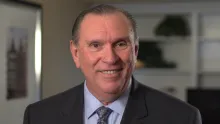
Randy D’Alessandro served as pastor for the United Church of God congregations in Chicago, Illinois, and Beloit, Wisconsin, from 2016-2021. Randy previously served in Raleigh, North Carolina (1984-1989); Cookeville, Tennessee (1989-1993); Parkersburg, West Virginia (1993-1997); Ann Arbor and Detroit, Michigan (1997-2016).
Randy first heard of the church when he was 15 years old and wanted to attend services immediately but was not allowed to by his parents. He quit the high school football and basketball teams in order to properly keep the Sabbath. From the time that Randy first learned of the Holy Days, he kept them at home until he was accepted to Ambassador College in Pasadena, California in 1970.
Randy and his wife, Mary, graduated from Ambassador College with BA degrees in Theology. Randy was ordained an elder in September 1979.
