

Don Ward
This transcript was generated by AI and may contain errors. It is provided to assist those who may not be able to listen to the message.
Two weeks ago, I gave a sermon titled, Your Worldview, and we said we would have a follow-up, because your worldview determines, to a large degree, the message of the watchman. The message of the watchman, or the watchman's message, is our title today. Our worldview, is this all there is to it? Is this world the world that is going to get better and better? Or are we looking for a better world, the world tomorrow, or beyond today? The inspired word of God has a lot to say about the role of the watchman in Scripture.
The watchman was usually seated in a tower, or standing on the highest point, so he could see for miles and mourn the people at the sign of impending danger. The kings of Israel would place watchmen at these places, so the enemy would not come upon them unawares. And like manner, God also sent prophets to Israel to serve as watchmen, and warned them of God's impending judgment if they did not repent and turn to him with their whole heart.
The role of the watchman was a weighty responsibility that required great courage and fortitude to be able to warn the people of what was going to happen to them if they didn't repent. And oftentimes, the kings, as you might recall, the case of Ahab and Jezebel, resisted mightily the messages of the watchmen or the prophets. Let's note the inspired words of the prophet Ezekiel with regard to this theme that we're talking about today.
Let's read the message of the watchman in Ezekiel 33. Ezekiel 33, verse 1. In Ezekiel 33, verse 1, Again the word of the Eternal came unto me, saying, Son of man, speak to the children of your people, and say unto them, When I bring the sword upon a land, if the people of the land take a man of their coast and set him up for their watchman, if when he sees the sword come upon the land, he blows the trumpet and warns the people, then whosoever hears the sound of the trumpet and takes not warning, if the sword should come and take him away, his blood shall be upon his own head.
He heard the sound of the trumpet and took not warning, his blood shall be upon him, but he that takes warning shall deliver his soul, his life essence. But if the watchman are the sword, come and blow, and the trumpet, but if the watchman are the sword, come and blow, and the trumpet, and the people of...
Sorry, I can't see this... And the people be not warned, if the sword come and take only persons away from them, he is taken away in the iniquity, in his iniquity, but his blood will I require at the watchman's hand. So you, O Son of Man, I have set you as a watchman upon the house of Israel. Therefore, you shall hear the word at my mouth and warn them from me.
The warning was usually first given, as we mentioned earlier, to the kings and princes of the land, the rulers, the leaders. The message of the prophet was generally delivered in four parts. First of all, their sins are graphically laid out before them, as in Isaiah 58.1, one of the most famous verses that people quote with regard to the warning message, blow the trumpet in Zion, also sound the alarm in my holy mountain, that's in Joel, but in Isaiah 58 verse 1, let's notice that back a few pages there, in Isaiah 58 verse 1, 58.1, cry aloud, spare not, lift up your voice like a trumpet, and show my people their transgressions in the house of Jacob their sins.
So the first part of the watchman's message was their sins are laid out before them. Secondly, a call to repent of their sins and turn to God with their whole heart. Then thirdly, the impending punishment if they did not repent. And then fourthly, oftentimes the promise of restoration. And virtually every one of the, what is called the minor prophets, these three things took place, that is, sins are graphically displayed, a call to repent, the impending punishment, and then closing with oftentimes the promise of restoration. The Church of God is built upon the foundation of the apostles and prophets, with Jesus Christ being the chief cornerstone.
Let's turn to Ephesians chapter 2 and read that, the role of the prophets. And as we shall see here, the prophets generally served as the watchmen, and the Church is built upon the foundation of the apostles and prophets, with Jesus Christ being the chief cornerstone. Paul, in the early part of preceding verses here, talks about how Jew and Gentile now have access to God through Christ. We'll pick it up here in verse 16. He came and preached peace to you that were afar off, that is, the Gentiles were afar off.
They were not, initially, the prophets did not sound the alarm to them and the message altogether, though there was some warning to the nations, especially in Jeremiah. So he came and preached peace to those who were far off and to them that were nigh, of course, the Jews. For through him we both, Jew and Gentile, have access by one Spirit under the Father. Now therefore you are no more strangers and foreigners, but fellow citizens with the saints and with the household of God, and are built upon the foundation of the prophets and apostles, Jesus Christ himself being the chief cornerstone, in whom all the building, fittingly framed together, grows into the holy temple of the Lord, in whom we also are built up together for inhabitation of God through the Spirit.
Jesus Christ was a great prophet himself. We'll look at this in Hebrews chapter 6.
It's Hebrews 3, verses 1 through 6. In Hebrews chapter 3, let's notice this.
Hebrews chapter 3, Remember Hebrews compares and contrasts elements of the Old Covenant with elements of the New Covenant. Under the Old Covenant it was an earthly calling. Under the New Covenant it is a heavenly calling. Consider the Apostle and High Priest of our profession, Christ Jesus, who was faithful to him that appointed him, as also Moses was faithful in all his house. For this man was counted worthy of more glory than Moses in as much as he whom has built the house. Of course, as you recall in Matthew 16, 18, where Jesus said, And I say unto you, You are Peter, little rock, petro, and upon this rock, big rock, Petra, I will build my church.
But the person that builds the house has more honor than that house, for every house is built by some man, but he that built all things is God. And Moses was barely faithful in all his house as a servant for a testimony of those things which were to be spoken after. But Christ as a son over his own house, whose house are we if we hold fast the confidence and the rejoicing of the hope unto the end? What message did the high priest and prophet of our faith preach? What message did Jesus preach? The message of the watchman is the title. So let's notice here one of the great messianic prophecies, I would say one of the greatest messianic prophecies in the whole Bible. Look at Malachi chapter 3, and Malachi chapter 3 and verse 1.
So the greatest of the prophets, the one who is building the house, I will build my church and the gates of hell shall not prevail against it. We'll see his message. We'll see first of all this prophecy of him coming. Behold I, the I is identified at the last part of the verse, behold I will send my messenger.
And the Hebrew word for messenger is malach. Malachi is a book about messengers. There are five messengers identified in Malachi. Malachi himself, Malachi is taken from Malachi. The Hebrew word for messenger, that is malach, m-a-l-a-k. Malachi was one of the messengers. The priests were another one of the messengers. That's in Malachi 2.7. And then here we have two messengers identified. In Malachi 3 we'll see John the Baptist and also Jesus Christ. Then in Malachi 4 or 5 it says I will send you Elijah the prophet before that great and terrible day of the Lord.
Jesus said that perhaps John the Baptist is that fifth messenger. Of course, the church today, our very emblem, I think this one says that we are preparing a people and preaching the gospel. Behold, I will send my messenger. Now one thing about this word messenger, or some more things, is that it can refer to a human being or it can refer to a divine being. In the first case here with John the Baptist, obviously it's referring to a physical being.
Then the second case, Jesus Christ, did come in the flesh. But then, of course, he was a spirit being in pre-existence and is now a spirit being seated at the right hand of the Father. And there the Greek equivalent is the same. That is, the Greek word for messenger is angelos, and we'll see that in just a moment. It can refer to a human messenger or a spirit messenger. Behold, I will send my messenger, my Malak, and he shall prepare the way before me. And the Lord, the at-dun-i whom you seek, shall suddenly come to his temple, even the Malak, the messenger of the covenant.
And Jesus Christ came as the messenger of the covenant. He gave his life's blood, and through his life's blood, the new covenant was ratified. And without the shedding of blood, there is no remission of sin, as it says in Hebrews 9. Now let's look at in Mark's Gospel, chapter 1, verse 1. We'll see this very prophecy that we just read here referred to in Mark chapter 1 and verse 1. The beginning of the Gospel of Jesus Christ, the Son of God, as it is written in the prophets. And here's almost a word-for-word quote of Malachi 3.1.
Behold, I send my messenger, my Angelos, before your face, which shall prepare your way before... ...your face which shall prepare your way before you, the voice of one crying in the wilderness. Prepare you the way of the Lord, make his path straight. Verse 3 is a quote from Isaiah 40 in verse 3. So two prophets are quoted here. And then it begins to describe the work of John the Baptist, John preaching the baptism of repentance. We'll note here quickly, and we'll turn back here to Mark if you want to hold your place.
Look at Matthew 3 regarding preparing the way. And John the Baptist... John the Baptist was out in the River Jordan, baptizing, and a contingent of the religious leaders came down from Jerusalem to see what was going on. This is Matthew 3.1, In those days came John the Baptist preaching in the wilderness of Judea, and saying, Repent you, for the kingdom of heaven is at hand.
For this is he that was spoken of by the prophet Isaiah, saying, The voice of one crying in the wilderness, prepare you the way of the Lord, make his path straight. And the same John had his raiment of camel's hair and a leathern girdle about his loins, and his food was locusts and wild honey. Then went out to him from Jerusalem and Al Judea and all the regions round about Jordan.
They were baptized of him and Jordan, confessing their sins. And when he saw many of the Pharisees and Sadducees come to his baptism, he said unto them, O generation of vipers, who has warned you to flee from the wrath to come. So we'll see in a lot of the watchman's messages, they did not mince words. They told it like it was, and they were told to bring forth fruit meat for repentance. Now we go back to Mark and continue. So we get a glimpse of John the Baptist preparing the way for Christ's first coming.
He turned the nation upside down in about six months, and he did not have any mass media. He did not have the Internet or anything like that. Of course, they didn't have the kind of transportation that we have today, and on it goes.
Now we look at verse 14 in Mark 1. Now after that Jesus was put in prison, Jesus came into Galilee preaching the gospel of the kingdom of God, and saying, the time is fulfilled and the kingdom of God is at hand, repent you and believe the gospel. And so Jesus Christ, the principal thrust of the message is the kingdom of God is at hand, and for them to turn to him and repent. And we get a glimpse of how he delivered that message, the watchman's message, in the last few verses there of Matthew 7. So if you would, turn there in Matthew 7.
We'll start in Matthew 7.24. Therefore whosoever hears these sayings of mine and does them, I will liken him unto a wise man which had built his house upon a rock. And the rain descended and the floods came and the winds blew and beat upon the house, and it fell not for it was founded upon a rock. And everyone that hears these words of mine and does them, he shall be likened unto a foolish man which built his house upon the sand. And the rain descended and the floods came and the winds blew upon the house and it fell and great was the fall of it. And it came to pass when Jesus had ended these saying, the people were astonished at his doctrine, for he taught them as one having authority and not as the scribes. The scribes were wishy-washy and all over the place, and oftentimes making excuses as to why he did not have to obey God's law. And you look at Matthew 23, you get another glimpse of Jesus and him delivering the message that he delivered in that day in Matthew 23. And Matthew 23, verse 30 will pick it up, while 29 will pick it up. Woe unto you scribes and Pharisees, hypocrites, because you build the tombs of the prophets and garnish the sepulchers of the righteous, and say, if we had been in the days of our fathers, we would not have been partakers with them in the blood of the prophets, the watchmen that came, that delivered the message, the warning, but they did not take heed. Wherefore you be witnesses unto yourselves, that you are the children of them which killed the prophets, fill you up the measure of your fathers. You serpents, you generation of vipers, how can you escape the judgment of hellfire? Wherefore, behold, I send unto you prophets and wise men and scribes, and some of them you shall kill and crucify, and some of them shall you scourge in your synagogues and persecute them from city to city. So Jesus himself, of course, did not miss words.
What did Jesus say about his kingdom and when it would come? So this has to do with worldview. Going back to two weeks ago, your worldview. Is this all there is to it, or is there a world to come? And where should our focus be? Now we look at John 1836.
Jesus is on trial, and they question him, I would imagine, for hours, as he was brought before the council there, the high priest. In John 18, verse 33, then Pilate entered into the judgment hall again and called Jesus and said unto him, Are you the king of the Jews? And Jesus answered him, Says you this thing of yourself, or did others tell you of me? And Pilate answered, Am I a Jew? Your own nation and the chief priest have delivered you unto me. What have you done? And Jesus answered, My kingdom is not of this world, for Jesus Christ's worldview was not concerning this world, per se, but it was the world to come. If my kingdom were of this world, then would my servants fight that I should not be delivered to the Jews? And now is my kingdom not from hence? So we are looking for a kingdom to come. This present evil age is going to come to a screeching halt, and Judgment Day is coming upon all nations. The churches of God today are largely the fruit of a message that emphasized the world tomorrow. Ambassador College and the Worldwide Church of God present the good news of the kingdom of God and the prophecies of the world tomorrow. Today we have a magazine and a television program titled Beyond Today. And once again, Jesus declared, My kingdom is not of this world, else my servants would fight. Remember the old spiritual, the train is coming, brother, get ready. Yes, indeed, the kingdom is a coming. Concerning the state and progress of the world, there are two basic views. The world is getting better and better. That's what the progressive liberals would have you to believe. And they're going to usher in the utopia.
And then the other view, the world, is getting worse and worse. So which view is correct? There are four basic ways where humans can attain knowledge. Four basic ways that humans can attain knowledge. Empiricism, that is, knowledge through the five senses. Knowledge through the five senses. Of course, that's physical knowledge. Secondly, human experience, experiential knowledge. Through experience. Experience is a hard teacher. It gives a test first and the lessons afterwards. You would rather learn the lesson up front. And that's one of the things that the watchman's message seeks to do. Is to warn you what to avoid, warn you what to look for, warn you how to get ready, warn you to wake up. Third way that humans gain knowledge is through human reasoning. Putting two together, as they say. And then the fourth way, which is, in today's world, being denied, and that is through revelation. 1 Corinthians 2. You probably beat me to it. 1 Corinthians 2, verse 8 will begin. So we're going to trust the Bible with regard to our worldview. Is the world getting better and better, or is the world getting worse? Really, the only answer to that is through revelation. So we're in 1 Corinthians 2, verse 8. Which none of the princes of this world knew, for had they known it, they would not have crucified the Lord of glory.
Really, we should have started earlier, but we'll read verse 7 now. But we speak the wisdom of God in a mystery, even the hidden wisdom which God ordained before the world unto our glory, which none of the princes of this world knew, for had they known it, they would not have crucified the Lord of glory. They really knew what life was about, the purpose of human existence, and why God created us.
But as it is written, I have not seen or hear heard, neither has it entered into the heart of man what God has prepared for those who love Him. But God hath revealed, He has revealed them unto us by His Spirit. For the Spirit searches all things, yea, the deep things of God. For what man knows the things of man, save the Spirit of man which is in him, even so the things of God knows no man but the Spirit of God. The things of God are revealed. Spiritual knowledge is revealed. And the world more and more denies spiritual knowledge. So what does God say about this world? Is the world getting better and better? Let's notice 2 Timothy 3.13. The Bible, the inspired word of God, holy men of old, wrote as they were inspired by the Holy Spirit, all scriptures given of inspiration by God. Also in 2 Timothy 3 and verse 13. But evil men and seducers shall wax worse and worse, deceiving and being deceived. And almost every day you read something, you hear something. I never thought I'd hear that. I never thought that it would come to that. Verse 16, all scriptures given by inspiration of God, it is profitable for doctrine, for reproof, for correction, for instruction in righteousness. And look at 1 John 2 verse 15. 1 John 2 verse 15 with regard to the inspired words through the Apostle John about this world. What is going to happen to this world? So once again, to a large degree, the watchman's message is based upon the worldview. In 1 John 2.15, love not the world, this present evil age, this cosmos. Love not the world, neither of the things that are in the world. If any man loved the world, the love of the Father is not in him. I couldn't write it. The love of the Father is not in him. For all that is in the world, the lust of the flesh, the lust of the eyes, and the pride of life is not of the Father, but is of the world. And the world passes away in the lust thereof, but he that does the will of God abides forever. So that's what the reveal-inspired word of God says about this world. We're looking for the world tomorrow, beyond today. The watchman's message must be framed in a way that challenges the mind and heart of the hearer.
And it must be framed in such a way that it makes sense that they can understand it, that it's clear. Sometimes it might be semantics. Here's an example. A driver was driving along on the road, and there appears a very noticeable sign saying, The end is near. You've perhaps seen such signs. A little farther down the road, the sign read, The end is near. Beware! He thought to himself, What kind of wacko put up these signs? A little farther, the sign read, You are much closer. The end is newer. And then suddenly, when it was too late, the sign read, Bridge out! But it was too late as he crashed into the water below. So a simple sign stating, Bridge out two miles ahead, would have prevented the driver from crashing. So the way the message is framed, the way it's stated, the way it's delivered, Christ taught them as one having authority. John the Baptist and Jesus Christ challenged them to their depth of their being.
One could say it is a matter of semantics, but semantics can only go so far. The gospel message is a message of hope. A message of hope that should fill our hearts and minds. A message that's fixed on the outcome. What will be the result if I walk this way? This is the way. Walk you in it. So let's quickly note what the Apostle Paul says about hope. Look at 1 Corinthians 13. Hope is one of the great sustainers of life. You know, as you look at world history, you see people who have suffered so greatly through the ages from various life circumstances. One of the things that kept them going was, there is a better world coming. There is hope. This verse here, I was the president of our senior class, and our class sponsor was an enlightened one, Episcopalian, from the city. We were a little country school, and we wanted this verse to be our class motto. She tried to talk us out of it, but she didn't succeed. At graduation, she showed up a bit inebriated, or some say drunk.
And now abides Faith, Hope, and Charity, these three. The greatest of these is Charity, Agape, and Spiritual Love. But you notice Faith, Hope, Charity, I'm sorry, you notice Faith, Hope, Charity.
And all things spiritual really spring from Faith. He who would come to God must first of all believe that He is, and a rewarder of those who diligently seek Him. That's Hebrews 11.6.
Why do I have hope? Because I have Faith, God, who cannot lie, has promised.
And so I'm looking to the future. I have hope, and that keeps me going. Faith, Hope, Charity, the eventual outcome is, and what God desires, is that we become love as He is love. Hope looks to the future. Hope is future-oriented. So look at 1 Corinthians 15, just forward a page or so, probably. 1 Corinthians 15 and verse 17. In almost every chapter in 1 Corinthians, Paul addresses one of the causes or one of the contentions that were among the Corinthians. They were divided on about everything you can name. Even some saying there was no resurrection from the dead, as in chapter 15.
And these verses are in response to that claim that there is no resurrection from the dead. In 1 Corinthians 15 and verse 17. And if Christ be not risen, your faith is in vain, you are yet in your sins. Then they also which are fallen asleep, they are dead, and Christ are perished. If in this life only we have hope in Christ, we are of all men most miserable. But now as Christ risen from the dead and became the firstfruits of them that slept, for since by man came death, by man came also the resurrection of the dead, for as in Adam all die, even so in Christ shall all be made alive, each man in his order, in Christ's coming. And the rest of the chapter talks about, to a large degree, about resurrection. So hope should permeate our being, for it is the helmet of salvation. You look at 1 Thessalonians 5.8. 1 Thessalonians 5.8, we're admonished here to put on the helmet of salvation, which is hope. And hope is one of the parts of the armor of God. It says in Ephesians 6, to put on the helmet of salvation. Here it tells you what the helmet of salvation is. 1 Thessalonians 5.8, but let us who are of the day be sober, putting on the breastplate of faith and love, and for in helmet the hope of salvation. A helmet goes all over the head. It's what permeates. So hope permeates every fiber of your being. You are forward-looking. You're looking to the future. You know this is not THE life. It is preparation for the life to come.
So the message needs to be filled with hope. The message must strike a chord with a hearer in such a way. The message must strike a chord with a hearer in such a way that he is challenged to the depth of his being as to whether these things be true.
Look at Acts 17.
I remember when I first started listening to The World Tomorrow somewhere in around 1960, 1961, and I really got earnest about it. In January, February of 1963, staying up sometimes almost all night and going to work early that morning teaching school and coaching, and there were three or four themes that just kept coming at me. At that time, I was teaching Sunday school to the teens in the morning service and in the evening service. You had two services a day, Wednesday night Bible study, and pretty good attendance in all of that. I was teaching at the first Baptist church in a town of about 2,500, and I started listening for keeps, I guess you could say, to The World Tomorrow. These questions or themes, if you will, continually were repeated. Why were you born? What do you mean, salvation? What is the kingdom of God? What is true repentance? And of course, you thought you knew everything already, but there was enough of a challenge there that you were willing to pursue. And so, as these booklets served as a guide in the Bible, I did the intense study, and I feel you have to be challenged to that point. I've got to get to Acts 17. In Acts 17, we have an example of what I'm talking about here with regard to the Bereans, which we've heard many times. In Acts 17, we'll read here in verse 1, Notice he reasoned with them what was the basis of the reasoning, the inspired word of God, out of the Scriptures. Opening and alleging that Christ must needs of suffered and risen again from the dead, and that this Jesus, whom I preach unto you, is Christ, the anointed one, the promised Messiah. And some of them believed, and consorted with Paul and Silas, and of the devout Greeks a great multitude, and of the chief women, not a few. But the Jews, which believed not, moved within me, took upon them certain lewd fellows of the basher sort, gathered a company, sounds like Charlottesville, and set all the city in an uproar, and assaulted the house of Jason, Paul's group, staying there, and sought to bring them out to the people.
And when they found them not, they drew Jason, and certain brethren unto them, the rulers of the city. These that have turned, these are the ones that have turned the world upside down, and are come here also, whom Jason hath received, and these all due contrary to the decrees of Caesar. We can see from this that the preaching of Paul spread from city to city, sometimes even without him going there. And when he came there, they said, well, we've heard of what you have said and what you have done.
So by word of mouth, the message spread quite a lot. But these things are trifocals, and actually it's the bifocal that I can see the print through, and at the bottom I just see a blur. Jason has received these all due contrary to the doctrines of Caesar, saying that there's another king, one Jesus. And they troubled the people and the rulers of the city when they heard these things, and when they had taken security of Jason and of the other, they let them go.
And the brethren immediately went away, Paul and Silas, by night unto Berea. So you have the contrast between Thessalonica and Berea. So they went to Berea, who coming there went into the synagogue of the Jews. These were more noble than those in Thessalonica, in that they received the word with all readiness of mind and searched the Scriptures daily whether those things were true.
Therefore, many of them believed also of honorable women, which were Greeks and of men, not of few. But when the Jews of Thessalonica heard about it, they came down from Thessalonica to Berea and ran Paul out of there. And then Paul goes to Athens. And much of the rest of the chapters taken up with his speech there on Mars Hill in the environs of Athens. But the point here, they searched the Scriptures whether these things be true. So as I searched the Scriptures, being guided by those booklets that I received, what I was, why were you born, what do you mean salvation, what is true repentance, I became convicted, so the message must challenge to the point that a person desires to see whether or not what is being spoken is true.
So the message must challenge the person's belief system to the point that they are moved to open the Bible and see for themselves what it really says. And to a large degree, it's only going to be, as it was in the days of the early church, those people who had some familiarity with the Bible. Paul went into the synagogue of the Jews. And the spillover from going into the synagogue of the Jews would spill out to the Gentiles, and then he would wind up oftentimes speaking to the Gentiles.
Also, the message must have a sense of urgency. A sense of urgency. You remember this thing of Paul, and one of the...appeared before one of the rulers. Paul almost persuades me to be a Christian. Come back, come back! More convenient day. But that urgency, that sense, must be so great. Remember the famous account of the handwriting on the wall in Daniel. Let's go there.
Daniel 5. Daniel 5. No. This is Daniel 5.1. The king made a great feast to a thousand of his lords, and drank wine before the thousand. And, by the way, they were drinking that wine from vessels that had been taken out of the temple. In the temple, as it says in verse 2. Then in the midst of all of this celebrating and frolicking and so on, he saw this hand. Verse 4, they drank wine, praised the gods of gold and of silver, of brass, of iron, of wood and of stone. In the same hour came forth a finger of a man's hand, and wrote over against the candlestick upon the plaster of the wall of the king's palace.
And the king saw the part of the hand that wrote. Then the king's countenance was changed, and his thoughts troubled him, so that the joints of his loins were loosed, and his knees smote one against another. He was scared out of his wits, handwriting on the wall. What's this about? So he called the soothsayers and all of the wise men of the Chaldeans and so on, and none of them could interpret the handwriting. And eventually, they called on Daniel.
They knew that in years past that he had been able to interpret the dreams of the king. So we pick it up again in verse 17. Then Daniel answered and said before the king, Let your gifts be to yourself, and give your rewards to another. Yet I will read the writing unto the king, and make known to him the interpretation. O you king, the Most High God, gave Nebuchadnezzar your father a kingdom, and majesty, and glory, and honor.
Pick it up again in verse 21. And he was driven from the sons of men, and his heart was made like the beast, and his dwelling was with the wild donkeys. They fed him with grass like oxen, and his body was wet with the dew of heaven, sleeping outside on the grass, till he knew that the Most High God ruled in the kingdom of men, and that he points over it whomsoever he will. And you, and you his son, O Belshazzar, has not humbled your heart, though you knew all of this.
See, when you know it all, and when you put it off as the one that Paul talked to, it's probably going to be too late. So many young people in the Church of God put it off, put it off, put it off, and older people, too. And they sort of have an entrance, like in those news items, prophecy's going to be fulfilled, and that kind of thing, maybe I'll get I'll get hot.
Here's Belshazzar handwriting on the wall. Daniel says, you knew all this, what happened to your father Nebuchadnezzar. Verse 23, But have filled up yourself against the Lord of heaven, and they have brought the vessels of his house before you. And you and your Lord, your wives and your concubines, have drunk wine in them. And you have praised the gods of silver, gold, brass, iron, wood, stone, the gods that can neither hear nor know, and the God in whose hand hears and in whose hand your breath is, and whose are all your ways, you have not glorified.
You have not recognized the God of heaven, the Most High God. Then was the part of his hand sent from him, and this writing was written. And this is the writing that was written. Many, many, techo, you farcen. This is an interpretation of the thing many God has numbered your kingdom and finished it. In other words, Nebuchadnezzar, you're through. You done for.
Techo, you are weighed in the balance and found wanting.
Paris, the kingdom is divided and given to the Medes and Persians. Then commanded Bel-Shazar, and they clothed Daniel with scarlet, and put a chain of gold about his neck, and made a proclamation concerning him that he should be the third ruler of the kingdom. And that night was Bel-Shazar, the king of the Chaldean slain, and Darius the Mede. Take the kingdom being about 62 years old.
When you hear the message, there needs to be a sense of urgency about the message.
You don't put it up. For we never know when the bridegroom, figuratively or literally, will knock on our door. We know that many prophecies have to be fulfilled before, literally, but figuratively. We did not know when they're where or how we shall draw our last breath.
The people walking down the street in Barcelona had no idea that day when they got up. Now, that would be their last day. Fourteen dead, eighty injured, and there were other terrorist attacks as well. You never know.
So we do not know how we shall draw or when we shall draw our last breath. Let's look at Luke 12, verse 16. This sense of urgency. Don't put it off.
You hear the message or the messenger. There should be a sense of urgency within it and a warning. Don't put it off. Don't delay. In Matthew 12, I mean Luke 12, verse 16. Luke 12, verse 16. And he spoke a parable unto them, saying, The ground of a certain rich man brought forth plentifully. And he thought within himself, saying, What shall I do? Because I have no room where to bestow my fruits. I've got so much, I can't put it in my barns. So I guess I just need to tear down the barns and build bigger barns.
I'm not concerned about the poor or anybody else that might need it.
And he said, This will I do. I will pull down my barns and build greater. And there will I bestow all my fruits and my goods, and I will say to my soul, You have much goods laid up for many years. Take your ease, eat, drink, and be merry.
But God said unto him, You fool, this night your soul, your life essence, shall be required of you. Then who shall those things be? Which those have provided?
Who's going to eat your stuff? Because tonight it's all over. So we never know.
This also means that we need to order our priorities right and put first things first. The ever present, Matthew 6, 33. Seek you first the kingdom of God and his righteousness, and all these things will be added to you.
We are all in the role of the watchman for our own lives.
It's pretty sobering if we're going to explore that a bit. The watchman must not get discouraged and quit even if the people do not respond. And the people must not get discouraged and quit if all of these things are not present.
Now, you look at Ezekiel 33 again. We read the first seven verses about the role of the watchman.
In Ezekiel 33, verse 30, Also the Son of Man, the children of your people, still are talking against you by the walls and in the doors of your house. Speak one to another, everyone to his brother, saying, Come, I pray you, and hear what is a word that comes from the Lord.
As we have today, the internet, and virtually all the sermons that are given in the U.S. are posted on the internet. And there are people who are, they search that these sermons, they're really what they're wanting. They want to hear something maybe that's new, something that scintillates or motivates them to explore that, that it's maybe a little bit new or whatever. Brother, what we really need is soul searching in every dimension of our being, of whether or not we're doing what we know to do. Of course, it's not wrong to be searching for knowledge. We know what it says in 2 Timothy chapter 4, for the time will come when they will not endure sound doctrine and will heap to themselves itching ears and be turned to fables. So here it says, come, I pray you, and hear what is the word that comes forth from the Eternal. They come unto you as the people comes. They sit before you as my people. They hear your words, but they will not do them. For with their mouth they show much love, but with their heart they go after their covetousness. And lo, you art unto them as a very lovely song of one that has a pleasant voice and can play well on the instrument, for they hear the words, but they do them not. And when they come to pass, and lo, it will come. Then shall they know that a prophet has been among them. Of course, those words were to Ezekiel, the watchman, the prophet of that day. And as I said earlier, we're all in a role of a watchman ourselves. It's so easy for members of the very body of Christ to lapse into some kind of spiritual sleep and walk as they were sleepwalking and begin to take things for granted and begin to take it easy, slack up on Bible study, prayer, meditation, let someone else think for them.
Each one of us has entered into a covenant of sacrifice, and we are daily standing before the Judgment Seat of Christ. Look at that in Romans 14 and verse 10. Judgment is now on the house of God, as it says in verse 17. This is a daily thing. In Romans 14 and verse 10, it says, Why do you judge your brother? Or why do you set at nothing your brother? For we shall all, and really this is in the present perfect tense, for we shall all, or we are all standing before the Judgment Seat of Christ. Verse Peter 4, 17 says, Judgment begins at the house of God. For it is written, As I live, says the Eternal, every knee shall bow to me, and every tongue shall confess to God. Yes, that includes Bill Maher and everybody else.
So then every one of us shall give account of himself to God.
So, we have the books now. The books are open to us, and we are without excuse. As Daniel told Belshazzar, you're without excuse. You knew what your grandfather or your father went through, and you have no excuse. And here you are feasting and worshiping other gods with the very vessels that were in the house of God. We need to understand our personal responsibility. Once we have tasted the good gift, there is no turning back to the ways of this world.
Yes, the watchman has a responsibility, but we also have the responsibility of striving to live by every word that proceeds from the mouth of God. We go back once again to Ezekiel 18. Ezekiel 18 says it very clearly here, young and old, men and women, children, old people, no matter where you are on the spectrum, socioeconomically. None of that is really going to matter. What matters is where do you stand before God. In Ezekiel 18 verse 4, Behold, all souls are mine. Whether or not you live or die, whether or not you experience the second death, God is the one who's going to make this determination. It says, and of course, Christ is playing a role. I can't say that every time. We know what it says in Matthew 10.28, fear not him who is able to destroy the body only, but fear him who is able to destroy both body and soul, life potential in the lake of fire. And once you are in the lake of fire, which is the second death, there is no resurrection. So verse 4, Ezekiel 18, Behold, all souls are mine, as the soul of the Father. So also the soul of the Son is mine. The soul that sins, it shall die. Go down to verse 20. The soul that sins shall die. The Son shall not bear the iniquity of the Father, neither shall the Father bear the iniquity of the Son. The righteousness of the righteous shall be upon him, and the wickedness of the wicked shall be upon him. So here I stand in the ministry throughout the world in the Church of God on a weekly basis. They strive to serve as watchmen for your very life essence, but you also have the responsibility.
And when all is said and done, you individually, as we've just read, will give an account to God. So I strive as a watchman for your life essence, your eternal life, and I stand before you Sabbath after Sabbath, and so do the ministers around the world. And we hope and pray that we are opening our hearts and minds to God's truth, and that you are internalizing it and acting upon it. Internalize means it becomes a part of you. It says in Hebrews 8 and 10 that the Spirit of God will write the law of God upon your heart and your mind.
So we close today with this admonition from Revelation 3 and verse 20. Hear the words of Christ, Behold, I stand at the door and knock. If any man hear my voice and open the door, I will come to him and will sit with him and he with me.
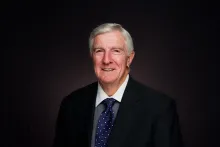
Before his retirement in 2021, Dr. Donald Ward pastored churches in Texas and Louisiana, and taught at Ambassador Bible College in Cincinnati, Ohio. He has also served as chairman of the Council of Elders of the United Church of God. He holds a BS degree; a BA in theology; a MS degree; a doctor’s degree in education from East Texas State University; and has completed 18 hours of graduate theology from SMU.
