

Frank Dunkle
This transcript was generated by AI and may contain errors. It is provided to assist those who may not be able to listen to the message.
The fall feasts are a time of excitement, not only about the physical. We are humans, and the physical is very nice. It's very important. You begin to feel the crisp air of the fall coming on, and another season is just around the corner. But it's also an excitement about the future. There are things in the air that are going on, and we realize there's a new age just around the corner as well that's coming. We can get excited about the coming of Jesus Christ, and the removal of Satan, and the coming of the thousand-year reign of the saints, and the eventual resurrection of all who have ever lived.
And finally, joining God and the family as the whole group of those who are saved, those who are redeemed from the earth, into that family. That is your future that we are celebrating. This is my future. These feast days are all about the future, the exciting future.
And another thing that we are told is, it's coming soon. We're told many times in the Scriptures that this is going to happen soon. Now, we think we have a good idea when it's going to happen, but don't forget that Jesus said it's going to happen faster than you think, at a time you're not expecting. When the bride is sleeping, the potential bride, that is, all the ten versions were not expecting it. When you're sleeping, you're thinking about something else, aren't you? You're usually dreaming, or your mind is another state. Maybe you were planning to do something or expecting something, but now you're asleep. And so, nobody was expecting anything to happen, and all of a sudden the bridegroom came.
I think that's what the thing about sleep was. It caught everybody by surprise. And so, this future, your future and mine, is coming soon, and it's your responsibility to be there. It's your and my responsibility to be at the feast. They are commanded observances, and as much as we are able to, we should be at them. And also the Feast of Tabernacles.
But it's also your responsibility and mine, individually, to be working out that salvation with deep respect, even trembling, to be serious about that, so that we are there. The Fall Festival speaks to one of two things. One is, what you will be, and the second is, or, what you could have been. That's really what we're celebrating, is what you will be, or what you could have been, depending on how you look at that. And so, we do need to be very respectful of these things.
So much of what people dream about for the future is in relationship to themselves. I look to the future. I look at what these feasts picture, and I'm so excited. I just can't wait for the millennium to be here. I remember growing up in the church that people would openly talk about when the millennium came here. It was going to be so wonderful. All the problems in this life, and the politics, and the wars, everything was going to be over. Just bring the kingdom so we can have a better life. They didn't seem to connect with the fact that the millennium life was not going to be the life they were living. We are called now to actually be resurrected or changed to reign with Christ and help somebody else live a good life.
We are called now to live the life that they will live in the future. This is a different opportunity. But when you stop and you think of the future in relationship to yourself, you can get all kinds of crazy notions and start thinking, this life isn't so good.
The next life, now that's going to solve the problem. So swing low, sweet chariot. Come in, take me out of here. I am waiting for a rapture. I'm waiting for anything. I've got the rupture. I need the rapture. I've got the heartache and the headache. I need III, you see. And if that's all it is, then perhaps we're missing something.
A paradise of ease is generally what I dream of. If you think about paradise, well, it's an island in the Caribbean. It's only so big. It only has a few trees on it. And my wife and I are there, and it has a steady supply of coconuts falling. That's paradise. Paradise in the Bible is more like a whole lot of people are there.
Everybody has lots of needs. And you have the talents and abilities to be serving and giving to those people with needs all the time, including God and each other. And it's going to be a great time. We tend to think of a break from responsibility would be paradise. Sort of under the vine, got the fig tree, kicked up, feet up, you know, got the margarita. And life is cool.
But that's not what the Bible really talks about. The Gospel of the Kingdom isn't the good news about no illness, no problems, no worries, no poverty. Great. Count me in.
It's about a different government. It's about a government instead of everybody wanting their own little island in the Caribbean and being very selfish. It's all about me. And I only want my tree to have coconuts falling. It's about everybody. It's about wanting to share and love and serve and the joys that come along with that. So what are these fall feasts to teach us? And what is the mindset that you and I should have as we observe them? Going into these feasts, we're already into the fall feasts, but as we approach now the feasts of tabernacles and the journey, the trip, the excitement, what should our mindset be? I'd like to take a look today and see how God expects us to be living now and how He wants us to go to these feasts now and observe them with the right mind. The title of the sermon today is Millennial Life Now. It's a concept that sometimes we don't have as we keep the feasts, as we look at prophecies, we look to the kingdom of God. We think everything is postponed. Once the magic kingdom gets here, everything will be transformed and suddenly the colors will be brighter, life will be better. But on this side, it's kind of a downer, this side we're sort of stuck and it's not so pleasant. So bring on the kingdom. Thy kingdom come pretty much for me to solve my problems.
Let's take a look at the concept of Millennial Life Now and see what the Scriptures tell us. I think there are two Scriptures that typically will foretell what the future of the Holy Days are speaking to. One is in Isaiah 11, verses 6-9, Isaiah 11, verse 6. It talks about a time that's coming when the wolf will dwell with the lamb. I don't know if you've been out and seen wolves. I don't remember seeing a real wolf, but I've seen coyotes when I've been out hiking around. And the coyotes sort of come sniffing and looking. And if they come upon something that's the right size and looks tasty, that one's done for. There will be a time when that type of an animal, a real carnivore, a killing carnivore, will not be a predator to something as innocent as a lamb. A lamb that has no defenses whatsoever, usually kind of light colored, white maybe, and making noise. Here I am! Here I am! We all like lamb, you know. Tasty little dude. I'm over here! I'm over here! And I'm helpless! I'm defenseless! I'm just tender as all get out. The leopard will lie down with the young goat. Over in Kenya, where my wife and I are heading tomorrow, the leopard is the animal that I enjoy seeing the most, oddly enough, for the back of its neck, is what I really like about a leopard. It just has a big, round, fat, muscular, it's not fat, but it's muscular neck. I just want to reach up there and just massage his neck, just feel the strong muscles of that neck.
That leopard will walk along, just seeing everything, and then climb a tree, or climb up on some tall, you know, bunch of wood that's fallen down. And they'll get a vantage point where it just looks. When a leopard wants something, pretty much it's going to get it. It's not like a lion that tends to walk around and everybody knows where it is. A lion smell really bad, they have old meat rotting in their teeth, flies everywhere. They're not very good at hiding themselves, but they're pretty efficient. They're very strong, they're fast, and under the right circumstances they can get prey. But they're very disadvantaged because you see a lion, you can draw a big, big circle around that lion, and there's nothing around there. A leopard's a little different. A leopard will get up high. You don't smell the leopard, a very clean cat. It has the spots, it'll disappear, you pretty much will never see a leopard. But when that leopard decides something's going to be dinner, it's dinner. Just very fast. So there's a time when this leopard will lie down with a young goat, or a gazelle type of an animal that it would normally prey upon. And the calf, and the young lion, and the fatling together, and a little child shall lead them. So God is going to recreate the fauna to where they're harmonious, to where there's harmony there. There's no kill or be killed, different type of animal world that will reflect the nature of those living at that time. The nature that God is trying to promulgate, as opposed to the one today, which is, you know, eat or be eaten. Do unto others before they do unto you. That's sort of the motto of civilization. Well, God's going to change things in the future. It says, The cow and the bear will graze, and their young ones shall lie down together. The lion shall eat straw like the ox, and the nursing child shall play by the cobra's hole, and the weaned child shall put his hand in the viper's din. Right now, it's not that kind of a world, and you have to be very, very careful.
Some parts of this country, even, you can remove something and get stung very easily. You can pick things up and have insect or snakes right underneath them. And you always have to be watching. The other day, my wife and I moved something, and there was a snake underneath, and, you know, it started moving around, and you begin to wonder, you know, what do we have here? Sometimes the scorpions, they just strike.
You put your hand somewhere, you've had it there before, and bam, there's a big old scorpion. So, it's a different world that's coming. They shall not hurt nor destroy in all my holy mountain, for the earth shall be full of the knowledge of the Lord as the waters cover the sea. And the other sort of quintessential passage of Scripture that would describe the future is Revelation 21, verse 4, where it says, "...and God will wipe away every tear from their eyes. There will be no more death, nor sorrow, nor crying. There shall be no more pain, for the former things have passed away." Okay, so we can close the Scripture and say, your kingdom come. We need those tame animals, and we need no more tears and no pain. And so, we're just kind of killing time until that gets here. Bring on the kingdom so we can have those things, so we can have peace and happiness. Is that what God's telling us? What will make the various phases of the coming kingdom of God so wonderful? What will make it into that utopia that we just sort of read about, we can dream about? What causes that? Is it that the lions aren't going to eat the lambs? Will that make the difference? Will no tear ducts and spirit beings be the reason for the lack of tears? Will they not have nerves so you can't feel pain? There's a thing that the Bible has from cover to cover. It could be boiled down to two words, cause and effect. Action, reaction. But this cause and effect governs happiness. It governs fulfillment. And all we've just read about aren't magical little things. It's not the magic kingdom we're going to step into. But rather, that the causes of happiness will be followed, and the causes of pain and misery will be avoided. And the end result will be no tears, and no sorrow, and no crying and pain. The end result of the millennial period being so full of rejoicing won't be that the animals are tame. It'll be nice. They will merely be a reflection of how civilization is living at the time. Like those animals aren't hurting each other, they're dwelling together in harmony, so nations won't be hurting each other. Husbands and wives and towns and relatives and people won't be hurting each other. They'll be dwelling together, different types of people.
And the result will be what we would call utopia.
I'll give you an example. Right now, in my life, I've found cause and effect. I've found that if a husband's focus is on his wife, the wife of his youth, he rejoices, you know, smiling, it's joy. You focus on the wife of your youth, it's happy. And guess what? The wife of your youth gets pretty happy. You know, it's a nice life, and it gives marriage a good name.
People will say, hey, I want to be married when I grow up. But, on the other hand, if a husband's focus is on being a womanizer, you know, I've got the wife here, but I've got the old bag here, I've got all these other women out there to flirt with, well, what do you think the result's going to be? It's going to be misery and divorce and misery and unhappiness and haranguing and nagging.
And it's going to give marriage a bad name, isn't it? And the kids are going to say, I don't want to get married when I grow up. Now, you can say, oh, but in the Magic Kingdom, you know, you get to the Magic Kingdom, it'll be automatic, happy marriages, right?
Just because we're there. Just because we happen to be in the millennium, or just having to be in the 100-year period. Not so. It comes down to cause and effect. Another example. If the wife's focus is just on me, on the self, this life is all about me, and I get up in the morning, and I've got to have people doting over me and praising me and thinking I'm just the best, hottest, coolest, prettiest, smartest person and doing everything I want all the time, then what do you think that family life's going to be like?
It's not going to be very happy, is it? And the people are going to say, the little ones are going to say, I don't want to get married, especially the boys.
I don't want to marry a woman when I grow up. Well, but then, let's go over to Proverbs 31 for a minute. Cause and effect. Proverbs 31. And you tell me if this is a millennial scene. It doesn't say anything about being in the millennium. It says in verse 10, who can find a virtuous, or as the margin says, a wife of valor. Who can find a wife of virtue, valor, for her worth is far above rubies.
Now, notice this family here. The point is, is this a happy family? Do we have to say, I can't wait till the kingdom gets here, cause I'm married. Wait a minute. Her husband safely trusts in her. He will have no lack of gain. She does him good and not evil. Drop down to verse 26. She opens her mouth with wisdom, and on her tongue is the law of kindness.
She watches over the ways of her household, and does not eat the bread of idleness. Her children rise up and call her blessed, and her husband also, and he praises her. Wow! Cause and effect. And the kids say, I want to get married to a woman like this when I grow up. I want to marry somebody just like mom. Many daughters have done well, but you excel at them all. Charm is deceitful and beauty is passing, but a woman who fears the Lord, she respects God and lives his way.
She will be praised. Now, the cause and effect part, verse 31. Give her the fruit of her hands. The Proverbs is full of cause and effect. Give a man the fruit of his hands. Give her the fruit of her hands. And let her own works praise her in the gates. Cause and effect. We can have that kind of marriage where the whole family rejoices. The whole family is honored. You see, the man there is sitting in the gates.
He's somebody that's helping and serving. We don't have to wait until the Magic Kingdom arrives. We can have what I will term millennial life now. It's not in any way to downplay what's coming. But it's so that we don't discount the wonderful calling that we have. We have God's Holy Spirit in us. We have God's laws. God is our Lord. He's our Master. He is our King. We submit to him now. We're not waiting for God's laws to show up.
We're not waiting for the causes of happiness and fulfillment to be taught us. No, we are actually enjoying them, participating them, learning them now so that we can teach them to others later. We, as it were, are the pioneers. We walk this path, this trail, this difficult, challenging road. We walk it first. We kind of blaze the trail. And then we can show people later on how to do it. It will be easier for them in some sense because Satan won't be around to fight. But you're not going to have a happier life.
You're not going to have a more fulfilling life just because you don't have to work at it so hard. You know, the things that have the greater challenge have the greater reward. We can go over here and climb a little hill. It's not very tall. The view is not very good when you get to the top. I see people climbing it all the time. But it's easy. It's just easy.
You just kind of walk up the hill. But you know, when you climb Mount Everest, it's really, really, really hard. But the view from up there is evidently outstanding. And the exhilaration from being able to develop oneself for the difficult things in life is much better. So when the angel says in Revelation 20 and verse 6, Oh, how extremely blessed are those who have a part in the first resurrection, they're talking about people who lived on this side of the coming of Jesus Christ, who had challenges.
But what were their lives like? Were they supposed to sort of be so miserable that every year when we went to the feast, we'd say, Wow, hope the millennium gets here soon, we can finally have some happiness. I hope you can appreciate what I'm trying to say today, and that is that as we go off to the feast, we're actually celebrating someone else's time on earth. In that seven-day festival, it will be those who live on into the millennium, who don't know God, and we'll have the opportunity to teach them. And the last great day, the eighth day of the feast, we'll be celebrating all the people who come up in a resurrection who never had the opportunity to be fulfilled and happy, like you and I do.
They then will receive God's Holy Spirit, and they will have an opportunity to try out God's way of life. The point is, their opportunity won't exceed or excel yours or mine. It won't be somehow a better human experience. It'll just be a huge contrast to the first experience they had, the one in which they lived in a society that was all evil, all self, all get, all take. It was like the lions going after the lambs. It was like those leopards that would descend on a little gazelle who was so dainty and so cute and just pristine in every way, and all of a sudden was just ripped up and hauled up to the top of a branch or a tree and hung there and ripped open until the leopard goddess Phil.
But he was so selfish he wouldn't leave it on the ground to share with any other animal, like a hyena or something. He had to haul it up on this tree as high as he could get it before he fell asleep from being gorged with food. It'll be different. That's the kind of life this world has seen for 6,000 years. It'll be a big contrast to that. But the human experience itself, the humans won't have better eyesight, better hearing, better taste.
They won't have better experiences in that sense that will somehow make their human lives overshadow yours and mine. Some think that we're called to be happy after Jesus Christ's return. But let's consider a fundamental principle. If God's laws and His Holy Spirit don't work now, they won't work then. If God cannot bring through love the joy and the harmony that results from that now, why would He bother bringing the millennium or all those people up in the Second Resurrection to have it fail then?
God's way either works or it doesn't. You know, after we think of the millennium being a wonderful time, well, let's get real, okay? The millennium is going to be one of the worst times ever on the face of this earth when it begins because it will have just gone through the Great Tribulation. The few people that are still alive will have seen the worst of the worst, Jesus said.
The worst time that has ever come. Imagine those images, imagine those relationships, the fractured families, the pains, the stories that could put the Holocaust, you know, to shame, as it were, in comparison. And this is the group of people that now lives in the millennium with broken hearts and broken bodies and broken minds. That's a tough place to begin. And if God's Spirit can't make you and I fully happy and fulfilled, what chance does the millennial period have for those people and their children, and their children's children, who will know and hear and still experience, probably says the sins of the fathers will be passed down to the third and fourth generation, maybe some time.
Mr. Armstrong used to think about that and he would say, you know, it'll probably be several generations until humans start to die out and other generations come up that have no ties to this age, no ties to the mind of Satan, no ties to the destruction and the pain and the hurt. And yet Jesus Christ promises right on the face of it that yes, even those people can be happy and they can rejoice. And conversely, if the way of God will produce millennial, utopian type of life for people then, it can do it now. It can do it now.
So we are really going off to the feast to celebrate God. We're going to celebrate His way. We are going to celebrate how well it will work in all ages. And we are going there as examples, current examples, that God's way works.
In Matthew 5, verse 13, Jesus talks about something that you and I aren't very familiar with, and that's assault losing its savor.
Matthew 5, verse 13. He is talking here about His elect, about those who are called now, those who are given His Holy Spirit now, in a world that is awful, terrible. But He says, you are the salt of the earth. He is doing a little bit of study about salt. I don't know much more about salt than what's on the table. There are some salts that come from the sea, there are some salts that come from the land, and beyond that, I don't know a lot about salt.
I've never heard of salt losing its savor. I've heard a discussion that salt can't lose its savor. It's always going to be salty. Salt is what it is, sodium chloride, and it has certain properties. According to Adam Clark's commentary, there was an individual who actually went to an area of the Dead Sea in Israel, and there was a vein of salt about 12 feet long on the side of a bluff, and the vein of salt was exposed on the edge. And the person began to examine that salt. Now, the Dead Sea doesn't get much rain, it gets a lot of sun, some wind, a lot of exposure to heat, and occasionally water. So the salt that's visible is exposed to the elements for quite some time. It's not just constantly being replenished. The individual went up and checked that salt. It looked like salt. It was crystalline, just like salt, but it absolutely had no properties of salt left.
It had been weathered out. It had too much happened to it from the elements to be salty anymore. And yet by taking something and digging deeper into that vein, the salt behind it that was not exposed to the air yet, it was still within the vein, was very salty.
It had all the flavor, it had all the properties of salt. He says here, you are the salt of the earth. It's also interesting that salt has certain properties, but one of those properties is taste, but another is it's preserving power.
Salt is used in pickling. It was very popular in the 1400s for the Europeans to come over to Cape Breton Island off of Newfoundland, where the warm gulf current meets the cold arctic or Atlantic current coming the other way. And there's a shallow there that causes all of the nutrients coming up from the warm Caribbean to settle out. When it hits the cold, it causes them to settle out. So in this rather shallow area, these nutrients are constantly falling. And so the fish go to that area in huge quantities. In the late 1300s, early 1400s, the Europeans found this. And so fleets of ships would come over from Europe, right to that coast, right around Cape Breton Island, and fish the coast. And what they would do is during the summer months, they would, with their fleets of hundreds from France and Spain and Italy, I'm sorry, not Italy, Portugal, would come over and they would catch enough fish. They would fillet it, dry it, and then salt it. And they would spend months doing that until they filled the entire ship. The Europeans back at that time were very Catholic. The Protestant Revolution hadn't happened. And there was a religious ban on eating meat, but you could eat fish. And so pretty much a large part of Europe was fed for decades, if not centuries, off of that one fishing ground, salting those fish. And those salted fish were preserved for the whole year, all that fall, all through the winter time, until the fishermen would come back the next year. The fish were being eaten across Europe. So salt has a very preserving effect. Let's go to the next verse here, or the next phrase here. It says, But if the salt loses its flavor, how shall it be seasoned? We are warned that we need to be careful that the cares of this world don't choke us, or that we get involved in something whereby we no longer are producing the fruit of righteousness, to where we're, in other words, not unique to the world around us. The enhancement, as God looks down and he sees an earth under Satan's rule, it's enhanced by the fact that there are saints here, the elect are here, that some of God's spirit is here, that some fruits of righteousness are here, and that is savor to God. This planet is worth saving, you know? It's also preserving, in a sense. Not that we preserve it, but our being here preserves it. Let's go, for instance, back to Malachi, the fourth chapter, in verse 5. It says, Behold, I will send you, Elijah the prophet, before the coming of the great and dreadful day of the Lord.
Now, I'm just going to give you my view of this, all right? It's a little different. But here's a view. If you look at before the coming of the great and dreadful day of the Lord, here's what's going to happen. He will turn the hearts of the fathers to the children, and the hearts of the children to their fathers, Lest I come and strike the earth with a curse. The word curse means total destruction, annihilation. What's this referring to? Well, if you look at the terms fathers and children, father means the paters, meaning those who are the influencers of others' behavior. They can be a teacher, they can be a physical father, like our Father in Heaven, we're supposed to become like Him. These paters and the children, or our Father in Heaven and His children, is how I look at this, had better be producing righteousness. In other words, whatever this is saying, God's way had better be working in advance of the coming of Jesus Christ, otherwise I will strike the earth with annihilation.
If you sense it in that vein, God almost has an out here for just wrapping up this experiment, and it's like it never happened. In other words, if God's way doesn't work now, if happiness and joy and harmony don't result by this time, I will come and strike the earth with annihilation. So in that sense, you and I have a preserving effect on the earth, and a preserving effect on the plan of God, if you read it from that standpoint. Now, it's already happened. Abraham, David, and many others who have come before us have turned their hearts to God the Father, and they have turned their hearts to what's being taught by God through the teachers. The children are growing, and so I think we can definitely say God is not going to come and annihilate us at this point, and say, deal over. Because we find in Hebrews 11, there were quite a few faithful people before us, and the Apostle Paul has a crown waiting for him. This was written back before Jesus came to the earth.
But my point is, you see how savorous the people of God are to him, and how even a preserving kind of aspect to their being godly brings to the earth and its inhabitants? My point is that your and my lives are important. It's important that we are living proof that God's way works.
And in doing and being that, we can be harvested with Jesus Christ to really show the people who will live in the future how to live. And we will help the success of the family of God in that future. If you want the kingdom to come, if you really, really want God's kingdom to come, it should already be here. Now, there's two ways the kingdom comes. One is literal, and we all pray for the kingdom to come. And that kingdom begins at the seventh trumpet. But there's another version of the kingdom. It says in Scripture that the kingdom of God is already shed abroad in our minds, in our hearts. The kingdom, you see, replaces... when Christ returned, he replaces Satan as the god of this world.
Satan's already been replaced as your god of your world. See? God's laws will go out from Zion and cover... the knowledge of the Lord will cover the earth as the waters cover the sea. It's already happened when you went in the tank to be baptized. The waters, God's knowledge, His word, His Spirit living in you, that's already happened. It's not that we're waiting breathlessly for the kingdom to get here so that some meaning, some purpose, some fulfillment, some joy, some happiness can happen for you and me. That should already be there. When we pray our prayer every day and we say, Your kingdom come, it can be dual. I pray every day, Your kingdom come now and Your will be done now in me this day, just like it will for all humanity when Your Son comes. We don't want to in any way diminish or discount what's coming for humanity, but at the same time do we sometimes diminish what God has done for us already. Back in 1 Peter 3, verses 1-8, we find that we are to be an example. We're not just preaching about something that's coming along. We are actually preaching about what is and what can be and what will be. 1 Peter 3, wives be submissive to your own husbands, that even if some do not obey the word, if a mate doesn't obey the word, they without a word may be won by the conduct of their wives. Be that living example now that even if the person is not interested in God, he's not interested in His way, you or I could be an agent to cause that person to say, Wow, I want a life like that. Just like a child says, I want to be married like him or her. I want to be a person who lives like this man or woman or young person. And hopefully people tell you that from time to time. And if so, you're winning them as much as they can be at this time, depending on whether God will call them.
That without a word, they may be won by the conduct of the wives. When they observe your chaste conduct, accompanied by, when it's this fear, the deep respect, deep respect of God and His ways. Don't let your adornment merely be outward. It's not what we have. It's not what we look like. It's not what we're doing.
Verse 4, rather let it be the hidden person of the heart. Guys, we can learn from the ladies here that are being talked to. This life we're living in the example shouldn't be just some outward show. But rather, who we are from our mind, from our character, with the incorruptible beauty of a gentle and quiet spirit, which is very precious in the sight of God. And man, by the way.
In verse 7, husbands, likewise, just as we read for the women, likewise, we can go and learn from that.
Dwell with them with understanding, giving honor to others, including the wife.
As to the more special, more refined, more excellent vessel, consider others higher than yourself, the Bible tells us.
As being heirs together of the grace of life, that your prayers may not be hindered.
Finally, all of you be of one mind, having compassion for one another.
This is where it is. You see, it's not just an ethereal. No, your compassion, loving one another.
Love as brothers. Be tender-hearted. Be courteous.
Verse 9, on the contrary, blessing, knowing that you were called to this.
This is our calling, that we can have this type of conduct, this live, this kind of life.
We can show, millennial life now is very possible. I'm an example of it.
That's our goal. That's our goal.
What does your example tell others? What is mine? Does it give young people living hope for a good marriage?
To give neighbors and coworkers? To give people at the store? To give society proof that happiness is very available?
Even while they're all carving up the politicians and scared to death about what's going on?
Somehow you're able to have a millennial life in the middle of all this chaos.
Or, are we just waiting for the Magic Kingdom to get here, with Tinkerbell's little wand?
You know, bing! You're happy!
The millennium will be a wonderful contrast to our modern world of terrorism, murders, divorce, abuse, self-indulgence.
But it shouldn't be a contrast to your life and mine.
When the millennium finally gets here, it might be a big letdown for you and me to say, Oh, this is kind of like the life I had.
People still trip and fall and skin their knees and still get cavities. They're not all healed instantly.
Turns out, men and women aren't any more alike than they were when I was alive.
See, it shouldn't be a contrast to your life and mine in some wonderful way.
Those of us who are living love and experiencing the joy and the harmony, in chapter 4, verse 10, just across the page here, As each one has received a gift, minister it to one another. This is what we should be about.
It's the act of loving. It's the act of serving. And the byproduct of that is joy.
It's available. Someday we'll wake up and God said, You know, you really could have been a lot happier. What? Me? How? I had a big electric bill.
My car kept breaking down.
I gave you a bunch of gifts, talents, abilities.
And if you had ministered those, served as the word there, if you had served one another as good stewards of the manifold grace of God, the byproduct of that would have been joy and harmony, you would have really had a much better time.
It's kind of what I think God's trying to tell me at times.
So our relationship with God and the Church, it holds all the opportunities for us to have a happy life, for our eternal dreams to come true, literally eternal.
Not only now, but for all eternity. It's a win-win situation.
Let's go to Ephesians chapter 1, verses 4 and 5, because here we find out that right now, we have been given something very special.
It says, just as He chose us in Him before the foundation of the world, that we should be holy and without blame before Him in love.
This is our calling. This is our purpose, with love and the joy and the happiness that comes from that.
Having predestined us to the adoption as sons by Jesus Christ to Himself and to the good pleasure of His will.
Verse 13, And you also were included in Christ when you heard the word of truth, the gospel of your salvation.
And having believed you were marked with Him with a seal, the promised Holy Spirit.
All those things that we're thinking that humanity is someday going to get, we already have it. It's here.
We're given detailed information.
We have lots of publications, sermons and Bible studies and articles and booklets and the Bible Correspondents' Course.
There's the ABC, the ABC Lessons Online.
There's so much there, and this is the easiest, most abundant time and spiritual knowledge that there ever has been.
And we have this calling, and we have the opportunity to grow closer to God and be more godly and have the understanding more than anybody that we know of down through time.
In Ephesians 1 and verse 9, Just back up a little bit, sorry.
And He made known to us the mystery of His will, according to His good pleasure, which He purposed in Christ.
When it says the word mystery, He's talking about hidden secrets.
Hidden secrets. They're hidden from humanity, but He's revealed those hidden secrets to us.
To be put into effect when the times have reached their fulfillment, to bring all things in heaven and on earth together under one head, even Christ, in whom we were also chosen, having been predestined according to the plan of Him, who works out everything in conformity with the purpose of His will.
You know, we have the opportunity for millennial life now.
Well, it's not the millennium, but wow, we've got it all.
We've got all the parts and the pieces, and it's all in place for you and me to have a fantastic life.
But are we seizing the opportunity? Let's go to Matthew 25, verse 1.
Matthew 25, verse 1. Here Jesus talks about this tremendous opportunity, and some will discount it and look beyond it or hope for some other thing to come along or whatever.
But He says, at that time the King of Heaven will be like ten virgins who took their lamps and went out to meet the bridegroom. Yep, we're all off.
The bridegroom was a long time in coming, verse 5. Yep, he's been a long time in coming.
He thought he was going to come now for 2,000 years. You can read it in Scripture.
We think he's going to arrive here pretty soon. But they all became drowsy and fell asleep.
Verse 6, at midnight the cry rang out. Here's the bridegroom.
Now, midnight is a time when most people are asleep. I'm long gone.
In fact, I sleep so hard that once I fall asleep, sometimes lightning will crash or thunder will roll right outside the window.
And Mary will be up and the dog's up and lights are on or something happens out there.
I hear about it the next day. Those things do not bother me.
But let's just say somebody comes and shakes me like she will sometimes.
You've got to wake up! You've got to wake up!
Huh? Where am I?
Here's what's happening.
Everybody's at midnight, everybody's thinking about something else, and boom! I'm here!
Come out to meet him.
But while they were on their way to buy the oil, the bridegroom arrived. Some weren't paying attention. Some weren't really living this life.
See, they had not taken God's Holy Spirit and really developed it and had a happy, fulfilling life.
They weren't really the walking, talking billboard, as it were, that God's way works.
So they're like, oh, well, hey, now I need to be more like God. I need it too late.
That's character. It takes time to build character.
So the virgins who were ready went in with him to the wedding banquet, and the door was shut.
We need to come to realize that in my life I'm responsible for the knowledge. God will give us the knowledge. It's more attainable than any other time. We've got the Bibles, we've got the literature, we've got all kinds of things.
We're responsible for understanding that knowledge, to be able to rightly divide the word of truth.
And then we're responsible to have the wisdom to apply that understanding at the right times and the right ways so we can live God's way. And once we do that, we can maximize this experience, this opportunity for life, and we can really focus on what's important, and that is each day that God has given us to live now as the early ones to be called to his way of life.
In closing, your life is what you make it. It's cause and effect. It really, really is up to you to make the most of it.
You were created with a capable body. You were given a fantastic mind.
You were put in God's creation with natural resources and the things that really can add to our lives.
You've become a new creation with God's Holy Spirit in his body and the Church.
And with that Holy Spirit, with his way, his laws, his help, you can have what we might call millennial life, that star-studded, enjoyable, fulfilling, not perfect, but growing and learning and maturing life.
And it can be a wonderful thing and a great example to others.
I'd like to close by applying the parable of the minas to this special opportunity that we have.
A mina was a weight in the past and it referred to a certain amount of money.
Let's go to Luke 19, verses 12-27.
Luke 19, verses 12. There are several things that are said about talents or minas.
I did some calculating this morning, going by what was said in a commentary and also a Bible encyclopedia for this term, mina.
I did some calculation, and it's challenging because mina comes out to calculate a certain weight, which we don't normally use.
You go online and you get a table and then you can compare that weight with another, transpose that, get that over into kilograms, transpose that into pounds.
By the calculations I did, one mina is three pounds of weight.
Here we're going to read in Luke 19, verse 12.
A certain nobleman, referring to Jesus Christ, went into a far country, which is heaven, to receive for himself a kingdom and to return at his second coming.
So he called ten of his servants and delivered to them ten minas, and said to them, Do business till I come.
So he gave each one of them ten minas.
Now, let's apply this parable of the minas to our special opportunity. If a mina is three pounds of weight, and we're referring to that weight as being of gold, three pounds of gold calculates out to $50,000.
Now, he might say, Well, maybe he was talking about silver. Maybe he was talking about copper. I don't know.
How precious is God's Holy Spirit and the calling of an individual now who can reign with Christ and be part of the first fruits, part of those who will have eternal life at his return?
That's pretty precious, isn't it? I like the gold analogy really well, that he gave them $50,000 each.
You and I have this incredible $50,000 million, whatever you want to put, opportunity here to do something with. What are we going to do with that?
And so he called these servants, and he says, Do business till I come.
In verse 15, so it was, when he returned, there was going to be a judgment. How did you do?
He commanded these servants, to whom he had given the money, to be called to him, that he might know how much every man had gained by trading.
And the first came and said, Master, your Mina has earned 10 Minas. The $50,000 you gave me, that was so special, so exciting.
I turned it into $500,000.
I am rich beyond belief.
My life is so filled with wonderful stuff. It's great.
I think the point here is that God has given you and me a precious opportunity to experience his way now.
And we are not limited by the age in which we live, from taking that very rich gift and expanding it into something that really, truly is great.
The big question is, not is God's kingdom coming? It will come.
But how much do I want that kingdom to come today, in my life?
How much do I really want the ruler? How much do I really want the laws? How much do I really want to live the life, to do the work?
Well, the answer to that question is given every day, by the way we live. And we show God.
We show Him whether we want His kingdom to come or not, by how we live our lives.
So as we enjoy the feasts, let's be living examples of millennial life now.
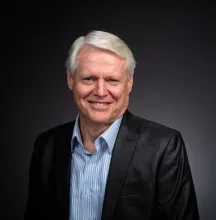
John Elliott serves in the role of President of the United Church of God, an International Association.
