
Don Ward
This transcript was generated by AI and may contain errors. It is provided to assist those who may not be able to listen to the message.
The title of the day, Mind Control Through the Crisis of Now. Mind Control, M-I-N-D. Mind Control Through the Crisis of Now, N-O-W. Almost every day the world is confronted with a new crisis. We can almost count on the crisis of the day. The crises range from earthquakes, volcanic eruptions, crazy weather. Chances are 7 out of 10 there will be a tornado within 50 miles of Oklahoma City in the next 12 hours. Chances are that within the next 12 hours or so there will be a tornado 50 percent chance 50 miles within Dallas.
Of course, you know about the horrible tornado that hit Van Texas just west of here by about 35-40 miles this past Sunday night. So, volcanic eruptions, crazy weather, mass murder, school shootings, suicide bombers, war, disease, economic news, disastrous accidents, such as the recent train derailment there in Philadelphia that killed 8 and injured 200 or so. So, people are caught up in the now, the crisis of now, the crisis of the day. Some of the ideas for this sermon came from a news source called naturalnews.com. I gleaned a few of the ideas from that, so if you want to look at that, you could read an article there about its title, Mind Control Through Emotional Domination, How We're All Being Manipulated by the Crisis of Now. So, that's naturalnews.com. The crisis of the now involves an incessant strategic bombardment of the population with a never-ending stream of crises. Some real, some contrived that demand immediate attention to the present. This psychological bombardment is waged primarily by the mainstream media, which assaults the viewer by the hour with images of violence, war, emotions, and conflict. The human nervous system is hardwired to focus on immediate threats to survival. And so, if you couple continual depictions of violence and the things that are going on in the world that causes the violence, this violence and the things that are going on evokes an emotional response. The emotional response could range from anger. Isn't it horrible what's happening out there? This guy just shot down in innocent people in cold blood to fear, wondering where the next shoe is going to drop. Mainstream media viewers have their attention and mental resources funneled into a never-ending crisis of the now. From which they can never have the mental breathing room to apply logic, critical thinking, or to view it in its historical context. It's happening now, and then by the time that you sort of get used to what's happening now, then here's another crisis. Almost no time for reflection on the causes of the most recent crisis before the masses are confronted with another crisis. It seems that the goal is to bombard the human nervous system so often with the unthinkable that humans become apathetic and in new word, hardened to the sufferings that are extent in the world. Not extent, but extent. All over the world. If we're not apprised of what is perpetrated on us, whether by design or by the sheer tragedy of the events of the day, our emotions are being pounded every day. Psychologists have documented well the fact that even laboratory animals, when exposed to trauma in no certain order over a period of time, eventually become apathetic. If you have applied the shot to they've done it with monkeys, they've done it with dogs, in no certain order, no certain reward, that over a period of time they just sort of give up, go to the corner, curl up, and become apathetic.
And when people become apathetic, they don't care. They may in their minds resist certain trends, but they feel, and for the most part, they are helpless to do anything about the evil that abounds. Let's turn to Isaiah chapter 5. Isaiah chapter 5 beginning verse 20, these woes that Isaiah, under the inspiration of the Holy Spirit, penned hundreds of years ago, they seem so apropos, so applicable to our world today. In Isaiah chapter 5 and verse 20, woe to them that call evil good, and of course that's where we are. Evil is called good. Those who would take a stance for right make themselves a prey. Oh, your place right there. Look at Isaiah 58.
Look at Isaiah 58. Isaiah 58 talks about, maybe it's 59. I think it's 59. Yeah, Isaiah 59 in verse 15, yes, truth fails, and they that depart from evil makes himself a prey. You stand up for that which is right. They jump on you like ravening wolves would jump on a fresh kill. And the Lord saw it and it displeased him that there was no judgment. And he saw that there was no man and wondered that there was no intercessor. Therefore, his arm brought salvation unto him and his righteousness sustained him. Things get so bad that God has to intervene. Now back to Isaiah 5. Woe to them that call evil good and good evil, that put darkness for light and light for darkness, that put bitter for sweet and sweet for bitter. Woe unto them that are wise in their own eyes and prudent in their own sight. Oh, they got it all figured out.
Woe unto them that are mighty to drink wine and men of strength to mingle strong drink, which justify the wicked for reward and take away the righteousness of the righteous from him. And then God begins to say what is going to happen to those people. In the past few weeks, we have seen the rioting in Ferguson, Missouri, Baltimore, Maryland, over the shooting by police of young black men, the war news from the Middle East, the continual report of suicide bombers, the brutality of ISIS, beheading people, the terrible earthquake in Nepal, that killed over 8,000 and thousands injured, and now another quake that followed suit that's killed. Last I heard 100 or more.
So the earthquake in Nepal, tornadoes in Oklahoma and Texas, and doubtless there will be more today through that area and up all the way to the Canadian border, possibly.
The trained derailment in Philadelphia and many other crises in the past few weeks.
ISIS has renewed its attack on Ramadi, trying to take it back over. Ramadi is the capital of Anbar Province in northern Iraq. They sent in 22 suicide bombers, 22 suicide bombers, and then followed up with troops. And they've taken over government buildings and a large part of the city. Ramadi is a very strategic point in this battle against ISIS and them setting up their state in the northern half of Iraq, mainly the northwest, and also in the northeastern part of Syria. The mass media covers these events live and in color, or as soon as possible, there's now usually some kind of surveillance video that's on hand to at least capture a part of it live. People have no time to think and reflect on what is happening to them and to the people in the world at large. So they generally react by emotion instead of common sense and reason. Common sense, sound reasoning, and critical thinking are rapidly becoming relics of the past. In recent tests of American high school students, their scores on critical thinking continues to drop to the point that they just don't know how to think. When they take the test, the test of largely memorization with really no background and understanding and depth of why the answers are what they are. And supposedly, this is education. The historical context is often distorted and only part of the facts are revealed, and oftentimes they're twisted so that you go out and do a survey on the street, as you've seen several of those conducted by various ones, news sources. Very few can name who the vice president is. Some can't even name who the president is. And it just goes on and on. Very few could even could name one state senator from their state. Most can't name the governor. Most do not know when World War II took place. World War II!
And it just goes on and on. The ignorance of the people in this age, yet this is a so-called enlightened age in which knowledge is rapidly expanding.
So the historical context is distorted and only parts of the facts are revealed. The future is almost entirely obliterated and often not explored. The future not being explored. The mainstream media doesn't explore the future because why wouldn't they explore the future? Because it would require reason and forward thinking. Now, but perhaps more importantly, forward thinking would require a nation, an organization, corporation, or a person to consider deeply the consequences of their action. If I do this, what's going to happen out there a month, a year, or 10 years from now? Where is the nation going to be? What about my corporation? What about me? Where am I going to be if I do X, Y, or Z?
So reason and forward thinking are two things which the mind controllers seek to eliminate because this would reveal the inevitable failures of today's insane policies, such as running the country on debt, hoping it will somehow not matter down the road. I mean, the bubble has to burst somewhere. Will the past erase from the minds of the masses? And the future off-limits? So forget about the past. Future off-limits? The crisis of the now becomes the only psychological reality in which the public is allowed to operate. Focus on what's here right now. And so we spend days and we send cameras, we send news crews, and we cover it for a few days. And the next crisis erupts, and now we're embroiled in that. And it goes on and on, day after day, week after week. Remember the past gets you labeled as a relic. Oh, you're stuck in the past. And to project current events into the future makes you a conspiracy theorist.
Even in the church, we have people who are so anxious to parent the mainstream media that they reflexively reject the fact that there are conspiracies designed to destroy you. Look at Ezekiel. Are you going to believe the Bible? What are you going to believe?
I mean, when it comes to spiritual things, you either have to accept human reasoning, which I don't think human reasoning will reveal much spiritually, or that which is revealed. And we have the Word of God. Look at Ezekiel 22, 23.
Ezekiel 22. These chapters along in here oftentimes are called the instructions to the watchmen, the watchmen for Israel.
Back in the old days, radio broadcasts, the worldwide church of God, a lot of time was spent on the watchmen.
In Ezekiel 22, 23, the Word of the Lord came unto me, saying, Son of man, say unto her, You are the land that is not cleansed nor rained upon in the day of indignation.
There is a conspiracy of her prophets in the midst thereof.
That's what the Bible says. What do you say?
There is a conspiracy of her prophets in the midst thereof, like a roaring lion ravening the prey.
They have devoured souls. They have taken the treasure and precious things.
They have made her many widows in the midst thereof.
Many different ways to make widows. Of course, you make widows by the kind of civil laws that you have with regard to marriage. You can make widows, of course, by allowing murderers to run free. You can make widows by sending your young men to war.
Her priests have violated my law, have profaned mine holy things.
They have put no difference between the holy and profane. Neither have they showed difference between the unclean and the clean, and have hid their eyes from my Sabbath.
I am profaned among them. Oh, who wants to listen to God? Who wants to listen to that religious stuff? Now that you go along and listen to the rest of this sermon today, you might get an idea why some people who have some critical thinking skills might view the religion today the way they do, because much of it doesn't make sense.
The prophets, in the midst thereof, are like wolves, ravening the prey to shed blood, to destroy souls, which means life essence, to get dishonest gain.
And her prophets have dobbed them with untimpered mortar, like you read about in Ezekiel 13, whitewashed the walls, making them appear like everything is rosy and good, whereas it is a facade only, seeing vanity, divining lies unto them, saying, thus says the Lord God, when the Lord had not spoken.
You could read the rest of the chapter where God says He looked for a person to stand in the gap, make up the hedge, but He found none.
Only the crisis of the now is allowed to be the focus of our conscious attention.
Riots in the street, the aftermath of a stage school shooting, or an overhyped measles crisis.
I mean, a few months ago, measles broke out on the west coast, and you would have thought that doomsday was upon us. They hyped that thing for weeks about measles and vaccinations.
The media prefers that you focus on the now, forget the past, and don't think about the future.
Be afraid, and be very afraid, and let us take care of you.
Very little historical context is allowed to be recognized or even taught to Americans because it might interfere with the crisis of now. For example, in any discussion of what the past might hold, or what the past might teach us, we're not reminded that the medical establishment was once heavily influenced by the tobacco industry. Those of you who are old enough to remember advertisements in the late 40s, 50s, long in there, you might remember the ad that appeared in the American Medical Association's journal touting the amazing health benefits of smoking cigarettes. One ad said, more doctors smoke camels than any other cigarette.
And you can see a picture of this on this website, naturalnews.com.
How was this achieved? Well, it was achieved by the tobacco industry, infiltrating science journals, giving money to universities, engaging in, quote, scientists for higher activities, doing so-called research to push their poisons under the scientific claim that smoking cigarettes pose no health risk whatsoever.
That was only a few decades ago. Much a different story today. But now listen to this.
There are American universities that are accepting, accepting, taking large amounts of funding from various Islamic organizations. Universities accepting the funding range from like Arkansas State University up at Jonesboro, Arkansas, a state university being heavily funded, some departments now owned by Islamic organizations, to Duke University, a very prestigious, well-known sort of Ivy League-type school in North Carolina, Durham, North Carolina. On the campus of Duke, they even have the Islamic call to prayer.
Propaganda and theory are presented as actual facts by the media, and almost every day a new study comes out that contradicts the old study. I guess who funds most of the studies that are conducted at American universities? Well, you guessed it. It's the major corporations. While one network is advertising zoralto, I've seen this happen this past week, zoralto is a blood thinner, sort of like cumin, and while one network is advertising zoralto, another network is advertising a law firm to contact if you have suffered physical damage from taking zoralto.
You probably see that if you watch Fox, those kind of channels.
Now, the greatest enemy of propaganda, and we're going to talk in a moment about propaganda, is the truth of God. The next greatest enemy of propagandists are sound reasoning, logic, and critical thinking. So at this juncture, let's define propaganda. First of all, the etymology of propaganda. Propaganda is a modern Latin word, the gerundi form of propagare, meaning to spread or propagate, to spread or propagate. Thus, propaganda means that which is to be propagated or spread. Originally, this word was derived from a new administrative body of the Catholic Church that was created in 1622, called the congregatio de propaganda fide. Congregatio de propagatio de propagandafide. It literally means congregation for propagating the faith, or informally, simply, propaganda.
Its activity was aimed at propagating, spreading the Catholic faith into non-Catholic countries.
From the 1790s, the term began being used for propaganda in secular activities.
You follow this, you'll see a large part of where especially the advertising world is today.
The term began taking a pejorative connotation in the mid-19th century, along around the 1850s and later, when it began to be used in the political sphere. Today, it is one of the main tools of political rhetoric and advertising, propaganda. Now, propaganda, when it first was introduced and became popularized, was a word that wasn't that bad. It meant spreading without bias, to some degree. But now, here's the definition that I got from the internet now. Propaganda is information that is not impartial. When it comes to advertising pickup trucks, Ford is not impartial. Neither is Dodge or Toyota or Chevrolet or any of those. I mean, we've got the best, and here's why.
So propaganda is information that is not impartial, which is used primarily to influence an audience and further an agenda, often by presenting facts selectively, perhaps lying by omission, not telling the whole truth. You know, with some of these drugs that they advertise today, like Zoralto, by the time they get through describing what Zoralto might do to you, why in the world would you take it? I mean, anyhow, Arnold Palmer thought it was pretty good. So perhaps lying by omission to encourage a particular synthesis, or using loaded messages to produce an emotional rather than a rational response to the information presented, an emotional rather than a rational. But really, what is being sold in advertising today is the image. What image?
And almost all broadcast news and advertising is geared to evoke a response based on emotion.
So we're in the crisis of the day that we have on the newscast. In addition to that, we have this propaganda that is continually, that we're continually bombarded with, and it's difficult to know which, what is true, and what is not true.
So once again, the truth of God and sound reasoning are the great enemies of propaganda.
The reality in the minds of most people in our times is first constructed out of pure emotion, then pushed into the minds of the masses through the crisis of the now.
Reality based on emotion leads people to commit mistakes that a sound mind would not commit.
They would never do that if they use common sense and sound reasoning.
Tobacco usage and the ingesting of harmful controlled substances is a case in point. Okay, let's take tobacco. Now, in the late 40s, 50s, even American Medical Association Journal carried advertisements about tobacco smoking, doctors preferred camels, that kind of thing.
Now, the so-called scientific evidence is quite clear. These substances, tobacco-controlled substances, illegal drugs, will harm your body, cause you to think irrationally, may have a psychedelic mind-bending effect, and may lead to premature death. But guess what? Who cares? I'm going to do it anyhow! Yet, the evidence is ignored.
So, this is why the number one tool of mind control for the mainstream media is emotional manipulation of the viewers connected with the image of how I look and how I fit in.
How do I look? How do I fit in? How am I going to fit in?
Now, emotional coverage can be authentic in cases where the crisis is real and the attention is justified. You see those little starving faces of those children in the Middle East or other remote parts of the world are not so remote, and you are moved emotionally and wish, boy, I wish I could do something about that. Or you see the victims of natural disasters or the victims of war, and your heart bleeds, as it were.
So, sometimes, of course, it is real, but emotional manipulation is often contrived in order to evoke a response for the sole purpose of manipulation, and the news organization deliberately tries to evoke controversy. This side against that side.
Send us your opinion. Edward Barnays. Edward, probably Bernays, Edward, you can spell Edward.
B-E-R-E-N-A-Y-S. Edward Bernays, the so-called father of modern propaganda and advertising, understood decades ago that you don't sell cigarettes by touting their benefits.
So, you don't sell a cigarette, neither do you sell a Ford F-150 just by touting how good the cigarette is or the truck is.
You sell them by adorning them to powerful emotional states reflecting positive self-image.
Let me give you a classic example. A classic example a few decades ago was a moral borough man driving down the freeways. You would see the picture of a moral borough man. He was a rugged looking guy in a sort of a flannel looking shirt. And what was the message? The message is if you smoke, it wasn't about the tobacco, per se, that real men smoke moral And if you want to be a real man, you too will smoke moral-boral. And those who don't? Well, they're wimps. The truth behind the propaganda is irrelevant. What matters is its emotional impact because emotions override reason.
When Jesus Christ was on trial and brought before the masses, emotions were whipped up. A reason was thrown aside. Pilate says, whom would you have released to you? Barabbas or this man?
And the masses cried out, Barabbas! Crucify him. That is, Jesus Christ. The devil has applied all of this and more to false religion. Sell the notion that you have an immortal soul. Sell the notion of an ever-burning hellfire. Sell the notion of eternal bliss.
Impress on your listeners the emotional ties to your family. Your family deeply desires to be with you in heaven. And your family is praying for your immortal soul. So you can escape the being tormented forever in hellfire. Just accept Jesus and be saved tonight. And for the first 20 years of my life, time after time, and Sunday night, I would hear what they call the altar call. And the song, Why Not Tonight? Thou would be saved. Why not tonight? And by the time I was eight years old, I had relatives. My son, we know you're a good kid and all that. We want you to have your soul saved. So we're worried about you at eight. Whether or not you're going to accept the Lord. So immortal souls are dangled over the fires of the mystical hell. And people make an emotional decision that is not based on the truth of God or sound reasoning. It's no wonder that sound-minded, critical thinking people are so put out with that kind of religion. It doesn't make sense, and it is myth. Paul talks about in 2 Timothy chapter 4, says, For the time will come in which they will not endure sound doctrine, but will turn to themselves teachers having itching ears, and shall be turned to fables. God appeals to the intellect and to emotion. God says, because he so loved the world, he gave his only begotten son. That's emotion. He loves. God loves. He has a full range of emotions. Because God is love, he created human beings in the first place. He wanted to share who he is, what he is, with humankind in a family relationship. Let's notice, once again, Isaiah. God also emphasizes common sense, reason, critical thinking. So God is love, because he so loved the world, he gave his only begotten son. Look at Isaiah chapter 1. In Isaiah chapter 1, Isaiah, the prophet, under the inspiration of God, is taking Judah to task, and it places Israel, as also mentioned. You look at verse 1. Isaiah 1, verse 1, the vision of Isaiah, the son of Amos, which he saw concerning Judah and Jerusalem in the days of Uzziah, Jotham, Lihaz, Hezekiah, kings of Judah. Verse 3, the ox knows his owner, the ass, his master's crib, but Israel does not know, my people does not consider. Now we come down to verse 16. Wash you, make you clean, put away the evil of your doing from mine eyes, cease to do evil, learn to do well, seek judgment, relieve the oppressed, judge the fatherless, plead for the widow.
Come now, let us reason together, says the Lord. Let us reason together. Don't just act on emotion.
God does act on emotion to some degree, but it's emotion and intellect. Though your sins be as scarlet, they should be white as snow. Though they be red like crimson, they should be as wool.
If you be willing and obedient, you shall eat the good of the land. But if you refuse and rebel, you shall be devoured with the sword, for the mouth of the Eternal has spoken it. Now you look at Acts 17. What do you reason from? What is the basis of your reasoning? Is it just that you pick certain things out of the air, or is there a basis for the reasoning? The Apostle Paul was a very well-educated, very intelligent person, taught at the feet of the Mary, the Pharisee of the Pharisees, acquainted with the literature of the day, and on and on it goes.
He went to one of the three greatest universities, schools in all of the world at that time. Tarsus was one, and Alexandria in Egypt was one, and in Jerusalem under Gomalia.
In John, Acts 17, so here is what Paul says in Acts 17, verse 1. When they had passed through Amphibilis and Apollonia, they came to Thessalonica, where was a synagogue of the Jews, and Paul, as its manner was, went into the them, and three Sabbath days reasoned with them, where he just picked it out of the thin air, according to his reasoning, out of the Scriptures, come let us reasoning together, opening an alleged that Christ must needs of suffered and risen again from the dead, and that this Jesus, whom I preach unto you, is Christ.
And some of them believed and consorted with Paul and Silas, and of the devout Greeks a great multitude, and of the chief women not a few. Then continuing in chapter 18.
Verse 1, after these things, Paul departed from Athens, the so-called cradle of Western civilization, Western democracy, Western education, and came to Corinth and found a certain Jew named Aquila, born in Pontus, lately come from Italy, with his wife Priscilla, because Claudius had commanded all Jews to depart from Rome and came unto them.
And because he was of the same craft, tent-making, he avowed with them and wrought for by their occupation, they were tent-makers, and he reasoned in the synagogue every Sabbath, and persuaded the Jews and the Greeks. So the Bible speaks of love, and it speaks of intellect, emotion and intellect. So what do we want? Do we want the peace of mind that comes from God through a sound mind, his spirit, his word? Or do we want to continually be battling our content-sis, the knowing within?
So common sense, of course, would dictate that you would choose peace of mind. This obedience will eventually corrupt a person's content, the knowing within, so that they cannot discern between good and evil. Look at 1 Timothy 4. See, we cannot be caught up just in the crisis of the day. We cannot have the historical record obliterated.
We cannot be robbed of the future, because the future is where our hope lies, as we shall see in a few minutes. In 1 Timothy 4. Now the Spirit speaks expressly that in the latter times some shall depart from the faith, giving heed to seducing spirits. Seducing spirits, of course, are demons. The doctrine of demons. Speaking lies and hypocrisy, having their conscience, the knowing within, and seared with a hot iron. Then it talks about some of the things they're doing. Forbidding to marry. Of course, marriage now has been turned into a circus.
We had an article in the last week's bulletin about babies born out of wedlock. Within a few years, over 50 percent would be born out of wedlock. Forbidding to marry. Commanding to abstain from meats, which God hath created to be received with thanksgiving of them which believe and know the truth. And so the conscience can be seared. So you couple a person's disobedience, which oftentimes today is called a mistake. Oh, I didn't disobey. You know, I made a mistake. Or, I made the wrong choice. I didn't make the right choice. I didn't sin.
I made a mistake. I made the wrong choice. Usually a mistake is sin, and usually the wrong choice is sin. Not always! You can make a mistake innocently. You can make the wrong choice innocently. And even in mistakes and wrong choices made innocently, there may be a penalty to be paid. The wrong choice with a controlled substance may be that affects one's ability to make sound decisions and affects the person's sense of right and wrong. And so the conscience through a continual pattern of disobedience. And usually what I've found is over the years, from people close to me to those not so close, that it begins with a bit of drifting, especially with the Sabbath and with church attendance.
And then in their private lives, as you heard in the sermonette, they don't have a plan to grow spiritually. And so prayer, Bible study, meditation, those things of building this spiritual relationship begins to drift and wane, and they go away, and finally they find themselves out there knocking heads, once again, with the world. Now, the saddest state to me to come to is to the point that a person doesn't care. The second leading cause of death among people under 30 years of age in this nation is suicide. The leading cause is automobile accidents, and a lot of people think that a lot of those automobile accidents are people who are doing the daredevil stuff or just living on the edge, don't care whether they live or die, and they die in an accident.
So to be to the point of don't care is a sad state to be in. When you come to the point that you really don't care, a lot of people hate themselves, and much more, they hate others. They feel like they've been abandoned, nobody cares, nobody loves them. So why should I go on living? Or why do I care? See, on the other hand, God created within us the desire for self-preservation to live, and God wants us to have life. Let's look at John 10. In John 10.10, we will see the contrast here between life and death in this one verse. In John 10.10, of course, you have the Deuteronomy 30.
I said before you, life and death, blessing and cursing, choose life. Here in the New Testament, the thief comes not, and I would equate the thief with an agent of the devil or the devil himself, the thief comes not but for to steal and to kill and to destroy. And Satan the devil and the demons can sell death. The thief comes not but for to steal and to kill and to destroy. I am come, the contrast.
That they might have life, that they might have it more abundantly. I am the Good Shepherd. The Good Shepherd gives his life for the sheep. Can you look at John 8.44 back a page or so? John 8.44. You are of your father the devil, Jesus Christ, speaking to the detractors of his day. You are of your father the devil and the lust of your father you will do. He was a murderer from the beginning and abode not in the truth because there is no truth in him.
When he speaks, he speaks a lie. He speaks of his own, for he is a liar and the father of it. Christ came to free us from the power of the devil. Once again, emotion, God's love, and intellect sound reasoning combined, not just caught up in the crisis of the day, not just caught up in the propaganda that is continually spewed forth, but a sound mind.
Look at Hebrews 2. Hebrews 2. Now we're in more to the not just prescriptive, I mean not just descriptive, but prescriptive what you can do. In Hebrews 2, verse 14, For then as much as the children are partakers of flesh and blood, He also himself likewise took part of the same, that through death he might destroy him that hath the power of death, that is the devil. The thief comes to kill and to destroy, a liar and murderer from beginning.
When he speaks, there's no truth in it. And deliver them, who through fear of death were all the lifetime subject to bondage, to whom you yield your self-servants to obey his servant you are. For verily he took not on him the nature of angels, but he took on him the seed of Abraham. Wherefore in all things that behooved him to be made like unto his brethren, that he might be a merciful and faithful high priest in things pertaining to God to make reconciliation for the sins of the people, or in that he himself hath suffered, being tempted, he is able to succor them that are tempted.
God says that he is angry with the wicked every day.
See, Jesus Christ came to set us free.
And God does not have any room in his emotional package, as you might say, for the wicked. Look at Psalm 7 and verse 11. Psalm 7 and verse 11.
So we too, one verse Proverbs says, the beginning of fear of the Lord is to hate evil in every evil way.
So this is Psalm 7 and verse 11.
Once again, showing, we're talking about emotion and intellect.
Today we are being ruled, we in the pejorative sense of the nation, the world, by emotion, and by being bombarded continually by one crisis after another.
We must not forget where we came from, where we are, and where we're going.
We keep all three dimensions of time and focus.
This is Psalm 7 and 11. God judges the righteous. God is angry with the wicked every day.
So God has a full range of emotions.
Now, notice further in Zechariah chapter 8 verse 17. Those of you who come to the weekly Bible study, you know what Zechariah 8 is all about.
Zechariah 8 gives a description of the way things are going to be in the millennium. Of course, some other things are mixed in, but basically that's the thrust. In Zechariah 8 verse 17, And let none of you imagine evil in your hearts against his neighbor, and love no faults at oath. For all these are things that I hate, says the Lord.
So that shows that God, we have shown that God so loved the world, we have shown that God is angry with the wicked. We see here that God hates every evil way. And we can conclude, He hates the evil. He does not hate the sinner. He loves the sinner so much that He gave His only begotten Son to pay for the sins of the world, as we read in Hebrews 2. We see from this that God has a full range of emotions. Angry with the wicked. He hates evil.
But He loves us so much that He gave His only begotten Son, so that we might have life and have it more abundantly. We're saved by grace, faith, and hope, all of which in their various component aspects involve emotions and intellect. Saved by grace, faith, and hope.
There are scriptures that say that. We look at Ephesians 2. Of course, this is one of the main verses that Protestants use and take out of context and twist. Those who are just bound out there, they're so-called on the mission to save souls without understanding the context, the history, and everything that's involved. In Ephesians 2, verse 5, "...even when we were dead in sin hath quickened together with Christ by grace your save." Let's read verse 4 with it.
God, who is rich in mercy for his great love, wherewith he loved us, "...even when we were dead in sins hath quickened us together with Christ by grace your saved." Some just read that by the grace of God, as if the grace of God was some kind of mystical kind of power that worked in the background and that somehow it mystically saves you. Now, I've given the sermon on grace, and we talk about it many times. It's God's divine favor. Because of God's grace, he created us.
Because of God's divine grace, he ordained a plan of salvation. Because of God's grace, he loved us so much, he gave his son. It goes on because of his divine favor. But that does not mean that we are not active participants and have to be active participants. Now you look at verse 8. There is something added to this in verse 8. For by grace are you saved through faith. So there's something coupled with the grace. It is through faith. And that not of yourselves.
Of course, the big argument that somehow, but it's not so big an argument, that not of yourselves doesn't modify saved or faith. It modifies saved. Because if God axiomatically gave you the faith, and you didn't have to do anything, it would be his fault that none are lost. Everybody would be saved and said it wrong. It would be his fault if any were lost. So, not of yourselves magnifies saved. Saved is a gift. It is, that is, salvation is a gift of God. But it is through, by grace, through faith. Faith, in simplest terms, means to believe God and to do what he says.
So grace is not a mystical power that saves one apart from their active participation. This is crucial to our understanding. This is one of the things that separates us from nominal Christianity. We must separate ourselves from nominal Christianity. We must not let the creeping in of nominal Christianity take the truth from us. In Ephesians, I'm sorry I want Romans now. In Romans 8, I said there were verses in the Bible that said you are saved by grace.
Verse says you are saved by faith. And here's a verse that says you are saved by hope. We put all of these together. So Romans 8, 24. For we are saved by hope, but hope that is seen is not hope for what a man sees. What does he yet hope for? Hope is a product of grace and faith. Because of God's grace, because of faith, we have faith. We have hope.
I have hope because I know that God, who cannot lie, has promised us eternal life. So in that sense, I could say I am saved by hope. Look at Titus. Titus says, in essence, what I've just said. Titus 1, verse 1. Once again, we have read verses that say we are saved by grace. And it says we are saved by grace through faith. We have read we are saved by hope. Hope is a product of grace and faith. I have hope because I believe.
I have faith in what God has promised. Let's see if this says something similar. In Titus 1.1, Paul, a servant of God and an apostle of Jesus Christ, according to the faith of God's elect, and the acknowledging of the truth, which is after godliness, in hope of eternal life, which God that cannot lie promised before the world began. How old is the plan of salvation before the world began?
But hath in these due times manifested his word through preaching, which is committed unto me according to the commandment of God our Savior, to tithe us, mine own Son, after the common faith, grace, mercy, and peace from God the Father and the Lord Jesus Christ our Savior. So you see, all three of those work in concert together. So, brethren, we must not be controlled by the now. We must not be controlled by the propaganda of the times.
God wants us to look beyond the now, as the apostle Paul did through all of his tribulations and trials. He kept his eye on the crown of life. He kept his eye on the big picture. He kept his eye on immortality. For those who seek honor and immortality, he says in Romans 1, so we must be future-oriented, not bound by the present.
We must press on to the kingdom of God. You look at Philippians 3. Philippians 3, verse 6. Once again, Paul, you just read the book of Acts and some of his accounts of all the things that he went through. So here we are in Philippians 3, verse 6.
Paul talking about some of the things that he had gone through, some of the things he had experienced and done. Philippians 3.6, concerning zeal, persecuting the church, putting people to death, touching the righteousness which is out of the law blameless. But what things were gained to me, those I counted lost for Christ.
Yes, doubtless, and I count all things but lost for the excellency of the knowledge of Christ Jesus, my Lord, for whom I have suffered the loss of all things. Paul was like an itinerant preacher going from place to place, house to house. We read about he took out with Aquila and Priscilla because they were tent makers there in Corinth.
He had no wife. He had no family backing him. And to count them but dung, that is the past, things that he had been, that I may win Christ and be found in him, not having my own righteousness, which is of the law, but that which is through faith in Christ, the righteousness which is of God by faith, that I may know him and the power of his resurrection.
A big picture. Paul writes in Romans, if I have hope only in this life, I am of all men most miserable, that I may know him, the power of his resurrection, and the fellowship of his sufferings being made conformable unto his death, if by any means I might attain to the resurrection of the dead, the future, the big picture, where you're going.
Not as though I've already attained, either were already perfect or mature, but I follow after, if that I may apprehend, that for which also I'm apprehended of Christ Jesus. He was struck down. He was drafted into the service of God on the road to Damascus to persecute Christians. We've been drafted. God has selected us. He's called us. Brother, I count not myself to have apprehended, but this one thing I do, forgetting those things which are behind and reaching forth into the things which are present, I press toward the mark for the prize of the high calling of God in Christ Jesus.
Let us therefore, as many as be perfect or mature, be thus minded, and if anything you be otherwise minded, God shall reveal even this unto you.
Pressing toward the kingdom. Now to Romans chapter 8. We'll be closing with these promises. Brother, we live in a very critical, crucial time, as you've heard me say many times. These are tough, transitional times. The world is in foment. But yet, as I said, Scripture today, lift up your heads because your redemption draweth nigh.
God does not want us to withdraw and be like the animals who are shocked in no certain order, become apathetic, curl up into a fetal position, withdraw, and even some die. He wants us fully engaged in the battle of the ages.
We have all the spiritual weapons necessary to overcome the enemy and defeat the enemy. Paul describes these here, and we'll close with these, starting in Romans 8.31. In Romans 8.31, What shall we say, then, to these things? If God be for us, who can be against us? He that spared not his own Son, but delivered him up for us all. How shall he not with him also freely give us all things? Who shall lay anything to the charge of God's elect? It is God who justifies. Who is he that condemns? It is Christ that died. Yes, rather, that has risen again, who is even at the right hand of God, who also makes intercession for us. Who shall separate us from the love of Christ? Shall tribulation or distress or persecution or famine or nakedness or peril or sword? As it is written, for your sake we are killed all the day long, we are accounted as sheep for the slaughter. Anything that we get beyond death is a gift. But there are conditions to the gift, as we have noted. Know in all these things where more than conquerors, through him that loved us, for I am persuaded that neither death nor life nor angels nor principalities, nor powers, anything that the devil can throw at us, nor things present or things to come, nor height nor depth, nor any other creature, shall be able to separate us from the love of God, which is in Christ Jesus our Lord.
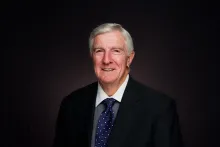
Before his retirement in 2021, Dr. Donald Ward pastored churches in Texas and Louisiana, and taught at Ambassador Bible College in Cincinnati, Ohio. He has also served as chairman of the Council of Elders of the United Church of God. He holds a BS degree; a BA in theology; a MS degree; a doctor’s degree in education from East Texas State University; and has completed 18 hours of graduate theology from SMU.
