
Roy Holladay
This transcript was generated by AI and may contain errors. It is provided to assist those who may not be able to listen to the message.
MUSIC Many of you have been around for a while, remember? Mr. Herbert Armstrong began to talk about the two trees. And not only on that topic, but on a number of other topics, I remember Mr. Armstrong saying, you people just don't get it. And I'm sitting out there and I thought, well, I get it. But he said, no, you're not getting it. I think many sat there and said, yeah, yeah.
I've heard that because Mr. Armstrong, once he started talking about a topic like this, would never let it go. He would keep talking and talking, adding more information. In fact, he, on a few occasions, predicted that at least half the church did not get it.
And I think he was pretty well on spot. Actually, it was maybe not even half the church really understood. How could he say something like that with certainty? How could he be right on that? Well, we want to take a look at that, but also understand the two trees. Now, I've spoken on the true trees more than once here. Now, I've given different sermons on it. But I'd like to be able to discuss this from a little different perspective today, perhaps in a way that you haven't always thought about it, and give a perspective that will help us understand how this topic applies to us today, because the two trees are still there.
Why is it important to understand this topic about the trees? Well, simply because the same problem exists today that existed back in time when Adam and Eve were on the earth right now, probably even more now than it did then. The appeal of the tree of a knowledge of good and evil is only increasing as we go along.
It hasn't decreased. It just gets more and more tempting. You probably have heard it many times and may have even said, well, this is a different generation. This is a different time. Things are different now, and you can't always look at things the way that you used to.
Well, when you come to understand these two trees, you may change your mind because the Bible says there's nothing new under the sun. And I think you will find that today that the tree of the knowledge of good and evil is still prevalent, present. It's just been repagaged. It's been presented in a little different way, but it's still the same old truth, or I should say tree. The truth of the Bible and what it has to say applies down to all times.
It applies to us today. In fact, I believe these principles concerning these two trees apply as much now, if not more than ever before. Some may think of Adam and Eve as sort of dumb Neanderthal types, but if they do, they don't understand the symbolism from the trees that people today do exactly the same thing. And I think that's proven in history, and it's been proven in the church over and over again. It's simply a matter with us, because God is working with you and with me at this present time. It's a matter of life and death for us, and you and I have to make certain choices.
Is it possible for a Christian today to eat of the tree of the knowledge of good and evil? What say you? I think you will find that it's absolutely possible for a Christian to eat of the tree of the knowledge of good and evil. This sermon today is meant to help all of us to have the ammunition that we need to overcome, have the insight to be able to spot when that tree is around or when the serpent's around trying to get you to partake of that tree and to recognize that and what you should be doing to resist it.
Let's begin by turning back to Genesis chapter 3. Genesis the third chapter. And let's notice the account in the book of Genesis. And notice the character, notice the flavor, the process that takes place around eating from this particular tree. It's important to understand what is said, the talk, the language, the issues, the feelings surrounding eating from the tree of the knowledge of good and evil. And as we do, I believe it will help all of us to recognize when you may encounter a similar situation where the tree is being offered to you.
And when someone's whispering in your ear, go ahead and eat. Go ahead and take of it. Beginning in verse 1, chapter 3 of the book of Genesis, now the serpent was more cunning than any beast of the field, which the Lord God had made. And he said to the woman, Has God indeed said, You shall not eat of every tree of the garden? Is that what God said? And the woman said to the serpent, We may eat of the fruit of the tree of the garden, but of the fruit of the tree which is in the midst of the garden, God has said, You shall not eat it, nor shall you touch it, lest you die.
Now, how did God actually phrase it when he mentioned it originally? To the first couple. Let's go back to verse 16, where God was talking to Adam in chapter 2. Chapter 2, verse 16. The Lord God commanded the man, say, Of every tree of the garden you may freely eat, but of the tree of the knowledge of good and evil, you shall not eat of it, for in the day that you eat of it, you shall surely die. Now, I want you to notice how God put this. God allowed Adam and Eve to eat of every tree in the garden. He didn't start out by saying, you know, you can't do this. He said, in a positive manner, his approach was a very positive view, you can eat of everything except this one tree. How many trees were there in the garden? 10,000? 100,000? How many varieties of fruit trees were there? Hundreds? God said, Go touch each one of them, hug them, climb up to the top, pull the fruit off, eat it, enjoy it, it's yours. Stay away from this one. Now, notice how Satan came along. Satan approached the subject, quote, Has God indeed said you shall not eat of every tree in the garden? See, he puts a negative spin on the whole thing. You know, why is God denying you this tree? Is what he's saying. He says God is denying you something that would be good for you. Have you ever heard anyone in the past, present, talk about how God's way is restrictive? How God's way, you can't have fun. If you go God's way, you've got to deny yourself, you've got to go without. You know, it's not a great way, and it's always put in a negative perspective. How often do they come along and say, if you go God's way, it's great. You're blessed. You can have a happy marriage, you can have wonderful children, you can be blessed. You know how to treat one another and go on and on and on about all of the blessings that come from God's way. Now, it's always from the negative, and especially in this world and society, people who don't believe in God, don't want to go God's way, will always come at it from that perspective. Now, notice God said two things. One, don't eat. Two, don't touch. In other words, don't go near that tree. Don't go around that tree. Don't even touch it. Stay clear of it. Get away from it. I don't know how many of you are afraid of heights. I'm not necessarily afraid of heights, as long as I'm not close to the edge.
I've noticed when I've been up on a mountain ledge and I look over, you begin to look over. You're very cautious. Some people walk up and stand on their toes and look over the edge. Not me. I lay down and stick my head over the edge to see what's going on. And you find, if you don't want to fall off the edge, guess what? If you're a mile away from it, you don't have to worry about it. If you're 10 miles away from it, you've got less worries. A hundred miles away, you don't have to worry at all. It's only when you get close, or you could reach over the cliff and touch it, or you have the potential of falling. Well, this is what God said. Just don't go anywhere near it. But sure enough, we know that they did. Let's notice in verse 4.
The serpent, in talking to the woman, said this. The serpent said to the woman, You shall not surely die, for God knows. And notice what he says here. God knows something that in the day you eat of it, your eyes will be open, and you'll be like God, knowing, good, and evil. So their eyes were going to be open.
Open to what? That's the question. Notice how I put this. While it's a lie, because God said, when you eat it, you'll die. It's a stretching of the truth, isn't it? You cannot pin down the language that the serpent used. It's more of a deception than an out-and-out lie. You shall not surely die, which is technically true. They ate it. They didn't drop dead. They didn't rot on the spot. You know, they didn't keel over. They were walking around. They lived for 900 years. But they did die, did they not?
They would not die the moment they ate of it physically, but they would begin to die spiritually. The wages of sin is death. To disobey God, to disobey a direct command from God is disobeying God, His nature, His way of life. They sinned. They went against God. They set down the path that leads to spiritual and physical death and being cut off from God.
Now, have you ever heard this type of language before from politicians? From maybe lawyers? Let me give you an example or two. It depends on what you mean by the word, the. If you ever heard anyone make that statement before, well, how do you pin that down? Or, I did not have sexual relations with that woman. You know, that was also said technically correct, and yet a deception that's very difficult to pin down. The devil uses the language of deception.
It's very hard to pinpoint what technically is incorrect with it, unless you are shielded by the Word of God, unless you're guided by the Word of God. See, Eve had correctly initially responded to the serpent by quoting God's words, and as long as she did, she was on safe ground. This is what God said. But as the serpent began to reason with her, she yielded to his reasoning, and she gave in.
Now, verse 6, it says, When the woman saw that the tree was good for food, that it was pleasant to the eyes, a tree desired or desirable to make one wise, she took the fruit and ate, and gave to her husband with her, and he ate. And the eyes of both of them were open. And they knew that they were naked, and they sewed fig leaves together and made themselves covered. And they heard the sound of the Lord walking in the garden in the cool of the day, and Adam and his wife hid themselves from the presence of the Lord God among the trees of the garden.
So now they were afraid of God. Now, the Bible talks about your eyes being open to two types of knowledge. We understand that mankind has a mind that we understand physical knowledge. When God calls you and converts you and begins to work with you through his Spirit, what does his Spirit do? Does it not open your mind to spiritual knowledge? Spiritual awareness? You can see and understand spiritual things.
Was their mind open to spiritual knowledge? And the answer is no. Their minds were open to the knowledge of good and evil, as we will see here. Their minds were changed. Their perception of things were distorted. They understood they were naked and they covered themselves. Now, prior to this, they didn't have any trouble being naked. It was just a man and his wife. They're running around the garden. Why were they afraid of being naked? But they developed an awareness, a sophistication, a new enlightenment, a new way of thinking, a new way of approaching things. Another effect of this whole action is their relationship with God was now turned to one based upon fear.
They were afraid of God. God comes walking through the garden. They hadn't been afraid of God before. Hey, God had talked with Adam. They had named the animals. God said, it's not good for you to be alone. He makes a woman for him. They're married. He gives them instructions. Everything's going along well, but now God comes along, and they go, and they hide from him. They were guilty. They felt guilty. They hid themselves from God.
They were afraid of him, but they were emboldened in the position that they had taken. Same thing happens when we partake of the tree of the knowledge of good and evil. We start to fear God. God becomes a God of punishment. We begin to have guilt, and we think, well, God won't listen to me. God won't hear me, and we're afraid of God, because we know that we're not doing things correctly. We're not doing things in the right way, so therefore we've sinned.
You stop partaking of that tree, and your relationship with God clears up as well. One way to have the right relationship with God is to make sure that you're not partaking of the tree of the knowledge of good and evil. Doesn't the Bible indicate that our sins separate us from God? Your sins have separated you from God as we read in Isaiah, and he doesn't hear your prayers. Sin causes a gulf between us and God. Puts a barrier up, puts a wall up, makes a separation, and that's exactly what occurred here.
The separation isn't on God's part. It's because man sins. Yet God states also in the New Testament that if we draw close to God, draw near to God, he'll draw near to us. And if we resist the devil, he will flee. So we can cross that divide by drawing close to God, staying close to God, and resisting the devil. Now let's notice beginning in verse 9 here, the blame game starts. Everybody starts blaming everybody else. Lord God called to Adam and said to him, where are you, Adam? I don't see you.
And so he said, I heard your voice in the garden. I was afraid because I was naked. I hid myself. And he said, who told you that you were naked? Have you eaten from the tree of which I commanded you that you should not eat? The man said, the woman whom you gave to be with me, she gave me the tree and I ate. So it's a woman's fault. If you hadn't given me this woman, I wouldn't be in this trouble. And the Lord said to the woman, what is it that you've done? And the woman said, the serpent deceived me and I ate.
So the Lord said to the serpent, see the serpent had nowhere to go. He was on the ground. It was about to be put on the ground, we'll put it that way. And he had nobody to blame.
Adam blamed, Evie blamed the serpent. There was an unwillingness on their part to take responsibility for their own actions. You and I, brethren, when we are unwilling to take responsibility for things that we do wrong, we start to eat of the tree of the knowledge of good and evil. See, Adam and Eve, they didn't have the attitude when God said, did you take of the tree? Yes, I did. I'm sorry. I shouldn't have done that. You told us not to do that. I've sinned. Forgive me. Help me. Fall before God. Cry out for mercy. Ask God to forgive them. That had been a completely different story.
But what do they do? They justify themselves. They excuse themselves. They did not take responsibility. So therefore, taking responsibility for our actions is a very important antidote to counter the tree of a knowledge of good and evil. For we are willing to say, yes, Lord, I know this is in the Bible.
I've broken. I'm sorry. I've sinned. Help me. Cry out for forgiveness. Ask for mercy. Ask for forgiveness. In other words, accepting responsibility is admitting you're wrong and repenting. The antidote to the poison that comes from eating this tree is to do that. And yet, we see society. We see the whole world, politics, every strata of society, where people justify themselves, are unwilling to take responsibility for their actions.
Going on over here in verse 22 of chapter 3, the Lord God said, Behold, the man has become like one of us. Now how did the man the woman become like God? To no good and evil.
And now lest he put out his hand, and take also the tree of life and eat, and live forever. Notice, if he had taken out of the tree, he would have lived forever. Therefore, the Lord God sent him out of the Garden of Eden, to till the ground from which he was taken. So he drove out the man, and he placed caribbean in the east of the Garden of Eden, or at the east, and a flaming sword which turned every way to guard the way to the tree of life, to prevent them from going back.
So their eyes were open to something new.
They were able to see both good and evil now, but they had a problem. They couldn't always tell what was good and what was evil.
They were exposed to good and evil now, but they couldn't tell because they had taken to themselves the ability to define good and evil. They had knowledge of the good and evil, but they were defining for themselves. Notice the tree is called, not the tree of good and evil, it's called the tree of the knowledge of good and evil. And it has to do with the awareness of good and evil. People today can look around in the world and they can say, boy, there's evil in this world.
And they can articulate what is evil. But do they look at themselves, their lifestyle, how they live, and say that they're living in an evil manner?
Now, everyone tends to justify himself.
When God says, he became like us, it meant that they became aware of good and evil, but not the way that God does.
They became aware of good and evil on their own, but they lacked the character of God.
They lacked the spirit of God.
They lacked God's instruction to tell them good from evil.
And so therefore, they set themselves up to be gods, to be the ones who determined what laws they would obey, what was good, what they should do, what is acceptable.
And ever since that time, as the Bible says, book proverbs, every man, you know, there is a way that seems right into a man, but the ends thereof are the ways of death.
There's a way that man thinks is right, and every man goes in the way that he thinks is right.
But the end thereof is the way of death. The wages of sin is death.
Every man goes in the wrong way.
So now we find they were not willing to follow what God had said.
Rather than this is a very key point in understanding these two trees, they would now decide for themselves, in other words, they would be God because it is God.
Only God has a right to tell us how to live, what laws to live by, what is right, what is wrong. He defines good and evil, not man. But now man was deciding for himself what was good and what was evil, what is right and wrong, apart from any moral foundation.
What's the difference between a converted and unconverted person?
Well, we are guided by God's Spirit. When God calls us, He guides us, begins to open our minds. But our minds are open to spiritual knowledge, spiritual awareness. God directs us through the Scriptures.
He opens our minds to understand the Scriptures.
You and I develop the character of God. We have the mind of God. And so we are able to look at things through the prism of God's mind, God's Spirit, the direction that God gives us. And what He clearly tells us, the unconverted rely on their own minds, their own judgment, cut off from God.
And from the time Adam and Eve left the garden, every man, every nation has followed his own way.
Now, when you carry this idea out to a number of different dimensions, you will see how it applies to us today.
And that's what we ultimately want to come down to and take a look at.
When you look at the idea of the tree of the knowledge, good and evil, succumbing to false religion is a big area of this tree.
Actually, every aspect of society comes under this.
Education, religion, politics, philosophy, every aspect of man comes under this false tree.
How many people have left the church over the years because they didn't want anyone telling them what to do?
They weren't going to be under authority.
They were not going to keep the Sabbath.
Or, you know, they weren't going to, they were going to keep the Sabbath, but they didn't want somebody telling them how to keep the Sabbath. They didn't need a minister. They didn't need a church. They'd decide on their own what was right and wrong. So what do we see today? We see hundreds of little groups, people all by themselves, little groups, home churches, as they're called.
And there's nobody there to teach them.
They go on the internet. They get literature from here. They get literature from there. They get sermons from here, sermons from there.
And it's a sort of a hodgepodge of information that they're collecting.
And when they do, they decide for themselves what is right and what is wrong.
And eventually, you find they go off.
How many times have you heard when somebody has left the church?
Over the years, they take off. They get involved in some other group. They say, wow, they're really sincere in their beliefs.
These people have a lot of love.
And so, you know, we want to be with them.
But this is the exact behavior that comes from taking of this tree.
Being completely convinced that doing what's right in your own eyes is correct.
You see, sincerity is not the issue. People can be sincere the day long.
That doesn't make them right, does it?
There are a lot of people who are sincerely wrong.
They also say things like, I feel so much better. I've really found the home.
And feelings are not the issue.
How we feel is not the issue. Taking of the tree means that you feel that what you're doing is right. And this is what happens with so many people.
Rather than we need to realize that the only way that we're going to finally be able to judge right from wrong is right here.
What does God say? What does the Scripture say? What does the Bible tell us? That's what we have to live by. And that's what God does when we're doing this. That's what God does when He calls a person and opens that person's mind. We begin to understand God's way of life.
We realize that it's totally different than what the world goes. It's totally different from the religions of the world and society around us. Because it's God's way.
When you take this reasoning to its ultimate end, the ultimate example, you have people like terrorists today, in the world today, they decide themselves to take people's lives.
They decide that it's okay to blow up children, that it's okay to bomb women, that it's okay to blow up churches, it's okay to destroy an airplane. And although the hundreds of people who are on it, they decide for themselves that they can take life. And that is not a decision that we humans have.
You know, that's a decision that God has.
So what you find is they decide right from wrong. And they become gods in deciding who lives and who dies.
The foundation of this world, as I mentioned earlier, of society was set with this act. And this is the way human beings have operated. Some have operated worse, some better. But it's all from the same base tree, the way of life. It has the same end result. The tree of the knowledge of good and evil.
You take of that tree, you will die. That's what God says. That's what God says. That's irrevocable. And so therefore, if you go that way, it leads to death.
The tree, that tree, the tree of the knowledge of good and evil, is the way of Satan the devil.
He used that tree to dupe one-third of the angels, and he continues to use that tree to try to dupe, deceive, mislead, misguide, misdirect human beings today.
But we don't want to stop there with trying to understand what this tree symbolizes. Let's explore a little more thoroughly the tree and what appeal to Adam and Eve.
And you'll see the same thing appealed or has appealed to every human being down through the ages. Go back to Genesis 3 and verse 6 again. Genesis 3 verse 6.
Notice there are three ways pointed out here.
Genesis 3, 6.
So when the woman saw that the tree, number one, was good for food.
Now, you might ask, how did she know it was good for food? Well, she saw, therefore it was good for food.
That it was pleasant to the eyes. Oh, it's so beautiful.
You know, whatever it was. And a tree that was desirable to make one wise.
Aha!
Well, she learned a lot just looking at that piece of fruit.
But you see, she had somebody whispering in her ear.
What does that equal to?
Well, it equals to a scripture over here in the New Testament. 1 John chapter 2 and verse 16.
Go over to 1 John 2, 16.
In 1 John 2, 16, we read this.
For all that is in the world, the lust of the flesh, the lust of the eyes, and the pride of life is not of the Father, but is of the world.
The world is passing away in the lust of it, but he who does the will of God abides forever.
Now, these two scriptures actually say the same thing.
Notice, the lust of the flesh equates that it was good for food.
They lusted after it. It was good.
It was a wrong desire. Lust is a wrong desire.
So they had the lust, the wants of the flesh.
It was good for food. The lust of the eyes.
Genesis 3, 6 says it was pleasant to the eyes.
And then the pride of life, desirable to make one wise. The pride of life, actually, you look it up, has to do with human beings and what we would call humanism. People thinking they can decide for themselves.
And so this is exactly what they did. They thought, well, if I partake of this, I'll be wiser.
I'll know good and evil. I'll know something I didn't know.
You need to link these two scriptures together in your Bible. Here in 1 John 2, 16, write Genesis 3, 6. Go back to Genesis 3, 6. Put down 1 John 2, 16 because the two go together. Let's take a look at these three.
The lust of the flesh.
The lust of the flesh. These are the passions of the flesh that ensnare us, trap us, lead us in the wrong direction.
An obvious and strong example, the lust of the flesh, would be sex or the pulls of sex.
Today, all you have to do is look at television. You see half-naked people running around on television. You can see all kinds of things, depending on what hour you watch it.
Radio, you hear things. Magazines, you open them up.
And you find that the media, movies, all of this today, it just abounds with it. There are other cravings, other desires, other ones, like food, alcohol, or other addictions of the flesh.
Things that are good but can be misused or misdirected.
Sometimes we don't normally think of things like anger and wrath as being this, but people can become addicted to it. This is the way they respond, getting angry at others. Is the lust of the flesh more prevalent today around us than probably ever before?
And I think probably the answer is yes.
It's understanding this tree, then, the need to understand it is revelant today as ever.
And the answer is yes.
What about the lust of the eyes? Those appetites that master our mind, our body, our spirit through the senses.
Things that we want but we cannot have or that drive us to work so we can have them.
Lust of the eyes today, you'll find that billion dollar industry set up for what's called advertising that appeals to the eye.
People see it. Little children watch children's programs. And all these toys and everything that would appeal to a little child are advertised on that.
Now, big children grow up and they see things. It could be a car.
It can be the latest iPod. It could be the latest telephone. Got to have it. Got to have it. You know, if it's a technical thing. And so that there's this desire that people have.
And so there are people who will sacrifice their families, sacrifice their health, will work themselves, will strive with every fiber that they have.
And they want to acquire the physical things, things that appeal to the eye. I would dare say, if I were to poll the audience here, all of those of you who got married, you know, one time, especially a while ago, if I were to ask you when you started out, did you have a whole lot that most of you would say, absolutely not?
Now, if you were like Norm and me, we had two crates we sat on in our kitchen. Now, those were our chairs. We had a hot plate. That's what we cooked on. We did have a refrigerator and a bed. That was it. And you know, slowly you begin to accumulate things over a period of time. But yet, because of the type of society that we live in today, so many young people get married. And the first thing they have to have is a stereo, a TV.
A TV. You know, they've got to have the technical, you know, the surround sound or whatever it might be. And you know, they will go head over heels in debt. And this is one of the reasons why today you'll find why are we a nation so much in debt? Because people are told, you need it! You should have it! You deserve it! And so therefore, just pull the plastic out and stick it in there. And you can have it! And so we go deeper in debt. We work, you know, we load 16 times.
You know, what do you get? Well, you get a little older and deeper in debt.
And you know, that's the way the average family is today. The desire to have more and more is extremely prevalent today. So is understanding this tree and how it operates important?
I think so. What about the pride of life? The pride of life deals with position, status, what you have that makes you something in this world. Having power over others, wanting authority, position. That's all very common among men, especially. It's a huge appeal to be in authority, have power, tell people something. The ultimate position today is the presidency of the United States. Probably most of us might think anybody wants that office. It's got to be crazy, but there are all kinds of people out there who will do anything to get into that position because they want the power. They want the authority. And you find that that occurs today. This can also occur within the church and has occurred in the church over the years. People wanting control and position over others. I've used this illustration before, but it's one of the best examples I can think of. Years ago, I assisted a church pastor, and he was counseling with two men, and they had a falling out. Why? The two of them were good friends. They got married at about the same time.
They had the same number of children. They were baptized at the same time. They were ordained as deacons at the same time. And one of them was about to be ordained as an elder, and the other was not.
And the one who was not was telling the pastor, you are not fair. This isn't right. You can't ordain him unless I'm ordained. We both should be ordained. Our career paths are both going along the same line, and now you're going to ordain him.
Well, he was not ordained. He left the church over that, and he couldn't take it.
It's very difficult for someone to be in a position of responsibility, a higher position, to go laterally to some other position or something less, and to be humble, be willing to do that, and move on. You find that there's this drive there. Are there people in the world today who seek power, position? Well, certainly. Look at all the billions, maybe not billions, millions of dollars that have been spent in the recent election that have taken place. Why? Because people want to be empowered. These, it's important for all of us to realize that the serpent's still around. He's still trying to influence people to go in the wrong direction. Let's go over to the book of Jude, beginning in verse 4. Jude, verse 4. Let's notice how the New Testament describes some of these same things. Jude, verse 4, says, For certain men have crept in unnoticed, who long ago were marked out for this condemnation, ungodly men who turned the grace of our God into lewdness, and deny the only Lord God in our Lord Jesus Christ. Now, verse 8. Likewise also, these dreamers defile the flesh, reject authority, speak evil of dignitaries, yet Michael the archangel, in continuing with the devil, when he disputed about the body of Moses, dared not bring against him a reviling accusation, but said, The Lord rebuke you. But these speak evil of whatever they do not know, whatever they know naturally, like fruit beasts. These things they corrupt themselves. Woe to them!
Now, notice three examples are given. They've gone in the way of Cain. They've run greedily in the air of Balaam for profit, and they've perished in the rebellion of Korah. Notice the attitude of the angel, Michael the archangel. He was not even willing to speak evil of those who are more powerful, or of Satan, but he said, The Lord rebuke you.
Cain, notice the example, Cain... What was Cain's problem here? He says, He's gone in the way of Cain.
Cain desired to have the relationship that Abel had with God. See, God accepted Abel's offering.
Abel was close to God. Cain wasn't as close to God. God told him, Look, you got to repent. You got to change. You can overcome this sin. But Cain desired the relationship with God without doing what was right. He wanted to be recognized as good without doing what was right. He didn't control his desires or the pulls of the flesh.
He became angry. He became resentful. He was a little bitter. He killed his brother.
And so he gave vent to the lust of the flesh. What about Balaam? Balaam succumbed to the lust of the eyes. Balak offered to Balaam, a large son of Manani, to curse Israel. He said, I can't do that.
He came up with an even bigger sum of money. And Balaam's heart was not true.
He succumbed to the pulls of the lust of the flesh. And he became mixed up. You might remember God sent an angel to stop his donking and speak through the donkey and tell him that his way was wrong and perverse. And so he gave in to the lust of the flesh. For he wanted that. And what about Korah? Korah had the pride of life. Moses had been placed in a position of responsibility by God.
Korah thought that he could do things better. He says, we're just as holy as you are, Moses.
And that he'd be a better leader. You know, you take too much on yourself. And so, you know, this was the language that he took. He could have been more talented. He could have been a better speaker. He could have been able to sway an audience better. But he succumbed to the idea that he was great and should be empowered and in charge. And God destroyed him. It was associated with him and his family. See, it's not always a matter of who's the most talented, who has the ability, but who has God chosen? God chose Moses. He chose Aaron. They were the constitute of the authority. This is in contrast with Moses. You might remember when God says, Moses, get out of the way. I'm going to destroy these people. And I'll raise up a nation among you. And what did Moses do? He said, well, let me just stand aside here, God, and I'll watch all of this take place.
No, Moses fell on his face, pleaded with God not to do it. He said, you know, remember what the nations will say about you if you do this. And so, you find he humbled himself and reasoned with God.
Add Jude, verse 11, to Genesis 3.6, 1 John 2.16 in your Bible, and you'll have a very nice summary of the tree. Remember, all you have to do is start in Genesis, and if you've got those two scriptures marked, you can then go back and rehearse this.
Let me just articulate some key phrases. If you're talking with someone or you hear someone talking, that would indicate maybe they're eating of the wrong tree.
What's the big deal? Or, I feel this is right. Things have changed. This is a new generation.
You don't have to do things the old way. I don't think God would mind if we did this.
Don't be so judgmental, so closed-minded. If you do this, you'll feel energized. You'll feel empowered, and you'll be able to do it. You've got to start thinking for yourself.
You don't let others do your thinking for you. You think for yourself. I can always repent later. Or, loosen up. You're too tight. You need to just be a little looser. You'll not be so stable. Let me give you an example of something that goes around today. This is just an example. We'll talk about it, but we'll apply it in principle to any number of things about cleaning unclean meat. God says, don't eat unclean foods. He just tells us that. He gives us a list. These are the birds you don't eat. These are the animals you don't eat. These are the fish you don't eat. These are the ones you do eat. Now, we hear all kinds of arguments today, do we not? Against that, well, that's Old Testament. That's the Old Covenant. That's been done away. We're in Utah today. We're in Utah today. We're in New Testament religion. We're under grace. You don't have to do those kinds of things.
Eating meat doesn't do any harm to you, and you don't get trichinosis from eating pork.
In other words, you should not surely die. That's what the devil said.
Look at people who eat these meats today. They're fine. It's no big deal. Pork is the other white meat, as you'll hear. So, scientifically, scientists can analyze pork, and they'll say there's no scientific evidence that this pork is any worse than anything else. Nothing wrong with it. Therefore, you should go ahead and eat it.
Now, what does God say? God says, don't eat it. Therefore, what should you do?
You should not eat it. Otherwise, we set ourselves up as gods. We reason around what God says, and we end up disobeying God. You see, this appeals to human beings on all levels, does it not?
Remember back in 1995, when the video came out, and people learned or thought that they could go out and eat unclean foods? What did they do? Well, I know what they did in the area we were. The first night they heard the video, they went right out and started eating things. You have the lust of the flesh. Man, does that lobster taste good.
It tastes like chicken, or whatever. It's good. It's appealing. What's wrong with it?
And so, therefore, it appeals to the lust of the flesh. What about the lust of the eyes?
Well, there are a lot of things that God says, don't eat.
When you look at them, the way they're presented, they look beautiful. Wouldn't it be nice to eat that? Or the pride of life? You go out to a restaurant with your boss, and there's pork there, you don't eat it, and he asks you why. And you say something. You might think, well, it wouldn't hurt for me to just eat a little bit, so that I won't appear like an oddball in his eyes.
Or do you just not eat it, and go on and obey God? Well, you see, this is what happens, and this is what occurs when it comes to some of God's law, and this is how people have reasoned.
Let's break it down a little more. God gave this commandment, I'm talking about clean, unclean meats, with the spiritual principle behind it. Can you tell me what the spiritual principle is, is behind clean, unclean meats? God says that we should not eat it, because we are a holy people. That's why. We are a set-apart people. We are holy. This is a constant reminder that God has called us to holiness, that we are not to just go off and eat anything. We're His first fruits. I'm sure that there are any number of health reasons connected with it, but God has called us to be holy. And when God says that you are to be holy, you show that you're holy by abiding by what the holy God says is holy. This Sabbath day is holy. Sunday is not holy.
The holy days are holy. Christmas is not holy. Easter is not holy. St. John's Day is not holy.
But what God says is holy is holy. And so when you do it, you then participate in the things that are holy, and you are one of the holy children of God. We've all slipped and eaten things that have pork in them. And we've had to ask God to forgive us. You didn't die immediately when you ate it. People, when they eat pork, don't die immediately. But they start a process that is going to end in spiritual death. What we need to be careful is that we don't begin to compromise. We don't say, well, it doesn't matter to eat a little when we know God says don't eat, period. Because when you start compromising, you compromise here, and it's easy to compromise over there. Then you compromise up here. The first thing you know, you are a compromiser, and you begin to let down. Your character begins to be destroyed. History is replete with people that it's recorded who began to compromise reason and over little issues, and they're no longer with us. They have left. Now, you can apply what I've just said here to any issue that you hear that comes up. You don't have to keep the Sabbath day. That's Old Covenant, Old Testament, we're under grace, we keep Sunday, good day, and people want to reason. Those people are sitting, are being influenced to sit under the tree of the knowledge of good and evil. Holy days, calendar issues, it's the same old tree, it's just repackaged a little differently and presented to people. Now, are you and I, as a Christian, supposed to understand the difference between good and evil?
Well, sure we are. Hebrews 5, 14, book of Hebrews, chapter 5, and verse 14.
It says, solid food belongs to those who are of a full age. That means we should no longer just be drinking the milk of the word, but eat the meat of the word, the solid food of the word.
That is, those who by reason of use, now there's use of the meat that they're fed, have their senses exercise, what?
To discern both good and evil. Does God's Spirit help us to discern what is wrong?
Well, sure it does. He shows us what's right. Does God's Spirit guide us in the right path? Does the Word of God direct us in what is good? Show us, don't do this. God says, don't kill.
And verse 3 says, you'll save life. God says, keep the Sabbath. And so God shows what's good.
He also explains what's evil. And the Bible is full of examples of people who sin and the result of that. Christians will understand good and evil. The difference is that we live the law of God, as it says here in verse 14, by reason of use.
That's what it's talking about. Context is the law of God, the meat of God. And by so doing, we can discern between good and evil. By obeying God, by doing what is right, by putting into practice everything that we learn, we begin to live that way of life, have that character, have that way of thinking. And as a result, we begin to be able to discern what is good, what is evil. A correct understanding of good and evil comes from God and His law.
Those who partake from the tree of the knowledge of good and evil have a knowledge about good and evil, but they themselves decide what is right or wrong. And they decide apart from God, separate from God, away from God, on their own. This is vitally important to understand that when you're in the church, are you automatically capable of discerning good and evil? No, you're not.
You have to live God's law. According to the Bible, you have to be constantly living by reason of use, Hebrews 5.14. To live God's word, you have to know what it really says.
Now, just assume you know. You stop living the law of God and your understanding will disappear.
How many times have we said, well, you know, I've known somebody, they left the church, they don't seem to understand anything. Why is that true? Well, because now their understanding has been removed. They have understanding as long as they obey. By reason of use, they do what is right. Do you go to the Bible, to God in decisions, difficult areas, gray areas, take it to God and pray, live by God's word? That's where we get understanding.
Unless you're living by the law of God, you will be duped by this tree. It's just a matter of time. You'll be tripped up. Now, I've said very little about the tree of life. We've been talking about the other tree. In Genesis 3, verse 22, you might remember, that God sent caribam to guard the way to the tree of life, lest they come back and partake of that tree and live forever.
The tree gives eternal life, but they would have eaten of that tree after choosing the other way.
They would have been probably in the exact same place as Satan and 3rd of the angels were, where they rebelled against God and living forever in misery.
So the way to that tree was blocked and guarded by caribam, so that Adam, Eve, their descendants, could not come back to that tree. And yet Jesus Christ in John 14, 6, if you'll remember, said, I am the way, the truth, and the life. No one comes to the Father except through me.
So how are we going to come to the Father to have eternal life? You've got to go in the way, and the way is Jesus Christ. God did provide a way back to the tree of life, and that was Christ through Jesus, through His sacrifice, to make it possible for our sins to be forgiven, for us to receive the Holy Spirit, have a connection with God, and begin our journey toward His kingdom. There's only one way back. There are not multiple ways. The world thinks, society around us thinks, but it doesn't matter what church you belong to. They all go to the same place. They use the analogy of a wheel with spokes, and all the spokes go to the hub. Hub is supposed to be heaven, so every way goes there. Now, let's know what the Bible says. Christ said, I am the way. In the book of Acts, it says, there's no other name given under heaven whereby man may be saved. It is the name of Jesus Christ. So there's only one way. So there's only one way, one path, one process to get back. And it's not an immediate thing. In Revelation 2, and verse 7 to the churches here, Revelation 2, verse 7, we read, He who has an ear, let him hear what the Spirit says to the churches. To him who overcomes, I will give to eat from the tree of life, which is in the midst of the paradise of God.
So you and I can have eventually the opportunity to eat of that tree. Now, we partake of that tree today. God gives us His Spirit. We receive the fruit from that Spirit. God lives in us. We have, through the Spirit of God, the down payment, the earnest of eternal life.
But we don't have eternal life yet, do we? We don't possess the eternal Spirit body and being able to live forever until the resurrection, until we're in the kingdom of God. There will come a time when you and I will be given the right to eat of that tree of life, to have eternal life. That's the time of the resurrection. But first, you've got to follow the way to get there. You've got to go in the way. There are not multiple ways.
It's really very simple when you get down to it. We have choices to make, do we not? We have to choose. You might say, well, I was baptized. I chose to go this way. I attend church.
And that's what we all had to do. We all had to make that choice. We made a choice to not go the way of the world, but to go the way of God. But this choice must be followed every day.
Every day, you and I make choices.
Otherwise, we will naturally go the way of the tree of the knowledge of good and evil.
The apostle Paul in Galatians 6 and verse 7 makes it abundantly clear that we have to choose between the trees. We have to continue to choose to make the right choices. In verse 6, he says, do not be deceived. God is not mocked. Galatians 6 and 7.
For whatever a man sows, that he will also reap. For he who sows to the flesh, that's the tree of the knowledge of good and evil, sowing to the flesh. For he who sows to the flesh will of the flesh reap corruption. But he who sows to the spirit, that's the tree of life, will of the spirit reap everlasting life.
So we will, through God's Spirit, be given everlasting life.
So Paul says, don't kid yourself. Don't deceive yourself. You're not somehow going to trick God.
You can't live a life of corruption, a life of just going your own way.
And then, at the last moment, throw yourself on the mercy seat and thank God is going to forgive you.
You have to overcome. He who endures to the end. God is not mocked. What you sow in this life, you will reap. This is talking about the all-important choices that we must make on a daily basis. We must choose the way of the tree of life continually. There's no other way around it. We can't compromise. What this means, every day you get up and you decide, I will pray. I will study.
You get up every day and you say, I will go God's way. I will keep the Sabbath every time the Sabbath comes around. I will observe the Holy Days. Here's my paycheck. I will tithe. I will do what God says. Every time you say, I will, I will, I will, what's happening? You're developing character. You're setting your will. You're developing habits. Eventually, with the character that you've developed, your very nature becomes that way. You are a person who will do what is right. When you're tempted, you know that you should go this way. God gives you the strength to begin to go. Our problem is we're still very human, aren't we? And we tend to give in to the wrong. What about the tree of life? In John 10, 10, John 10, 10 Christ said, I've come that they might have life and that they might have it more abundantly.
God wants us to have an abundant life, even now, an eternal life. God has life. When you look, where does life come from? It comes from God. Look at all the phrases that are used in the Bible concerning life. The tree of life, the book of life, the fountain of the water of life, the pure river of water of life literacy, crown of life, the breath of life, the grace of life, the word of life, the spirit of life, the path of life, the fountain of life, the way of life, the Use of God, the statutes of life, the resurrection of life, the breath of life, The light of life. The prince of life. Everything that emanates from God has life with Him. God wants to give life. He wants all things to thrive, to really live. He doesn't want to see death for anyone. We read in the Bible where God bemoans the fact, why will you die? God says, talking to sinners. He asks sinners to repent. He wants all of us to flourish and to really live.
Let's notice the final references to this. Open Revelation 22. Revelation 22, verse 1.
He showed me a pure river of water, of life, water of life, symbolizing God's Spirit and life. It clears crystal, proceeding from the throne of God and the Lamb.
And in the middle of its street, on either side of the river, was a tree of life, which bore twelve fruits, each tree yielding its fruit every month. And the leaves of the tree were for the healing of the nations. And there shall be no more curse, but the throne of God and of the Lamb shall be in it, and His servants shall serve Him. Where do the curses come from? Well, they come from disobedience. So there's not going to be any more curses, no more disobedience. This tree comes directly from God. The river proceeds from the throne of God, the leaves for the healing of the nations. And how badly do we need that right now? And we find that in the future, the world, all humans, nations, will be healed by going God's way. And God's way of life produces healings in the nations to the whole world, and people will be healed on all levels—physical, emotional, mental, spiritual. In verse 19, if anyone takes away from the words of the book of this prophecy—he indicates here—of this prophecy, God shall take away his part from the book of life.
Now, many of the early texts have not the book of life, but the tree of life.
The NIV translation translates it as the tree of life, whether it's the book of life or the tree of life from the holy city and from the things that are written in this book. So you and I, brethren, will have a chance to partake in the tree of life. But we must make the choice.
Otherwise, we will give up our part in the tree of life, the tree that heals all nations. As we proceed through the coming years, we will be faced—there will be many times—that Satan, the world, society around us, our own nature, the lust of the flesh, the lust of the eyes, the pride of life will be there. Satan will be whispering. He will want us to partake of the wrong tree. We have to choose. We have to say, no! See, Adam and Eve did not choose rightly.
You and I must choose wisely. We must choose in the right way. We must understand how it works and understand the tree of life and choose life, not death. In verse 14, Revelation 22, blessed are those who do His commandments, that they may have the right to the tree of life.
God gives us the right, the privilege, to the tree of life and may enter through the gates into the city. So there is an ultimate fulfillment when this happens in the Kingdom, when all human beings will be given an opportunity to partake of the right tree, will be given God's Spirit, have that chance, that opportunity. Brethren, there will, let's put it this way, God has and offers, or will offer, and give everyone the opportunity to have access to this tree of life. God wants to give life. His way is a way of life.
Satan's way is a way of death. It is a way of destruction, the way of violence, the way of this world. It leads in the wrong direction. Everything you read about God in His way is that it leads to life. So you and I always have a choice to make, and that choice is, choose life.
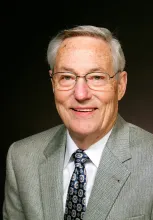
At the time of his retirement in 2016, Roy Holladay was serving the Operation Manager for Ministerial and Member Services of the United Church of God. Mr. and Mrs. Holladay have served in Pittsburgh, Akron, Toledo, Wheeling, Charleston, Uniontown, San Antonio, Austin, Corpus Christi, Uvalde, the Rio Grand Valley, Richmond, Norfolk, Arlington, Hinsdale, Chicago North, St. Petersburg, New Port Richey, Fort Myers, Miami, West Palm Beach, Big Sandy, Texarkana, Chattanooga and Rome congregations.
Roy Holladay was instrumental in the founding of the United Church of God, serving on the transitional board and later on the Council of Elders for nine years (acting as chairman for four-plus years). Mr. Holladay was the United Church of God president for three years (May 2002-July 2005). Over the years he was an instructor at Ambassador Bible College and was a festival coordinator for nine years.
