

David Schreiber
This transcript was generated by AI and may contain errors. It is provided to assist those who may not be able to listen to the message.
Brethren, how should you live your life? Or maybe a better way of expressing that is, how do you live your life? Do we live with the confidence of having faith, trust in God? Or do we find that a lot of times there's a little fear, doubt, or compromise in our lives and how we live, how we conduct ourselves, how we relate to God, His way of life, His plan, His purpose? Too often, our doubts, our worries, and our fears hold us back, and they constrain us, and they keep us from doing what we know that we need to do and what we should do. There are many times when we're afraid to make a total commitment to whatever it might be to be totally committed to God, His way of life, plan, purpose. Let's go over to the book of James, James 1, verse 6. I want you to notice the scripture here where we are told about how we should approach things. James 1 and verse 6. Now, he was talking here about if we lack faith to ask God for it, and he said, let him ask in faith, or excuse me, asking for wisdom, says, let him ask in faith with no doubting, or I think the King James version says, no wavering, for he who doubts is like a wave of the sea driven to and fro by the wind, just back and forth, back and forth, and he's not steady. For let not that man suppose that he will receive anything from the Lord. He is a double-minded man, unstable in all of his ways.
Now, the word wavering, the King James version, or doubting, means to think that something may not be true or certain. So you don't know. So you doubt. Maybe it is, maybe it's not, could be, could not be, and so you never come down on the side of, this is what I need to do. This is how I should live, or this is how I should conduct myself. It means to doubt, to be uncertain about. The word double-minded means pertaining to being uncertain, again very close, about the truth of something. Double-minded, doubting, a doubter.
I believe one of the greatest thrusts that Satan the devil has ever hurled at the church, has made into the church, is to foster off a lack of commitment. As far as the church, you go back 20 years, or 25 years. There was a time when maybe we were deceived, but we thought that everybody who was there was committed to God, his way of life. And when the bomb dropped back in 1995, you find the people scattered everywhere. And today we find that there's a lack of commitment on the part of many people. Commitment means a devotion or a dedication to a cause, or a person, or a relationship. Look at all of the divorces that take place in our country. You find that today, in many marriages, there's a lack of commitment. When you were baptized, the one thing that you were told that God requires of you is that you must make a commitment to him and to his way of life, and that it can't be half-hearted or lukewarm. It's got to be with a complete wholeheartedness.
I can remember back in the early 60s, in Pasadena, the first individual that any of us ever knew in the church who was divorced while he was in the church. And how that sent shock waves through the church. And yet, over the years, going back and looking at the envoy of students who attended Ambassador College, this person divorced, this one left the church, remarried, divorced, and you know, just seems like an endless record. Brother, we need to realize that God wants us in our marriages to have a commitment to one another. You know, that's part of what marriage should be like. But I also see that there's a lack of commitment today to the church.
Now, when I say commitment, I'm talking about fidelity, loyalty, faithfulness on the part of many. You know, it doesn't seem that for some, it doesn't matter where they attend. They play hopscotch. They hop here, they hop there, they go over here. And there's not a loyalty to wherever they attend. To be able to be there, to do the work, and to accomplish the work. Again, 20 years ago, you would never have thought of this. It's like during the Civil War, someone is reported to ask Abraham Lincoln this question. Mr. President, do you think God is on our side? And Lincoln replied something like, my concern is not whether or not we are on his side. See, we need to be on his side.
Satan is the author of division, and he's very good at it. And we see how he does this. As I said, there's been a major thrust where he has tried to undermine the confidence, the faith, in so many people. He never gives up his attack on the church. He doesn't attack the church and go off somewhere, especially the Church of God. He uses the same approach that he used from the very beginning, to divide and conquer, as far as the angels are concerned. He does not want to see us committed to a cause, committed to the church, committed to preaching the gospel. You know, God has placed us in the church. And as I mentioned a week ago when I gave the sermon, last Sabbath, I talked about the fact that God has called us to be in a harvest.
We are the harvest, but we're also involved in the harvest.
Satan does not want to see the gospel preached to this world. He doesn't want to see us committed to a cause. Okay, he would allow people to be involved in the church, but he doesn't want them committed. Because you see, you find a group of people who are committed to a calling, who are committed to what God wants us to do. There's no telling what God can accomplish through those people. I'd like to recite a story.
It's a story taken from the focus on the family. Many of you know about the focus on the family, from a newsletter that they put out. And it starts out by talking about war, how we see many movies combat pictures such as John Wayne, where they're fighting. It all looks so romantic. It looks great. There's not much going on. People get shot and they die and they pass over and they go on. And it wasn't, I think, until Saving Private Ryan that you had a movie that began to show some of the horrors of warfare. They mentioned here the most descriptive battle I've ever read. This is again from the focus on the family. It was from Bruce Canton, an excellent book on the American Civil War, including the Army of the Potomac, and provided a striking understanding of what it was like to be a soldier back during the Civil War. It says, these men often march for days without sleeping. When they got to a battle, they were thrown almost immediately into the battle.
They were exhausted, could not sleep. About the only food they had was a real tough bread called hardtack. And if they weren't fighting, sometimes they had a little salt port to go along with it. So it's no wonder that out of the Union Army, it's reported that over 200,000 of them died. from health-related problems, dysentery, you know, all kinds of diarrhea-related diseases that they had, same type of percentages with the Confederate Army. So you find that they suffered and they went through a lot. That was a time, you know, today we have wars where somebody has a drone flying over, spot a person on the ground or a building they want to take out, and you could be a thousand, two thousand miles away. You send the signal, boom! It makes a strike, you know, a laser strike. You can watch it taking place. You're not really that involved in many cases. But back at this time, and over the centuries, when they fought wars, it was eyeball to eyeball, person to person. You had to get close enough, if you had a gun, to shoot them. Back when they had swords, you had to get close enough to hack them, slice them, dice them, you know, go through all of that. And so there were battles when tens of thousands of people were killed in just one battle. The book brings out how that many in the Union armies and many in the Confederate armies, how dedicated they were to their cause. They believed in what they were doing. They believed that they were right.
And there's a letter that was written. I've always been amazed at some of the letters written by the soldiers back to their families, back to their wives, their children, an eloquence that we simply don't possess today, and being able to express themselves right in a manner that not taught in schools today. Here's a letter that was sent by a Major Sullivan Ballou of the Union Army. He penned it to his wife Sarah a week before the Battle of Bull Run on July the 4th, 1861. Here's what he wrote to his wife, and I thought I would read this because it shows, number one, his commitment to the calling and, secondarily, his love for his wife and his family.
He says, My very dear Sarah, the indications are very strong that we shall move in a few days, perhaps tomorrow. Lest I should not be able to write again, I feel impelled to write a few lines that may fall upon your eyes when I shall be no more.
I have no misgivings about or lack of confidence in the cause in which I am engaged. So he believed in the cause. He believed that it was necessary to protect the Union, and my courage does not halt or falter. I know how strongly American civilization now leans on the triumph of the government and how great a debt we owe to those who went before us through the blood and the suffering of the Revolution. And I am perfectly willing to lay down all my joys in this life to help maintain this government and to pay that debt. Sarah, my love for you is deathless. It seems to bind me with mighty cables, that nothing but omnipotence could break. And yet my love for a country comes over me like a strong wind, bears me irresistibly on, with all of those chains to the battlefield, or as it was like he was chained there. The memories of all the blissful moments I've spent with you come creeping over me, and I feel most deeply grateful to God and you that I have enjoyed them so long. And how hard it is for me to give them up and burn to ashes the hopes of future years, when God willing, we might have lived and loved together, and seen our sons grow up to honorable manhood around us. If I do not return, my dear Sarah, never forget how much I loved you.
And when my last breath escapes me on the battlefield, I will whisper your name. Forgive me for my many faults and the many pains I have caused you. How thoughtless, how foolish, I have oftentimes been. O Sarah, if death did come back to the earth, and flit unseen around those they loved, I shall always be near to you in the gladdest days and the darkest nights, and amidst your happiest scenes and your gloomiest hours. Always, always, and if there be a soft breeze upon your cheek, it shall be my breath. Or the cool air cools your throbbing temple, it shall be my spirit passing by. Sarah, do not mourn my death.
Think I am gone and wait for me, for we shall meet again. Sullivan. Then it goes on to say, in postscript, Major Belew was killed one week later in the first battle of Bull Run. And it says, I wonder if he did die, whispering his wife's name. Rather than you see the commitment, now the reason I read this is not that we should go out and fight and be committed to warfare. But you and I have been called with the highest calling in the universe. We have been called by God to be a part of his family, to be his sons, his daughters, to rule with him. We have been called to do a job today. And do we have the same type of commitment to that? Do we have the same type of commitment to the church, to our marriages, to our family, to the work of preaching the gospel? What is our motivation? What motivates us? Why do we get up in the morning? There's a lesson that God wants us to learn and never forget that I think will help to carry us through everything that we might be faced with in the future. It's explained in 2 Kings 6. Let's turn back to 2 Kings 6.
And we'll begin to read in verse 8. 2 Kings 6 and verse 8. If you remember, the king of Syria was making war against Israel. He consulted with his servants. And he said, okay, we're going to move our army over here. We're going to camp out. Then it says, the man of God, which was Elisha, the prophet, sent to the king of Israel, saying, verse 9, Beware that you do not pass this place, for the Syrians are come down there. And then the king of Israel sent someone to the place of which the man of God had told him. And thus he warned him, and he was watchful there, not just once or twice. So every time the Syrian king planned something, God revealed to Elisha what was going to happen.
He told the king, the king avoided the problem. So therefore, the heart of the king of Syria was greatly troubled by this thing. He called his servants and said, Will you not show me which one of us is for the king of Israel? In other words, there's a spy in our midst, or there's a mole among us, who's letting Israel know about this. And one of his servants said, None, my lord, O king, but Elisha the prophet who was in Israel tells the king of Israel the words that you speak in your bedroom. Elisha had a pipeline to God. God knew what was going on over here. He comes back over to Elisha, he tells the king, and boom. You know, the king was able to avoid all those problems.
Okay, so the king of Syria figured this out. Well, if Elisha is doing that, I'm going to send an army up there, capture Elisha, and he's going to have to come down here and answer to me. So he sent a great army over to Dotham, the city.
Verse 14, therefore he sent horses and chariots and great army there, and they came by night and surrounded the city.
When the servant of the man of God arose early and went out, so here's Elisha's servant. He gets up real early in the morning. He's going to go out, do his jumping jacks, or get fresh air, whatever he's doing in the morning.
There was an army surrounding the city with horses and chariots, and his servant said to him, Alas, my master, notice the classic question that you and I have asked on many occasions. What shall we do? What are we going to do now? Maybe you've been faced with financial troubles. What are we going to do? Maybe you're faced with health problems. What am I going to do now? Whatever it might be, what are we going to do?
So he answered, Elisha answered him, notice what he said, Do not fear, for those who are with us are more than those who are with them.
Those who are with us. Brethren, that's the lesson I want us to learn.
Those who are with us, with you, with me, with every one of us here, are more than those who are with them. Whoever them might be, whoever might be out there trying to destroy us or undermine us as the true servants of God. Notice he said, fear not. Why? Because fear undermines faith and reliance on God. There are various attributes that if a person gives into, will undermine his faith. Fear is the major one. Doubt, worry, all of these things undermine the faith that we need to have in God. The confidence. Elisha had great confidence because he knew that God was with him.
He knew that God would be with him and guide and direct him in this.
Now notice verse 17. And Elisha prayed and said, Lord, I pray you, open his eyes that he may see. The Lord opened the eyes of the young man and he saw. And behold, the mountain was full of horses and chariots of fire all around Elisha. That God had sent his own army, spirit army, angelic hosts who were there. We all face all kinds of crises in our lives, brethren.
And Jacob alluded to that in his sermonette. It could be relationship problems. It could be marital problems. It could be health problems, financial problems. It could be persecutions, any number of trials that we might go through. Trials are part of our lives to help us to look to God for help, to rely upon Him, to trust in Him. We can fear men so much because we fear God so little. We have to learn to fear God. Our fear must be of God. God has promised never to leave us or to forsake us. You might remember I covered this recently in a sermon back in Hebrews chapter 13 verses 4 and 5. God said, I will not, I will not leave you. I will not, I will not, I will not forsake you. Double and triple negatives, which are positives that God promised to be with us always and that He would never leave us. Now, the point I'm making today is not that we should try to see angels or pray that God would reveal the angelic hosts to us. That's not the point. Or contact them, but that we need to be close to God, so close to God that we know, first of all, that He will never leave us or forsake us. And when a crisis or a problem comes up that warrants it, that if it warrants it, there will be millions of angels there to help us and intercede on our behalf, if that is what it takes. Today, people fear demons. They fear Satan the devil. But, brethren, God is more powerful than all of them put together. You can lump all of them together, and they're just like a drop in a bucket. All human beings are like a drop in a bucket. So are the angelic hosts. They may be a little more powerful than we are, but compared to God, they're nothing. He is the Almighty, the all-powerful. He created them. They're created beings.
He is not. So Satan the devil is far inferior to God. There's no comparison.
There are two God beings who are all-powerful than one devil. And again, He's created the devil, and so they can very handily take care of Him. There are two righteous angels for every demon, and the righteous angels are backed up by the power and authority of God. So they have God behind them. And, brethren, we are backed up by the power and authority of God likewise. We are His family. We are His children. And just like you, if you have children or have had children, you know you would do anything to protect those children. And if we are obedient children, seeking to serve God, realizing our own frailties, repenting of those, fearing God, God is with us and He will help us. I want you to notice the example of Jesus Christ in Matthew chapter 26 and verse 52. Matthew chapter 26. Notice His example when He faced the greatest trial of His life. We read here in verse 52, Jesus said to Him, put your sword in its place. You remember this mob came out to take Christ captive, and the servant of the high priest was there. Peter gets his sword out and whacks his ear off. So Jesus said, put your sword in its place, for all who take the sword will perish by the sword. Or do you not think that I cannot now pray to my Father, and He will provide me with more than 12,000 legions of angels? See, if I needed it, God would supply me with hundreds of thousands of angels here. That's not the problem. He knew that His hour had come. In verse 54 says, how then could the Scriptures be fulfilled that it must happen? In that hour Jesus said to the multitude, have you come out against me, as against a robber with swords and clubs to take me, as a daily with you, teaching in the temple, and you did not seize me. But all this was done that the Scriptures of the prophets might be fulfilled. Then all the disciples forsook Him and fled. So picture it. Here's a mob, a rabble, soldiers. They're out there screaming. They want to take Him. The disciples say the jig's up and they flee. And He's standing there by Himself. He's all alone. Or is He? Well, let's notice in John 16, John chapter 16 what Christ said. Verse 32, John 16. We'll read here in verse 32.
Christ said, indeed the hour is coming, yes, has now come, that you will be scattered, each to His own, and will leave me alone. But, He said, yet I am not alone, because the Father is with me. Brethren, do you realize if you were placed in a situation where there was not another Christian within miles of you, no one there to hold your hand, support you, help you, and your life was being threatened, it doesn't matter how many would be against you. There are going to be more for you than are against you. And as Jesus Christ said, the Father is with me. That's what gave Him the supreme confidence and trust, because He knew that God was there to help Him. Others would forsake Him, but God did not. Others may forsake us, leave us, hurt us, but God will never fail us. Let's look at another example in the Old Testament. Second Chronicles, chapter 32, beginning in verse 1. You might remember this example of Sennacherib, king of Assyria, and Hezekiah.
Chapter 32 says, After these deeds of faithfulness, Sennacherib, king of Assyria, came and entered Judah. He encamped against the fortified cities, thinking to win them over to Himself. When Hezekiah saw that Sennacherib had come and that His purpose was to make war against Jerusalem, He consulted with the leaders and commanders to stop the water from the springs.
So they stopped all the waters, so that the Assyrian army wouldn't have any waters. They built up the wall. They built up a second wall. They built up the defenses. They got their arm limits ready. Notice verse 6. Then He sent military captains over the people and gathered them together to Him in the open squares of the city, and gave them encouragement. Now, how did Hezekiah encourage the people? What was he going to say? Here was Sennacherib with an army of over 185,000 soldiers. Just think of it. A huge army. He said, Be strong and courageous. Do not be afraid, nor dismayed before the king of Assyria. Why? Nor before all the multitude that is with Him. You could look out there and you could see the chariots. You could see the horsemen. You could see the armor. I mean, you could see this huge army. For Hezekiah said, For there are more with us than are with Him. There were more angelic beings. I mean, Jerusalem at that time was the center of God's attention. And even though the house of Israel had gone into captivity, it was not yet time for the house of Judah to go into captivity.
So He said, There are more with us than with Him. He stated the same thing that Elisha had said.
Who was with Him? It says, For with Him is the arm of flesh. Okay, He's got soldiers out there, and they've got spears and all of this. But with us is the Lord our God. So there's a difference. We've got God on our side to help us and to fight our battles, and the people were strengthened by the words of Hezekiah, the king of Judah. Brethren, God, in verse 21, sent an angel who cut down every mighty man of valor and leader and captain in the camp of the king of Assyria.
You go over to 2 Kings and it says that there was 185,000 people who died that night. So the Assyrians, what was left of them, got up in the morning, and they looked around and almost every tent, all the soldiers were dead. So, you know, He returned, shamed face to His own land. And what was He going to do there? And when He had gone into the temple of His God, some of His own offspring, some of His own children, sons, killed Him. And He died. So God sent an angel, and in this case, protected them. See, fear is one of the greatest faith destroyers there is.
You and I, brethren, need to have confidence. We need to live our lives every day, everything we do, with the confidence and the trust that God is truly there with us. However, Hezekiah was a man like us. By that, I mean he was human. He had weaknesses and frailties. Let's notice in verse 24. Those days Hezekiah was sick and near death, and he prayed to the Lord, and He spoke to him and gave him a sign.
But Hezekiah did not repay according to the favor shown him. For his heart was lifted up. Hezekiah became proud and vain. And it's easy for us to become proud and vain over things that we have done or things that we have accomplished and look at me, that type of thing.
Therefore, wrath was looming over him and over Judah and Jerusalem. But, you find, then Hezekiah humbled himself for the pride of his heart and he and the inhabitants of Jerusalem. So the wrath of God did not come in their day. They fasted, they prayed, they humbled themselves before God. Rather than we can become prideful over our obedience, we can look back to 1995 and say, well, look at me. I remain faithful. And we can look at what we've done or accomplished since then.
What did Jesus Christ do when he walked the earth? Here he was, the Son of God in the flesh. God in the flesh. He said, I can do nothing of myself. He gave the Father credit for everything. The Father was the one that he constantly pointed everybody to. And, brethren, that's the attitude and the approach that we need to have. If anything is accomplished, it's because of God, his greatness, his power, when it comes to the realm of spirituality. Let's notice in 2 Chronicles 16, verse 9, another scripture that ties in with this. 2 Chronicles 16, verse 9, we read, The eyes of the Lord run to and through throughout the whole earth.
That's probably the angelic host that God sends out. And they're going throughout the whole earth to show himself strong on the behalf of those whose heart is loyal to him, and that you've done foolish. Therefore, from now on, you shall have wars.
The angelic host, God allows the angels to go to and fro. They report back to him on how you're doing, how I'm doing, what's going on in our lives. And you see that those who are loyal to God, those who are committed to God, who are faithful to God, then he will show himself strong on their behalf. God will be with us, and he will guide us.
Brethren, are you, am I loyal to God today? I think this is where many go off today. They claim to be loyal to God, not to a man. And yet, God, you have to ask yourself, what is God doing today? What did Christ say he would do? He said he would raise up his church, and the gates of hell would not prevail against it.
He said, I will be with you always, even to the end of the age. So he promised to be with his people and his church. He did establish the church, and he gave that church a purpose, that this gospel is to go into all the world as a witness into all nations.
So we are to prepare our people, and we are to preach the gospel to the world. Are we committed to doing what God is committed to doing? Are we committed to God's work? Or do we just sort of float around from one group to another, or from here to there, and not be loyal or committed to anyone?
We should be committed to God and what he is striving to accomplish. Let's notice in Psalm 34 and verse 7. Psalm 34 and verse 7. The angel of the Lord encamps all around those who fear him and delivers them. So the angels of God encamp around those who fear God. Do we fear God? Do we respect God? Do we stand in all of God? Do we tremble before his word?
See, God is our protector, and so we have to have the proper fear and respect for him and realize who we are. Let's notice some New Testament examples. The example of the apostles. Peter, Paul, in the book of Acts. Let's turn back to Acts 5 to begin with. Acts chapter 5 and verse 14.
Acts chapter 5 verse 14.
We read that believers were increasingly added to the Lord, multitudes both of men and women, so that they brought the sick out into the streets and laid them on beds and couches, that at least the shadow of Peter might fall on some of them. When they would pass by, and also a multitude gathered from the surrounding cities to Jerusalem, bringing sick people and those who were tormented by unclean spirits, and they were all healed. Well, you think Jerusalem would be jumping up and down with joy over all of this. To see people healed, demons cast out.
But let's notice what the religious leaders felt. Then the high priest rose up and all those who were with him, which is the sect of the Sadducees, and they were filled with indignation. What were they indignant about? Well, that these people were being healed. See, here were people who, and basically, knew nothing about Christ, and yet they were being healed here.
And they laid their hands on the apostles, and they put them in common prison. So here are all the apostles. They're doing these good works. They grabbed them all, throw them in prison. Well, what did the church think? Here are our leaders. They're in the Husk out. They're in jail now. What are we going to do? But at night, an angel, the Lord, opened the prison doors and brought them out and said, Go stand in the temple and speak to the people all the words of this life. Well, the high priests the next day asked them to bring them out. They didn't find anyone, as verse 23 says, inside the prison. Then they found out, well, they're back at the temple teaching the people all over again. And then the captain, verse 26, went with the officers and brought them without violence. They feared the people, lest they should be stolen. See, the people had a great deal of respect for them. And then, in verse 29, Peter and the other apostles answered and said, We ought to obey God rather than man, when they were told not to preach in His name. They said, No, we will preach in His name. So here again, when it looked very bleak, God intervened to deliver the apostles. But yet, let's notice a few chapters later, chapter 12 of the book of Acts, in verse 1. Acts 12, verse 1. About that time Herod the king stretched out his hand to harass some from the church. And he killed James, the brother of John, with a sword.
You ask yourself the question, why would God allow James to die, one of the original apostles, so early on, without being able to go out and do more work? Now, God allowed him to die. Had God lost his power? Had he gone off? Did he forget about James? Well, obviously not. God was with James, but he had a reason why he allowed this. Now, I'm sure that this was something that shook the church up, tested their faith, their trust, their belief in God. Perhaps it was an example to the church that they needed to double their efforts to pray for one another. So often when somebody's going through a trial, it's us, we don't pray for them, as we ought to. Now, let's notice in verse 5.
You find here that Peter, therefore, was kept in prison. They captured Peter, put him in jail. Now, but constant prayer was offered to God for him by the church. And when Herod was about to bring him out that night, Peter was sleeping, bound with two chains between two soldiers. So picture it. Here he is. He's sitting there. He's got chains wrapped around him. He's got two soldiers and one on either side. And there is a guard before the door, or the guards before the door, were keeping the prison.
How was Peter going to get out? Was he going to tunnel out? Did he have a saw? What was he going to do? Well, you find that, verse 7, Behold an angel, though Lord stood by him. Light shone in the prison, struck Peter on the side, raised him up, saying, Arise quickly, his chains fell off his hands. Didn't need a key. They're gone. And the angel said to him, Gird yourself, tie yours on your sandals. So he did. Said, Put it on your garments. You follow me. So he went out and followed him, and did not know what was done by the angel was real. He thought he was seeing a vision. He thought he was dreaming. Did not know exactly what was going on here. And when they were past the first and second guard posts, they came to the iron gate leading to the city, which opened to them of its own accord. And they went out and went down the street. Immediately the angel deserted him. And you remember, he went to the house where people were all gathered praying. A young girl came, recognized Peter, and went back and said, He's here.
She didn't really believe. They didn't believe. He had to keep knocking and knocking. Let me in. So you find that God intervened on his behalf.
God allowed James to die and Peter to live. But why? Well, obviously, one had run his course, the other had not yet finished what God had in store for him. Later on Herod spoke to the people. You'll notice in verse 21, he was arrayed in a royal robe, sat on his throne, and gave an oration to them. And the people shouted, The voice of God, not of a man. And immediately an angel of God struck him, because he did not give glory to God, and he was eaten with worms and died. And the word of God grew and multiplied.
Now, God intervened. He had not lost his power. God was still there. He delivered Peter. Yet, later on, Peter was martyred. According to tradition, Peter was crucified.
And the tradition says that when he was crucified, he did not feel worthy to die, as Christ did. And he asked to be crucified upside down. So they crucified him, his head down, and did it that way. Now, had God forsaken Peter? No. He had run his course. He had done the job that God had called him to do. He had finished the job, just like Christ had finished the job that he had done. And so God allowed him to be martyred. And as we know, all of the original apostles, or we think, were martyred except John the apostle. Notice in chapter 16 in verse 16, we have the example of Paul and Silas. Paul and Silas, they had gone to Derby and Lystra, Phrygia, the regions of Galatia, Mysia, Bithynia, and so passing by Mysia, they came down to Troas. And you find that a certain woman named Lydia, verse 14, heard, was converted. Now it happened, verse 16, as we went to prayer, that a certain slave girl, possessed with the spirit of divination, met us, brought her master and much profit by fortune-telling. Now there are those who claim to be able to have talked to the dead. They're not talking to the dead, they're talking to demons. That's what that is, to evil spirits. So apparently she had contact with an evil spirit, and when her boss would say, okay, somebody would come in to have his fortune told, she would tell something about the future or something about what they had done, and brought him a lot of money. The girl followed Paul and us and cried out, saying, these men are the servants of the Most High God, who proclaim to us the way of salvation. But brethren, that's happened today. We've had ministers go into what used to be called insane asylums, psychiatric wards, walk by in some body point. There goes a servant of God, and they recognize the servants of God. So this she did, as verse 18 says, for many days. And finally, just got to Paul, he was greatly annoyed. He turned and said to the spirit, I command you in the name of Jesus Christ, come out of her. And the spirit did. Now, when the man saw that his livelihood had been removed, he got a crowd up. They captured them. The multitude rose up together against them. They were beaten with rods. In verse 22, they laid many stripes on them, and they threw them into prison. Verse 24, they were told to keep these two men securely. So having received such a charge, he put them in the inner prison, so as far into the prison as you could get, and fastened their feet in stocks. About midnight, Paul and Silas, they weren't discouraged. They were praying and singing. And it says here, the prisoners were listening. And suddenly, there was a great earthquake. Foundations of the prison were shaken, all the doors were opened, and everyone's chains were loosed. And the keeper of the prison awoke, thought all of the prisoners had escaped, was going to kill himself. Paul cried out with a loud voice, don't do that, we're here. Then the next day, the magistrates sent and said, okay, let them go. Now you see, Paul had a little backbone here, and he said, wait a minute, they beat us being Roman citizens. We didn't get a trial.
You have the magistrates come and talk to us. So the magistrates were very concerned because you don't do that to a Roman citizen. Well, one of the results of this was that the jailer and his whole household were converted at this time. So God allowed them to be beaten. You can say, well, where was God? I mean, God will allow us to go through trials. Remember when Paul, he was called Saul at the time, was called by God? God said, you shall go before kings, the Jews, the Gentiles, and I will show him how much he will have to suffer for my name.
So if there was anybody who had to suffer, you go through trials. It was the Apostle Paul. So, brethren, God delivered them. He opened the prison.
And Paul knew that there were more with him than there were with the jailer, the magistrates, and all of them. Now, later on, we know that Paul was arrested. He went up to Jerusalem. He appealed. He went up to Rome. He appealed his arrest. He was arrested for two years. Then later on, he was a prisoner for two years, a total of four, in Rome.
Now, why? Why did God allow that? You could say, well, here, for four years, Paul's taken out of circulation. But God had said part of his commission was to go before kings. How was he going to go before kings? How would you plan it to go before kings? One day, he just sort of walks into the palace and says, hell, Caesar, let me tell you about the gospel. It doesn't work that way.
Somehow, he had to be brought before kings. So, when he appealed his arrest, he went before one king, then another king, then another king, Felix, Festus, and so on. He appealed to Caesar. Finally, he appears before Caesar. And the Bible in the book of Romans tells us that there were those who were converted of the household of Caesar. I don't know if that means his immediate family or just servants who served in his household. So, God was able to bring Paul before kings, not in the way that Paul would have dreamed, not in the way that he would have thought, but in the way that God had designed it. Now, later on, 61 AD, Paul was let go. He went out, continued to preach. Somewhere around 66-67 AD, he was captured again. This time, he was martyred and killed. And so, you find the original apostles, all of them, basically except John, being martyred in one way or the other. Now, in Psalm 23, Psalm 23, a psalm that we're very familiar with, let's notice. Here's a psalm that summarizes everything that I've said here. Psalm 23, beginning in verse 1. Notice, in the psalm of David, he says, the Lord is my shepherd. It is written from the point of view of a sheep talking about the shepherd who looks after the flock. Jesus Christ is the chief shepherd. He looks after us, his flock. The Lord is my shepherd I shall not want. So, God promises that we don't have to want. He makes me lie down in green pastures. He leads me beside the still waters. So, God provides food, clothing, and shelter for us. He restores my soul. So, there are times that we need restoration. We need to be picked up and encouraged and restored. He leads me in the paths of righteousness for his name's sake. Yea, though I walk through the valley of the shadow of death, and there will be times when we will go through trials and tests and persecutions that we think that we're going to die. But notice, I will fear no evil. Why? For you're with me. The shepherd is there. God will never leave us or forsake us. You're rod and your staff, they shall comfort me. The rod and the staff to guide them, direct them, protect them. You prepare a table before me in the presence of my enemies. You anoint my head with oil, my cup runs over. Surely, he says, goodness and mercy shall follow me all the days of my life, and I will dwell in the house of the Lord forever. So God promises to be there, to guide us, to lead us, to direct us. Do we really believe this? Do we really trust God, rely upon him? When the servants of God are faced with a Christ, as Nick calls for it, God can provide instantaneously hundreds and thousands of angelic beings to be there, to be with us, to protect us, and to intervene on our behalf.
Notice what Romans 8 and verse 31 says. Romans 8, verse 31. It says, What then shall we do?
What shall we say to these things?
If God is for us, who can be against us? Brethren, if God is for us, which he is, it doesn't matter who stands up against us, because God is there to lead and guide us. One final scripture in 1 John 4, 4.
1 John chapter 4, verse 4. 1 John chapter 4. We read, You are of God, little children, and have overcome them, because He who is in you, God is in us, Jesus Christ lives in us, is greater than He who is in the world. God is in us, He guides us, He is greater than Satan the devil, this world, all of its armies, all of its political systems, all of those things.
So, brethren, let's never forget the lesson that there are more for us than there are against us.
1 John chapter 4, verse 6.
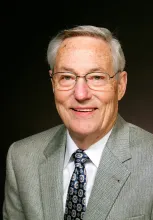
At the time of his retirement in 2016, Roy Holladay was serving the Operation Manager for Ministerial and Member Services of the United Church of God. Mr. and Mrs. Holladay have served in Pittsburgh, Akron, Toledo, Wheeling, Charleston, Uniontown, San Antonio, Austin, Corpus Christi, Uvalde, the Rio Grand Valley, Richmond, Norfolk, Arlington, Hinsdale, Chicago North, St. Petersburg, New Port Richey, Fort Myers, Miami, West Palm Beach, Big Sandy, Texarkana, Chattanooga and Rome congregations.
Roy Holladay was instrumental in the founding of the United Church of God, serving on the transitional board and later on the Council of Elders for nine years (acting as chairman for four-plus years). Mr. Holladay was the United Church of God president for three years (May 2002-July 2005). Over the years he was an instructor at Ambassador Bible College and was a festival coordinator for nine years.
