

Tim Pebworth
This transcript was generated by AI and may contain errors. It is provided to assist those who may not be able to listen to the message.
It's been a while since we've been here. I think we were here the first part of July, and we've had a couple of months in between. I come to you from two days of very hard Chinook fishing over at Bowie Tan in Astoria. Learned a kind of a rough lesson, just to let you know so you're not questioning whether I'm wearing Rouge or not today. No, I'm not. I learned the lesson that my ball cap definitely does not cover anything below about here. So I kind of have this nice little U-shaped suntan mark going on here.
I figured if I didn't mention that up front, you'd be going, what is going on with his face as he goes? As Mr. Richards mentioned in the beginning, it kind of has been a rough month around the world, this last little bit. Economically here in the United States as well as in Europe, there's a lot of uncertainty out there right now.
There's a lot of concern with economics in particular. As our nation has watched the fallout these past few weeks following the just absolute debacle of the House of Representatives and the Senate on the debt deal, the regular Joe is the average citizen of the United States. A more complex picture of really the financial trouble that we as a country are in began to emerge. Our debt had nearly reached about 100% of our GDP.
We nearly owed more than what we brought in. And I guess if you make an analogy to your own household, we'd maxed out the credit card. The problem in the debate kind of centered on, well, what are you next? Where do we go from here? For some in the House and Senate, they wanted a new credit card. They desired a new credit limit. Additional revenue rather than cuts to kind of help balance that budget, claiming that the only way to really stave off these economic consequences was to provide faith in the United States economy for countries willing to invest.
Others in the House and Senate advocated for a more conservative approach, claiming the United States had a spending problem rather than a revenue problem, and advocated for raising the credit limit in the short term, but desired sustainable cuts and programs to overall reduce the budget to, again, stave off economic collapse. On August 1st, that deal was reached. Beginning of the month, that deal was reached. We increased the credit limit, and of course, we staved off economic collapse. Or so it seemed. In the days following, the Dow plummeted over 500 points in a single day.
The S&P dropped 60. It was its greatest loss since 2008 on the S&P. The markets have been on an absolute roller coaster ride since. It's been up, it's been down, it's been up, it's been down. It's been all over the place. And again, that leads to that uncertainty. Leads to that uncertainty of, well, where do we go next? Where do I put my money? Where do I put these things?
There was an article just a couple of days ago on CNN Money talking about the stock market still being shaky. A month after this all went down, people are still worried about where to put things. It says right here, the S&P 500 index is down 10% overall. It actually is the biggest drop in the month of August since 1998. Significant drop. 52% of Americans disapproved of the deal that was reached.
And Congress's approval rating dropped to a 5-year low of 14%. 14% of Americans thinking that they're doing the job that they need to. August 5th, Standard & Poor's reduced the credit rating from our Stellar AAA credit rating to a AA Plus rating, which is exactly what the debt deal was supposed to have staved off. The truth is, despite everything that Congress and Senate did, people without jobs still found themselves without work, the government still holds $14 trillion in debt, over $100 trillion in future obligations, foreclosure rates are at an all-time high, and the people of the United States are facing an economy that has left them without hope for a better tomorrow.
Frankly, the hope and change are two things the American public are a little short on these days. The faith that the American people have placed in their government is waning. Before the debt ceiling deal was reached, I saw a YouTube video that a friend had posted on my Facebook feed called The Great Recovery. Have any of you guys heard of this? Great recovery? It was intriguing. I was kind of curious to see.
It's a thing that Dave Ramsey's doing. You've probably heard of him. He's a debt consultant and a radio talk show host, but he's kind of the figurehead of the movement. And what it is is a grassroots thing. It's starting from the ground-up kind of push to try to recover the United States economy. Now, I'm not necessarily endorsing it, per se, and I haven't signed the UCG up for it or anything.
It's kind of a church-based thing. But it was interesting because he was one voice in the middle of all this that was actually making sound biblical sense. I'd like to share with you real quick just a short article from the Christian Post. It's an online newspaper. It says, Fame Debt Consultant and Radio Talk Show host Dave Ramsey is calling on Christian leaders and congregations to step up to the forefront of recovery efforts during the economic crisis and to not rely on the United States government to solve the country's problems.
Ramsey, who has heard on more than 450 radio stations and satellite radio throughout North America, has taken his Christian perspective on financial matters and applied them to a grassroots movement he's calling the Great Recovery. In Dave's word series, he says, our country is in a mess. The government has no answer for this broken economy. We do. He said, God is still on his throne and he is the hope for this nation.
It's time for pastors, church leaders, and believers everywhere to rise up together and lead this nation out, one family, one church, one community at a time. Now, we recognize there may not be a leading out for this country. This may well be the beginning of the end for the United States, but it's kind of interesting. He's the one person out there, aside from church organization, within our own organization, that's making the call for a return to sound biblical money principles and a return to God.
In his video, he went back through the history of this country and he talked about the economy. He said, leading up to the stock market crash in 1929 and then the resulting Great Depression, the government really didn't meddle in the economy. They didn't stimulate the economy. They didn't push it and try to make it do things that they're trying to make it do now. It was an indicator. It's kind of like if the country wasn't doing well, neither was the economy.
If the country was doing well, the economy was doing well as a result. As of the Great Depression, however, and the hope and the despair that came along with that, as a collective group, as the nation, the United States, rather than place our trust in God, we placed our faith in the government. We placed our trust in the government to fix the problem. You know, God got put on the back burner. This pattern isn't unfamiliar. We see it time and time again throughout the Bible.
We see the nation of Israel gets into trouble as a whole. Individuals get into a mess. They place their trust in the wrong place. They forget about God and then ultimately face the consequences. Let's take a look at 1 Chronicles 21. Turn over to 1 Chronicles 21 and we'll see one of those examples of King David.
King David is an incredible, incredible example in that he did make lots and lots and lots of mistakes, but he was also really good about recognizing that when something had gone wrong, he had a very repentant attitude. He was very good about repenting what happened. 1 Chronicles 21. We'll start in verse 1 and we'll see the example of the numbering and the censusing of Israel and Judah. 1 Chronicles 21 verse 1 says, Now Satan stood up against Israel and moved David to number Israel. So we can actually see here the influence comes from Satan himself. We see that Satan influenced David to number the people of Israel, which is interesting because this is one of those scriptures that gives people a little bit of trouble. Samuel 24, and you can write this down, in Samuel 24 it records that God allowed David to number the people of Israel. So what we have here is a situation kind of like Job where God allows Satan to work here and allows him to do his thing.
But David, either way, was set out to number the people of Israel. Verse 2, David said to Joab and to the leaders of the people, Go, number Israel from Beersheba to Dan, and bring the number of them to me, that I may know it. Verse 3 says, Joab knew what David was about to do here was wrong. He knew it was not right. In fact, he tried to reason with him, tried to convince him that let's not do this.
And was ultimately overruled. Verse 4, Notice in this case the king's word prevailed. This wasn't God's word. This wasn't God's instructions. This is David acting on his own here under Satan's influence. And realistically, when it comes to numbering the people of a country, there's really only two reasons to do that. You're either raising money, you're levying taxes, or you're forming an army. You're conscripting an army. Either way, whether you're increasing the wealth of your country through taxes or you're making a larger army, you're putting your trust somewhere other than God.
So you're putting your trust in something other than God. Either God doesn't have the ability to keep the country afloat financially, or God doesn't have the ability to protect you in battle if you're acting out on your own here.
We see what he had planned, actually, in the next verse. Verse 5, So we see here, we're looking at a military situation here. He's curious how many soldiers he has. Curious how many soldiers he has. So we don't know, it doesn't say, scripturally, you know what David had planned here. We don't know if he had some sort of a military conquest that he was going to go on and that God didn't know about in this case, or whether he was just kind of a military conquest.
And we're going to see what he had planned here. Or whether he was just kind of solidifying his own trust. Okay, alright, I've got this many men behind me here as we go into these military campaigns. We're not 100% certain here, but we see in verse 6 that Joab actually didn't go on and count Levi and Benjamin among them.
So he didn't go on and do that, for the king's word was abominable to Joab. Verse 7, And God was displeased with this thing, and therefore he struck Israel. So God is less than enthusiastic here, with David's lack of faith and lack of trust, and for, frankly, placing his trust in his own might and in his own power. Ultimately, we see that God punishes the people of Israel.
And David recognizes, again, that he did wrong in this situation. And he's not going to be able to do that. And he's not going to be able to do that. He's going to be able to take away the iniquity of the people of Israel. And David recognizes, again, that he did wrong in the sight of the Lord. He's incredible in that example of a repentant heart. And he asks for forgiveness. Pick it up in verse 8. So David said to God, I've sinned greatly because I've done this thing, but now I pray, take away the iniquity of your servant, for I've done very, very foolishly.
I added the second very. Sorry. It's not in there. Verse 9, And the Lord spoke to Gad, David, seer, saying, Go and tell David, saying, Thus says the Lord, Choose one of them for yourself, that I may do it to you. So David's not getting off here. There is going to be a punishment of some variety, and he's going to have to figure it out himself. Kind of that, go cut a switch. Go pick which one you want. Either you get the big fat one, or you get the little thin one. You know, and it's a toss-up.
Each one's got its own issues. But in this case, God's giving David options. Gives him three. Verse 11 says, So Gad came to David and said to him, Thus says the Lord, Choose for yourself. Choose your poison. Either, verse 12, Three years of famine, or three months to be defeated by your foes with the sword of your enemies overtaking you, or else for three days the sword of the Lord, the plague in the land, and with the angel of the Lord destroying throughout all the territory of Israel. Now consider what answer I should take back to him who sent me.
Gad's telling David here, you know, Go ahead, think about it. Get back to me. I'll go let God know. And David was given some extremely difficult choices here. Three years of famine, which, as you well know in the Bible, in those areas, can be absolutely devastating. Three months of war losses, so actually out there in the wars for three months, losing men every day, or three days of pestilence and destruction in the land, in the hand of God. Well, David chooses, in this case, to place himself in the hands of God and hope for mercy.
See in verse 13. David said to Gad, I am in great distress, please let me fall into the hand of the Lord, for His mercies are very great, but do not let me fall into the hand of man. And David recognized he's not going to get mercy at the hands of his enemies. There is no mercy in man. But God, there is mercy. The Lord sent a plague upon Israel, and 70,000 men of Israel fell.
We do see that in this case David does receive mercy. His personal life is spared. Jerusalem isn't destroyed. But 70,000 people that had absolutely nothing to do with David's decision died. David's choice to trust in his own might, rather than in the might and glory of God, was devastating to the nation of Israel as a whole. We see this pattern displayed again and again and again throughout the Bible.
Get yourself into a mess, place your trust somewhere other than God, and then face the consequences. As the old saying goes, those who don't know history are doomed to repeat it. Are we cognizant of the need to trust in God in every aspect of our own lives? Do we trust God implicitly or conditionally? Are we looking for something out of our trust in God?
Are we willing to yield control of our lives and place ourselves willingly under his authority, trusting that his way of life is the way of life that we need to lead? Today and the time we have remaining, we're going to explore these questions and reflect on ways that we can trust God in our own life. If you like titles, the title of today's sermon is, My God, In Him Will I Trust. My God, In Him Will I Trust.
You know, just like David, the leaders of our country make decisions on a regular basis that potentially have vast repercussions throughout the nation as a whole. Unemployment rate right now is hovering around 10 percent, a little bit higher. Was it 15 at one point? And those are decisions that are made at a national level, and the repercussions that come from those decisions.
Unfortunately, it seems sometimes that they're oblivious to the consequences of those decisions, and that it tends to be a situation where, as long as they manage to remain in power, it's whatever I have to do to make sure I still have my office. Whether it's the right thing to do or not, the attitude is, why worry about the fallout as long as I'm still where I'm at? You know, brethren, we ultimately have little to no control over the decisions that our leaders in our country make.
I do not have President Obama on speed dials I can't dial him up and go, hey, about this debt deal, here's a deal. We don't have that ability. We can get angry, we can get ramped up and frustrated.
I do, I listen to talk radio. By the end of the day, I'm angry levels up here, frustration levels up here. But you know, it really doesn't do us any good. It really doesn't do us any good to get ramped up about it. We have absolutely no control over the decisions of our nation as a whole. And who are we to say that these decisions and these things are not exactly what needs to happen? You've already said that. You really don't know. But it is abundantly clear our leaders have turned away from God a very long time ago.
While we don't have control over Congress and the President, we do have a lot of opportunities to trust God in our own lives. And the tagline of the Great Recovery, the little subtext that's in there is, it all starts with us. It's a grassroots thing. It starts in each individual person, in each individual community, and it works its way up the hole. Just like in our church. It starts with us.
It starts with us. There are three main aspects of our life where we can demonstrate our trust in God, and we're going to spend the rest of our time today looking at those. We can demonstrate our trust in God first in the trials that we go through. So we can demonstrate our trust in God through our trials. We can demonstrate our trust in God with our lives. And we can demonstrate our trust in God in the promise of eternal life that He has given to us. So in our trials, with our lives, and in the promise of eternal life.
As you well know, there is one thing in our Christian walk that is absolutely guaranteed, and that's trials. In fact, if you have talked to a lot of individuals, there are a lot of people going through some really serious trials right now. Different things, health-wise, financially, employment situations. People are hurting. Even people within our own church are hurting. And these trials are kind of part and parcel of our conversion, and they teach us some incredible lessons.
Let's take a look at James 1. Turn over to James 1, verse 2. We're not going to too many real obscure scriptures today, so you will have heard these before. My apologies.
But James 1, verse 2. We see one of those chin-scratching scriptures in the Bible, where you really think about it from a standpoint of, how exactly do I display this attitude? How do I display this? This is a chin-scratcher. I have a hard time with this. James 1, verse 2. My brethren, count it all joy when you fall into various trials. Knowing the testing of your faith produces patience, but let patience have its perfect work, that you may be perfect and complete, lacking nothing. If any of you lacks wisdom, let him ask of God, who gives to all liberally and without reproach, and it will be given to him. Verse 6, but let him ask in faith with no doubting, for he who doubts is like a wave of the sea driven and tossed by the wind. Count it all joy. How many of you can honestly say the last major trial that you've went through? You danced a jig of celebration, did cartwheels, were so excited that you had another opportunity to face a trial? It's not the way our carnality works. It's not the way our human nature works. Trials are not fun. They're not enjoyable. They're trials. They're trying. They're hard. They get us down. They get us depressed. But the attitude that we're supposed to exhibit in this case and the reasons why are incredible. Verse 3, knowing the testing of your faith produces patience. So going through that trial, testing us gives us faith, gives us patience. That patience, when we let it have its perfect work, we see that that patience ultimately leads to perfection. Trials refine us. They temper us. You know, if you're working with metal, you want to make metal durable. You put it to the fire. That's the way you make it durable. That's the way you make it stronger. Glass. I worked with glass during the summer, you know, and you've got tempered glass. That's submitted to heat as well. I mean, that's how that process works. The heat makes them stronger. And frankly, our trials cause us to become better Christians as a result, provided we learn the lesson in our trials. Verse 5 goes on to say kind of an interesting concept here. It says, If any of you lack wisdom, let him ask. If you're lacking something in your life, ask.
Because it says he gives to all liberally and without reproach, and it again will be given to him. Verse 6, this is the important piece. Let him ask in faith with absolutely no doubting. In other words, trusting that God is going to do what he says. Okay, that God is going to give you an answer. Now we know that answer may not come when we expect it. It may come many years down the road, and you kind of go, oh yeah, I remember asking about that way back here.
But with no doubting, for he who doubts is like a wave of the sea driven and tossed by the wind. Brethren, faith is trust. Faith is trust. In fact, the word translated faith here in the Greek is pistis, and it's a Greek word derived from the root word that is petho. Petho means to convince someone of something, to assure them. It has a synonym of trust. Trust in God, that faith that God is going to do what he's promised. And that's imperative. So why is it so hard for us? Why is it so hard for us? When we fall into trials, why is it we feel like we have to take control of the situation? That we're in this trial, we've got this problem, and we just have to take control, and we have to just do this. Why do we feel that way? Why does it seem like there is no solution on the horizon sometimes, and that we have to take it into our own hands and get the job done? It's actually an easy answer. It's a scientific answer. It's stress. It's because of stress. When you get into a trial, and we fall into various trials, you know as well as I do, your stress levels rise. You start getting those stress levels, and they start moving up. Stress is actually a normal response. Everybody responds to stress. Some people respond a little better than others, but everybody responds to stress. Stress is a response to stimuli that makes you feel threatened or upsets your general balance. So stress is one of those things we all face it, and it's not a bad thing in all situations. In fact, stress response is what's responsible for all these heroic stories you hear of people who have lifted a car off of somebody. That comes from a stress response. And scientifically what happens is this. The stress causes your brain to release a chemical called epinephrine. An epinephrine stimulates your adrenal glands, and those adrenal glands produce a chemical we're very familiar with called adrenaline. Adrenaline causes an increase in breathing rate, heart rate, and alertness, and also causes us to go into a situation that is called the stress response. And the other word for stress response is one you're probably familiar with, fight or flight. It's a basic response. Every organism has it. Fight or flight. What happens in a stress situation and in a trial situation is your body's been thrown into DEF CON 4. You're elevated. You're clear up here. You've got all these chemicals moving around in your body. It's tough to come down from that. You have this desire just to act. Either run or fight your way through it. God doesn't want us to react. God wants us to put that on his table. He wants us to table that and let him deal with the situation. To trust that he is going to take care of it and fight our battles for us. I count myself among this. I generally consider myself to live a relatively stressful life. If we're living a life full of stress, it's probably because we haven't really fully learned to trust in God. And put things on his plate. Let him take care of it. Let him help us. We're still trying to control our own lives a little too much. If we're living that life of stress. And just rushing around and we're just not putting enough in God's hands. Let's take a look at Matthew 6. Matthew 6, verse 25.
Matthew 6, 25. We see that, you know, the reality is a lot of what we worry about and stress about. Kind of the non-essentials, a lot of times. We build them up to be essentials. Sometimes they're really the non-essentials. Matthew 6, verse 25.
It says, it's actually under heading in my Bible, it says, do not worry. It says, therefore I say to you, do not worry about your life, what you will eat or what you will drink, nor about your body and what you will put on. Is not life more than food and the body more than clothing? Look at the birds of the air, for they neither sown nor reap, nor gather into barns, yet your heavenly Father feeds them. Are you not of more value than they? Again, those things we worry about, a lot of times are non-essentials. Not always. Not always. Sometimes they're huge, huge things.
But we do know our God takes care of us. I don't know about you guys, done your monthly budget and run it out on paper before and never have it and never come out. And yet you make it through the month just fine. You know, you have somebody say, hey, you want a whole bunch of zucchini? And you're thinking, well, not really. It came in in a pinch, you know? These things that kind of come out of the blue. We had a situation a couple of years ago, we had both of our cars had died, completely died. And I called my friend up because I knew we had a truck for sale. I called him up and said, how much you want for your truck? And he goes, why don't you just take it? Just, we'll sign over the deal. Gave a free truck. I mean, we were in desperate need for something. And I could have sat and worried and worried and worried and worried about it, and I did. I did. But, you know, God takes care of us. God provides for us. And provided we trust in God, He does take care of us in our trials. You know, whether we're going through health problems, whether we're going through financial problems, looking for jobs, you know, God does take care of us. And again, not always in the timeframe that we think that He should take care of us sometimes, but ultimately it ends up working out. The second part we need to trust God in is with our lives, because sometimes when we're stressed, I don't know about you, I do this a lot. We often choose the path of fight. Rather than run from it, we think we've got this solution over here that we want, and whatever obstacles in the way, I'm going to go right through those obstacles, and I'm going to get to that solution that I think I need. Sometimes, though, that solution may not be the one that God has planned for us. In fact, I noticed in my own life, the more obstacles I punch through, sometimes the more frequent the obstacles become. And the more it's like, you know, there's a path over here that there aren't a bunch of obstacles, but I'm punching through all of these to get to over here. Sometimes you realize that's really maybe not the path that God wants you to take. God knows His people. He has plans for His people. Saul of Tarsus was one of those people. And we know the story of Saul. He was a major persecutor of the followers of Christ. He was present, possibly led, Stephen Stoning. He spewed and threatened all sorts of things towards the people of God, bound the people of God through Him in prison. We also know of His miraculous conversion in Acts 9, when Christ set into motion the plans that He had for Saul. Now, there's a parallel account, actually. We're going to visit the parallel account. The parallel account is Acts 26. It's kind of a recounting of what Paul tells Agrippa about that day on the road to Damascus. So Acts 26 is where we'll go. The story is actually in Acts 9 from the first person. But we're going to look at the third person, second person. I teach science, not English.
My wife will let me know afterward if she's an English major. Acts 26, verse 14. He's recounting the actual moment. The moment when Christ spoke to Him. Struck and blind. Did all of that. We see Acts 26, verse 14, and He's telling again, Agrippa here.
Goats are used in agriculture for animals that don't want to do what they're supposed to do. You know, sheep. You can kind of get sheep to follow you. You can kind of move them around a little bit. Goats? Oxen? No. You prod them. You've got to jab at them to get them to do what you want. In this case, here's Paul kicking at the goat. The hand of God is forcing him in one direction. He's like, no. I don't want that. Christ asks him, why are you resisting? Why are you kicking against the goats? I'm moving you in a certain direction, and why are you fighting the prods that I'm using to move you there? Why was he kicking at the goats? I love that phrase. Because how often do we kick against the goats at the hand of God? God's got a plan for us. He's got us moving in one direction. Maybe in a direction that we didn't expect. Maybe in a direction we didn't desire. But that's where the hand's moving you. Do we kick at the goats? You know, if you'd asked me, growing up, where I saw myself in 15 years, I didn't see myself standing here behind this. I definitely didn't. I didn't seek it out. I didn't desire it. It found me. And the more I pushed against it, the more I fought it early on, the more the hand pushed in the other direction. You know, God has plans for his people. And again, it may not be the same plans that people had for themselves. I'm a real visual person. And I kind of think of God's way of life like you're driving a car down the freeway. You're driving a car down the freeway, you're doing 80 miles an hour, right down that straight, easy path. All right, easy path. Just flying. You know, our human nature tells us to hang tight to that wheel. Don't let go. Don't let go of the wheel. Because we've got to retain control of that car at that speed. We've got to maintain our heading. What God's asking us to do in our lives is to let go of that wheel. To let him control the car. To take our hands away from the wheel and trust that we're going to make it out in one piece. To give up our control of our own lives and be guided in the direction that he wishes us to go. Now don't get me wrong, we do still have free will. We do. We could at any point in time in this Christian walk say, you know what? No, I'm done and walk away. That's the free will. What God asks us to do is to yield that will. To yield that will to him. To give up control. And to allow ourselves to be herded. To quit kicking at the goats. Do we trust God enough to let go of the wheel? It's a tough question. Proverbs 3 verse 5. Proverbs 3 verse 5.
You know, this concept of kicking at the goats kind of goes along with the concept of service. You know, I don't know how many times I... I don't know if I should admit this or not. People from Salem will hear this and they'll figure it out. I didn't like to give opening prayer or closing prayer back when I was a little bit younger. And so I would purposely not wear a suit jacket to church so that they couldn't ask me to give opening and closing prayer. Because you had to have a jacket on, right? Maybe God wanted me to give the prayer that day. And I kicked at that goat and I didn't do it. I don't know. You know, I mean, we kick at these things all the time. But we need to make sure that we trust in God enough that he directs our paths. Proverbs 3, verse 5 says, How often do we do that? How often do we lean back on what we think we know? Or what we do, in fact, know maybe. But in all your ways, acknowledge him and he shall direct your paths. We're directed here to trust in God with all of our heart. Everything. Not to trust in ourselves at all. But in and of ourselves, we have nothing. Our understanding is foolishness. In our own carnal understanding. And in God, is where our trust has to lie. We're further instructed in verse 6 to acknowledge him in all of our ways. All of our journeys and paths. Know him. Acknowledge him. Let him know what we're planning. Begin the journey in our planning with prayer. Ask God for support. Ask God for his blessing. Pray for the outcome according to his will. And then trust that he's going to provide. Trust that he's going to do what he says he's going to do. Because again, if we do these things, God will direct our paths. And we have to trust in God because ultimately he is in control of our lives. Lastly, we can show our trust in God through the promise of eternal life. In the Gospel of the Kingdom of God, we've got these Kingdom of God seminars coming up. The Gospel of the Kingdom of God is a promise of eternal life. It is a promise given to us by God. Christ came to this planet to tell us what the plan of God was. Ultimately, that he would return. That upon his return, he would establish his kingdom. And that he would overcome death and grant life eternal to those who are his. There were some conditions to the promise, however. There were some conditions. You know, we don't just get to walk in with no work on our end, as many people do think in the world today. We'll take a look at Acts 16.
Acts 16, we see the question.
We also see one of these scriptures that is used oftentimes by modern Christianity. To say, well, there's really no work involved. We can just believe and be saved.
Acts 16, we'll visit verse 30.
So Acts 16, verse 30, it says, And he brought them out and said, Sirs, what must I do to be saved? And their response is, Believe on the Lord Jesus Christ, and you will be saved, you and your household. You know, again, this scripture has been quoted time and time again by modern Christianity, with the argument that really all you have to do is believe. That's it. Believe He exists. Keep doing what you're doing. You know, God loves you just the way you are. There's no need to change.
And again, according to many today, that's enough.
We know that's not correct. We know that's not correct. Romans 6, 23, we're not going to go there for sake of time today, but we know that Romans 6, 23 tells us the wages of sin is death. When we mess up, when we sin, each and every time we sin, we earn that death penalty. Christ's sacrifice and His blood sealed the new covenant. And just like the old covenant, it's a binding agreement. It's a contract between us and God that says we will abide by His rules. We will abide by His terms. You know, we fall short. It's not okay. It's not okay. God is a merciful God. He does forgive our iniquity, but He doesn't tolerate it. We've talked about this before. We'll visit it for just a second. There's a big difference between mercy and tolerance. You know, tolerance is a recognition that you've done something wrong, but that it's okay. You don't have to worry about changing it again. Attitude of permissiveness. And it's one that we see in the world around us really frequently, especially in the Church's modern Christianity today. You know, the idea of everyone falls short, you know, the walk is hard. Don't worry about it. You know, Jesus loves you just the way you are and doesn't demand any kind of a change at all. Well, mercy is similar to tolerance. It recognizes you've done something wrong. It forgives you, but it demands that you make a change so that it doesn't happen again.
We know, too, that if you can't ultimately overcome, then God has no part in us. You know, and I've used this analogy before, but it's a lot like when you live under your parents' roof. You know, your parents have a lot of rules. My parents had a lot of rules. My dad had a lot of rules. They didn't all make sense, but again, you know, they had rules. I was expected to keep those rules. I was bound by those rules. And if I broke the rules, I was informed again in no uncertain terms that, you know, there's the door. Don't let it hit you on the way out.
God's kind of like that. We've got rules. Doesn't want us to go. Does not want us to go. But if we can't abide by the rules, we're in breach of contract. You know, we're contractually obligated to obedience. And we love God. We want to obey. We want to do the things that we're supposed to do.
But brethren, our God is merciful. He is not tolerant. He's not tolerant in the definition of tolerance of today. You know, so we look at the promises of eternal life given to us in the Gospel account. Let's examine it in that context. Go to John 3 16. Go to probably the most famous scripture in this entire book. You'll see it at every football game, every hockey game. Sometimes people on the street with a cardboard sign. John 3 16. This scripture has got a lot of airtime.
But it's an important one. John 3 16. As soon as I find it, I'll read it.
There we go. John 3 verse 16 says, For God so loved the world that he gave his only begotten Son, that whosoever believes in him should not perish, but have everlasting life. Verse 17, For God did not send his Son into the world to condemn the world, but that the world through him might be saved. Again, we see this thread of believe and not perish. But what are we talking about when we talk about belief here? Is this a belief as in, like, I believe in fairies and unicorns belief, or is this a different kind of belief? Belief in this word is actually a word derived again from the Greek word pistis that we saw earlier. And the word is pistiu, oh, pistio, again, I do not speak Greek, so my apologies on that. But it is directly translated to have faith in or to trust. So when we see believe used in this context, it's saying that whosoever has faith in him, who trusts in him should not perish, but should have everlasting life.
This is actually backed up by several scriptures in the Old Testament that we will not turn to, but I'll give them to you so you can check them out on your own. It's Psalm 34, 22, and these are in the ASV, so you'll see a couple of differences here. Psalm 34, 22 says, the Lord redeems the soul of his servants, and none of them that trust in him shall be condemned. Psalm 18, verse 2, the Lord is my rock, my fortress, my deliverer, my God, my rock, in whom I will trust, my shield, and the horn of my salvation, my high tower. Isaiah 12, 2 is the last one, that is, behold, God is my salvation, I will trust and will not be afraid. For the Lord is my strength and song, and he has become my salvation. All three of those Old Testament scriptures discuss the need for trust in God, and a link between that trust, salvation, and eternal life. You know, brethren, the world is uncertain, very uncertain. In fact, the gentleman I fished with yesterday were both investors in the stock market, and so we talked a lot about the uncertainty of the markets, and no one wants to put their money anywhere. You know, everybody's afraid to put their money somewhere because the rules keep changing. Things are just uncertain, and it's becoming more and more clear that we're nearing the time of the end. You know, I don't think it's going to be October 21st. You know, like this other guy's claiming now, the guy that claimed May 21st, now it's October. It's not going to be then. But every day brings us that much closer to the time that we recognize as Jacob's trouble. We know full well things are going to get a lot worse before they get better, which is kind of scary because things are pretty bad already. The leaders of our country believe they know how to get us out of this mess, yet you know as well as I do that they're only going to make it worse. In medicine, science claims to have all the answers. Everywhere you turn, there is someone or some corporation claiming that they have all of the answers and that they're going to save us all. There really is only one hope for mankind now. He isn't a Democrat, he isn't a Republican, he isn't a scientist, a community organizer. Jesus Christ promised his disciples that he would return, that he would establish a kingdom on earth and rule for eternity. Do you trust him? Do you believe him? Are we willing to place our life fully into his hands, surrender ourselves and our will completely and allow him to guide us? Or are we kicking at the goats? Are we willing to let him solve our trials and our problems for us? And are we willing to trust in him to receive the promises that he has given? God requires that we trust in him. The question is, will you or won't you?
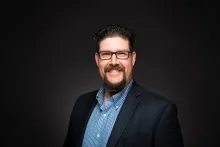
Ben is an elder serving as Pastor for the Salem, Eugene, Roseburg, Oregon congregations of the United Church of God. He is an avid outdoorsman, and loves hunting, fishing and being in God's creation.
