
Aaron Dean
This transcript was generated by AI and may contain errors. It is provided to assist those who may not be able to listen to the message.
2016 presidential election, the race for that. It's been in the news for a long time. We'll be in the news probably for the rest of the year, but that officially got off to a start last week with the Iowa caucuses recently. Now it looks like it's narrowing down to maybe five or six possible candidates that are going to be in the race to the end. We don't know who the final two will be.
It will be facing off this next November. But will either of them, doesn't matter who it is, will either of them be able to change the course that our nation is now on? Not likely. And if they can change the course, it'll probably be very very short-lived. You know, you think about this coming year and you wonder, well, what's what's going to take place this coming year? We don't know. What's going to happen? What's it going to be like? What events are going to take place? It might alter the course of who's going to be elected president or whatever. We could be heading into some rough sailing this coming year when you look at all the things that are going on here in the United States and around the world.
But with all the attention being given to politics, little attention has really been given to much what's going on the rest of the world. And there's a lot of chaos, a lot of problems around the world. But everything here seems to be centered on the presidential election. But any, you know, you think about it, any given day, something could happen in some part of the world that could just blow up and change the course of our lives, our history right now.
That could affect every one of our lives. Now, one thing we know, when you look around the world, what do you see? You see a lot of chaos. And wherever you see a lot of chaos, you can know one thing for sure. Satan, the devil is behind the chaos, stirring things up. And his number one target, you know, maybe target other people who wants to get rid of anybody he can, but I think Satan's probably number one target is the true people and followers of Jesus Christ, the poop people of God.
Of all the people on earth, God hates God's two people more than anything else. And whatever he'd like to do, anything he can to cause them trouble, cause them to be divided against one another, get them more scattered. He'd like to destroy God's people, disrupt their lives in any way he can, by any means. And here's the thing that's scary. What does Revelation 12, 12 say? I'll just quote it. It says, Woe to the inhabitants of the earth and the sea, for the devil has come down to you having great wrath because he knows that he has just a short time left.
And we're in that time now. We're very close to it. And that's scary. Great wrath. And his greatest wrath is going to be directed towards the true people of God, you and me. So we were rapidly approaching that day, and as Timothy put it, or as Paul put it, I should say, in 1 Timothy 3.1, we are now living in very perilous times, as we're told, for the last days. And first, excuse me, not first Timothy, 2 Timothy 3.1. So it could be a rough year, I don't know, for the people of God, especially. With that in mind, what should we all be focusing on, spiritually speaking?
What should our focus be? That's what we'll look at today. We will look at what should our spiritual focus be for the times that we're now living in, in the year ahead of us for this year, and maybe the times beyond that, depending on how much time we have. The title I have for my sermon here this afternoon is, My Sheep Hear My Voice. My sheep hear my voice. That's taken from John 10, verse 27. I want to look briefly at that scripture, at the context.
It's very interesting to look at the context in which price made that statement. Do we know what the context was? What was happening right at the time he said that? And what advanced does it look to? And how's the tie-in to that statement? Let's go turn to John 10, verse 27.
Christ said, My sheep hear my voice, and I know them, and they follow me. When did Christ say this? It tells us right here. John 10, just a few verses back, verse 22. Now it was the Feast of Dedication in Jerusalem, and it was winter. The Feast of Dedication, that's referring to what the Jews call Hanukkah. It's also called the Festival of Lights. Hanukkah is an eight-day festival which begins on the 25th of Kislev, which is the ninth month on the Hebrew calendar, corresponding roughly to our December. It commemorates the rededication of the temple after it had been destroyed by Antiochus Epiphanes, or Antiochus IV, back in about 165 BC, I should say. Antiochus Epiphanes, or Antiochus IV, was the king of the Greek sol-Eukat Empire from 175 to 164 BC, and he totally destroyed this temple about 165 BC. He sacked Jerusalem, he slaughtered thousands of Jews who had not converted to Greek Hellenism, Greek culture, and he did that beginning in 167 BC for a period of about three years. And he also greatly defiled the temple. He defiled the temple by offering swine's flesh on the altar and by rededicating the temple to the Greek god Zeus. And that led, of course, to the revolt of the Maccabees. A lot of you are familiar with that. He was recorded in first and second Maccabees, those apocryphal books, but they gave a true history of that period of time. So the time leading up to the time pictured by Hanukkah was a time of great tribulation. It was one of the darkest hours in Jewish history. So the context of John 10, 27, where Christ said, my sheep hear my voice, was in the context of a time when God's two followers, back at that time, during the time of Antiochus Epiphanes, they had to stand up to tyranny and lay their lives on the line as never before. And you wonder, well, we have to do that someday. And it was a time back then when those two followers of Jesus Christ, not Jesus Christ, as we didn't know him then, but he hadn't appeared as a son of a man yet, were the two followers of God, they had to come together and stand together, as the Maccabees did. They had to stand together against a horrible, horrible onslaught against their lives and their people. And they had to know the voice of God. They couldn't listen to man. There's a lot of confusion. They had to know the voice of God, as it was unbelievable life or death pressure to abandon God's ways and God's values. As you did, if you tried to hold the God values, and they got ahold of you, you were put to death and immediately are tortured.
Well, that is the context of Christ's statement, my sheep hear my voice, as referring back to the Feast of Dedication.
Let's note three other things from this particular verse here, from John 10, verse 27, which says, my sheep hear my voice. That's now three things from this particular scripture, the overall scripture, my sheep hear my voice and I know them and they follow me. First, number one, Christ calls them my sheep. The two followers of Christ belong to Christ.
They do not belong to any man or to any group of men. They belong to Christ who purchased them with his own blood. Acts 20, verse 28. Number two, Christ said, I know them.
You know, none of us here know every single person on the face of the earth who was the true follower of Christ who has God's Holy Spirit. We don't know. Once you talk to Pilgrin, you can kind of predict whether or not they're half of God's Spirit or not, and they're fruit by their fruits. But we don't really know who all of Christ's two followers are, but Jesus Christ does. He knows every one of them. He knows who they are. He knows every hair on our head. He knows our hearts. He even knows our thoughts. He knows our strengths. He knows our weaknesses. And He knows our every flaw. And He loves us. All of us who've called Didacard life to Him, He loves us regardless of those flaws or faults. And He still laid down His life force again if He had to. And He knows how to work with each and every one of us to get us to where He wants us to be. Christ knows us better than we know ourselves. My sheep hear my voice. And I know them. I know them. What's the third point Christ makes in this one verse? Third point is, and they follow Me. Why do they follow Christ?
Because they hear, they understand here, and they follow His voice. My sheep hear my voice. They know whether or not something is coming from the mind of Jesus Christ or not. They know that.
John 10, verse 14. Let's go back there just for a second. He says, I am the Good Shepherd, Christ. These are the words of Jesus Christ. I am the Good Shepherd, and I know my sheep, and I am known by my own. My own know Me. They know my voice. Christ is known by His own true followers. They know the true Jesus Christ. They know when something is coming from the voice of Christ and when it isn't. I am known by my own, and they follow Me.
Now I want to break down and expand on three major points we can take from this scripture of John 10, 27. From this scripture, it says, my sheep hear my voice. Now before getting to the first point I want to, besides giving credit to God, I want to give credit to someone else. I'd like to give credit to Evelyn.
I had a sermon prepared. I gave it down in Arkansas, and I was planning on giving it maybe next up here. But I was thinking about it the first part of the week, and I asked that. I said, well, you know, this first sermon here for Saginaw and then later Gaylord, I think maybe I'd like to give something a little different than that particular sermon. So I had to say, well, what do you think would be a good subject or good points to cover for my first sermon for Saginaw and Gaylord? Without hesitation, she rattled out three points. So you can cover this, this, and this. And I was amazed. I thought, whoa, wait a minute. Let me get a piece of paper in a pen quick before I forget it. And I wrote the first one down. I wrote the second one down. And then I thought, what was the third one again? She said, yes. I wrote that down. I said, there's a sermon right there. And actually, it is. I mean, I could do right now. I could take 30 seconds, give you those three points, and that's the sermon I could walk away. That would be it. There was a sermon. But I decided to launch it from this verse, John 10, 10, 27. She per my voice. But I'm going to give these three points now and fill in a little bit as well. But I'm going to state the three points exactly as Evelyn gave them to me. First part of the week. Exactly. Same word she gave to me. Those are the three main points of the sermon. Number one, first thing she said, we must follow Christ.
So that's the first point. We must follow Christ. And that means trusting in Christ to lead us through any and all circumstances we may find or encounter in this life, in this coming year and years ahead of that. It's interesting, as we all know, but that Christ began His earthly ministry. He began by calling 12 men, 12 disciples. And those callings, those individuals that recorded in the Gospels. I just want to look at one area. It's one of those areas that talks about four of those men who were called back in Matthew 4. Matthew 4 verses 17 to 22. Matthew 4 verse 17. From that time, Jesus began to preach and say repent for the kingdom of heaven, His hand. The very beginning now of His ministry. He's going to select 12 disciples to train and spend the next three and a half years with. And Jesus walking by the Sea of Galilee, He saw two brothers. Simon called Peter and Andrew, his brother, passing a net into the sea, for they were fishermen. And He said to them, follow me and I will make you fishers of men. They immediately left their nets and followed Him. Going on from there, He saw two other brothers, James, the son of Zebedee, and John, his brother. And the boat with Zebedee, their father, mending their nets. And He called them. And immediately, they left the boat and their father and followed Him. Now, first of all, these were ordinary people, like you and me. We had ordinary jobs, there were fishermen, they were just ordinary people. With every day of jobs, like you and me. I want to say something here. I want to quote from William Barkley's New Testament study Bible, what he says in this particular verse. It is not to be thought, he says, that this was the first time that he had seen them, or they him. As John tells the story, at least some of them were already disciples of John the Baptist, John 1 35. No doubt they had already talked with Jesus and had already listened to Him, but in this moment there came to them the challenge, once and for all, to throw in their lot with Him. You know, that's also true of all of us, isn't it?
In our calling to follow Christ, we had to decide if we would meet the challenge to, once and for all, throw in our lot with Jesus Christ, to follow Him, to be one of His two followers. And it wasn't an easy decision, but the point, God opened our minds, and finally at one point we had to make that decision. Am I going to commit to this? And how's that going to change my life? Am I going to follow Christ regardless of what happens next, whatever that means, and where He's going to lead us? You know, Christ warned some who wanted to follow Him that it wouldn't be easy. Matthew 8. Let's go over a few chapters, I should say. Matthew 8 verses 19 and 20. Matthew 8, 19, a certain scribe came and said to Him, teacher, I'm going to follow you wherever you go.
But Jesus said to him, He didn't say great, you know, that's wonderful. I'm going to bring some more with you. No, He said, foxes have holes, and birds of the air have nests, but the Son of Man has nowhere to lay His head. Do you realize what that means? Do you realize what that might entail, what you might have to lose or give up to keep that kind of a commitment?
This is all whole true of all of us, our calling to follow Christ. We had to just make that decision, but He was warning this particular individual that it might not be easy. It might be sacrifices you'd have to make along the way. It might not always go just as well as you'd like.
Following Christ would at times require living by faith, He was telling this man, and putting the entire direction of your life into God's hands. That's what it might require. That's what He was telling him, basically. Going on in verse 21, another disciple said to him, the Lord, let me first go and bury my father. Nothing wrong with that. But Jesus said to him, follow me and let the dead bury their dead. Christ warned this individual there would be times where following Christ would mean putting Him ahead of maybe family matters. Nothing wrong with those, keeping a commitment to those family matters. It might become a time when you might have put me ahead of that. We should be committed to our families, of course, but Christ here in a powerful way is expressing that even the closest family ties must not be said above our allegiance to Jesus Christ. In that come a time we have to put that allegiance to Christ first.
Matthew 10, another chapter over here, Matthew 10, beginning in verse 34.
Do not think that I came to bring peace on earth, but I did not come to bring peace but a sword. For I have come to set a man against his father, a daughter against her mother, and a daughter in law against her mother in law. And a man's enemies might become those of his own household.
But because he who loves his father or mother, we should love our father and mother and our family. He didn't say you're not supposed to do that, but he says, who loves them more than me is not worthy of me. And he who even loves a son or daughter more than me is not worthy of me.
So Christ is saying that allegiance to him and following him has to come first and foremost, even above our family and our closest loved ones, if that might be the case at times.
But following Christ not only means loving Christ more than our own families, it means loving Christ even more than our own lives.
Let's say Matthew 10, verse 38, Because he who does not take his cross and lay his life on the line to follow me is not worthy of me. And it might come a time, he says, when he who finds his life and puts his saving his life ahead of me, he may lose it. And he who loses his life for my sake, he's going to find it. He's going to find eternal life. Maybe you have to lay down your life, you might lose it. But don't worry, he says, if you do, you will find eternal life.
So sometimes we might have to love Christ even more than our own lives. It also means loving Christ more than material possessions and more than material success in this life. Matthew 19, a few more chapters back. Matthew 19, verse 20.
Young man said to him, well, all these things, he talked about keeping the commandments before that, and he said, yeah, I've kept all your commandments. All these things I've kept from my youth.
What do I still lack? I've obeyed you and I've kept your commandments from my youth.
What do I still lack? Verse 21, he said, if you want to be perfect, now he's not telling us to go sell everything we have, but he's making that point here, principle, what it's going to be like to follow Christ. If you want to be perfect, go sell what you have and give to the poor, and you will have treasure in heaven and come and follow me. But when the young man heard that saying, he went away sorrowful, for he had great possessions. You know, somebody had great possessions. You think he would be willing to give a little bit of that to the poor? But this man was very sorrowful. His security lied in his possessions. That was his mistake. Then Jesus said to his disciples, Assurelai, I say to you that it is hard for a rich man to enter the kingdom of heaven. Why? Because he's going to trust his security to his riches. But you know, you can lose your riches overnight. The economy can collapse. A lot of things can happen. It can all be gone. Our only security is in God and in Jesus Christ. And that's the point he was trying to make to this individual. Because the Father of Christ means putting our security and our future entirely into his hands.
And it tells even more than that, as expressed by the Apostle Peter. Let's turn to 1 Peter 2.
1 Peter 2. Let's begin in verse 17. 1 Peter said, Honor all people, love the brotherhood, fear God, honor the king. 2 Serb its beasts admissive to your masters with all fear, and not only to the good and the gentle, but also to the harsh. 3 For this is commendable if, because of conscience toward God, one endures grief, suffering wrongfully. 4 For what credit is it if when you are corrected for your faults and you take it patiently? But what about when you do good and you still suffer wrongfully? Somebody takes it wrong and they accuse you of something you're not really guilty of at all. 5 What if you do good and suffer for it? What if you take that patiently and put it in God's hands? He says, Wow! God looks at it and says, This is really commendable for God. There's one of my true followers. He's putting everything into my hands. He's not trying to get retribution or revenge.
And then he says, speaking that about being suffered wrongfully and taking it and putting it in God's hands, he said, verse 21, 4, To this you were called, because Christ also suffered wrong for us. He suffered wrongfully for us. I'll leave you with an example that you should follow his steps, who committed no sin, nor was deceit found in his mouth, who when he was reviled did not revile and return. And when he suffered and suffered wrongfully, he did not threaten, but committed himself to God who judges righteously.
So to follow Christ means to share in a small portion of his suffering, to share in a small portion of his wrongful suffering.
And he says that's commendable before God. Why? Because to this, it says here, to suffering wrongfully, we were called. We were all called to go through wrongful suffering. That's a part of our calling. So I have to ask the question, why? Why is that? Didn't Christ suffer wrongfully for us? Why do we have to suffer wrongfully? Why is that a part of our calling? Why are we called to suffer wrongfully? Well, it says here, one answer says that you should follow in his steps. You should follow Jesus Christ because he suffered wrongfully. We need to follow in his steps. But then I have to ask another why. Why should we have to follow his steps when it comes to suffering wrongfully? Didn't he do that for us? Why is it important for us to have that same experience?
Because, think about it, it's very, very important. Who is the God of this world? Satan. And under the rule of the God of this world, under the rule of Satan, millions and millions, even billions of people, all around the whole world, have suffered wrongfully. That's what Satan does. He brings on wrongful suffering to the entire world.
What are we supposed to become? We're supposed to become kings and priests to our God. And we're going to reign on the earth. Revelation 5, verse 10. And if we're going to do that, we're going to be there, ruling on the earth with Jesus Christ and helping the people of the earth who've gone through all this horrible, wrongful suffering in their past lives, in the lives of the people of the earth. Whose they'll still be living when Christ returns. We will have to understand and be able to relate to those people to help them. They're going to be traumatized, as nobody's ever been traumatized.
We're going to have to understand what it's like to have to suffer wrongfully, as all of them have. So I understand what you've been through. I experienced a little bit of that myself.
But it tells us the answer to that is also given to us by the Apostle Paul in his second letter to the Church of Corinth. Let's go to 2 Corinthians chapter 1.
2 Corinthians chapter 1 verse 3, beginning in verse 3. 2 Corinthians 1 beginning in verse 3, Blessed be the God and Father of our Lord Jesus Christ, the Father of mercies and the God of all comfort.
You know, we've all experienced that, haven't we? We've all gone through wrongful suffering. We've put it in God's hands, had to learn that. And you know what's happened? You used those who've gone through it. You've received a miracle of comfort. God can comfort us in a way that no one else ever could when we go through those things. The God of all comfort, who comforts us in all of our tribulations that we go through and sufferings we go through. Why? Why does God comfort us? That we may be able to comfort others who are in any trouble with the same comfort with which we ourselves were comforted by God. So we can understand that, and we can comfort others because millions of people need to be comforted and receive God's comfort. And if we've gone through that and we understand that experience, we can relay that on to them and give them encouragement. For as the sufferings of Christ abound in us, so our consolation also abounds through Christ. And if we are afflicted, verse 6, it is for your consolation and for your salvation to help you achieve salvation and not let that suffering turn you into bitterness or cause you to get stumbled or go the wrong direction.
And because if we've gone through that, it's then effective to help you endure the same sufferings, which we also suffered. Or if we are covered, it is for your consolation and for your salvation. And I hope for you as steadfast, because we know that as you are partakers of the sufferings, so also you will be our takers of God's consolation. For we do not want you to be ignorant brethren of our trouble, which came to us in Asia, Paul says, or Peter says, Paul, Paul says, which came to us in Asia that we were burdened beyond measure and above strength, so that we despaired even of life.
Yes, we had the sentence of death in ourselves, that we should not trust in ourselves, but in God who raises the dead. Even if we might lose our life, we didn't have to worry, because we know God can raise us back to life, eternal life, who delivered us from so great a death and does deliver us, and whom we trusted, he will still deliver us. So we're called to suffer wrongfully, so that in the future we can comfort and console and encourage others who have suffered wrongfully, and to help them help them attain the same salvation that God through Christ is granted to all of us, or will have granted to all of us.
Revelation 14.
Revelation 14, beginning in verse 1, just for two verses here.
Then I looked, and behold the Lamb, standing on Mount Zion, of course, that Lamb being referenced to Christ, the Lamb of God, and with Him 144,000, having His Father's name written on their foreheads.
And I heard a voice from heaven, like the voice of many waters, and like the voice of a loud thunder, and I heard the sound of harpists playing their harps. And they sang as they were a new song before the throne of God, and before the four living creatures, and before the elders, there are gods thrown there, these spare beans. And no one could learn that song except the 144,000.
Who were redeemed from the earth.
Why could no one learn that song as if the 144,000? Why?
Verse 4, these are the ones who are not defiled with women, for they are virgins. That is, these are those who are not defiled with false teaching. They remain faithful to God, no matter what, even giving up their lives. They were not defiled with false teachings, for they are spiritual virgins. They held true to God, and refused to compromise God's teachings and God's laws, or the teachings of Jesus Christ.
These are the ones who are not defiled with women, for they are spiritual virgins, and they are the ones who follow the Lamb wherever He goes. That's what we're talking about, following Christ, isn't it? We must follow Christ. These are the ones that follow the Lamb wherever He goes.
So the first main point we can take from John 10, 27 is we must follow Christ wherever He goes, in whichever direction that may take our lives.
The second main point we can take from John 10, 27, the second thing came out of Evelyn's mouth, just like that.
What did she say next? She said, the second point I think would be good to point out is we must stay together. We must follow Christ, and we must stay together.
What is this coming year going to bring?
We don't know. But at any time, at any given day, a spark could ignite and send the entire world into a period of great tribulation. It could happen at any time. It all takes its one event. On June 25, 1914, a teenage Serbian nationalist assassinated Archduke Franz Ferdinand and his wife Sophia in Sarajevo, and that was the spark that ignited World War I, that led to millions of lives being lost.
On September 1, 1939, Hitler invaded Poland, which ignited the spark that ignited World War II.
Because we all know what happened on September 11, 2001. The attack against the World Trade Center and the Pentagon, and it would have been more if they could have done it, maybe even the White House, the other plane that went down in Pennsylvania. That was a spark that ignited a war on terror, which is still ongoing today, and changed everybody's life from that moment forward.
On what day will another spark ignite? The abomination of desolation, which will then lead to the Great Tribulation. Let's go back to Matthew 24.
Matthew 24, verse 14. And this gospel of the kingdom will be preaching all the world as a witness to all the nations, but then the end will come.
Therefore, he said, Christ warned us, he said, this is going to happen just before the time of the end, before Christ's return.
Jesus, a short time before that, he says, therefore when you see the abomination of desolation spoken of by Danny the prophet standing in the holy place, whoever reads, let him understand. When that happens, let those who are in Judea flee to the mountains. Let him who is in a house's house top not go down to take anything out of the house. Don't worry about trying to pack your belongings.
And let him who is in the field not go back to get his clothes. Woe to those who are pregnant and those who are nursing babies in those days, and pray that your flight may not be in winter or on the Sabbath. One thing I really hear is about verse 20. He's talking about the end time, just before Christ's return. He says, pray that your flight not be on the Sabbath. Jesus Christ knew the Sabbath would still be observed and important in the time of the end. It wasn't going to be changed Sunday. He calls it the Sabbath. Pray your flight not be on the Sabbath. But why does he say all these things? Going on in verse 21, For then it will be great tribulations, it has not been since the beginning of the world until this time, known or ever shall be, unless those days were shortened. No flight should be saved.
All life on earth could be wiped out. But for the elect's sake, for those people who are remaining faithful to God, who are laying down their lives, are trusting God with their lives, those days will be shortened. God is not going to allow the world to be destroyed. What will happen to the elect in the months and years leading up to this particular time?
Going back to verse 9 of Matthew 24.
Well, some things that might happen. They will go over some of you up to tribulation. They will take your lives. But don't worry, because if you remain faithful to God, it doesn't matter if the Lord of mercy could take your life, because I'm going to preserve your life, and you're going to be given eternal life. But you're going to be hated by all nations for our namesake, and Christianity is already being hated in general, let alone what true Christians are going to be like in the years ahead. Because Satan is going to go after them. Satan hates them. That's why hatred is going to be stirred up against the two followers of God. And then what's going to happen? Many will be offended, and some will even betray one another, and will begin to hate one another. And many false prophets will arise and deceive you. Will arise and deceive many. And because lawless will abound, the love of many will grow cold. People who've loved one another, it'll grow cold.
They'll be worried about what's happening. They'll be thinking about how can I escape this? How can I save my life?
But we must make sure that that never happens, that our love for one another never grows cold.
Almost all of us do to ensure that. Verse 13. He who endures to the end shall be saved. We have to endure to the end.
More than anything else, what will help us to do that? What will help us in these kind of times that we might have to face? What will help us to endure to the end?
What will help us? Staying together.
And never allowing anything to divide us or to turn us against one another. Because that's what Satan wants to do. That's his tactic.
We must stay together, and our love for one another must remain strong. That's going to help us to stay together and to see us through whatever we have to see through. Let's go to 1 John 2.
1 John 2, verse 7.
Begin verse 7 of 1 John 2. Brethren, I write no new commandment to you, but an old commandment which you've had from the beginning. The old commandment is the word which you heard from the beginning. But again, verse 8. Again, a new commandment I write to you.
Now first, what was the old commandment that you had from the beginning? We don't have to guess, because John tells us here in 1 John 3, verse 11. 1 John 3, verse 11. For this is the message that you heard from the beginning, going all the way back to the beginning of the Old Testament, even, that we should love one another. That's not new. That was God's intention from the very beginning, and we should love one another. So the old commandment was to love one another. What then is this new commandment that was also the old commandment which you heard from the beginning? Well, John tells us that as well. John 4, 1 John, I should say, 1 John 4, verse 21. And this commandment we now have from him, from Jesus Christ. This is a new commandment that Jesus Christ gave us, that he who loves God must love his brother also.
That's the commandment we have from Jesus Christ. Now, let me ask a question. This might be a little hard to follow. But if the old commandment is that we should love one another, and the new commandment is that we must love our brother also, why then is this new commandment really a new commandment? Aren't they both basically the same? Why is loving our brother a new commandment, and we must love one another the old commandment? Aren't they both the same, basically? So why is it we must love our brother? Why is that a new commandment then? Isn't it basically the same as the old commandment? What's the difference?
There's a major difference. It's extremely important that we understand what that difference is.
The world we now live in is headed into spiritual darkness, like it never has before.
He's heading into the greatest spiritual period of darkness the world has ever known, and that's about to come upon on the world in our time. The time's just ahead of us. Satan knows this time is short.
He's going to thus try as never before to divide and destroy the two followers of Jesus Christ.
And just look at our history. He's already got a good start on that, doesn't he? Look at how divided the two people of God are. And when he gets them divided, the more smaller they get, the more he can get to them, the more vulnerable they become.
Look at what we are now facing in the years just ahead of us. The commandment that we must love our brother takes on much greater and much more significant meaning because we're entering into a period of great spiritual darkness. And the two followers of Christ are going to be the only spiritual light in the world that's going to be left. God's two followers will be the only true light to take away a portion of that darkness that's now going to engulf the world. 1 John 2, verse 8.
1 John 2, 8, Again, in new commandment I write to you, which thing is true in him and in you, because the darkness that we're now in, it's going to pass away. And there is a true light in that darkness. The world's going to never ever govern. There is a true light there. And that true light is already shining. That's talking about us. Those who have God's Holy Spirit.
How important is it then for us to love our brother? Verse 9. He who says he's in the light and he doesn't love his brother, but he hates his brother. He's really in darkness. And he who loves his brother abides in the light and there is no cause for stumbling in him.
See, there's no cause of stumbling if we all stay together and be a part of that light.
Verse 11. But he who hates his brother is in darkness and he walks in darkness and does not know where he's going, because the darkness has blinded his eyes. See, if we don't love one another, we will still be in darkness. We'll still be in a state of blindness, not seeing or understanding what we are.
Let's go back to 1 John 1. Pick it up in verse 5. This is a message which we have heard from him and declare to you that in God is light and in him is no darkness at all. So if we say that we have fellowship with him, with God and with Jesus Christ, and we walk in darkness, we lie. We cut ourselves and we do not practice the truth. But if we walk in the light as he is in the light, then we have fellowship with one another. See, the second main point we can take from John 10.27 is that we must stay together to be a light in an ever darker world that's coming upon us. We must continue to have fellowship with one another. We must stay together. That's very, very important. That fellowship, staying together, encouraging one another, supporting one another, is extremely important for the times just ahead of us. Now, the third and final point that we can take from John 10.27, the third thing that Evelyn told me and said to me that I had said I gotta write that one down too. She said, Christ as our shepherd will see us through.
You know, the number one threat facing America right now is not global warming or climate change, as are usually stated by our current president. We don't have to worry about the earth being destroyed by climate change. Just real quick, we're told that by God himself in Ecclesiastes. Let's go back to Ecclesiastes 1. Look at a few verses real quick. This could be another sermon. 1st Ecclesiastes 1, verse 3. What profit is a man from all his labor in which he toils unto the sun? One generation passed away and another one comes. But the earth abides forever. The earth is going to abide forever until Christ, or God himself, determines he's going to destroy it so he can create a new earth. That earth is not going to be destroyed by global warming or climate change. It's not going to be destroyed until God decides to destroy it to create a new earth. He says, the earth abides forever. Verse 5. The sun also rises and the sun goes down.
And it hazes the place where it arose. The wind goes toward the south and turns around to the north, and the wind rolls about continually and comes again on its circuit. God created the earth's weather patterns. And He created all the laws which regulate those weather patterns.
But what about the danger that some people are proclaiming now about the possible global warming or climate change that might cause the glaciers to melt? And the polar ice to melt? Or will we raise the level of the oceans to cause coastal flooding and to start destroying not millions of lives? Well, it's interesting to say what verse 7 says here. Verse 7. All the rivers run into the sea. What if the glaciers melt? All that? Those water run into the sea. But the sea's never full. Hmm. It's a place which the rivers come. There they return again.
Why are the seas never full? Why do the rivers return again to the place from which they came? What law of God regulates that? The law of evaporation. Water evaporates. It goes up into the clouds. It's formed in the clouds. It forms rain. It falls back to the earth. Evaporation goes back. The constant cycle. God has laws that regulate the earth. So it won't be destroyed by something like that until God sees fit to do it himself.
Now, what's the number one threat facing America right now? Number one threat facing America, even as given by Americans themselves in a recent poll, is the threat of global terrorism. Islamic terrorists, they hate the West. They hate Israel. They hate the United States. They hate the descendants of Abraham, Isaac, and Jacob, basically. That's who Satan wants to destroy.
What if those people, those Islamic terrorists, ever got their hands on weapons of mass destruction?
That is now becoming a major threat and a major concern that all the leaders of the world are having to acknowledge. But we have an assurance from God himself that Christ, as our shepherd, is going to see us through. 1 Peter 5, verse 4, Christ is referred to as being the chief shepherd. I'm not going to turn there. He's referred to as being the chief shepherd from whom we will receive the crown of glory that does not fade away. As our chief shepherd, Christ will continue to guide us and protect us through whatever we may have to face in the years ahead in our lives.
Right to the end of our life. Let's go to Matthew 10.
Going back to the book of Matthew to Matthew 10.
This is what Christ himself assures us of. Matthew 10, verse 28. Christ himself said, Do not fear those who kill the body, who could take your physical life, but they cannot kill the soul. They cannot take away your spiritual life. But rather fear him as able to destroy both soul and body in hell or in Gahanna. See, man can take our physical life, but man cannot take away our spiritual life. He cannot destroy the spirit in man. There is a spiritual essence in man. He can't destroy the spirit in man, which returns to God when our physical life ends. Ecclesiastes 12, verses 6 and 7. I will use that scripture in funeral memorial services, in term of services, to encourage anybody, even if they don't understand the truth.
Matthew 10, verse 28. Again, Do not fear those who kill the body, but cannot kill the soul, but fear rather him was able to destroy both body and soul in Gahanna. And then, verse 29, to show the value we have as a human being made in God's image, are not too sparrows' soul for a proper coin.
And not one of them falls to the ground apart from your father's will. God even notices every sparrow that dies. Can you believe that? Every bird is important to God. Every creature he's ever created.
And then, he says in verse 30, as I referred to earlier, but the very hairs of your head are all numbered. God knows so much about it. He knows how many hairs we have in our head, or maybe don't have.
Verse 31, Do not fear, therefore, you are far more valuable than many sparrows.
Therefore, whoever confesses me before man, him I will also confess before my father, who is in heaven, so you can be granted a gift of eternal life. And when it comes to Christ seeing us through any and all threats by mankind, or by terrorists, or by disease epidemics that are now raging in some parts of the world, it doesn't matter. One of the most encouraging chapters in the entire Bible is Psalm 91.
Let's go to Psalm 91. Psalm 91, beginning in verse 1. I just want to read a few verses here. I think it's extremely encouraging as we face very uncertain times, and times of terrorism we're living in now.
If we put our trust in God and our faith in God and remain faithful to God through any and all things that happen to us, here's what God assures us, promises us. He who dwells in the secret place of the Most High shall abide under the shadow of the Almighty.
I will say to the Lord, He is my refuge. He is my fortress. He is my God, and Him I'm going to trust. I'm not going to trust in my my house, my bank account, my wealth. I'm going to trust in God no matter what happens.
Because surely He will deliver you from the snare of the fowler, verse 3, and from the perilous pestilence, no matter what disease epidemic is taking place or plague. He shall cover you with His feathers. Under His wings, you shall take refuge. His truth, holding on to His truth and His principles and His way of life, His truth shall be your shield and your buckler. That's all you need for protection.
You shall not be afraid of terror by night, nor of the arrow that flies by day. You don't have to worry about missiles coming in, or pestilence that walks in darkness, different plagues, nor of destruction that may lay waste at noon day.
A thousand may follow your side and ten thousand at your right hand, but it shall not come near you. Only with your eyes shall you look and see the reward of the wicked, because you have made the Lord, who is my refuge, even the most high, your dwelling place. No evil shall befall you, nor shall any plague come near your dwelling. Verse 11 and 12, for he shall give his angels charge over you to keep you in all your ways, in their hands they shall bear you up, lest you dash your foot against the stone. These last two verses, interestingly, were the verses quoted and misapplied, I should say, by Satan in his Temptation of Christ, as recorded back in Matthew 4, 6. But they're not talking about tempting God by jumping off of a wall or by jumping off a tall building, as Satan interpreted them and used them. They're talking about Christ as the chief shepherd, protecting us and seeing us through any and all dangers and threats that we may have to face in our lives in the years ahead. And they are telling us that Christ as our shepherd, that Christ the shepherd is going to see us through any and all things. He will see us through to the end if we continue to trust in Him. Quickly then, in conclusion, remember John 10, 27, my sheep hear my voice, and those who hear Christ's voice know three things. Number one, that we must follow Christ. Number two, we must stay together. And number three, that Christ as our shepherd will see us through. He will see us through to the end, so we'll be given the very precious gift of eternal life in God's kingdom.
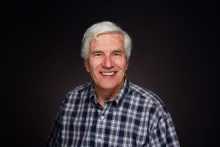
Steve Shafer was born and raised in Seattle. He graduated from Queen Anne High School in 1959 and later graduated from Ambassador College, Big Sandy, Texas in 1967, receiving a degree in Theology. He has been an ordained Elder of the Church of God for 34 years and has pastored congregations in Michigan and Washington State. He and his wife Evelyn have been married for over 48 years and have three children and ten grandchildren.
