

Don Ward
This transcript was generated by AI and may contain errors. It is provided to assist those who may not be able to listen to the message.
The Nature of God in Christ Part 2. And we're going to focus more today on the oneness of God. But we need to understand what others teach on it, what they believe, and also lay some foundation. So last week we explained the classical Trinitarian view of God in a triune sense of three inseparable persons who act in unison. There is a distinction to be made between triune and triad. Triune means that three persons are inextricably linked together. That's the Trinitarian model. You cannot take one of those out because they say that that is the essential nature of God, that His essential being requires that these three, God, Son, and Holy Spirit, act in unison. They interpenetrate each other and they act as a whole. We pointed out that when Jesus Christ, or when the Word, was incarnated into the flesh, if that were the case, then you have a fourth entity that is introduced, a fourth being. You would have the Son being eternally generated in the heavens, as they say, and yet you have Jesus Christ in the flesh and you have the same thing with the resurrection. And also, we see in the Scriptures that Jesus Christ is sitting on the right hand of the Father. Now, in the Church of God, we speak of God the Father and God the Son, Jesus Christ, and we speak of the Holy Spirit. We speak in a triad sense, not in a triune sense, because we know that the Holy Spirit is not a person, that the Holy Spirit is the essence of God in Christ. Remember John 4.24. That should be a memory Scripture. God is Spirit. Those who worship Him must worship Him in Spirit and in truth. Now, sometimes in the Churches of God, ministers will say that the Holy Spirit is God's power. That's like their definition of the Holy Spirit. The Holy Spirit is God's power. Turn to Zechariah chapter 4 and verse 6. Technically, that is not correct. You say, oh, well, it's not. No, it's not. And I'll show you why it's not.
God is Spirit. That's John 4.24, the very words of Jesus Christ Himself. God is Spirit. Those who worship Him must worship Him in Spirit and in truth. In Zechariah 4 and verse 6, then He answered and spoke unto me, saying, Thus, or this is the word of the Lord unto Jerubabel, saying, Not by might, nor by power, not by might, nor by power, but by my Spirit, says the Eternal. No. God does works of power through His Spirit. But God is Spirit. His essence, His being is Spirit. Just as our essence, our being is flesh. The Holy Spirit is directed by God and Christ. Notice now Psalm 104 verse 30. Psalm 104 and verse 30. And let's turn as quickly as we can. I'm turning to all of these myself that we say to turn to in Psalm 104 and verse 30. You send forth your Spirit. So the Holy Spirit is under the direction of God and Jesus Christ. You send forth your Spirit. They are created, and you renew us the face of the earth. The glory of the Lord shall endure forever. The Lord shall rejoice in His works. Forward to Psalm 148. Psalm 148.
In Psalm 148 and verse 5, Let them praise the name of the Lord, for He commanded, and they were created. So the Holy Spirit in doing the works of power is under the direction of God the Father and or Jesus Christ.
Let's turn now to John 15 and verse 26 and note once again that the Holy Spirit proceeds from the Father. That is not to say that Jesus Christ is not a spirit being, He is. But the Father is said to be our Father. He is the one that begets us with the word of truth. And if Jesus Christ were the one that begets us, then He would be called Father. Notice the clear words of Jesus Christ in John 15 and verse 26. But when the Comforter is come, Comforter the Holy Spirit, John 14.28 tells you that the Comforter is the Holy Spirit. When the Comforter is come, whom I will send unto you from the Father, from the Father, even the Spirit of truth, which proceeds from the Father, it shall testify of Me. So Jesus Christ says that He would send the Holy Spirit from the Father, that which proceeds from the Father. Now to Titus chapter 3. Titus chapter 3.
We'll begin in verse 5. Titus chapter 3 and verse 5. Not by works of righteousness which you have done, but according to His mercy He saved us by the washing of regeneration and renewing of the Holy Spirit, which He shed on us, He God the Father shed on us abundantly through Jesus Christ our Savior. Now exactly how that works altogether, I don't know for sure. But the Scriptures say that the Holy Spirit proceeds from the Father, it is shed on us through Jesus Christ. Furthermore, we must understand, there is one Spirit essence. Like it talks about human beings being of one blood that all the nations come from, as Paul talks about in the book of Acts. So let's turn to Ephesians once again. Many of these we turned to last week, or at least we referenced them in Ephesians chapter 4.
And we're going to begin in verse 2. Ephesians 4 in verse 2.
With all lowliness and meekness, with long suffering, forbearing one another in love, endeavoring to keep the unity of the Spirit in the bond of peace, there is one body and one Spirit, even as you're called in one hope of your calling, one Lord, one faith, one baptism. Now in Hebrews 6 it mentions baptisms plural. There are three baptisms mentioned in the Bible. There is the baptism, here he's talking about the baptism into the body of Christ. There is one baptism into the body of Christ, and that is through God's Spirit, which we'll turn to 1 Corinthians 12 in just a moment. There is the water baptism, and there's also the baptism by fire, which of course we don't want. One Lord, one faith, one baptism. One God and Father of all, who is above all and through all, and in you all. There we begin to get into the unity of God, of Christ, and each one who has the Holy Spirit. One God and Father of all, who is above all and through all and in you all. So it's correct in the Bible to say that God is in you, that Christ is in you, that the Holy Spirit is in you because the Holy Spirit is the essence of God and Jesus Christ. In 1 Corinthians, 1 Corinthians 12 and verses 12 and 13, I call these two verses, the greatest unity verses in the Scriptures. 1 Corinthians 12 verse 12. For as the body is one and hath many members. So here we see a collection of parks making up one body. In all members of that one body having many, being many, our one body, so also is Christ. So all everyone that has God's Spirit composes the spiritual body of Christ in that sense today. We are the temple of God. God's Spirit is in us. For by one Spirit are we all baptized into one body. Whether we be Jews or Gentiles, whether we be bond or free, I've been all made to drink into one Spirit. God the Father and Jesus Christ have that Holy Spirit in them. If you have God's Spirit, you have the very divine essence of God in you. Let's turn to that Scripture and note it well in 2 Peter chapter 1, where it uses the term, where Peter uses the term, the divine essence, the very essence of God. In 2 Peter chapter 1, whereby given unto us, this is verse 4, 2 Peter 1.4, whereby given unto us exceeding great and precious promises, that by these you might be partakers of the divine nature, having escaped the corruption that is in the world through lust. The Greek word for partaker is koinonos, k-o-i, koinonos, koinonos, meaning a partner and a sharer of anything. So we share in that divine essence. Partakers, sharers, partners in that divine essence, the very nature of God. So with these fundamental points clearly in view, our purpose is to explain how God is one. Before we explain that critical truth, we need to review the principal views regarding the origin of the sun. Now, once again, when theologians talk about the nature of God, what they're basically addressing has to do with origin and relationships.
Most of the explanations that various models use in trying to explain the nature of God, they draw from theology, they draw from philosophy, they come up with constructs to try to preserve what they call the oneness of God and also to combat or deny polytheism. Now, one of the things that historians say is that one of the reasons why the Trinity doctrine was developed was because the pagans were accusing the Christians of polytheism of worshiping more than one God because they talk about God the Father, God the Son, and they talk about the Holy Spirit.
So they came up with these models. According to Trinitarianism, the Father eternally begets the Son, and the Father and the Son are eternally generating the Holy Spirit. So Trinitarianism tries to make three into one, and they say this is a closed, it is a closed system because they say that if any one of these elements is missing, then that would destroy the essential nature of God.
So it's not possible that anyone else could enter into that system. Yet, they speak of being born again, or born of the Spirit, and being led by the Holy Spirit. And we explained last week that the incarnation of Christ and then the resurrection of Christ shatters the Trinitarian model because you can't have the Son in heaven being eternally generated and on earth at the same time. Now, another view is Arianism. In the Roman Empire, in the third, fourth centuries, great disputes came about regarding and in the Christian world.
There were two basic headquarters that came to be in the Christian world. One was at Antioch, and one was at Rome. Of course, you know that they were first called Christians at Antioch, and Paul wrote an imported epistle to the Romans. And there was a great deal of discussion with regard to the nature of God.
How is God one, and yet how did you account for Father, Son, and Holy Spirit? So, a man by the name of Arius came up with a doctrine which some of the Roman Emperors accepted. And it went back in two between Trinitarianism and Arianism from time to time until it was finally completely settled basically at the Council of Chalcedon. The first council, the Council of Nicaea, defined Trinitarianism, but it was basically set in stone at Chalcedon, which happened, I'd say, maybe 150 years after Nicaea.
What Arianism or what Arius said was that the one who became Christ was a created being, that God created an angel or a being who eventually was made flesh and dwelled among us. Now, the Jehovah's Witnesses teach this. They teach that the one who became Christ, I think they usually use Michael, the Archangel Michael, as the one who became Christ.
So, Arianism believes in pre-existence of the one who became the Son, but they view Him as a created being. Now, what I'm about to say now, if you can get this into your thinking, and you cannot just sit there and not make yourself some kind of notes, in order to be, one of the requirements to be in God is you're uncreated. God is uncreated. The word, the one who became the Son, is uncreated.
So, there's a great distinction made between uncreated beings and created beings. The angels are created beings. Okay, when this began to be discussed in doctrine committees in the worldwide Church of God, and I was on the committee from the beginning, one of the things that they were saying, they who were trying to change the doctrine was that we cannot be on the God plane because we are created beings.
Now, at one point, of course, Adam and Eve were created, and then we had the offspring, and we were here today. It started somewhere. But here is the difference. And God, in His wisdom, and Jesus Christ, in the plan of salvation, created us with the potential of receiving the eternal Spirit. The eternal Spirit, the essence of God, is uncreated, whereas the Spirit that is in angels is created. And so, we have within us that Spirit, that eternal Spirit.
One place I believe it's in Hebrews, chapter 10, I think, where it says, the eternal Spirit. We have that eternal Spirit in us. And, as it says in Romans chapter 8 and verse 11, that by the same Spirit, He raised Jesus from the dead. He will also make alive our mortal bodies. So, once again, you see, when we are made Spirit beings, we are then of that essence of the eternal Spirit, uncreated. And we are in the kingdom of God through a birth process.
All the wisdom and the knowledge and the riches of God, His ways are past understanding, but I think we can understand that because it closely parallels what happens in the human sense. That is a very important distinction. The very definition, flesh and blood cannot inherit the kingdom of God.
Spirit beings in the kingdom of God. And those spirit beings shall have been born at the resurrection of the eternal Spirit. The same Spirit, He raised Jesus from the dead. He will make alive our mortal bodies. Another view states that God's nature was incarnated into the womb of Mary. This view, in effect, asserts that God made up a person and at a certain time put it in Mary's womb, and that's how Jesus Christ came to be.
Whereas the scriptures say that the word was made flesh. The scriptures say that the word was with God and the word was God. We'll read that in just a moment. Another view asserts that there was a man who was an evangelist in the Church of God known as a powerful speaker, Bricket Wood, in the 60s and 70s. He, along with another faculty member at Bricket Wood, Anthony Bazzaud, developed a theory, and that was that Jesus Christ was just another man, a special man that God designated to die for the sins of the world.
A mere man who was designated to die for the sins of the world. Now, the Church of God holds what would be called a binitarian by being two binitarian view of the Godhead as explained in John 1.1. But we do not say that it is a closed system. So let's go to John 1.1 again. Let's wear this John 1 out in John 1 in verse 1. John 1. In the beginning was the Word. Once again, the Greek word was een is the verb to be, meaning to exist. In the beginning, God existed. The Word existed. In the beginning, the Word existed. The Word was with God, showing relationship, and the Word was God's identity. That's who He was. Now, the Jews were familiar with the word terminology. By that, I mean word in quotes. By word terminology, I mean WWORD. John is the only gospel writer who talks about the logos in Greek. None of the other gospel writers, none of the other New Testament writers refer to the one who became Jesus Christ as the Word. John probably wrote his gospel last, and we know that the book of Revelation was probably written in the 90s A.D. But the Jews were familiar with word terminology. And here's how it came to be. As the Jews went into captivity, of course, they had gone into idolatry, committed spiritual fornication. Israel went into captivity first under the hands of the Assyrians, circa 721-718 B.C. Then, 604 to roughly 586 B.C., Judah and Benjamin went into captivity. Now, in Babylon, the Jews learned many of the ways of the pagans. The Jews began to view God in an de-anthropomorphized way. Are you familiar with de-anthropomorphized? First of all, anthropomorphized. Anthrop, or man, is a form of anthropomorphization. When you anthropomorphize God, you ascribe human-like qualities to God. When you anthropomorphize God, you ascribe human-like qualities to Him. He is described in the Bible as having a face and hands and human-like qualities. While the Jews began to make God more and more ineffable, more and more unknowable, and they began to write in the margin, in the marginal reference in the Targums, when God was anthropomorphized, they began to de-anthropomorphize Him. In other words, not ascribe human-like qualities to Him.
There are many, many places where they change this. There's what's called the emendations of the soferene. Turn to Genesis 18, please. Genesis 18. This is quite sobering when you look at this. You put yourself in Abraham's shoes and you say, man, what would I do if this happened to me?
In Genesis 18, and the Yave appeared unto him in the plains of Mamre. The Yave appeared unto him, and he sat in the tent door in the heat of the day. Now, what the Jews began to do, they would, in the place of Yave, they put memra, M-E-M-R-A. And I'm going to read now from the Jewish Encyclopedia. Their words, not mine. The word, the capital W-R-D, the one we know is John 1-1. The word in the sense of the creative or directive word or speech of God, manifesting his power in the world of matter or mind, a term used especially in the Targum as a substitute for Yave when an anthropomorphic expression is to be avoided. So, instead of personalizing God in the anthropomorphic sense, they would use memra. You go on and read this. It's quite fascinating. Verse 3.
Well, let's read 2. He lifted up his eyes, looked and loathed, that three men stood by him, and when he saw there, he ran to meet them from the tent door, and bowed himself toward the ground, and said, My Yave! Now, the way you can distinguish the Hebrew words in most Bibles, that is, the name of God, is if it's all caps, L-O-R-D, it's Yave. If it is capital G-O-D, it is usually Elowim. If it is capital all caps, G-O-D, it is El. My Yave, if now I have found favor in your sight, pass not away, I pray you from your servant. Let a little water I pray you be fetched, and wash your feet, and rest yourselves under the trees. Now I'll get some bread, and so on. And it goes back. Look at verse 17. And the Yave said, Shall I hide from Abraham the thing which I shall do? And so, we have this Yave. These are called theophanies, God appearances to man. And the Jews and the Targums began to write memora, word. In Greek philosophy, they also began to talk about the logos as being God's rational power that ran through the universe and did things in the name of God. Theilou was a Jewish philosopher who tried to merge Judaism and Greek philosophy. The point I'm making here is that when John came on the scene and used this terminology, the word, the Jews knew what he was referring to, even though the other Gospel writers had not used it. That's the point. And what John does, and John was also in his writings, both hear his Gospel in the three epistles, combats Gnosticism. So the word who was with God in the beginning, as explained in John 1.1, is uncreated, as it says in Hebrews 7, 3, and 4, without father, without mother, without descent, without beginning or end of days. So therefore he's God. Remember the definition of God. One of the main requirements to be on the God plane is uncreated. Now we'll be on the God plane, but we get there through a birth process of the Eternal Spirit, which is in us.
Verse 2, the same was in the beginning with God, the Word.
Uncreated, co-eternal, co-essential with the Father. As we explained last week, the Word gave up His glory and took on the form of man. Now let's read verse 12 here in John 1. But to as many as received Him, to them gave He power to become the sons of God, even to them that believe on His name, which were born not of blood, nor of the will of the flesh, nor the will of man, but of God. And at the resurrection, we will be born of God. And the Word was made flesh, dwelt among us, and we beheld His glory, the glory as of the only begotten of the Father. In the Old Testament, the Jews recite the Shema, Deuteronomy 6 and verse 4. And let's go there. The Jews claim to be strict monotheists, that there is only one God. Now the question is, does Deuteronomy 6 verse 4 prove that there is just one God in the Godhead? Deuteronomy 6 verse 4. And in examining this, a few things we want to say before we actually begin the explanation here. For the Jews, the Shema is not only an assertion of monotheism, it is also an assertion in the numerical sense. There's just one God, there's not any other. So it's not just an assertion of of what He is, but it's also an assertion of that there is just one. Now Jesus came proclaiming a controversial and revolutionary message about God and the way to eternal life.
There are two scriptures here that we need to be in the background. You can mark your place there. I had you turn there too quickly. Let's go back to the Gospel of John chapter 1. John chapter 1.
These two scriptures regarding the Father. And John 1 and verse 18. No man has seen God at any time. Yet we know from the Old Testament that Moses saw his hind parts. No man has seen God, that is the Father, at any time. The only begotten Son who is in the bosom of the Father, he hath declared him. Now in John chapter 5. John chapter 5 and verse 37.
Jesus is in the discussion once again with some of the distractors, detractors, detractors. John 5.37. And the Father himself which has sent me, if he didn't exist, how could he send him, had borne witness of me, you have neither heard his voice at any time, nor seen his shape. Heard his voice, yet in Exodus 20, we see that God thunders the Ten Commandments from Sinai. And you have neither heard his voice nor seen his shape at any time. You have not his word abiding in you, for whom he has sent him you believe not. Search the Scriptures, for in them you think you have eternal life, and they are they which testify of me, but you won't come to me.
In the Old Testament, the term is one is used 13 times. In three or four cases, it's put in there by translators to enhance the meaning. We're going to look at a couple of these and to show that is one doesn't mean, in every case, in fact, in almost every case, it means a collection of beings. We'll go first of all to Genesis 2. In Genesis 2, verse 24, Genesis 2 verse 24, Therefore shall a man leave his father and his mother, shall cleave unto his wife, and they shall be one flesh. That Hebrew word for flesh is spelled E-C-H-A-D, E-C-H-A-D. It can refer to a single being. It could refer to a single being, but in most cases, it refers to a collection of things. Notice in Genesis chapter 11. In Genesis chapter 11 and verse 6. I'm not going to turn to all of these. You could easily go to a search engine. You put in, is God, and all of these references will come up. In Genesis 11, verse 6, And the Yahweh said, Behold, the people, the people, more than one, the people is one, E-C-H-A-D, and they have all one language. And this they began to do, and now nothing will be restrained from them, which they imagined to do. Then back to Deuteronomy 6 and verse 4.
Many Jews themselves today, and also scholars, contend that this can no longer be used, or should have never been used, to try to show numerical oneness. That is this verse. Notice the wording in this verse. Here, O Israel, the Yahweh, our Elohim, and Elohim can mean more than one. Let us make, God said, Genesis, God, Elohim said, Let us make man, let us make man in our image. The eternal hour, or the Yahweh, our Elohim, is one Yahweh. Now, some translations word this to say, the eternal hour, or the Yahweh, our Elohim, is one Yahweh. Or, He is God alone. There is no other God. So, you can study this yourself, but the conclusions, the phrase is one. It occurs 13 times in the Old Testament. Eight times the phrase could be applied in the collective sense. Twice the phrase is not applicable, because it's not in the original Hebrew. It's added for clarity. So, we can see that the Old Testament references to is one, does not limit God to one being based on the language. And when Christ came on the scene, they refused to confess that Jesus Christ was the Son of God. And then Orthodox Christianity made a mistake by trying to force the clear references in the New Testament of more than one personality, God the Father and God the Son into one being. So, we have a quagmire, a confusion of various Trinity and other kind of paradigms trying to explain the Godhead. When Yahweh appeared to Abram, as we've seen in Genesis 18, he appeared in human form. Very often when God showed himself in visions to the ancients, he did so in human form. Yet, we have read from John 5 and verse 37 that no man has heard the voice of God nor seen his shape at any time. And Christ said that in John 1.18 that he had come to declare the Father.
In the New Testament, we have something similar.
The Greek word, H-E-I-S, hess, is usually translated one in the New Testament. And if you just look at Strong's Concordance, Strong assigns one number, 1520, to both the masculine Hess and the neuter Hian.
And there's also a feminine word in the Greek, mia, M-I-A, that can be translated one. What is now to turn to John 10 and verse 30?
Hess, H-E-I-S, is a masculine form, and hian is the neuter form of the word. Since these forms convey different meanings, one must determine whether hess or hian is assigned in a particular verse. So in John 10 and verse 30, some have tried to use this to show that there is only one God and not two beings in the Godhead. In John 10 and verse 30, I and my father are one. Once again, hess is a masculine form, hian is a neuter form, and they convey different meanings. And you have to determine whether hess or hian is assigned in a particular verse. In this particular verse, the inner linear, transliterated Bible notes that the word hian is used in John 10 and verse 30.
The Hebrew Greek Key Study Bible states that the masculine hess must be distinguished from the neuter. The masculine form hess means numerically one, while the neuter form hian means one in essence, as in John 10 and verse 30. So when hian is used as it is here, it means I and my father are one in essence, not one being. Now the Jews understood this, as we shall see from the context. Then the Jews took up stones again to stone him. Jesus answered them, Many good works have I shown you from my father, for which of these do you stone me? The Jews answered him, saying, For a good work we stone you not, but for blasphemy, because you being a man make yourself God. So the Jews understood that when the word hian was used, it meant essence, that he was also God. And for this, they tried to stone him.
Now if the Greek word hess, H-E-I-S, was used, it would have denoted one person, one being. I'll read one final note here about this. Barnes, the Barnes note states that the word translated one is not in the masculine, but in the neuter gender. It expresses union, but not the precise nature of the union. It may express any union, and a particular kind intended is to be inferred from the connection. So the connection here is that they are of the same essence. There are two beings. Now we notice John 14 and verse 23.
John 14 and verse 23. Jesus answered and said unto them, If a man love me, he will keep my words, and my father and I will love him, and we will come unto him, and make our abode with him. We both, we will come unto him, and make our abode with him. So we see once again two beings, but of the same essence. So we got part way. So next time we'll do the nature of God and Christ. God is one. Part three. I'm hoping that you will study parts one and two, and be ready for part three. Now we have in the Tate Library, or maybe you should call it CD Library now, we have the class, Fundamentals of Theology, that I teach at ABC, in which this and much more, we spend about 10 days, two hours a day, basically on the nature of God and Christ in those classes. So those classes are available on CD, in the Church Library. I know Mr. and Mrs. Faucher have been listening to that and studying that in recent weeks.
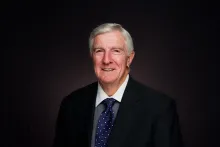
Before his retirement in 2021, Dr. Donald Ward pastored churches in Texas and Louisiana, and taught at Ambassador Bible College in Cincinnati, Ohio. He has also served as chairman of the Council of Elders of the United Church of God. He holds a BS degree; a BA in theology; a MS degree; a doctor’s degree in education from East Texas State University; and has completed 18 hours of graduate theology from SMU.
