
Robin S Webber
This transcript was generated by AI and may contain errors. It is provided to assist those who may not be able to listen to the message.
Well, good afternoon, everybody, and we're going to be moving into the second message here in San Diego on this beautiful Sabbath afternoon. And today we're going to complete our three-part series entitled, Not Without Blood. And it's taken from Hebrews 9 and verse 7, in which the author of Hebrews is commenting about the high priest, that once a year he would go into what is called the Holy of Holies, but as it is said, not without blood. As stated in the first part of this three-part series that I gave, the spark of light, insight, and encouragement to give this message came to me when I was reading through a book by Andrew Murray.
Andrew Murray lived about 120-130 years ago. He was a Christian writer that lived in South Africa. So that's 130 years ago in South Africa that he wrote a book, and I'd like to share the title of that with you if you'd like to further this study. And it is simply called The Practice of God's Presence. I always like to give credit where credit is due, that somebody lights a match and lights come on for everybody else.
And Mr. Murray was quite an author. As we complete this series today, let's remember why we are here today. It's always important to ask the big questions. Why are we here today? Why does God have us observe the New Testament Passover? And ultimately, who are we hearing from today? Is it just simply a man? Is it just simply a pastor? Is it just simply your friend Robin Weber? As we go through the Scriptures, we need to ask ourselves, when it's all said and done, Scripture is about hearing God.
It's about hearing God, and the whole testimony of the Scripture is hearing God sharing His heart, sharing His desire, as we just heard in the previous message, as a Father to each and every one of us. And not only God the Father shares His heart, but nearly 2,000 years ago, Jesus Christ, on that night in which He was betrayed, was also sharing His heart with His disciples, not only then in an upper room in Jerusalem, but to all of the disciples down through the ages that are reading this Word today.
And in Luke 22, I'm going to go over there. Join me if you would for just a second. In Luke 22. And I would like to ask you to think of this as Jesus, Yeshua, of Nazareth, saying this to you as one of His disciples in 2022. In Luke 22 and in...let's go to verse 14. When the hour had come, and that's very dramatic. That means something is happening. That's kind of poetic, prosaic, whatever. And it's like the gong has been sounded. The time had come. The hour had come. This is it. And He sat down and twelve apostles with Him. And then He said to them, with fervent desire, I have the desire to eat this Passover with you before I suffer.
Another word when you look at the different synonyms, the different readouts, and different commentaries about the word fervent desire. Another term we might want to use is He was very anxious about it in a very positive way. His body language was moving forward. His heart was moving forward. This is why He had come to this earth.
When we sang that song earlier in our hymn service, For God so loved the world. Why? What is that love? That love is personified in the person of Jesus Christ. And He was eager. And He said that, say with me a second, please. He said that knowing what was going to happen that night to Him, as He would be beaten, as He would be mocked, as He would be scourged, He knew what that walk up to Gogatha would be like, as He carried the cross beam for a stake up there to be nailed to.
He knew the agony that was going to go on for nearly six hours when He was up there. A spectacle to everybody looking around Him. But He realized, He did not only say that when He was 12 years old in the temple courtyard with the men that were listening to Him, and then when He talked to Joseph and Mary, remember? And what did He tell Joseph and Mary? He said, I am about my Father's business. He was all business that evening long ago when He said with eagerness, with fervent desire, that is why He had come to this earth.
That's it. And that's what we're going to be commemorating this coming Thursday evening. I know that we, too, are anxious towards participating in coming before God on this coming Passover of the New Covenant. But allow me to stretch you some. Are you ready? We're going to stretch here a little bit. I want you to think. I want to mold your heart into what we're talking about today.
How truly anxious are we to not merely sit before the Passover table? But let's stretch that. How anxious are we to come before the very throne of God? And be in the continual presence of God? That's basically what we're going to be addressing today, because that's what the New Testament Passover ultimately allows. That you and I, at least in the Spirit at this junction, we'll talk about the next step at the end of this message. But do you think of yourself as always having access and always being able to be in the presence of God? Think that through. I just kind of want you to let that sink in for a moment.
You have an opportunity that even the high priest of old did not have. But once a year, you and I have an opportunity that Adam and Eve, Father Adam and Mother Eve, spurned, tossed away, didn't recognize how incredible it was to be able to walk and to be able to talk and to be able to be, and to be able to share themselves and God share Himself with them in the Garden of Eden.
This is what we're talking about. Why is this important to get into our spiritual psyche? Because the Passover service is more than an event. It is a renewal of the divine privilege to remain. Think this through. To remain in the continual presence of God by His grace. In other words, on that evening, Thursday night, we just don't eat and walk away.
Another year of chores done. Another year of church chores. Another year of spiritual chores done. To come, to sit, to imbibe, to go, and simply be as we were when we came into this room. We don't eat and walk away. But we have the privilege by God, not by our works, but by God, to be continually in His presence. And that's what I'm going to focus on today.
But not as He first found us, but as transformed servants. As, think this through for a second. I'm talking to you and I'm talking to me. As sacred vessels, training in the here and the now to become a kingdom of priests to a holy God. And in the future towards those that are made in His image. That we will come into contact with. Whether in this lifetime, whether by God's grace in the millennium, or whether when all of humanity comes up to truly know Him through Jesus Christ.
That is our calling. This biblical festival of Passover proclaims, I want you to think about this for a moment, proclaims a new existence of an unleavened human being. A new man. That's me. A new woman. That's many of you. A new kind of human being. A new community called the body of Christ. For if we take that bread, if we take that wine, we are no longer just simply by ourselves, but we are with the Father, we are with the Son. And if we take that in all, we have the fellowship of the Spirit and we become the spiritual organism of the body of Christ.
We experience again that renewal of a new birth, a new creation. And thank God above, a new existence, a new way of being, a new way of waking up, a new way of dealing with our mates, our children, our grandchildren, our neighbor, our co-workers, our fellow parishioners, the stranger that we meet in our pathway. That God has now called us and is molding us, not tomorrow, not when we're resurrected with a glorified body, but now to become that kingdom of priests. That's the story of God from Exodus 19 all the way into 1 Peter 2.
God is calling us to be a kingdom, a realm of priests under the Father and under the ultimate High Priest, Jesus Christ.
Last time through Scripture, we eyeballed the throne room of God. And we lingered there for a while in Revelation 5. I'd like to just kind of remind you of two vivid pictures of the ultimate sacrifice of what it is and what it can do, just to bring us in. And then we're going to take off here in a moment with the, shall we say, this is just the intro of where I'm going to be taking you for the rest of the time.
In Revelation 5 and 6 and 10, Revelation 5 through 6 through 10, we came to find and we came to discover that the Lamb, as though it had been slain, is the picture that God gives us.
Let's remember the book of Revelation is the book of God the Father through Jesus Christ and given in vision to the Apostle John at the end of his life. And it says that, I saw a lamb as if it had been slain. Now, I want you to think this through. Are you with me? Think this through. It had been slain. But that lamb is alive. It's the only sacrificial lamb that has risen.
I want you to think about that for a moment. All the other lambs were basically made dead all over, just like Rover. Turtle doves, bullocks, goats, sheep, they were all sacrificed. And it was a wonderful sacrifice, but they're dead. The only sacrifice given to God that has risen is the Lamb of God. And that's why it's again important that we pound into our head and hold into our heart that in the book of Revelation, what a wonderful revelation that is.
It's not only a revelation about prophetic events in the future, but it's the revelation that the Lamb has risen. It says as one that has been slain, but he's alive. Are you with me? He's alive. 28 times in the book of Revelation, it could actually be called the book of the Lamb.
28 times from beginning to end, the Lamb is mentioned. So that's the first thing that it gives us a portrait, a snapshot of what's going on in the heavenly tabernacle. And it gives us a perspective that the one that actually volunteered to give his life, because sheep and turtle doves and goats and bullocks, they don't volunteer, they don't raise a paw and say, take me. But that's what the Lamb of God did before, in the beginning, when he and the Father made that decision, that one had to come down from above to rescue us from below.
Number two, Revelation 12, verse 11, is the second aspect. It says, speaking of the church down through the time of Jesus to the end of the age, that they were able to overcome Satan and his minions and his vessels by the blood of the Lamb. And in that, we discovered that it's not just red, it's not just flowing, it's not just blood for blood's sake. There is real power, power in understanding what the blood of the Lamb is about. Dear brethren, and you're all our friends, Susie's and mine, for so many years now.
When we come that night and we partake of that wine, which symbolizes Jesus' blood, we need to recognize, okay, here's the wine. And we know that Jesus died for us. Well, a lot of people out there know that Jesus died for them. But, whoops, excuse me. There we go. But we need to recognize that what this blood is, there's power. Where does the power come from? Where's the power cord? The power cord comes from our faith that God the Father and Jesus Christ from above really did this.
When we go down through John 17, there are two or three times when Jesus says, Father, thank you and take care of those when I'm not here that actually believe that you sent me. To me, that is so powerful and so encouraging because I see all of you and I do know that you believe that the Father sent Jesus of Nazareth, that there was a miraculous incarnation and he grew up and he lived and he died.
And there is no other name under heaven than Jesus that God put forth as the sacrificial lamb that we might live. There is power. Don't ever underestimate that. And that's the power that keeps us going sometimes. Sometimes we don't have to face the tribulation to recognize we have tribulation in our own life in this time, in this day, maybe this week, maybe this past year. And here we are again. It's been a challenging couple of years, hasn't it? Between COVID, between the aura of war happening over in Europe, with the loss that we've had in our own lives, our own families, those that will not be with us this year that have been with us in the past, and yet we, the living, must continue.
What is the purpose? Why? Because of the power that is in the blood of the lamb, that we are connected with God the Father. We are not cut off, that He does love us. Once again, we come to the conclusion then of that first message. Number one, shed blood of an innocent for the guilty is the only way that God has elected to deal with us. Think that through for a moment. The shed blood of an innocent, like the livestock of Abel from the beginning, is the only way God allows us to deal with him. Number two, blood must always have the same place in our hearts as it does God's.
We admit it. It's a process and it's a learning experience as we've gone through that trail of blood from Genesis to Revelation. I just want you to think about this for a moment. It took God 4,000 years to present the ultimate sacrifice, being Jesus of Nazareth, and that it didn't just simply come overnight. Like that, like blood, it takes time to soak in. I'm trying to remember, Susie and I have been keeping the New Testament Passover since about 1970, as I remember. So, where are we? 52 years. And I just got to share with you, and I was learning more this past year about the love of God and the instrumentation of God, and our role of being and training as kings and priests in the wonderful world tomorrow.
Every year, it builds and builds, and it's just like blood. Just like the blood has to soak in with life experience. It's like it's often said that the poem that's read by the man of 20 reads differently when they're 80. And so, we learn, and we allow that aspect of the blood to soak into us and understand it. So, today's message is designed to biblical answer how we are able to approach the holiness of God's throne. How we approach the holiness of God's throne. And number two, to remain. I want you to think about, when I was going through these notes this morning, you get so excited thinking about this.
I'm sorry, you know, it's just you put your finger, you put your heart, you put your eyes in God's word. It's almost like you get divine electrocution. You spark up, you get excited. You go, wow! Wow, this is incredible! And how do we remain in an uninterrupted experience before the presence of God? Uninterrupted! I want you to think about that for a moment. An uninterrupted appearance before the throne of God. Have you ever thought about experiencing God without interruptions? Just let that sink in for a moment. You know, your computer can get interrupted.
It can go dead on you, and you try to call your server, and you think they're dead on the other side of the line. Nothing's happening. This can go dead, this can go dead, but you have the privilege of an uninterrupted experience with God. Have you ever thought of a, you know, you put a, have you ever noticed that, you know, you have a picture up here? Perhaps it's of a loved one? I'll tell you something, I know, I've got Susan as a captive audience here for a second. She can't walk, if she walks out, grab her, okay?
I actually met Susan's picture before I met her in 1969. It was in Vaster College, and I walked into her brother's dorm, and there's a, there's this picture on his desk. He's a good brother. He had a picture of his sister on his desk, and I looked over, and I actually took a third look. How's that? And that night, I met her at the freshman reception. So we all have pictures like that of our loved ones. But can you imagine a picture, and all of a sudden, that which looks still and not moving comes out of that picture?
When walking towards you? It's alive, it's real, it's intimate. And that's how God wants us to picture, when he shares his heart with us, that he wants you and me to have uninterrupted presence with him.
An intimacy that you and I have never known, even with our own mates.
Uninterrupted. And it all comes because of the blood of Jesus Christ.
So let's go to Hebrews 10 for a second, okay? Hebrews 10. The author of Hebrews lays down some very incredible messages here in Hebrews 10 verse 19.
Allow me to read it.
I want to share this with you in consideration of entering the presence, the holy presence of God. And here's the neatest thing. He actually gives us an invitation by his calling.
It's not like we're breaking up the party up in the heavenly tabernacle. We have an invitation.
We have an invitation card that we might do this. Therefore, brethren, verse 19, having a boldness to enter to the holiest by the blood of Jesus, by a new and a living way which he consecrated for us through the veil, that is, his flesh, and having a high priest over the house of God. Let us draw near with the true heart and full assurance of faith, having our hearts sprinkled. Remember the sprinkling below Mount Sinai that we went through? Having our hearts sprinkled from an evil conscience and our bodies washed with pure water.
At first glance, what wonderful news for you and for me. But now, let's look a little bit closer.
What it means to enter the holiest, to enter the holiest. What a reversal of humanity's faith that it laid upon itself, parallel to Eden. And that when Eve and Adam and Eve were exiting and being shown the door, shown the door of Eden, that which they had rejected.
For they themselves decided to be their own gods, to make their own rules, to know better than the creator. There was an exit. They were shown it. Guard it at the gate by caribs.
But now there is now an entrance to Jesus Christ, that second Adam. And from the very beginning, God, that father that we heard Clint Porter talking about, who's an encouraging father, said, even in the middle of great sadness. Because sometimes you do something, you just can't take it back all at once. He said that through your seed, through your seed, that yes, the serpent will bite your heel, but that your seed will crush the head of the serpent. The first prophecy about Messiah. So, listen that through way back then. But here's what I want to share with you, as we're going to be partaking of that bread, and as we're going to be partaking of that wine, that this uninterrupted presence before God, and I'm just kind of moving some words to maybe kind of work with our hearts, is simply this. It's not only being in the presence of God, it's the fellowship with God. You know, you can be in something, you know, I can go up here and I can be in somebody's presence like this. Here's April right here, and not say a word, not even have a tangible connection. So, you can be in somebody's presence, right? Right? We're all guaranteed, right? But this is not what God wants. God wants intimacy. He wants connection. When our three daughters come in, when we have our family gatherings, and our daughters come in, I don't go, oh hello over there, how you doing? Hi! See you a little bit later. No, Susie and I, as you all do with your children, we go up and we give them a hug, no matter how old they are.
We want that connection. We want that feeling. We want that tender expression. This is what God wants of and for each and every one of us. Not only presence, but the fellowship with God, and never to be broken again. With this definition in mind, let's go to 1 Corinthians 1. 1 Corinthians 1.
And we're just going to start at the very beginning of 1 Corinthians and do a little reading. 1 Corinthians 1. And we're going to pick up the thought in verse 3. Excuse me, I don't want to pick up the thought in verse 3. Pardon me. Yeah, it is verse 3 that I want to start with. Because this is a part of the whole New Testament Passover experience. Grace to you, and peace from God our Father and the Lord Jesus Christ. I thank my God, always concerning you, for the grace or the favor of God, which was given to you by Christ Jesus, that you were enriched in everything by Him in all utterance and all knowledge.
Even in the testimony of Christ was confirmed in you. In other words, the testimony of what that life, that death, that resurrection, that ascension to the right hand of God was all about, so that you come short and no gift, eagerly waiting for the revelation of our Lord Jesus Christ. Who will also confirm you to the end that you may be blameless in the day of our Lord Jesus Christ.
Blameless. No spot of sin.
No looking back over our shoulder trying to remember what we did because God's forgotten it. We are forgiven through the name and the blood of Jesus Christ that we ask repentance of.
God is faithful by whom you were called into the fellowship, the community. The word fellowship there is konea, which is an intimate fellowship. It's not just what you know.
It's a connection with God the Father and Jesus Christ and their spirit in us.
The fellowship of His Son Jesus Christ. Now I plead with you, brethren, by the name of our Lord Jesus Christ that you also speak the same thing and that there be no divisions among you, but that you be perfectly joined together in the same judgment. So we look at this and we recognize what God gives us. The covenant people of Israel were granted through tabernacle worship out in the wilderness a shadowy type of what is very real above with an expectation of the ultimate removal of the partition between that which is designated holy place and the holy of holies. Now we know in ancient Israel that only one man of the house of Aaron, the high priest, to go in from the holy place, which was the first portion of the tabernacle, beyond that veil.
And beyond that veil was what was the holy of holies, was where the ark of the covenant was with the angels over it. And that's where the blood would be sprinkled and that was called the mercy seat. But also that was also thought of as being the throne of God on earth where heaven and earth met, where heaven and earth met in that holy spot and in that holy place and the blood would be sprinkled. So we take a look at this, but there is only one man that can do that. Join me if you would and let's allow David's prayer to be ours as we come up to this New Testament Passover. Psalm 42 and we pick up the thought in verse one. As the deer pants for the water brooks, so pants my soul for you, O God. Now notice verse two. This is where David was and maybe even with all the shenanigans. We all have shenanigans that we've done, but you read his story. You go, really? This is a man after God's own heart, but this is where it percolates out, where he says, my soul thirst for God, for the living God. When shall I come and appear before God?
Where shall I come? When is this going to happen to where I can really connect and never have to depart again? That's how much David longed and yearned for the presence of God in his life.
Interesting. So we take a look at this. And so what we're going to have to do then is to look at this and to understand a few things. I'm going to go number one to let's go back to 1 Corinthians. Excuse me, Hebrews. Let's go back to Hebrews and pick up the thought chapter 10.
I'm going to just give you three elements here from Hebrews. Therefore, brethren, having boldness to enter the holiest by the blood of Jesus, by a new and a living way, which he consecrated for us through the veil that is his flesh.
Number one. I'm going to go about five minutes on each point here, so please stay with me.
Our walk in holiness begins by entering with the blood of Jesus.
I didn't say that. This is God sharing his heart and how it works.
That's having faith that Jesus' blood is what it's supposed to be grants us freedom to enter.
Let me explain it this way what I mean. Let's notice two immediate factors.
We did have our previous separation, but now what God says is we get to make up the distance.
Keep your finger there. Join me if you would in Ephesians 2.
As you turn to Ephesians 2, let's understand something. We live in a world of the temporal. We live in the world of flesh and bones, sticks and stones. We live in a kingdom of dust.
Human beings, when you really think about it, are just dust walking on two legs. Dust thou art and dust thou will return. I hope that didn't crush your total image of yourself when I just said that, but that's our reality.
And to recognize we're not used to holy.
God is holy. God is uncreated. The echo of the ages comes down to us where God tells the servants, I am holy, therefore you be holy. Hmm. You know, when you go back to the book of Genesis, it says, in the beginning, God. And then it talks about the creation. The creation, the mundane, that which passes away, is what the uncreated created. In the beginning, God, there's no explanation for God's beginning like the explanation of the created earth because God's uncreated. And as I was given to Israel, who had seen the miracles of the uncreated, bring them out of slavery, bring them out of Egypt, open up the Red Sea, they didn't have an explanation because there are just some things in scriptures that are going to be a mystery. We're not going to know. And we don't need to know because God just simply is. And so this is the God that we're talking about. He's holy. And to recognize then what allows us to enter that holy presence is the blood of someone else that was holy. Now you're already over in Ephesians. Pardon me. Ephesians 2 verse 13. I'll be right there. In Ephesians 2 and verse 13, let's take a look here.
Now to a degree, this is speaking of the gentile community that was being grafted into the Israel of God. But I think it speaks to all of us. But now in Christ Jesus, you once who were afar off have been brought near by the blood of Christ. For he himself is our peace who has made both one and has broken down the middle wall of separation. Having abolished in his flesh the enmity that is the law of commandments contained in ordinances so as to create himself one new man from two, thus making peace, and that he might reconcile them both to God in one body through the cross, thereby putting to death the enmity. Now as I said, the context is talking about the Jew and the gentile and the new Israel of God, the new community that yes, God started with Israel, but now he's grafting in the gentiles. But the drama that is here tells us, and there is drama, there is an enormity of activity here where it says, but now in Christ Jesus, you who are once far off have been brought near by the blood of Christ. I can be far off. I'm going to use Victor here for a second for my measure of distance. There's Victor, and I'm getting far off. If I go too far off, you know what's going to happen? I'm going to go off the stage. Then we have Mr. Gardenhire have to anoint me, okay, from falling. I'm a far off. I would remain far off until I take that trail of blood, the trail of blood that was mentioned from Genesis forward. But now, no longer, as I move forward, no longer the blood of a lamb, or the blood of a goat, or the blood of a turtledove, or the blood of a bullock, but to recognize that something occurred when Jesus of Nazareth was crucified, and the blood flowed, and he gave his life. Because what did Moses tell us? Life is in the what?
Blood. But now, with that blood, there is a connection. And here I am. I'm not going to fall on your lap, Victor. Okay, is that the blood? It's that blood of the Son of God that creates the connection. Now, I know that you all know this because many of you have been keeping this, but I'm trying to make it very graphic so that we just don't come up to the New Testament Passover and say, okay, give me some wine. Shame on us if that's our approach.
Because God is holy, and he has by his grace brought us up. Who are we? Who's Susan? Who's Robin? Who's Skip? Who's Suzanne? Who's Pat? Other than God has elected us to be his children, elected us to be saints, to be sanctified for a purpose, to become a kingdom of priests.
Scripture does tell us that life is in the blood.
Thus, the power of the blood is in the worth of the life. I want to share that with you for a moment.
Life is in the blood, but the power that we spoke of earlier, the power, the power of the blood, is in the worth of the life. In the blood of Jesus dwelt the power and the workings of a divine life, the word. So, let's come to appreciate that his blood had almighty and unceasing power.
Yes, he was in a human framework. Yes, he had in that sense physical blood, but there was that added element. Because, let's again remember this when we studied the works of Jesus and what God the Father wrought through him is Jesus was not only a son of man, an incarnation dwelling in this tabernacle of flesh, but he was also the divine son of God, son of man, son of God. So, you always have to kind of understand that connection. And by spilling his blood on Golgotha, which as you know, I often call it the altar of Golgotha, by perfectly fulfilling the law when he shed his blood, he did what we couldn't do. He kept the law perfectly. By his shed blood under the weight of its curse, which is death, his blood has made sin entirely powerless. Powerless!
It is not like the sword of Damocles any longer over our head on a thin. When you believe that, when you believe that there's a father above and that there is a son and that God came down and died for us, that blood was not just special. In that sense, while it flowed like fiscal blood, it was also divine. He was that lamb and there is power in that blood to understand. Let's go to point number two. Point number two. Our walk in holiness comes by a new and a living way through the veil which is his flesh. When we renew the Passover covenant, we are moving in a new and a living way. Now, that the blood is our spiritual foundation. We now build upon it. This is not just another way of saying by blood. Here's one thing that we want to understand. We cannot duplicate Christ's blood. That is once spilled forever for all of humanity, but we can strive to duplicate how he walked when he shed that blood. I'm going to share that again.
We cannot duplicate Christ's blood. Christ's blood is Christ's blood, and it had to be blood that spilled from him. He kept the law perfectly. He did what we could not, and plus he was the son of God. So we can't duplicate Christ's blood. Don't go there. Don't try that. But we are called to duplicate how he walked when he shed that blood. In the walk before that, for 33 years as a human being, the lesson we are to learn here is this. The pathway into holiness is through the torn veil of his flesh. His flesh is that veil, and it was perfect. The veil that separated man from God was the flesh, and it is our flesh today that separates us because by nature, not just what Adam and Eve did, but we picked up the baton and have done our own thing in our own time and in our own way. When Jesus came to the flesh, he could tear the veil only by dying. And remember that when he died, when you go to the Gospels, at that time the veil was what? Rent! Not from the bottom up, not from the bottom up, but from the top down because the rescue came from above and not here from below. So that's when it's talking about the veil being his flesh. In order to bring to nothing the power of flesh and sin, he offered up the flesh and he delivered it to death. And his consecrated life in the flesh is what gives worth and power to the shedding of blood. Likewise, there's another responsibility for us to enter into God's holiness, that when we fully esteem the blood of Christ, we live in a consecrated life of faith and obedience to our Father's will, just as he did, and offer our flesh, our existence, as a daily sacrifice. Join me, if you would, in Romans 12 for just a second. In Romans 12, let's eyeball this together.
Not just with our eyes, but with our heart.
I beseech you therefore, brethren, by the mercies of God, that you present your body a living sacrifice, holy, acceptable to God, which is your reasonable service. And don't be conformed to this world, but be transformed by the renewing of your mind that you may prove that which is good and acceptable and the perfect will of God. And that's why we read his word. And that's why we note the example of Jesus Christ. When God said, This is my Son, this is my Son, in whom I am. Well, please.
Point number three.
And this is what I want to share with you as we begin to conclude. We have a great high priest, and the invitation is there. Have you ever been in a crowd and there's somebody kind of important up there you'd like to meet, but you know you have everybody in between you?
Or you feel like, yeah, you know, they've met everybody. Why meet me? Here's the invitation to you this morning, this afternoon, and for the rest of our life while we breathe. It's like this.
Draw near. Come on, over here. That's what Jesus does.
See, we are used to talking about a heavenly tabernacle. We're talking about a dwelling.
Matthew calls it the kingdom of heaven, the tabernacle that is up there right now, which is the ultimate tabernacle. But a tabernacle is just a building. It's a structure. It was a tent. Later on, Solomon made it into marvelous stones and glitter and glamor, etc.
When I trek up to 215 tonight, I don't want to go to my house. I want to go to our home with this one.
Home. There's a difference between a house and a home.
A home has affection. A home has a desire of bonding.
Let me ask, Susie, can I share about your visit back to Ohio about the difference between a house and a home? Is that all right? Yeah. Susan was back just chucking. Susan went back because they're putting up her parents' house for sale. She had a wonderful time working with her brothers. It's so nice to see siblings work together on this kind of matter together, loving and just, you know, three peas out of the same pod. That's what families like. Susan just kind of wanted to be back there and just kind of experience her. Folks lived there the last 30 years. She went back.
You ladies will kind of get this. She kind of wanted to drink it in and feel you know kind of just be there. But it wasn't the same because she was the only one in there. There weren't people moving around or this or that. And then her sister-in-law came over, right, Susie?
And all of a sudden it began to connect. The memories, the fellowship, the bonding, the intimacy, the laughter, the tears, sometimes the upsets in any family. And it all became real. See, what God wants in the heavenly tabernacle and what he's bringing to this earth is he doesn't want more furniture. The furniture was still there by and large. He doesn't want you as a piece of furniture. He wants you as a son and a daughter to be with him for eternity.
Have you thought about that way? And to recognize then, that's no wonder that he says, draw near. And that's what Jesus does as the high priest who carries his own sacrifice, not somebody else's blood, but his own blood. He's up there as the high priest. What does a high priest do? A high priest brings people towards God. He invites them in. He hears our prayer. He hears in Jesus' name. He meets us at the portals of the heavenly tabernacle and meets our prayers and then takes them to the Father and mixes it up with the Father, talks about it, shares it, and works with us. We that are in training to be his assistants one day as the kingdom of priests. And that's what he does. In a sense, God the Father, who is supreme, has basically made Jesus, our heavenly high priest, the home builder.
He brings our hearts. He brings our words. He brings the music of our life. And he brings it before his Father and our Father. And they talk about us. They share us with one another, with both of them, and recognize how beautiful that is. I'd like you just to consider for a moment the difference between the high priest here on earth and the one that you and I have in heaven in that tabernacle forever. The priests of old could only enter the sanctuary because of their identity. Think this through for a moment with Aaron. It was the household of Aaron that was the high priest. And they could only... if they've heard anything through this message, how often could they go into the Holy of Holies? Once a year. Thank you, Victor. You will shorten this sermon with your bold answer. Thank you very much. Here's what I want you to think about.
And this is what I'm going to leave you with. You and I have the privilege of having an ongoing presence with God in that heavenly tabernacle, not because we enter under the name of Aaron, but because we enter under the name of Jesus Christ.
We are not identified with Aaron. We are identified with Jesus Christ, the Lamb of God, the high priest in heaven that did not take somebody else's life but allowed his own life be given.
And that's what we're saying. Stay with me. As we partake of that bread and that wine on Thursday evening, we are saying in faith that we know that. Now, join me if you would in Revelation 3.
And we'll conclude. I just want to show you one thing here.
Let's understand that the message of Revelation 2 and 3 is for all the saints of God down through the ages. And even when this was first written on scroll, it went through all of the churches. So this, in a sense, is speaking to all of the saints, all of the churches down through the ages.
And we notice what it says here. Verse 11. Behold, I come quickly. Hold fast what you have that no one may take your crown.
So I say, hold on to the love of God our Father.
Hold on in faith to the blood of the Lord Jesus Christ, the Lord of our life, the Savior that our Father has provided, which is what Yeshua Jesus means, and Christ, consecrated as the only one, as the one Messiah that was sent to this earth.
Hold on. Well, you say, well, I need to hold on. Well, I need to hold on until I die.
We have people, especially over these last two years with COVID, that we're looking forward to going on and on and on. And maybe I'll get around one day to doing this.
Maybe one day I'll really get around to taking this seriously and taking the next steps.
If anything that we're learning in this kingdom of dust, life is temporary. Anything can happen, any moment to anybody. Time and chance comes upon us all.
But time and chance is not involved with the calling of God. God made an astute, thought-filled, love-filled act when He elected to call you to be His child, to be a first fruit, to be there with Him ultimately to where there will be no separation, no sorrow, but it will be intimate. It says, He who overcomes, I will make a pillar in the temple of my God.
And notice what it says here. I was reflecting on this this morning. And it says, And He shall go out no more, and I will write on Him the name of my God, and the name of the city of my God, the new Jerusalem, which comes down out of heaven for my God, and I will write on Him my new name. Notice what it says here. And it caught my attention just with the Passover coming up and thinking about the Holy of Holies. And it says, I'm going to make Him a pillar, and He shall go out no more. When the man of the house of Aaron went into the Holy of Holies, he was there by the time he did what he was instructed, and then he went over on the other side of the veil, and he went out. It says here, this kingdom of priests, this elect of disciples that are in training now to have true, dynamic, living faith in the blood of Jesus Christ, which personifies the love of His Father to each and every one of us, says there's going to come a time that we will not go out. God will say, draw near at the resurrection, and we're going to be planted forever. Just think about that. Plant it forever. And just like Adam and Eve, it'll be like that'll be gone, that'll be out of our mind, and we'll be walking and talking in that ultimate Garden of Eden, which is laid out in Revelation 22. The one with the tree of life, the one with the living water pouring, the one where there is no temple because they are the temple. Heaven and Earth have come together. I hope you're as excited as God the Father is, Jesus Christ is, your friend up here is right now just thinking about this. Let's recognize on this Thursday evening with all of this now, let's have the positivity. Let's have the faith that the Father above is saying, come to the table. Partake of the bread, partake of the wine.
Draw near. That's what it's all about.
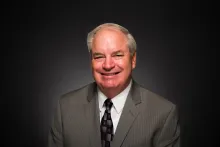
Robin Webber was born in Chicago, Illinois, in 1951, but has lived most of his life in California. He has been a part of the Church of God community since 1963. He attended Ambassador College in Pasadena from 1969-1973. He majored in theology and history.
Mr. Webber's interest remains in the study of history, socio-economics and literature. Over the years, he has offered his services to museums as a docent to share his enthusiasm and passions regarding these areas of expertise.
When time permits, he loves to go mountain biking on nearby ranch land and meet his wife as she hikes toward him.
