

Andrew C Lee
This sermon was given at the St. George, Utah 2020 Feast site.
This transcript was generated by AI and may contain errors. It is provided to assist those who may not be able to listen to the message.
Let's get the technology settled here. I hope everyone's having a great feast. What a fantastic spot it is here. You wouldn't know that it was just planned on short notice. I guess we'd say the feast is like a swan gliding across the lake. It looks peaceful and smooth on the top, and I'm sure there are a lot of people paddling like crazy under the surface that we can't see. So thanks to everyone who's putting all of the work in to make this a fantastic feast for all of us.
As you can see, the title for today, Now, Next, and Beyond. I should mention as well, by the way, the children's choir music was fantastic. I'm not going to embarrass the kids by asking the ones who are there on the video to stand up, but for those young ones who are in the audience that were singing today, thanks for that.
It did sound fantastic. So I'm going to try to make it easy on everybody today. We've got the slides going, and I'm going to ask you to simply remember three words, now, next, and beyond. Now, a lot of people deal with complexity in this world, and one of the ways that we deal with complexity is to develop frameworks. I know when I'm working with people at work, we talk a lot about how to build a framework that things can fit inside.
So for those of you who are in school, you've probably dealt with frameworks in English class when you're writing an essay. And what does a teacher tell you to do? Okay, when you're writing your essay, we're going to go with five paragraphs. You're going to have an introduction, you're going to have three-body paragraphs, and you're going to have a conclusion. And by using that framework, we can get our arms around a complicated topic and sort of figure out how to pull it apart and put it back together again.
Likewise, in business, we heard the other day about the burning platform, another framework that people use to analyze things. Perhaps you've heard of something called the SWOT analysis. Often when people are analyzing something in business, they'll look at strengths, weaknesses, opportunities, and threats, and categorize those things.
So what I want to do today is use this framework of now, next, and beyond as a framework for us to consider both the feast and our spiritual lives. And in case you think I'm smart, which I'm not terribly, I did borrow this idea of now, next, and beyond from where I work. We use it all the time at work. Because, especially with COVID, as you're trying to deal with stressful times, now, next, and beyond is a great framework, in my opinion.
So let's illustrate how this works. Now, we're going to take a test in a short time. Actually, we'll do this on the honor system after the sermon. And when we come back to this at the end of the sermon, if you guessed correctly what this is, please see Charles Malire and he'll give you at least $50. So what is it? Any thoughts? Any ideas? If we zoom out a little bit, a picture begins to emerge.
That's a picture from the late 18th century, and it was painted by an artist that was part of a school of post-impressionist artists called the Pointillists. And the Pointillists were artists after the Impressionist period that dealt with doing painting by putting little dots on the canvas. And those dots, when you stood far enough away from them, would begin to form a picture. So here we can see a bit of that picture forming. And we zoom out just a little bit further, and we realize that we have the painting by Georges Serrat, named Peraud de Cirque.
And the little guy with the oval circle around him is who we were looking at before. Now we understand a very short and brief framework about Pointillist art. What do you see now? Probably you can make out a mustache, you can make out a chin, a nose, and the back of a hair. Again, if you guessed that correctly, go see Charles Miller after services.
He'll be ready to go. So what we're going to talk about today is taking this framework and applying it to the feast and our spiritual lives. So for those who want to try a bit of an experiment, too, with note-taking, for those who are perhaps visual learners rather than maybe the more sequential path that we often take, draw up a grid on your note paper, if you wanted to try this.
Make three columns for now, next and beyond, and make two rows for the feast and our daily lives. And then put a little triangle below it with a point of the triangle facing up and pushing up against that grid that you drew. And we'll come back around to that in a few minutes. And the idea here, as in any conceptual framework, is not going to be to go incredibly deep into any one of these elements, but to move across them and to build a picture that hopefully, as we look back, as we take some time to reflect on the feast and on our lives, will have meaning to all of us and help to motivate us in the way that we live our lives.
I should mention as well, I forgot to mention one other thing about frameworks, and that's from my friends from Cleveland. You know, frameworks are used in sports as well. People have built these frameworks, and the big controversy these days is who's the greatest of all time in the NBA. And many of the frameworks, I won't necessarily say which one I agree with. Many would say Michael Jordan, but more of them these days are saying LeBron James.
I'll just leave that for you to think about. Not too many basketball fans out there, huh? Cleveland audiences like that. Alright, let's talk about now, the idea of finding joy in the moment. Are you uncomfortable with the idea that you're at the feast to have a good time? Does it feel a little strange to say, Hey, I'm at the feast, I'm here to have a good time? It does feel a little uncomfortable to use those words, maybe, doesn't it?
We usually use the more King James word of rejoice, because it kind of sounds a little more spiritual, because we shouldn't really be here to have too much fun, should we? A little bit of fun, some good, godly rejoicing, but not a lot of fun. Now, the Scriptures tell us, as we know, in Deuteronomy 14.26, that we are to rejoice, as King James or New King James English tells us.
It says we should spend money, and talking here about the tithe that we save up, and it says we should spend it for whatever our heart desires. That sounds kind of fun, doesn't it? It brings out examples of that day and time, oxen or sheep, wine or similar drink. Anyone buy an ox for the feast? No, maybe we'll find a few stuffed oxen and sheep for the kids up on the stage in a couple days.
For wine or similar drink, for whatever your heart desires, you shall eat there before the Lord your God, and you shall rejoice you in your household. Other translations, more modern translations, instead of the word rejoice, will say enjoy or celebrate. We're here to celebrate. It's not only a feast that we're here to learn or to study God's word, but it's a time to celebrate, and there's a reason for that. And likewise, one of the reasons, I think, is that we learn also in our daily lives, the fact that we need to have joy.
One of the fruits of God's Spirit that we learn about when we read Galatians 5 is the fruit of joy. And probably in this time, more than any, we have to focus on that. The video was incredibly inspiring, seeing some of the blessings, the joy, the ingenuity, the innovation that can come despite everything going on around us in the world today. And there's an element of our Christian lives that is about now. It's not only about the future. Just like the feast is not only about the future. Let's read Matthew 6, verses 31 through 34, passage that's probably familiar to many people. Therefore, don't worry, saying, What shall we eat? Or what shall we drink? What shall we wear?
For after all these things the Gentiles seek. For your heavenly Father knows that you need all these things. But seek first the kingdom of God and His righteousness, and all these other things shall be added to you. Therefore, don't worry about tomorrow, because tomorrow will worry about its own things, sufficient for the day as its own trouble. I had a boss once, and one of his favorite sayings was, you know, the great thing about this job is there's always something to worry about.
You're always worried you're either too busy or you're not busy enough. You're working too long. You're not working hard enough. And how often is it that way in our lives as well that we worry, especially these days? You know, you read some of the things that are put out by mental health professionals today, and what do they say? Turn off the news. Turn off social media. Stop thinking about all these horrible things that might come down the road on us tomorrow.
And get outside. Take a walk. Enjoy the sunshine. Whatever it is that you have outside. Spend some time with your family. Play a game. Have some recreation. Enjoy the now. And there is an element of that that is directly in line with God's Word, as he tells us.
Don't worry about tomorrow. We heard about the sermonette a couple of days ago. If we believe God, if we trust in Him, if we know where it is that He's taking us as we take that leap of faith, we don't have to worry about tomorrow. God also gives us blessings in this life. Now, we don't preach a health and wealth gospel, and we shouldn't, because it's not as simple as saying, Obey God, and He's going to open the gates of heaven, and He's just going to make you wildly rich.
All we have to do is look around and realize that that's not the case.
That being said, though, as we read here in Luke, God also does give us physical blessings. And He gives us physical blessings because one element of what He wants is for us to enjoy the existence that we have. Again, joy is a fruit of God's Spirit. Luke 6, verse 38 tells us, as we see up here, give, and it will be given to you.
Good measure, press down, shaken together, running over, will be put into your bosom. For with the same measure that you use, it will be measured back to you. So talking here about generosity, and if we're generous to other people, if we're giving to other people, if we're letting God's Spirit live in us, and expressing those qualities of God's way, one of the blessings, not the only blessing, one of the blessings that He does provide is blessings in this life. And so this is the starting point of this framework. The feast is an opportunity, an opportunity to leave the turbulence of today's world. It's never been more important than it has been today. One of the things I love about the feast, I don't know about you, but I tend at the feast not to watch the news. I just usually don't even turn on a TV during the feast. And that alone gives me a lot of peace. Just getting away from all of those things going on. We can come back to those things, current events and politics and all the rest will have its time, but it's not here. It's not at the feast. This is a time to enjoy, to celebrate, to realize the fact that there's a different world that we're living for. And the time that we spend in the now today at the feast, enjoying the time together, rejoicing, whatever we want to call it, is one of the blessings of this time. And likewise, we need to seek that same thing every day in our lives. And if we have God's Spirit working within us, it's not just dependent on what it is that's happening in our life at that point in time. We saw it on the video earlier today. These pressing things can be happening. We can be working in difficult situations. We can be living through incredible trials in our lives. And we can and should find joy in the day as we understand God and what He's doing in our lives. So for those of you who've drawn your picture, it might look a little bit like this. And we'll fill it out as we go along. And so as we wrap up on the now, we think about here at the feast, we're here to rejoice. We're here to enjoy. We're here to have a good time. And we do that. And it's good to see people doing that.
And likewise, in our daily lives, as we think about our lives, we need to find joy in the moment. Ask God. How often do we ask God for joy as one of the blessings of His Holy Spirit, as part of the fruit of that Spirit?
Let's move to next. Recognizing God's blessings and multiplying them. What does next have to do with the feast?
Knowing that we also have beyond to work with past that. What does next have to do with the feast? Now, we know the lessons that were given to the Israelites. They were to live in booths. Things weren't convenient for them back then. They couldn't just go to Sukkah Depot and buy their booth.
I think you all know Sukkah is the Hebrew word for booth that's in the Bible. And Israel was commanded to live in booths for a reason.
Have we focused on that reason lately? Leviticus 23, verses 41 through 43. In Leviticus 23, we see all the holy days laid out. We see reasons for them. Reasons why we keep these days. In verse 41, You shall keep it as a feast to the Lord for seven days in the year. It will be a statute forever in your generations. You shall celebrate it in the seventh month. You shall dwell in booths for seven days. All who are native Israelites shall dwell in booths.
And here's the why. Very important. That your generations may know that I made the children of Israel dwell in booths when I brought them out of the land of Egypt. I am the Lord your God.
Now, I don't know that we reflect on that that often. You know, we think about it during the spring holy days, the fact that God brought ancient Israel out of Egypt and delivered them. But one of the things that God wanted was that those people would never forget the salvation that God gave to them as a physical nation. And he asked them to do something incredibly unique. Now, there are harvest festivals all around the world. My wife grew up in a wine-producing region in Germany. We spent several feasts over in Germany, and we'd visit her relatives sometimes either before the feast or after.
And they would have their wine festival going on, usually at this point in time, because it's harvest time. And what did they do? They were in their villages, and they would open up the courtyards of their farms, they would serve the new wine, they would serve all of these traditional dishes that they prepared, and they would have a festival, but they would have it in their village. And that's something very different than what God asked Israel to do.
At harvest time, at the time that they had the most plenty, what is it that God said? Take up a tenth of it, if it's a long journey, exchange it for money, and leave. Leave behind your house, leave behind your farm, leave behind all of the comfort that you have, and go. Don't stay there, and there's a specific reason for that. Turn with me, if you will, to Deuteronomy 8.
It connects very specifically to this thought when we read through this passage in Deuteronomy 8. We'll start in verse 11. Deuteronomy 8, 11, But beware that you don't forget the Lord your God by not keeping His commandments, judges, and His statutes, which I command you today.
And I think we know Deuteronomy was written to the children of Israel as kind of a review before they entered the Promised Land. Let's remember everything that we went through. We're going to go and settle the land. We're going to spread out and live in our areas. So here's what we need to focus on.
Verse 12, Lest when you've eaten and are full, you've built beautiful houses, and you dwell in them. And when your herds and your flocks multiply, your silver and gold, and all that you have, when your heart is lifted up, that you don't forget the Lord your God who brought you out of the land of Egypt. One of the big warnings that they were given goes on in verse 15 and 16 to recount some of the events that happened, the way that God delivered them as they came out of Egypt.
And there's a punchline in the end which has great relevance to the feast as we think about next. And we look back during the feast and we should think about this, that we don't say in our heart, My power and the might of my hand have gained me this wealth. So one of the big reasons that God told Israel at this time, leave your place, leave your home, leave the solid things that you've built, and come away and live in a temporary dwelling, was to remember, to remember that it was God who gave them the ability to create wealth.
It was God who gave them all of the land that they had around them. And they were to learn not to trust in those solid houses that they built, everything that they'd put together on the land, but to think back when they had nothing, and to think back on that deliverance that God gave.
And so we need to spend some time. The feast should not only be a time to enjoy, but it should also be a time of reflection. Because when we think about the booth, you couldn't help when you walked in and out of that booth during the feast, to think about the fact that I'm lying here on the floor, I'm looking up, there's actually, if you look at rabbinical rules for building a booth, you're actually supposed to be able to see the sky through the top of the booth.
So if it rains, it's going to rain in on you. So you can't help but think, I'm not at home. You know, if there's a strong wind that could blow this thing down, if it rains really hard, I'm going to get wet. All these things that you think about of where you're living, the situation that you're living in, and how God used that flimsy structure as a method of deliverance for ancient Israel.
And as a way to realize that all of the things that we have around us at home, all of those things that seem solid and fast and secure aren't. And it's actually God's deliverance and God's protection that's what we rely on. That's the lesson of the temporary dwellings at the feast. And we should all take some time to sit back and to reflect on that through some quiet moments at the feast. What is it that God has blessed us with? What is it that we've left behind? You know, perhaps it's school.
You know, we've got people who are, as they should be, students in university right now, taking college classes. Maybe you had to miss a test. Maybe you're going to have to cram all the way home so that you're ready for the week after the feast to get the schoolwork done. It's a time to reflect on the things that you've left behind. Your job, your home, your community, all of the things that you do, and reflect on God.
And to set those priorities back in order to realize what it is that God has given us, why He's given it to us, and what we need to do with those things. And let's go there next as we think about our day-to-day life. What are we doing with the blessings that God has given us? What is it we're doing with His blessings? Let's turn to Matthew 25. This was referred to in the sermon a few days ago. We'll read Matthew's account, a short part of Matthew's account of the parable of the talents. Matthew 25, starting in verse 14.
And he who received one dug a hole in the ground, and he hid his Lord's money. We're not going to delve into all of the meaning behind this. We could give a whole sermon about all of the meaning behind the parable of the talents. But what I want to focus on is a singular thing here. Unlike other parables in the Bible, Jesus Christ didn't define the meaning of a talent. It might seem a little odd to hear that. As soon as we hear talent, what do we think of? We think of great musicians. Perhaps we think of scientists or astrophysicists. Stephen Hawking was incredibly talented with math and with quantum physics. Musicians who are great. But the Bible doesn't actually tell us that a talent is a natural, mental, or artistic or intellectual ability. A talent in that point of time was actually a unit of measure, a unit of weight. It was usually used to weigh out money. So probably in this parable, what was happening is you had a man who was a trader, had a trading business. He would get out, and at that time when you were traveling, you know, probably with donkey, maybe camels, walking a lot, you could be gone for three, six months going out to buy merchandise. And so you'd leave resources behind with people who worked for you, and you'd say, take these productive resources, trade with them, earn money, move the business forward while I'm off going to wherever buying more goods that we can trade. And so I think that as we look at the parable of the talents, we should understand talents more broadly as resources that were given. And the question to think about in our everyday lives is, what are the resources that each one of us has to work with? And then we look back at the parable of the talents, where the master told those, the servants, that you should take those talents and you should multiply them. And the important piece of this to me is that it goes to every single part of our life.
It doesn't say just take those talents and use them within the doors of the church. It says, use them in your entire life. Everything that we do should be aimed towards growth and development, taking the resources of things that we've been given and multiplying them. To me, the biggest analogy, the best analogy of this is nature. So we know that God created the heavens and the earth. He created them through His Spirit. That same Holy Spirit, that's the power behind the creation of the universe of every living thing, is what dwells within us.
It's the means by which Jesus Christ lives within us. And so we know that the things that we do are manifestations of that Holy Spirit for living according to God's way. And what do we see around us? We went on a hike yesterday. We were up in Snow Canyon. And you see all of this volcanic rock. Volcanic rock is really dense, right? If you try to plow it, you'll break the plow. I wonder how they set some of these houses in place here. You probably can't even drill through parts of the lava flow to build a foundation for a house.
But what is it that you see on top and in the crags of these lava flows? You see first sand that's blown in there, dirt. And then what is it that happens? A seed blows in there and you see grass. You see other plants that are growing in all of these unlikely places. Little crevices within the rocks. And the thing that we should think about is how God has built this incredible desire for growth into everything that He's created. I challenge you to think of one living thing that God created that doesn't grow. Rocks don't count because they're not living.
Think of one living thing that doesn't grow. You get a puppy. What happens to that puppy over the course of six, eight, nine months? It grows up and it's a big dog and you forget it was ever small. You get a kitten. Get anything, any animal.
Think about human beings and life in general. The desire for procreation is one of the strongest desires in any living being, in animals and in humankind. God put that in there. God put it in there because part of the nature of His Spirit is to grow and develop and you can't hold it back. Just like you can have a wasteland of rock after a volcano and this lava flow out there and you wait a few years and there are things growing there where you never thought they possibly could.
That Spirit's inside of us. We have resources at our hands. How are we using those to create growth? To develop our minds, to develop our other skills in serving the brethren, to develop our families, to add to the neighborhoods that are around us. If we're Christians and that Spirit is living within us, it's going to manifest itself in every piece of what we're doing as individuals. Because it's not because we're trying hard to grow, it's because we're getting out of the way of the Holy Spirit which cannot help but spur growth.
Just like when you look out in nature, things cannot help but grow when springtime comes and sprout. So let's go back to our framework and anchor again on where we are as next. We think about the Feast of Tabernacles and next. We think of God as the source of our blessings.
We think of the things that He's given us. We think about the fact that we trust in Him and not the things that we have around us as we leave our homes and as we are in our temporary places. And as we live our day-to-day lives, we have to think about multiplying those things that God has blessed us with. An ongoing part of our lives as we question how God's Spirit is living and acting through us. Finally, beyond.
Living in the understanding and the hope of God's Kingdom. We hear a lot about this at the Feast, and absolutely rightfully so, because this is the ultimate destination of everything that we're about as people. It's the ultimate destination of God and fulfillment of His plan. We read a portion of this passage a few days ago. Actually, we read the full passage. We'll just read a portion of it today. They shall not hurt nor destroy in all my holy mountain, for the earth shall be full of the knowledge of the Lord as the waters cover the sea. I'd venture to guess that in the world that we're living in today, we have an appreciation for how fantastic this world to come is going to be in a way that we didn't have even a year ago.
There's so much fractiousness around us now, so much fighting. It's almost as though we're looking for things to have differences over, rather than looking for things that will bring us together as people. How wonderful that Kingdom is going to be when no one will hurt or destroy, when we'll be able to come together, and we'll be able to use all these incredible abilities that God has put at our hands and use them for good, use them constructively.
Then we think of Revelation 21, verses 3 and 4. As we think of the ultimate conclusion of God's plan, I heard a loud voice from heaven, saying, Behold, the tabernacle of God is with men, and he'll dwell with them, and they will be his people. God will be with them and be their God, and he will wipe away every tear from their eyes. There will be no more death, nor sorrow, nor crying, and there shall be no more pain, for the former things are passed away.
What does that mean to each one of us? Very different, probably, depending on your situation. I read this Scripture once, and was talking with a man after services who came to me, and he said, You know, I live with chronic pain. He was a man who had a really bad workplace accident, and he said, I'd never understood this Scripture in the same way before, but he said, Since my accident and living with day-to-day pain, I realized in reading that passage no more pain. And he thought about how what a huge difference that was going to make in his life.
We all deal with different things in our lives. These things speak to us in different ways, in different parts of our life. But I would say this year, especially, has given us unique understanding of what the absence of death, sorrow, crying, and pain could be like. How wonderful that would be. You know, we just hope for a day where maybe we hear that COVID cases went below 30,000 in the U.S.
It's not a great bar. Imagine a world where you turn on the news and, you know, sorry, guys, not much to say today. Nobody got murdered. No accidents. No deaths. Nothing else really bad going on. So let's look at these videos of dogs playing the piano for a while.
That would be a great world. Well, maybe cat videos would be better. We can argue that out later.
But this whole past also animate us in the way that we live our daily lives. It's not only at the feast that we sit back and sort of daydream, you know, won't it be great when?
Because it's more than that. Hebrews 6, verses 17 through 19.
Thus God, determining to show more abundantly to the heirs of promise the immutability of his counsel. In fact, it's not going to go away. It's permanent. It will happen. He confirmed it by an oath that by two immutable things in which it's impossible for God to lie, we might have strong consolation.
So we're reminded here at the feast of what it is that's going to come, in part so that we remember that this is a promise of God. It's not something he's thinking about. It's not something he's going to consider under the right circumstances. It's a promise of God that his Son will return and he will bring us eternal life and he will put an end to all of the problems that we experience in this world. And this hope we have as an anchor of the soul, sure and steadfast.
You know, this idea of an anchor, if you're like me, sometimes life does feel like you're just on this boat getting tossed around in the waves, drifting around from place to place. You're just trying to get a sight on the shoreline, figure out where you are and get your bearings and see if you can paddle your way in the right direction. But what does God say he gives us? He gives us an anchor. We don't have to be a drift on the water like the world around us is. We don't have to be worried about where we're going to navigate ourselves. Because what we think about, what we focus on during this feast, in terms of what's beyond, what God is going to bring, that's an anchor that we can drop solidly to the bottom of the water, tie it off to our boat, and we're not going anywhere. God's got us. And as long as we stay tied to that anchor, that hope of this world to come, we have direction in this life.
As we put all these pieces together, and we know what it is that we need to do, we know what it is that we're living for, we know that there's something beyond all of the things that we struggle with in our world today.
So this almost completes our picture with one concept left.
Finding the balance. That's the challenge of living now, next, and beyond.
Let's focus away from the feast for a moment, and the idea of living now, next, and beyond in our lives.
You know, changes in our life circumstances can alter the focus on those elements, but I'd say also that our age can change our focus on those elements, can't it?
Younger people, however you want to define that, so I'm middle-aged. Here's my definition of being middle-aged.
Young people think I'm old. Old people think I'm young.
So young people are rightly focused on now, aren't they? That's how God wired us. There is nothing wrong if you are 15, 18, 25, and you're focused on building a life now, getting your education, figuring out your strengths, what it is you want to do with your life, building a career, thinking about a family, and getting married.
God wired those things into us as young people. I'm saying us, because I still think of myself as young. I know I'm not.
Young people should be focused on now, but not to the exclusion of next and beyond.
I can think back to people that I knew growing up in the church, and at the incredible blessing, I see some of the people out here that I spent feasts with when I was a teenager and even younger, and it's great to see those faces out there.
People who were focused on the fact that we do have a next, they thought about where their lives were going to go next. They knew God's way. They made a commitment to live according that way.
And those people have been blessed. Their lives haven't been perfect. Their lives haven't been flawless.
But they had a blessing that other young people around them didn't. And unfortunately, I know people who got so mired in the now that whether it was the girl or the boy who lured them away, whether it was greed that ended up taking over, and they just said, you know, I don't care about all this stuff that might or might not happen in the future, like Jesus Christ's return.
I just want everything I can buy with my money now. And to get out of balance that way.
So even if you're young, we can never focus just on now. We have to think about what's next. And we have to think about beyond as we live that balanced life.
What about those of us in the middle of life? You know, it's so easy. You have kids, you have a mortgage, you've got a job.
In times like this, maybe you're worried about losing the job or what happens if you do.
Maybe you're building a business and you've always got to think about what's going to happen next, the next opportunity or threat that's out there.
And we can get so wrapped up in that, saving for kids' education, saving for retirement, trying to figure out what the next step is in our careers.
We can get so mired in that what's next that we forget to live in the now.
You know, that story is so common, right, of people who are working so hard, they neglect their families, and suddenly the kids are grown up and out of the house and they realize they've never built a relationship with them.
And we know other people, probably, who get so wrapped up in what's in front of them, they forget about God's way of life.
It starts slowly and you just start to drift away, because that anchor, that sure anchor that the hope of the future gives us, at some point it starts to fray, the rope starts to fray and then gets cut.
And so if we're living in that center part of life as middle-aged people, we've got to remember there's a now to enjoy, and there's a beyond that we have to live for, and we're not just thinking about what's next in front of us.
I don't have as much experience in the older generations, although I see it through my mother's eyes as she turned 85 this year and her life starts to slowly draw towards its end.
And I see it in parts of my own life, as the bones crackle and pop when I walk up to step sometimes, and it takes a little bit longer to get out of bed. But, you know, as you get older, it can be difficult, too. You know, older people have seen a lot of the physical pain that life can bring.
They've seen the sorrow over the course of years that can come with life. And rightfully so, there's a deeper hope and understanding as the physical starts to break down of what the spiritual is going to bring.
But at the same time, even people in that older age need to think about now, because there's still a life being lived.
Incredible ways that older people can contribute within the church community and within their neighborhoods and everywhere else.
And they have to think about what's next and what they're putting their time and their energy towards, as well.
All of you probably know examples of older people who are incredible prayer warriors, who are wise and give incredible advice when you come and you talk to them about things.
And they contribute in amazing ways to our congregations. And they do that because they're living now and next and not only thinking about what's beyond.
It's something we have to keep in mind all the time. And no matter what phase of life we're in, to have appreciation for those other elements and have that balance in our lives.
Ecclesiastes 11, verse 9. This is for young people, this is your favorite scripture of the whole sermon because it's the last one.
I used to always listen when I was a kid for those special cues when the sermon was just about over. And it's just about over.
Ecclesiastes 11, 9. Rejoice, O young man, in your youth, and let your heart cheer you in the days of your youth. Walk in the ways of your heart, in the sight of your eyes.
But know that for all of these, God will bring you into judgment.
To me, this is a theme scripture for this idea of balance. It's written, in this case, specifically to young people.
But I love the way that it acknowledges the fact that as a young person, you should enjoy your youth. You should feel good about the fact that you're strong and you feel like you can accomplish just about anything if you're a guy, right?
And ladies, you feel good about getting together with your friends. You feel good about yourself and the things that you can do as you think forward in life.
And all the things that you aspire to, having a family, achieving things in a career, getting educated.
But we always remember at the end of that also that God will bring things into judgment. So we balance those things out.
That's why, to me, this is the theme of balance. It doesn't address us older people in the same way, but I think we understand the concept and the fact that we all need to live an element of this in our lives.
So this is our completed framework. My hope is that as we reflect back on this, as we think about the feast, we realize a little bit more.
That we think a little differently, maybe, when we see the picture. That what might have looked like just some data points and some dots out there, didn't always make a coherent picture.
Fit maybe a little bit differently together as we think about all the different elements of the feast.
And as we consider the lives that we have to live, as we leave the feast.
So I encourage everyone to take some time during the feast. Enjoy the now.
Take some time, though, also to reflect on the next.
Sit back and consider your life. What's going to change in our lives over the course of the next year? Not out of coincidence, not out of random occurrences, but because we want it to happen, we pray to God about these things.
And we become more like Him, and we let His Spirit live more powerfully within us. And we think of beyond.
Likewise, in our day-to-day lives, let's make sure we're keeping that joy in our lives, enjoying the moments that God gives us, multiplying the things that He's put into our hands as resources, and always keeping His plan, His ultimate goal, central to our lives as the anchor that it is.
Wish all of you a profitable rest of the feast.
Thank you.
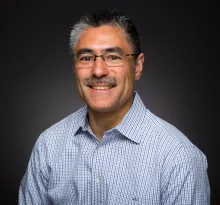
Andy serves as an elder in UCG's greater Cleveland congregation in Ohio, together with his wife Karen.
