

Greg Thomas
This transcript was generated by AI and may contain errors. It is provided to assist those who may not be able to listen to the message.
Well, when I work around my home and yard, I like to listen to college lectures by noted professors. For over a decade, I've been a subscriber to a company called Great Courses. It's part of a larger organization called The Learning Company. And I mostly listen to history lectures, and sometimes I listen to religious lectures. And I have listened to complete college courses on religion, given by a number of individuals like Brad S.
Gregory, Jamie Jill Levine, Bart Ehrman. He's probably the most notable if you go to the Internet and you look up Google and you look up theology professors. Probably Bart Ehrman will come very quickly to the top. By the way, I've been listening to him for years, and I've seen how he's moved from someone who was a person of faith to someone who was an agnostic, perhaps even an atheist, in his teachings about God and the Bible. Luke Timothy Johnson, who's a little more moderate, Thomas F. X. Noble, Isaiah Gaffney, who teaches classes in Judaism, Kenneth Harry, Jody Magnus, Karen Armstrong, Patrick Allody. Again, these names may not mean much to you, but they're leading professors who teach religious classes at major universities, and they're highly regarded in their world.
Their classes are filled with eager students who want to learn. In a nutshell, here is what most of them teach, and I've heard hundreds of these classes. I've taken complete courses by listening to these classes. Here's what the overwhelming majority of them teach, and I think it tells us a lot about the state of modern Christianity.
The Old Testament. The overwhelming majority teach that the creation account is a myth because evolution occurred. Moses did not write the first five books of the Bible. A number of individuals did, who lived hundreds and hundreds of years apart. The Exodus didn't really occur. King David may not have existed. Most of the books of the prophets were not written by their claimed authors, and most were written after the events took place to make them look prophetic since the author now knew already what happened.
In essence, the Old Testament is filled with rich and interesting traditions, but it's a collection of myths and embellished stories. Here's what the overwhelming majority of these theologians teach regarding the New Testament. Jesus himself never claimed to be divine. He was just an apocalyptic prophet whose followers elevated him to divine status after his death. Many books ascribed to Paul were written by later generations.
First and Second Peter were not written by Peter. He was illiterate and incapable of writing. The New Testament is filled with contradictions and mythical events embellished to encourage the believers at the time. This is what if you were 18-19 years old today, and you were going to go to a state college, or one of the larger colleges around the United States, maybe a mainstream college that was founded by the Methodist Presbyterians Baptists, this is what you would be taught in your religion classes.
So unless you choose to go to a small evangelical or very conservative type of college, what you're going to be taught are the kinds of things that I mention here. Again, I've listened to classes from all these individuals, and to one degree or another, they all teach those precepts about the Bible. So you might ask, Mr. Thomas, why do you subject yourself to that?
Why do you do that? It's probably a really good question, and I'll give you a fair answer. I come from a sales background, and my sales background taught me to know your competition, to know their product, to know their benefits and features, because how can you sell against them if you don't know their product? If you think about it, that's what Mr.
Lee has been trying to do with the interactive Bible studies, rather than teaching everyone to parrot some few sentences of a prethought answer to understand why people believe what they believe, who are different from us, and to know how to respond to their product, to their teachings, to their benefits and features. And I was taught that as a young man, getting into sales, that you need to know your competition.
So that's why I have tended to listen to programs like that. But God has some scriptures that I think are very interesting. Let's go to Isaiah 44 and verse 24. Let's begin there. Isaiah 44 and verse 24. This prophecy, I believe, pretty much encapsulates what we have in our world today. Isaiah 44 and verse 24.
And a lot of these highly educated individuals that I mentioned, who are highly respected in their field. And again, if you were 19, 20 years old and you just said, I'd like to know more about what the Bible teaches, I would like to know more about God, and you search Google, you are going to run into one of these individuals. And again, their classrooms are filled with students each and every semester who are being taught things about the Bible, things about God that are distorted, and things that are untrue. I call them faith busters. Think about this 19-year-old kid who's wide-eyed and innocent, and they want to go and learn more about God, and they sit in this classroom, and this teacher overturns everything they were taught their entire lifetime about God's word is true. And the Bible is inerrant, and all the things that they were taught in their lifetime are turned upside down by these college professors. Again, if you're a sincere 18-year-old teen, and you want to know about the Bible and what knowledge there is about God, what will you find available? You will find many of these professors on Google, their programs on Google, their blogs on Google, their teachings on Google, and that's a problem. Let's take a look at another scripture. Jeremiah 23, verse 16.
Now, obviously, these theology professors don't claim to be prophets in a biblical sense, but they're teachers. They're influential. They're influencers in our culture. They're looked up to by younger generations as authorities of people who know the Bible, of people who understand scripture and know what they're talking about. And as Jeremiah says here, they make you worthless. You begin with faith, a basic faith in God or basic faith in the scriptures, and you go to these colleges, and you sit down in these classrooms, and they deconstruct your faith one piece at a time, so that by the time they're done with you, you don't know what to believe.
That's what they do. And they teach you that everyone who walks according to the dictates of his own heart, and they say, no evil shall come upon you. I could retire if at a dollar, for every time a person said, well, I'm a good person. Yeah, I don't go to church, and I don't pray or study the Bible, but I'm a good person. So I assume by that they mean they're going to go to heaven because they're such a good person. But that's what is taught in our world today. Again, these theology professors, they are not prophets, but they certainly are influential. Well, I have found one college instructor on the great courses to be very enlightening, and at least, unlike many of the others, to be intellectually honest. His name is Philip Carey. He has a PhD. He's an American philosopher who serves as a professor at Eastern University. That's in St. David, Pennsylvania. And he's provided lectures on the history of Christian theology, as well as on major figures of ecclesiastally history for the teaching company. And I've listened to a few of his classes. And these are classes where I've come in contact with him. Recently, I listened to a course entitled, The History of Christian Theology. And I was particularly interested in some things that he said in his second lecture, entitled Pauline Eschatology. That means, last days. And in this lecture, he reviews what the early church believed about the reward of the dead. And I would have to say that I was impressed and stunned by his candidness. And unlike many others, his intellectual honesty on what the authentic church of the first century believed about the reward of the dead and the mortality of the human soul. So today, what I wanted to do is go over some of the scriptures he mentions in his lecture, look at our traditional understanding of these scriptures, which is correct, and then some of the things that he said in his own lecture that are phrased a little differently than we might normally use. But again, I was very impressed with his intellectual honesty and his frankness, because what he says must shake up a lot of people, because it's contrary to what most people believe about what is the reward of the dead. Let's go to 1 Corinthians chapter 15 and verse 45. We typically read this at a funeral, almost every funeral. And of course, we understand that those who have fallen asleep are unconscious and they're awaiting the resurrection from the dead. So let's see what it says here. In 1 Corinthians chapter 15, Paul's writing in the book of Corinthians, and we'll pick it up here in verse 45. Paul says, In the first Adam, the first Adam became a living being. That's the Adam spoken of in the book of Genesis. The last Adam, referring to Jesus Christ, became a life-giving spirit. However, this spiritual is not first, but the natural and afterward the spiritual. Adam was born fleshly, physical. We are fleshly, physical. Later on comes the spiritual. Verse 47. The first man of the earth, made of the dust. The second man is the Lord from heaven. As was the man of dust, so also are those who are made of dust, and is the heavenly man, so are those who are heavenly. And many who want to believe that you go to heaven would read that scripture and say, Paul's looking forward to the heavenly man. Being heavenly, in other words, being in heaven is what the person would say. Verse 49.
Now this I say, brethren, that flesh and blood cannot inherit the kingdom of God, nor does corruption inherit incorruption. Behold, I tell you a mystery. We shall not all sleep, but we shall all be changed. In a moment, in the twinkling of an eye at the last trumpet, and we understand that, to be representative of the feasted trumpets, the literal return to earth of Jesus Christ. For the trumpet will sound, and the dead will be raised incorruptible, and we shall be changed. For this corruption must put on incorruption. This mortal must put on immortality. So when this corruptible has put on incorruption, and this mortal has put on immortality, then shall be brought to pass the saying that has written, Death is swallowed up in victory. Oh, death, where is your sting? Oh, Hades, where is your victory? The sting of death is sin, and the strength of sin is the law. But thanks to God, who gives us the victory, that's through the resurrection, who gives us the victory through our Lord Jesus Christ. Therefore, my beloved brethren, be steadfast, immovable, always abounding into the work of the Lord, knowing that your labor is not in vain in the Lord. And again, many professors would read that and say, Paul is talking about the importance of going to heaven, being the heavenly man, being heavenly. Here's what Professor Carey says in his lecture after he reads his scripture. Paul is not saying, You have to hope to get to heaven when you die. Heaven is where Christ is, and that's where he's coming from. The consummation is Christ coming from heaven, not us going to heaven. That's a reversal of what many people think they're going to find in the Bible. And indeed, that is the complete reversal of what many people think they're going to find in the Bible, because they're taught that the reward of the saved is going to heaven. Here's his comments in the Course Guide.
The picture is not of us going to heaven after we die, but of Christ coming from heaven to earth, bringing life for the dead. Likewise, the picture is not of our souls leaving our bodies behind, but our mortal bodies putting on immortality. Paul calls this a spiritual body and speaks of a heavenly dwelling which will clothe us. Heaven and Pauline eschatology does not mean the place where we go, but the place where Christ is, hidden from our sight, but having the power of eternal life with which we long to be clothed. Again, we take that for granted, because that's what we believe, and that's what we have always known.
But for someone who isn't aware of that, these kind of statements would be shocking. Let's take a look at Revelation 21 and verse 1, another scripture he refers to. Revelation 21 and verse 1, about a new heaven and a new earth. Now I saw a new heaven and a new earth, for the first heaven and first earth passed away, and there was no more sea.
Then I, John, saw the holy city, New Jerusalem, coming down out of heaven from God, prepared as a bride adorned for her husband. And I heard a loud voice from heaven, saying, Behold, the tabernacle of God is with men, and he will dwell with them, and they shall be his people. And God himself will be with them, and be their God, and God will wipe away every tear from their eyes. There will be no more death, nor sorrow, nor crying. There shall be no more pain, for the former things have passed away.
Then he who sat in the throne said, Behold, I make all things new. And he said to me, Write, for these words are true and faithful. And he said to me, It is done. I am the Alpha and Omega, the beginning and the end. And I will give the fountain of the water of life freely to him who thirst.
He who overcomes shall inherit all things. I will be his God, and he shall be my son. And we are all very familiar with that scripture, and look forward to that time, and realize that the statement, Behold, the tabernacle of God is with men, has symbolism from the Feast of Tabernacles. We're there celebrating the Kingdom of God. We're all looking forward to a time when God himself will come and tabernacle his presence on this earth.
Professor Carey says this, quote, There's a picture in the book of Revelation of a heavenly city descending from heaven like a bride adorned for her bridegroom. The heavenly Jerusalem descends from heaven as if heaven comes to earth. That's the movement of Christian eschatology. So the picture is not us going to heaven after we die, but Christ coming from heaven to earth, bringing life for the dead. Continuing, he says, Likewise, the picture is not of souls leaving bodies behind, but of our mortal souls being clothed with immortality and everlasting life.
So reverse the usual picture, he says. And that's the usual picture, that you're going to go to heaven when you die. He says, you need to reverse the usual picture because the usual picture is wrong. Continuing, he says, quote, Instead of an immortal part of ourselves called our souls escaping the body, we've got this mortal self called the body that is clothed from the outside, with immortality.
And he's referring to the return of Jesus Christ. Let's take a look at another scripture, 2 Corinthians chapter 5 and verse 1. 2 Corinthians chapter 5 and verse 1. Paul writes here, another scripture many people used in an attempt to support that heaven is the reward of the saved. For we know that if our earthly house, this tent is destroyed, we have a building from God, a house not made with hands, eternal in the heavens. For in this we groan earnestly, desiring to be clothed with our habitation, which is from heaven.
And many would say, see, we're groaning to go to heaven. We are groaning for our habitation to be in heaven for us to go there and be with Jesus, one would traditionally say. Verse 3. If indeed having been clothed, we shall not be found naked. For we who are in this tent groan being burdened, not because we want to be unclothed, we certainly want to be clothed with immortality. But further clothed, that mortality may be swallowed up by life.
Now he who has prepared us for this very thing is God, who also has given us the Spirit as a guarantee. So we've been given the gift of God's Holy Spirit as a guarantee of the resurrection, as a guarantee of being clothed with immortality when Jesus Christ returns. Verse 6. We are always confident knowing that while we are at home in the body, we are absent from the Lord.
For we walk by faith, not by sight. We are confident, yes, well pleased, rather to be absent from the body and to be present with the Lord. Therefore, we make it our aim, whether present or absent, to be well pleasing to him. And again, many people would say, look at those verses and our habitation that we're groaning for and we're longing for is in heaven.
And that's simply not true. Here's the way that Professor Carey puts it. Quote, Now notice, if you were thinking of the soul going to heaven when you die, you might read this passage about our heavenly home. That's not what Paul is thinking. Continuing, he's talking about a heavenly dwelling, which is not a tent, not temporary. It is a house not built with hands.
It's heavenly, immortal, incorruptible. And we will put it on. That's what the resurrection of the dead is. So again, you see that he's supporting our understanding, our traditional understanding of the reward of the saved, which is the resurrection of the dead at the return of Jesus Christ. Professor Carey continues, quote, When Paul states in verse 2, And it will come down to clothe us.
End of quote. One more statement from him here. Heaven is this hidden dimension where Christ dwells now, where we cannot see him, for which will come our eschatological future, the immortal spiritual body, the heavenly home that will clothe us. All right, let's take a look at one more scripture that the professor refers to. Colossians chapter 3 verses 1 through 4. Colossians chapter 3 verses 1 through 4.
Paul wrote the congregation of Colossae.
Now someone who believes that heaven is the reward of the saved would say, he's saying here, look above where Christ is. That's what we should long for. That's what we should desire to be with Jesus up there above, setting our minds on things that are above. Of course, they ignore verse 4 when it says, when Christ appears, meaning his second coming, then you will appear with him in glory.
Here's what Professor Carey says about this scripture. He's referring to verse 2, seek from above. Is he saying expect to go to heaven? No, that is not what he is saying. Where you really live is with Christ exalted in heaven. That's where your true life is. That's where your spiritual body is. It's stored up for you. This heavenly building, which is coming with the coming of Christ, that's what you need to be expecting.
That's what you need to set your heart on. That's what heaven means in the New Testament. Heaven is where eternal life is already, and we wait for it because it's not yet on earth. I just wanted to share this commentary with you today to show you that in spite of the overwhelming majority of people that are teaching the next generation of so-called ministers of the Methodist and Presbyterians and Baptists and other main line Protestant faiths, that there are exceptions that there are those who are at least being intellectually honest.
I think that's really important. Again, I've listened to many of these professors. I've listened to them cover all the verses that we talked about from the approach of the Catholic Church of the fourth century, as if the first century never even happened.
Just assuming and teaching that the Church of the first century was the same Church after Rome gained ascendancy and after Gentiles gained control and domination and influence of what had been the Church, and after Plato's teachings, his pagan philosophy of Plato's teachings were accepted, including the immortality of the soul and other teachings, that there are those who stand in the gap. They're rare, but there are those who are intellectually honest and teach what the Bible says, even though it may be shocking to many who hear those teachings.
Our final scripture today, Hebrews chapter 10 and verse 35. Hebrews chapter 10 and verse 35. We live in an age of faith-busters. Scientists condemn what the Bible says and say it contradicts science. Many of our so-called religious leaders, as we saw earlier, don't really believe that the Old Testament or New Testament are inspired. They don't believe that Paul wrote the books that have his name. They don't believe that Peter wrote the books that have his name. They don't believe that Jesus Christ was divine, that that's something that happened after his death, that his followers exalted him into divinity, that he was only a prophet.
Many of them don't believe the miracles of the New Testament or the Old Testament. They don't believe the Exodus happened. Maybe a few Jewish people stumbled out of Egypt and ended up in Palestine, but it certainly wasn't the Exodus and the miracles and all of those things that occurred in Scripture. They don't believe that Moses wrote the first five books of the Bible.
They don't believe virtually anything in Scripture, and it can be a faith-buster. If we listen to these things, if we begin to believe these things, begin to accept these things, they will destroy our faith. Hebrews 10, verse 35. Therefore, do not cast away your confidence. Your confidence that the Bible is true. Your confidence in God's promises about your future, about the forgiveness of your sins, about Jesus Christ being your Savior, about you being in the resurrection and being given immortality and eternal life.
Don't cast away that confidence and that belief that you have in spite of what the world teaches. Do not cast away your confidence, which has great reward. For you have need of endurance. And yet sometimes we feel like our minds are being assaulted. The politics, the social media, the lack of faith, the lack of respecting of religious order in our culture today. All of those things can wear us down. He says, for you have need of endurance, so that after you have done the will of God, you may receive the promise, and that's the promise, of life and the family of God, spiritual, immortal, living for eternity.
Verse 37. For yet a little while, and he who is coming will come and will not tarry. There will come a time when Jesus isn't delaying, when Jesus doesn't seem like he's slow to return, but he who is coming will come and will no longer delay. Now the just shall live by faith.
Trust this word, and trust that what it says is true, and sure, there are errors due to transcribal emissions. There are things through centuries of people writing the Bible where they wrote wrong letters down, and they wrote wrong numbers down, and that was copied, and that too was copied again.
And so there are errors within the Scriptures from translators and through people who have copied the Scriptures for many years, but the true root of the original Word of God is true and can be trusted. I think that's important for us to understand. The just shall live by faith, faith in God, faith in God's promises, faith in his Word, as Paul told Timothy, that this is his inspired Word. God breathed, and we need to live by that faith. But if anyone draws back, my soul has no pleasure in him.
But we are not of those who draw back to perdition, but of those who believe to the saving of the soul. So let's continue to be believers. Let's continue to be disciples of Jesus Christ learners with open hearts and open minds, and love the Word of God, and believe in his Word, and believe in his promises and in his prophecies. Let's endure to the end. Have a wonderful Sabbath.
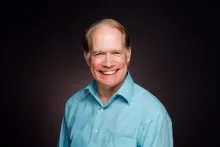
Greg Thomas is the former Pastor of the Cleveland, Ohio congregation. He retired as pastor in January 2025 and still attends there. Ordained in 1981, he has served in the ministry for 44-years. As a certified leadership consultant, Greg is the founder and president of weLEAD, Inc. Chartered in 2001, weLEAD is a 501(3)(c) non-profit organization and a major respected resource for free leadership development information reaching a worldwide audience. Greg also founded Leadership Excellence, Ltd in 2009 offering leadership training and coaching. He has an undergraduate degree from Ambassador College, and a master’s degree in leadership from Bellevue University. Greg has served on various Boards during his career. He is the author of two leadership development books, and is a certified life coach, and business coach.
Greg and his wife, B.J., live in Litchfield, Ohio. They first met in church as teenagers and were married in 1974. They enjoy spending time with family— especially their eight grandchildren.
