

Paul Moody
This transcript was generated by AI and may contain errors. It is provided to assist those who may not be able to listen to the message.
Is your heart in the right place? I saw a card a number of years ago that had a picture of the human body, and it had a magnifying glass on the chest area, and it showed the heart being just a little bit to the left of center, where the heart is located. And on the inside, the card said that, I just wanted to show you that my heart is in the right place. Well, you know, it's a smart play on words. If you looked up heart in the Bible, you will find it is mentioned hundreds and hundreds of times.
Obviously, the heart is very important. Very important. I'd like to read a verse in Proverbs 4.23 that show that we want to be careful with our heart. Proverbs 4.23 We do want to make sure that our heart is always in the right place. This verse says, Proverbs 4.23, You can do a lot of thinking about this verse. Keep your heart with all diligence. Out of it, spring the issues of life. We're going to be discussing the heart this morning and its importance. The Hebrew word for heart, two words. First of all, labe, L-E-B is the way it's spelled in English. Labe and labab, L-E-B-A-B. The Hebrew word simply means the heart.
It means feelings, the will, the center of anything, the most interior organ. The Greek word for heart is cardia. That may sound familiar. K-A-R-D-I-A. When a person has a heart attack, it may be a cardiac arrest. And so we use the word, a cardiologist, as a heart doctor. So we use that word that goes back to the Latin language.
Cardia is the Greek, K-A-R-D-I-A. And it means heart. It means thoughts. It means feelings. It means the middle. If you look up the word heart in the dictionary, our English dictionary, you will find it as the center. Of course, the first definitions will have to do with the physical organ itself, the heart that pumps blood to our bodies. But when you get on down to about definition 3, 4, in that range, you'll find more what we're talking about today.
The heart one is used as the center of emotions, personality, attributes, inmost thought and feeling, the deepest heart and feeling, the center, or rather the central or real part. We use heart as the heart of the matter, the central and real part, the essence, the core. So we find that the word heart is important in the Bible and also in our present language. It goes to the very core of our being, the center of us, the most interior part.
In a very real sense, the heart is who we are at the deepest level. It's at the core, it's at the middle. It's the center of our human spirit. And so no wonder the Scripture says in Proverbs, Keep your heart with all diligence, for out of it spring the issues of life. It is the heart, or to the heart, that God looks. He looks at this center, this core, that's the part that matters to God the most.
Man looks at the outside, God looks at the inside, deep at the inside of us. Let's go back to 1 Samuel 16 and verse 7. And when Saul had disqualified himself to be king of Israel, then God was in the process of having someone ordained, or let's say anointed, rather, who would replace him. We know that would be David. And so God instructed Samuel to go to the house of Jesse to anoint the next king of Israel.
And so Samuel was afraid to go because actually he might get himself in trouble if he went in trouble with Saul, King Saul. Verse 2, if Saul hears it, he will kill me. And so God told him to go and make sacrifice, and then in the process be able to anoint the next king of Israel.
And so that's what he did. And in verse 5 he said, he was asked, Do you come peaceably? And verse 5 he said, Peaceably, I have come to sacrifice to the Lord. Sanctify yourselves and come with me to the sacrifice. Then he sanctified Jesse and his sons and invited them to the sacrifice. So he conducted a sacrifice, and Jesse and his sons were invited. Verse 6, So it was when they came that he looked at Eliab and said, Surely the Lord's anointed is before him.
This man looked, you know, he looked brilliant. He was probably no doubt good-looking. And Samuel just thought, here's God's servant Samuel. This is the one. This has to be the next king of Israel. Verse 7, Notice, God said to Samuel, Do not look at his appearance, or at the height of his stature.
Here he was, tall and handsome. Don't look at his appearance or the height of his stature, because I have refused him. For the Lord does not see as man sees. For man looks at the outward appearance, but the Lord looks at the heart. That's what I'd like to have us really focus on today, and what God looks at. He looks not at the outward appearance, not at the way things appear to be outwardly, but deep in our hearts and minds.
So then they called Abenadab and Shammah, and verse 7, Jesse made seven of his sons to pass before Samuel. And Samuel said to Jesse, Seven sons came before Samuel, not of one of them was chosen to be anointed the next king of Israel. Verse 11, Samuel said to Jesse, Are all the young men here? He said, Well, there remains yet the youngest, and there he is, keeping the sheep. So Samuel said that Jesse send and bring him. For we will not sit down till he comes here.
So he sent and brought him in. Now he was ruddy with bright eyes and good looking. And the Lord said, Arise, anoint him, for this is the one. And Samuel took the horn of oil and anointed him in the midst of his brothers. And the Spirit of the Lord came upon David from that day forward. And so the next king of Israel was chosen based upon what was in his heart. We're going to see what was in David's heart a little bit later, not right now. But it's what is at the heart, the center, that God is concerned about, not what is outward.
Second Chronicles 16, verse 9. Second Chronicles 16, verse 9. This is a verse we no doubt have heard, but it's a good principle to always keep in mind and to remember as we go about living this life day by day. In 2 Chronicles 16, verse 9.
The eyes of the Lord run to and fro throughout the whole earth. God's eyes are just going back and forth throughout the whole earth. That's what it says. To show himself strong on behalf of those whose heart is loyal to him. I'm reading the New King James translation. Doesn't the Old King James translation use the word perfect? Whose heart is perfect toward him? So God's eyes go back and forth to and fro to show himself strong on behalf of those whose heart is perfect or loyal toward him.
God is searching for those with the right heart. So brethren, it is important that our heart is in the right place. And God is able to look deep inside of each of us and to know our deepest desire, intent, motive, and thoughts. He knows what makes us to tick. He knows man at the deepest level. You know, we know that when Judas Iscariot betrayed Christ and then later committed suicide, that in Acts chapter 1, the apostles came together and Peter stood up and he said that it was necessary to choose a replacement for Judas.
I wonder how many of us even know the name. Could you write down the name of the one that they chose to replace Judas? We know that Judas' heart was not in the right place. But the one that would replace Judas would have a heart in the right place. Let's go to that in Acts chapter 1. It's mentioned that his heart would be in the right place. Acts chapter 1. In verse 15, we find Peter standing up and discussing the situation of Judas now needing to be replaced.
In verse 21, Peter continuing to speak to the group, said, "...of these men who have accompanied us all the time, that the Lord Jesus went in and out among us." The one they would choose was one that was very familiar with the teachings of Christ. It had gone in and out. It really traveled around quite a bit. We don't many times realize the replacement also had to go forth and testify about Jesus Christ being the Messiah and all that he taught, preached the same gospel.
So the replacement was very familiar with Jesus Christ and the teachings of Christ. So someone that's been with us as the Lord Jesus went in and out among us. Verse 22, beginning from the baptism of John to that day when he was taken up from us. Here's someone that was with him from the very beginning. One of these must become a witness with us of his resurrection.
And they'd be someone that was really familiar then with Jesus Christ from the very beginning of his gospel and his ministry. They proposed two. One was Joseph, called Barcibus, who was surnamed Justus, and the second was Matthias. In verse 24, notice, they prayed and said, You, O Lord, who know the hearts of all, show which of these two you have chosen.
It's a God who knows the hearts of all. And so, verse 25, they continued to take part in this ministry, and the apostleship from which Judas by transgression fell that he might go to his own place.
And they cast their lots, and the lot fell on Matthias. So that was Apostle number 12, Matthias. I don't even know if most of us would be able to pass a quiz on that, but we should be able to. Matthias is the one. But God who knows the hearts chose someone whose heart was in the right place. The lot fell on Matthias, and he was numbered with the 11 apostles. He made number 12. So the heart is very important, isn't it? Let's go to Acts chapter 15, verse 6, when the apostles came together to consider the matter of circumcision, and whether it was required of new Gentile converts, whether or not it was required.
Then Peter, well, they all came together in verse 6, Acts chapter 15, and verse 6, the apostles and elders came together to consider this matter. And when there had been much dispute, Peter rose up and said, Men and brethren, you know that a good while ago God chose among us that by my mouth the Gentiles should hear the word of the gospel and believe. So God who knows the heart, let us verse 8 here, God who knows the heart, acknowledged them by giving them the Holy Spirit just as He did to us, and made no distinction between us and them, purifying their hearts by faith.
So Peter then stands up and tells them that God knew the heart of Cornelius and the Gentiles in Acts chapter 10. That's where the sheep was let down three times with the unclean animals. And many people in the world use that to show you can eat anything you want to. Of course, all they want to eat are some of the unclean meats like pork and maybe shellfish and things. They don't want to eat rats and snakes and dogs and all that sort of thing.
But if God cleansed everything, you could just as well do it, you know. But that's not at all what Acts chapter 10 is talking about. But it shows that God acknowledged the heart of Cornelius and the Gentiles, and they were given the Holy Spirit, and they were baptized at that very time. We know when we read verse 9, we see that there is a need for purifying of our hearts, that there is something lacking at the time we are born into this human shape and form or substance, made no distinction between us and them purifying their hearts by faith.
So there is something that needs to be purified. Many verses in the Bible show that the human heart of itself is lacking, very lacking, and in fact is evil and deceitful. One verse we might turn to, or a couple of verses, to show that is Jeremiah 17 and verse 9. I don't want to get off too far on the matter of conversion, but the human heart does need converting.
The human heart needs changing. The human heart is lacking, and it needs God's Spirit, and it needs actually the sacrifice of Jesus Christ to be purified, to be forgiven, and then God's Spirit to help it to live the way that God requires and commands. In Jeremiah 17 and verse 9, it says, So God does test us, and it does bring out here that the human heart obviously needs purifying.
It needs a changing. In Deuteronomy 5 and verse 29, talking about the ancient Israelites, God said, Well, let's go back and read that verse. In Deuteronomy 5 and verse 29, the Israelites didn't have the right heart. Their heart erred. They missed the mark. And so it does take God's Spirit. It does take conversion for us to really have our heart in the right place and be able to please God. That is important to realize, but there is something that, like we'll see in a few minutes, David, even before God's Spirit came on him, was a person that had a heart that wanted to do what was right.
And so, you know, humanly, we go so far in having a heart that is striving to please God. But we need God's Spirit to actually empower our hearts and minds and to purify and make it possible. In Deuteronomy 5 and verse 29, Obviously, the Israelites of old did not have a converted heart. They didn't have a heart that could do what was pleasing to God. And so every human heart needs a change, needs to be converted. Every human heart needs a cutting away of something that is evil, the old heart. You might say spiritually we all need a heart transplant.
We need a new spirit, a new heart, a new mind that comes from God, from His Spirit. Circumcision, spiritual circumcision, pictures that cutting away of the evil heart and the transplant of a new heart that can please God. Deuteronomy 10 and verse 16, let's read one verse in the Old Testament that talks about this spiritual circumcision.
You know, God was never really interested in just cutting away of the flesh. We know that physical circumcision is just cutting away of a little bit of flesh, but spiritual circumcision is cutting away of something that is spiritual in our hearts, something that is evil. In Deuteronomy 10 and verse 16, therefore circumcise the foreskin of your heart.
There is a foreskin of our heart that must be circumcised and be stiff-necked no longer. Of course, when we are spiritually circumcised, we will want to obey God. We will have a childlike attitude of obedience and not be stiff-necked. So God wants us to have that kind of heart, one that is able to obey Him and please Him and do His will. Well, let's move along to Romans chapter 2, and we also read here about spiritual circumcision. So circumcision of the spiritual type makes it possible for us to have a new heart, to have a heart that is converted, a heart that is teachable, a heart that is set upon doing the will of God and not our own.
In Romans chapter 2 and verse 28, He is not a Jew who is one outwardly, nor is that circumcision which is outward in the flesh. No, that's not what God is not looking at what is outward. But verse 29, He is a Jew who is one inwardly, deep in His heart.
And circumcision is that of the heart, in the spirit, and not in the letter. So God wants every heart and requires every heart to be circumcised. And that's what makes us a spiritual Jew. That's what makes us converted, is that we have had the evil foreskin of our human hearts cut away. And we've had then God's Holy Spirit to come into our lives and to begin to convert our minds and our hearts. Colossians chapter 2 mentions a circumcision made without hands. That's the circumcision of the heart that really matters. It will purify our hearts, and it will put God's laws and His character in our hearts.
So we see that real conversion goes right to the heart. But this new heart, of course, has to be willing to do God's will, and of course, over a lifetime, has to strive to stay on track. It is possible, after God does give us a circumcision made without hands, it is possible to fall back. It's possible to miss the mark. In fact, it's possible to go back to the old evil heart that is deceitful and wicked above all things. And that we must strive continually then not to do, but to have the good heart to do God's will.
The Bible is full of good examples of those whose hearts were in the right place. Let's go back to 1 Samuel 13 now. 1 Samuel 13, David. And this is why God chose him to be anointed the next king of Israel after Saul, as we read. It was because his heart was in the right place. At the deepest level, he wanted to do God's will, not his own. And so when Saul had disobeyed God, and he would be rejected as far as his lineage continuing in Israel, then in 1 Samuel 13 and verse 13, Samuel said to Saul, You have done foolishly.
You have not kept the commandment of the Lord your God, which he commanded you. For now the Lord would have established your kingdom over Israel forever. Saul's heart was not in the right place. He justified disobedience of God's command. In verse 14, But now your kingdom shall not continue. The Lord has sought for himself a man after his own heart. So God looked around for a man after his own heart. And the Lord has commanded him to be commander over his people, because you have not kept what the Lord commanded you.
It was not at that moment that we read about the anointing of David as the next king. That's just a couple of chapters later. But over in Acts 13, as it is talking about David, turn to Acts 13, verse 22. David was a man that wanted to do God's will. His heart was in the right place. Acts 13, verse 22.
When he had removed him, Saul, he raised up for them David as king, to whom also he gave testimony and said, I have found David, the son of Jesse, a man after my own heart. Notice who will do all my will. We see that one of the key things that someone who has his heart in the right place will do is the will of God. A heart that is in the right place will then seek to please God. It will seek to do God's will, not our own will. So David was a man after God's own heart. And brethren, there's nothing in the Bible that says you and I cannot also be a man or woman after God's own heart. Are you? There's nothing that says you can't be a man or woman after God's own heart. Who will do all of God's will, as it says here about David? David, the man after God's own heart, would do God's will in his life, not his own. There's nothing that says you can't have that same mind to set your heart to be a man or woman after God's own heart, just as David was. In Ezra, chapter 7 and verse 10, Ezra, chapter 7 and verse 10, we read about Ezra and how he prepared his heart, set his heart to do God's will, to do what was pleasing in God's sight.
Ezra, chapter 7 and verse 10, and this is when Ezra then came to Jerusalem, verse 8, in the fifth month, he had traveled from Babylon during the days of the Persian Empire and came with a group of people to Jerusalem. And verse 9, on the first day of the first month, he began his journey from Babylon. On the first day of the fifth month, he came to Jerusalem according to the good hand of his God upon him. And that is verse 10. For Ezra had prepared his heart to seek the law of the Lord and to do it, and to teach statutes and ordinances in Israel. He had set his heart on doing this, on the law of God, to seek God's law and to teach it faithfully to Israel. He had prepared his heart. You know, that shows that you and I have something to do as far as our heart. That central part of us, we have something to do as far as our part, as far as keeping our hearts in the right place. We can prepare our heart to do God's will and to seek his law, or we can neglect to do that. We can neglect to prepare our hearts. I hope that we will, of course, prepare our hearts like Ezra did and do God's will.
You know, attitude is very important. A part of the heart is our attitude. And, of course, we know that we sometimes say, well, he has a good attitude, or he has a bad attitude. You know, we pick up on that. We pick up on where people are coming from. He has a good attitude. He has a bad attitude. Daniel is described in chapter 3 of Daniel as having an excellent spirit. He just had a tremendous attitude. And in that chapter, the King Darius of Persia recognized Daniel's attitude and put him above the other of the three presidents. He liked Daniel's attitude. He liked his demeanor. He just came across as one whose heart was right and was faithful and loyal, dependable. It says he had an excellent spirit. Oh, I might just read that. It's always good to look in the Scriptures, and it just helps to get it more firmly placed in our minds. Daniel 6. Daniel 6. And this is late in Daniel's life. He was an old man by this time. And this is the chapter where he would be thrown into the lion's den. Daniel was an old man, probably in his 80s, when he was thrown into the lion's den. He'd been through the Babylonian Empire, all the kings of Babylon. Now the Persian Empire had come on the scene. So Daniel was old at the time he was thrown into the lion's den. In Daniel 6 and verse 1, it pleased Darius to set over the kingdom 120 satraps to be over the whole kingdom. And over these three governors, of whom Daniel was one, that the satraps might give account to them, so that the king might suffer no loss. Then thus Daniel distinguished himself above the governors and satraps, because an excellent spirit was in him. And the king gave thought to setting him over the whole realm. So Daniel is described as one that has such a heart, an attitude, an excellent spirit.
There are examples then that are good. David, a man after God's own heart. Ezra, who prepared his heart to seek God's law and teach it. Daniel, who had an excellent spirit and attitude. But you know there are bad examples, and many kings of Israel are described as their hearts were not right with God, their hearts were not perfect with God. One of the most outstanding examples of how one's heart was at first right with God and later was not right with God. And we learn from that is that of Solomon. Let's take a few minutes to read about King Solomon, because we learned that we must strive to not let our heart go astray later in life.
We have to stay on course with our heart in the right place our whole lifetime. In 1 Kings, we'll turn to 1 Kings chapter 3, and I'll briefly summarize this for the sake of time. We're familiar with it. When David died and God appeared to Solomon, then he asked him that he would grant whatever he would ask. And we know that Solomon did not request riches and possessions and things. He asked for an understanding heart. Let's pick up the story in verse 5. In Givion the Lord appeared to Solomon in a night by dream, and God said, Ask, What shall I give you? Solomon said, You have shown great mercy to your servant David my father, because he walked before you in truth.
Here's a true description of David, the man after God's own heart. He walked before you in truth, in righteousness, and uprightness of heart with you. You have continued this great kindness for him, and you have given him a son to sit on his throne as it is this day. Now, O Lord my God, you have made your servant king instead of my father David. But I'm but a little child. I do not know how to go out or come in. And your servant is in the midst of your people, whom you have chosen a great people too numerous to be numbered or counted.
Therefore, give to your servant an understanding heart to judge your people, that I may discern between good and evil. For who is able to judge this great people of yours? And the speech please the Lord that Solomon had asked this thing. And God said to him, because you've asked this thing, and have not asked long life for yourself, you have not asked riches, you have not asked the life of your enemies, but have asked for yourself understanding to discern justice, I have done according to your words.
See, I have given you a wise and understanding heart, so that there has not been anyone like you before you, nor shall any like you arise after you. And he went on to say that I also will give you the riches and the honor and the other things too. So verse 14, if you walk in my ways and keep my statutes and commandments as your father David walked, then I will lengthen your days. So Solomon, his heart was in the right place, obviously.
His attitude was good, his heart was in the right place. Well, let's go to chapter 8. And he went on to build the temple. We know that David was told he could not build the temple, but Solomon did build it. And we read in chapter 8 near the end of this chapter that Solomon was dedicating the temple, and he also blessed the congregation.
And notice that his heart is certainly in the right place at this time. Verse 57. Well, in verse 55, he stood and blessed all the congregation. Verse 56, blessed be the Lord who has given rest to his people Israel, according to all he has promised. There is not fail one word of all his good promise, which he promised through his servant Moses. May the Lord your God be with us as he was with our fathers. May he not leave us nor forsake us, that he may incline our hearts to himself. Solomon is praying a good prayer here, or a good blessing on the congregation, that he may incline our hearts to himself to walk in all his ways, and to keep his commandments and his statutes and his judgments, which he commanded our fathers.
And may these words of mine, with which I have made supplication before the Lord, be near the Lord our God day and night, that he may maintain the cause of his servant and the cause of his people Israel, as each day may require. That all peoples of the earth may know that the Lord is God, and there is no other. Verse 61, let your heart therefore be loyal to the Lord our God, to walk in his statutes and keep his commandments as at this day.
So Solomon is praying a good prayer. His heart is in the right place. Could a person like this ever lose it? Could his heart ever end up in the wrong place? We know it did. Turn over a couple of chapters to chapter 11 and verse 1. Brethren, it is possible for also our heart to be turned in the wrong direction and not be perfect with God, and we must not ever let that happen. First Kings 11 and verse 1, So God warned because they would turn the heart to idolatry. Turn away your hearts after their gods.
Well, it says, Solomon clung to these in love. He had 700 wives, princesses, and 300 concubines, and his wives turned away his heart. That is sad. Someone so wise whose heart was in the right place earlier. And yet he had 1,000 women in his life. He had 999 too many. According to the Scriptures, God made just one. And they turned away his heart. Sad. Let's read on down. Verse 4.
Solomon did evil in the sight of the Lord and did not fully follow the Lord as did his father David. He did not fully follow God to some extent, apparently, but did not fully follow God's way as David did. Then Solomon built a high place to Shemosh, the abomination of Moab. His wife, one of his wives, or several of them, prevailed upon him to build this high place on the hill that was east of Jerusalem. And from Molech, the abomination of the people of Ammon, his wives. And he did likewise for all his foreign wives who burned incense and sacrificed to their gods. He just built a lot of places of worship, false worship. Sad. It's sad what happened to King Solomon.
So verse 9.
But notice.
And this happened.
You can read about other kings.
You can read about other kings. You can read about other kings. Rehoboam did not prepare his heart, it says, to seek God. However, Hezekiah and Josiah did prepare their hearts. Their hearts were in the right place. Most of the kings of Israel did not have their hearts in the right place. They got into idolatry and false worship. Jeroboam did right away. Rehoboam, then Abijahm. Their hearts were not perfect. We read. You can read quite a few verses about that.
What about your heart? How can you prepare your heart to seek God? And not turn aside in your spiritual old age. Wouldn't it be a shame to be like Solomon? Have your heart right? And God blessing you. And then later in life, to have something turn your heart to idolatry. Turn your heart away from God and His laws and His ways.
We must not let that happen. Notice in Luke 8 and verse 15, the good seed. Luke 8 and verse 15.
We want to keep our heart to be the good seed.
Luke 8 and verse 15. In the parable of the sower, a seed that fell by the wayside, a seed that fell upon the stony places, a seed that fell among the thorns. Jesus is here explaining the seeds where they fell.
We might pick it up in verse 14. Luke 8 and verse 14. The seeds that fell among thorns are those who, when they have heard, go out, and are choked with cares, riches, and pleasures of life, and bring no fruit to maturity. King James says, perfection. They don't bring any fruit to perfection. The cares of this life, riches, can distract. And I would say it can turn our hearts. The pursuit of just trying to have physical things, maybe to have more money and riches, distract. We can be so preoccupied that we don't have time to study and pray and be close to God. And the heart then is turned in that direction. In that is in verse 15, the ones that fell on the good ground. That's where we want to be. The ones that fell on the good ground are those who, having heard the word, and notice what they, noble and good heart, keep it and bear fruit with patience. Notice there is a noble and good heart. The word noble means in the Greek beautiful, good, virtuous, honest, and the word for good is agathos, it means good or well. A good, solid heart that is in the right place. One that's a beautiful heart, an honest and virtuous heart. That's the one that we want to have that will go on to bear fruit. It will change and develop in the character of God. We must keep our hearts fleshly. Let's go to 2 Corinthians chapter 3. We must be very careful not to ever let our hearts become hard and calloused or bitter. 2 Corinthians chapter 3, in verse 2, Paul says, You are our epistles written in our hearts. God's people are in the hearts of His ministry. You are our epistle written in our hearts. God's ministry wants the members to grow and to keep their hearts in the right place. Written in our hearts, known and read by all men, you are manifestly an epistle of Christ, ministered by us. Written not with ink, but by the Spirit of the living God. Not on tables of stone, but on tables of flesh, that is of the heart. God's in the process of writing His laws upon our hearts and minds, but He can't do it on a stony heart, when that's hard, when that's bitter.
You know, we can't write upon stone. It's too hard, but a soft heart is where God is writing His laws upon our hearts and minds. We must always then resist becoming hard to keep our hearts soft and teachable. Beware of resentment. Beware of grudges. Beware of pride and self-righteousness. Beware of bitterness. Bitterness of heart is poison, grumbling and murmuring, and becoming bitter. The Scriptures warn us about it. In Acts 8, let's read a couple of verses on bitterness. Acts 8, verse 20. We must never let our hearts become bitter, our attitude to become bitter. And Peter said here of this Simon, who was baptized but had not repented, actually.
Acts 8, verse 20. Peter said, Your money perish with you. He tried to buy the gift of being able to give the Holy Spirit. Your money perish with you because your thought that the gift of God could be purchased with money. You have neither part nor portion in this matter, for your heart is not right in the sight of God. This man's heart, he wanted to buy, he wanted to be the big one, able then to be empowered to give the Holy Spirit to people, like he saw Peter and John were able to do earlier in this chapter. Peter said, Your heart is not right in this matter.
In verse 22, Repent, therefore, of this wickedness, and pray, God, if perhaps the thought of your heart may be forgiven you. For I see that you are poisoned by bitterness and bound by iniquity. So this man, Simon, here was certainly, I think, in the gall of bitterness, as it says in the King James. Brethren, we must then keep our hearts soft and pliable and teachable. Let's go to Hebrews 12. It's important then to have our hearts so that they can be taught, so that God's laws can be written, not ever to become hardened.
In Hebrews 12, verse 14, Pursue peace with all men, which is strived to be at peace with everyone, yes, and holiness without which no one will see the Lord. Looking diligently, lest any one fall short of the grace of God, lest any root of bitterness springing up cause trouble, and by this many become defiled. So a root of bitterness, a grudge, something that gets caught in your mind and in your heart, and you just can't let it go. Someone's hurt you.
Someone said something or done something that's hurt you. And so bitterness and a grudge and resentment lodge in your heart. It will destroy you. Don't let that happen. Be forgiving, and don't let any bitterness or grudge or resentment ever lodge in your heart. Strive to always keep your heart teachable and correctable. Don't let it become hard. Let's read quite a few scriptures earlier in Hebrews, beginning in Hebrews chapter 3 and verse 7. The scriptures say that we should then keep our hearts soft, keep them tables of flesh, and not ever tables of stone.
Hebrews chapter 3 and verse 7. As the Holy Spirit says today, if you will hear His voice, do not harden your hearts as in the rebellion. The day of the King James' provocation, when the days the Israelites were coming out of Egypt. Do not harden your hearts as in the rebellion, in the day of trial in the wilderness, where your fathers tested me and proved me and saw my works forty years.
Therefore I was angry with that generation and said, they always go astray in their heart. They didn't have all that there were such a heart in them. We read that verse. They always go astray in their heart. They have not known my ways. So I swore in my wrath they shall not enter my rest. Beware brethren, lest there be in any of you an evil heart of unbelief in departing from the living God. Our heart then is most important. Do not ever have an evil heart of unbelief.
Verse 13, but exhort one another daily, while it is called today, lest any of you be hardened through the deceitfulness of sin. For we have become partakers of Christ if we behold the beginning of our confident steadfast to the end. While He said, today, if you will hear His voice, do not harden your hearts as in the rebellion.
And chapter 4 continues, Therefore, since a promise remains of entering His rest, let us fear, lest any of you seem to come short of it. And so it shows how faith has to be very much a part of our lives as we go forward. And on down in verse 11, Let us therefore be diligent to enter that rest, lest any one fall after the same example of disobedience. For the word of God is living and powerful and sharper than any two-edged sword, piercing even to the division of soul and spirit and of joints and marrow, and is a discerner of the thoughts and intents of the heart.
So, you know, God is able to discern right down to the center of what makes us operate in tick. Hopefully that is to be a man after God's own heart and to do His will and what is pleasing to Him. And verse 13 says, there is no creature hidden from His sight, but all things are naked and open to the eyes of Him to whom we must give account.
So, how can we keep our heart then in the right place? Let's read a couple of verses in Matthew now. Matthew 22 and verse 36. We can determine that with God's spirit we will do God's will. We will obey Him. We will keep His Sabbath. We will keep His holy days. We will keep all of His laws and commandments. We will set our minds like Ezra, prepare our hearts to seek God's law and God's will in our lives.
Matthew 22 and verse 36. Jesus was asked, teacher, which is the great commandment in the law. Jesus said to Him, You shall love the Lord your God with all your heart, with all your soul, and with all your mind.
This is the first and great commandment. So, we love God by keeping His laws and by being obedient to Him and by doing His will. We love Him by praying every day and by studying every day, by fasting on occasion, by keeping His Sabbath, keeping His holy days, by coming out of the world and being different than the world. We strive to do God's will. That's how we love the Lord our God with all of our heart and mind and soul and being. But Matthew 6 and verse 33 shows us how to keep our heart in the right place.
Matthew 6 and verse 33. I know you know this verse. We've said it so many times. Turn to it so many times. But I want to look at the context of this verse, not only the verse itself. But let's read the verse itself. First of all, Matthew 6, 33, But seek first the kingdom of God, and his righteousness, and all these things shall be added to you.
So that's what we need to always focus on first, the kingdom of God and the righteousness of God, which would be His laws. But let's look at the context of this verse by going back to verse 19. It helps us to get a better setting of what verse 33 is all about. Verse 19, Do not lay up for yourselves treasures on earth, where moth and rust destroy, and where thieves break through and steal. So any of the physical things are going to eventually deteriorate.
They're going to rust and disappear. But verse 20, Lay up for yourselves treasures in heaven, where neither moth nor rust destroys, where thieves do not break in and steal. So we are to make our deposits in heaven. And God will, of course, when that character that we develop will, the reward will be granted at the return of Christ.
But verse 21, For where your treasure is, there your heart will be also. Now, what is our treasure talking about? In the context, I think you'd have to say that it would be talking about gold and silver, money and physical things. But, you know, we can also expand on this a bit and say that a bigger treasure for all of us would be our time. The time that we are given every day is a new day. What a wonderful blessing. And so our time and how we use it and what we do with our time. We use all of our time to work 90 hours a week.
No time for prayer, no time for study. Work 15 hours a day. Times six would be 90. 90 hours a week. That doesn't give you any time left for praying and studying and worshiping God. And so making a fortune and seeking after money would choke God's word. And it would show that the heart is on physical things. And our treasure, our greatest treasure, our time is being devoted to physical things. And we've got to make sure we do need to devote certainly time to our jobs and physical things and work hard.
And we should. But in proper balance, so there's time also for Bible study, prayer, and drawing close to God. So that's, you know, you look at this passage here and Jesus is saying that we should keep our heart in the right place. Verse 22, the lamp of the body is the eye. If therefore your eye is good, your whole body will be full of light. God's kingdom truly is what we seek and what we want. But if your eye is bad, your whole body shall be full of darkness.
If therefore the light that is in you is darkness, how great is that darkness? And he said in verse 24, no one can serve two masters. Either he will hate the one and love the other, or else he will be loyal to the one and despise the other.
You cannot serve God and mammon. So the heart has to be on the spiritual things. Set your affection on things above. Colossians chapter 3 and verse 1, not on the physical things here below.
And Jesus goes on down to say, don't worry about all the physical pursuits. Verse 25, don't worry about your life, what you'll eat, what you'll drink. All these physical pursuits. God takes care of the birds. He takes care of the flowers. And they don't toil or labor. And verse 30, if God so clothes the grass of the field that today is and tomorrow is thrown into the oven, will he not much more clothe you, O you of little faith?
Therefore do not worry what shall we eat, or what shall we drink, or what shall we wear? After all these things, the Gentiles seek. Your heavenly Father knows you need all these things. But, and here is that verse, but seek the first the kingdom of God and his righteousness. And all these things will be added to us anyway. So these verses are telling us to keep our heart in the right place.
Prepare our heart daily to seek God and do his will. Don't be careful not to let your heart be turned aside with too much time and, let's say, affection and love for the physical side of life. We could be, we could become distracted and our heart could turn away from God to something that is physical because that's where all of our time and effort is being spent.
Another way to keep our hearts in the right place, or another thing that we must always keep in mind is that, let's turn to Matthew 18. And that is that we do want to do God's will. We do want to be obedient to Him and pleasing to Him at all times.
In Matthew chapter 18 and verse 1, at that time the disciples came to Jesus saying, Who then is greatest in the kingdom of heaven? And the way Jesus answered that, He called a little child and said Him in the midst of them and said, Assuredly I say to you, unless you are converted and become as little children, you will by no means enter the kingdom of heaven. Therefore whoever humbles himself as this little child is the greatest in the kingdom of heaven. So as a part of keeping our heart in the right place, always let's always strive to keep our heart childlike.
Like a little child. Keep it teachable, your heart teachable, correctable. Oh, how we hate correction. But what if you're wrong and you need it? You're going to welcome it even though it's not easy. You're going to say, well, that's what I really needed because I was going the wrong way. Keep it childlike. Keep it humble. Keep it meek and obedient to God. You know, when you think about it, let's think about that as I was preparing this message.
Little children don't have hearts that are hard. They're soft, and pliable, and teachable. I mean, little children like those who are two or three years of age, they've not had a chance to grow up and have a hard heart, to have bitterness and resentment and grudges. They have a soft heart, and we need to keep our attitude always soft like that of a little child. You know, another way that we can keep our hearts in the right perspective and in the right place is to realize what we are. And that is, according to Isaiah 64 and verse 8, we are the clay, and God is the potter.
Constantly remind ourselves that God is the potter. He's the one doing the shaping and forming and molding and the creating, and we are the clay in His hands. And He is shaping and forming in us His nature and His character. We are His workmanship. We're His creation. And we should pray daily, create a clean heart in me, O God, just as David did in Psalm 51.
God's Holy Spirit will work with that kind of attitude that we are the clay, and God is the potter. In conclusion, let's turn back to Proverbs 4.23 one more time and read this verse. And I want to also read it in a few other translations. Proverbs chapter 4 and verse 23. Keeping our heart in the right place. Proverbs 4 and verse 23.
The new international version says, Yes, brethren, guard your heart. Keep it in the right place. Be a person after God's own heart. Want to do His will. Prepare your heart daily to do what is pleasing to God. Don't ever become bitter, hard, wayward, disobedient. The new American Standard Bible says, The new Revised Standard Version says, Keep your heart with all vigilance. Keep it with all vigilance. Don't ever let your heart begin to go off in the wrong direction, like King Solomon and others we read about. The Jewish translation says, Above all that you guard, keep your heart. For out of it are the issues of life. And the word issues goes back to a Hebrew word, Tota, T-O-W-T-S-A-A-H. It means the goings forth, the outgoings. What comes out of our heart is really the most important thing that comes out of us, the issues of life. God then tells us, Above all things that we should watch over our hearts with diligence. Out of it flows the issues of life. It's the wellspring of life, the springs of life. And God's eyes are continually searching for those whose hearts are perfect toward Him. I saw this card that had a magnifying glass on a human body on the chest, and it showed the heart was right there in the chest, just left of center. Inside, just wanted to let you know my heart is in the right place. We'll play on words. But if God were to put a spiritual magnifying glass on our hearts, may He find them in the right place.
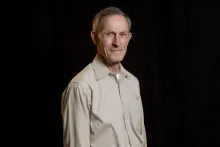
David Mills was born near Wallace, North Carolina, in 1939, where he grew up on a family farm. After high school he attended Ambassador College in Pasadena, California, and he graduated in 1962.
Since that time he has served as a minister of the Church in Washington, Florida, North Carolina, South Carolina, Oregon, West Virginia, and Virginia. He and his wife, Sandy, have been married since 1965 and they now live in Georgia.
David retired from the full-time ministry in 2015.
