

Brian Shaw
This transcript was generated by AI and may contain errors. It is provided to assist those who may not be able to listen to the message.
Brethren, every time we pray to God, we talk about that category that Christ gave in that model prayer about Thy kingdom come. And it's a reminder of that coming kingdom, something that every day we should always keep our eyes up and remember that that kingdom is coming down here. But it has not arrived yet. Still, we have a foretaste of that coming kingdom at the Feast of Tabernacles.
We know not everyone can go. Many times health and other circumstances hinder that. And we do remember them and encourage them not to lose heart because they're with us spiritually speaking. But this subject of Thy kingdom come reminds me of our holy calling and the feast that is coming up. Our holy coming, calling rather, and the feast coming up. Notice it's called a holy calling in the Scriptures. Let's go to 2 Timothy chapter 1 because this is an appropriate subject right before the feast about those that God identifies as the called out ones.
In 2 Timothy chapter 2 and verse 8, it says, Therefore, do not be ashamed of the testimony of our Lord, nor of me, his prisoner, but share with me in the sufferings for the gospel according to the power of God, who has saved us and called us with a holy calling, not according to our works. That's not why he called us because we're so great and wonderful and we're so obedient before none of that. Nobody deserves that calling, but according to his own purpose and grace, which was given to us in Christ Jesus before time began.
God has a plan that he is working out about calling people with a holy calling. We know only God can make things holy. And so that call is something that comes from God to us. And it mentions here the term according to his own purpose and grace, which was given to us in Christ Jesus. It reminds me how many have received the Grace booklet. Can I see? I think it's the great majority of the brethren. I'm about halfway through, and what an inspiring, wonderful booklet. I had a lady from another Church of God group that mentioned maybe a month ago when she came just to visit for a while.
She said, I hope one day one of the Churches of God will come up with a booklet on grace. And I said, well, I just announced it that very day that we have it, and now we have it in our hands. The first booklet on that such an important subject. And so our calling also has to do with the grace of God, his unmerited favor, as well as pardon to all of us.
So it's not only called a holy calling, it's also called a heavenly calling, because God's in heaven. And from there, He does the calling. Notice in Hebrews chapter 3. Hebrews chapter 3 verse 1. It says, therefore, holy brethren, partakers of the heavenly calling, partakers of it, because it comes from God Himself. And so this word call in the Bible, which is used around 700 times, both in the Old Testament and the New Testament, we identify one of the terms that are used is for the people of God, the called out ones.
And the word is those that have been called and who have chosen to accept the calling of God. That's what chosen means. We're going to go into this a little deeper, because the Feast of Tabernacles has to do with those called out ones from the world that God calls to His own people. And that's the group that is going to be celebrating this wonderful Feast of Tabernacles. So the term call, which in the Hebrew is kara. You can put it sounds like K-A-R-A. And in the New Testament, it's kaleo.
K-A-L-E-O. From where our term in English, call, comes from? So it goes from the Greek to the Latin to the English. And that's where we get a person is called into the church. In Spanish, it's even more direct, because the called out ones in the Greek has to do with that term, kaleo. And one of its derivatives is called clesis, which comes from the same root word. You get eclesia. Ek out clesia. People. People called out. Those called out. In Spanish, we get the word because in English, it's church. And church has another derivation. It's not dealing with called out ones. But in Spanish, we get the Greek word eclesia, which goes into Latin and then into Spanish, and we call it eglesia, which eclesia.
So it goes directly. So when we talk about going to church, we don't say church, we go eglesia. We're going to meet with the called out ones. I like the description that the Expositor's dictionary brings out about calling.
And I'm going to be using this dictionary quite a few times. It's a new book that I got a couple months ago, and it's coming very handy about calling. It says, a call from higher rank than of a lesser rank. So a calling is from someone who is above you in rank. It's from a superior to a person that is less.
And so the invitation, the calling, comes from God, of course, to man, who's much more of a lesser being. Thus, a call is something more than an invitation, not just an invitation. It is a command and requires a decision by the one's call. So it's not like, oh, you want to go get some coffee? No, I'm not thirsty right now. Oh, that's fine. No, this is a command from God that requires a decision by the one's call.
So when you feel being called by God, it is something that you feel drawn. You feel a special attraction and a special coming to God that you didn't have before.
He goes on to say, the called are to hear and respond. So God says, I'm offering you the chance to be part of my people, and I want you to respond.
Yet, this dictionary goes on to say, to call does not assure a response. Human beings can ignore or reject even the call of God.
Of course, we see that in the parable of the seeds in Matthew 13, where some were sown into the wayside next to the road, very hard. Others in the rocks, the other among weeds, and then another, which is good ground. And there it talks about a person that initially receives that call, and he might be happy. He might be enthusiastic. But what happens? Well, he finds out there are sacrifices to be made. The Sabbath is to be kept. The feasts are to be kept. Tithing is to be obeyed. Food laws. And so some people, they initially receive that opening of their minds. They know the truth, but they say, oh no, I can't. I'm working on the Sabbath, and no, I can't afford this, and I've got a family to feed or whatever. Whatever happens, it says that a person can ignore or reject that calling.
And I've seen that time and time again, the different things that hinder a person from responding and accepting the call from God. So what are we being called out to do? What are we being called out to do?
Again, from the scriptures, number one tells us to come out of the false ways and sins of this world. There in famous Revelation 18.4, come out of her, my people, from this Babylon that surrounds us, this system. It says, come out of her and don't participate of those sins. Number two, we are being called to build a lasting relationship with God. God wants to be a father to us.
But that means we are to be a child of God, which means submission in his family. Some people don't want that. I want to be independent. I want to choose my own. I don't want to submit to God. Just like people rebel against their parents and don't want to submit. We can do the same thing with God.
And number three, we are to faithfully learn and follow his instructions, which means his laws, right? His laws.
To be able to incorporate them more and more in our hearts, in our minds.
And fourthly, to serve him in whatever capacity he chooses to place us. No, that's not the last one. I have one last point, but this is number four. To serve him in whatever capacity he chooses to place us. I call these type of people the Here I Am, Lord. Servants. They're there. Here I am, Lord. What do you need done?
You're not picking and choosing what you like to do. No? Here I am. What do you want me to do?
You know, we've had times, especially at the Feast of Tabernacles, especially in some of these international places, where, you know, the toilets get stopped up. There's no plumber close by. Well, you know, the minister cleans those things up. That's what it takes. You've got to do whatever it takes to make sure things are done properly. And the fifth is to fellowship with others that are called out. We are to have fellowship with others that are called out of this world.
And so these called out ones, once a year, are to go to another place, leave their homes behind, and fellowship for eight days together at a place that God chooses. And He uses the church. He opens the doors. He chose the ministry where He wants His people to meet around the world, or like around 86 feast sites around the world, last time I counted. But again, don't quote me on that. It could be more or less, but that's one of the figures.
And during this feast, we are to learn more about God's laws and His ways. Notice this beautiful scripture in Deuteronomy 31, in verse 10. God is a God, not only of the macrocosmos, not only the big picture, but He is of the microcosmos. He also has details that He's concerned about that we keep.
It's like a good household. The man takes care of the big things, women take care of the more domestic things, and everything kind of works together. So here in Deuteronomy 31, in verse 10, and of course there are homes where women can do more things, and you have to adapt what can you do best, and what can she do best, and work through that. In Deuteronomy 31, in verse 10, it says, And Moses commanded them, saying, this is again from God, at the end of every seven years, at the appointed time, Moedim. We learned that term the other week. That's the time for especially the feasts. In the year of release, remember the seventh year, all the debts were forgiven, at the feast of tabernacles, when all Israel comes to appear before the Lord your God in the place which he chooses. You shall read this law before all Israel in their hearing. So it was a special time, the seventh feast of tabernacles, because God's law, which basically stems from Genesis all the way through Deuteronomy, the first five books, it's called the section of the law, they would go over all of this. Why does God ask this? It says, verse 12, Gather the people together, men and women and little ones, talking about children, and the stranger who is within your gates, those that came in, just like we talk about John Visser coming in and becoming part of the nation. So others came from different parts, but they were obedient to God, so they weren't excluded, who is within your gates, that they may hear and that they may learn to fear the Lord your God and carefully observe all the words of this law. There's a good parallel here to explain what does fearing God mean. It means to carefully observe all the words of this law. Don't be neglectful. And that their children who have not known it may hear and learn to fear the Lord your God as long as you live in the land which you cross the Jordan to possess.
So this knowledge should be transmitted from generation to generation, and in particular, every seven years. Now, why did this take place? People didn't have Bibles available at that time. Basically, the Levites were the ones that took care to copy the scrolls. They were very expensive, and so a lot of people, they went to Sabbath services. They heard the preachings and teachings, but every seven years, God wanted just like we have to have a driver's test every every couple of years. You have to pass a driver's test to be able to drive a car. Well, here God wanted to make sure everybody rehearsed his law, and the seventh year was when even the poor people that usually would just send the man of the house to represent them at the feast, here in this year, everybody was to attend. And so, of course, they had to pool all the resources and bring everybody because God said, you're not to neglect this. And also, why did he do it during the Feast of Tabernacles? And not at some other time. Anybody have a reason why doing it at the Feast of Tabernacles?
Yes? The work was done. The work was done, yes. They didn't have to worry about the harvest. That's a good point. And also, because you had eight days of the feast, and you were all together, and going through the entire law took time. The other feasts were all short times. But here, you had seven days where they were to meet together, and they would start maybe with the Book of Genesis. And then, the following day, Exodus, and then Leviticus, and then Numbers, and Deuteronomy.
During that period of time, people would have to have God's law read to them. So they didn't have anybody reinterpreting stuff. Everybody could hear it directly. Well, nowadays, we have the privilege that we can go every year to the feast, and that we can learn about God's laws and how to apply them.
And so, it's far more information-driven feasts than it was before. When people could hardly read and write, it's very difficult to educate people. But at least here, God assured that the children were going to be familiar with God's laws directly. And of course, we have Bibles. I mean, we can read those five books. How long would it take us? We could do it in just a couple of hours. But in those days, this was the way God assured that everybody in Israel heard God's laws every seven years, and all the little babies and all the little kids, eventually they would learn the same thing.
It's interesting what the Bible Knowledge Commentary brings out about this section in Deuteronomy 31. This is what they wrote. It says, C. H. McIntosh wrote the following. And unfortunately, what he wrote is much truer today than a century ago. This was a famous preacher in his day back in the 1890s, and this is what he wrote. The Word of God is not loved and studied. This was back in the 1890s, either privately or publicly. Even at that time, the studying of Scripture, which used to be a lot more stressed and a lot more practiced, you know, it's getting into the 20th century that had begun to be lost.
Trashy literature is devoured in private. Imagine trashy literature in the 1890s. I mean, that was all school kid stuff. And he's already concerned. And music, ritualistic services, and imposing ceremonies are eagerly sought after in public. Oh, it's all this grandiose stuff, how you got to dress up, and all of these ceremonies, and people preaching with robes and bejeweled and all kinds of garments and all of this flashy stuff. He says people were really enjoying that. Thousands will flock to hear music and pay for admission. But how few care for a meeting to read the Holy Scriptures? These are facts, and facts are powerful arguments. We cannot get over them. There is a growing thirst for religious excitement, you know, make things exciting, and a growing distaste for the calm study of Holy Scripture and the spiritual exercises of the Christian assembly.
It is perfectly useless to deny it. We cannot shut our eyes to it. The evidence of it meets us on every hand. So what he said, you can multiply it by at least five times, if not ten times, after a century. That's how far we have degraded. Yeah, sermons on God's laws are not very popular, using Scripture for the majority of what is expounded here.
Now, going back to the term calling in the Old Testament, in Genesis chapter 4 verse 23, we have the first time that this term is used about calling. Of course, we have the term by Adam when he called animals, but I'm not talking about that. This has to do more with a spiritual calling. We'll reduce it to that. Genesis 4 verse 23, it says, then Lamech said to his wives, Ada and Zula, Zilla, hear my voice, wives of Lamech, listen to my speech, for I have killed a man for wounding me, even a young man for hurting me.
If Cain shall be avenged sevenfold for having killed Abel, then Lamech seventy times, seventy-sevenfold. And Adam knew his wife again, and she bore a son, and named him Seth, for God had appointed another seed for me instead of Abel, whom Cain killed. The term Seth means substitute, referring to substitute for Abel. And as for Seth, to him also his son was born, and he named him Enoch, Enosh. Then men began to call on the name of the Lord. We've heard that term, but what exactly does it mean?
And the Expository Dictionary has a good explanation on that. It says, this was just after the fall, the expulsion from Eden, at a time when tragic events reported in chapter four took place. Cain's murder of Abel and Lamech's bigamy and self-justified killing demonstrated the awful impact of sin. Truly lost and aware of that condition, some men turned to God. It is significant that most often when the Old Testament believers called on the name of the Lord, they were in a desperate situation in which only God could help. Psalm 50 verse 15 mentions this principle. Psalm 50 in verse 15 it says, Call upon me in the day of trouble. I will deliver you and you shall glorify me. You will give glory for when God answers and helps the person out. Now we have a calling to serve God. One of the first ones.
Of course, Abraham was called by God, but in particular we can focus on Moses in Exodus chapter 3 verses 3 and 4. This is the incident with a burning bush.
Verse 3, Then Moses said, I will now turn aside and see this great sight, why the bush does not burn.
So when the Lord saw that he turned aside to look, God called to him from the midst of the bush and said, Moses, Moses, and he said, Here I am. Then he said, Do not draw near this place, take your sandals off your feet for the place where you stand is holy ground.
Moreover, he said, I am the God of your father, the God of Abraham, and the God of Isaac, and the God of Jacob. And Moses hid his face, for he was afraid to look upon God. And so then Moses is told of the oppression of the Israelites in Egypt. And then in verse 10, this is what God calls Moses to do.
He says, Come now, therefore, and I will send you to Pharaoh, that you may bring my people the children of Israel out of Egypt. So there's a calling. There's a mission to carry out.
And God's congregation is the ecclesia of God. In Acts chapter 7 verse 38, when Stephen was speaking to them, he talks about the congregation in the wilderness using that term ecclesia, the called out ones.
And of course, what were they being called out to do? Exodus 19.
Verse 4.
And so this is what God said. You have seen what I did to the Egyptians and how I bore you on eagles' wings and brought you to myself the way they were protected along the way.
Now therefore, if you will indeed obey my voice and keep my covenant, then you shall be a special treasure to me above all people, for all the earth is mine, and you shall be to me a kingdom of priests and a holy nation. So that was the calling that they were being asked to carry out.
We know, though, that was only partially successful until the New Testament, when God uses the church, the called out ones, and not just a few out of Israel in the Old Testament, which he calls out specifically, gives him the Holy Spirit to carry out his will.
So let's go to the New Testament now.
There's an addition to this term of being called, as in the Old Testament. Remember, the term calleo is now used, and there is a difference, and that is that you are called in Christ Jesus, or through Christ Jesus, God calls a person. Notice in Philippians chapter 3, verse 14.
Philippians chapter 3, verse 14.
Paul said of himself, I press toward the goal for the price of the upward call of God in Christ Jesus. Remember how I mentioned about the holy calling, heavenly calling, the upward call of God in Christ Jesus. So this is something that now we have access to. Christ is our mediator, he's the head of the church, and God is using him to carry out his will.
Notice in Romans chapter 1, another description where it shows the calling has to do with Jesus Christ now.
Romans chapter 1 and verse 5.
It says, through him we have received grace and apostleship for obedience to the faith among all nations for his name, among whom you also are the called of Jesus Christ. So again, the Old Testament is partially fulfilled, but then in the New Testament it is fully developed.
So now we have a spiritual church. It's not just a physical church of descendants of Abraham, which the majority never were obedient, but now it's a spiritual church and from among all the nations that a person is being called, and that now there is this opportunity to be part of God's church, no matter from what nation you come from. In 1 Corinthians 1, we see the characteristics of those being called by God. 1 Corinthians chapter 1, verse 24.
It says, but to those who are called, both Jews and Greeks, Christ the power of God and the wisdom of God, because the foolishness of God is wiser than men, and the weakness of God is stronger than men, showing that He's going to do His will. He's not going to ask anybody for permission.
Verse 26, for you see your calling at term, kaleo, brethren, that not many wise according to the flesh, not many mighty nor many noble are called, but God has chosen the foolish things of the world to put to shame the wise. So the wise look upon church people and they say, well, people here, just simple, ordinary, nothing extraordinary about these people. They don't have a bunch of PhDs after their names. They're not the rich and powerful, but this is what God said He would do. These are the people He would call chosen what the world considers foolish or simple. And God has chosen the weak things of the world. They're not powerful. To put to shame the things which are mighty and the base things of the world and the things which are despised so we don't have kings here. We don't have presidents of corporations. We don't have multi-millionaires or anybody else here. And the ministry had this bit of a joke that when you got a visit request, basically you'd go to a place wasn't the nicest neighborhood. And guess what? Down the street usually ended up being kind of like the most modest house. That's where God was doing the calling. And of course, in very rich and opulent places, we generally have small churches because everybody's so full of themselves and they've got many other options to do. And so it says that he has called these which are despised. God has chosen and the things which are not important, he meant, means to bring to nothing the things that are, that no flesh should glory in his presence. He doesn't want anybody coming and saying, oh, of course, I'm so smart or I'm so powerful or I'm so brilliant that God had to call me. He doesn't want anybody to do that. We know we don't deserve what God has chosen to do with us, our calling. So let's look a little deeper into the calling itself. Again, this Expositor's Dictionary says the freedom to reject God's calling is illustrated in the Old Testament history. Not everybody that was called carried out God's will and is seen clearly. And you can think of some like Saul and others that started out fine, but they didn't follow through. And it's seen clearly in some of the gospel parables. So let's go to Matthew 22. Christ illustrated the way God calls in this parable. Matthew 22. In verse 2, it says, The kingdom of heaven is like a certain king who arranged a marriage for his son, and sent out his servants to call those who were invited to the wedding, and they were not willing to come. So here they were invited. The call was given. In a sense, here we're talking about a king. He gave the command. You're invited, and what are you going to do about it? You have to respond to it. And again he sent out other servants saying, Tell those who are invited, see I have prepared my dinner. My oxen and fatted cattle are killed, and all things are ready. Come to the wedding. Of course, it's dealing here with a marriage for his son. So it's talking symbolically of the marriage of the Lamb with the church. But these that were invited made light of it, and went their way, one to his own farm, another to his business. These were people that had means, and the rest seized his servants, treated them spitefully, and killed them.
But when the king heard about it, he was furious, and he sent out his armies, destroyed those murderers, and burned up their city. Then he said to his servants, The wedding is ready, but those who were invited were not worthy. Therefore, go into the highways, and as many as you find, invite to the wedding. So these are not the special.
These are people, ordinary people. They're out there in the highways.
So those servants went out into the highways and gathered together, all whom they found, both bad and good, so all kinds of people. And the wedding hall was filled with guests. But when the king came in to see the guests, he saw a man there who did not have on a wedding garment.
Here's this great privilege. It's like being invited by the President of the United States, and then you go in and you walk in with a t-shirt, some shorts, and some sandals.
And you're supposed to be presented. You'd be kicked out. Well, how much more talking about God and Jesus Christ?
Verse 12, so he said to him, friend, how did you come in here without a wedding garment?
And he was speechless. He realized he wasn't careful. He wasn't respectful.
He insulted the king. And in a sense, we sometimes have this analogy that when we come here, we are the called out ones. We are an assembly of God's people, and we are invited on the Sabbath.
It's a command. How are we going to respond? And so we try to dress appropriate before God.
This isn't some type of a nice dress party or impress other people. No, it's to do honor, to God. Wear your best, whatever that is, but come in a respectful manner to God's services and to God's feasts. There are places where it's hotter, the tropics, and you might have Hawaiian wear. But whatever it is, come with your clothing properly ironed. It looks nice. It looks neat, because we're before God. Verse 13, Then the king said to the servants, Bind him hand and foot, take him away, and cast him into outer darkness. There will be weeping and gnashing of teeth. Just think of the embarrassment. And of course, God's kingdom. We better be respectful to God in the way we act and the way we dress. In verse 14, this is the summary, the conclusion of this parable. For many are called, term, Kaleo, but few are chosen. And this has to do, as other translations have. Many are invited, but few choose to accept the invitation. And so those that respond positively and carry out God's will, God chooses them.
So let's look before we finish, just to depart about the epistles. We've gone through the Old Testament, through the Gospels. Now we're going into the epistles and see what it says about those called out once. Those that heard, responded, and chose to follow God. In the again, Expositories dictionary, it says, to be called is to be involved in salvation's great adventure. And boy, it's been a great adventure, being called some at the end of their lives, some at the beginning of their lives. But just like the parable about the workmen, some were called early, in the morning, others mid-morning, others at the end, just an hour left. And guess what? They were paid the same thing. People received the same salvation. Some don't have to work a whole lifetime of struggling and battling Satan and this world and overcoming. But salvation is for everybody, regardless of when they are called. And so it says here that this is a great adventure.
Boy, my life has been an adventure. I think everybody's life, being called when you didn't expect it and getting to know a family like this and preparing for that coming kingdom of God. You know, a lot of people, they have their same routine day in, day out. You know, watch TV, go out, do this, eat. There's nothing of greater purpose in their lives. Boy, when God calls us, He says, I'm going to prepare you to be under Jesus Christ as a king and a priest, and I want you to renew this beautiful earth. You're going to renew it. You're going to be on the ground floor of God's kingdom at the start with Jesus Christ as your instructor, and He's going to hand out responsibilities, and we're going to get to work, and we're going to serve Him, and boy, are things going to improve so quickly. But this great adventure is also filled with spiritual battles, with trials, and guess what? Success is not certain. It is not secured.
But if a person is triumphant, if they overcome, they will receive the greatest of rewards that any human being can have. You know, Bill Gates can have his billions when he dies. It's like a pauper.
He can't take it with him. He's going to be resurrected without any possessions, no bank accounts. He's going to be just one little human being. But we can get a reward from what we do in this life. Notice in 2 Peter chapter 1 and verse 10. 2 Peter chapter 1 and verse 10.
It says, therefore, brethren, be even more diligent to make your call, the term calling, being called out. Make your calling an election sure, for if you do these things, you will never stumble. For so an entrance will be supplied to you abundantly into the everlasting kingdom of our Lord and Savior, Jesus Christ, an entrance to God's kingdom.
But again, nothing is secured until that last baiting breath we take. In 2 Peter 2 verse 20 describes, a person can turn back.
They can disqualify themselves. They can destroy the calling from God. It says in verse 20, talking about church members. For if after they have escaped the pollutions of the world through the knowledge of the Lord and Savior, Jesus Christ, they know His laws, but they go back to the values and laws of this world. They are again entangled in them. It's just like going back to the weeds in the thicket and overcome. They can't battle successfully. They are won over by the world. The latter end is worse for them than the beginning. And believe me, we've seen this happen. Men who had risen to responsibilities and became evangelists in the church, and then they had a falling out. And I remember one gentleman who said, oh, I met this former evangelist in the church that was from Pasadena. It had a very high position. He left the church, and basically he went back into the world. And he said, oh, yes, I met him now a couple years later. And there he was at some business convention, and there he was smoking his big stogie, you know, a big cigar, and talking with him. There was nothing mentioned about the church or any. He had lost all of that calling and knowledge. It can happen to us, too. It goes on to say, verse 21, for if it would have been better for them not to have known the way of righteousness than having known it, God's way, to turn from the holy commandment delivered to them.
So that includes their calling. You can reject it. But it has happened to them, according to the true proverb, a dog returns to his own vomit and a sow having washed to her wallowing in the mire. See, that's their natural condition. They went back to it.
They didn't overcome their human nature.
And so we have this holy calling, and that's why we are going to the feasts. And those that, again, stay behind, they're part of the holy calling. And God knows what's possible for them, but the important thing is to keep the feast wherever you're at.
Tune in to the services of those holy days when they are there. Be in spirit during this feast.
Notice Ephesians chapter 1. Ephesians chapter 1. And verse 18. It says, and I'm going to read it from the good God's Word version. It says, then you will have deeper insight, deeper understanding. You will know the confidence that he calls you to have. So you will know God is going to fill you with that confidence.
And the glorious wealth that God's people will inherit. So that's dealing with the calling.
In Deuteronomy 16, verse 13 through 15, you can read it later on. It tells us about going to the feast of tabernacles. It says about going with your family. If you have a family, if not by yourself or with friends, and twice in these verses it mentions you shall rejoice at this feast.
It's a great opportunity to be together, to build those bonds of friendship among the called out ones. It's a best opportunity like none other during the year.
This is why in Ezekiel chapter 45, in verse 25, when it talks about the future kingdom, let's go there for a second. Ezekiel 45 verse 25. You might not have noticed this before. It's a small little nugget of truth that God's word gives us. Ezekiel 45 verse 25.
It says, in the seventh month, on the fifteenth day of the month, at the feast, He shall do likewise for seven days according to the sin offering and burn offering, the grain offering, and the oil, which of course had to do with physical rituals which represented in the future the death of Christ. So the feast, it just simply called the feast. Not the feast of tabernacles, not the feast of booths. It is called the feast, as the IBP commentary brings out.
And also, the Bible knowledge commentary, it says, those called simply mention the feast, the greatest of the feasts for eight days. And so we use that. Are you going to the feast?
Well, here's the biblical precedent for that, that it becomes the feast to go to. And of course, for eight days, we get into the groove of looking forward to that coming kingdom of God. It is a great privilege. Let's go to Hebrews chapter 12 as we wind down this sermon. Hebrews chapter 12 and verse 23. Here's another description of those called out people. Hebrews 12 verse 23.
It says, to the general assembly, saying you are going before Mount Zion up in heaven, you know, you're looking upward to the general assembly and church, Eclassia, of the first born, and it should say first born ones as commentaries bring out. First born here is in the plural.
And it means the church of the first borns because there are a lot of people. The IVP commentary brings out the first born is plural, and those are the ones who will inherit as a first born inherits what comes to them.
So it is the church of the first born, of the first fruits too. Finally, last scripture, verse 1 through 3. I think this is appropriate to conclude with these verses talking about the calling. How important, how privileged, how unmerited it is. John says, behold, what manner of love the Father has bestowed on us that we should be called children of God, part of his family.
Therefore the world does not know us because it did not know him. They're not called out yet. Beloved, now we are children of God. Yes, we have accepted the calling. We have responded and been chosen, and it has not yet been revealed what we shall be. But we know that when he is revealed, talking about his coming to the earth, we shall be like him. There will be a transformation from flesh to spirit, for we shall see him as he is. We'll see him with spiritual eyes, just like he has spiritual eyes, and we will be similar to him. So that is the high calling.
God is asking all of us to carry out the called out ones from this world and into a foretaste of God's world at the feast. So, brethren, let's look forward and spiritually prepare with the confidence that comes from being called by God.
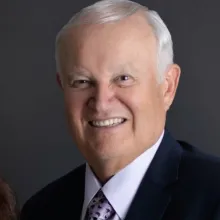
Mr. Seiglie was born in Havana, Cuba, and came to the United States when he was a child. He found out about the Church when he was 17 from a Church member in high school. He went to Ambassador College in Big Sandy, Texas, and in Pasadena, California, graduating with degrees in theology and Spanish. He serves as the pastor of the Garden Grove, CA UCG congregation and serves in the Spanish speaking areas of South America. He also writes for the Beyond Today magazine and currently serves on the UCG Council of Elders. He and his wife, Caty, have four grown daughters, and grandchildren.
