
Paul Moody
Our most important treasure is the understanding God has revealed through His Word and Holy Days, giving our lives purpose and hope. This hope strengthens us through trials, comforts us in times of loss, and assures us of the wonderful future God is preparing for all humanity. Regardless of our physical circumstances, we must cherish this treasure and let it guide our lives each day.
This transcript was generated by AI and may contain errors. It is provided to assist those who may not be able to listen to the message.
Well, again, welcome back to everyone. Speaking of pictures, I enjoyed from my lodging in various places this year, kind of jumping in the Facebook from time to time and getting a glimpse from the various parts of the world, where many of you went for the feast. Looks like you had a great opportunity to not only see places, but meet God's people from various places all around the world. The Feast of Tabernacles, the last great day, the last two major events, these holy days, end God's plan of salvation for all of mankind. We've just spent the year walking through the holy day cycle. Again, days that are very precious to us, just as the Sabbath is. Days that are very much given for God's people today, and as we keep them, we're reminded what God's doing. Right? What's God's doing? That's a question much of the world asks, I think, when they look around. Stuart mentioned the news and the things going on in the world, and people ask, you know, why is this going on? And if there is a God, what's God doing?
And so we've just come through the holy day cycle that reminds us and renews our vision of God's plan of salvation for all of mankind. Now we've come home, we've come back to our jobs, back to school, back to our responsibilities that are our daily routines. And I would say it's important that we don't allow the significance of the holy days and the hope that they represent fade from our view. I assume your life is much like mine. As soon as we walk back in the door from being gone, the deadlines that piled up, you know, that we kind of cleared out of the way so that we could go, are waiting for us, and the obligations, and the need to catch back up on all the many things. But as we do, let's make sure that the vision that we caught, and we're ignited with at the feast remains a part of our vision as we go forward. We all have things that we value deeply, things that we treasure greatly in this life. It's our families, our spouses, our children. It's our relationships with one another, our homes, perhaps even our jobs, but things that we cherish and value most deeply. And we work, and we care, and we protect those blessings, and rightly so. And yet, Jesus gave us a principle that helps us to understand what the most important treasure is that we can possess in this life. What it is that we must treasure. I want to begin today in Matthew chapter 6 and verse 19 with the words of Jesus Christ.
Matthew chapter 6 and verse 19. As we go through the sermon today, I'd like all of us to consider the question, what do you treasure most in this life? What do you treasure most in this life? Matthew chapter 6 and verse 19. Jesus said, do not lay up for yourselves treasures on earth where moth and rust destroy and where thieves break in and steal. You know, it's like if the whole effort of our life is to lay up things that are corruptible that can just disappear through a fire or a flood or some other, you know, disaster. It's like, what do you have to show for your life's effort? He said, verse 20, but lay up for yourself treasures in heaven where neither moth nor rust destroys and where thieves do not break in and steal. He says, for where your treasure is, there your heart will be also. Where your treasure is, there your heart will be also.
And so, what we treasure, brethren, determines where we're going to invest our time, our energy, you know, what our focus is going to be. And I would say, yes, indeed, we all do have things in this life and even physically that we treasure. And that's not a wrong thing, but it's about priority. It's about the things that we put first. Jesus said, where your treasure is, there your heart will be also. As God's people, we've been given something of incredible spiritual value today. We've just spent our time reflecting upon it. God's holy days.
God's holy days. Through his holy days, God has revealed his purpose for humanity. In the future, he's preparing for us all and for all of mankind. It's an understanding that gives our lives hope, indirection, purpose, and focus. I mean, just consider what your life's focus would be, what your worldview would be, apart from knowledge of God, apart from his ways, apart from knowledge of the plan of salvation that is revealed through the holy days. How would you even view life? How different would that be from how you see life today? Brethren, the knowledge of God's way, the knowledge of the kingdom, and the truth he has revealed through the holy days is our greatest treasure. And Jesus tells us that where our treasure is, our heart's going to be there also. Our focus, our energy, our very being, thrown into pursuing what it is we treasure the most.
We all went in various places for the Feast of Tabernacles this year. Unless we stayed local due to infirmity, the rest of us were out of state in various places, out of country, in many cases as well. I spent the feast in West Africa. I was able to spend that half with the brethren in Nigeria, half with the brethren in Ghana. And I can just tell you that while I was there, I interacted with brethren whose physical circumstances are very different from ours. I mean, if we're talking physical treasure, you know, we have our homes, we have our vehicles, we have the things we've worked for in this life. But in terms of physical treasures, there's a living standard that is very different. And most of the brethren that I interacted with live in very basic homes, compared to what we live in. Most do not own a car. Most travel day by day in ways that are, we would consider, quite difficult. Very basic in terms of what we have. And yet, what I would say is they are just as rich as we are in the most important things. According to the treasure, according to the calling we've been given from God. Their circumstances remind me of something Paul wrote, because the Apostle Paul, as you can recall, he said, all things that I may have counted as gain, I've counted as loss for my service to Christ. It's like, you know, here's a man that, in his own right and in his own field, was a very successful man until he started following Christ. And then he was an outcast among his own colleagues in that sense. He says, anything that I may have had that I could say was gain in this life, I have counted lost for the pursuit of Christ, where the true treasure is. And Paul said in 2 Corinthians 6 verse 10, this part of that verse, he says, having nothing and yet possessing all things. That's an incredible concept.
You know, having nothing according to physical standards and yet possessing all things, because of a relationship with God, because of understanding what it is indeed that God is doing in his life. So again, I split my attendance between Nigeria and Ghana for the feast, and the focus at both of those feasts was this treasure, right, this calling, this revelation from God that through the Holy Days, we come to understand what is his purpose for life, what is his purpose for mankind, and for the world. And, you know, gathered with people that we would say by a certain standard have nothing, they possess everything.
Again, what is your most important treasure? Just to give you a little perspective into what some of our African brethren went through to get to the feast this year, Nigerian road travel is not very conducive, not to a comfortable journey, but if you need to get where you're going, it's what you do.
But the feast site in Nigeria was about four hours outside of Legos, and it was somewhere that people could converge in all directions to meet up in, but the roads to get there are full of potholes.
The Omarodian family, they live up in the northwestern part of Nigeria at an opportunity to make a visit there years ago to go and see them. They spent seven hours on a stretch of the road that they said should only take one hour. Their overall trip was 14 hours in a higher bus with, you know, many other people getting in on and off in various places, but they said on one stretch, it was seven hours in an area that should have been one, and that's because the road was not just bad, there was no road. As in, literally gone, as the vehicles abandoned the road itself and are driving in the fields next to the roads. Of course, the rain had wallowed all of that out, and so now you had semi-trucks that are tipped over on the uneven ground, and the load spilled, and the vehicles making their way around that. And much was the same 10 years ago when I made the journey up to visit them. So they arrived. Mrs. Omarodian, I have to say, is pushing 80, somewhat of a frail woman, and that they arrived there. They were there for the opening night service. They were singing. They were rejoicing, and they were very glad to be together. A brethren from the Wary congregation crowded in the buses and traveled on roads where they ran the risk of terrorism and armed bandits. There's actually areas in certain pockets where vehicles get stopped rather frequently. The occupants get robbed, and people from time to time get killed as well. And so, you know, they're traveling through that. God bless them with safe journeys. And our Benin congregation came in a hired bus that kept breaking down on the way. They missed the opening night service and got there in like 3 a.m. hour of the morning, and the driver of the bus actually just abandoned it there at the feast site and caught another transport back to Benin City. And it was still sitting there when I left. Again, to me, flying on the airplane is the easy part. I can get on an airplane in Spokane, and for the next 24 hours I can eat snacks and watch movies and order scotch if I want to. And that's the easy part of the journey. And yet what the brethren go through to come together, and what they endure to come together, is something that they desire to do because this is their vision. Right? It is the spiritual treasures of their hearts to be together, to rejoice before God at the feast, and to learn more of His ways. Again, that's a wonderful, for me, example to see, again, the hardship even to get to the feast, and yet you rejoice so greatly that you're there. Matthew chapter 13 is over a few pages, the words of Jesus Christ once again.
Matthew 13, Jesus taught in parables often, which were stories conveying a lesson. And a short parable here of the kingdom of heaven, Matthew chapter 13 and verse 44, Jesus said, again, the kingdom of heaven is like treasure. Right? It's like treasure. What is treasure? It's like something you find and you value and you grab hold of and you don't want to let it go. And He says the kingdom of heaven is like treasure hidden in a field which a man found in hid. And for joy over it, it says He goes and sells all that He has and He buys that field. It's like He found something that is so valuable to Him that everything else that He thought was of value, He will trade it for the blessing of that treasure. And Jesus says that's what the kingdom of God is like. That's what the understanding of God's ways is like and the calling of God is like.
That's what it's like to understand the significance of the Holy Days and God's plan of salvation for all of mankind. It is a treasure that is above all other treasure that we could come into contact with physically. Again, the brethren in West Africa, their example reminds me that the greatest riches in this life aren't the things we can point to physically. They're the things God is offering us spiritually. So let's consider what makes that treasure so extraordinary beyond any physical possession. What makes it unique to the people of God? Why don't everybody have this treasure? Why don't they all have it right now? 1 Corinthians chapter 2.
Also Paul writing. 1 Corinthians chapter 2. And beginning in verse 9, Paul says, But as it is written, I has not seen nor ear heard, nor have entered into the heart of man the things which God has prepared for those who love him. And I hear that we often will quote that scripture, and I hear it quoted often. And it's like we say, I can't see, ear hasn't heard, and we stop there.
And you know what? In terms of the physical condition of humanity, yes, that's true, but Paul doesn't stop there. We don't stop with ignorance. Verse 10, he says, But God has revealed them to us. Notice how? Through his Spirit. For the Spirit searches all things, yes, the deep things of God. For what man knows the things of man, except the spirit of man which is in him? Even so, no one knows the things of God except the spirit of God. So if you're a man and you have the spirit of man, or you're a woman, you have the spirit of mankind, there are things you understand that the animal world doesn't understand. I mean, how long does the phone have to ring in the cow pasture before he answers?
Okay, but you'll answer the phone and you'll hang up on the telemarketer and you'll, you know, respond however it needs to be. But the spirit of man allows us to reason and do various things above the animal world. How much more than the spirit of God that brings a reasoning and an understanding beyond anything that can be comprehended in the spirit of man. And so what Paul is saying is, you know what? I hasn't seen or ear heard, according to man's wisdom, what God has in store, but by his spirit he has revealed those things to the people of God. Verse 12, now we've received not the spirit of the world, but the spirit who is from God, that we might know the things that have been freely given to us by God. These things we speak in words that man's wisdom, not in words which man's wisdom teaches, but which the Holy Spirit teaches, comparing spiritual things with spiritual. It says, but the natural man does not receive the things of the Spirit of God, for they foolishness to him, nor can he know them because they are spiritually discerned. And so the things which God has prepared for those who love him can't be discovered through human reasoning alone. It involves the revelation of God's Spirit, God's Spirit working with you, God extending that calling, opening your mind, opening to the point where eventually the Spirit dwelling in you, working with your Spirit, helps you to understand and receive these revelations from God. It's called a mystery in a number of places of the Bible, the mystery of Christ, the mystery pertaining to salvation, and God helps us to understand these things. It's kind of like that treasure in the field hidden in plain sight.
God's words are here, hidden in plain sight. But again, it's his Spirit that opens our mind to these things and helps us appreciate the abundance of the treasure. You know, mankind, by his wisdom, has made some pretty incredible advances in recent decades on science and technology and health and so many things, but even mankind's most brilliant minds can't answer the great questions of life. Who are we? Why are we here? What is our purpose? What happens after death?
Will this world ever experience lasting peace? Brother, those things we have come to understand the answers to through God's Word, God's Holy Days, revelation of God's Spirit. Don't ever take for granted what you understand by the calling of God. Indeed, it's something that is a mystery to much of the world, and yet it is a treasure to us. Again, just consider how different our outlook on life would be if we had no understanding of God's plan at all.
I mean, don't we live with a biblical worldview? Don't we see what's happening in the world among people, among nations, through the perspective of the Word of God? Doesn't that help give us understanding, but doesn't that also help to give us peace and reassurance? Knowing this world isn't going to end with the calamity of man. It's going to have the intervention of Jesus Christ and the kingdom of God, which will ultimately come and bring the resolution. But if we didn't understand these things, how empty would life be? How empty even would the greatest treasures of life be? They would be just for a moment. But again, the things of God are eternal. What a treasure! What a treasure to have a relationship with God, to know Him, to know His purpose, and to know our purpose.
At the Feast of Nigeria, I gave four sermons. I gave a Bible study. I conducted a leadership conference one afternoon. I conducted a wedding. I conducted a baptism. I conducted the blessing of little children. That was the first four days of the feast that I spent in Nigeria. And then I went to Ghana and repeated a lot of that same thing. But every event, every step of the way, every time we came together at the feast to do something, all of this was centered in one way or another on the spiritual treasure God has given us. Understanding the hope and the purpose and the future of all things that God has intended. You know, to conduct a baptism, to bring someone and, you know, play a part in their coveting with God through that sacrifice of Jesus Christ. Again, baptism, marriage, all these things. We have the view of what God is doing through family and the family that He is building, and it brings it all into perspective for us.
Imagine how different our perspective on everything would be if we didn't understand our calling or know what God is accomplishing in us and in the world.
Tomorrow I'll be up in Colville. It's Rita Carney's memorial service up in Colville.
Rita, a dear lady, 98 years old when she died. I've known Rita since I was 15.
Our family moved in the area. Rita was playing the piano at the church services up in that day, in the worldwide Church of God. At one point then, when we had church services up in Kettle Falls, she came at 90 years old and played hymns for us, albeit the tempo had slowed a bit. But the blessing of having her there and participate was great. Joe and I visited her in, I want to say it was early June, and her conversation was focused on the kingdom of God and what it is that God is doing. But I'll just say the words of comfort and encouragement that I'll share with the family. It would offer very little hope without the perspective of knowing and understanding what it is that we know. Grounded in the blessings that God has revealed, grounded in the promise of the resurrection for the faithful at the return of Jesus Christ. Again, all of these things apply to every aspect of our life if we allow them. And if we treasure them, the blessing will flow out through every aspect of our lives. This understanding should never become ordinary to us, brethren. It impacts our greatest joys, and it's there in our greatest sorrows. And yet it is the perspective God has given us that sees us through.
That brings me back then to God's annual Holy Days, because indeed the Holy Days walk us through the blessings. They walk us through God's plan step by step. And so I just want to briefly in overview, because we've covered these in depth, right, as we've gone throughout the year. And we've just wrapped up. But keep the focus. Don't put them on the shelf. Let's just briefly in overview walk through this treasure. Let's revisit it for a moment. Leviticus chapter 23 in verse 1.
Again, the feasts of God remind us of what is our most important treasure. Leviticus chapter 23 in verse 1. The Lord spoke to Moses, saying, Speak to the children of Israel, and say to them, The feasts of the Lord, which you shall proclaim to be holy convocations, these are my feasts. They're mine, God says. Right? They're the feasts of the Lord. They're God's Holy Days.
So they're not the feasts of the Jews. They're not the feasts of any one people. They're not the feasts done away in Jesus Christ. God says they are mine. And as His feasts, then, He is the one who would command their keeping, and He is the one who establishes how they're to be kept. And in the end evaluation, it is His good news that comes forth through those days.
As the chapter goes on, then, God lines out what those feast days are, again, each that we walk through in this previous year. I'll just remind us of Paul's words in Colossians chapter 2 and verse 17, where Paul declared the Holy Days to be a shadow of things to come.
A shadow of things to come. We sang about that in the first hymn today, not a memorial of things done away. Indeed, they are a shadow of things to come. And from that perspective, they are forward looking. They're designed to be days of hope and salvation for all of mankind to be inspired by. It begins with the Passover. And, you know, to me, I almost felt like we have whiplash this year, that we've just come so quickly through, you know, the Holy Day cycle. But Passover does not feel like it was all that many months ago, but I would say, what was it, April? That we kept the Passover into the Days of Unleavened Bread. The Passover begins that plan of salvation whereby all can become the literal children of God. And that's such an incredible concept, brethren. I think we know it so well. We've heard it so many times that it can almost lose its impact on us. But the Creator God of the universe has created you in His likeness to be His children, His glorified children, ultimately, for eternity. And that is such an incredible concept. The Passover is the starting point for that spiritual process. It reminds us that a redemption comes through Jesus Christ alone, no other name given under heaven among men by which we must be saved. Recall that when John the Baptist saw Jesus coming to him to be baptized by him, he said, Behold the Lamb of God who takes away the sins of the world. John knew who this was, who he represented, the Lamb of God, the Lamb that takes away, the Lamb who brings the deliverance for all. Indeed, the Passover establishes the foundation for the entire plan of salvation. Through Christ's sacrifice, we can be forgiven.
We can have the death penalty lifted from us, and we can be reconciled in relationship to God. And once we've claimed that promise through baptism, it becomes a treasure to us beyond anything this physical life can offer.
You know, the Apostle Paul was doing incredible works for Jesus Christ, and he was conducting miracles. He was healing people by the power of God. People resurrected to life from the dead, and yet with his own infirmity, he pleaded to the Lord three times that it would pass from him, and the answer was, My grace is sufficient for you. That's not a lesser answer when you consider the grace of God towards us. It is everything. It's like you want, you're asking for this physical element, and you know what, in my mercy, at times, God says, it has come to various people, but Paul, he says, My grace is sufficient. Understand what I have done in your life. Indeed, this is a treasure beyond any physical treasure you could possibly possess, the grace and the mercy of God.
And Azoan Levin-Bread then remind us that the forgiveness of our sins is not the end of our spiritual journey, that actually we have to be taking effort to turn, to change, to live a different way of life according to righteousness every day. We represent that action in type through putting out of the leavening, right? For the days of the leavened bread, we take of the unleavened, again, taking of Jesus Christ, the bread of life, daily. 1 Corinthians chapter 5. I'm just going to give us one scripture for each of these holy days, and they're not the Old Testament, Old Covenant type. They are the spiritual fulfillment. Okay, 1 Corinthians 5 and verse 6.
Again, the words of the Apostle Paul. 1 Corinthians 5 and verse 6.
Paul says, Your glorying is not good. Do you not know that a little leaven leavens the whole lump? He's writing this around the time the Passover and the days of unleavened bread. But you see, there was an open sexual sin that was being tolerated in the congregation. And Paul says, it's like leavening in the dough, and if you just allow it to fester or not deal with it, it infects all. A little leavening leavens the whole lump, he says. Verse 7, Therefore purge out the old leaven that you may be a new lump, since you truly are unleavened, for indeed Christ our Passover was sacrificed for us. He says, Therefore let us keep the feast. Let us keep the feast.
Yesterday Darla and I had a delivery to make in Missoula, Montana, and on our way there, we stopped at a rest area, and I popped into the facility, and she got hung up in the parking lot.
Maybe I shouldn't use the word hung up. She was introduced in the parking lot to a Jehovah's Witness who had a message for her. And when I came back out, several minutes later, they were still in conversation, and she handed him off to me, and of course, it told him I was a pastor, so we had an interesting conversation as well. But their conversation, you know, he opens the door, and she says, Well, what about the Sabbath? And he said, Well, that's done away with Christ. Well, are all the, is it one of the Ten Commandments, are all the Ten Commandments done away with Christ? Well, we keep it in the Spirit. And you know what, that's the answer, right? The Sabbath is done away in Christ. These holy days are done away in Christ. I don't think so. In fact, I know so. Paul says, Therefore, let us keep the feast. One of the greatest New Testament proofs that the church, indeed, was still keeping these feasts by the direction of the apostles after the death and resurrection of Christ. Let us keep it, he says. Not with old leaven, nor with the leaven of malice and wickedness, but with the unleavened bread of sincerity and truth. And so we have the spiritual answer, really, to what the leavening and the unleaven point to, right? Sincerity and truth is the unleaven. God hasn't called us to simply receive forgiveness and continuing to live then, as we did before. He calls us to repent. He calls us to overcome and to grow and put the sin out of our lives and learn to walk in his ways. The treasure of the days of unleavened bread is that God has given us an opportunity for a new way of life today. And partaking of the bread of life, Jesus Christ, through that we embrace that reality every day. Right? It's not just for the seven days of the days of unleavened bread. That's the type. But it's a pointing to what we do and must do.
365 days a year as these holy days build one on top of the other, and they impact our lives.
Feast of Pentecost or the Feast of First Fruits, as it's called, reminds us that we can't accomplish that transformation by our own strength. That we need God's Spirit working with us and in us, and affecting change within us. Acts chapter 2 records the giving of God's Spirit to the disciples on the day of Pentecost, marking the beginning of the New Testament church. And you'll recall Peter's powerful sermon on that day. Acts chapter 2 verse 38. Again, Acts chapter 2 and verse 38. Peter said to them, Repent, Let every one of you be baptized in the name of Jesus Christ for the remission of sins, and you shall receive the gift of the Holy Spirit. He says, For the promise is to you and to your children, and to all who are far off, as many as the Lord our God will call. It's a blessing. It is a treasure to have a calling from God. You know, the Old Testament type was the harvest. It was the first fruit harvest. And the spiritual fulfillment in this age is the harvest of the church out of the world by the giving of God's Spirit. It's called a first fruit harvest. It is a smaller harvest with a greater harvest yet to come. And yet God seals those whom he is harvesting out of the world today by his Spirit. The good news of Pentecost is that God has not only shown us what he wants us to become, he has provided the means for us to grow towards that goal. And so, again, as part of this package, treasure that Spirit.
Treasure God's blessing in your life daily. Don't quench it. Don't put it on the shelf, because the Holy Days are done for this year, and we don't have to think about it until March, April of next year again. Stir it up. Ignite this in your life. It's the power of God unto salvation. A piece of trumpets is the next holy day. Now we're moving to the fall, right? We just, in the last month, have walked through this final progression, the Feast of Trumpets. Historically, Israel reflected upon God's judgment and mercy on the Feast of Trumpets. It was the Feast of the Memorial Blowing of Trumpets. And yet again, the ultimate fulfillment of this day is yet future. Revelation chapter 11 and verse 15.
Revelation 11 verse 15 says, then the seventh angel sounded, sounded the trumpet. Okay, right? Yet the seven angels and the seven trumpets and the seventh angel sounded, there were loud voices in heaven, saying, the kingdoms of this world have become the kingdoms of our Lord and of his Christ, and he shall reign forever and ever.
Feast of Trumpets portrays the day of the Lord and the time of God's judgment upon the nations of the earth. The return of Jesus Christ, the establishment of the kingdom of God, things that we yearn for rather than each and every day. Is this not our treasure?
Is this not the focus of our life? Indeed, as well, at the time of Christ's return, at the last trumpet, then the saints are raised. There's a lot of exciting things that are portrayed by the Feast of Trumpets. 1 Corinthians chapter 15 and verse 50.
1 Corinthians chapter 15 and verse 50, Apostle Paul writing, Now this I say, brethren, that flesh and blood cannot inherit the kingdom of God, nor does corruption inherit incorruption. You know what? As strong as maybe we feel in the flesh at the moment, you're not going to get in the kingdom in that form. Flesh and blood can't inherit the kingdom of God. Verse 51, Behold, I tell you a mystery. We shall not all sleep, but we shall be changed in the moment and the twinkling of an eye at the last trumpet. For the trumpet will sound and the dead will be raised incorruptible, and we shall be changed. We shall be changed, he says. It is a blessing to understand these things. For the corruptible must put on incorruption, this mortal must put on immortality. So when this corruptible is put on incorruption and this mortal is put on immortality, so then shall be brought to pass the saying that is written, Death is swallowed up in victory. It is a victory, brethren. The overcoming of the flesh, the overcoming of the grave, the message of the Bible is that the grave cannot contain the people of God. Indeed, the victory will come. And because of God's awesome plan, death does not have the final word. What a treasure that is. What a treasure. I hope you treasure that. I think we all think of friends, of loved ones, of people, and we think of the words of God. This is our hope. This is our passion and our treasure. Indeed, this is what our life is about. Verse 55, O death, where is your sting? O Hades, or the grave, where is your victory? The sting of death is sin, and the strength of sin is the law. But thanks be to God who gives us the victory through our Lord Jesus Christ. And he says, therefore, right, that word that Stuart pointed out in the sermon, that therefore, in light of this, light of all of this, my beloved brethren, Paul says, be steadfast, immovable, always abounding in the work of the Lord, knowing that your labor is not in vain in the Lord. Again, where your treasure is, there your heart will be also. And if your treasure is in these words, your work won't be in vain. Your effort won't be wasted. The blessing will be realized in that day, even for you and for me. The Feast of Trumpets portrays some incredibly difficult things in the world, but it also portrays some incredibly wonderful things. And when we keep it in our minds today and reflect upon the elements of judgment and mercy, just as Israel did, then we're blessed.
We're blessed with encouragement, knowing that in the end is where righteousness dwells.
The Day of Atonement, right? The next holy day we just walk through, the Day of Atonement, pictures future time following Christ's return when all of mankind will be offered the opportunity for reconciliation with God by coming under the sacrifice of Jesus Christ, by the work of the high priest, Jesus Christ. Again, it's what you and I have experienced today, but it's salvation open now, the opportunity open to all of mankind, not just the firstfruits. And it also portrays the jubilee-like regathering of Israel into the Promised Land, as well as the removal of Satan the Devil, the instigator of sin. Revelation chapter 20 in verse 1.
We're living in this world today, seeing the effects of all that is happening in the world today, and yet we've just come from the Feast of Tabernacles showing there's a blessing coming, and it will be such an incredible difference. What in part makes that difference? Revelation 20 verse 1. I saw an angel coming down from heaven, having the key to the bottomless pit, and a great chain in his hand, and he laid hold of the dragon that serpent of old, who was the devil in Satan, and bound him for a thousand years, cast him into the bottomless pit, shut him up, set a seal on him that he should deceive the nations no more, till the thousand years were finished. But after these things, he must be released for a little while. You know, just like again the type in ancient Israel, and you had that goat that was the scapegoat.
In Ghana, when they came to the feast, you know, they piled into a bus and put the luggage on the top. There were 300 people, so multiple buses, but on one of these buses, the luggage was piled up like a mountain on the top of the bus, and the people are in it. And you know what else were on top of the buses? Goats. Goats coming to the feast. And you unload the luggage, you unload the goats, and you tether the goats out, and they turn around and look, and here's an empty lion laying on the ground. I called it the escape goat, you know. He knew when to get when the getting was good.
But there was the scapegoat of the old covenant of the Feast of Atonement, and that one had a suitable man that took that outside the account of the assembly of the people of God and released it away from the congregation of God's people. And we see in this day an angel is coming, a suitable angel which will bind the adversary and remove him for a thousand years from the midst of the congregation of God. What a wonderful message of hope. The good news of the Day of Atonement is that God is making reconciliation possible through Jesus Christ for all of mankind in that day. Humanity will be freed from Satan's deception, and they'll be brought into a lasting relationship with him. And that opens the door then to the blessings that we celebrate during the Feast of Tabernacles. Right? The thousand-year millennial reign of Jesus Christ as King of Kings.
That Feast of Tabernacles is a time when the knowledge of the Lord will cover the earth as the waters cover the sea. Just like there's not a dry place under the surface of the ocean, there won't be a dry place on this earth that does not know who God the Father and Jesus Christ are, and what their plan and purpose for all mankind is. And as man responds to that knowledge, and they respond with reconciliation to God and then obedience, the blessings flow.
Micah chapter 4 and verse 1.
Micah chapter 4 and verse 1. You probably heard this read at the Feast of the Tabernacles, maybe more than once. Micah chapter 4 and verse 1 pointing to that future time. Now it should come to pass in the latter days that the mountain of the Lord's house shall be established on top of the mountains and shall be exalted above the hills and people shall flow to it. In the Bible, oftentimes mountains and hills are symbols for governments and nations. Mountains being larger governments, hills being smaller governments and nations. In the mountain of the Lord's house, the kingdom of God is going to be established over every nation. That's what it's telling us. Verse 2. Many nations shall come and say, come, let us go up to the mountain of the Lord, to the house of the God of Jacob. He will teach us his ways and we shall walk in his paths. For out of Zion the law shall go forth and the word of the Lord from Jerusalem. The people in that day will actively seek the ways of God. They will find the ways and the truth of God and they will live them.
Verse 3. You shall judge between many peoples and rebuke strong nations afar off. They shall beat their swords into plowshares and their spears into pruning hooks. Nation shall not lift up sword against nation, neither shall they learn war anymore. It says, but everyone shall sit under his vine and under his fig tree and no one shall make them afraid. For the mouth of the Lord of hosts has spoken. Peace and harmony, brethren, will be the result of that time.
Prophecies of the millennial age under the reign of Christ are abundant in the Bible. Again, we've read those throughout the Feast of Tabernacles. The desert blossoming like a rose. The plowman overtaking the reaper. It'll be a wonderful time for all those living on the earth as they come to know their God and receive the benefits of a right relationship with Him for a thousand years. What a treasure! What a treasure! Finally, there's the eighth day, or the last great day, as we would often call it, and it is a day of hope for all humanity. It points to a time following the thousand-year millennial reign of Christ and the saints on the earth. It pictures the great white throne judgment of Revelation 20, a period of time featuring the general resurrection of all mankind from their graves to a physical life. Notice Revelation chapter 20. I'll pick it up in verse 4. Revelation 20 and verse 4 says, And I saw thrones, and they sat on them, and judgment was committed to them. Then I saw the souls of those who had been beheaded for their witness to Jesus and for the word of God, who had not worshipped the beast nor his image, had not received his mark on their forehead or on their hands. And they lived and reigned with Christ for a thousand years. So we're talking about here the first fruit resurrection of those who are in Christ at his coming, resurrected to glory in the likeness of God in Christ, and they reigned with Christ for a thousand years. Verse 5 says, But the rest of the dead, the rest of the dead did not live again until the thousand years were finished. This is the first resurrection. So you have the saints that are raised to reign with Christ, and then after the thousand years then is the raising of the rest of the dead. All those who ever lived and died apart from a true knowledge of God will be given an opportunity for a right relationship with him. They'll be judged by the standard of God's word, and eternal life will be given to those who respond favorably and faithfully. Indeed, it's an opportunity for salvation for all of those who ever lived or died without a true knowledge of God. Go down to verse 11, Revelation 20 verse 11. It says, Then I saw a great white throne in him who sat on it, from whose face the earth in heaven had fled away, and there was found no place for them. And I saw the dead, small and great, standing before God. They're standing. Okay, this is a physical resurrection. Standing before the great white throne, before the presence of God. Standing before God, and books were opened. It says that another book was opened, which is the Book of Life, and the dead were judged according to their works by the things which are written in the books. Okay, so you have books opened, it says, and we say, well, what books? What books is that?
Well, the word is biblia. Okay, so where we get the word Bible, the books that are open is God's word.
In fact, that it's open to these people, it means it's open to their understanding. Just as it's been open to our understanding today, the word is here, but the understanding is missing. So the understanding is opened to them. And then the Book of Life as well is opened to these individuals. That's an opportunity for salvation. That's an opportunity to have your name written in the Book of Life. All those who have ever lived or died without a true knowledge of God are given a time to live physically for a period. To acknowledge these words, to understand them by God's Spirit, just as you and I have, and to make a choice. And indeed, if they respond, well, their name is written in the Book of Life. And ultimately, eternal life becomes their reward as well. If we move now into verse 13, it represents yet another segment of people that come up after the thousand years as part of this rest of the dead. It says, the sea gave up the dead who were in it, and death in Hades, or the grave, delivered up the dead who were in them, and they were judged, each one according to his works. And so what you notice about this group of people is it does not say books were open to them. And it does not say the Book of Life was open to them. Because there are three segments or three sections of people, you have the faithful saints who were raised with Christ that is coming, you have those who have never known God or Christ, or had a true understanding or a true faith in that way, and then you have the group of people who knew, who had the understanding, who at one point in their life had the books opened, who at one point in their life had the Book of Life open to them, and they with knowledge rejected God. Indeed, they will come up in a resurrection as well, but the Book of Life, again, will not be open to them in that way. But it says they were judged, again verse 13, each one according to his works. You know, how did they live with the knowledge that they had? This is now the moment of truth. Verse 14, then death in Hades were cast into the lake of fire, this is the second death. Anyone not found written in the Book of Life was cast into the lake of fire.
And so you have those who have with understanding either past, present, or future rejected the calling of God. They will be ultimately destroyed in a lake of fire. It's called the second death.
The wages of sin is death, not any eternal life, and a burning hell. Okay? They're thrown in, they're consumed, they're gone. It says the wicked will be ashes under the feet of the saints. It says their memory will be forgotten. But again, then what will remain? What remains is the spiritual family of God. And that's the eighth day. The eighth day does not have a conclusion, understand. The eighth day is essentially open-ended into eternity. Isaiah 9 verse 7 says, of the increase of his government and peace, there will be no end. The kingdom of God will be ever-growing, ever-expanding, ever-accomplishing the purpose of God forever. That is indeed part of the eighth day. Revelation 21 verse 1, now I saw a new heaven and a new earth.
For the first heaven and the first earth had passed away, also there was no more sea. And I, John, saw the holy city, the new Jerusalem, coming down out of heaven from God, prepared as a bride adorned for her husband. And I heard a loud voice from heaven, saying, Behold, the tabernacle of God is with men, and he will dwell with them. They shall be his people, and God himself will be with them and be their God. Verse 4, and God will wipe away every tear from their eyes. There shall be no more death, nor sorrow, nor crying. There shall be no more pain, for the former things have passed away. They've passed away. That's the future. That's the promise. No more suffering, no more pain, no more death. It is swallowed up in the victory of God and Christ, in an age in which righteousness dwells. Verse 5, then he who sat on the throne said to me, Behold, I make all things new. And he said to me, Write, for these words are true and faithful. And he said to me, It is done. I am the Alpha, the Omega, the beginning and the end. I will give of the fountain of water of life freely to him who thirsts. He who overcomes shall inherit all things. And I will be his God, and he shall be my Son. Brethren, what an awesome plan God is bringing the past for those created in his image.
It is an eternal family plan. It is one founded upon the peace and harmony with God through a reconciled relationship, through the sacrifice of Jesus Christ. And we walk through this every year as we walk through the Holy Days, and it is indeed our treasure. I hope these words are so precious to you. We have heard them so many times. We have lived them and celebrated them so many times. Don't let them become common. Let it be the greatest treasure of your life.
Following the Feast of Tabernacles this year, in the eighth day, this would be then last Sabbath, Steve Koussi and I visited the congregation in Liberia. They're the potential UCG congregation that we're getting to know over some time, and so this was our second visit there to them.
It rained like you wouldn't believe in Liberia, one of the heaviest rain density regions of West Africa, and I laid there in the hotel room all night, Friday night. Every time I woke up, it was raining, and it was the kind of rain that you heard, you know, loud and clear. And we got up the next day and headed out to the village outside of Monrovia, where the congregation meets, and it was flooded. I mean, it wasn't houses underwater, but it was just standing water everywhere. The road into the village was underwater.
All the way up to the doors around all these houses was deep water. We ended up climbing up onto the elevated train tracks and hiking about a mile into the village on the train tracks before we could hike down then, and people who put out cement blocks and boards, and so you're kind of navigating across these mud bogs for about the last hundred yards to the congregation. But we arrived, and there were 42 people with muddy shoes that had come together that day to rejoice together in the Sabbath.
And while I was there, I gave a sermon in depth on the Holy Days, because you see, they're learning about the Holy Days. They understand they must be kept, but their understanding of what they mean, you know, what's their new covenant significance is really missing, because you think about how many years we've kept these days, and the lessons that grow deeper and deeper each year. Put out the leavening for the days of unleavened bread, and you walk through those days, and you find the box of crackers behind the, you know, whatever in the pantry, and you're like, oh, this is like sin hiding in my life, even though I've examined, you know, we learn those lessons.
A good understanding have those who do His commandments. So this is newer to them, and they're coming to understand these things. So I gave an in-depth sermon on the Holy Days, and I talked about, here's their Old Covenant type, and here's their spiritual fulfillment.
Here's what they mean to the people of God today. When I stepped away from the lectern, literally the entire congregation erupted in applause. They were excited. They were excited. After the service, an older man came up to me, and he was very excited. He grabbed my hand, and he says, you know what? No preacher in Liberia will ever preach Revelation 20 and 21. He says, because they don't know what it means, and they won't touch it.
He said, but you preached from the Bible. You preached God's Word. You spoke it to us, and it is so exciting. And Steve Goosie was sitting there, and he said, you know what? When you started reading Revelation 20 and going into 21, and you talk about the rest of the dead, he said, everybody started getting excited. He said, they had never heard that before, and they were rejoicing. They were rejoicing. And I would say, brethren, do we still rejoice? Do we get excited? Do we grab hold of these days in the message of God, which such zeal that we say, this is our treasure.
This is the most important treasure in my life, and nobody is ever going to snatch it out of my hands, because it's a lens through which I view everything. So it gives us hope. It gives us direction. It's what gives us focus. Again, it reminded me of Paul's word, 2 Corinthians 6.10, having nothing yet possessing everything.
Everything. Our African brethren are proof that this treasure isn't measured by what we possess physically, but by what God has given us spiritually. Paul said in 2 Corinthians 4 verse 7 that we have this treasure in earthen vessels. Like in clay pots is what he was saying. We have this treasure in earthen vessels that the excellence of the power may be of God and not of us.
And so as human beings, we are those earthen vessels. We are those clay pots, the dirt, right, that has been made into the image of God, and we carry this treasure.
It is part of our being. It's a part of our purpose. It's a part of our spirit, if indeed God's spirit is in us.
And we place incredible value on the knowledge, on the gift, and on the hope that this treasure provides. Brethren, the value of our treasure doesn't depend upon the vessel that carries it, but upon the God who has given it to us in the first place. The value comes from him. It's his power, his plan, his purpose. We are made in his image.
So let us not allow the meaning of these holy days to fade until next year. Now we're home. There's a lot of other things vying for our focus. Don't take the focus that you came home with and put it on a shelf and say, I'll come back to it next April. Let's carry the message forward with us every day. Remembering the sacrifice of Jesus Christ, remembering our calling, remembering the wonderful future God has promised. This is truly our most important treasure. And if we keep it as such, if we hold it dear as such, and value as the most important thing in our lives, then brethren, our hearts will be there as well.
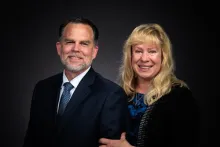
Paul serves as Pastor for the United Church of God congregations in Spokane, Kennewick and Kettle Falls, Washington, and Lewiston, Idaho.
Paul grew up in the Church of God from a young age. He attended Ambassador College in Big Sandy, Texas from 1991-93. He and his wife, Darla, were married in 1994 and have two children, all residing in Spokane.
After college, Paul started a landscape maintenance business, which he and Darla ran for 22 years. He served as the Assistant Pastor of his current congregations for six years before becoming the Pastor in January of 2018.
Paul’s hobbies include backpacking, camping and social events with his family and friends. He assists Darla in her business of raising and training Icelandic horses at their ranch. Mowing the field on his tractor is a favorite pastime.
Paul also serves as Senior Pastor for the English-speaking congregations in West Africa, making 3-4 trips a year to visit brethren in Nigeria and Ghana.
