
Rick Shabi
This transcript was generated by AI and may contain errors. It is provided to assist those who may not be able to listen to the message.
Well, good afternoon, everyone. Thank you very much, Teresa, for a beautiful job, as you always do. Wonderful voice and great meaning in that song. It made me want to speak about grace today, but I'm not going to. I hope you're having a good Sabbath day. It's nice to see you and speak to you last Sabbath. We were here, but the Sabbath before we were up in Milwaukee, Wisconsin. We did a seminar up there with Mr. Stiver.
We had around 80 to 90, roughly a church. And then we had around 40 to 50, who came to most of them. We ended up with about 23, who actually sat through all 10 hours of presentation that we did for ABC. So we presented them with our certificates up there in Milwaukee, Wisconsin. Dan Dowds, the pastor, did a great job of organizing it.
The brethren were really wonderful, very enthusiastic for God's Word. One person put that as an evaluation. What would you like to see? We'd like to have you come back next year. What is your evaluation? Come back next year. We get that a lot, and we go out to the church areas. I think Mr. McNeely did one out in Phoenix. And Mr. Stiver and Mr. McCready did one out in Portland. Mr. McCready was still feeling okay. He was all the way out in Portland, Oregon. Flew out there to do a presentation somewhere in July. So we've done three this year. Plus, we've done the Cincinnati one, which we try to do every year. Try to take Ambassador Bible Center out to the brethren. And they love it. They really do love it. Some of them want us to come back every year. Phoenix has had three. Toronto has had two or three.
And down in Florida, they've had like two or three down there. We did one last year in July. And they said, come back. What if they wanted to come back next year? So the years kicked off very well. We had a Deutsches Summerfest. It was our theme for the picnic that we had, the orientation picnic. Where students could get to know each other. We had German theme, German colors.
We had even a Grieders who were German. They were in a dirndl dress and a lederhosen for the men. And they looked really the part. And they welcomed those who came to the new students, as well as the alumni who came to help and support them. And we had various games so that the students could get to know each other. And then we even had a soccer ball from Germany. Well, it wasn't from Germany. From the World Cup.
It was like the soccer. It was the same coloration. It obviously wasn't the real expensive one. But we had one there showing. We had beer for the students. Root beer. And ginger beer. I'd clarify that. And we had mugs for them to take home. Plastic mugs that they could take home afterwards. So it was a really nice occasion. We had Bratwurst, which was a long hot dog. A really nice sauerkraut. And all the fixings.
Then they also had a German potato salad. They had red cabbage slaw. And we had Spetzel, which is German noodles. Which is delicious. And so they had that as well. And then we topped it off with apple strudel. With ice cream. So they had a really nice day. And they had pretzels to eat as snacks. Pretzels are kind of like a combination between the bread and the pretzel. And they were able to dip that in cheese.
And have that as a snack throughout the day. So it was very much a German theme. And even the teams of the five students. Five student teams. We had six on each team. Divided up. They were the Prussians, the Rhinelanders, the Berliners. I'm going to probably forget one. Prussians, Rhinelanders, Berliners, Bavarians. Now which one am I forgetting? And the Saxons. Those five. And they each had to go through different things.
And depending on how well skilled their team was. Certain ones of the activities. They ended up getting a prize at the end. So it was a really nice day. They enjoyed it. On Monday we had orientation. To let them know about classes and what to expect. And all the rest. And so we have a new student handbook that we did. We took it out of the catalog. That we used to have a lot of the rules and regulations for the students. But they were interspersed throughout the catalog. So we took all those out. And we had a lot of the rules and regulations for the students.
We took all those out, expanded on them to some extent, and made it into a student handbook. Now they have a student handbook. They're responsible for every jot and tittle of that particular book. The class has been really good thus far. We've started classes on Tuesday. They've been really bright-eyed and bushy-tailed. I think their tails will get a little less bushy as the year goes on. But right now they're bushy and they're up there and they're bright and they're in their seats. And the classes begin to get a little bit more light. And the class is beginning to get a little bit more light. And the class is beginning to get a little bit more light. And the class is beginning to get a little bit more light.
And the students are going to get their seats and the classes begin on time and sometimes don't end on time, which they should. But anyway, they begin on time and the students are enthusiastic. So a really nice class. 32 students. Two of them are Skyping us for the first couple of months because of some health situations and considerations. And then they'll be joining us after the feast. And then we would have had 38 this year. But we had several from Philippines who were accepted who were unable to come because they could not get a visa.
So we have David Macarek here who's the lone Filipino survivor. And we're happy to have him here. He is married to an American lady. And so he's been dreaming to come. He's been accepted for years. And so now this year he's been able to make it. He lives in California. His wife will come back from time to time, take some classes. But she has a great job out there. And is helping support his stay at ABC. So we're thrilled to have him after his brother was here in, I think, 2001. Charles Macarek was here. And then now David is here as well. So we're very happy. The father is one of our loyal ministers over in Philippines.
To Sam, a teenager, the question was asked. Why can't you go out to see Spiderman 3 with us on Friday night? Sam's answer? My parents don't allow me to go out on Friday evening. Or, he might answer, my church doesn't allow me to go. Another scenario. This is Susie, a sophomore in high school.
She's asked, why do you take two weeks off in the fall while school is just in session? Susie's answer? Our church tells me to take time off for our convention. Another scenario. A neighbor asks you to come to dinner and says, why can't you eat that pork roast?
Your answer? My church doesn't allow me to eat that. Or, perhaps you dodge it a different way by saying, it's off my diet.
One final one. You're at work, you're a Christian, and you're at work. And they ask you this. Why can't you work overtime on Saturday? And your answer? My church teaches. That's our Sabbath. Now, many of those answers, there's some good in them. But all of them do one thing. Each one avoids the responsibility of taking ownership for your own actions.
A Christian is one who needs to be responsible for his or her salvation. Now, this may sound funny. Now, I'm not talking about going out and being a loner. Well, I'm going to go out here and do my own thing. I'm going to be my own thing. Because we know the Bible very clearly teaches we need to be a community and a oneness. And Mr. Meyers has been speaking about that for weeks, about we are a family and so on. But how often is the family together?
How often is the family together? Let me give you a few stats that I wrote down. Okay. Out of a month of 720 hours, you are together for 26. That's if you go to Bible study every week, which we go every other week. And that's if you come to church services and sit here for three hours, or here for three hours, fellowshiping and so on. How much of that time are you on your own? 26 hours out of 720, which is about 4% of the time. 4% you have your church influence, 4% you have your ministerial influence. The rest of the time, you're flying on your own.
Do we take ownership of our own salvation? Are you actively working out your own salvation with fear and trembling? You see, salvation is a personal matter. It's what you do with the knowledge and information that you have. It's about our relationship with God. It's about our faith, our trust, our belief, and our practice in God's way. So, how are you handling your own salvation? Let me give you a few scriptures on this, and my goal today is to motivate you to take responsibility, whether you're a young person or whether you're an older person, to take responsibility.
Taking responsibility doesn't mean being blunt and hurting people. I don't mean that. Taking responsibility does not mean somebody says, why don't you keep Christmas? You know, Christ says it's a pagan. It doesn't mean you try to offend people. But it does mean you own who you are. You don't divert it. Well, I don't go out Friday nights until my parents won't let me.
Why don't you go out Friday nights? Because it is God's Sabbath day. I believe it is God's Sabbath day. That's why I don't go out on Friday evenings. Why can't I eat that pork? Because God's Bible, God's Word, tells me that it is unclean for me. You may not believe it, but it tells me it's unclean for me. I can't eat it. Why won't you go? Why won't you go? Why do you take off those two weeks? Because it's God's holy days. God made those holy days for me.
Do you take responsibility for yourself, for your own actions, on the road to eternal life, as we heard from Mr. Clint Porter today? Are you taking responsibility? Philippians 2, verse 12. Let's read what Paul said. Then we'll go through some of the scriptures that show you our individual responsibilities are clearly laid out. Philippians 2, verse 12. He said, Wherefore, my beloved, as you have always obeyed, not as in my presence only, but now much more in my absence.
You don't just obey when I'm around. You obey whether I'm there or not. You take responsibility. It's not a matter the church makes you do this. Oh, the church is here. I better be on the ball because the minister is around. I better get some prayer in because the minister told me to get some prayer in. I better do this because the minister told me. I better do this because the church tells me.
Do you do it because you believe it? We'll see what the responsibility is of the church in a moment. He said, You have obeyed, not as in my presence only, but now much more in my absence. Work out your own salvation with fear and trembling. The apostle Paul puts squarely on our shoulders the responsibility to work out our own salvation.
Look at 1 Timothy 3, verse 15. Should you expect guidance and direction from the church? Absolutely. The church is identified as the pillar and ground of truth. Being the pillar and ground of truth, you should expect that they will lead you, guide you, teach you, inspire you, and try to motivate you to learn the truth and to practice the truth.
You bet. 1 Timothy 3, verse 15. Paul writes, breaking into this letter to Timothy, he says, But if I remain long, that you may know how you ought to behave yourself in the house of God, which is the church of the living God, the pillar and ground of the truth. If the church doesn't have the truth to teach to you, how can you be led in it? So the church has a responsibility.
In fact, in 2 Timothy 4, notice what Paul urges Timothy to do. Because the church has, is the pillar and ground of truth. 2 Timothy 4, verses 1 and 2, we read this. I charge you, I command you, I urge you.
Therefore, before God, Paul writes to Timothy, And that Lord Jesus Christ, who shall judge the quick and the dead, it is appearing in his kingdom. Preach the word. The ministers can get up here and preach the word.
Men can get up here and give a message. People can get up here and sing and inspire you. But what you do with that is up to you. What will you do with what you hear? What will you do with what you learn? So he goes on to say in this section, he says, Preach the word. Be instant, in season, out of season. Reprove, rebuke, exhort with all long suffering and doctrine.
You could be urged, you could be spoken to, you could be impelled, you could be motivated. But what do you do with what you hear?
And do you just do it for a little while? Or is it about our salvation? Ephesians 4, verses 11-13. Why did God give a ministry? Not to run your life. He gave a ministry to prepare you. He gave a ministry to teach you. He gave a ministry to model for you God's way of life. But whether we do it or not depends on whether we accept that responsibility or whether we dodge it. Well, my minister told me, I really wanted to eat that pork, but my minister gave a sermon about unclean food, so I guess I better do it. Well, I better take off for the feast because my church tells me to take off for the feast. Yes, the church tells you, but if that's as far as it goes with you, or do you believe the Word of God, the truth? Ephesians 4, verses 11-13. He gave some apostles, some prophets, some evangelists, some pastors, some teachers. Why? For the perfecting of the saints, for the maturing of the saints, for the work of the ministry, to help prepare them that they might be serving for the building up of the body of Christ. Till we all come in the unity of the faith and of the knowledge of the Son of God to a perfect man, a complete person, a mature person, to the measure of the stature of the fullness of Christ. God's ministers are trying to teach us how to be Christ-like, how to prepare for the kingdom of God, how to be ready for eternal life. But whether we are or not depends on whether we will seize the moment, whether we will take a hold and do something about it, whether we are willing to accept that responsibility. Yes, the church can give guidance in the conference in Acts 15, where they said, and James stood up and said, my sentence is, my judgment is that we do thus and such. You can see that pronouncement made. You can see it in strong direction in 2 Thessalonians, chapter 3, where the Apostle Paul said to the church at Thessalonica, here's what I want you to do. Here's what I command you. Yes, you can receive commands. You can receive instruction.
You can receive orders. But whether you do them or not depends on you.
You're the one that has to take hold of your salvation.
Am I headed down the right path or not? We've got choices every day to make. Am I going to do this or do that? What am I going to do? So the minister can only be around, the church can only be around 4% of the time.
96% of the time you have to do it on your own.
How are you doing? Students at ABC will give them some...they have a little better advantage. They get to have church around, Bible around, teaching around about one-third of the time. So 66% of the time they're still on their own.
They still have to decide what they will do, how they will handle the responsibilities that are laid out for them. So how do you apply the instruction from God's Word? That's between you and God.
God's the only one that's going to see. I can't see how your mind is working even now. I can't see. God does. He sees what you're thinking. He sees how you're feeling about it. He sees you. And your relationship with Him is what will be very key. It's between you and God. He sees you and He knows you. So let's see how we can be responsible for our spiritual lives and for our own salvation.
Hebrews 2 and verse 9. And I will be stressing in these scriptures that will follow. I'll be touching on them, but I will be stressing how they say, You individually. There are things that we all do collectively as a family. But you individually must apply God's way of life in your time and for your salvation. Notice in Hebrews 2, verse 9. Jesus Christ tasted death for every man, every person. Hebrews 2 and 9. But we see Jesus, who was made a little lower than the angels for the suffering of death, crowned with glory and honor, that he, by the grace of God, should taste death for every man, or all of mankind. But He tasted it for each one of us. He didn't taste it in general. He took that. Yes, that sacrifice is there. But each one of us has to come to God and accept that sacrifice in our lives. That's what baptism is all about, isn't it?
We read over in John 6, verse 44, God had to call you. John 6, verse 44, He had to call you to Him. John 6, verse 44. And each one of us has a different story to tell about how we were called. Some people say, well, I'm just cleaning this place out of janitor, I was dumping the garbage, and this magazine fell out. I picked it up. It was a good news magazine, an airplane truth in times past. It was a magazine. And I looked at it, and it looked interesting, so I stuck it in my pocket, took it home, and read it, and now I'm coming to church. God calls people in many ways, sometimes through family, because family members are going to church, and they wonder, why is this person doing this, and why are they doing that? God calls people sometimes through families.
John 6, 44. Famous scripture. No man, no person can come to me, except the Father which has sent me, draw Him individual, and I will raise Him up at the last day.
God wants us all to accept responsibility for our own salvation. Do we? Are we accepting that responsibility? 1 Corinthians 7, verse 17. God wants each of us to be able to walk with Him. 1 Corinthians 7, and verse 17.
He wants us not only to accept the sacrifice of Jesus Christ, He wants us to accept His teachings and do something about it. Not just read nice words. Oh, these are nice words. I just read the Bible for inspiration. Do you read the Bible to do something about it? Do you read the Bible for both inspiration and for action? What am I supposed to do? 1 Corinthians 7, verse 17.
But as God has distributed to every man, each person, as the Lord has called every one, so let him walk. And so I ordain in all the churches. Each person must do his thing.
Even when we talk about the body of Christ, what if I'm only a fingernail on the little finger? What if it gets smashed? Does that affect my whole body? Yeah, affects my whole body. Ever stub your toe and start walking a certain way? And pretty soon, by walking that way, you start to hurt in the hips. Because I'm walking differently.
My back is being thrown out. Because you've been hurt in a little way. As members of the body of Christ, God expects each one of us as members to do our best to take responsibility for being a good fingernail, for being a good baby toe, whatever you are in the body, maybe a kneecap, whatever you are. He expects us all to be and to do our very best and to take responsibility for that.
Not responsibility. My fingernail is not going to take responsibility for my hand. My fingernail is not going to take responsibility for my eyes. But I want my fingernail to be doing well so that the rest of my body can do well. How each one of us, you talk about the weak link in a chain. How you change it at lots of strong links. Well, that was really strong.
But you have one that's really weak. What happens to that chain? It'll break. God wants each of us to accept responsibility that we have. Take a look at Acts 8. It shows individual choice and responsibility. In the case of the Ethiopian eunuch, Acts 8, beginning in verse 27. Acts 8, 27, Philip had just returned from a trip to Samaria, I believe is where he was preaching. He had come back and was in Jerusalem.
And God said, I want you to go stand by this intersection. And you're going to see something happen when you are there. So he goes and stands there. Didn't tell him what he was going to see. And all of a sudden, here comes, you know, on this highway, going down south. Comes this highway and he's looking, watching, and all of a sudden it says in verse 27, And he arose and went, and behold, a man of Ethiopia, a eunuch of great authority under Candace, queen of the Ethiopians. There's debate whether he was truly a eunuch or just an officer or whatever, but regardless.
Here was a man, had come all the way from Ethiopia to worship in Jerusalem. And if he were truly a eunuch, he would not have been allowed to enter because he had something taken away from him and would not be allowed to have full worship. But he could worship as a believer.
But how diligent is this man? He's riding back and he's bumping along and he's reading the book of Isaiah. Remember, the book of Isaiah wasn't just, oh, give me my Bible and look up the book of Isaiah. It was a scroll and didn't have chapters and verses. Just one long scroll. So he's reading through it and happens to be reading in what we would term now Isaiah 52-53. Isaiah 52 and Isaiah 53, and he's reading that section.
And he's trying to figure out who is this talking about this one that's being bludgeoned and beaten takes upon him the infirmities and weaknesses of all mankind. Who is this? And he's wondering about that. Just at that time, God's Spirit inspires Philip to go join himself to that chariot.
There must have been other chariots because it didn't say the chariot. It was that chariot. And so he runs down and he runs alongside. Running along, the chariots may be going slowly. And it wasn't a Ben Hur chariot. It's unthinkable that a man of great... He was treasurer under Candace, queen of the Ethiopians. It's unthinkable that he would come up in a Ben Hur chariot, you know, just for his driver and him hanging there holding on with his spear.
And that's it. He's going to go all about 400 miles in a Ben Hur chariot. Probably wagons. Probably an entourage. Probably guards. Probably food and water. And here he's going back and God tells Philip, join yourself to this chariot. So Philip runs alongside and he says, do you understand what you're reading?
And the man had come to a place where he was stumped. That's what the Spirit did to call him. And the man said, well, I have this question. I don't know what this is talking about. And Philip must have said to him, I can help you. So he said in verse, he ran side. Did you understand? The man said, how can I accept someone should guide me?
Verse 31. He desired Philip that he would come up. He was teachable. He had a good heart and a good attitude. Verse 32, in the place of the scripture which he read was this. He was led as a sheep to the slaughter and like a lamb dumb for before his shear, he didn't open his mouth.
And so he was talking about Jesus Christ, Isaiah 53. And Philip could have said, I know who this is talking about. Let me tell you about him. Let me tell you what he stood for. You probably heard some things up here in Jerusalem, you know, about Jesus Christ. Let me tell you about him. And so he spends time talking to him. Verse 34, in the eunuch answered and said to Philip, I beg you, of whom speaks this?
In verse 35, Philip opened his mouth, this is verse 35 of Acts 8, and began from the same scripture and preached to him Jesus. Now, what do you think he told him? Jesus liked to hold lambs. Jesus liked to sing folk songs. Jesus liked the Jewish version of pizza every so often. Jesus liked, you know, what did he tell him about Jesus? That he wore whiter than white clothes? That he always had a halo when he walked around? What did he tell him? He would obviously have told him what Jesus Christ taught, what Jesus Christ stood for, what Jesus Christ was all about.
And so after telling him all that, notice what happens. That's verse 35. And as they went on their way, of course, if you tell somebody, he died for the sins of humankind. He came to take away our sins. And if this man were any least bit sensitive, he would have said, you mean he could take away my sins? And Philip could have answered, yes, he can. How? Well, through baptism. Well, notice what he says.
Verse 36, they went on their way. They came to a certain water, certain lake, certain body of water. And the eunuch said to him, here's water. What do I lack to be baptized? We've talked about Christ.
We've talked about his teachings while we're riding along. We talked about what it takes, what it means. What do I lack? And notice what he lacked. Philip said in verse 37, If you believe with all your heart, you may. Isn't baptism a very personal thing? It's not a group thing, though there may have been several people baptized at the same time you were. It's not a group thing. You don't do it because while my friends are being baptized.
Well, it's about time that I be baptized. While people tell me I should be baptized. Well, I'm good enough, and I've overcome everything, and I can present to God this wonderful person. Baptism is a very personal thing, isn't it?
Between you and God. That your acknowledgement and your showing, your giving up your old ways and yourself in baptism. You're picturing the death, burial, and resurrection of Christ as you picture the death and burial of the old person and the rising up to walk in newness of life of you. And with the hope of the resurrection of the dead in front of you. That's what you're picturing. But it's your personal commitment. And so he asked him, If you believe with all your heart, you may. Not just empty belief, not just head belief. You believe it down to your toenails.
What you've heard, what you've learned, what you understand. It's in your heart. And he said, I believe with all my heart. If you believe with all your heart, you may. And he answered and said, I believe that Jesus Christ is the Son of God. You know what he confessed there? He confessed that Jesus Christ was resurrected. And part of the teaching of the baptism is that you come up to rise up out of the water, which is typical of a resurrection, though you're not resurrecting the old self.
But you're picturing Christ's resurrection, the hope of the resurrection. And he said, Jesus is the Son of God. Not was. He used to be, but he isn't anymore. He is. He's at God's right hand. How did he get there? Resurrection. And verse 38, He commanded the chariot to stand still. They went down both into the water, both Philip and the eunuch, and he baptized him. An individual choice. Taking responsibility for himself and his future.
In Luke 14, remember the scriptures that we go over, count the cost? Luke 14 is all about you making a choice. Individual choices we have to make on the road to eternal life. Luke 14, verse 26. Luke 14, verse 26 to 28, he says, If any man, any person, comes to me, and hates not, does not love less, his father, mother, wife, children, brothers, sisters, yes, in his own life also, he or she cannot be my disciple.
If somebody comes to me, he must make a choice. He must take ownership of what he's doing. He must know what he's doing. It's about possibility of losing your family because you walk with God. One student told me his family was ready to disown him because he wants to come to ABC. They want him to come. We had students come to Ambassador College whose parents did disown them because they came. You're no longer my son. You're no longer my daughter because you've gone there. Why? Because they did not like the love of the truth, and they were trying to control.
That young person made a decision. Verse 27, he says, Whosoever does not bear his cross come after me cannot be my disciple. It's a choice. It's an individual choice that we have to make. We have to take ownership of who we are. We have to take ownership of what we do.
We have to take ownership of the choices we make and the decisions we make to enact those choices. In verse 33, he says, So likewise whosoever he be of you that forsakes not all that he has, he cannot be my disciple. It is a commitment. It's a choice. It's owning who we are on the road to eternal life. Now, the Apostle Paul said this, and the Apostle Paul owned who he was quite a bit.
But notice Philippians 4, verse 13, this encouraging Scripture. You probably know it by heart. Philippians 4, verse 13. Here's what the Apostle Paul said. I, I, can do all things through Christ who strengthens me. I'm not supposing you can do it on your own. But what you must supply is the ownership. What you must supply is the desire. What you must supply is the effort to say, I'm going to set my feet in this direction.
Now, the Spirit of God will lead me and guide me and Jesus Christ in me. I can do all things through Christ who strengthens me. And that's the huge key. We can't do it on our own. But we can make those decisions. We can take ownership when we take what comes to us to make decisions about our eternal life, about how to live the Christian life. We must make those decisions. Matthew 6, verses 5 and 6. Prayer is very personal, too, isn't it? It's between you and God.
The minister doesn't go into your prayer closet. He doesn't have it bugged. Didn't have somebody slip in and put a little bug in there so that we can hear what you say. Oh, okay, they made a good prayer tonight. Oh, yeah, she made a good prayer this morning. Okay, they prayed three times today. I guess they're doing all right. No, we don't bug your prayer closets. Your prayer is between you and God. It's very personal. Whether you pray, what you pray.
You have to work out your own salvation. Your responsibility. Matthew 6. Matthew 6. I want to pick up verses 5 and 6. He said, And when you pray, you pray individually, thou, You shall not be as the hypocrites are, For they love to pray standing in the synagogues, In the corners of the streets, that they may be seen of men. Fairly I say they have their reward. Verse 6, But you, when you pray individually, enter your closet.
And I tell the students, I believe this literally, I used to go into my closet. A stuffy clothes hanging in my face, shoes underneath my knees, trying to find some place to... Because I thought, go in your closet. I had to be a closet, couldn't pray in the room, even though I was by myself. I thought I'd enter into this closet and get kind of claustrophobic.
And the air was gradually, the oxygen was waning as I was in there. But I prayed. God says, enter your closet, your private place. Do you take responsibility for your prayer life? It is between you and God. Even when you pray with your wife, you're praying to God, not to her. And sometimes she'll cross the bed, she may pray her prayer to God. You're listening in, in that case, just the two of you. But she's not praying to you, she's praying to God. And as a couple, you're sending your prayers up to God.
But it is a choice again, see? Do we accept that responsibility? Have we? And if we had accepted it before, how are we doing with it now? Are we following through? Prayer is very personal. What about Bible study, 2 Timothy 2.15? 2 Timothy 2.15.
Study to show yourself, or do your diligence to show yourself approved to God. Notice, a workman. Other translations put it, a worker, or someone who's working. That needs not be ashamed, rightly dividing the word of truth. Rightly handling the word of God. What about in your Bible study? Do you take hold of it, or do you wait for everybody else to do Bible study for you? Well, I come to church, and I come to Bible study, and that's my Bible study for the week. Or do you accept the responsibility of those 96% of the time that you're not around anybody else to make those decisions? You have to ask yourself, how am I doing? How am I doing? Prayer and Bible study. Study to show yourself approved. A workman, singular. The Apostle Paul, 1 Corinthians 9, also took hold of himself. 1 Corinthians 9. And what I like about the Apostle Paul, he didn't blame everybody. Well, you know, I'm having a hard time here. It was because of them, and because of the way I was born. You have to understand my past. I've had a really bad past. That's why I can't do it. That's why I'm having such a hard time overcoming, because I had such a bad past. Each one of us has a choice to make, don't we?
We can't blame everybody else. We can't say, well, if I hadn't done that, I wouldn't have done this. You know what the Apostle Paul said? 1 Corinthians 9, 27. But I keep my body. There's one of the words in the ladder of virtues over in 2 Peter that talks about engratia, which means, take a grip of yourself. Garret, you don't do that. Christians don't do that. And you're a Christian, so stop it. Take a grip of yourself.
The Apostle Paul said, I keep my body and bring it into subjection, lest that by any means, when I have preached to others, I myself should be a castaway.
I take a hold of myself. I take responsibility for my actions. Well, the devil made me do it. You know, the devil hadn't done that. I was with the wrong crowd, the wrong crowd. I don't care what crowd you're in. You have a choice. You said, I'll follow God the rest of my life. Please forgive me of my sins, so I don't have to die. The second death, the eternal death. Please forgive me, and I will walk with you the rest of my life. That's what we said at baptism. Are you still walking with him? Or are you going, well, I have this bad background. I was with a bad group. Well, I don't care if you're a bad group or not. Make a right choice despite the bad group, and leave the bad group. Have that type of influence they have on you. Leave them. But make a right choice. Accept responsibility.
Accept responsibility for who you are. You're a Christian. You're called by God to eternal life, to wonderful promises that God has for each one of us. What are we doing with our time and our effort? James said this, James 1, verses 22-25.
He says, Be you doers talking to everybody. Be you doers of the word, not here as only, deceiving your own selves. If any, that's a singular, if any person, be a hearer of the word, not a doer. He is like a man, like unto a man, beholding his natural face in a glass. He beholds himself and goes his way. And straightway forgets what manner of man he was. Like looking into a mirror, seeing that your hair is all disheveled, and walking away and forgetting about it. But I did that once. Couldn't figure out why all these people were looking at me driving on the freeway in Pasadena. I got interrupted with a telephone call. I had gotten dressed already. I was ready to blow dry my hair, which does go wiry. It used to. It's not as much there now. But it used to get more wiry. Anyway, I had to blow dry it and comb it. And I didn't. I had just taken a shower, washed it, and the phone call came, and I had to get going and hung up the phone. I was already dressed. I ran out. I'm driving along, and I look. As it came to a stop, I'm looking at my rearview mirror, and I'm a wild-haired anti and driving down the freeway. I forgot what manner of man I was.
Don't forget what manner of person you are. Don't forget. In verse 25, But whosoever looks into the perfect law of liberty, and continues therein, He, being not a forgetful hearer, but a doer of the work, This person shall be blessed in his deed. This person who takes responsibility to do what's right, to take responsibility to do what's right, to take responsibility and ownership of his actions and his life. This is the one who yields to God. And by the way, you can save nobody by your own actions. Ezekiel 14, 14 tells us, So Noah, Daniel, and Job, is that the three? Let me go back to Ezekiel 14, 14. Ezekiel 14, 14, Though these three men, Noah, Daniel, and Job, were in it, they should deliver but their own lives by their righteousnesses. You can't deliver somebody else. I can't say, well, God, I only got in a 15-minute spirit, but my wife got 45. So how about giving me 30-30? How about evening it out?
Well, I didn't get much Bible study today, but she got an hour, so how about giving me 30 minutes of her time? Sorry.
Each one of us must work out our own salvation with fear and trembling, with the guidance, with the inspiration, with the motivation of the ministry and the church you bet on your side. But when the chips are down, you're all by yourself. What do you do when you're by yourself?
What do you do? Do you accept responsibility, or do you blame others? Well, I was born this way. You have to understand. I'm going to have these weaknesses. We all have weaknesses.
But most of us don't use them as excuses.
Choice. Paul said, I wrestle with myself. Engrateia means take a grip of yourself. Take hold of who you are.
1 Peter 1, 17 tells us each one of us is going to be judged.
You know what? Nobody's going to be standing there beside you. Maybe Jesus Christ as your advocate and high priest. And by the way, Jesus Christ is your high priest in heaven. And he ever lives to make intercession for you.
When you pray to him, help me, Father, help me, Christ. And he says, hey, Father, I know what that feels like to be. I've been down there. I know what's up. Let's give them some help. Let's give them some extra help through the Holy Spirit. Let's give them a full supply. 1 Peter 1, 17, though, Peter writes this, And if you call on the Father who, without respect of persons, judges, according to every man's work, pass the time of your sojourning here in fear.
We are not judged as a body. We are, in certain ways. But we are judged as individuals when it comes to individual salvation.
If 98% of the brethren here are on the road to eternal life and you're not, they're not going to suck you in somehow because you're around them.
It's a choice we all must make. It's being willing to step out and take ownership of what we do, what we say, how we act, what we think. 2 Timothy 4, verses 7 and 8, the Apostle Paul knew he would be rewarded.
2 Timothy 4, verses 7 and 8.
Notice what Paul said. He said, He said, I have fought a good fight. He didn't say, we have fought a good fight. We're all fighting the good fight. He said, I have ownership. I fought a good fight. I have finished my course. I made it. I passed the finish line. I have kept the faith.
He probably lagged at times, but overall, what did he say? I kept the faith.
And verse 8, henceforth there is laid up for me a crown of righteousness, which the Lord, the righteous judge, shall give me at that day, and not to me only, but to all of them also who love his appearing. Everyone!
The parable of the pounds or the minas is an example of God giving talents, gifts to people to see what they would do, responsibilities. They were all given one, right? One pound each. That's founded in Luke 19. And when he came back in his kingdom, he wanted to see what they had done. And the first one came and said, here, one, I've got ten more. Way to go! You took responsibility for it and you enhanced it. The second one came, he had one, and he gained five more. Way to go! Good job! And the last one came, I just kept it in the napkin. Here it is. You gave it to me. I didn't do anything with it. I didn't exert myself.
I didn't take ownership. I didn't do the best I could. And God's taken away from him, given to the other. Do we take ownership? Romans 14, 12, each one of us is going to have to give account of ourselves. Each one of us, Romans 14 and verse 12. So then every one of us shall give account of himself to God.
My wife can't be there with me to hold my hand.
I won't be there to hold her hand. I might want to, but I won't be there, each one of us.
Are we willing to take the responsibility for our actions? Whatever they may be. For our responsibilities as Christians. For whatever we do.
In Revelation 3 and verse 12, last script, 10 to 12, last scripture, I will read.
Revelation chapter 3 verses 10 to 12.
I think you get the point from my reading. Him, I, you, talking about each one of us individually, we have responsibilities. As I said, the church has a responsibility to teach us the truth. Church has a responsibility to guide us in the truth, to motivate us in the truth, to try to stir us with the truth. But whether we practice it or not all depends on the choice we make. On whether we accept ownership of that information and do something with it. That's godly and right.
Revelation 3 verse 10.
Because you have kept the word of my patience, I will also keep you from the hour of temptation, which shall come upon all the world to try them that dwell on the earth. Behold, I come quickly. Hold fast, that fast which you have, that no man takes your crown.
I picture angels up in heaven. I hope I have one being made up there making my crown. I don't know what it's going to look like, but they're making it. I don't want somebody to get that crown as my crown, but they will get it if I don't take it seriously. They will get it if I don't value it enough to do what I need to do in this life, in living and walking with God in His way with His Holy Spirit to help me. And I can't earn it. It's a gift of God. But He tells me what I need to do in the process of having received His wonderful grace in my life.
But verse 12, He says, Him, Him that overcomes, will I make a pillar in the temple of my God. He shall not go out. He'll be solid and staunch. I will write upon Him the name of my God, the name of the city of my God, which is New Jerusalem, which comes down from God, out of heaven, from my God, and I will write upon Him my new name. God wants us to be in His kingdom. God has a crown being ready for us. Jesus Christ is coming back to give every man according to what He has done, each one of us. So, let's be guided, instructed, sometimes directed by the Church and the ministry. But let's take responsibility for ourselves and our relationship with God, and with His help and strength and our volition. Let's make sure we work out our own salvation with fear and trembling.
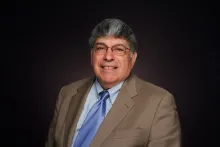
Gary Antion is a long-time minister, having served as a pastor in both the United States and Canada. He is also a certified counselor. Before his retirement in 2015, he was an instructor at Ambassador Bible College, where he had most recently also served as Coordinator.

