

Jorge de Campos
This transcript was generated by AI and may contain errors. It is provided to assist those who may not be able to listen to the message.
Well, good afternoon, everyone. Good afternoon. I want to thank Mr. Drayby very much for his seminet about the talents and the building of our gifts. It's very appropriate and I appreciate that. And it goes very well in hand with what I want to talk about as well, because yesterday we're talking very briefly about how to identify the Church of God that Jesus started in Pentecost. And we looked at a few areas such as unity of mind, unity of body. We looked at the Church of God as a praying church and it is a spiritual church. But the question now remains is, so what? Or, in other words, how do we get a third fold on the church? It says in Romans, Acts 23, that we have the first fruits of the Holy Spirit. And so the question is, what is our role in the church as individuals so that we indeed are not just looking for a group of people. There are God's church, but we ourselves are part of that group. And therefore, what is it that you and I need to do? Christ, again, in these teachings, brings some very interesting points here. And I want you to look at the Beatitudes, at one of the Beatitudes, and that is in Matthew 5. Matthew 5 verse 6. Matthew 5 verse 6. Because Yah of Christ says in this Beatitude, the blessed are those who hunger and thirst for righteousness. For they shall be told, told with love. Well, told with contentment, told with happiness, told with all of good things, but I would say it's full of the Holy Spirit. Because when we are hungering and thirsting for righteousness, we'll be told. And what is the day that can make you really a contented, satisfied, full person but God's only Spirit? That only God's only Spirit can really give us true contentment and true filling in fulfillment in our lives.
So we need to hunger and thirst for righteousness. Now the question is, which righteousness?
Which righteousness? Because it says, hunger and thirst for righteousness. Which righteousness? Is it ours? Is it my righteousness or your righteousness? Is it our self-righteousness? Obviously not. Turn with me briefly to Isaiah 64. Isaiah 64 verse 4, which says, starting reading in verse 4, You know, as you disappointed, you are sad with us. In these ways, we continue, and we need to be saved. But we all are like an empty thing, and all our righteousness are like filthy rats. We all played as a leaf, and our iniquities, like the wind, have taken us away. So our righteousness, in all our righteousness, in all different types of righteousness you and I may have. It's just like a filthy rat. So to under-end thirst for our righteousness is clearly not what we need to be under-end thirsting. So what righteousness is it? Paul also put it in another very interesting way, which helps us to understand this point a little clearer, and that's in Romans 10. So if you turn with me to Romans 10, we'll start reading in verse 1. In Romans 10, in Romans 10, and we'll start reading in verse 1.
It says, brethren, my heart's desire and bread to God for Israel is that they may be saved. Think about it another way. Put it in our context. It follows you amongst us, and indeed it should be our our approach. We say, saying brethren, our desire and bread to God, we said everybody and you and we shall be bold and the state that everybody, in fact everybody in the world, will be saved. That's our prayer, our desire, it's for anybody to be saved, after all is God's desire too, isn't it? When he says, for I bear their witness, they dare have a zeal for God. Now you and I look around at some people around us, some people are very religious. There's no question some people are really very religious. So they have a zeal for God. They are zealers for God, but not according to knowledge, not according to knowledge.
Now what does that bring to mind to you?
When I read that, it reminds me of the two trees, because one tree is the tree of knowledge of good and evil, and the other one is the tree of life, which basically is the tree of the knowledge that God has given us freely so that the end result may be love. It's the God-given knowledge. So one is the knowledge that man knows better and they can work out their own standards of what's right and wrong, and therefore that knowledge is not right. And therefore, it ties in with Romans 10 verse 2 that says, people have a zeal for God, but not according to knowledge, not according to God's knowledge, which is facing the tree of life. They have a zeal for God, but according to human developed knowledge of good and evil. Why? Verse 3, for they being ignorant of God's righteousness. They are ignorant of the righteousness that comes from God.
And establishing their own righteousness, you know, it was through their own understanding of right and wrong, the tree of knowledge of good and evil, they established their own standards of what's right and what's wrong. They established their own righteousness. They have not submitted to the righteousness of God. It is quite revealing when you look at it from this way, that Christ told us for us to be told, told of the Holy Spirit with content and happiness, and what is the day of the day of the Holy Spirit, God for His Holy Spirit, today is an anniversary of when He did that. And if Christ told us, you and I need to hunger and thirst for righteousness, which righteousness clearly God's righteousness, so that we'll be told.
So, let's continue reading to get a little bit more understanding. I mentioned this verse yesterday in verse 4, and it says, For Christ is the end of the law for righteousness.
Christ is the ultimate fulfillment of what is the tree of life, of what is the right way of life. Ye, fulfill the law to the ultimate end, so you cannot add any more to the law, so it's the end of the law. That's it. You can't add the law, not only the literal elements of it, but the spiritual elements have been fulfilled by Christ. He expanded the law to His teachings, so He is the end of the law. After reading, there's no further additions to the law. He has extended to His ultimate end. So, He's the end of the law for righteousness.
Because, like Christ said earlier on, if you're under Him first, for righteousness you'll be full. So, it just ties in in a beautiful way when you look at it that way. And then it goes on to everyone that believes, or who believes.
Now, what is believing? Believing? I believe in Christ, as I mentioned before. I'm going to do what He says.
So, if we believe in Him, we are going to do what He says, and we're going to fulfill what He told us. For instance, as an example, He said, you heard, love others as you love yourself, but I tell you a new law, which is basically love others as I have loved you. He has folded the law. That's the end of the law. That's the ultimate end of the law. He's completed it. He gave a whole step for us. But to everyone who believes. So, if we believe in Him, that is the end, and that's where we're going to practice. And when we practice, and we're 100 and 1st with that, for that, for that righteousness, then we'll get told with the Holy Spirit.
Let's go on reading on the same book, and we're just going to jump a bit to verse 14. Verse 14.
Because it's explaining about the same thing, and it says, how then shall they call on Him? You know, they have not believed. Now, if Christ is the end of the law, Christ is the ultimate, the pinnacle, the ultimate example of true righteousness.
And He is the one we've got to believe. And how shall people call on Christ?
If they have not believed. If they don't believe in Him, they don't know who He is, they don't know, they don't believe in Him. How are they going to call? Are they going to trust? Are they going to have faith in Him? Are they going to call on Him? And how shall they believe in Him?
If they have not heard Him? So how they'll believe in Christ, if they have not heard who Christ is? So they can't believe in Christ, in the true Christ, if they have not heard who He is.
And how shall they hear without preaching?
How shall they... Obviously, we've got God's Word, but God has put it in such a way that it's the written Word, but it's also the preached Word.
That's why elsewhere He says to the Gentiles, preaching is foolishness. Because God put it in, then we ought to learn of the true preaching as well, not just through God's Word. You know, through hearing comes faith, as we can see it in a moment.
It's amazing how God has put it together. And how shall they preach unless they are saved?
So you see the progression. How they'll call on God if they don't believe, if they call Christ if they don't believe, how they believe if they have a word, how they hear if there's no preacher, and how will we have a preacher if the preacher's not saved? Now, this is a very important statement which the religion around us does not understand. I mean, it does not cease to amaze me. When I got to Brazil, every second person may be exaggerating, but a lot of people have called themselves pastors and elders, and they just give themselves the Bible. And in the sense, you can see a little bit of that in the Protestant world as well. People just give themselves their Bible. Oh, and so and so and so and so and so and so and so and so and so and so. Where does that come from? Oh, I'm studying a word and I'm now a person. I'm a pastor. They just give themselves, but that's not what it says here. It says here, how shall they preach unless they are saved? It doesn't say you give yourself the Bible.
And as it is written, how beautiful are the feet of those who preach the gospel of peace to bring black tidings of these things. In other words, how beautiful it is to have the gospel be increased to us. That God has provided a way that the word is being preached for us. Now, it is said, you and I know, there will be a time, there will be a famine of the word.
It's perfecting, but it does say it's a famine of hearing the word. So there will be Bibles, which is reading, but there will be a famine of hearing the word. That is interesting.
So there will be a time when the church will not be able to do its work, because that's going to be the place of safety or whatever it will be, and the church will not be able to do a work. Finances might not be there, whatever it may be.
But while there's time, we've got to preach the word. And therefore, how beautiful it is that the word can be preached. That's really what it says. But, verse 16, But they have not obeyed to the gospel. For Isaiah says, Lord, who has believed our report? So then it's faith. Faith. In other words, believing. Because, as we read earlier on in verse 4, remember, Christ is the end of the law for righteousness to everyone who believes, and believe is, in the sense, faith. Faith is belief, is trusting. It's a similar word. So then, faith comes by hearing. And hearing by the Word of God. So, faith comes through preaching. It helps us to believe. It helps us to believe more as we come to church and we listen, preaching God's word. It helps us sharpen us to improve in our belief in our belief in God and in these principles. And helps us grow in Christianity. As we grow with that, therefore, as we believe, we then look more at Christ as being the end of the law. And therefore, we strive to follow his example. And therefore, we are hungering and thirsting for righteousness. And therefore, we'll be told with the only Spirit. So, when we hungering thirst for righteousness, we are actually hungering and thirsting for the gospel of the Kingdom of God, which the gospel of Jesus Christ can be preached in the Father. Because, when we hungering thirst for righteousness, we believe and believe. We can't believe unless we have one that preached that one has been sent and our beauty believes and faith and that belief comes by yearning and beginning the yearning of the Word of God. And therefore, when we hungering thirst for that righteousness, we are hungering and thirsting for the Word of God. Because it's the Word. The Word of God is Christ's teaching. It's what's in God's mind. And therefore, it's God's Word. They fall. Those of us that have been around church, remember, for many years, remember, I must come from this to say, people will grow as much as their heart is in the Word. You may remember, you're saying, people will grow as much as their heart is in the Word. And you can see where that progression comes in. The progression comes into play. So we have a need to do and to be part of the work of God.
And whenever we have our heart in the Word, to do that Word, we're going to grow spiritually. Our hearts and minds will be in righteousness, God's righteousness, hungering and thirsting for that righteousness. And they will be full with the Holy Spirit.
Look out Christ, put it in another way. In John 4.34. John 4.34.
John 4.34. Christ said, My food is to do the well of him who sent me and to finish his work. The food that sold Christ was to do God's work, to do the well of God and to do God's work. And if we are to have the same food as Christ had, the same hunger and the same thirst, our mind needs to be wrapped up in doing God's work, like Christ's mind was. He said, to finish his work, to do the work that was even dream. And we all have a job to do as a church, collectively and individually, ourselves, because we are the temple of God. We got a work to do. And as we so beautifully learn in the sermon, it's part of the road. It's part of that road that we're traveling, of developing those gifts and those talents and using them. So, Jesus tells us a lot about the words of God. The Word of God, because he is the Word of God, right? So, let's look at when he started talking about the Word of God and living according to that Word we just crossed. Look how people reacted. John 6 verse 63. John 6 verse 63.
He was getting some very spiritual deep media, and he said in verse 63, It is the Spirit who gives life, God's Spirit that gives life, and flesh, prophets, and others. The words that I speak to you are spirit, and they are life.
So, the words, and we heard that faith comes by hearing of the Word, and the words that I give you are spirit, and they are life. And so, if we have our mind in the words of Christ, which is the teaching of Christ, we are increasing our faith. We then need an organism that is preaching and people are serving and doing the work of God, preaching God's work. And as that is being done, we are growing in righteousness, His righteousness, because we have an under and thirst for that. And that's why Christ said, My food is to do the will of my Father, is to complete His work. So, we stay tied together. And that's why He says here in verse 63, the words that I speak to you are spirit and they are life. But there are some of you who do not believe. Some of you don't agree with us. They don't believe.
For Jesus knew from the beginning who were they who did not believe.
And also, by the way, who would we be training in? And He said, Therefore, I have said to you that no one can come to Me unless it has been granted to me by my Father.
This is very difficult to understand for people out there in the world. Very, very difficult.
I once told this to one person. And this person literally got angry with me. And they lost point into this scripture. And it would mean.
Because people in the world don't understand that it is a colon.
I'm going to summarize it in a different way. It's God that controls the time of the August. And you say, How does that connect with this is a poem? Because God decides when to call, and when not to call, and when to harvest, and when not to harvest, who and when at what time. He controls the time of the August.
He decides who to call now as the first priest, and who to call later.
And that is difficult for people in the world to understand. But it is a beautiful mystery that you and I have been blessed to understand. It is a beautiful mystery. Because once you understand this, you know that our job is one of watering, one of planting, one of pulling out the seed. But our job is not one of killing the world. We are not looking at numbers. We're looking at quality that people is built to give.
We're looking at helping people on that road to use those gifts as we go to the sermon, and to grow, and to multiply. And that is tied into the structure here, because it's God that calls it. No one can come to Christ unless it has been granted to that person by God the Father.
And from that time, from that time, many of His disciples went back and walked with Him no more. When Christ got to this point, people said, chips, and God. And it's the same thing with this other person that I met. This person got very upset when I wrote this, and after that they didn't want to have anything to do with us, with the quality of church. He goes, he just comes in.
So, when Christ directed people to spiritual things, in other words, to action, now they lift.
And therefore, it comes to this very point about how can you and I individually can be part of the two churches of God?
Our responsibility, our first and foremost responsibility, is to have our lives being transformed. That's what our job is, to transform with God's help, with His Spirit, to change our lives. But that is our first most responsibility.
Now, people say, ha, but so many people have lived, and a lot of the cases have been the mostest fault. And so it's the leader's fault. And yes, it is the leader's fault. But look at what it says in Jeremiah 5. In Jeremiah 5. Sometimes we forget at a certain point, say, I look at Jeremiah 5, verse 30. Jeremiah 5, verse 30.
An astonishing and horrible thing has been committed in the land. There's something happening in this country, and in other countries, not just in this country, something horrible and astonishing happening in the land.
The prophets prophesied falsely. Wow! The ministers out there, the leaders, have gone astray. They're teaching wrong things.
It says it's something astonishing and horrible, says God. It's astonishing and horrible.
What's happening? How big?
Do we get it? Now it's it. And the priests rule by their own power. In other words, by the power of these other people, their own, not by God's power, but they support this thing, and the priests and the prophets, they're all working together, and they're doing this hand in hand. So we can easily say, oh well, it's been a minister's fault. It's a minister's fault. And yes, it is. I'm not letting that blame go away. But look at what it says in the next verse. And my people love it! And my people love it! They want it! They let it out!
It's an astonishing and horrible thing happening in the land. The people, the priests, the ministers, evangelists on TV, and I don't know what else, they are going strong, and it'll get stronger. They are lying, they are not speaking the truth, they prophesy falsely, and the people are lifting it up. That's the reality.
But what will you do in the end? It's going to be a judgment. And what will come? It will come. So, Britain, the leaders have gone wrong, sure, but the people love it.
The leaders want physical power, they want prestige, they want authority, but the people have loved all that conduct. And so, when Christ was talking about that, we need to be different, we need to be changed, we need to hunger and thirst for righteousness, and that can only count through the word, and that fight comes by hearing of the word.
He's basically talking to us that we have to be changed, we have to be transformed, we have to be different, but the world is not saying that. The false ministers are saying, no, no, you don't have to be transformed, and the people love it because they say, Christ accepts us just as we are. And they love it because there's no change.
That's the wide road. It's not the narrow road. Look how Paul put it in Romans 12. Look how he wrote it in Romans 12.
Romans 12. He's talking verse 1.
I beseech you therefore, brethren. I, I, I, what you're saying is, brethren, I really plead with you, please, please take attention, pay attention to this. I beseech you. By the mercies of God, by God's mercy, please pay attention that you present your bodies a living sacrifice.
Holy, acceptable to God, which is your reasonable service. O rational service is, is what, what's expected, what God expects you. God expects us to be presenting our lives as a sacrifice, a living sacrifice, not to die. Christ died for us. That's His sacrifice. Our sacrifice is more like a peace offering. You think about those offerings that you have, those five offerings that you can read in the litigants in the beginning, you know, and one of them is a peace offering. That's, that's our offering. That's a living sacrifice.
Holy, acceptable to God, which is reasonable service. And do not be conformed to this world, but be transformed by the renewing of your mind. The word transformia comes from the word that we're getting in English called metamorphosis, which you think about over one becoming a butterfly. It's a complete change. So our minds must be changed completely, must be completely renewed in a way we think, in a way we think. And again, as it was brought up early on this morning on the sermon that we had about how God called an individual like a holist, and there God called him. Full of sin. But you know what? We all are holistic. We all have the same old quote-unquote. But by God's grace, he's extended as a hand. A hand to get out of that mud pile is extended. But now he didn't want us to go back in day, so we now got to live away from it. So by grace, he's taken us out of that mud, but now he wants us to be transformed into a little clean life. So be transformed by the renewing of your mind that you may prove what is that good and acceptable and perfect will of God. So we prove what is the will of God. What does God want us to do? And after all, God is a God of love, and the law, and the end of the law, after all, is love. In Christ is the performance of the law that says, love others as I have loved you. And so, hunger in person for righteousness is nothing more than hunger in person for that ultimate Godly love for one another and for God. And that's the perfect and acceptable will of God. Continuing then in verse 3, for I say, through the grace given to me, to everyone who is among you, not to think of himself more highly than you ought to think, but to think soberly. So don't think of yourself. Let me not think of myself. Let's not think of ourselves as we're too important, but rather being humble, neat, teachable, gentle, those Godly characteristics, think ourselves soberly. Has God as dealt to each one a measure of faith? God has dealt to each one of us a measure of faith. In other words, he's given us certain talents or abilities that we have to exercise in faith and use in our Christian life.
For, as we have many members in one body, but all members do not have the same function. We've got a hand. A hand does not know how to do the job of a liver. And the hand can try, but if the living do the job of a liver, then likewise a liver will not be able to do the job of a eye, or of a tongue. And so, we all have different functions. But we in the same body, spiritually speaking, we in the Church of God, and we have different talents. Each one of us, God has given us a measure of faith, as it says at the end of verse 3. A measure of faith, a certain talent. And each one of you, as I look at you, you add your own specific talents that God has given you. Talents either have given you a birth, or he has expanded through when you gave him the Holy Spirit, or he's given you additional talents, since you have the Holy Spirit. Things that you do not know you could do, and now you can. And you say, well, I can help out in this area, I can help out in that area. I've got this ability, I've got this talent, and I can help in the work of God, in one way or the other.
So, verse 5. So we, being many, are one body in Christ. We, as people, individuals, are many people, but we are one body in Christ. And individual members of one another. Verse 6. Having them gifts differing according to the grace that is given to us. So each one has gifts, each one has talents. As we are in the sermon, we've got talents. On this road, we've got talents, we've got gifts, and we're going to use them. We're going to use them.
Let us use them. You do not need the church organization to tell you you can use your talents.
Because Christ is the head of the body, and you're a member of that body. The body is an organism. The church is an organization doing the job, but you have talents. Use them. I think this might be something that people in the past say, no, no, it's got to go through the minister, and you know. But you have certain talents. Use them. God's giving them to you. Use them.
If prophecy, let us prophesy in the proportion of our faith. So some of us have an incapability of preaching God's word. Now, again, as we saw, the one that preaches is saint. So there, again, there is a point that we have to consider. Old ministry. Now, ministry is serving. I mean, you can serve in many ways in the church. You don't need a tatl of a different. You can serve. You don't need a tatl. You don't need a badge. You're conservative. We're all conservative. And if you have a talent of serving in a certain area to serve the church, serve it. Like it said in verse 6 in the middle there, let us use them. So if you've got certain gifts, use them. You don't need to have a minister to say, yes, you can use your talents. Of course you can. God has given it to you. Use it.
Let us use it in our ministry. You know, it was in our serving. Serving one another in whatever way we serve. We've got a talent. Serve. He would teach us in teaching. Now, some of you could be very good teachers. Okay, so you can teach out in society. They say, oh, but for instance, in the churches, we start having some young people. And you have an idea of saying, okay, we have some young people. I'd like to do a little Bible study for the young people, and I'd like to help out with the Bible study. Sure. Come to me. Let's do something. We see some young people. Let's do that. There's no reason why we can't do that, provided it's done decently in order.
Teaching. Some with sorts and exaltants. That's encouraging. Encouraging. Encouraging people to to go ahead. Anybody can encourage people. You know, you see somebody struggling with a health issue. We all can exalt. We all can help. You've got gifts. Do it. Some he who gives with liberality. Some of you have the capability of giving in certain areas. Then do it liberally, not grudgingly. Do it. He who leads with diligence. You have the talent to organize things and get things going and doing it. Then do it. Not in a fashion. Not in a way that kind of rugs you in place, because that's not humble. You know, when you do something, oh, I'm going to be going to be lead. I'm going to be lead. I'm going to be... No, that's not God's way of leading. God's way of leading is humility. It's not bragging and boasting, etc. That's not what I'm talking about. But lead, take leadership in service. Leadership in something like that. It's nothing. Saying, bragging and putting it on Facebook and saying, I've done this. Look how good I am. You know? That's not what I'm talking about. He says he who leads with diligence. He who shows mercy, with cheerfulness. Now, you can deny. You can show mercy to people.
Let's do it with cheerfulness. You don't need a minister to give you permission to be merciful.
God, it's God's church. It's Jesus Christ. He's the head. And we as individuals respond to Christ. As I mentioned yesterday, I'm pointing you. I'm trying to do my job to point you to Christ. Not to me. I'm just He's a vehicle. I want you to be closer to Christ. And I want you to serve Christ the network and use the gifts that you have. And He's going to say, and love without a focus. So you have a gift of really being outgoing and loving. Do it. But not hypocritically. Just do it. And that in the end is the greatest gift of all.
A bore what is evil, clean to understood. So a boring, I mean, any of these things could be done with an evil motive or intent. And that you don't want. You want to do it with a right, godly intent. So, so there's a lot that that we can do. And we can look at it in the right way.
And it ties in with the road that we eat. The road that we eat. It's not just a destiny. Yes, the destiny is important, but it's a road that we eat. And in this road that we eat, we've got certain talents, certain gifts, and use them for education, to edify the body of Christ. Look at an example, that example in 1 Corinthians chapter 12. 1 Corinthians chapter 12.
Verse 11. 1 Corinthians chapter 12. It's talking about, but one and the same spirit works all these things. So it's talking about different, different talents, different gifts that, and it says, for one and the same spirit works these things. God's spirit is the one that works these gifts that we have. And then he says, distributing to each one individually as God grows, as he works. God distributes these talents individually to each one of us to do a job in the body. Just like the foot has a job to do in the body, like the hand has a job to do, the liver has a job to do, the eye has a job to do, we all have a job to do for the good of the body, working together.
So, but the point is God distributes, has, he wills.
So some people have a very good talent to, to see things, or to hear things, and to inform others about what's happening. Well, then do it in a nice way, in a godly way, in a right approach, and keep people informed that in a godly way, I'm not talking about doing things wrong, I'm just talking about hearing about world news, for instance, and years in things, and the ministry may not have heard about it. Well, I remember some years in the past, there were some members in the church that had access to different things, and they were taking all these clippings, and every step of their job, and give the minister a whole bunch of clippings that they had picked up. Because that was their job, and they were happy, were helping to keep the minister informed of certain things that were, were happening. So in a sense, he was being a year, and was helping the minister with certain input and facts, and things, and gathering them in a nice way, and things like that. So, I mean, it's just an example. People have, but God distributes those talents as, as he sees, better. So we have different gifts, and we have to bear fruit. We have to bear fruit.
With these talents, with these gifts. Now, obviously, there's the fruit of the Holy Spirit. It was very clearly explained when you submit it. The Holy Spirit has a, a way of doing things. It's a fruit, which is with love, joy, kindness, mercy, with long suffering. That's God's spirit. That is what we get from the Holy Spirit. We receive from the Holy Spirit. We receive that, that fruit. Now, with that fruit, we take that mental attitude, that way of being, of love, peace, kind, long suffering, patience, self-control. We take that, work our talents with our gifts, and now we produce things, and we bear fruits. We bear fruits using God's Holy Spirit, which is that mind of those nine characteristics, and with our talents, and then we produce fruits for the church, and for others, and even for the world. We go out and we serve people, we serve the community in ways that you can do. So we are to bear fruit amongst those different gifts that we have, as we read here in Corinthians 12, first Corinthians 12, then it goes on to first Corinthians 13, where it says, you could have all these other things. You could, you could have great understanding, you could be able to be as much as you want, but if you don't have love, you ain't you, but nothing. Because then it says the greatest of these gifts is love, is of their concern, because in the end God is love. So we've got to aim to do everything in that focus of that gift of love, of that talent, that ability that God wants us to be. So it's got to be around a way of being, of God.
So we, there's a lot we can do towards serving one another. There's a lot we can do.
But, but, if we are doing it without being truly practicing Christians, then it's like what people say, your deeds speak louder than your words.
Or it's like, I've seen so many parents, they were in the church, they, they had very nice children when they were teenagers and before teenagers, beautiful, well-be-aid children, but they're not in the church. And I'm not saying every case is like that, but I'm saying, you see in many cases, that some of the parents, when he talked to some of those children, and you hear that they felt that parents were not being truthful, because they were going to church and being one person and coming home being a different person. So we have to love our Christianity every day. And you and I know it's hard, it's difficult, but that's what we're going to be, we're going to be practicing Christians. And that means our deeds must precede our words. We've got to love first, that's why it says we've got to transform ourselves with the power of God's own Spirit. And that is our first and most important responsibility, to be a light.
Now, we are lights here, and we've got fluorescent tubes here, and generally speaking, we don't hear them, and they give light, it's quite nuts. But you know, one of these fluorescent tubes go wrong, and they start flickering, getting that way, flickering. It's actually annoying. It's annoying. You don't want the light to speak.
The light must be quiet. You must give light. And we are lights, and our light must be first and foremost. Our deeds, our actions, they speak louder than words. So that's how we need to transform us. Now, after, after, we've done that. But then we can go on to the second stage of Christianity, which is that we, then, are together as a group, getting together and doing the work. Then we can do a work. But we can't do a work if we're not practicing living it, because then we just be making things in a sense. We just be doing this. So we've got to live. And first, therefore, transforming ourselves is the first and the most important point of us being members of the future. The other two points, I'm going to go through them very quickly, because if we don't do the first, we are as a kind of, it's putting the card before the horse.
And let's look at the second point of our responsibility as members of God's church. And that's in Acts chapter 2, when the better thing to cast is kind of, Acts chapter 2.
And we see there in verse 11, Acts 2 verse 11, there were people of, and it's not really in verse 8, but I'm not going through it all, there were people of different national epic groups. They were from one area, different area, from Egypt, from Antibia, from Libya, from Rome, etc. There were preterns and there were Arabs, verse 11. And we hear them speaking in our own times, the wonderful works of God. So these people, they were converted. They received the Holy Spirit at that time. And the people of all these other nationalities, they were hearing it in their own language. But what they were hearing is the wonderful works of God.
So in other words, the disciples, that is, they were preaching to these people. They all could hear it, and they were proclaiming the wonders of God, the wonderful wonders of God, the works of God. And look in chapter 2, verse 22, a little bit further, same chapter, verse 22. Look how Peter then became a man giving a sermon that converted over 3,000 men.
You look at it, verse 32. Man of Israel, give his word, Jesus of Massacred, man attested by God to you by miracles, wonders, and signs which God has threw in him as yourselves. And then he goes on, and he gives a sermon, he preaches. And at the end of that, we see there were 3,000 people that converted.
So what happened to Peter's life when he received God's alizfird?
What happened when Peter allowed God's alizfird to work in his life and his mind? He, being full of the Holy Spirit, he then started preaching the Word of God.
So when we are full of God's only Spirit, we enjoy talking about God's truth, doesn't it? We enjoy with other people talking about the truth. And with our example is such powerful light, people are going to ask us the reason of our faith.
And we are going to give them a 2-hour discussion. No, we're going to give them a short, brief explanation, and that will encourage them to maybe ask more, or if you satisfy the question, they leave it alone. But you want to talk about the truth.
And that's what happened. Look at the art in chapter 4, verse 31. Chapter 4, verse 31 of Acts. It says, And when they all prayed, the place where they would assemble together was shaken, and they were all full of the Holy Spirit, and they spelt the Word of God with boldness. So when you're full of the Holy Spirit, you have the courage, you're not ashamed, to talk about the gospel of Christ. You're not ashamed of Christ.
And you're able to talk with boldness. And so, when we hunger and thirst for God's truth, for His laws, and therefore we get full with the Holy Spirit, and we are practicing living and using those talents to serve and to give as God gives us ability, and we're putting them to practice in our lives, we become a light.
We're being transformed. We become a light. That light shines. People look at it and ask you, what is the reason of the hope in you? And you have the boldness in generalness, in nameless, in kindness, to tell them the truth. In a way, the God's Spirit will give you the right words to say it to help that individual. And so, they started preaching, as you can see, out of it full of the Holy Spirit, and they spoke the Word of God with boldness.
And so, we can see examples for Jesus in Acts 6, about Stephen spoke the Word of boldness. We can see in Acts 13, our whole spoke the Word of boldness, and then later on as well. You see, so when God's Holy Spirit follows our lives, and when we follow the God's Holy Spirit, God opens our mouth to speak bold, the Word of God. For we have to be careful to do it in the right environment. We don't want to be a flickering light and making noise and being annoying. We want to be a nice light that makes people ask, how come there's this light work?
You know, and then you tell them. And then we can open our mouth and share that with people. Since it says, it's not by power, it's not by might, but by my Spirit, that the Word will be done. And maybe God is teaching us a lesson as a church, where we have to rely on every single member of the church to help in doing the work. I'm not saying that you all are now going to be ministers and go out there and do anything.
No, that's not what I'm saying. Don't misunderstand me, please. That's not what I'm talking about. What I'm talking about is that we all have to tell us that you have gifts, you have abilities that God has given you, that only you know what they are. Use them in a godly way, not in a proud and national way. No, that's what I'm talking about.
In a godly, lovely glory, use them to serve and to edify the church, which is Christ's spiritual body. Now, when we do that, what happens? What happens to those people that are wearing Jerusalem on the day of Pentecost? There were people from everywhere, from all these lands, and what they do? There were 3,000 of them, there were baptized. And what they do? They went back to their different countries. They went back to their different territories, and what they did? They preached the gospel. And through that, the word got expanded during the first century church through word of mouth.
And therefore, they did it. And the approach that we need to do is the same, but it's in a godly manner. I'm not saying please do not misunderstand me, I don't want you to misunderstand me. It is that we are to help in being alike in an example. And this way, number one, we are transformed. That is firstly from us. Number two, we are preaching the gospel. That is what single symbol of our logo of the church, preach the gospel. Through our life, through our example, and people ask us questions, we do that.
And number three, when we do that, we're pointing people to Christ, to God's way, so that we can actually have people be prepared to be changed. Those are the three roles that we as Christians, we have to be part of God's church. You know, it was first transform ourselves, then we help the church and organization to actually preach the gospel in a godly way, in a right manner, and to help prepare people, so that when the day will come, because we are doing today, we are preaching the gospel purely as a witness to the world.
Matthew 24, 14. And this gospel of the team that we preached unto the whole world as a witness. Why? Because the people are not going to believe. They're not going to believe. But then when these things come to happen, and the tribulation is here, the people would have had the seed, and that seed and finally germinates, and said, aha! What so and so said was right, and now I repent. And that's why, out of the great tribulation, there'll be a great multitude, because of the work that you and I can do in a gentle, loving way now, preparing the people for that great multitude that will come up at a later time.
It's amazing the responsibility we have. And so Pentecost, the giving of God's Holy Spirit, God's Holy Spirit, is in a sense the day of the creation of the vehicle for the harvest of God, which is the Church of God. The Church of God is the Mother, and that vehicle, the Mother, the Church of God, is what is helping that harvesting to be done, so that all that is put into a silo till the day of Christ coming, each one is unordered at Christ coming, but then there'll be the redemption of the body, and we'll be resurrected.
It's a wonderful meaning that we have, which the day of Pentecost. So, Gregor, for us and for all of us to be part of the True Church of God, we have to have that unity of mind, that unity of body. We have to be a praying people and fasting as occasionally as we can. We have to be full with the Holy Spirit as a true Church, but to be full with the Holy Spirit, we need to be practicing and living righteousness by putting to practice the gifts and the talents that we have in our lives, being a true light, being a transformed light. And then we support the preaching of the Gospel of the Kingdom of God, and as a whole group, as a Church, we are helping to prepare a people to help one another, so that more people can be able to be in the Kingdom.
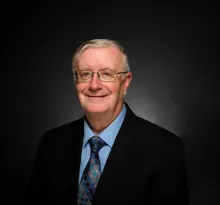
Jorge and his wife Kathy serve the Dallas (TX) and Lawton (OK) congregations. Jorge was born in Portuguese East Africa, now Mozambique, and also lived and served the Church in South Africa. He is also responsible for God’s Work in the Portuguese language, and has been visiting Portugal, Brazil and Angola at least once a year. Kathy was born in Pennsylvania and also served for a number of years in South Africa. They are the proud parents of five children, with 12 grandchildren and live in Allen, north of Dallas (TX).
