

Don Ward
This sermon was given at the Jekyll Island, Georgia 2014 Feast site.
This transcript was generated by AI and may contain errors. It is provided to assist those who may not be able to listen to the message.
It seems that each year that the feast goes more smoothly than it used to, as he hasn't heard a single complaint, neither have I, except sometimes Vince plays the piano too loud, but... But thank you very much to Mr. and Mrs. Martin, and also to the staff, and Mr. Martin, who mentioned the people there who worked so diligently, the people who did the special music, and also the men who gave the sermons and sermonettes.
I think we've had some of the best sermon and sermonettes that we have had in a long, long time, and it's very encouraging.
And then thanks very much to all of you, brethren. I want to thank you on behalf of the Home Office Administration and the Council of Elders for your sacrifice and sacrifices and for your faithfulness.
Well, they've sort of weaned us off of telling jokes about Texas or any other place, but since I'm last and nobody else can come back, there was this Texan who died and he went to the usual place, to the pearly gates. He was met by Peter there, and Peter said, oh, welcome to heaven, celestial bliss. Let me show you around.
So he took him to this beautiful garden. He said, well, what do you think about this? And the Texan said, well, it's nice, but I don't guess you've ever seen the hill country when the blue bonnets are blooming.
He said, well, OK, let me show you this. So we took him with this beautiful river, clears crystal, beautiful bubbling water running. He said, well, it's very nice, but I don't guess you have seen the Rio Grande.
Then he said, well, not to be out there. He took him to a beautiful beach setting. He said, well, this is very nice, but I don't guess you've been to South Padre Island.
He said, well, I've got one more place to show you. So they went back and they got in this elevator and they went down, down, down. And finally, they got down there.
And there was this tremendous, roaring fire. And he said, I bet you've never seen anything like this. The Texan said, no, but I know a couple of boys down in Houston and put this thing out for you. We're titling the message today, Your Spiritual Survival Kit. Your Spiritual Survival Kit.
I will take a winding, twisting road. I suppose you say this is not a linear sermon on one subject. I'm going to go all over the place, as they say.
So my specific purpose statement would be to equip us with a Spiritual Survival Kit. Of course, this is coupled with all the messages that you have already heard.
The messages of this fee should have stamped indelibly upon our minds and hearts that we are living in very serious times.
And also, stamped upon our minds and hearts, the urgency of the times in which we live. This world desperately needs the restitution of all things that you read about in Acts chapter 3.
The whole creation groans for the manifestation of the sons of God that you read about in Romans 8, and that Scripture has been read.
The world desperately needs to understand and give answer to the great questions of life that we covered here on the first Holy Day.
The world desperately needs to become as God is, 1 Corinthians 13, verses 1-3, 2 Corinthians 3, 3 Though I speak with the tongues of men and of angels, and have not charity, if I am not becoming as God is, it prophets me nothing.
4 I am becoming a sounding brass or a tinkling cymbal, and though I have the gift of prophecy, understand all mysteries and all knowledge.
5 And though I have faith so that I could remove mountains and have not charity, if I am not becoming as God is, it prophets me nothing.
6 And though I bestow all my goods to feed the poor, and though I give my body to be burned, if I am not becoming as God is, if I have not charity, it prophets me nothing. 7 If you go home with nothing else of that understanding, so many people are caught up from time to time in the various twigs and branches, and we really need to stay close to the trunk of the tree if we're going to survive.
The world desperately needs to know who the true God is and understand the true path to love, joy, and peace.
The world desperately needs to have the God-ordained family structure restored in all the nations of the world.
The peoples of this world desperately need to be relieved of suffering and pain.
And this world desperately needs godly leadership and leaders who are honest and who are just.
The world desperately needs to learn to fear God and become one with Him.
The world is entered into a terrible time of trouble and turmoil, and the world will never be the same.
And almost every day we see one more event that turns that tells us the world will never be the same.
There's no question that the world is at war and the peoples of the world are filled with fear and anxiety.
The news abounds with war, rumors of war, and every evil that can be conceived.
And we could ask, where will the next shoe drop? It can be at your front door. Home invasion is a common occurrence now.
It could be on the freeway, or it could be in the heart of the world's largest cosmopolitan center.
So, in view of all of the challenges that you have heard about here during the feast and the sermons and sermonettes, in view of all the challenges that we face as Spirit-begotten brethren of the Church of God, what are your goals and plans for meeting these challenges? What about your spiritual survival kit?
The Church desperately needs ministers and parents who are so filled with the three C's that you heard about in Frank Dunkel's sermon, conviction, commitment, and courage, that they have the courage to live by their convictions and not compromise God's truth in all the dimensions of their life.
Not pick and choose, but in all of the dimensions of their life.
So, we could ask ourselves, am I providing the kind of spiritual leadership for my family and also the people I come in contact with here and now, or am I just treading water waiting for what this feast pictures, the wonderful world tomorrow?
But we live in the here and now, and we must redeem the times, for the days are indeed evil as Paul writes in Ephesians 5.
Maybe it's 4, but somewhere along in there.
The messages of the feast should have indelibly impressed upon our minds that these are serious times.
The world has entered into this terrible time of trouble and turmoil. As we look at the Scripture, we have heard all of these things that I've mentioned up front and more during the first messages of the feast.
As I said, I believe there are some of the best messages that we've had in a long time.
This feast should be a great pivotal point in your life, a great spiritual experience, a turning point.
The trumpet has sounded. The handwriting is on the wall.
It is the wise who will understand. It is the wise who will take to heart.
It is the wise who will take the spiritual kit with them.
Let's turn to Daniel 12.
In Daniel 12, I plan to come back to Daniel 12 if I have time later today, I think.
In Daniel 12, when we look at this verse 10, many shall be purified and made white.
After the abomination of desolation is set up, there is a countdown that begins, and it says, During this period of time, many shall be purified and made white and tried, but the wicked shall do wickedly, and none of the wicked shall understand, but the wise shall understand.
So how do we become wise? How do we make sure that we will be among the wise?
You look in Revelation 22, verse 11.
Revelation 22, verse 11 is not so encouraging in one way, but I would take it as a warning to make sure that you are one that does understand, that you are one who is willing to make the sacrifices, to make the stand, to act on the courage of your convictions.
In Revelation 22, verse 11, He that is unjust, let him be unjust still.
You see, there comes a point of time, and I know because I have children in this age group, I have great-grandchildren that range from two years of age to daughters, or a daughter in their fifties. I guess both are in their fifties now.
So that covers a wide span of time, about a half a century.
We have people who are in their forties and fifties, been around the church for a long, long time, and yet they continue to tread water.
Or they occasionally might come to services, they might occasionally attend a holy day.
And we're thankful for that.
But you know, Proverbs 29, 1 says that being often reproved and you harden your neck, judgment or destruction will come without warning.
That's a loose paraphrase of that Scripture.
So we want to make sure that we're not among the unjust.
We want to make sure that we are among the wise.
So it says, He that is unjust, let him be unjust still.
And he which is filthy, let him be filthy still.
And he that is righteous, let him be righteous still.
And he that is holy, let him be holy still.
Now, what constitutes a holy thing?
A holy thing has God's active presence within it.
We are called saints or holy people, because God's active presence is in us.
Where God's active presence is, that makes it holy.
Now, sacred things point to a higher reality.
So we want to make sure that we're among the wise, that we are among the just, and that we are ready.
So we ask the question, is each one of us accurately assessing? That is, evaluating our spiritual state, examining ourselves. Where do we stand?
Know the Apostle Paul admonished the Corinthians, examine yourselves whether or not you be in the faith.
So I believe it is high time that we stir up the Spirit that was given us by the laying out of hands. Let's note in 2 Timothy 1 and verse 6. 2 Timothy 1 and verse 6. Here, the Apostle Paul admonishing the young evangelist Timothy.
Timothy here, this is one of the prison epistles. The Apostle Paul was in prison when this was written. He's writing back to Timothy. Apparently, Timothy was becoming a little bit timid to match his name against Timothy, Timid Timothy.
And maybe being a little bit anxious or whatever about Paul being in prison.
Paul even says, Do not be ashamed of me, prisoner of the Lord.
And he writes to Timothy 2 Timothy 1 and 6. Wherefore, I put you in remembrance that you stir up the gift of God. Now, this word stir up, an adzo poreo. An adzo poreo in the Greek. And it means to kindle up, to inflame one's mind, strength and zeal. Now, if I could have had jalapenos for lunch, maybe we would have had more fire. But I only had onions. Now, we had a wonderful lunch with Mr. and Mrs. Martin. In this case, it was another Martin, the one from Ruston's, Scott and Claudia Martin. But it is time to inflame, to stir up.
Paul continues here. Stir up the gift of God.
An adzo poreo. Kindle up, inflame one's mind.
Which is in you by the putting on of my hands. For God has not given us the spirit of fear, but of power and of love and a sound mind.
So that is what the Word of God and the Holy Spirit can impart to us, and we are to stir it up. The Holy Spirit, though it is definitely not a living organism that we can discern through the five senses, but it is a living power. It is invisible within us.
And it conforms to what you might say the laws of biology, in that if you quench it, you lose it. Just like with a muscle, if you don't use it, you lose it at atrophies. So, stir up and flame the gift that is within you.
So that is one of the first things that we want to do with regard to our spiritual survival kit, is make sure that we're stirring up, that we're using the Spirit that God has given us. Paul writes to the Thessalonians and says, Quench not the Spirit. Use that Spirit. Use that power.
If you wait till next year to get your spiritual house in order, and I say this, every sermon I give is first and foremost to myself, if we wait till next year, we may not be here next year.
The next year will really be a time in which the wheat and chaff will be sifted. As you see the chaos and confusion developing the world, the chaos and confusion in society, and you know that some of that will spill over. Satan will do everything that he can to create chaos and confusion within the church, within the body of Christ, and in your own life. God is indeed sifting out the hearts of men before His judgment seat.
There will be no place to hide when the famine of the Word really hits the world. Look at Amos 8, verses 3 and 4. There is a famine of the Word that is coming for the past several years, as I have stood and I have given the last sermon at the Feast of Tabernacles, now for many, many years, whichever side I was attending.
I look out and I wonder and ask, what about next year?
Is this the last one that we'll be able to enjoy as we have enjoyed this one? With the peace and the calm and everything that goes with it? In Amos 8, and one of the great themes of the book of Amos is the Day of the Lord. In Amos 8, verse 3, In the songs of the temple shall be howlings in that day, says the Lord God. There shall be many dead bodies in every place, they shall cast them forth with silence. Hear this, O you that swallow up the needy, even to make the poor of the land to fail. Now, in verse 7, The Lord is sworn by the excellency of Jacob, surely I will never forget any of their works. Shall not the land tremble for this, and every one mourn that dwells therein? And it shall rise up wholly as a flood, and it shall be cast out and drowned as by the flood of Egypt. And it shall come to pass in that day, says the Lord, that I will cause the sun to go down at noon, and I will darken the earth in the clear day, the day of the Lord, the heavenly signs.
And I will turn your feast into mourning, and all your songs into lamentations. See, for those of us, we should be admonished by the sermonette this morning, now is the time for us to sigh and cry for the abominations thereof, so that we will be ready, and we will not be caught unawares. And I will bring up sackcloth upon all loins, baldness upon every head, and I will make it as the morning of an only sun, and the end thereof as a bitter day. Behold, the days come, says the Lord God, that I will send a famine in the land, not a famine of bread nor thirst for water, but of hearing of the words of the Lord.
I don't think necessarily that it's saying all preaching will stop and all teaching. In some ways, there can be a famine of the hearing of the word here in this audience this afternoon.
If we just, to really hear as the Bible speaks of hearing, it actually has the implication that you hear it and you act on that hearing.
As we near the end of the age, Matthew 24 talks about false prophets. They say, here He is or there He is, that Christ is here or there, go not forth. If they say He's in the desert or some other place, go not forth, because there will be false prophets that arise. So there will be a lot of preaching going on, as it were, in different quarters, the way it sounds, but will there be a hearing, a truly hearing of the word? And of course, there's another way. We have more and more pressure being exerted upon ministers, even in the churches of the land like in Houston right now.
They passed a city ordinance having to do with what they call hate speech, anything directed toward homosexuality. And they passed an ordinance that you could be brought before the council because of speaking against homosexuality. The mayor of Houston is a lesbian.
And they got up a petition, 50,000 signatures. People signed it to have it come to the ballot box. They would not allow it to go to the ballot box. Then, a group of clergy filed suit against the city, and now the lawyers for the city have demanded that all the ministers send in all of the tapes of their sermons, sermon notes, and anything that they've ever said about the issue of homosexuality and that kind of thing. So, a famine of the hearing of the Word. The time is coming in which you shall be hated of all nations for my name's sake. And a lot of it will be who is going to boldly proclaim the Word of God. Verse 12, They shall wander from sea to sea and from north, even to the east. They shall run to and fro and seek the Word of the Lord and shall not find it. In that day shall the fair virgins and young men faint for thirst. They that swear by the sin of Samaria, of course, that's where they set up a syncritic religion, a false religion, and say, Your God, O Dan, one golden calf, would set up in Dan and one at Beersheba. For, brethren, we are, as I've said, already living in very serious times. So he who hath an ear to hear, let him hear what the Spirit says to the churches. He who has eyes to see, let him see. Now, let's briefly note the behaviors that will be extant in the church at the end of the age. And surely we want to take warning from this and be instructed thereby. Let's go to 2 Timothy 3. 2 Timothy 3, the first five verses gives you a graphic description of what is going on in our world today.
I'm not going to read all of it. I'll read the first two verses. This, though also, that in the last days perilous times shall come. For men shall be lovers of their own selves, covenants, boasters, proud, blasphemers, disobedient to parents, unthankful, unholy. And it continues with any number of behaviors that you read about, hear about almost every day.
At least some of this. Now verse 5, see the Bible Paul is writing to Timothy, who is a young evangelist in the church. The Word of God is written first and foremost to each one of us, not to the world. I think one of the problems we've had maybe is thinking that, well, that's the people out there. No, it's for us. Surely this verse, having a form of godliness, you remember the parable of the ten virgins? That while the bridegroom carried, they all slumbered and slept. And then at midnight the knock came on the door, a rise and beat the bridegroom, and five were wise and five were foolish.
Five had oil in their lamps and five didn't. So they were, I suppose you'd say, they were all going to the church. Maybe they were all going to the feast, having a form of godliness, but denying the power thereof. What do you think is the main power, denying the power thereof?
The power of God for us to be converted, for us to become new creations in Christ Jesus. That it's not like water off a duck's back when you hear sermons, and when people come before you and pour out their hearts and their being, I wonder if we were to assess maybe four weeks from now, six weeks from now, what changes have you made in your life as a result of attending the feast?
Have any of the sermons or any one sermon made such an impact on your life that you've written it down and that you're saying, I am going to do something about this? I'm not just going to go through the form. Having a form of godliness by denying the power thereof from such, turn away. For of this sort are they which creep into houses and lead captive, silly women, laden with sins, led away with different lusts. Now, there's a lot of ways. This could be taken not only just in a sexual sense, if you want to say, well, it's a sexual sense.
You see, there are people, there are wolves who would lead you away. We welcome everybody to attend with us, as Mr. Keller said this morning, who want to meet with us in peace. But we do not welcome those who want to lead our people away from the truth. Those who would create doubt, those who would sow seeds of discord.
Of course, we would not welcome that. And of course, it seems that some of those who do such things are able to pick out, just like the wolf does with a flock of sheep, those are most vulnerable, and they go after them. So, brethren, some of the things we might say here today might cause you to curl your toes a bit and dig in. But it is for our own good and our own warning, and for our own spiritual survival kit.
So, you can look at this verse in at least two or three different ways, ever learning and never able to come to the knowledge of the truth. Oh, well, here's a new thing. Or, what about this? A little later, I might talk about that a little bit more. If you go back a page or two to 1 Timothy 4, in 1 Timothy 4, now the Spirit speaks expressly that in the latter time some shall depart from the faith, giving heed to seducing spirits and doctrines of devils.
Would that ever happen to any one of us? It says that some shall depart from the faith, giving heed to seducing spirits. We want our spiritual survival kit to be so loaded with the Spirit and Word of God that there would be no way that we would be able to be seduced by doctrines of devils that would turn us away from the truth of God. Speaking lies in hypocrisy, having their conscience seared with a hot iron, forbidding to marry. There are a lot of different ways you can forbid to marry, not just the doctrine of the Catholic Church for their priests of celibacy.
There are more and more cohabitation in this nation, more and more people living together, not marrying. Commanding to abstain from meats. You're now beginning to see vegetarian restaurants springing up here and there, part of the environmental movement, some of it. And not saying that, of course, you should eat your fruits and vegetables, which God has created to be received with thanksgiving of them which believe and know the truth. Now, what I'm reading is from the Scripture. This is not my words. These are the words of Almighty God, and if we want to be warned thereby, we can. In 2 Thessalonians 2, this thing about loving the truth, the first part is taken up by the man of sin and how the man of sin sits in the temple of God, claiming that he is God, and he deceives people by the signs and miracles that he performs. And how is it that he is able to deceive members of the body of Christ? In verse 10, 2 Thessalonians 2, 10, and some say, well, I've never experienced the first love. I grew up in the church. It's always been what I've been taught from a child, from infancy. It's like you take it for granted. We must never take the truth for granted. How do you prevent being deceived by loving the truth? What is truth? John 17, 17, your Word is true. Sanctify them through your Word. Set them apart. Your Word is true. How much time are we spending with this Bible, digging into it, studying it, trying to learn more and more about the deep spiritual treasure trove that we have in our possession? Do we even realize how precious it is? The pearl of great price. The one who sold everything he had. Pearl of great price. And for this cause, notice this, for this cause, God. What cause? Because they love not the truth. And for this cause shall God send them strong delusion that they should believe the lie. There's no indefinite article in Greek. What is the lie? The lie is to believe that that one who sits in the temple of God is God, the impostor, the man of sin. You see, the first part of that chapter is talked about apparently in 1 Thessalonians. Paul thought the coming of Jesus Christ was much nearer than it really was. We're about 2,000 years down the road. Christ still is not returned. So we look at that first part of the chapter, verse 1. And now we beseech you, brethren, by the coming of our Lord Jesus Christ, and by our gathering together unto Him, that you be not soon shaken in mine, or be troubled neither by spirit, nor by word, nor by letter, as from us. Some were apparently writing letters and signing Paul's name to it, that this is what Paul is saying. Nor by word, nor by letter, as from us, as that the day of Christ is at hand. Let no man deceive you by any means. For that day shall not come, except there come an apostasia, false teaching, falling away first. And some people will be deceived because they love not the truth. How do you develop that love affair with the truth? It is studying this word, digging into it. If you have never had the first love, then you can. I know I've been there. That love of the truth.
In Isaiah 30, In Isaiah 30, and I sort of get ahead of myself a bit right here, I see time is so fleeting, and this hour passed so quickly to me. Maybe not to you, but...
First of all, I guess I better turn to Isaiah 30.
In Mr. Smith's sermon, he was talking about the immigrants who come, who are flooding into the United States at the present time. Many refuse to be assimilated. They do not learn the language. They do not embrace the culture, the values, and so on in the United States. They refuse to be assimilated.
We have people who move from group to group to group, not assimilated to any particular church group.
What does that result in? It's he brought out in his sermon that they feel no sense of loyalty.
What if no organization had people that were not assimilated into it that were convicted, committed to that organization so that the gospel could be preached to the world, so that Sabbath services could be provided for the brethren around the world, so that we could have the literature, so that we could have programs for the youth, and we could just go on and on? What if no one committed to anything but just sort of ran hither, thither, and yon?
Of course, Daniel talks about when he shall have accomplished to scatter the power of the holy people, then you know that the countdown is beginning.
In Isaiah 30, verse 8, Now go write it before them in a table and note it in a book, that it may be for the time to come forever and ever, that this is a rebellious people, lying children, children that will not hear the law of the Lord.
You know, some of the ministers, and especially some of the newer ones, talk about, well, I really need to approach this subject, but you know, I don't want to offend anybody. It's almost like the ministry is intimidated by some of the brethren or young people, or whatever it is, with regard to what they should preach and teach, and what they should stand for. Now, the ministry is not in a popularity contest. If we were, I would lose every time. So we're not in a popularity contest, you know, with regard to this thing of being assimilated.
See, if you're not assimilated, you do not feel or develop any sense of loyalty. And furthermore, and here's probably the most important part of that, is this, that you do not come under the authority or umbrella of any governmental structure within an organization or a church.
You're free to flip, flip, flip, teach, teach, teach, whatever you want to, you think. And that is one of the things that happens. Paul writes another place in Timothy. This is 1 Timothy 3.15. I'm not turning there. It says that the church of God is a pillar and ground of the truth. Now, there is no central, quote, clearinghouse, whatever word you want to use there. Final arbiter with regard to what is going to be presented as the official teaching. It is not to say that everything is perfect. We will never have everything perfect. But I do believe that we have the trunk of the tree quite well grounded and founded. And so, the thing of coming under authority, of understanding that it was Jesus Christ under the direction of God the Father who set up the structure of the church. In Isaiah chapter 30, continuing, verse 10, Which say to the seers, See not, to the prophets, prophesy not unto us, write things, speak unto us, smooth things, prophesy deceits. Get you out of the way, turn aside out of the path, cause the Holy One of Israel to cease from before us.
Wherefore, thus says the Holy One of Israel, Because you despise this word, and trust in oppression and perverse-ness, and stay thereupon, therefore this iniquity shall be to you as a breach, ready to fall. It's just like an unsteady wall that's not braced, swelling out in a high wall whose breaking comes suddenly at an instant. One place in Isaiah, Isaiah writes, To this man will I look, the one who fears and trembles at my word.
After Christ was baptized, he went back to Nazareth, to his hometown, and he went into the synagogue, and he picked up the scroll and he began to read.
Let's turn there to Luke 4, verse 16.
In Luke 4, verse 16.
And he came to Nazareth where he had been brought up, and as his custom was, he went into the synagogue on the Sabbath day and stood up to read. There was delivered unto him the book of the prophet Isaiah, and when he had opened the book, he found the place where it was written. The Spirit of the Lord has upon me because he has anointed me to preach the gospel to the poor. He has sent me to heal the brokenhearted, to preach deliverance to the captives and recovering of sight to the blind, to set at liberty them that are bruised to preach the acceptable year of the Lord.
You see, we live in a world in which we have so many threats on every side, war, rumors of war, terrorism, and all those kind of things that you hear about and read about and you see live in color on your television set. But what was Jesus Christ most concerned about? Look at that again. He read from Isaiah, The Spirit of the Lord has upon me because He has anointed me to preach what? The gospel to the poor. He has sent me to heal the brokenhearted. To preach deliverance to the captives and receiving of sight to the blind, to set at liberty them that are bruised to preach the acceptable year of the Lord. Of course, each one of these could have a physical and a spiritual application. Christ did not mention the geopolitical situation, the environmental situation, or any other physical condition. Christ came to relieve the heart, mind, and emotional condition of humankind. The healing of other conditions will stem from the healing of the human condition. So what is the Bible definition of the Kingdom of God? Let's turn to Romans 14, verse 17. We haven't read during this feast the Bible definition of the Kingdom of God, so we have had sermons that expounded these things. Let's read the Bible definition now of the Kingdom of God. Romans 14, verse 17. For the Kingdom of God is not meat and drink. But what is it? The Kingdom of God is righteousness, peace, and joy in the Holy Spirit. See, that is the Bible definition of the Kingdom of God. And flesh and blood cannot enter into the Kingdom of God. The Bible definition clearly states that the Kingdom of God is spiritual in nature. In fact, the Bible definition of the Kingdom of God negates the physical and exalts the spiritual. The Kingdom of God is righteousness. And what is the Bible definition of righteousness? Well, in Psalm 119, 172. All your commandments are righteous. And we could take it a step further with 1 John 5 and verse 3. For this is the love of God, that we should keep His commandments, and His commandments are not grievous. See, Jesus Christ writes, if you would turn to Matthew 22, where Jesus Christ was asked this question, what is the greatest commandment in the law? And we have heard a great deal about this. Mr. Keller has emphasized that God loves every person. God loves every person regardless of what group or organization, race, creed, or color they're in at the present time. He loved Him so much that He gave His only begotten Son. But He is not called, as you heard this morning, everyone to salvation at the present time. In Matthew 22 and verse 37, this is in response to the question posed in verse 36. Master, which is the great commandment in the law? Jesus said unto Him, You shall love the Lord your God with all your heart, with all your soul, with all your mind. This is the first and great commandment, and the second is like unto it, You shall love your neighbor as yourself. Now oftentimes, people will leave off reading right there, but look at the next verse. On these two hang all the law and the prophets. This is the whole ball of wax, as it were, to love God and to love your neighbor. For this is the love of God that we should keep His commandments, and His commandments are not grievous.
So it is safe to state that the Constitution of the Kingdom of God is God's holy, immutable, spiritual law.
And God has called us to live under the Constitution of the Kingdom of God now.
This is our one and only opportunity to live under the Constitution of the law of God, the Kingdom of God, and the flesh is here and now. So He's called us to righteousness, joy, and peace now.
See, there are two kinds of peace basically spoken of in the Bible. Peace with God, which is achieved through repentance, faith in God, baptism, laying on of hands, and then the peace of God, going on to perfection. The peace of God that surpasses all understanding. And regardless of the situation that circumstances whatever the trial is, we can have the peace of God abiding within our being.
So it seems that our focus should be on these essential spiritual qualities now. The problems that beset us and all of humankind are at the root and core spiritual. What are the things that worry you most in your life? What are you most concerned with? What causes you the most heartache?
Is it the environment? Then the environment is being polluted. There's no question that the environment is being polluted. You can read article after article about it. Is it the national debt? Maybe we should be concerned the national debt is spiraling. 19 trillion, whatever it is.
Is it the geopolitical situation that is extant in the world? And the geopolitical situation is indeed grave. Korea says they have the atomic bomb, nuclear weapons. And you know what sort of rulership that they have. Iran is going for the bomb. And supposedly Israel and the U.S. are trying to prevent them. Some say they already have it.
You know the situation in the Middle East. You've heard about it in sermons here already. Russia and China have forged a new alliance. They participate in war games from time to time, joint war games.
The Ebola crisis we've heard about several times. Or what about terrorism? Did you lose sleep worrying whether or not you will be a victim of terrorism? I doubt it. I don't. Are you worried about the upset weather conditions? I'm concerned. We've had drought for probably 10 or 12 of the past 14 years.
During thunderstorms, my grandmother used to gather the grandchildren around, and we'd go into a little hallway, and she would say, oh Lord, and all kind of stuff. But just like Job states in the book of Job, that which I feared has come upon me, and so one early evening night in April, several years ago, a deadly tornado swept out of the West, and it blew her and my grandfather away, and it killed them.
Now, losing a loved one can break your heart, but there's usually some kind of closure, and you realize that you need to go on. I submit to you that the things that cause people the most grief, worry, and concern are those situations and circumstances that involve human relationships, and ultimately, our relationship with God. And so many people let their human relationships with each other affect their relationship with God in a negative way. And one of the great shortcomings of the people of God, the church of God, and going back to ancient Israel and all the way up through, has been the refusal to exercise judgment, mercy, and faith with one another. Judgment, mercy, and faith, thus making reconciliation.
Oh, boy! Judgment, mercy, and faith works like this. Matthew 23, 23 says, "...you have paid tithe of men, anise, and coming, these ought ye to have done, but not to have neglected the weightier matters of the law, judgment, mercy, and faith." How does that work? See, the weightier matters of the law! So if there are weightier matters of the law, they spring from the law. Judgment, mercy, and faith. How do we know that we're centered? The law says, thou shall not, whatever it is, or thou should, whatever it is. So we're instructed as to what we should do. We judge ourselves by the law of God. Then we go before God and we ask for mercy, and He's faithful and just to forgive us all unrighteousness. Then with your neighbor, it's the same process. We're supposed to go to our neighbor. We exercise the judgment. We ask one another to forgive one another, and we go walk together agreed. And from Cain and Abel to the present time, we have not been very good at doing that. So this arena of human relationships, this is one of the main areas that break our heart. Looks like a Proverbs 17.22.
In Proverbs 17.22, a merry heart does good like medicine, but a broken spirit dries the bones. Brethren, it's really not oral conditions that break our spirit. And really, it's not what's happening in the environment. It's as despicable as that might be. And one of the things, of course, is to learn thereby as we see these conditions. But when it gets down to it, what is the thing? It's the things that I'm talking about of the mind and of the spirit. Look at Proverbs 18.14 across the page. The spirit of a man will sustain him in infirmity, but a wounded spirit, who can bear? A wounded spirit, who can bear? And of course, you have the Proverbs about a good word, fitly spoken. How good it is. The power of life and death is in the tongue. So we can help our brothers and our sisters and way out of our spiritual survival kit, we can choose a good word. A good word to help them along the way. Or if there is a dispute, that we exercise judgment, mercy, and faith, and that we walk in a reconciled position, one with another. When the husband or wife announces that he or she wants a divorce, when the son or daughter says they're on drugs, or when the son or daughter comes home and says, I'm going to be a parent. I'm not married. When you learn that people are falsely accusing you, when you learn that your best friend has betrayed you, and when you learn and you fill in the blank, anything that has to do with human relationships and the seed of your emotions, these are the things that wound the spirit and wring out the heart. As one author wrote, you know you're getting older by the wrinkles in your heart. I think that most of us can say that our hearts have been wrung out so many times it's bound to be wrinkled. The weary hearts, minds, and emotions of humankind need to be restored. Yes, the land needs to be healed. The nations need to learn the way of peace.
And it will be refreshing to drink the fruit of the vine anew in the Kingdom of God. But more importantly, the hearts, minds, and emotions of humankind need to be relieved of worry, anxiety, guilt, suffering, pain, and shame. Brethren, we can help one another along the way. We don't know really how much power, how much influence that we can have with one another. The human condition can only be helped through the power of the Word and the Spirit of God. So, brethren, as we are leaving here and we face this new year, I hope that we will take the messages that we have heard here in the Feast to Heart, that we will develop a plan to lead our families in the way of God, and take steps to correct the course if it's off course at the present time.
Parents are in a very difficult position these days because, just like ministers, some ministers are intimidated by members of the congregation or even youth. None of us want to offend anybody. All of us want to be well-liked and all the things that go with it. But the Bible says that we are to sound the trumpet. Lift up your voice like a trumpet. Shoke Jacob his sins, and by people their transgressions. Blow the trumpet in Zion, for the day of the Lord is at hand.
So brethren, we must ask ourselves if we are seeking first the kingdom of God. We must always believe God and do what He says. The simplest definition of faith is this. We've heard about faith. What is the simplest definition of faith? Oh, I know we can quote Hebrews 11.1, which says, Faith is a substance of things hoped for and the evidence of things not seen.
The simplest definition of faith, just as Abraham did with Isaac, is to believe God and do what He says. God says to Abraham, Go do this. Abraham went and did it. And of course, God intervened. He didn't have to sacrifice Isaac. So brethren, we are under terrorist attacks. We're under terrorist attacks from the devil in the spiritual sense. We need to teach and live the culture of God today, so we will be prepared for leadership in the world tomorrow.
So do we really have the vision. Do we really understand that we are involved in the battle of the ages? That we're going to restore God's government on the face of this earth. And indeed, we are looking forward to that time in which all humankind has the opportunity to enter into a time of righteousness, of peace, and joy.
I want to leave you here today with this essay that I have found to be inspiring over the years. And it's titled, The Fiery Furnace of Life. It will summarize many of the things that have been said here in the sermons and many of the things that I've said here this afternoon. When you are in the fiery furnace of life, that is the time to fight the good fight and gain the victory over self completely to accept the buffer things and slanders and misrepresentations of good intentions and good deeds with meekness and patience.
That is the time when the Spirit of God's love dwelling in us richly will manifest itself in the control not only of our words and actions, but of our innermost thoughts. If even so much as a bitter feeling against our accusers and maliners arises, it is to be fought and so complete a victory gained over it that every fiber of our being will be in sweet accord with our Savior's instructions, Love your enemies.
Pray for them which despitefully use you and persecute you, Bless and injure not. Are you tempted to repine, to feel sorry for yourself, to feel disappointed at your lot in life? Or your experiences along the way?
That is the time, remember, that all repining, discontent, and disappointments indicate that self-will in you is not so dead as you had hoped. For he who has buried his own will completely in the will of God can know no disappointment. But in every affair of his life, he sees by faith divine appointment and hears the Word of God in all of life's affairs assuring him, all things work together for good to them that love God and are called according to his purpose. It is one of the evidences of reaching the maturity of our elder brother, Jesus Christ, when we are able to take the opposition of the great adversary and of the world and of our own flesh patiently, uncomplainingly, unmermeringly, joyfully, as part of the disciplinary action given to us by our all-wise and all-loving Father.
Such is the good fight. From the first battle to the last, we must gain the victory, and with each victory, the new will. The Father's will in us grows stronger in hope, the helmet of salvation, the sight of things the Father has reserved for the faithful grow keener and more urgent, and faith, strength, and endurance greater. And with the very first victory come blessings, which are added to after victory, blessings of rest, peace, joy, and the Holy Spirit, full assurance of truth and of faith as our Father promised.
Blessed are you when men shall revile you, persecute you, and say all manner of evil against you falsely for my sake. Rejoice and be exceedingly glad. From this standpoint and no other, it is possible to accept with fortitude and resignation whatever test of patience, perseverance, faith, hope, and love that your Father may see fit to permit to come upon you.
In this condition, all of our experiences will result in blessings, however unjust or difficult they may appear on the surface. It is from this standpoint a victory over self-will, under sanctification of the Spirit through obedience to the truth, that all the blessings and promises of our Father are ours in the fullest sense. All things are yours, whether things present or things to come. For you are Christ, and Christ is God's. This is the degree in Christ that we seek to be approved. We must pray that God will unite our hearts and prayers, and above all, our new mind with His will, that we may be wholly, completely satisfied, completed and converted.
And the very peace of God shall brew Satan under your feet shortly. My brethren, I have enjoyed being here with you, and so has my wife. And as I said, I think we've had one of the best feasts ever. And I would leave you with, and we're going to sing this as a closing hymn, May God bless you and be with you till we meet again.
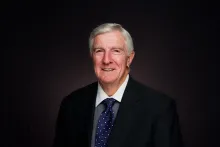
Before his retirement in 2021, Dr. Donald Ward pastored churches in Texas and Louisiana, and taught at Ambassador Bible College in Cincinnati, Ohio. He has also served as chairman of the Council of Elders of the United Church of God. He holds a BS degree; a BA in theology; a MS degree; a doctor’s degree in education from East Texas State University; and has completed 18 hours of graduate theology from SMU.
