

Frank Dunkle
This transcript was generated by AI and may contain errors. It is provided to assist those who may not be able to listen to the message.
Happy feast! Appreciate, by the way, the special music by Adira and Mrs. Crow. Very meaningful, very touching. I've always said that I could do that in a million years. It might take you a million years, but eventually, I guess all of us will be able to do it in a million years, couldn't we? Just a matter of time. We had a wonderful night to be much observed last night. I hope that you did. Also, wherever you were last evening. I found it kind of interesting that we were sitting around the table, and all of us, I think, were in the senior category.
I remember bringing up a topic. I was trying to think of a word. Of all the people sitting at the table, no one could come up with a word. It reminded me of what George Burns once said, that by the time that you're 80, you've learned everything. The only problem is you've got to remember it. That was distinctly the problem last night. I told them there, I said, I'll probably think of it tonight.
When I'm in bed, I'm supposed to sleep, but I'm thinking about what is this word. And sure enough, I did. I thought of it last night. True to form. But wonderful beginning for this wonderful feast of unleavened breath. And of course, we've all gotten the leavening out of our homes. And I hope we have the picture that it is to remind us to put sin out. However, once you put the physical leavening out, what do you do for the seven days that we're gathered for the days of unleavened breath? What do we do after that? Well, we are to eat unleavened bread for seven days, but what is that to remind us of?
You know, what are we supposed to think about during the course of these days? Is it just to put the sin out? No, brethren, the seven days that we're observing now and we begin today is to drive home the point that we have to bring in righteousness. We have to bring in righteousness. That's the message of the seven days. We all learn, of course, about putting the sin out. But the point of this festival is to bring in the righteousness. It's like, you know, Mr. Armstrong used to give the example of how do you get air out of a bottle.
Well, you have to replace it with something else. You've got to replace it with a liquid that forces that air out of the bottle. Well, brethren, how do we, once we put the sin out, how do we bring in the righteousness? So that's what we want to talk about here at this first service, you know, here of the days of unleavened bread. You know, the Bible gives us a principle that we can help us understand the complete meaning of the days of unleavened bread.
Over in Romans 12 and verse 21, Romans 12 and verse 21, over there it says, Be not overcome with evil, and we sure do live, don't we, in a world that is becoming increasingly evil. There's a lot of wickedness in the world, in the society that is around us here.
And it seems as people get further away from God, the evil multiplies. Evil men and seducers, as the Bible says, will wax worse and worse. But it says, Be not overcome with evil, but overcome evil with good. And so here Paul has given us the principle of the days of unleavened bread. We must overcome sin. Again, not an easy thing to do when all foundations in our society are being destroyed. You know, the basic building blocks of society are being torn down in this country. It's getting worse and worse.
It's happening in the schools, it's happening on the job. It seems like it is everywhere around us. If we compare it to leavening, it's a very good analogy, isn't it? How pervasive it is in society. I was cleaning our van yesterday, and you've got to go in and you've got to vac to get the leavening out. And one thing I'm reminded of every single year, you could have the most minute vacuuming system, and I guess they make the little bitty vacuum cleaners that you could buy. I don't have one of those, but you can't get it all out.
You simply cannot get it all out. I mean, we would have to dismantle the entire interior of the car to do that. You probably have to haul everything out of your home to get every speck of leavening out of your house. Now, this doesn't mean that we don't attempt to do it, because the lesson is to learn how difficult it is to get rid of the leavening.
in our lives, and how pervasive it is. But over here in 1 Corinthians 5 and verse 6, again, the message that we should get about sin and why we have to put it out, why we have to overcome it. In verse 6 of 1 Corinthians 5, Paul says, As your glory, he said, is not good. Do you not know that a little leaven leavens the whole lump? That is a message, brethren, we cannot forget in regard to life.
It says, he goes on to say, therefore purge out the old leaven, that you may be a new lump, since you truly are unleavened. They had cleaned out their lives of the physical leavening, and they, of course, had the opportunity to have the Passover that was sacrificed for them. But going on in verse 8, it says, therefore let us keep the feast, not with old leaven, nor with a leaven of malice and wickedness, but with the unleavened bread of sincerity and truth. Sincerity and truth has to come from the heart of wanting to obey God, wanting to walk in a different way of life.
You know, you reflect over the years of how far you've come since you were called. And remember the dynamism that maybe you had when you were younger. Do you still have that? Dynamism, brethren, to continue to strive, to overcome, to change in your life, to make a real turnaround in your life. You know, we are to keep the days of unleavened bread of sincerity and truth, get rid of the malice and the wickedness, like, you know, was discussed in the first message.
And that's a part of what we need to get rid of. Get rid of, again, those carnal attitudes that oftentimes people can have. And it's like I said at the Passover, if there's anybody here, if you don't feel like you can wash somebody's feet here, that's the person's feet you ought to be washing. That's exactly the person's feet you should be washing. Because we need to overcome, again, grudges. We need to be willing to forgive and to worship in sincerity and in truth. And, you know, when we do that, it is to remind us, when we're doing things from the heart and we're obeying the truth, it reminds us of Jesus Christ, who is the true bread that we eat.
When we partake of the Passover, that morsel of bread, we are ingesting Jesus Christ. And Jesus Christ was the most sincere, the most positive, a good example of what we ought to be as human beings here upon the earth. And he was the antithesis of sin. He was sinless. He was without sin. Sin is evil. Sin is negative. And, you know, it causes us all men or problems in our lives. And sin starts small, even as Paul points out here. It multiplies. It changes people to the bad.
It corrupts. Like a dough that is injected with leavening, it takes over the whole lump. You know, it is an aggressive thing in our lives where we let it run. And, you know, the leavening is made to agitate. And that's what sin is about as well.
When people get caught up in sins, very often their attitude changes and they are agitated. You know, they're hard to get along with. People that, you know, are embracing sin. And sin is stubborn as well. It's very stubborn. You know, sometimes you can... It's amazing how people will, again, wrap a rope out around a post and hang on to it for dear life. To hang on to whatever it is that is their puppy, you know, their little thing that they want to do.
Whatever it is, even if it's contrary to the law of God. Sin is sad. Again, it is negativity. It causes unhappiness. And ultimately, you know, it makes us sick. Physically, it makes us sick. You know, sin makes us sick. People do that to themselves all the time because of their... You know, sometimes you see somebody, it's like... I believe it was on, you know, that... Or at least I heard the story of this. I don't think it's true, but a story about, you know, this man on Johnny Carson being interviewed.
And, you know, Johnny, how he was, he said, well, tell us, you know, how long... How have you lived so long? You know, and that's my Johnny Carson, by the way. But anyway, then he... The man says, well, you know, I drank as much as I wanted to. I smoked as much as I wanted to. And I chase women all my life. And then Johnny says, well, how old are you? And he said, twenty-nine. You know, people live... You know, as I say to some... Sometimes I said to my wife, that person lived too long, too much.
You know, they were burning the candle at both ends. But again, some people would just hang on with a rope to whatever it is, the sin or the foible that they want to do. Smoking is an example of this. And sometimes people, you know, it's amazing that they will smoke even when they find out they have cancer. They keep smoking. Sometimes people, you know, get so bad that they have to have a hole in their throat.
And you probably see the people sticking a cigarette in the hole. What a life! You know, one thing I do not want to be... I don't want my life, the sole purpose of my life, to simply serve as a warning to somebody else. You ever thought about it that way? About yourself? That God says, let this man, this woman, be a warning to you about how not to live. But that's the effect of sin in our lives.
Boy, I wish we could really drive that home to our young people. But I realize that when you're young, you know, you're alive, you've got all this time ahead of you, you'll never die, you know, you think that you'll never be sick, you'll never experience the discomforts of anything like that, but let me promise you, those days come far too soon.
And be careful how you live, because you have to inherit it when you get old, and you'll be like we were last night, unable to remember, you know. But on the other hand, brethren, sin is negative. On the other hand, righteousness is positive. It's good. It causes us happiness. It gives us fun forever in our lives. What's fun today? It will be fun tomorrow.
It will always be fun. If we're living righteously, it gives us good health. It gives us fulfillment in life. It gives us a sense of well-being and contentment. You know, it teaches us patience. We can have a real joy in our lives, brethren, when we live righteously. We don't lose hope. We have faith in our lives about what happens to us and how ultimately it's going to turn out. It's like the way I like to put it is we're living a life, if we're living righteously, that has a future.
If we don't live righteously, our life does not have a future. We're going nowhere. But unleavened bread, brethren, is to teach us to not just put sin out, but, brethren, bring in the positive righteousness in our lives so that we can reap all the good things.
We can reap, again, the happiness and the joy, brimful and running over. Maybe it sounds rhetorical to say, why do we need to put sin out when we understand it that way? Why would somebody want to live a life that has no future? Well, there are seven and a half billion people on the earth that seem to like doing that. Why do we need to put sin out, brethren? It's not just because it's negative and destructive, but there's another reason. There's actually another reason why we need to put sin out.
I'm not going to go over there, but you might want to write it down. It says in Isaiah 59 that sin or iniquities separate us from God. It says, but your iniquities have separated between you and your God and your sins of hid his face from you that he will not hear. If we do not, brethren, put sin out of our lives and bring in righteousness, it's like our prayers are going to bounce off the ceiling, ricochet off the ceiling, and come back down to us and go nowhere. Sin separates us from our relationship with our Father in heaven and Jesus Christ.
Since Adam, every human being has been born in that condition, separated from God. From a baby, human beings are corrupted by sin. Even Paul, David, talked about that in Psalm 51. He was born in sin. All of us have been born in sin, brought up in it, immersed in it, all of our life. In every human being, since Adam has had a broken relationship with God that had to be mended, that had to be reconciled, when Adam and Eve chose to eat the wrong tree rather than the tree of life, it condemned all human beings to going the way of the tree of the knowledge of good and evil, of having a separate relationship so that they could not have a relationship with God.
The thing about it, which is in the world today, is that most people don't even know it. Most people are not even aware of it, that they're in that condition. Now, before we all get on a high horse and we think, well, boy, I know, well, you wouldn't know if God hadn't revealed it to you.
You wouldn't see it. You know, this great mosaic that God is painting of His plan, unless God had opened our eyes. It's not our job to criticize other people in the world. They are where they are because God hasn't really called them out of that yet. Someday they will, and they may excel head and shoulders above us. They may do much better than we do. So before you criticize someone, it's like the old saying, Walk a mile in their shoes.
I would advise that for another reason, because if you walk a mile in their shoes, then you'll be a mile away, and they won't be able to catch you because you'll have their shoes. But I hope that, again, you won't walk a mile. You have to walk a mile in their shoes to figure out that you are no better than they are. What exactly is sin? Frankly, Christianity has so watered that down. Sin. This word sin, this little three-letter word.
I remember Dr. Minninger wrote a book. He was a noted psychologist. He wrote a book years ago called, Whatever Happened to Sin? Because people have gotten into the politically correct thing. You don't want to say sin. You want to say mistake. You don't want to say something that would be judgmental. You want to say maybe an error in their life. You don't want to ever say that word sin because that carries a religious connotation of breaking some law, of going against some code of conduct in the Bible.
And of course, you don't want to get into that because it's not politically correct. So Minninger felt that our culture had lost an awareness of what sin was and what guilt was. And frankly, most pastors of the world don't even know what the definition of sin is. You ask most pastors, what is the definition of the sin? Now, you should know immediately if I were to ask you what Scripture defines for us what sin is. 1 John 3, 4. As the old King James says, sin is the transgression of the law.
New King James, I think, says lawlessness. In other words, being without law. So sin is the transgression of the law or living without the law of God. And that word, by the way, for sin, that is in 1 John 3, verse 4, from the Greek, which is hamartie, is missing the mark. Missing the mark. That's what it means. And oftentimes, prior to our calling, we were missing the mark all the time. If we had been out of the shooting gallery, we wouldn't have been close to the target.
We were really missing the mark. But God's will, brethren, is that we hit bullseye on the target. And if we are living according to God's law, brethren, it's like we're hitting the bullseye every time in our lives. The bullseye of this target, by analogy, is the law of God. You know, the Ten Commandments, the statutes, and the judgments. God's law, brethren, sets the standard. In fact, it's a minimal standard for us. Christ came to broaden that standard by adding the spirit of the law, not just the physical letter of the law.
In other words, not just a sin to go out and physically commit the act of adultery. It's a sin to actually think it in your mind, to learn to control ourselves from the inside out and just the teeth out, in other words, where people can just see what we do. Rather, people can't know what we're thinking, but God certainly can know that and does know that in us.
But when we break the law of God, brethren, we miss the target. We miss the mark. And that's what human beings have been doing for nearly 6,000 years. The law of God shows us a way, a righteousness. It's a way. It's like a path for us, a road to travel in our lives. I'm not going to go to Psalm 119, verse 172, but there it says that God's commandments are righteousness.
Boy, I wouldn't want to be in the camp that says the commandments are done away. Because that is what actually tells us what righteousness is. And you know, the person that teaches against any of God's laws, the Bible says they're going to be least in the kingdom of God.
And I assume that anyone that would do that is probably going to come up with a second resurrection. You know, it's like the minister of the world who talk about the law being done away with all the time. You know, when they saw that sign in their dream that said, P.C., and they thought it meant preach Christ, it actually meant to go plow corn rather than preach Christ. And those that teach against the law who had this mistaken idea that they were supposed to do the work of God, in the kingdom they're going to have lowly jobs because they're not going to be in front of people teaching others at that time. When Paul came along, he said about the law of God, he said, it's holy and it's just and it's good.
Just like God. God is holy and just and good. His law, by extension, is holy and just and good. And, brethren, that is the way in which we should walk. It is the way of righteousness, the law of God. Let's go to Psalm 119 over here. Psalm 119, I want to show you one other scripture here in this particular passage. In Psalm 119, in verse 172 there, we read that, it says, It says, Then over in verse 142, if you're still turning there, of Psalm 119, it says, Your righteousness is an everlasting righteousness and your law is truth.
And Jesus said that the truth would make us free. The truth would set us free. It's the law of God.
And, you know, religionists of our world today, you don't get that point, that the truth of God is expressed through the laws of God. So the law is truth. The law is righteousness. And when Jesus Christ came along, brethren, with His tremendous sacrifice that He gave on the day of the Passover on the fourteenth of Nicene, Jesus came, brethren, to reconcile us to the Father, and through His sacrifice we could be forgiven. I want you to think about the fact that, brethren, even if you and I obeyed the commandments perfectly, if we could hit the target every time, keep in mind, just like you when you were trying to clean out the leavening, you probably left some of that old leavening there, didn't you? And you search for it the next seven days. You'll find it in some extraordinary places. You know, sometimes you might be surprised when you'll find it. You can't get rid of it. Fully, at least in the flesh, none of us are going to ever be perfect. So we have to keep that in mind, brethren. But without Christ, to wipe away those sins that not only that we messed up on, that we have fallen down on, things that we've done wrong and we've asked God's forgiveness for it, but the things that we don't even know about. I hope when we're praying that we ask God, please forgive me, Father, of those sins that I've committed, I don't even know about it.
And there may be far more of those for all of us than we realize, that there are sins that we've committed. But Christ came, brethren, to make it possible for us to be righteous. We can't be righteous just by keeping the law. It is the way of righteousness, but it's Christ that cleans us up that makes us acceptable.
And Christ that forgives that sin, even that sin that we're repented of, that we know about as well, and the things that we don't know about. If we have an attitude of saying, Father, tell me where I'm wrong, show me where I'm wrong, God will certainly do that for us. So righteousness, brethren, is a way of life. It is a path to walk in, in our lives. And of course, that righteousness includes the sacrifice of Jesus Christ.
It's interesting that in the book of Isaiah, there's a prophecy there about how there's going to be a highway, symbolic of the way of righteousness. It's called the way of holiness. So like I said, God's law is righteousness, and God's way is a path to walk on. But there's going to be probably a literal highway, by the way, but that's symbolic of the righteous walking on a path. It's called the way of holiness, and it is going to lead to Jerusalem in the world tomorrow, where Jesus Christ is going to sit on his throne, and it says that no unrighteous person will walk upon that highway.
Now think about the fact that, frankly, no unrighteous person's walking on the pathway that God's people are walking on right now. God's people are walking on a right pathway. The world is not on that path. They're on a whole different path, a broad way, a big way. We're on a narrow path, and we're all following one another to one degree or another. Like I say, we're all in the same boat. We're on a narrow path, and sometimes it gets pretty narrow. And we all have to follow each other. And, you know, sometimes people want to be rugged individualists. I don't want to follow anybody. Well, that's foolish. We all follow somebody, don't we? And we all follow Jesus Christ. And Paul even told the people, follow me as I follow Christ. So, brethren, are you in the way of holiness in your life? If you are, you're getting the point of the days of Unleavened Breath. And you're holding it down. You're getting better at it. You're getting better at target practice. And you're getting up there, and you're hitting that target every time. That's the goal. That's the goal. Hopefully we're not committing the same sins we did when we were first called. We may wrestle with thoughts. Maybe we don't physically do the things we used to do, but we still wrestle with thoughts. Which is another frontier, isn't it? You know, was it Star Trek that they were going to bravely go to a place that no man has gone? And that's one of the last frontiers, and it's up here, between our ears, that we've got to conquer that. And if we can conquer that, God will give us much opportunity in the future. Much opportunity. We're going to rule with Christ for a thousand years, if we can conquer the inside. And of course, it is a battle, isn't it, within our minds? There are three basic root words for sin in the Old Testament. I've already mentioned the one that's in the New Testament. That means Mr. Mark. But three basic words for sin in the Old Testament that reveals a pattern that we are talking about here. And it reveals to us, again, this thing of what God's way is about and what sin is.
The first Hebrew word I want to mention is spelled C-H-A-T-A. K-T-A. In the Old Testament, by the way, this is the most common word that is used for sin. And you know what it means? It means to miss. Again, like the target. You miss the target. And oftentimes, interestingly, that particular word, kata, appears in Scriptures with the word walk or way or turn aside those words. In the Hebrew, it's halik and derik and sewer. And another one is to turn to or from. Or to, or as it is in Hebrew again, path. So those words, this particular word of sin is associated with. Again, walking, way, to turn aside or to turn to or from, or simply path. So in other words, the idea being is that when we sin, we get off the path. So you begin to see through this one word here, God's revealing of what this actually means by comparison to what we've been talking about here.
Over in Proverbs 8, let's go over to Proverbs 8 over here.
Proverbs 8 and verse 32.
Proverbs 8 and verse 32.
It says, So again, God's way of life is a way, a path to walk on, hear instruction, and be wise and do not disdain it. Down in verse 36.
So we see again in this verse, verse 2, way is used here in this particular passage. In that particular word, by the way that is there, is derrick, D-E-R-E-K. And down here in verse 36, the word is kata, which means to miss God's way to get off the path. And we don't want to get off the path of God. The next Hebrew word I should say is avon. It's like the old ding-dong avon is here.
The Hebrew is translated iniquity oftentimes, and it means to err from. And it's found in context with turn to or from, or to walk, or turn aside. And over in Isaiah 57, verse 17, it says there, and I'm just reading it here. This is from the King James. Because of the iniquity, or avon, of his covetances I was wrought, and he went on, and the word there is holic, by the way, on frowardly in the way of his own heart.
So again, that's avon. And it means iniquity.
You know, turning aside, not walking again in the way of God. The next Hebrew word is ta'a, T-A-A-H.
And ta'a is usually translated as transgression, or to err, and it means to wander, to be out of the way, out of the way. Deviating, strain. It is often used with way, or turn from and to, and walk, or turn aside. Over in the book of Amos in chapter 2 and verse 4, if you want to write it down, the Bible there says, There are lies that led them astray, ta'a, astray against, comes from the Hebrew word ta'a, lives, or lies which their fathers followed, which in the word holic is used there, and holic means walked.
The way they walked, I think it is actually in the King James, walked, the way their fathers walked. And that is they walked contrary to the way of God. So God's way is a path, it's a way of life, a complete way of life.
In sin, when we sin, brethren, we're turning aside away from God's way in life, and turning from the right path, and we're getting unfortunately on the broad path that leads to destruction that is in the world, that everybody's on.
You know, how does one stop walking down the wrong road? Now, one thing you would not want to do is ask a man that question of he's lost. You know, how often have men almost driven to Texas before they ask direct directions? I don't mean to put men down, but I are one. You know, we like to stay with something like a bronchian bull. We want to stay with it, and we'll figure it out. But sometimes that didn't work that way. It reminds me of a story about a couple of religious guys from the local church standing on the side of the road, and they were holding up a sign that read this. The end is near. Turn yourself around now before it's too late. And they planned to hold this particular sign up to each passing car. And when people, the first driver came along, he basically looked and he snarled out these religious guys out there holding this sign. You religious nuts! And he sped on down the road, and these two fellows heard, you know, as he rounded the curb and headed down the road, they heard a screeching and then a big splash.
And one religious guy said to the other, do you think we should have put up a sign that said, the bridge is out instead?
Well, brethren, when we're going down the wrong path, God is telling us, turn around, the bridge is out.
You're heading to the cliff. Turn around, you're going the wrong way. And repentance, in the church, I think we've always looked at this correctly. Repentance is being sorry for what we've done, and then making a 180-degree turnaround and going back the other way, and getting on the right path. Now, one thing you don't want to do is make a 360-degree turnaround, which some people do.
So God wants us to change our life, whatever that might be. It may be at the beginning of our calling. We have to do that when we're at the beginning of our calling, don't we? But sometimes we have to do that on individual sins, too. You've just got to turn around and do something entirely different on that particular element of our life. If somebody's got a drinking problem, for instance, make a 180-degree turn, become a teet holder. If it takes that, you know, if you've got a pornography problem, you can't stay off of pornography when you're on the computer or wherever it is. Make a 180-degree turn and get rid of your computer. You know, you won't die.
You know, get rid of whatever the problem is. We've got a problem with smoking pot in this world. It seems like it's getting worse and worse. And a lot of the pot, by the way, that is out there now is worse than the 60s. It's more potent and more powerful. And we've got so many people nuts about, you know, the marijuana anymore. I think probably pretty soon all states are going to have it legally. That will be something probably available to everyone. But you've got a problem with it, and that is doing it at all. You know what my recommendation is? You're probably hanging out with the wrong people.
I had a young man down in Alabama many years ago, came to me, and he wanted to be baptized. And I knew he had a pot smoking problem. This going back, by the way, to the... would have been the 70s.
And he said, yeah, I still do. And one of his problems is back then, by the way, he was smoking pot, and all kinds of weird things began to happen. He started having hallucinations, and he may have been doing more than just pot as well. And I said, well, tell me what your life is like. And he said, well, I do all right until I get around, you know, my friends. And I said, there you go. You're going to have to find new friends. And when he was able to do that, he was able to kick it. But let me say one other thing. Even though he was baptized, he kept having these problems. And I tell you, you know, if you've got a problem with it, it is a gateway drug to other problems. So be very careful what, you know, you listen to what other people say, for one thing. In the world, you hear some people, and they say that marijuana is the greatest thing in the whole world. But, you know, I beg to differ. I've seen, again, what happened and has happened through the years. To some people have been addicted to that and involved with that, and the results have never been good. So turn from it 180 degrees. Turn away from it. If you've got to get rid of old friends, get rid of them. True, whether you're talking about that or you're talking about, you know, other things that maybe others might get you into. But turn around and make a change in your life. Let's go to Proverbs 16 and verse 17. Proverbs 16 and verse 17.
Solomon, one thing Solomon learned, brethren, through experience, is this lesson. You know, it seems that the message of Proverbs is the end. Solomon began to really put it all together. But here in verse 17 of chapter 16, he said, The highway of the upright is to depart from evil. That's how you do it. Make that 180 degree turnaround in your life to depart from evil. He who keeps his way preserves his soul. You're only protecting yourself if you live God's way. You're only helping yourself. You'll be, again, head and shoulders above other people if you live God's way of life. And Solomon learned that lesson big time in his life. He had all kinds of problems that came up because of his sins. When Solomon sinned, though, he learned. He learned. And one of the things that he learned is what he says in Ecclesiastes 12 verse 13. He said, let us hear the conclusion of the whole matter. Fear God and keep his commandments, for this is the whole duty of man. This is the whole. This is the whole man. Actually, the word duty is not in the original text because it's in italics there, as you'll notice. But this is the whole man, to live by God's commandments. That's what Adam and Eve should have done in the garden. Kept God's commandments. You know, when God created Adam, he wasn't created all there.
And that's the part that was not finished in Adam nor Eve, and hasn't been finished in the last 6,000 years. And on anyone except those, God is called out of the world and out of this society.
So we need to, again, do those things that are God's way, God's life. For us, and the life that leads to joy is a way where we're loving God and we're loving our fellow man, our neighbor. There was a Pharisee who was an expert in the law, and he tried to trip Jesus Christ up. Let's go to Matthew 22 over here. Matthew 22.
Matthew 22.
We need to be reminded of this each and every year, particularly during this time. But the Unleavened Bread period of this year, of this festival year, here we are, brethren, beginning the first step in God's plan. There's seven steps, and we've already kept the Passover, which is the first step. This step, of course, is where we are putting sin out and bringing Jesus Christ in. The next step is Pentecost. It has to do with the harvesting of the firstfruits. And we want to be there when the firstfruits are harvested. Those that are first called are harvested. But in order to get there, brethren, we have to do this part. And we need to do it in a right and a proper way. In Matthew 22, in verse 36, again, this Pharisee was trying to trip him up. He said, And Jesus said to him, You shall love the Lord your God with all your heart, with all your soul, and with all your mind. And this is the first and great commandment. And the second is like it. You shall love your neighbor as yourself. On these two commandments hang all the law and the prophets.
So you can put two pegs on a wall. One is loving God, and the other is loving your neighbor. And all the laws of God fit right under that. Every one of them.
It really is simple, isn't it? God really simplifies it. And he simplifies it even more.
Because the law of God, those two commandments hang on one peg. And that peg is what?
Love. Love describes it all. Makes it, again, very, very simple for us. Loving our neighbor and loving God. And, brethren, if we are loving God with all of our heart and soul and mind, and notice that it didn't say part of your heart, you've got to be committed. You've got to be the most important thing, brethren, to you and your life. Is your calling, brethren, the most important thing to you in your entire life? Ask yourself that question.
Is it the most important thing to you? Is salvation, does it really matter to you?
Because if salvation doesn't matter, then obviously your calling is not going to matter at all. But God wants us to, again, realize that this is the commitment that is from the heart.
And if we make that kind of commitment our lives, we will never have a void in our lives. An empty space, a hole, as some have called it, in our lives. And this is stress by Jesus himself. When Jesus said, I am the bread of life that's symbolized again by that bread we take at the Passover and the unleavened bread that we're going to be eating during the days of unleavened bread. And he goes on to say, he says, He who comes to me will never go hungry. And he who believes in me will never be thirsty. So we'll never experience that hole in our lives that a lot of people have. They have an emptiness there. They don't know their purpose in life. They don't know what life is about.
And consequently, they devote themselves to whatever it is that strikes their fancy.
But the result of being filled with the bread of life, brethren, is never having that empty space within us. Eating the bread of Jesus Christ in our lives and growing in His love, brethren, is actually when we're doing that. And we're doing it with all of our heart, brethren, it's getting the air out of the bottle. Getting that sin out of our lives. Getting that air out of the bottle principle that we talked about at the very beginning. Our calling is to fill our lives with righteousness so that sin is forced out.
We can't lose that focus. Or what's going to happen is we're aiming at a target, we're going to miss it if we lose that focus. It's not, brethren, we just stop sinning as we've got to bring in the righteousness. So again, to get rid of this sin. Ask yourself, brethren, what am I doing right? Don't ask yourself what you're doing wrong. There's a lot of things you're doing wrong. And you probably know those already, don't you? But what am I doing right? And hopefully we're trying and striving to add to that in our lives. We're striving with all of our hearts to do that. Are you honest? Do you tell the truth?
Are you someone, brethren, that always can be counted on? You know, that you're going to be honest in all your dealings with people. There was Abraham Lincoln who said he never knew a man who had a good enough memory to be a liar.
And I heard another man who said, you know, basically that if you tell the truth, you don't have to remember what you said.
And I really do believe that. I really do believe that. No, many false teachers have arisen in the world to say the opposite of God's way of life.
Some say you don't have to do anything, just accept Jesus.
Foolish, very foolish. But that's what some teach. Some get caught up in that. It happened in the first century of the church. Paul had to write, he said, avoid profane chatter and contradictions of what is falsely called knowledge. Boy, we're in a knowledge explosion today.
It says, by professing it, you know, falsely so-called knowledge, some have missed the mark, they've sinned, in other words, in regards to the faith. Got completely off track.
It's important, brethren, for us to keep on the basics of our life. Prayer, study, you know, the Bible, and fasting and meditation. Those four basic things, brethren. Keep them in our lives. Don't get caught up in the world and the society. Right now, and as we get closer to the end of the age, brethren, everything that we've known is going to change. I'm talking about in our society.
Probably, you know, they're talking about now putting a different face on, was it the $20 bill? I can't remember who, is it Tubman they're going to put on the $20? I think that's the least of our changes that are going to take place. Because I think eventually currency is going to be done away with, or a new one introduced.
And of course, before that happens, the economy of the entire country may dry up. We never know, brethren, what's going to happen in the future. But we've got to be on our guard. We can't let down even, brethren, when it's very gloomy outside. Let's keep our faith, look forward to the future. How do the righteous, how do they live when all the foundations have been shaken and destroyed?
How will we live, brethren? Maybe there might be a time where you might be the only one in a city where you are that knows God's truth.
And God may use you in ways marvelous in the future, but you have to hold fast. The pursuit of righteousness, brethren, is God's intent for each and every one of us. That's why you were born. Pursuit righteousness in your life. Now, over in Romans 6 and verse 13, Romans 6 and verse 13, Paul says over here, "...And do not present your members as instruments of unrighteousness to sin, but present yourselves to God as being alive from the dead, and your Places as instruments of righteousness to God. For sin shall not have dominion over you, that there shall be a life, and the world, for sin shall not have dominion over you." For sin shall not have dominion over you, for you are not under law but under grace.
On down here to verse 19, I speak in human terms because of the weakness of your flesh. For just as you presented your members as slaves of unrighteousness and of lawlessness leading to mortal lawlessness, so now present your members as slaves of righteousness for holiness. Now, God wants us to be holy, sanctified. For when you were slaves of sin, you were free in regard, it says, to righteousness. But then He says, What fruit did you have then in the things of which you are now ashamed? For the end of those things is death. Like you say, if we go against God's way, our life has no future. It ends at death. But God's way ends in a future.
God wants us to make sure we're walking down that path, that right path, and we're doing it, brethren, with our whole heart.
You know, so when you look at the Feast of Unleavened Bread, don't look upon it as just the Feast of Yeast. But think about the fact that that unleavened bread means that we ingest, we bring, you know, the unleavened bread into us. If we're looking at it as the Feast of Yeast only, we're just putting things out. We're not bringing things in. And God wants us to, again, to have that, how do you get an error out of a bottle principle activated in our lives? Bring in, brethren, humility. Bring in service. Bring in love. You know, Paul's focus, again, was to produce fruit. And we learned that, didn't we? We read that at the Passover, John 15, that God purges us all so that we will bring forth much fruit. That's what God is pleased with. If we're withering and dying, then we're going to be purged. We're going to be stepped off by the husband.
So, brethren, how do we put righteousness into our lives? I want to give you four R's for that.
Four R's. Number one, recognize sin through the commandments of God. Recognize sin through the commandments of God. Number two, repent of sin. Number three, resist then sin. The Bible says if we resist the devil, he will flee from us. If we resist sin, brethren, we'll get it out of our lives.
And number four is to replace it with righteous action. Do the righteous things.
Get rid of the malice. Get rid of the wickedness. And bring in, brethren, sincerity and truth. Depart from evil and do that which is good.
As Paul said, being filled with the fruit of righteousness that comes from Jesus Christ.
Or, as he said in another place, but you, man of God, pursue righteousness. If you're going to be a man or a woman of God, pursue righteousness. So, brethren, this is how the living bread of life works in us. This is the 11 bread acting positively in us. It is overcoming evil with good.
It is righteousness. It is a beautiful truth, brethren, which so few have had the privilege to know that we know in the church today. Jesus said, this also, as we are on that path or walking in that way of God, he that endures to the end, the same shall be saved. I mentioned at the Passover, this was my 49th Passover since I came into the church back in 1968, back in that time. Hardly seems 49 years has passed, but here we are. And, you know, young people, they're like 17, 18 years of age. I was where you were 49 years ago. And boy, it goes fast. It just goes so fast. I think Nikita Khrushchev said, you know, you only live once, live it up.
Of course, I don't think he meant what I'm going to say to you now. You do only have this physical life where there's a reward. So be careful your footsteps. Enjoy life. But remember, again, God calls us into question in our lives, you know, in all the things we do. But the best thing to do is to live God's way of life, and you have the tremendous joy that comes. So again, think about it, brethren. For seven days, Israel walked with God in leaving Egypt. I'm not sure we'll hear this message, but maybe we'll hear this discussed how it took seven days for Israel to get out of Egypt. They were out of Egypt on the seventh day of Unleavened Bread. And we, on the other hand, in the modern day New Testament church, we eat Unleavened Bread seven days to symbolize our walk with God away from Egypt or away from sin, because Egypt was a type of sin. And Satan, Pharaoh was a type of Satan as well. So, brethren, if we truly do this, we will produce the fruit of righteousness, and we will stay on the path so that we can be in that future early harvest that's going to take place by and is symbolized by the next festival after the days of Unleavened Bread. So let's make sure, brethren, we don't just put the sin out, but let's make sure that we're bringing in the Unleavened Bread of sincerity and truth. And let's make sure, again, that that bread of life, Jesus Christ, is active in us and changing us. And hopefully, if we can endure the end with that, we'll become like Christ. And when the time the resurrection comes, we'll be able to be there in the resurrection and be right there beside Jesus Christ to rule with Him when He returns to set up His kingdom upon this earth.
A partial set of Scriptures used:
Rom 12:21 Do not be overcome by evil, but overcome evil with good.
AND HOW DIFFICULT IT IS to reach all the leavening and take it out !!!!!
1Co 5:4 In the name of our Lord Jesus Christ, when you are gathered together, along with my spirit, with the power of our Lord Jesus Christ,
1Co 5:5 deliver such a one to Satan for the destruction of the flesh, that his spirit may be saved in the day of the Lord Jesus.
1Co 5:6 Your glorying is not good. Do you not know that a little leaven leavens the whole lump?
1Co 5:7 Therefore purge out the old leaven, that you may be a new lump, since you truly are unleavened. For indeed Christ, our Passover, was sacrificed for us.
1Co 5:8 Therefore let us keep the feast, not with old leaven, nor with the leaven of malice and wickedness, but with the unleavened bread of sincerity and truth.
1Co 5:9 I wrote to you in my epistle not to keep company with sexually immoral people.
1Co 5:10 Yet I certainly did not mean with the sexually immoral people of this world, or with the covetous, or extortioners, or idolaters, since then you would need to go out of the world.
Difficult to get rid of the CARNAL attitudes...
"Whatever happened to sin?" Dr. Menninger
1Jn 3:4 Whoever commits sin also commits lawlessness, and sin is lawlessness.
THE LAW sets a minimum standard. CHRIST MAGNIFIED the Law to its full standard expectation for Godly Character.
Breaking the Law, we miss the mark/target.
Psa 119:172 My tongue shall speak of Your word, For all Your commandments are righteousness.
Rom 7:12 Therefore the law is holy, and the commandment holy and just and good.
Psa 119:142 Your righteousness is an everlasting righteousness, And Your law is truth.
Joh 8:32 And you shall know the truth, and the truth shall make you free."
Isa 35:8 A highway shall be there, and a road, And it shall be called the Highway of Holiness. The unclean shall not pass over it, But it shall be for others. Whoever walks the road, although a fool, Shall not go astray.
Mat 7:13 "Enter by the narrow gate; for wide is the gate and broad is the way that leads to destruction, and there are many who go in by it.
Mat 7:14 Because narrow is the gate and difficult is the way which leads to life, and there are few who find it.
Mat 7:15 "Beware of false prophets, who come to you in sheep's clothing, but inwardly they are ravenous wolves.
Mat 7:16 You will know them by their fruits. Do men gather grapes from thornbushes or figs from thistles?
1Co 11:1 Imitate me, just as I also imitate Christ.
Pro 8:32 "Now, therefore, listen to me, my children, For blessed are those who keep my ways.
Pro 8:33 Hear instruction and be wise, And do not disdain it.
Pro 8:35 For whoever finds me finds life, And obtains favor from the LORD;
Pro 8:36 But he who sins against me wrongs his own soul; All those who hate me love death."
Amo 2:4 Thus says the LORD: "For three transgressions of Judah, and for four, I will not turn away its punishment, Because they have despised the law of the LORD, And have not kept His commandments. Their lies lead them astray, Lies which their fathers followed.
180 DEGREE TURN... THEN RUN FROM IT, FROM FRIENDS THAT DRAG YOU OR INFLUENCE YOU INTO IT!!!
Pro 16:17 The highway of the upright is to depart from evil; He who keeps his way preserves his soul.
Pro 16:18 Pride goes before destruction, And a haughty spirit before a fall.
Ecc 12:13 Let us hear the conclusion of the whole matter: Fear God and keep His commandments, For this is man's all.
Mat 22:36 "Teacher, which is the great commandment in the law?"
Mat 22:37 Jesus said to him, 'YOU SHALL LOVE THE LORD YOUR GOD WITH ALL YOUR HEART, WITH ALL YOUR SOUL, AND WITH ALL YOUR MIND.'
Mat 22:38 This is the first and great commandment.
Mat 22:39 And the second is like it: 'YOU SHALL LOVE YOUR NEIGHBOR AS YOURSELF.'
Mat 22:40 On these two commandments hang all the Law and the Prophets."
Mat 22:41 While the Pharisees were gathered together, Jesus asked them,
Mat 22:42 saying, "What do you think about the Christ? Whose Son is He?" They said to Him, "The Son of David."
Mat 22:43 He said to them, "How then does David in the Spirit call Him 'LORD,' saying:
Mat 22:44 'THE LORD SAID TO MY LORD, "SIT AT MY RIGHT HAND, TILL I MAKE YOUR ENEMIES YOUR FOOTSTOOL" '?
Mat 22:45 If David then calls Him 'LORD,' how is He his Son?"
Mat 22:46 And no one was able to answer Him a word, nor from that day on did anyone dare question Him anymore.
IS YOUR CALLING THE MOST IMPORTANT THING TO YOU IN YOUR LIFE? DOES SALVATION REALLY MATTER TO YOU?
Joh 6:48 I am the bread of life.
Joh 6:35 And Jesus said to them, "I am the bread of life. He who comes to Me shall never hunger, and he who believes in Me shall never thirst.
Getting the "air out of the bottle"... getting sin out of our lives. Can't loose the focus and forget what the target of our lives IS... Must get rid of sin. WHAT am I DOING RIGHT??? Pursue and enlarge that field to CROWD out sin and the ways of SIN.
Do you tell the truth? Can you be counted on to always have honest deals in all you do? In all your dealings?
KEEP WITH THE 4 Basic Tools/Practices: Prayer, Bible Study, Meditation and Fasting.
THE PURSUIT OF RIGHTEOUSNESS IS GOD'S INTENT FOR EACH OF OUR LIVES!!!
Rom 6:13 And do not present your members as instruments of unrighteousness to sin, but present yourselves to God as being alive from the dead, and your members as instruments of righteousness to God.
Rom 6:14 For sin shall not have dominion over you, for you are not under law but under grace.
Rom 6:15 What then? Shall we sin because we are not under law but under grace? Certainly not!
Rom 6:16 Do you not know that to whom you present yourselves slaves to obey, you are that one's slaves whom you obey, whether of sin leading to death, or of obedience leading to righteousness?
Rom 6:17 But God be thanked that though you were slaves of sin, yet you obeyed from the heart that form of doctrine to which you were delivered.
Rom 6:19 I speak in human terms because of the weakness of your flesh. For just as you presented your members as slaves of uncleanness, and of lawlessness leading to more lawlessness, so now present your members as slaves of righteousness for holiness.
Rom 6:20 For when you were slaves of sin, you were free in regard to righteousness.
Rom 6:21 What fruit did you have then in the things of which you are now ashamed? For the end of those things is death.
UNLEAVENED BREAD means we INGEST the Righteous way of LIFE that was Christ's example and teaching. PRODUCE FRUIT!!!!
JOHN 15.... must produce FRUIT!!!!
HOW do we put Righteousness in our lives? The 4 Rs:
1 Recognize SIN through the commandments of GOD
2 Repent of SIN
3 Resist SIN
4 Replace SIN with Righteous action, DO THE RIGHTEOUS THINGS.
1Co 5:8 Therefore let us keep the feast, not with old leaven, nor with the leaven of malice and wickedness, but with the unleavened bread of sincerity and truth.
Overcoming Evil with GOOD!!!
Mat 10:22 And you will be hated by all for My name's sake. But he who endures to the end will be saved.
LIVE and be careful with your footsteps and the PATH you walk. There is only ONE NARROW WAY...
For 7 days Egypt walked with GOD leaving Egypt. We now eat UB 7 days to symbolize our walk with GOD away from Egypt and the SIN it represents.
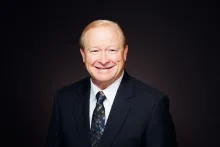
Jim has been in the ministry over 40 years serving fifteen congregations. He and his wife, Joan, started their service to God's church in Pennsylvania in 1974. Both are graduates of Ambassador University. Over the years they served other churches in Alabama, Idaho, Oregon, Arizona, California, and currently serve the Phoenix congregations in Arizona, as well as the Hawaii Islands. He has had the opportunity to speak in a number of congregations in international areas of the world. They have traveled to Zambia and Malawi to conduct leadership seminars In addition, they enjoy working with the youth of the church and have served in youth camps for many years.
