
Don Ward
This transcript was generated by AI and may contain errors. It is provided to assist those who may not be able to listen to the message.
Today we are parallel roles of our spiritual and physical fathers.
Parallel roles of our spiritual father, singular, and physical fathers. So when you think of the heaven, our your heavenly father, what thoughts run through your mind? And when you think of your earthly father or your husband, what do you think of? What thoughts run through your mind when you think of each one? Your heavenly father, your earthly father.
When you think of your heavenly father, do you think of father and son and a close loving relationship?
Or do you think of the great love that God has for all of his creation? And one of the verses we quoted there at the beginning of God's soul of the world. I think everybody can quote that, that he gave his only begotten son.
The Hebrew word for father is av, and it's spelled A-V.
In Shrong's Concordance, if you look up father in the Shrong's Concordance, the Hebrew word will be av. It's the first word in Shrong's Concordance. It is a mimetic, which means an imitative word taken from the first and simply sounds off an infant's lips. An infant begins to go, a-v-v-v, by we call it cooing or something like that. And whether that is by design of creation or just the way it is, nonetheless, it is the way it is. The Hebrew word av is a mimetic, imitative word taken from the first and simplest sounds of an infant's lips and the first word in Shrong's Concordance. The first word of a child, av, and then it becomes da, da-da-da-da. And then that becomes da-da, and eventually av is fades away in its da-da in the English language and daddy, eventually.
Listen to this. A University of California psychologist Nicholas Christian-Feo found that infants tend to resemble their fathers at birth.
In a test he conducted, participants picked the correct mom of an infant from photographs 30% of the time, but picked the correct dad 50% of the time. One hypothesis is that nature itself encourages the father's investment by having the infant to resemble the father. Thankfully, that's just in the beginning. But eventually, by having the child to resemble the father, the father knows that he has a great responsibility. If he looks into the eyes, do you recall, those of you who are fathers, when that first child came and you looked into the eyes, face of that first child, and what your thoughts were, it is an awesome thing, of course, to be a father. Let's look at Romans 8, verse 15. In Romans 8, 15, Paul uses the word abba. Abba is a Chaldean word, and scholars don't know why the apostle Paul used the Chaldean word. The Syriac, which is basically in Chaldean, translates this as father's, father, father. But in Romans 8, 15, this is a verse that gives you the closeness that is, as much as you can, convey in language, just spoken words, of the closeness that should exist between father and son, or father and daughter. In this case, it is speaking in a spiritual sense in Romans 8, verse 15.
For we have not received the spirit of bondage again to fear, but have received the spirit of sonship, oio thesia, whereby we cry, Abba, father. Abba, father.
In most cases in the New Testament, the Greek word for father is pater. And as we've already noted in the Hebrew, it is av, just simply A-V, av, avavav. In biblical and Greek language, in the biblical Hebrew language, in the biblical Greek language, father is used in various senses as begatter, progenitor of an individual, as the head of a household, as a founder of a nation, as a term of respect, used in so many different ways.
Let's look at John 8, verse 53, the use of father in John 8, in verse 53. 8, 53.
Are you greater than our father Abraham, which is dead? Of course, Jesus Christ, they're the one questioning because he said he is the I am, which is dead, and the prophets are dead. Who make yourself to be?
And so the word father, here it is pater, and it's usually the one that is used for father in the Greek language.
In 1 Corinthians 4 and verse 15, let's look there in 1 Corinthians 4 and verse 15, we know that the father is the one who begets us, and in the spiritual sense, the father is the one who brings us to birth.
The Apostle Paul writing here about fathering someone in the Gospel. You know, I could get very discouraged in our anticipatory participation with regard to, I must be the worst teacher on the face of the earth, because, you know, I can't set it in your mind's kind of thing, or I would think that some just, we're probably going to change the way that we respond. But 1 Corinthians 4 and 15, for though you have ten thousand instructors in Christ, yet have you not many fathers, for in Christ Jesus, I have begotten you through the Gospel. Of course, the father is the one who ultimately begets us, who calls us, begets us, and the father in Jesus Christ work in a reciprocal relationship to bring us to conversion.
In Ephesians 1 and verse 17, Ephesians 1 verse 17, we see here that the father is the source of gifts and knowledge.
We're going to see as we read various scriptures that Jesus Christ said that He came to teach what the father taught Him. He came to teach what the father taught Him. In Ephesians 1 and verse 17, that the God of our Lord Jesus Christ, sink in, that the God of our Lord Jesus Christ, the Father of glory, may give unto you the spirit of wisdom and revelation in the knowledge of Him.
The eye of your understanding being enlightened, that you may know what is the hope of His calling and what the riches of the glory of His inheritance in the saints. So God gives us various gifts. Jesus Christ is called the Revelator, but the revelation begins with the Father. Look at the book of Revelation chapter 1.
If you ask most people on the street, you would say, who revealed the book of Revelation? And they would say Jesus Christ, which is correct. Hopefully they would. But you'll note that Jesus Christ received the revelation from God the Father. We're reading now Revelation 1 and verse 1.
The revelation of Jesus Christ, which God gave unto Him.
You can read right over there. The revelation of Jesus Christ, which God gave to Him to show unto His servants things which must shortly come to pass. And He sent and signified it by His angel, His Angelos messenger, unto His servant John. The Holy Spirit proceeds from the Father. So in that sense, you could say, well, the Father is the source of the Holy Spirit. In some way, Jesus Christ plays a role. It is shed on us through Christ. Now, look at John 1526. John 1526. So when I said that the Holy Spirit proceeds from the Father or He is the source of the Holy Spirit, did John 1526 immediately pop into your mind? Well, He's going to go next to John 1526.
In John 1526, when the Comforter is come, whom I will send unto you, from the Father, even the Spirit of Truth, which proceeds from the Father, He shall testify of me.
And you look there in John 1426, and you see that the Comforter is identified as the Holy Spirit. John 1426. But when the Comforter, but the Comforter, which is the Holy Spirit, whom the Father will send in my name, He shall teach you all things, bring all things to your remembrance whatsoever I have said unto you.
As a doer, God the Father is first and foremost, what would you say? As a doer of what He does.
First and foremost, He is a Creator. He is a Creator in both the physical and spiritual sense.
In Job, it talks about that when God suspended the various planets in the earth out in the space, and the morning stars sang for joy, the angelic beings, spirit beings, are created beings. Of course, the great difference between us and angels is that we are begotten of God's Spirit and born of God's Spirit. We're not just created beings.
God also, and most of everything that God the Father did, He did through Christ. Now, let's go to Genesis 2. Notice another part of God's... What are we talking about? We're talking about God is a spiritual Creator. We know that He created the spiritual realm before the physical realm because, it says, the morning stars sang for joy when they saw the physical realm, the morning stars being the angels. In Genesis 2, verse 1, Thus the heavens and the earth were finished, and the host of them. And on the seventh day God ended his work which he had made, and he rested on the seventh day from all his works which he had made. And God blessed the seventh day, sanctified it, set it apart. It's a special day. And as we're going to see in just a moment when we turn to Romans 7.14, we'll see that the Sabbath is spiritual. The law is spiritual. And all spiritual things have what? They have God's active presence within them. And God blessed the seventh day and sanctified it because that in it he had rested from his work which God created and made. Alo him. Now we look at Romans chapter.
He blessed the seventh day and made it holy. In Romans 7 and verse 14, showing that it is spiritual.
This is Romans 7.14, for we know that the law is spiritual, but I am carnal. I am of flesh and under sin. But the law is spiritual. In the spiritual sense, God is first and foremost a Father.
He is our Creator, He is our Father. Those two go hand in glove. Now let's go to Isaiah 63. We'll go to 63 and then we'll go to 64 to show very clearly what it says about God being our Father. He is our Creator and He is our Father. We're laying a background here and we will bring much of this into the physical realm of earthly fathers in Isaiah 63 and verse 16. Doubtless, you are our Father. Though Abraham be ignorant of us and Israel acknowledge us not, you, O Lord, are our Father, our Redeemer. Your name is from everlasting. Then turn the page maybe. If not, look at Isaiah 64 and verse 8.
But you, O Lord, you are our Father. We are the clay, you are the potter. And we're all the work of your hand. When you read that scripture, what would pop into your mind? What would you think? You are the potter, we are the clay. Mold us, make us, shape us. You might think of God always has our best interests at heart. You might think of Hebrews 11 and verse 6. He who would come to God must first of all believe that he is in a rewarder of those who diligently seek him.
Now we look at Ephesians 3 verse 15. Ephesians 3 and verse 15. I think this is one of the verses that the New International has either left out or changed to some way. I don't understand why ministers think that they are gaining something by quoting from so many different translations or concordances. You might get an idea from that.
There is hardly anything that surpasses. You do away with the these and the thou's and all of that in the King James easily. But the power, the eloquence of that language, and of course the New King James does away with the these and thou's, is hardly a surpass. You might occasionally say, okay, the New Living or the English Standard might make such and such clearer, but the power, I read them parallel to what it says in the King James and what it says in the New Living or the New International version, New International NIV.
Ephesians 3 and verse 15, all this talking in between, I almost forget where I was turning to. In Ephesians 3 and verse 15, let's read 14. For this cause, this is a verse that I think they have either left out, for this cause I bow my knees unto the Father of our Lord Jesus Christ, of whom the whole family in heaven and earth is named.
So, in the spiritual sense, there's no question that God the Father is a Creator, He is our Father, He begets us. Now, when we say that about the Father, we know that much of the work that He does is through Jesus Christ. But we do pray singularly, singularly, to the Father, our Father who art in heaven, and we pray in Jesus' name. There is no deeper, closer, respectful relationship that can exist than Father-Son, Father-Daughter.
You know, I was privileged to have two daughters. You know, and you remember some of those things that I began to think, well, probably they shouldn't be doing this. They'd be 12, 13 years old, come sit in your lap, and it's just a special relationship of Father-Daughter, especially, and of course, Father-Son, but usually in a different way.
Initially, notice this, initially God and Christ are unconditional givers of themselves. For example, we go back even before the foundation of the world. Jesus Christ slain before the foundation of the world. We go to John 3, 16, God so loved the world, that He gave His only begotten Son. That was determined before the foundation of the world. So initially, God and Christ are unconditional givers of themselves. Let's look at 1 John 4 and verse 10. 1 John 4 and verse 10. In 1 John 4 and verse 10, we'll see where the love begins.
It begins with the Father. 1 John 4, 10, Herein is love, not that we love God, but that He loved us. He sent His Son to be the propituation for our sons. Beloved, if God so loved us, we ought also to love one another. No man has seen God in any time. If we love one another, God dwells in us, and His love is perfected in us. Verse 16, We have known and believed the love that God hath to us. God is love, and He that dwells in love dwells in God and God in Him.
God first loved us, and children learn love from their parents. As we will talk more about as we go along, one of the reasons why the societal structure and the moral condition of this nation, and for that matter the whole world is in, is because of the breakdown of the family, and especially the absence of the Father in the home. God expects us to exercise the gifts of the Spirit.
See, initially He gives us all of these things, but He expects us to quench not the Spirit. You know, in the parable of the ten virgins, their lamps are going out. Their Spirit is dwindling. They're not renewing the inward man on a daily basis. Once again, when you think of your heavenly or physical Father, what do you think of? Do you view Him negatively with a sense of guilt, because you feel that you never quite measure up?
So maybe you wouldn't say, I don't view Him negatively, but I just have sort of this uneasy, queasy kind of feeling that somehow He's judging me all the time. You know, there's a verse that says, if God should mark a nic who would be able to stand, we are all sinners. God knows that we are but flesh. But He's always willing to forgive us when we confess and repent of our sins. So, do you feel that you never quite measure up, so God is never pleased with you, thus you don't really feel close to God? God does not want us to be on a perpetual guilt trip.
He wants us to be free of guilt. And upon confession and repentance, God will remove our sins as far as the east is from the west, which is like infinity. But to some degree, we tend to view our Heavenly Father, especially initially, in the same way that we view our physical Father. God is bringing sons and daughters to glory in His family. And as we have noted, Fatherhood has to do with begetting, loving, and teaching.
You absolutely know that your physical Father beget you to physical life. You can say, oh, that's my dad. There's no doubt that's my dad. But did you discern? Do you discern from Him that He is your physical Father, that He loves you, that He has your best interest in heart, and He has taught you how to live your life? Now, if He didn't, you don't have to use that as an excuse.
You can make up for that rapidly through the Word and Spirit of God. God ordained marriage and family so we could see in a concrete way what He's doing on the spiritual plane. The Father's position is desperately needed in physical things. Being there, spending time, as we shall note also, the Father's role is absolutely essential in all things spiritual.
The Father is the source of the Holy Spirit, as we have noted, John 15.26. As you heard in the sermon at, God draws us through His Spirit, John 6.44. God bestows every good and perfect gift that is the Father. Here we are in John. Look at 1 John. I mean, James back past John.
In James chapter 1 verse 17, Every good gift and every perfect gift is from above and comes down from where? From the Father. The Father of lights with whom is no veribleness neither shadow of turning. I mean, what was true in Quasillian, B.C., is true in 2020 A.D. The truth has not changed. The truth is, it is a state of existence.
The truth is, it stands forever. God begets us through His Spirit, verse 18, of His own will, begat He us with the word of truth, that we should be a kind of firstfruits of His creatures. He loved us so much, as we've noted already twice, that He gave His only begotten Son. God intended and commanded that fathers be the head of the wife and children. God commanded that fathers be highly respected. Look now, please, at 1 Corinthians 11 verse 2. 1 Corinthians 11 and 2. 1 Corinthians 11 verse 2.
Now, I praise you, brethren, that you remember me in all things, and keep the ordinances, as I delivered them to you. But I would have you know that the head of every man is Christ, the head of the woman is man, and the head of Christ is God. So here Paul, this is somewhat in reverse, hierarchical order, but in hierarchical order, God is the head of Christ, Christ is the head of man, man is the head of woman, the parents are the head of the children, and they all have precious roles to fulfill.
And when those roles are not fulfilled, things go askew in the structure of society and the world. And the world has been turned upside down, and the turning of the upside down is the wrong way.
So God intended that fathers be respected, but since World War II, and especially with the advent of television, and the ever-burgening media platforms called social media, which are really anti-social, because it keeps people, you talk about the lockdown, well that's what social media does. Not in person. We're hurling back into social media, and boy, we are addicted to it. The ever-burgening media platforms, television shows and so on, have characterized, remember the old, when I was a boy, we got the Laurel Daily Leader, the daily newspaper, and in it had the comic section, and there was Dagwood and Blondie. Of course, Blondie knew it all, and Dagwood was a stooge.
Fathers portrayed as somewhat of a dunce, not able to manage his own affairs, let alone take care of a wife and family. You're led to believe he's out of touch with reality. He just doesn't understand the modern world. He hasn't been enlightened, and if we didn't have fathers, the world would be a better place, because really it's made for women and children. That's sort of the way, I know this is tough maybe on some ears, but it's the truth, and we shall show it from Scripture as well.
He just doesn't seem to understand who's really in charge, but it is his fault.
He is often viewed as someone to be pitted, to be tolerated, and really they're saying if it were not for the fathers, the world would be a great place to live. Fathers are viewed by some as the last stick in the mud to be overcome in the world, so we can really move forward into a new age of enlightenment, fun in the sun.
One dad won a door prize drawing, and he called his five children together and asked them to decide which one of them should get the prize. Who is the most obedient, he asks. Who never talks back to his mother, who does everything she says. The five children answered in unison, you do, dad. You get the prize. One wise senior adult who was celebrating his 50th anniversary was asked the secret of how long marriage, the secret of their long marriage, he replied, I learned a long time ago you can be right or you can be happy. David Chansey writes, most dads understand that the best gift they can give their children is to love their mother, but some are slow to catch on. A husband and wife were attending a marriage seminar about communication, and the instructor asked the husband, what is your wife's favorite flower? The well-meaning husband, who wanted to show that he was really tuned into her needs, leaned over to his wife, gently stroked her arm and said, it's Pillsbury, isn't it? Male and female are equal in their God-ordained potential of becoming glorious, radiant spirit beings in the kingdom of God.
So many husbands and fathers are so out of it, it's no wonder they are viewed the way they are. Is it prophesied? Let's look at Isaiah chapter 3. Isaiah chapter 3. Oh, some would say, speak unto us smooth things. Do not speak unto us hard things. Speak unto us smooth things. If we're going to make progress, if we're going to solve, if we're going to pass the mantle on, if we're going to preserve the truth. In Isaiah 3 verse 1, In other words, they are going to experience extreme famine.
The Lord and the ancient, and as I've mentioned, from Amos 8, a time of famine and the Word is coming. The captain of 50, the honorable man, the counselor, the cunning artificer, and the eloquent orator, and I will give children to be their princes, and babes should rule over them. And the people shall be opposed, every one by another. There are quite a few verses in the prophets about every man's hand shall be against his neighbor. And every one by his neighbor, the child shall behave himself proudly against the ancient, and the base against the honorable. You take some person that's just been out drinking, carousing, whatever words you want to add to that, stealing, burning, whatever, and he's going to speak evil of those who are in authority. In fact, let's do away with that. Let's not have any of that.
When a man shall take hold of his brother, of the house of his father, saying, You have clothing, be you our ruler, and let this ruin be under your hand. In that day shall he swear, saying, I will not be a healer, for in my house is neither bread nor clothing, make me not a ruler of the people. And so many men, so many fathers have abdicated their role, their responsibility, as head of the household. Sort of a summary verse here, verse 12.
As for my people, children are their oppressors, and women rule over them. O my people, they which lead you cause you to err and destroy the way of your path. The Lord stands up to plead and stands to judge the people. The Lord will enter into judgment with the ancients of his people and the princes thereof, for you have eaten up the vineyard, the spoil of the poor is in your houses. We go back three or four months, and the world was living in the old Alabama song, High Cotton. Yeah, we were walking in high cotton. We were yeeting high off the hog, as they say. But then comes this virus out of nowhere, and suddenly the world comes to almost a grinding halt. No NFL, no NBA, no NHL, no WNBA, no college football, no high school football. Of course they're saying they might bring football back this fall.
Maybe they will, maybe they won't. But we see in this world people running to and fro, wringing their hands, wondering what to do about the behavior that now terrifies the world. You just think about the anguish that the president, you know, you can see it in his face.
And you can see it in the face of so many of those in leadership positions. Much of the confusion, unrest, lawlessness, fear, and terror stem from the fact that fathers did not and are not fulfilling their roles. We must not let that happen to us. In one way I hesitate to say this, but other way I feel I must. I think we have the finest group of parents in this congregation that I've ever seen. And we have the finest group of young people that I've ever seen in my tenure in the church, which has many decades. And of course, I had a life before the church, a professional life. Two of the young men that I coached carried New Testaments in their coat pocket. If they didn't have a coat, they put it in their shirt pocket. But much of the confusion today resides in the destruction of the family. Today's terrorists are not just found in Al Qaeda, the Taliban, Hezbollah, or any other terrorist organization. They are family members. We hear stories of how mothers and fathers can summarily kill their children and continue to live as nothing happened. Just in recent week or two, they dug up those two children there in Arizona.
They've been killed by, I think it was the father. The probability is great that these fathers and mothers had not been properly nurtured by loving fathers and mothers.
Dr. Alberta Siegel, professor of psychology at Stanford University, wrote in the Stanford Observer the following, quote, When it comes to rearing children, every society is only 20 years away from barbarianism. But really, our barbarianism began in the early 60s. Some of the seeds were sown in the 50s. So now you have at least 40 and 20.
You have three 20s, three generations in which the barbarianism has taken root, has thrived, and now we are reaping the harvest. The harvest is not really that pretty, is it? Twenty years is all we have to accomplish, the task of civilizing the infants who are born into our midst each year. These, I wouldn't use this word, but I'm quoting from the doctor, These savages, these precious little children, is what I would say, know nothing of our language, our culture, our religion, our values, our customs, or our interpersonal relations. You see, the headhunters in New Guinea, they grow up in a society and culture in which they are taught from birth that cannibalism is okay. You eat another person, you get strength from that person. What she's saying here, I think it's a woman, these precious infants are born morally illiterate. We know that. The infant is totally ignorant about communism, fascism, democracy, civil liberties, the rights of the authorities, contrasting with the prerogatives of the majority, respect, decency, honesty, customs, conventions, and manners. The barbarian must be tamed if civilization is to survive. Who will tame it? Will the government? No. It will only happen if the family structure is restored. To whatever degree it is restored, and whatever degree it is maintained with you, that's how successful it will be. One comedian noted recently that most crimes of violence occur in the family, so he said, so don't lock the doors, you may need to get out. The world desperately needs men, especially men at this time, of course, women as well, who will exercise true fatherhood, manhood, true femininity, true motherhood. As we have seen through the example of God the Father, a physical father's leadership role is first and foremost spiritual. For God so loved the world, He gave His only begotten Son. To provide spiritual leadership, we need to be able to effectively communicate with our wife and with our children. God is so concerned about communication with us that He sent the Word, the Living Word of God, to live and walk among us. Just look at John 7.14. What are we talking about now? Communication. You know, I grew up in a family in which my father had advanced a third-grade education. My mother was valedictorian of her high school class and had a little scholarship to the community college. The vast difference in their educational, not necessarily intellectual, because my dad had a very good mind. But he didn't have an education. And he, of course, with my mother being the way she was, well-educated, valedictorian and intelligent, it hampered his communication quite a bit. But even with whatever lapses there may be, they can all be overcome. So here we are, John 7 and verse 14. John 7 and verse 14. Now about the midst of the feast, Jesus went up into the temple and taught. And the Jews marveled, saying, How knows this man letters, having never learned? And Jesus answered them and said, My doctrine, My teaching, is not mine, but his that sent me. I told you that earlier. If any man will do his will, he shall know of the teaching, whether it be of God or I speak of myself. He that speaks of himself seeks his own glory, but he that seeks his glory, that sent me, the same is true, and no unrighteousness is in him. Now quickly to John 15. How much did Jesus teach? How much did Jesus communicate? We have in our possession what is called the living Word of God.
Holy men of old didn't speak of their own accord. They spoke as they were moved by the Holy Spirit. In John 15.15, henceforth I call you not servants. For the servant knows not what his Lord does, but I have called you friends. For all things that I have heard of my Father, I have made known unto you. Was Jesus Christ a communicator? I would say he says that he had taught them everything that the Father had made known to him. Communication is a sacrifice. And I know after a hard day's work, and believe me, I put in many hard days work. I know what work is like. In Hebrews 13 verse 15, we see that the communication is a sacrifice. It is so easy just to get in the routine, to get in the rut, and not to ever break out of it, and to just continue as you are. To break out of a routine and a rut requires tremendous effort.
In Hebrews 13, and we'll start in 14, For we have no continuing city, but we seek one to come by him. Therefore, let us offer the sacrifice of praise to God continually, that is, the fruit of our lips, giving thanks to his name, but to do good and to communicate, forget not. For with such sacrifices, God is well pleased.
So, communication is a sacrifice, and really, the world, to a large degree, turns on communication. Physical fathers must communicate their love, care, and concern, tell their wife and children they love them in word and deed. Research shows that the two main ways whereby love is perceived by a child is through the spoken word, I love you, and secondly, by touch, physical contact, in the right way. God is not afraid to express his emotions. We read in Genesis 6, where he was grieved by the sin of the people in the pre-flood world, grieved that it even created man.
God does not put on, neither does Christ, a phony facade of primitive emotions of super-he-man. I can't cry, you're not going to break me down. I've got a stiff upper lip. Can we rise above animalistic ugg-ug-ug and truly express our emotions as appropriate? One of the shortest and most powerful verses in the Bible is John 11.35, which says, Jesus wept. Perhaps the number one way love is perceived is through the amount of time that is spent with a person. One person wrote, Dad should know that love is spelled T-I-M-E. One corporate executive who said his five-year-old daughter was the most important part of his life realized that he usually went to work before she got up in the morning and often returned home after she was in bed at night. So to spend time with her, he took her to the office with him one Saturday. After looking around the office, she asked, Daddy, is this where you live? A nice NIN, A-N-A-I-S, a nice NIN, N-I-N, last name, once wrote, quote, Love never dies of a natural death. It dies because we don't know how to replenish its source. It dies of blindness and errors and betrayals. It dies of illness and wounds. It dies of weariness, of witherings, of tarnishings. See, the inward man has to be renewed daily, and love is a choice. Oh, this talk about I'm no longer in love with you. I just fell out of love with you. Well, how did you fall out of love? Well, you fell out of love by not doing what you need to do to sustain love and the relationship.
The most masculine activity in this life is to become spiritually mature.
Then I would say the second greatest masculine activity is fathering. Not in the sense of begetting. Anybody can do that.
But being a real father. So many people in this world have never really been fathered.
Many of the behaviors that we see extend in our society today stem from youngsters who are in search of a father. Will they find it? Will they find it in what they're doing? They're not going to find it there.
And it's doubtful that any governmental program will show them the way.
They excuse themselves and blame someone or something for their behavior, since they've never been taught self-discipline and responsibility. Fathers must discipline their children and teach them responsibility.
Fathers should establish rules and the penalty for breaking the rules. Let's go to Ephesians 6 now. What we're about to say here is just life and death. It's the difference. It's the difference in so many things, so many activities, so many points of leadership.
Establish rules and the penalty for breaking the rules.
You know in John 15, while you're turning there, comment briefly, John 15, verses 1 and 2. It says, I am the vine, the father is the husbandman, and the father prunes every vine so it can bear more fruit.
If you're without chastisement, if you're without discipline, then you're counted as illegitimate. That's what it says in Hebrews 6. In Ephesians 6, children obey your parents in the Lord, for this is right. Honor your father and mother, which is the first commandment with promise, that it may be well with you, you may live long on the earth, and your fathers provoke not your children to wrath, but bring them up in the nurture. That means in the discipline, the teaching, and admonition of the Lord.
You see, you must set the rules, and you must then enforce it. Now here's what Pat Riley, who many of you know the name Pat Riley for years, he was the coach of the Los Angeles Lakers back when they were winning. WNBA World Championships.
He wrote a book on his coaching philosophy. In this book, he writes about goal-setting and discipline. He calls it Riles Rules. He spells his last name R-I-L-E-S, Riles Rules. You put Riles Rules in Google, and you'll get this quote. Pat Riley led the—I've already done that. He writes, He writes, It is doomed for failure.
I used to coach. I coached both high school and college. I had rules, and they were enforced.
The challenge of the ages is before us. If the church is going to survive, if the nation is going to remotely turn around, the God-ordained family structure must be upheld and, in most cases, restored. Thoughts or ideas—thoughts or ideas, as we might call it—are the precursors of action. Psalm 139, verses 17-18, it says that God's thoughts are ever toward us. The Father thinks about us. The Father is aware of us. He is aware of where we are and what we're thinking. It says in Matthew 10.28, Fear not him who is able to kill the body, but fear him who is able to kill both body and soul in Gehenna fire.
Not even a sparrow falls to the ground unless he is aware of it. The hairs on your head are numbered. God is aware of your presence and your thoughts.
As a man thinketh—this is Proverbs 20.37—as a man thinketh in his heart, so is he.
So thinking has to be straightened out.
Our Heavenly Father once again always knows where we are in whatever location. He knows our thoughts.
He is constant care and concern for his creation. Sparrow falls to the ground. Hairs on your head are numbered. So he always knows where you are, what you're thinking, what you're doing. And more importantly, he knows what you are becoming. He's more interested in what you are becoming. The Psalms are filled with words of comfort, praise, and encouragement for us. God has spoken the great words of life and hope to us, and our fathers should do the same.
Look at Psalm 27. Psalm 27 has been sent to music.
I think they titled it, The Lord is the Light of My Life. In Psalm 27, verse 1, The Lord is the light of my life, the Lord is my light and my salvation, whom shall I fear? The Lord is my strength of my life, of whom shall I be afraid? When the wicked, even my enemies and my foes come upon me to eat up my flesh, they stumbled and fell. Though a hoe should encamp against me, my heart shall not fear. The war should rise against me, and this will I be confident. One thing have I desired of the Lord, that I will seek after, that I may dwell in the house of the Lord all the days of my life, to behold the beauty of the Lord and inquire in His temple. And it goes on and on. I would encourage you to read the entire Psalm. Psalm 103, once again, Bless the Lord, O my soul, bless His holy name.
He knows our frame, He removes our sins as far as the east is from the west. One of the names of God is El Shaddai, and it means to nourish, to provide spiritually and physically.
Let's go to Ephesians 5, verse 29. See, here's one of the great verses in the whole Bible that would make all the difference in the world in so many fronts. If this simply was followed. If the commandment of thou shalt not commit adultery or fornication, if that were followed, it turned the world around in a matter of months. In Ephesians 5, verse 29.
For no man ever yet hated his own flesh, but nourishes and cherishes it, even as the Lord the Church. You see, you take care of yourself. But God has commanded us to take care of our families and our wives and our children. For we are members of his body, of his flesh, and of his bones. For this cause shall a man leave his father and mother, shall be joined unto his wife, and they too shall be one flesh. This is a great mystery, but I speak concerning Christ and the Church. Nevertheless, even though there is a spiritual principle, there is also a physical. Nevertheless, let every one of you in particular, so love his wife even as himself, and the wife that she reverents her husband. Do we provide for, it says in 1 Timothy 5, 8, if you don't provide for your own household, you're worse than infidel and denied the faith.
God has our best interests at heart. He's looking out for our best interests years in advance. What is this called? When God looks out for your interests years in advance, what is that called? That is called God's provenance. God is looking out for your interests years in advance. Look at Genesis 45, one of the great lessons in the story of Joseph. Joseph went through all he did, and Joseph did what he did, but yet at the same time God's hand was in it all the way. Of course, Joseph had to do what he did, but at the same time God was with him, and this is why it worked out the way he did. In Genesis 45 verse 7. And God sent me before you, Joseph speaking, to preserve you a posterity in the earth and to save your lives by great deliverance. So it was not you, oh yeah, we you sold me into slavery, but God had a hand in it. So it was not you that sent me here, but God, and he has made me a father to Pharaoh and lord of the house and a ruler throughout all the land of Egypt. So I think that's one of the things that we really don't remember, that God always has our best interests at heart and looks out for our interests years and events. Our heavenly Father forgives, He holds no grudges, and we are all prodigal sons in our heavenly Father's eyes. We all, like sheep, have gone astray. We have all been to the pick-pen and worse. We have all sinned, where yours were white-collar or some other kind. We have all sinned. And how did a mere mortal receive the prodigal son?
Well, the parable tells us that he killed the fatted calf, and they had a great feast.
And when one repents and turns to God, there's great rejoicing among the angels in heaven. So no matter where you are or anybody else is, they can turn to God. God is long-suffering, and He never gives up unless you do.
And God rewards us, and He will give us the crown of life. So let's conclude. Let's read this one scripture once again in Romans 8, verse 15. We'll start there, read 16 and 17. Romans 8 and verse 15 again.
For that is Romans 8 and verse 15.
For you have not received the spirit of bondage again to fear, but you have received the spirit of sonship, whereby we cry, Abba, Father. The spirit itself bears witness with our spirit that we are the children of God. And if children, then heirs of God, and joy and heirs with Christ. If so be that we suffer with Him, then we may be also glorified together. So, happy Father's Day to all of you. Hope you keep on keeping on and doing the things that we have said here today, and that we continue to have strong families and blessed children. It's such a blessing to have wonderful children who are striving to follow God's way.
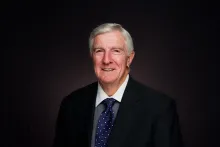
Before his retirement in 2021, Dr. Donald Ward pastored churches in Texas and Louisiana, and taught at Ambassador Bible College in Cincinnati, Ohio. He has also served as chairman of the Council of Elders of the United Church of God. He holds a BS degree; a BA in theology; a MS degree; a doctor’s degree in education from East Texas State University; and has completed 18 hours of graduate theology from SMU.
