

Steve Shafer
This transcript was generated by AI and may contain errors. It is provided to assist those who may not be able to listen to the message.
Thank you, Renee. That was very, very beautiful. And I thank the sound crew for their diligence and rectifying the problem there as well. Modern technology, things can't go wrong. Last time, I was looking at the period of time between the Old and New Testaments and showed how that was a period of a great deal of confusion during that period of time. We also saw back last time that the Maccabees, after they reclaimed the temple up to Antiochus of Piccadines, went in there desecrated in 168 BC, how they got it back, got control of it back about 165 BC.
Then after that, they then first made an alliance with Rome, which they saw as an upcoming power. It's recorded there in 1 Maccabees chapter 8. And then shortly after that, they also made an alliance with, actually it was King Demetrius, who was the Greek king of the Ptolemies. He was the king of the south at that time. And they made an alliance with him as well. So they had an alliance from both the Romans, upcoming power, and from the Greeks, who were still controlling that area at that time, to guarantee then that the Jews would have religious jurisdiction over Jerusalem and the temple up to and including the time of Christ.
At the very time that Christ then has prophesied later in Revelation that we now would become the Passover Lamb slain from the foundation of the world. We also saw last time, as documented by Philo and Josephus, that at the time of Christ, both Passovers were being observed in and around Jerusalem. The Jews were observing the Passover, the domestic Passover at the beginning of the 14th, right at the beginning of the night of the 14th.
And also at the time of Christ, of course, they had been for as many centuries, observing the, since about the time it has a chai at least, the temple Passover sacrifices well on the afternoon of the 14th. Both Passovers, I said last time, are extremely important. They both point to Jesus Christ as a Messiah, and they both played a very important role in leading up to the New Covenant Passover, the Christ instituted with his disciples on that night in the year he died.
Today then, I want to look at just both of these Passovers, the domestic Passover and the temple Passover, as they took place at the time of Christ in the New Testament, from the perspective of the New Testament. One, of course, would be changed and perpetuated, the other would come to an end. So the title for my sermon here this morning, I should say, is the Passover's Plural, the Passovers of the New Testament, or the Passover Part 5.
Now, there's a lot of things you could cover in here that raise questions, so I could cover much more than I will be covering, but I want to simplify it by just basically focusing on two things. I want to show you, first of all, that Christ and his disciples kept the domestic Passover at the beginning of the 14th, as instructed in Exodus 12, with one exception for sure, possibly a second exception, but with one exception primarily.
And secondly, I want to then go through the events surrounding the afternoon temple Passover sacrifice at the time Christ died. It's very interesting to go through the events that occurred right before Christ died at the time he died, and what took place there in and around the temple and in Jerusalem.
So first of all, let's take a look at Christ's last Passover with his disciples. Again, I don't want to get bogged down with looking into a lot of things that come up as questions surrounding that. I simply want to point out what is clear. And to do that, we're just going to look primarily at the Gospel accounts of Matthew, Mark, and Luke, and briefly at John as well. And at a couple of scriptures there, the scriptures in there, that it can be somewhat confusing to clarify that. Let's look at those statements. So first of all, let's go to Matthew's account. We'll look at Matthew first, and then Mark, and then Luke, and then briefly at John.
Let's begin in Matthew's account, which is in Matthew 26. We'll just look at some of the scriptures here to point out some things that are clear and obvious, and then also to clear up a couple of scriptures here, the statements that are made that are kind of confusing as well. Matthew 26, verse 1, it came to pass when Jesus had finished all these sayings, and he said to his disciples, he said, you know that after two days is the Passover and the Son of Man will be delivered up to be crucified.
Christ knew that he had been predestined to die on the Passover day, on that Passover afternoon. That was predestined. He knew that. I don't believe his disciples fully understood that, even though they heard him say it plainly. They still didn't really get what was going to happen. They didn't really understand that until after the fact.
Let's drop down onto verse 17 of Matthew 26, where we read this. Now on the first day of the Feast of Unleavened Bread, as it's written here in the New King James, on the first day of the Feast of Unleavened Bread, the disciples came to Jesus, saying to him, where do you want us to prepare for you to eat the Passover? Now, this is one of those statements that on the surface it doesn't make any sense, because one thing we know for sure, this cannot be the first day of Unleavened Bread.
Christ died on the afternoon of the Passover day. He died the day before the first day of Unleavened Bread. So in the context of Matthew 26 here, this has to be sometime very late in the afternoon of the 13th, just as the 14th is about to begin, as the Passover day was about to begin at sunset.
And we know Christ initiated the New Testament or New Covenant Passover with the disciples on that night at the beginning of the Passover day, that night, the night of the 14th. That is right after sunset, as the 14th day of the first month began. So this then has to be just prior to that time, in the context here of Matthew 26. What then is the explanation for the first half of verse 17 here?
Now, take a note, first of all, that the words, day of the feast in the New King James, are in italics, which means they are not in the original Greek. They were added by the translators to try to make it clearer. In this case, they make it more confusing rather than clarifying anything.
Also, the two English words that are translated here in this verse, verse 17, is translated unleavened bread. Those are translated from one Greek word, the Greek word azumos, A-Z-U-M-O-S, which simply means unleavened. Now, it implies unleavened bread, but the actual meaning of the word is unleavened. So, a little translation would be, now, on the first of unleavened, or on the first day of unleavened. Now, in the first century AD, with that statement being made in Greek, everyone would have known exactly what it meant. Two thousand years removed later, we can be a little bit foggy on what it meant, because language has changed and so on. But since unleavened bread had to be eaten with the Old Testament Passover service, as we're told in Exodus 12, verse 8, and since all 11 had to be removed before the Passover day ended, the Passover day was referred to as the first of unleavened, or the first of the unleavened. That's what it was referred to back then. That doesn't necessarily mean that the Passover day was the day of unleavened bread. That would take another sermon to go through and really explain that totally. But it simply meant it was the first day on which unleavened bread had to be used, and that all 11 had to be removed from their dwellings before the Passover day ended.
So in the first century AD, the Passover was called the first of unleavened, or the first of the unleavened, which is the correct rendering of the first half of Matthew 26, 17. Now, on the first of unleavened, as the Passover day was about to begin, and you can look at the context here, the disciples came to Jesus saying to him, where do you want us to prepare for you to eat the Passover? Now, that's a very clear statement, and I'm taking the Bible at its word here. What is clear? That's a very clear statement. They were preparing to eat the Old Testament Passover meal. Where do you want us to prepare for you to eat the Passover? Would it be a domestic Passover meal eaten in a home? Verse 18. He said, go into the city to a certain man and say to him, the teacher says, or the master says, my time is at hand, I will keep the Passover at your house with my disciples. And this has to be referring to what we now call the Old Testament Passover.
The New Testament or New Covenant Passover had not yet been initiated by Christ, and disciples did not have any real knowledge, prior knowledge, that that's exactly what it's going to do. I'm sure when they, some of the things they said, they kind of questioned, but they didn't really know what he was going to initiate during this Passover service, mess over the meal he was having with them. So they weren't aware of that. So when they were thinking of Passover, they were only thinking of one thing. They were thinking of the Old Testament or Old Covenant Passover service. Verse 19. Did Christ's disciples then do exactly as Christ told them? Verse 19. The disciples did as Jesus had directed them, and they prepared the Passover. They prepared for what we'd call today the Old Testament Passover. Now, note in the next verse that they were preparing for that very evening. Verse 20. And when evening had come, this is the evening of the 14th, the beginning of the 14th, when evening had come, he set down with the 12th. For what purpose? Well, to eat the Passover and to keep the Passover with his disciples, as we read in verses 17 and 18. Now, Matthew then goes on to describe how Christ, during that Old Testament Passover meal, how he instituted the New Covenant Passover with the bread and the wine, which we'll get to a little bit later. But first, let's go now to Mark's account. Go to Mark chapter 14.
Excuse me. Mark 14 will begin at the look of verse 12.
Again, which is a confusing statement on the service.
Mark 14 verse 12. Now, on the first day of unleavened bread, when they killed the Passover lamb, his disciples said to him, where do you want us to go and prepare that you may eat the Passover? So it talks about killing a lamb here and eating the Passover. But it says, on the first day of unleavened bread. So what does that mean? Again, we know one thing for sure. This cannot be referring to the first day of unleavened bread. Passover lambs were never killed on the first day of unleavened bread by anybody's reckoning, regardless of how you want to interpret, you know, between the two evenings. They were never killed on any day other than the Passover day, which is the 14th day of the month. So none of these words here now are in italics.
But again, the English words unleavened bread, if you look them up in strong, are translated from just one Greek word, from the Greek word azumos, which simply means unleavened. That can certainly infer unleavened bread, but it actually literally means just unleavened.
So this phrase in Greek is very similar to the one used in Matthew 26, 17, and can be literally translated now on the first of unleavened.
Now on the first of unleavened, or on the first of the unleavened.
And if you look up the word day in strong, there's no Greek word for day in this verse. It's the first day of unleavened bread. There's no Greek word for day there. They just put that in there as well.
So it simply reads in Greek, now on the first of unleavened, on the first of the unleavened, which again is referring to the Passover day, not the first day of unleavened bread, when you understand what that phrase meant, you know, 2,000 years ago. But again, notice the question posed by Christ's disciples. They said, where do you want us to go and prepare that you may eat the Passover?
And there's only one Passover they would have been thinking of. That was what we call the Old Testament Passover.
Now, notice something else here in this verse as well, which becomes very important when we understand that the first of unleavened here is referring to the beginning of the 14th.
That's referring to the very beginning of the Passover day, which began at sunset on the 14th.
It thus says here, now on the first of unleavened, in other words, the very beginning of the night of the 14th, it says, when they killed the Passover lamb. Very interesting, that's what it says, when they killed the Passover lamb, which indicates that the Passover lamb eaten by Christ and his disciples was killed right after sunset, the beginning of the 14th. When you really understand it, that is between the two evenings, or between sunset and darkness as the Passover day began. It didn't indicate they ate it on that same night, on the same evening, on the evening of the 14th, after everything had been prepared in advance. So they obviously found the room, and they prepared that room ahead of time of actually killing the Passover lamb in advance of eating the Passover lamb with Christ. But they obviously prepared it in advance, but ahead of time, we're going to read on here Mark 14, verse 13, and he said, and he sent out two of his disciples, who had been just prior to that, of course, and said to them, go into the city, and a man will meet you carrying a pitcher of water following. Now they had no idea what that was for. That was something new. What do we need a pitcher of water for? But they did what he said. And wherever he goes, wherever he goes in, say to the master of the house, the teacher says, where is the guest room in which I may eat the Passover with my disciples? It's very clear he was going to eat the Passover with his disciples, and they were going to kill the lamb on that evening as well. Verse 15, then he will show you a large upper room, furnished and prepared, and there make ready for us. So his disciples went out and came into the city and found it just as he had said to them, and they prepared the Passover. Now one thing I just want you to notice as well, there's no question in the disciples, my, well, why are we doing this tonight? I thought we did on the 15th. There's no question about it. I mean, to them, there's nothing, they're doing it on the time of supposed to have always done it. They obviously done the Passover with them the previous years, a couple years that they were with him, and there's nothing unusual in their mind that he told and prepared there and go there and prepared on the night of the 14th. That was normal for them.
disciples gave no indication of this being abnormal. And going on to verse 17, in the evening then, that evening of the 14th, he came with the 12th. So on the evening of the 14th, after the Passover lamb had been killed, Christ came with his 12 disciples, after they prepared this room in advance, to eat the Passover with his disciples. So it's very clear, and it's very apparent, that Christ ate the Old Testament Passover meal with his disciples on the night of the 14th, not on the night of the 15th. Because that's obviously, it's very clear that's what this is indicating. All the gospel accounts are indicating. Finally, let's go to Luke's account. And well, we'll go to Luke's account next, and we'll also look briefly at John. But let's go to Luke 22. Again, this is a very interesting verse as well, which I've covered previously. But look at it again here. Luke 22, verse 1, where it gives a very interesting statement here to give us a perspective of how they looked at this, even back at the time of Christ. Now, the Feast of Unleavened Bread drew near, which is called Passover. So again, it's already covered by this time, by the time of Christ here, some of the Jews were calling the entire Feast of Unleavened Bread Passover, just like they still do today. You've all seen the advertisement about, and it's a really good advertisement about trying to get prepared, donating $25 for a center meal to Jews that are in Russia and Siberia and so on. And if you look at that ad carefully, they show it quite often. It says Passover, and it gives the dates this year for Passover. It says April 19th to April 25th, which is exact dates of the Feast of Unleavened Bread. Passover is on the 18th, but they say Passover, and they give the dates for the Feast of Unleavened Bread. So today, many of the Jews called the Feast of Unleavened Bread Passover as they were doing, apparently here at the time of Christ as well. Let's go down to verse 7, where we find the same Greek expression that was used in Matthew 26, 17, and Mark 14, 12. Verse 7 of Luke 22, Then came the day of unleavened bread, when the Passover must be killed. Again, as we know, the Passover lands were never killed on the first day of unleavened bread. The only day on which the Passover lands were ever killed was the Passover day. So this day of unleavened bread, when the Passover must be killed, has to be the Passover day itself. See, the whole confusion is cleared up when we realize that the Greek expression used by Matthew, Mark, and in here in Luke as well, literally means the day of unleavened, or the day of the unleavened, or the first day of the unleavened, as it's squirted in Matthew and Mark.
And in all three cases, that Greek expression referred to the Passover day as being the first of unleavened, as the first of the unleavened bread, the first day of the unleavened, because the Passover lamb was always eaten with unleavened bread in the Old Testament, and the unleavened bread had to be used with the Passover meal, and it was on the Passover day that all unleavened had to be removed from their dwellings. Now, the time setting here in Luke 22.7, as it was in Matthew 26.17 and Mark 14.12, is at the very end of the 13th, the beginning of the 14th, as some was about to set. And that was precisely when the Old Testament Passover lamb had to be killed, right after sunset, the beginning of the 14th. At Ben-Ah-Abarim, as I said, or between the two evenings, between sunset and darkness at the very beginning of the 14th. Now, Matthew, Mark, and Luke clearly indicate, when properly understood, that that is precisely when Christ and His disciples had their Passover lamb killed, and when they ate their Passover meal, on that evening, even the 14th, at the very beginning of the 14th. So, Christ and His disciples were observing the Passover precisely as instructed in Exodus 12, with only maybe one, possibly two, exceptions.
In Exodus 12, as we know, on that first Passover, they had to remain in their homes until the next morning, and they had to put the blood of the lamb on their doorposts. Why? Because God was going to bring judgment on the Egyptians, the passing over the death angel, who then strike all the firstborn Egyptians dead. That was a one-time event. That only happened once.
After that, it would not have been necessary for them to remain in their homes all that night, until the next morning. There wasn't going to be no death angel passing over them. And whether they put blood on the doorposts or not, I don't know. That may not have been necessary as well. I don't know. But we know they didn't remain in their houses all night on this Passover reading up here in the New Testament, because as Matthew 26.30 says, when they had sung of Him, they went out to the Mount of Olives after they had that Passover very late that night. So they didn't remain in their houses all night, but that wouldn't have been necessary, because that was only when that first Passover, when judgment was going to be brought on on Egypt and on their firstborn.
But note the next few verses here in Luke's account, which clearly reveals they are observing what we would call today the Old Testament Passover. Luke 22 verse 8.
He sent Peter and John, saying, Go and prepare the Passover for us that we may eat. In verse 9, So they said to him, Well, where do you want us to prepare? Again, he said, Behold, when you have entered the city, a man will meet you carrying a pitcher of water. Follow him into the house where he enters, which he enters. Then you shall say to the master of the house, The teacher says to you, Where is the guest room, where I may eat the Passover with my disciples? Then he will show you a large furnished upper room there, make ready, make it ready for Christ and his disciples to eat the Passover.
Again, that's very clear. Going on in verse 13. So they went and found it just as he had said to them, and they prepared the Passover over and over again. And when the hour had come, he sat down the twelve apostles with him, and he said to them, With fervent desire, I have desired to eat this Passover with you before I suffer. Again, I'm sure the disciples did not understand what he meant by that, by far before he suffered. But at this point, the disciples had no idea that Christ was going to be initiating a new covenant Passover. So I'm sure they were puzzled by what he said here, because they still did not realize that he was about to suffer horribly and to be crucified and die on that next afternoon, on that afternoon that Passover day. But Christ knew who he was, he knew what he was destined to fulfill, and he knew who would become that next Passover afternoon, that very Passover afternoon. That he would become the Lamb slain from the foundation of the world, that all those Passover lands had symbolized and looked forward to for centuries. And Christ had been looking forward to this moment, says here, I would say, ever since the Garden of Eden, ever since the foundation of the world.
Why? Well, because Christ knew he was about to undo everything that Satan had done.
He was about to nullify that. He was about to redeem mankind from Satan. And he's about to give mankind direct access to his father, so all could become literal sons and daughters of God, of God the Father. And he's about to save mankind from Satan and from death.
So I said to them in verse 15, with fervent desire, I've desired to eat this Passover with you, before I suffer. For I say to you, verse 16, I will no longer eat of it until it is fulfilled in the kingdom of God. So Christ was about to open the door to eternal life in the kingdom of God.
So this particular Passover had to be different. Something else, new symbols had to be instituted. So during this Passover, Christ would institute the New Covenant Passover, a new covenant that would later that Passover day be sealed and ratified by the shedding of his own blood and by his broken body.
So the New Covenant would be sealed and ratified by Christ himself and by Christ alone. When it precisely at 3 p.m. that following Passover afternoon, he would become the Lamb slain from the foundation of the world through reading and revelation.
Then Christ would later, after first making this New Covenant with his disciples, he would later ratify this New Covenant with his own blood so it could never be changed and so it could never be rescinded. It would be enforced once and for all.
And he guaranteed that by laying down his own life as the Son of God.
That then was Christ's last Passover with his disciples, which took place beginning the 14th, as originally instructed in Exodus 12, and is planned by God from the very beginning.
Because that was the precise time Christ had to make a New Covenant with all of his true followers before he would ratify that covenant with his death on that following Passover afternoon.
It's precisely what Christ did on that night. He made a New Covenant with all of his disciples. Let's go just briefly to John 13. Look at John's Gospel just for a second.
Because he initiates something here that's recorded in John that's not recorded in Matthew, Mark, and Luke's account. And also, the statement in John 13.1 could be a little confusing as well. John 13, verse 1. Now before the Feast of the Passover.
Now we know this was the evening of the Passover when you get the context here of John 13. And this was before the first day of Unleavened Bread. Remember, the Feast of Unleavened Bread by this time was called Passover, by many of the Jews, as we read in Luke 22, verse 1. So in reality, this is the night of the Passover, and before the Feast of Unleavened Bread, which was called Passover. That kind of clears that up a little bit. Now before the Feast of Passover, when Jesus knew that his hour had come, and that he should depart from this world to the Father, having loved his own who were in the world, he loved them to the end.
And then verse 2, "...and supper being ended..." or actually, as my margin says, "...and during supper..." during that Old Testament Passover supper meal that he was having with the disciples. "...and during supper the devil had already put it into the heart of Jesus Iscariot, Simon's son, to betray him. And Jesus, knowing that the Father had given all things into his hands, and he had come from God and was going back to God, he rose from supper, laid his sizes garments, and he took a towel and girded himself.
And after that he poured the water into a basin, and began to wash the disciples' feet, and to wipe them with the towel of which he was girded." Because that totally took them by surprise. We know Peter's reaction. He's, you're not going to wash my feet.
And Christ said, if you don't wash my feet, you'll have no part with me. He said, then wash everything. And he said, no, I just need to wash your feet. So they were totally taken aback by this. He did not know what he was doing. This is something totally new. They were totally unexpected. But this was the beginning of the New Covenant Passover service at Christ Institute on that night. He began that New Covenant Passover with foot washing. He then added this in John 13, verses 13 to 15.
He said, you call me teacher, or you call me master and Lord, and you say, well, for so I am. If I then, you're a Lord and master, and your Lord and teacher have washed your feet, you also ought to wash one another's feet. For I have given you an example that you should do as I have done to you. And tremendous lessons we learned, lessons of humility, lessons of service, and so on from following that example of Jesus Christ of washing one another's feet, which is where we, of course, start the New Covenant Passover service.
He then, of course, added the New Covenant symbols of bread and wine. Let's just go back real quickly and read that in Matthew's account, Matthew 26, Matthew 26, verses 26 to 28, Matthew 26, verse 26. And as they were eating, Jesus took bread, blessed and broke it, and gave it to the disciples, and said, This is my body. This represents my body, which is going to be broken and is going to suffer for you. Verse 27, And then He took the cup and gave thanks, and gave it to them, saying, Drink from it all of you.
For this is my blood. This is symbolic. This represents my blood, and my blood of the New Covenant, which is shed for many for the remission or forgiveness of sins. So Christ then concluded this particular Passover of making a New Covenant with all of His disciples. A New Covenant with the promise of eternal life in the Kingdom of God, as we indicated by the next verse, verse 29.
But I say to you, I will not drink of this fruit of the vine from now on until that day, when I drink it new with you in my Father's kingdom. And when they'd sung of Him, they went out to the Mount of Olives. So that then concludes Christ's last Passover with His disciples. It was the last Old Testament Passover, if you will, meal that He had with them, and it was the first New Covenant Passover. And this New Covenant was made between Christ and His disciples, between Christ and His followers, at the precise time that God had intended, at the beginning of the Passover and on that night of the Passover.
Because first and foremost, see, it's important to understand, first and foremost, the Passover is a covenant. He said, this is a New Covenant. It was the Old Covenant, but now it's the New Covenant. See, first and foremost, the Passover is a covenant. It's a binding agreement between two parties.
A binding agreement here between Christ and His followers. So only one question remained. How would this New Covenant be ratified and guaranteed? It came with a promise of eternal life. How could that be guaranteed? And who would ratify this New Covenant? To guarantee it would be fulfilled.
Well, that leads us up to, then, the events of the Afternoon Temple Passover, which are very interesting to look at. See, what happened on the afternoon of that Passover day on which Christ died?
See, Paul tells us in Hebrews 10, verses 1 and 2, that the Old Covenant sacrifices, including the sacrifice of the Passover Lamb, could never make those who approached God perfect. I could never make you perfect.
As it says in Hebrews 10, verse 2, then would they not have ceased to be offered. If those sacrifices could have made people perfect, then they would still be offered. Because they could never make the person who offered them perfect.
Now, when did the Afternoon Temple Passover sacrifices first cease to be offered? An interesting question to ask, especially when we look at the events that happened on that Passover afternoon on which Christ died. It's very significant that the Temple Passover sacrifices were offered originally about 3 p.m. in the afternoon. That's when they were originally offered, right about 3 o'clock in the afternoon. At the very precise time that Christ died.
And we're given that precise time in several places, but you can go to Matthew 27, verses 46 and 50, and it's the precise time that Christ died. So it was the ninth hour, 3 in the afternoon.
But what happened on that particular Passover afternoon, on that year that Christ died? Did God frustrate that particular afternoon Passover service, or sacrifice, I should say? Did the sacrifice of Jesus Christ replace those sacrifices, those afternoons, Passover sacrifices, in the year Christ died? So once and for all time, Christ could become the Passover Lamb slain from the foundation of the world. Now you can go to Josephus, and Josephus confirms that at the time of Christ, in that period of the first century A.D. there, that hundreds, if not sometimes thousands, of Passover lambs were brought to the priests to offer as Passover sacrifices that afternoon Passover sacrifice, the temple, temple Passover sacrifice. Sometimes hundreds, sometimes thousands of lambs were brought. So to have time to do that, they began around noon. They did those sacrifices between noon and sunset on the afternoon of the 14th, because they had sometimes, like I say, hundreds, sometimes even thousands of them, you couldn't do that just all at one time. It took several hours. So they would begin about noon and do it between noon and sunset, which is probably how the Jews came to interpret between the two evenings as between noon and sunset on the afternoon of the 14th. But on the afternoon of the 14th, in the year Christ died, Gospel accounts tell us that four monumental and miraculous events occurred. What was the first monumental and miraculous event that occurred on that Passover afternoon? And very significantly, when did it occur? And why did it occur at that precise time? I have to ask that question. Well, let's read it for ourselves. Let's go to Mark's account. Let's go to Mark chapter 15. Mark chapter 15, verse 25, let's begin there. Mark 15 verse 25, it was a third hour and they crucified Him. That is a third hour after sunrise, or about 9 a.m. as we would call it today. Third hour is about 9 a.m. That's when Christ was crucified. Now let's drop down to verse 33. Now when the sixth hour had come, that would be six hours after sunrise, or about noon. Now when the sixth hour had come, there was darkness over the whole land until the ninth hour, until three that afternoon, until the very precise time that Christ died. The sixth hour to the ninth hour would have been from noon to 3 p.m.
From noon until the very time that Christ died. And it says, the whole land in and around Jerusalem became darkness beginning at noon. Suddenly and miraculously, day became night.
Now remember, back then they didn't have any electricity, didn't have any artificial lights. And you think about it, it was during the day, probably the right day before that, or at least daylight anyway. And so they wouldn't have been having candles with them or oil lamps, they wouldn't have brought those out with them because it was daylight. Just use those at night. They didn't know it was going to get dark. So they wouldn't have any lights with them at all out there in the area of the temple, around Jerusalem. Thus when it suddenly became dark, it was dark. There was no light, no sunlight. It had been very dark. It would have been very difficult to see well at all. Everything would have been obscured in darkness, and this darkness here lasted for three hours right up until the very time that Christ died, from noon until 3 that afternoon. So I have to ask myself, why did it begin at noon? Why did God have this darkness begin at noon, three hours before Christ died?
See, what else normally began at noon on the afternoon of the Passover? Well, normally on the afternoon of the Passover, they begin sacrificing the temple Passover lamps. It began at noon. That's when they begin. So this darkness then would have made it extremely difficult, if not impossible, for them to do that. At the very least, this darkness would have greatly frustrated the temple Passover sacrifices on that afternoon.
And more likely than not, it eliminated them altogether. It's very unlikely they would have been to carry on business as normal on that Passover afternoon. And the reason, of course, is because on this Passover, the real Passover lamp would be slain, once and for all. To forever replace the old covenant Passover lamps. On this afternoon, Christ was going to become that Passover lamp. And He was the only real Passover lamp.
Now then, at this precise time, I should say at the precise time that Christ died at 3 that afternoon, three additional monumental and miraculous events occurred. Let's go to Matthew's account. Let's go to Matthew 27. Matthew 27, let's begin in verse 45 of Matthew 27.
For again we read, Now from the sixth hour, until the ninth hour, there was darkness over all the land. The whole land became dark. Very difficult to see. In about the ninth hour, 3 in the afternoon, Jesus cried out with a loud voice, saying, Eli, Eli, lama sabach tani, that is my God, my God, why have you forsaken me?
See, Christ alone would have to ratify this new covenant all along. Why have you forsaken me? Verse 50, and then Jesus at that time, He cried out with a loud voice and yielded up His Spirit. So it's about 3 o'clock in the afternoon on that Passover day. Now what happened next at this precise time? Verse 51, Then behold, the veil of the temple was torn in two from top to bottom.
Of course, as we know, the veil of the temple separated the holy place from the most holy place, or from the holy of holies. Now this veil, you think about it, we don't get some information. This veil was 30 feet wide. It was 60 feet long, or 60 feet from top to bottom. And this veil was at least 4 inches thick. They say it was 4 to 6 inches thick. Can you imagine how thick that is? That's how thick it was. And it was extremely heavy.
Now in addition to that, here's some other information that's interesting. You can go back and look into history. In addition to that, in Herod's temple, this is Herod's temple that Herod had reconstructed and refurbished. In Herod's temple, there were also two huge 60-foot brass doors behind the veil. That's from the front of the veil, which were closed. And here's what Alfred Edesheim says in his book called, The Life and Times of Jesus and Messiah, page 610. Very interesting. He talks about behind the 4 to 6 inch veil, there were huge brass doors which opened into the Holy Place, from the Holy of Holies to the Holy Place. At the moment of Jesus' death, he gives evidence that they were miraculously opened when the earthquake occurred, which you're going to read about in just a moment. Here's Edesheim's opinion about these historical records. We'll indicate that. Here's what he says. That some great catastrophe, the impending destruction of the temple, and the future is going to occur 40 years later, had occurred in the sanctuary about this time, about 40 years before the temple was destroyed, is confirmed by not less than four mutually independent testimonies, those of Tacitus, Josephus, the Talmud, and of earliest Christian tradition. The most important of these are, of course, the Talmud and Josephus. The latter speaks of the mysterious extinction of the middle and chief light in the golden candlestick 40 years before the temple was destroyed. And both he and the Talmud refer to a supernatural opening by themselves of the great temple gates, the huge brass doors behind the veil that had been previously closed, which were regarded as a portent of the coming destruction of the temple. We can scarcely doubt that some historical fact must underline so peculiar and widespread a tradition, and we cannot help feeling it may be a version of the occurrence of the rending of the temple veil at the crucifixion of Christ. Now these doors are positioned right there in front of the veil. And for the terrain of the curtain, the terrain of that veil to open up to the holy of holies, and if symbolically gives for Tim having access to God the Father through Christ's sacrifice, for that to be symbolically correct, then these doors would have had it opened as well. Because the doors were main closed, the veil could turn, but the door stayed closed, then you still wouldn't have direct access to the holy of holies. So the doors had to open at the same time, and there's indications that that occurred as well. Those doors miraculously opened at that very time. At the same time, the veil of the temple tore from top to bottom, as we just read here in Matthew's account.
Verse 51, Then, behold, the veil of the temple was torn in two from top to bottom. And then, and what else does it say here? And the earth quaked, and rocks were split.
Now this earthquake was so violent, it says rocks were split. And the Greek word for rocks here is petra, which means massive rocks. Not pebbles, but massive rocks were split. Undoubtedly, large crevices of the earth also opened up. Undoubtedly, there was also some damage done to the temple. This had to be a fairly massive earthquake to split giant rocks into, so on. And it was still dark when this occurred. You know, you can just realize, and realize, people would have been in a panic when this happened. And many would have been running for their lives, probably.
See, all this, of course, was by the hand of God, as a powerful witness to testify that Jesus was precisely who He said He was.
That He was the Son of God. The Son of God had just died to save mankind when these miracles occurred. And with all that going on, it is very unlikely, in my opinion, that the priests were offering any of their Passover lambs of the temple at this particular time when all this was going on. The darkness, the earthquake, the doors opening, the veil turned into... I don't think any going on business as usual. Very unlikely those Passover, afternoon Passover lambs, sacrifices were totally disrupted.
It is very likely that the only lambs sacrificed on that Passover afternoon was Jesus the Christ, who was the Lamb, of course, slain from the foundation of the world. Now, there was yet one more monumental event, and very miraculous event, that occurred right after this. And that event demonstrated what the death of the Son of God would mean for all of mankind. Let's go on here in Matthew 27, verse 52. And then it says, And the graves were opened, and many bodies of saints would fall asleep, were raised. And then coming out of the graves, after His resurrection, they went into the holy city and appeared to many as a witness. So when the centurion... and it says here, the centurion was standing there when Christ died. When the centurion and those with him who were guarding Jesus saw the earthquake and the things that happened, and these rocks splitting into and everything, they feared greatly, saying, truly, this was the Son of God. Truly, He was who He said He was. This was not just any prophet. This was the Son of God who died.
So those then are the events which took place on the afternoon of the Passover, on which Christ died. His death at the time of the Temple Passover lands was sacrificed, thus then ratified and guaranteed the New Testament, or New Covenant, I should say, Passover. It ratified the New Covenant Passover, and it guaranteed the fulfillment of that New Covenant. Christ's death guaranteed that mankind now had direct access to God the Father through Christ, and it guaranteed the door to eternal life in the kingdom of God was now open to all of mankind through Jesus Christ and His sacrifice. So I'll conclude there for now. There's one other sermon I could add. I don't want to do that next week. Next week I want to give a sermon concentrating on the meaning of the Passover, the preparedness for the Passover. But I could give one more series to kind of wrap this all together, which I may give, but if I do it'll be at least in a couple weeks or so. But I'll end there for now, and it gives a lot to think about. And it's very interesting to look at the account and think about how everything that transpired on that Passover day, on which Christ died.
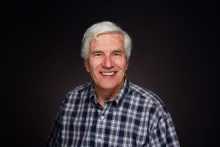
Steve Shafer was born and raised in Seattle. He graduated from Queen Anne High School in 1959 and later graduated from Ambassador College, Big Sandy, Texas in 1967, receiving a degree in Theology. He has been an ordained Elder of the Church of God for 34 years and has pastored congregations in Michigan and Washington State. He and his wife Evelyn have been married for over 48 years and have three children and ten grandchildren.
