

Steve Shafer
This transcript was generated by AI and may contain errors. It is provided to assist those who may not be able to listen to the message.
Again, that is a special period of time. We're in between Mother's Day and Father's Day, but we're also in another very special period of time right now. We are now in a very significant time period. We are in the period between Passover non-loving bread and Pentecost. And that is held out as being a special period of time in God's Word. Pentecost is very unique when it comes to all of God's feasts and holy days. It's the only day that we're instructed to count down to all the others on this day, the first day of the seventh month, or whatever it is, on this day of the month. But here in Pentecost, you count 50 days. And let's read that for ourselves. Leviticus 23, we're talking about all of God's feasts and holy days. Leviticus 23, which goes through all of God's annual feasts and holy days there. But let's begin in verse 1. The Eternal spoke to Moses, saying, Speak to the children of Israel, and say to them, The feasts of the Eternal, which you shall proclaim to be holy convocations. These are my feasts. Then tells us when to observe the Passover and days of un-loving bread in verses 5 through 7. Then talks about waving a sheaf of the firstfruits of your harvest before the Lord to be accepted for you, verses 10 and 11. That wave sheaf offering represented Christ as the first of the firstfruits who gave his life for us as portrayed by the Passover, portrayed by the very day on which he died, because he died on the Passover day. And the sacrifice was then accepted for all of us before his father, so we could then be part of that harvest of the firstfruits. Of course, that occurred going before his father to be accepted. His firstfruits occurred about three days and three nights later after he was resurrected, which, of course, he was resurrected during the days of un-loving bread.
Then instructions are given to count down to Pentecost, beginning here in verse 15 of Leviticus 23. And you shall count for yourselves from the day after the Sabbath, from the day that you brought the sheaf of the wave offering, seven Sabbaths shall be completed. Count fifty days to the day after the seventh Sabbath, then you shall offer a new grain offering to the Eternal. Of course, the day after the seventh Sabbath will be a first day of the week or a Sunday, which is why we always endure Pentecost on a Sunday or on the first day of the week. Dropping down to verse 21, And you shall proclaim on the same day that is a holy convocation, this day you count down to.
It's a holy convocation. You should do no customary work on it. It should be a statute forever in all your dwellings throughout your generations. Now, in the Old Testament, this particular holy day is called the Feast of Weeks. You can read that in Deuteronomy 16, verses 10 and 16. It's also sometimes referred to as the Feast of the First Fruits. In the New Testament, it's simply called Pentecost, which is a Greek word where it means count fifty. So that's why it's called Pentecost in the New Testament, count fifty.
Now, since the countdown to Pentecost begins during the days of unleavened bread, Pentecost is thus directly linked to the Passover in the days of unleavened bread by this countdown period. That links them together. And that makes this entire period of time between Passover and unleavened bread in Pentecost, which we're in right now. It makes it very significant. And it also tells us it's something we can learn if we focus on that period of time as a whole. So in my next two sermons, leading up to Pentecost today, and then two weeks from today here, I'd like to focus on this entire period of time from Passover and unleavened bread to Pentecost from two perspectives. Today I want to focus on it from the perspective of the Old Testament, and then next time I want to focus on it from the perspective of the New Testament. So today, then, in Part 1, we will look at the time between Passover and unleavened bread, that period of time, and that countdown, then to Pentecost, that entire period of time, from the perspective of the Old Testament. So my title for this sermon here this morning is Passover to Pentecost, Part 1. Passover to Pentecost, Part 1.
I want to begin by asking this question because this is the only place where we're told to count down to a particular Holy Day. So why is that? Why does God have us count to Pentecost? Why do you just tell us on the third month, sixth day, or something like the Jews do? I won't go into that difference, but just tell us what day it is. Why does He have us count down to it? Well, it doesn't tell us. God's Word often doesn't tell us because it makes you have to think deeply into God's Word and try to analyze things and kind of come up with an answer for yourself. But there are three possible reasons I can think of as to why God instructs us to count down to Pentecost instead of just telling us on which day to observe it. One, it invariably links Passover to these unleavened bread with Pentecost. It links those two periods of time together. That's one reason. Second reason, because God wants us maybe to look at and learn lessons from that entire 50-day countdown period. Not just to look at them separately, but to look at them as a whole period of time. We can learn lessons by looking at that entire 50-day countdown period and learn lessons from what happened during that period of time. That 50-day or seven-week period. During which the first roots of the early spring harvest will grow and mature and are reeked. I'm talking about agriculturally. That's the period of time when the spring harvest started to grow and finally came to completion maturity where it was then able to be harvested in the spring. Late spring or right around June, by the time of Pentecost. Third reason that maybe God wants us to count down to Pentecost is to look at that period of time is because we, as a spiritual first-roots of God's harvest, maybe because we have a key role to play in fulfilling the meaning behind the physical events that took place historically during that particular period of time.
That's what I want to focus on here today from the perspective of the Old Testament. We'll get into obviously some spiritual things in the New Testament as well. But what events happened during the countdown to Pentecost in the Old Testament? As God was leaving Israel out of Egypt to Mount Sinai to meet with God to receive the Ten Commandments. What happened during that period of time in the Old Testament? What happened during that 50-day countdown period?
Well, just to review a little bit, we know what happened on Passover. This is the Old Testament now. On the Passover, God passed over all the houses of the Israelites who had the blood of the slain Passover lamb on their dropos.
And all the firstborn, or firstborn of the Egyptians, died on that night.
But all the firstborn of the Israelites were spared. They were passed over. Israel was then forced out of Egypt in haste.
Then after they were forced out of Egypt in haste, they were trapped. Trapped at the Red Sea and pursued by the Egyptians. And that occurred, of course, during the days of Unleavened Bread.
And it's traditionally understood Israel then crossed through the Red Sea on the last day of Unleavened Bread. And on that day, all the Egyptians who pursued them into the Red Sea died as the waves came back and covered the Egyptians and they all drowned. Let's look at that. Just to review what it says here in Exodus 14.
Exodus 14. And let's begin in verse 21. We read verses 21 and 22 to start with. Exodus 14, verse 21. Then Moses stretched out his hand over the sea, after the Israelites had gotten over to the other side, and the Egyptians were pursuing them in the Red Sea. Then Moses stretched out his hand over the sea, and the Lord caused the sea to go back by a strong east wind all night. This is when it's opening up for the Israelites, I should say, here. And made the sea into dry land, and the waters were divided. So the children of Israel went into the midst of the sea on the dry land. And the waters were walled to them on the right hand and on their left.
Now, it's important to realize that this is the real beginning of their journey, as they went through the Red Sea and got to the other side. That's when they really began their journey to Mount Sinai, or their journey to Pentecost, if you will. But it's also interesting to know that this was a type of baptism when they went through that Red Sea, and God held the waters up on both sides. As it says, and I'm just going to turn here real quickly, 1 Corinthians 10. Paul wrote this, 1 Corinthians 10, verse 1, Moreover, brethren, I do not want you to be unaware that all of our fathers were under the cloud, all passed through the sea, all were baptized into Moses and the cloud in the sea. So it was a type of baptism for them.
So the journey began with the type of baptism as they went through the Red Sea. Now let's go back to Exodus 14 here, and let's pick it up in verse 27. And Moses then stretched out his hand over the sea after Israel had all gotten to the other side. And when the morning appeared, the sea returned to its full depth, while the Egyptians were still fleeing into it. So the Lord overthrew the Egyptians in the midst of the sea. Then the waters returned and covered the chariots, the horsemen, and all the army of Pharaoh that came into the sea after them. Not so much as one of them remained. But the children of Israel had walked on dry land in the midst of the sea, and the waters were walled to them on the right and on the left. So the eternals saved Israel that day out of the hand of the Egyptians. And Israel saw the Egyptians dead on the seashore. Thus Israel saw the great work which the Lord had done in Egypt. So the people feared the eternal and believed the eternal in His servant Moses. Salvation for Israel resulted in death to the Egyptians. So Israel was on the other side of the Red Sea, and the Egyptians were destroyed. I want you to get this picture. They'd made it. Their enemies had all been destroyed. They'd made it through the type of baptism. It was like, wow, they're on the other side now. They've gone through that baptism, spiritually speaking, in a sense. Now on the other side, they don't have to worry about the Egyptians. The Egyptians are not on the army or Pharaoh anymore, pursuing them. They're now on the other side. The Egyptians were all destroyed. But does that mean their troubles are over? Or are they just beginning? Then we have what is called the Song of Moses, but it's much more than just a song. Let's pick it up in verse 15. It starts in verse 15, Exodus 15, verse 1. Then Moses and the children of Israel sang this song to the eternal, because they're now free of the Egyptians, free of Pharaoh. They're on the other side of the Red Sea. They spoke, saying, The depths have covered them. They sank to the bottom like a stone. Going down to verse 9.
The next verse in this song of Moses. This next verse is key when it comes to understanding an extremely important lesson we can learn from counting down to Pentecost. Because it tells us what this countdown to Pentecost is really all about. And prophetically speaking, it links all of us to this countdown period from Passover to Pentecost. It tells us where we are going in our journey in our countdown to Pentecost, where we're headed, and where our ultimate destiny is going to be, where God is leading us to. It tells us what awaits us at the end of our countdown period, if you will.
Verse 13 of Exodus 15. You and your mercy have led forth the people whom you have redeemed, and you have guided them in your strength to your holy habitation. Now let's look at this spiritually. The people whom you have redeemed. You think about it, that's the real meaning behind Passover, isn't it? We were all redeemed back to God by and through Christ's sacrifice that he gave on Passover. And God now owns our lives. And our lives belong to God. That's why we're called the people of God, because God owns our lives.
He's the one that's in charge of our lives to a large degree. Of course, we have our own responsibility in that. Second, it says, you have guided them in your strength. You know, in a sense, that's the ultimate meaning behind the Days of Unleavened Bread. The resurrection life of Christ means we now have Christ guiding and directing our lives through his strength, and through the strength of the Holy God's Holy Spirit, which resides in us now. Guiding and directing us away from sin, and away from the ways of the world, which led to death. Guiding us away from Egypt, if you will, because Egypt symbolizes the world.
Away from the ways of Egypt as we yield to God and allow God to do that through Christ living in us. And where are we headed? See, what is our ultimate destiny? Where exactly is the countdown to Pentecost going to take us? To your holy habitation, it says in the end of verse 13. To your holy habitation. To live with God. To where God lives. Verse 17 of Exodus 15, You will bring them in and plant them in the mountain of your inheritance.
Let's talk about the kingdom of God, and spiritually speaking, ultimately. In the place, O Lord, which you have made for your own dwelling, the sanctuary, O Lord, which your hands have established. And the Lord shall reign forever and ever. Verse 18. So, if you want to look at this spiritually, this is where our countdown to Pentecost is leading all of us. It's leading us to God's holy habitation. To the place where God dwells, which he made for his own dwelling, as it says here.
Not just to meet with God, as he did at Mount Sinai, the Old Testament, but to live with God and reign with God forever and ever. Well, let's note something else that also directly pertains to all of us from this song of Moses. Going back to verse 14, Exodus 15, verse 14. The people will hear and be afraid.
Sorrow will take hold of the inhabitants of Philistia. Then the chiefs of Edom will be dismayed, and the mighty men of Moab. Trembling will take hold of them, and all the inhabitants of Canaan shall melt away. Fear and dread will fall on them. By the greatness of your arm, they will be as steel as a stone. Why? Because they will all be driven out and conquered, and their land will be given to the people of God.
So let's talk about their inheritance, where their users are going to go and take over their land. And they're all going to be conquered by God and by the people of God. And they're all going to be driven out. That's why they're going to be dismayed. However, there is more to the story. What about the people of God? Do they have a role to play in all of this? See, what is our role and our countdown, depending on the cost, if you will?
Note the last half of verse 16. Fear and dread will follow them, by the greatness of your arm they will be as steel as a stone. Till your people... And then rest of the statement, I mean, think about what's this here. Till your people pass over, O Eternal, till the people pass over whom you have purchased. That's us, isn't it? Back then it was the Old Testament of Israel. God purchased them, but He's purchased us with His blood of Jesus Christ.
He owns us through the blood of Christ that we're now under. Till the people pass over whom you have purchased. And you will bring them in and plant them in the mountain of your inheritance. What's that all about? Till your people pass over. Till the people pass over whom you have purchased.
You know, we think of God passed over our sins when we repented and accepted Christ's sacrifice. But here it indicates that we must pass over. What's that all about? Pass over what? Pass over where? What must our role be? What must we pass over in order to reach our ultimate destination? We have to pass over something. What is that? What obstacles or hurdles might we have to pass over that might lie in our path that prevent us or slow us down from trying to make it to our ultimate destiny? See, what might stand in our way to try to prevent us from reaching the end of our journey?
The end of our countdown period, if you will. Now, in Israel's countdown period, Old Testament Israel's countdown period, after they had safely miraculously crossed the Red Sea, and they were safe on the other side, from that point on, to meet with God at Mount Sinai to receive the Ten Commandments, which happened on Pentecost, according to our traditional understanding and what it indicates in the Bible as well, it was not an easy journey for them.
After they crossed the Red Sea, you think, well, now we've got them made. The Egyptians are gone, the Pharaoh's gone. It's going to be easy sailing now. We just have to get there. It wasn't easy sailing at all. It was extremely bad. Their real troubles lie ahead of them. They thought they were all in the past. See, four major obstacles awaited them, any one of which could have prevented them from reaching their destination. We, in essence, look at these things spiritually, these obstacles, we look at them spiritually, we have to pass over these same obstacles.
We have these same obstacles, spiritually speaking, in our path. They could prevent us from making it to our ultimate destination, being God's kingdom. So let's look at four major obstacles, Old Testament, Israel-faced, to see what lessons we can learn, to see what obstacles we're going to have to face in our journey to Mount Sinai or to Pentecost, or to be with God. So, the four obstacles Old Testament and Israel faced in their journey to Pentecost, one by one, first thing they came to, just, I think it was three days later, they came to the bitter waters of Mara.
What are we told next immediately following the Song of Moses? Exodus 15, verse 20. The Song of Moses ends in verse 18. Exodus 15, verse 20, Then Miriam, the prophetess, the sister of Aaron, sister of Aaron and Moses, took the temple in her hand, and all the women went out after her with timbrels and with dances, as if they had not crossed the Red Sea and Pharaoh and the Egyptians are all destroyed, and they're behind them.
They got the sea separating them. They're safe. So, they're celebrating. They went out with her with their timbrels and with dances, and Miriam answered them, saying to the eternal, For he is triumph gloriously, the hoarseness rider he has thrown into the sea. They had gained a triumphant victory, because all of us did after being baptized, didn't we? Having our past erased, all of our sins are erased, are now under the blood of Jesus Christ. We got a brand new start after we were baptized and repented.
But in the case of Old Testament Israel, the singing and song of triumph was short-lived. Or short-lived, I think it's supposed to be pronounced, but I always like to say short-lived. Because only three days after their triumph of victory over Egypt, they faced a major obstacle. Beginning verse 22, of Exodus 15.
The people of worship literally means bitter, bitter waters. And they were so bitter, they couldn't drink the waters. And the people complained against Moses, saying, What shall we drink? So they cried out to the eternal, and Moses did, and the eternal showed him a tree. And when he cast it into the waters, the waters were made sweet. And then he made a statute in an ordinance for them, and there he tested them. So they were tested right off the bat. They had to face the test. After we were baptized, we weren't facing any tests. To see if we were committed to the road that God has on. There he tested them. And he said, verse 26, If you diligently heed the voice of the Eternal, your God, and do what is right in his sight, and give ear to his commandments, and keep all his statutes, I will put none of the diseases on you which I have brought on the Egyptians, for I am the Lord who heals you.
What major lesson can we learn from this? Because on our journey to Pentecost, after we were baptized, do we ever have to battle an attitude of bitterness? At some point? Did any of us ever come to bitter waters? Do we ever have to face and deal with something that was really hard to swallow? They wanted to take this water, but they couldn't swallow it. Did we ever come to something that was hard to swallow after we were baptized? Has bitterness ever been a stumbling block for any of God's people? Could it potentially prevent us from completing our journey? Or completing our countdown, to Pentecost, if you will?
Notice again the last verse, last part of verse 26. I think I'm exactly...I lost my place here, but... Let's see, Exodus 15, verse 26. If you didn't heed the voice of the Eternal, your God, and do what is right in His sight, and give ear to His commandments, and keep all the statutes, I will put none of the diseases on you which have brought on the Egyptians, for I am the Lord who heals you.
I'm the Lord who heals you, it says.
There's a reason God said this. I think at this particular point, why did God say this, right at this particular point, as I reach these bitter waters of Mara, why did God tuck down that point, I am the Lord who heals you? He healed these waters. He healed bitter waters. And He says, keep my laws, my statutes, because I am the Lord who heals you. Why did He say that at this particular time? At the very time they came to bitter waters.
I think He said it because an ingrained attitude of bitterness can keep us from completing our journey to God's kingdom, unless we turn to God for healing. Bitterness takes a hold of you, gets ingrained in you. It's very hard to get it out. It can eat away at you and destroy you. And you have to sometimes turn to God to have that attitude and that feeling healed. Sometimes only God can bring the healing. There are times when only God can heal us of bitterness. It takes the mind of Jesus Christ to heal bitterness. Look how He was treated, but He never became bitter, did He? And if we diligently ask Him to do that, to heal us of any wrong attitude of bitterness, God will do it if we're persistent. He will do it. He'll take that away from us.
But any attitude of bitterness we hold against anyone or anything must be healed before we can continue on our journey. It's going to hold you back in your progress that God wants us to make towards His Kingdom.
Think also about this.
God also said, I'll put none of the diseases on you which I have brought on the Egyptians.
What diseases did God bring on the Egyptians to tie into this?
You think about it. God continually hardened Pharaoh's heart against Israel to where he became so bitter in his resentment toward Israel that He felt He had to destroy them.
Every time these bugs came on, He became more bitter in His heart to destroy Israel.
That caused Pharaoh to pursue Israel, even into the midst of the Red Sea, to his own destruction.
Destruction of his armies and destruction of Egypt. The point is that if bitterness is not healed, it can defile us and could lead to our destruction if bitterness is not healed. Let's turn here for a moment to Hebrews 12.
Hebrews 12, verse 14, He said, Pursue peace with all people and holiness, without which no one will see the Lord. Looking carefully, lest anyone fall short of the grace of God, lest any root of bitterness springing up cause trouble, and by this many become defiled.
How can bitterness be healed by God, as was in the case of the bitter waters of Mark? God healed those waters. How can God heal bitterness in us, if we have that, to have to contend with and to fight? Let's go to Ephesians, chapter 4. I think Paul gives us the answer in Ephesians 4, beginning in verse 29. And if you follow this right here in this two verses, this will help to heal bitterness. Let no corrupt word proceed out of your mouth. And this ties in directly with Chuck's sermonette as well, as a part of it. Let no corrupt word proceed out of your mouth. For what is good for necessary edification, it's going to edify somebody, that it may impart grace to the hearers. And do not grieve the Holy Spirit of God, by whom you were sealed for the day of redemption. And let all bitterness and wrath and anger and clamor and evil speaking be put away from you with all malice. Be kind to one another. Be tender-hearted, forgiving one another, even as God in Christ forgave you.
See, bitterness can be healed through the mind of Christ. Through forgiveness, kindness, having empathy towards others, understanding them. You know, somebody who may... Chuck was talking about honoring parents of me. If you're quoting that from the Tank and Mama booklet, about honoring parents who might not be honorable. And yet, we're told to do that. And by the very fact we do that, that can bring healing to us and healing to them as well in time. Because God is going to... There may be circumstances. We don't know what circumstances those people have mistreated. Parents have mistreated their children. How were they mistreated by a parent or grandparent? What did they go through? What made them that way? What caused them that way? There may be factors involved that God knows about that we don't know about. That God will heal them someday of that as well. But bitterness can be healed through the mind of Christ, through forgiveness, kindness, having empathy, edifying others, by building others up as much as possible, and by not tearing them down. Let's look at the second obstacle, the sit in their path after they face the bitter waters of Mara. The next obstacle was a test, as well. It was a test of their faith in God, their faith in God to provide for them. Actually, it was a test of the Sabbath. Let's go to Exodus 16, verse 1. And they journeyed from Elam, and all the congregation of the children of Israel came to the wilderness of sin, which is between Elam and Sinai, on the fifteenth day of the second month after they had departed from the land of Egypt. So we're now about one month into their journey. Verse 2. Then the whole congregation of the children of Israel complained against Moses again and Aaron in the wilderness, and the children of Israel said to them again, although we had died by the hand of the Lord in the land of Egypt, when we sat by the pots of meat and when we ate bread to the full, for you have brought us out to this wilderness to kill this whole assembly with hunger. First, we didn't have any water, and now they don't have any food. How are we going to survive? Then the Lord said to Moses, Behold, I will rain bread from heaven for you, and the people shall go out and gather a certain quota every day, and that I may test them whether they will walk in my law or not. And it shall be on the sixth day that they shall prepare what they bring in, and it shall be twice as much as they gather daily. Of course, talking about God bringing down manna from heaven to feed them. He rained twice as much on the sixth day, twice as much manna, because if they didn't go get it that day, it stank the next day. But on the sixth day, I'm going to give you twice as much and it won't stink. You don't go out on the seventh day, but it will not worry if it lays over, it will survive for two days.
So why twice as much on the sixth day, going down to verse 22 of Exodus 16? It was on the sixth day that they gathered twice as much bread, two omers for each one, and all the rules of the congregation came and told Moses. Then He said to them, This is what the Lord has said. Tomorrow, the seventh day, is a Sabbath rest, a holy Sabbath to the eternal. Bake what you will bake today and boil what you will boil, and lay up for yourselves all the remains to be kept until morning.
So He did that in verse 26. Then Moses said, Eat that today, for today is a Sabbath to the eternal. Today you will not find the manna in the field. I'm going to give you twice as much yesterday. Six days you will gather it, but on the seventh day, on the seventh, there will be no manna. It happened that some of the people went out on the seventh day to gather, but they didn't find anything. The Lord said to Moses, How long do you refuse to keep my commandments and my laws? He had Moses tell Israel. See, the Lord has given you the Sabbath. Therefore He gives you on the sixth day bread for two days. Let every man remain in His place on the seventh day, and let no man go out of His place on the seventh day to gather manna. So the people rested on the seventh day. So God here before Israel as a nation is going to make them His holy people, His nation. And He sanctifies the Sabbath day and sets it apart from the other six days of the week. As Israel, at this point in their history, had forsaken the Sabbath, as captives in Egypt, and had totally lost track of it. So here it became a test commandment to test their faith, and to test their faith in God to provide for them, even if they kept the Sabbath. And that's a test for God's people today, isn't it? People come into that Sabbath, that could be a stumbling block. Wait a minute, I've got to work on that day. I might lose my job. Well, God still will be able to provide for me. Well, God says here, I will provide for you. It may not be easy, but I'll provide for you.
I was keeping the Sabbath so important.
Let's go forward just for a moment here to Exodus 31.
If I can find it. Exodus 31, verse 13.
Speak to the children of Israel, saying, Surely my Sabbath you shall keep, for the sign between me and you throughout your generations, that you may know that I am the Eternal who sanctifies you, and who sets you apart. Verse 16, Therefore the children of Israel shall keep the Sabbath, to observe the Sabbath throughout their generations, as a perpetual covenant. It is a sign between me and the children of Israel forever. For in six days the Lord made the heavens and the earth, and on the seventh day he rested and was refreshed, showing the Sabbath was ordained to be observed from the very beginning, from the time God first created mankind. And here it says, A sign between me and the children of Israel forever. Still a sign for God's people today. Still a test commandment for many, and for any who God will call to test commandment.
Today we're looking at Old Testament Israel's journey from Passover to Pentecost.
What this example then tells all of us is this. The test of the Sabbath was a test of faith. It was a test which can stop or delay a person's journey that God has called them to, the Kingdom of God. It can delay that if he can't pass this test to the Sabbath. That could be a really tough test for many people that are called, especially today because so much takes place on Saturdays today. But God is saying here, if you follow me, I'll work things out. It may not be easy, it may not be as good as it was before for a while, but I'll work things out. That's a real test commandment. It's like a third obstacle that Old Testament Israel faced in their journey to Pentecost, and that was contention at Rephidim.
They had some contention they ran into at this particular place where they stopped at. Contention over what?
It was contention over whether or not God was still among them. They got to the point where, is God still with us? Acts 17, verse 1, Then the congregation of the children of Israel set out on their journey from the wilderness of sin, according to the commandment of the eternal, and they kept in Rephidim. But there was no water again for the people to drink. So the people then, even though God killed the waters before, they still said, well, what are we going to do now? We're not going to have any water. They still complained again. Therefore the people contended with Moses and said, give us water that we may drink. So Moses said to them, why do you contend with me? Why do you tempt the eternal? And the people thirsted there for water, and the people complained against Moses and said, because they always never complained against God, they complained against their leader. He said, why is it you have brought us out of Egypt to kill us and our children and our livestock with thirst? So Moses cried out to the eternal, saying, what shall I do with this people? They're almost ready to disown me. And the eternal said to Moses, verse 5, Go on before the people, and take with you some of the elders of Israel, and also take in your hand your rod, with which you struck the river, turned it into blood, and go. And behold, I will stand before you there on the rock in Horeb, and you shall strike the rock, and water will come out of it. And the people may drink. And Moses did so on the side of the elders of Israel. So he called the name of the place Masah, which means contention, and Meribah, which means tempted, because of the contention of the children of Israel, and because they tempted the Lord, saying, Is the Lord among us, or not? So what spiritual lessons can we learn from this particular incident? What happened here that caused the people to murmur and complain, and to contend with God, and to even begin to doubt whether or not God was still among them after everything that had happened and took place before this?
To doubt whether God was still leading them or not? Even of all the miracles that God had performed in getting them to this particular place in their journey. What happened was this. What happened was that things didn't go as they expected, as Israel expected. Things didn't go as well as they had anticipated. Instead, they actually went from bad to worse.
They went worse than expected. They went from bad to worse. Now, if you're baptized, you went your life to God. And all of a sudden, you start having some tests, and you think, well, now I'm really going to be blessed. Things are really going to go great now. What if things don't go great right away?
What if they become very difficult? What if they go from bad to worse? See, when that happened, what did Israel begin to do? They began to doubt God. Wait, is God still leading us? How could He still be leading us? How could we have all these trials, these problems? How could things go from bad to worse where I've committed my life to God? Is God among us or not? See, this is really a great lesson for all of us and for all of God's people, wherever they are and whoever they are.
So, that couple in France, in Paris, said, why did God allow my wife to die on that plane? Why didn't He prevent her from going on that plane? Is God really there? Did He see it? Do you know what's going on? Is God still among us? You could begin to doubt that once it like that happened, couldn't you? All of us could. But things will go wrong at times. This is Satan's world. At times, things may even go from bad to worse.
But that does not mean that God has forsaken us or is no longer among us. And it doesn't mean that God is no longer leading us. In fact, it means just the opposite. It means that God is leading us just as He led Old Testament Israel. Wherewith them, also, things went from bad to worse. And they got in desperate situations. So, never doubt God or God's leadership because of circumstances. That's what this is telling us here. Never doubt God. We question God because things don't go as we expect them to go, or they go from bad to worse.
Again, what did Christ Himself tell us? Let's go quickly again. This is a review. There's a couple of verses here in the New Testament. Matthew 5, verses 10, 11, and 12. These are the words of Christ Himself. He said, beginning in verse 10, Blessed are those who are persecuted for righteousness sake.
For theirs is the kingdom of heaven, or the kingdom of God. Blessed are you when they revile you and persecute you, and say, all kinds of evil against you falsely for my sake. He says, that's going to happen to some people who have committed their lives to God. That's going to happen. They're going to be tested in that way. And they're going to wonder, was God still among us?
Is God still leading me? But Christ will rejoice and be exceedingly glad, verse 12, For great is your reward in heaven, For so they persecuted the prophets who went before you. Let's go quickly to John 16, which we always read a Passover, Christ's Prayer, on the Mount of Olives before he was betrayed and taken. John 16, verse 1, These things I have spoken to you that you should not be made to stumble, and here's what he tells us, these are going to happen to some of God's people. But when they happen, don't think that God is not among you, not leading you.
Don't let this cause you to stumble on your journey to the kingdom of God. They will put you out of the synagogues. The time is coming that whoever kills you will think that he does God's service. Some of God's people are going to die in their faith. And the wife or the children or the mother, maybe, is going to say, well, how could God allow that to happen? He says, I'm telling you, it's ahead of time.
These are going to happen. Don't let them be stumbling blocks, because these things they will do to you because they have not known the Father nor me. But these things I have told you that when the time comes, and when these things happen, that you remember that I told you of them ahead of time, and these things I did not say to you at the beginning, because I was with you. But I'm telling you these things because they're going to happen. We need to remember this because when they happen, so we will not allow, when they do happen, we will not allow those things to cause us to stumble or to doubt that God is still among us, or to doubt that God is still leading us.
What did the apostle Peter say? I'm not going to turn there. I'm just going to quote it. Peter wrote, if anyone suffers as a Christian, let him not be ashamed, but let him glorify God in this manner. 1 Peter 4 verse 16. Then the very next verse in verse 17, he said, for the time has come. The reason is, don't be ashamed if you suffer as a Christian. He says, because the time has come for judgment to begin at the house of God. 1 Peter 4 verse 17. Judgment regarding what? Judgment is to, if we still believe that God is with us, even though things go from bad to worse, you go through every trial, you lose a loved one, and you begin to doubt, is God looking down and judging, how's the other person handling this?
They still believe in me. They still know that I'm among them, even though this happened. We still believe God. Is God still leaving us, even when matters go from bad to worse? Let us now look at one final obstacle that stood in the path of Old Testament Israel on their journey from Passover to Pentecost.
What final obstacle did they yet have to face before they could move forward on their journey to Pentecost, or to Mount Sinai to meet God in the case of the Old Testament Israel? The final obstacle they had yet to face was their battle with Amalek. Exodus 17, verse 8. This is still in Rephidim.
Verse 8, Now Amalek came and fought with Israel in Rephidim, and Moses said to Joshua, Choose us some men, and go out and fight with Amalek. Tomorrow I will stand on the top of the hill with the rod of God in my hand. So Joshua, the commander of the army, he did as Moses said to him, and he went down and fought with Amalek, with the Israelites, to lead the Israelites in the battle. And Moses and Aaron and her went up to the top of the hill to observe. And so it was when Moses held up his hand that Israel prevailed. And when he let down his hand, Amalek prevailed. But Moses' hands became heavy. So he took a stone and put it under him so he could sit down and rest while he was watching, observing his battle. And Aaron and her had to support his hands, one on one side and the other on the other side, as his hands were heavy. And he held up his hands and were steady then until they were going down in the sun. So, verse 13, Joshua defeated Amalek and his people with the edge of the sword. Then the Lord said to Moses, Write this for a memorial in the book, and recount it in the hearing of Joshua, that I will utterly blot out the remembrance of Amalek from under heaven. And Moses built an altar and he called the name, The Lord is my banner. For he said, Because the Lord has sworn, the Lord will have war with Amalek continually from generation to generation.
What vitally important spiritual lesson can we learn from this historical battle?
Again, to just rehearse what happened, dear Pharaoh and Egypt have been destroyed.
All that was now behind them.
But they still had to face Amalek and the Malachites. The Malachites would do anything within their power to destroy them, destroy Israel.
And to try to do anything in their power to prevent them from completing their journey to Mount Sinai to meet with God. The Malachites stood between Israel and their final destination. And those Malachites were going to do everything they could to destroy Israel. They weren't going to allow them to make it. And they thought, wow, this is not going to be hard. The Malachites said, This will be easy.
But I want to just think of this spiritually. What persistent enemy do we still all face who will do everything within his power to destroy us or to prevent us from making it into the Kingdom of God? Who will do anything within his power to complete us, stop us, I should say, from completing our journey? Of course, the enemy who is still pursuing us and who will continually pursue us from generation to generation is Satan. Satan still stands between us and our goal to complete our journey.
And Satan wants to prevail against us. But we have to prevail against Satan if we are to complete our journey from Passover to Pentecost. Even as Old Testament Israel had to prevail against Amalek.
In Israel's final battle before reaching Mount Sinai was against Amalek, and our final battle before reaching God's Kingdom is Satan. It's against Satan. And we must prepare ourselves to win that battle. How do we do that? Just real quickly. Ephesians 6, verses 10 to 13.
Ephesians 6, verse 10.
Now, in addition to what it says here in the next few verses here in Ephesians 6, which I'm not going to go through, how can we prevail against the continual attacks we face in our battle with Satan?
How did Israel prevail against Amalek?
Stop and think. The Malachites were fierce warriors, weren't they? They were fierce warriors.
They were feared by all the nations at that time. Nobody wanted to go up against the Malachites.
Because the Malachites, they utterly and readily destroyed anyone who fought against them.
And they were the most strongest and fearsome people at that time of history.
So no one wanted to do battle against the Malachites.
Now, what do you think about this battle we're going to talk...we just read about?
We don't know what the Malachites were. They were the strongest and fiercest army and people to face that nobody wanted to face because they just utterly destroyed their opponents in battle. What about the Israelites? Who were they?
They were nothing more than a nation of freed slaves, who had never engaged in physical warfare. They hadn't experienced warfare. They'd just been liberated from Egypt as slaves. They'd never trained army, but they'd been battle-tested like the Malachites did.
The odds against Israel prevailing against Amalek were 10,000 to 1 or greater.
How then did they prevail?
See, look at our odds. Where are we? We don't have any strength. How can we prevail against Satan? Let's go back to Acts 17.
Acts 17. Let's go through it again. Just slowly, this time, analyze it. Acts 17, verse 8. Now Amalek came and fought with Israel and Rephidim.
And Moses said to Joshua, Let's just stop first in verse 8. Amalek came and fought with Israel and Rephidim. Fight with Amalek. Moses did a judge to choose as a man and go out and fight with Amalek. He tells Joshua, God through Moses tells him to go out and choose some men and go out and fight with Amalek. So God obviously had to inspire Moses to make this statement, but it would have seemed at the time to be Israel's death warrant to go out and fight against Amalek as just a group of freed slaves against the strongest army in the world at that time. Obviously the battle took place in a valley. As Moses and Aaron and her went up on the top of a hill so they could observe the battle below, which was then led by Joshua, verse 9. And Moses said to Joshua, Choose as some men and go out and fight Amalek. Tomorrow I will stand on the top of the hill. So they went up to the top of the hill, apparently this battle took place in a valley, and they looked down from the top of the hill and looked and observed the battle going on. And I'll do with the rod of God in my hand. So Joshua did as Moses said to him, and he fought with Amalek. And Moses, Aaron and Aaron went up to the top of the hill to observe the battle that was taking place below. But see, there's one thing that Israel had on their side that Amalek didn't realize, that Amalekites didn't realize. Now Moses here is representing the people of Israel. As long as his hands were raised up, kind of like in prayer towards God, as if his hands were raised toward God, looking to God to win the battle, as long as his hands were raised up toward God, Israel prevailed. Verse 11, and so it was when Moses held up his hand to God that Israel prevailed, and when he let down his hand, Amalek prevailed.
I thought about this, I thought, well, you know, when we let down spiritually, or we've been, depending on ourselves, instead of looking to God and raising our hands towards God, Satan can begin to prevail in our lives over situations that happen, because in our battle with Satan, at times we can get weary, too. We can get weary. We're fighting. Worry the battle. Those times, all God's people go through those things, they need support to get through those times. Verse 12, but Moses and became worried, just so we can become weary in fighting Satan every day. So they took a stone and put it under him, and he said on it, and Aaron and Er supported his hands, one on the one side and the other on the other side, and his hands were steady until the going down to the sun. They put a stone under him, and he said on it, for support, because we all need support. And a major part of that support must come from others who are in the same battle with us, as it would lead in the latter part of verse 12. We all must support one another, and we must all stay in the battle, be there for one another, until Christ finally gives us the ultimate victory. But the point here is, don't ever get battle weary. Stay in the battle until the victory is won. And to do that, we all need to be supporting one another. We all need to stand with one another. Because if we do that, we will win the battle and defeat Satan. Or better yet, Christ will win the battle, because he is our secret weapon that we have on our side, and Christ will defeat Satan. Verse 13 of Exodus 17. So Joshua defeated Amalek, and the people will put the edge of the sword. Then the Lord said to Moses, Write this for memorial in the book, and recount it in the hearing of Joshua, that I will utterly blot out the remembrance of Amalek from under heaven. And God will eventually blot out the remembrance of Satan from under heaven. Verse 15, And Moses built an altar, and called its name, The Lord is my banner. He is my banner, who is going to lead me in victory. God is our banner. We follow His banner, His flag, so to speak. He is the one who is going to lead us in victory.
The Lord is my banner. For he said, because the Lord has sworn, the Lord will have war with Amalek from generation to generation. And we could say, the Lord will have war with Satan from generation to generation, until he shall be no more forever. I'm going to quote Ezekiel 28, verse 19. All who knew you among the people are astonished at you. This is the prophecy of Satan. You have become a horror, and you shall be no more forever. Ezekiel 28, verse 19. You should be no more a horror, no more a terror, no more a wager of war against God's people. You will no longer be relevant at all. God is prophesying of Satan. You shall be no more forever. But the final obstacle in our paths between us and our journey from Passover to Pentecost is Satan. To defeat Satan, the real thing we need is the love of God.
More than ever in the history of God's people, as we continue our journey to Pentecost, we need God's love for one another. That's the one thing we have to have to hold us together to support one another. We need to continually help and encourage and pray for and support one another and hold up each other's hands. We need to uphold each other's arms and we continue our ongoing battle with Amalek, our ongoing battle with Satan. So in conclusion, then, as we continue our spiritual journey to Pentecost, as we continue our spiritual journey toward becoming the Bride of Christ and toward becoming the First Fruits of God, remember these four lessons. Number one, don't ever harbor or maintain a root of bitterness toward anyone or anything. Number two, have faith that God will always be our provider and don't ever get discouraged over trials surrounding the Sabbath or Holy Days. Remember, the Sabbath sets us apart to sign between God and the children of Israel forever a sign of our covenant with God. Number three, don't go as expected, or even if things go from bad to worse. Never despair. Never begin to doubt God because of that. Because God will lead us to our destination and He will never leave us nor forsake us. He's there even though He may not think He is. He knows what we're going through and He's going to continue leading us. And number four, as we all continually battle with our final enemy and the final obstacle in our journey, let us all hold up each other's hands. Let's all be there for one another to support one another. Sometimes if a person goes through a really rough time, they really need support of God's people, their brothers and sisters in Christ. Stay in the battle, remain in the battle so you can be one of those ones that's helping others to make it into God's kingdom, to give your love and support to others so they won't get battle-weary. That then will conclude part one of our journey from Passover to Pentecost, parallel in the Old Testament of Israel's journey. Next time in part two, we'll look at the events that took place between Passover and Pentecost in the New Testament. You may not think a whole lot of things were there, but there's quite a bit there. One of them you might realize. So see what lessons we can learn from those events that took place in the year Christ died from Passover to Pentecost from the perspective of the New Testament.
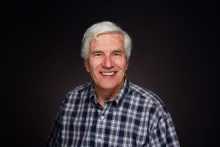
Steve Shafer was born and raised in Seattle. He graduated from Queen Anne High School in 1959 and later graduated from Ambassador College, Big Sandy, Texas in 1967, receiving a degree in Theology. He has been an ordained Elder of the Church of God for 34 years and has pastored congregations in Michigan and Washington State. He and his wife Evelyn have been married for over 48 years and have three children and ten grandchildren.
