

Robin S Webber
Holiness is foreign to our natural world. Thus, on the Day of Atonement we are spiritually enlightened to grasp what God declares and invites us in understanding His invitation: "I am holy therefore you be holy." Understanding this throughout Scripture from Leviticus16 to the Epistle of 1 Peter allows us by God's grace and workmanship in us (Eph. 2:8-10) to become seamless authentic Christians from the inside out when we understand that today we can boldly approach the throne of our Heavenly Father with our Heavenly High Priest (The Goat, The Lamb of God) forever by His side.
Here's what I would like to ask you today, and I hope that I can answer in the course of the next minutes. Why are we here today? Why are we here today? And what would God have us to feed upon this day? Why are we here today? I will say as a child, having grown up in the church, that this was a paramount question. Because growing up later on in Pasadena, every high day, every high day when Mr. Herbert Armstrong would speak, it'd say, Brethren, why are we here? And he was asking a question. And the one thing about Mr. Armstrong, he'd always ask the big question, but he would also, through God's scriptures, supply the big answer. So why are we here today? And what would God have us to learn as we empty ourselves of our own nourishment and our own nutrition? As New Covenant Christians, why today do we focus on the role of one high priest? I said New Covenant Christians. We're not an extension. We are a new creation. And yet we look at the Bible as a whole, from beginning to end, because if you don't read the beginning of the story, you're not going to understand the rest of the story as it goes along. So to understand as New Covenant Christians, why today do we focus on that one high priest in the past? We might say the type. And why do we focus on that one high priest in the New Testament towards now and the future? And how do we bring them together? I would like you, if you remember any phrase that I offer to you today, this is the one coming up. I like creating phrases, as you know. This is the one that I would like you to write down and shot. And it's simply this. Today, on the Day of Atonement, we bump into holy. We bump into holy. Now, we remember Moses, when God began to deal with him and call him before he went back to Egypt, that Moses bumped into holy. Yes, he did. And he was given immediately an assignment, wasn't he? I don't have sandals on. Take your sandals off, because he was on holy ground and he was approaching, literally, the I-M, not in personification, but within that bush.
He bumped into holy. There is something different as to when you bump into holy. There's another story in the Old Testament about Moses, probably when he wasn't fasting. He must have been a skinny guy, Skip, but that when he wasn't fasting, there was a time when he was up on the mountain. And he begged to God, begged to God, because God was not happy with Israel and was going to want to start things over again. And he said, Show me, show me yourself. And finally, God says, Okay, I'm going to show myself to you. But what I'm going to do, I want you, I want you to do, I want you to get behind the rock. So you get behind the big boulder. I'm sure there were a lot of boulders up on Mount Sinai or whatever mountain he was on back there. And he says, I'm going to come by. But you know what I'm going to do? I'm going to spare your life because you can take you couldn't take me for an honor. I'm just going to show you my backside. That'll be enough for you, young man. Oh, wait a minute. He was over 80 years. Well, he was young because he's talking to the Ancient of Days. And so, you know, as you know, when you're a certain age, you can call everybody a kid or a young, you know, about every, every time you notch up a little bit. Pretty soon I'll be calling kids that are in their 50, uh, young people that are in their young people. Seen, I'll be calling them kids. But here he is. He says, You, you turn, you can't, you can't take me full. And I'll tell you why. You don't have the equipment to be able to do it. The Day of Atonement is a little bit like Moses up on the mountain. It's a little bit like the stories I've already shared with you about, uh, him dealing with God. Today we bump into holy and understand that a holy God has ordained a holy day for a holy people for a holy purpose. Did you catch that? If you got that, you can go home. That's the day. Okay. We have a holy God who has ordained a holy day and what she does weekly as well on the seventh day Sabbath. But with these holy days too, they are given to us as a holy people for a holy purpose. What I want to share with you, it's the four letter adjective before each of those turns of that phrase. Holy. Very important. We're given this day as a 24 hour pause button that we might grasp the fullness of the God that is holy. Join me if you would in Psalms 46 and verse 10. Please Psalms 46.
Pardon me.
Notice what it says. This is not just a phrase to read well. There's power in this phrase. Be still.
Be still. Boy, that's hard today in this day and age. With everything coming our way, the frenetic world that we live in, everybody trying to gain your attention, doorbell rings, cell phone rings, whatever you might have on your computer to call you to the computer room to see who's trying to bug you again or sell something to you again, or this or that and everything in between. Be still. Be still. Being still, if I can make a comment, I've never thought about it until this moment. That's why we have prayers. Be still is a form of worship because this is what God tells us to do. And as we are still, that is giving God his worthship of what he has asked us as Creator to do. He says, I will be exalted among the nations and I will be exalted in the earth. So we've been called to be still, to leave our labors behind. And not only that, this is a fasting crowd, right? Yes. Even our tummies are supposed to be still on this day. They're not supposed to be going up and down like a Texas oil well in West Texas. We are to be still. We are before a God. It is here and now that we explore the sequence of God's systematic and expanding plan of salvation for humanity and internalize the role of the festival of atonement in our own personal lives and to internalize that role.
Bottom line, God does not want you, in a sense, to be the same when you go out as when you were coming in. We are not just here to show up. We are here to spiritually grow up as we come to Sabbath services, as we hear the holy days. We are a new creation in the making. And He is making us, first fruits at this time, to be a part of that new creation that extends beyond the meaning of the day of atonement that touches upon it and actually makes it able to be.
So we're going to look at it, and we're going to come to understand that it is here and now that the past, the present, and the future come together to not only understand the personal impact in our daily lives, but to spiritually prepare for the Feast of In-Gathering. And the Feast of In-Gathering, the Feast of Tabernacles, is not simply just one more agricultural harvest of thanksgiving. It really has the deepest of meanings, and that is of a great human harvest that is yet to be. That is going to start with millennium and later on expand down the line to where others are going to be involved in that.
It's harvest time. It's time to go to work, to understand that. And it speaks to that. It's going to be seated, and it is going to be reaped by God. It is going to be reaped by His Christ, and it's also going to be reaped by us under Jesus Christ. Not with Jesus as always supreme, but under His tutelage that you and I are going to have a part to share the glory of the gospel and reveal the people about God the Father and Jesus Christ.
So the title of my message is simply this, pausing, reflecting, and entering into holiness. As much as I've studied this over the last 50 years as a minister, I don't think I'm still prepared. So that's why I keep on preparing, because it is an incredible moment. That holiness which comes from the uncreated into our lives, the created, and to have that connection is unbelievable and beyond belief. Let's understand that God initially realized only a nation that is fully reconciled to Him, and in at one moment, that famous phrase that we use this day, with His purposes and His way of being, could move forward and fully rejoice and properly receive the blessing of enter into the joy of the Lord.
I'm going to make that connection with you right now. If you think I'm speaking to you, I am. Okay? Each and every one of us, and it's coming back to me. We need to understand that we are never going to be able to experience that hearing that voice enter into the joy of the Lord until we begin to really understand what it means to bump into holiness, and recognize that that holiness wants to be bumped into, wants to have a connection, wants to have a relationship, but we've got to be willing, and we've got to recognize who's calling us to that relationship.
Join me if you would in first—what I wanted to mention here before I go any further, the one thing that God has always wanted is a relationship. Oftentimes, people will just simply look at the Bible, and they'll say, well, this is a book about blood because it talks about the sacrifices, or this is a book about rules—rules, rules, rules, and more rules. Some people just don't like rules.
I like them, but, you know. But with all of that, whether it be a book about blood, a book about rules, ultimately, on the top tier, if you want to jot this down, the Bible is a book about relationships. It's a book of relationships. All the way back in the Old Testament, God said, I will be your God, and you will be my people. I will be your God. You can take that to the bank. You can bet your life on that one. I want to be your God.
And you will be my people. I will do my part, but you've got to do your part. And so we recognize that, and it's about fellowship. We talk about fellowship.
The Bible is basically, when it speaks in the New Testament about fellowship, the word is konaya. It's fellowship. It's rich. It's deep. It's intimate. It is always. It is communion in that sense. His purpose never changes. Join me if you would in 1 Peter 2, which is a little bit an echo of Exodus 19. This kind of comes out of Exodus 19, but this is the New Testament version to those that are under the New Covenant. 1 Peter 2. And let's pick up the thought if we could in verse 9. 1 Peter 2 verse 9. Notice what it says here. But you are a chosen generation, a royal priesthood, a holy nation, his own special people.
It's almost like homemade, rather than store-bought. This is special. And we are there to proclaim the praises of him who called you out of darkness into his marvelous light, who were not a people, but are now the people of God who, notice, had not obtained mercy, but now have obtained mercy.
So we take a look at this. We're called a royal priesthood. We're called a holy nation. But now notice 1 Peter 1, the charge of God, putting the Day of Atonement not as the background, but it'll be the foundation. Notice what it says in 1 Peter 1. Excuse me. Pardon me. 1 Peter 1 chapter.
No, that's what I wanted there. Pardon me a second. 1 Peter 1, 16. Pardon me. Here we go. Notice what it says here. Actually, verse 15. But as he who called you is holy, you also be holy. Notice in half of everything that you do. Is that how your Bible reads?
No. In all your conduct, because it is written, be holy, for I am holy. So we take a look at this. Humally by ourselves, we don't get holy. And I mentioned already some of the bumpins that Moses had. And to recognize that there's a difference. What holy is like? I'd like to take you back to Isaiah 6 for just a second. One more aspect of holy.
Isaiah 6.
Picking up the thought in verse 1.
Notice what it says here. This is talking about a vision here that was had by Isaiah. And he's seeing the temple filled. And notice what it says here. That above it stood the seraphim. Each one had six wings with two. He covered his face with two. He covered his feet. And with two he flew. And one cried to another. Almost like parrots. You ever heard parrots going back and forth to one another? Or just even birds in your backyard? But these aren't parrots. These are seraphim. Seraphim are at the very top of the angelic realm. You have host angels. You have carobim. You then have the seraph that are right there. They're covering the throne of God with their wings. Holy, holy, holy is the Lord of hosts. The whole earth is full of His glory. That's one of the jobs. To declare that forever for eternity. That's what we're talking about on the day of atonement. So we take a look at this. And the one thought I'd like to share with you, why is this so important that I'm spending this time on holy? In Matthew 5 and verse 8, in one of the Beatitudes, one of the beautiful attitudes that we are to have as New Covenant Christians, it says something startling in Matthew 5 and verse 8. It says, only the pure in heart will see God. Only the pure, unfettered, untouched, unvarnished, unspotted, pure, white, whole. What you see on the outside is what you get on the inside. You are what God is calling us to be. And I've been thinking about recently, you hear a lot of this on the news about different politicians that are supposed to be public servants. You hear this thought about authenticity. We need to be, we need to have authenticity. We need to be able to relate with people where, where they are at. And here, that's God. Our Heavenly Father, if you want to jot this down, He's authentic. Jesus Christ not only preached, but He practiced what He preached. He said, no man hath greater love than to lay his life down for his brother. And you know what? He did it. Jesus Christ is authentic. God the Father is holy. He's authentic. Jesus Christ is holy. He's authentic. Are we ready more than ever on this day of atonement, 2025, as we're moving to learn how to be a kingdom of priests during the wonderful world tomorrow, are we prepared to be ever more authentic? That what people see on the outside is what we are on the inside. Because if people don't see that, we know that there's a Father above. You can fool some of the people, some of the time. Most of the people, most of the time, God is not fooled. He's waiting. This is what the day of atonement is about. Join me if you would. Join me if you would here in Leviticus 23. Leviticus 23.
Leviticus 23. I'm picking up the thought in verse one. And some of you are hearing this for a message on the holy days for the first time. So this is a really important one.
Very important. Why are we here? Why isn't everybody else here? Why are we only here today? But notice what it says. And this is where the confusion comes in sometimes. And the Lord spoke to Moses, saying, Speak to the children of Israel, and say to them, The feast of the Lord, which you shall proclaim, to be holy convocations, these are my feasts. The rest of Leviticus 23 goes for it. Did you notice whose feasts that they are?
Whose feast are they? Did Moses dream this up while he was over in the Sinai Peninsula? These are the feasts of the Lord, or can also be the feasts of the Eternal.
These are God's feasts. These are holy festivals. That's what makes them holy days, because they come from a holy God. And if I keep on saying holy during this message, I haven't lost my mind of just trying to get with the seraphim, because God is calling us to be something totally different than when he picked us up along the road of the pilgrimage. And some of us have been keeping these days for decades, years, scores of years, over half a century.
Are we growing? Are we developing even more confidence than ever in God the Father, in Jesus Christ?
Have we gotten tired of the pilgrimage? You know, sometimes you can travel for so long that you kind of forget where it even started or why it even started this. God didn't forget. God's called you. I believe that with all of my heart. We have a calling. We don't join a church. It's one of the first things I remember. Two things I remember when I came into this way of life, 62, 63. Number one, the church is not a building.
The church is the people. In Greek, church is ecclesia. That means separate at once. We don't go to church. We are the church, whether at home, whether we're at work, whether we're whatever. We're here. I remember the other one I just thought of when I was thinking. It was actually the other one that I was thinking about. That's on the side, though, for right now. So why don't we fast? Why do we fast today? Why do we fast? We fast, as it says in the word that we are to, in a sense, the word is an-na, a-n-a-h. That means to afflict ourselves. And, of course, as Mr. Miller was mentioning, the affliction only goes for 24 hours at this point, unless you want to extend it. Not quite like Moses or Elijah or Jesus. But we are to humble ourselves before God. It's just kind of a little titty bit appetizer to tell us, you know, that we're mortal, that we really are flesh, that our days really are numbered, that if we didn't fill up our fiscal tank, we're not immortal, and to show our reliance on God. And we say, Father, thank you. Thank you very much. And thank you for Jesus Christ, who is not only my Savior, he's not only my personal Lord, but he is the heavenly High Priest. He is that door, I am the door, the door that opens up your entire holy realm up above to you and me. Do you ever think about that? Do you ever think about it that way? That's how I think about it. So I kind of wanted to share it with all of you today, because it's only by God's grace that we have that. Yes, we fast. Yes, we do this. Yes, we do that. Yes, we come to the holy days.
And they are important, but that's not what saves us at the end of the day. Those are works, and we are saved by God's grace. We're going to be getting into some scriptures on that a little bit later as to what we do. Let's talk about a little bit here just for a moment that that the Day of Atonement was the only day of the year. I'm going to paraphrase a little bit, just for time. You can look up in Leviticus 16, but just hear me through for a moment. The Day of Atonement was the only day of the year in which only the high priest, a man, made entrance into the Holy of Holies of the Tabernacle and, or later on, the temple to directly approach God and make sacrifice, number one, for himself so that, in turn, he might make sacrifice for the entire nation to atone for their sins. Can you imagine that? One man? Oof!
He's going to make sacrifice. That's done on the outside of the Tabernacle, later on, done on the outside of the temple, but he would ultimately carry that in. And what he would do on that day, what he would do on that day, I'm looking at how I could do this. No, I can't move because of the video. The temple, this is the power point, the temple, and or before that the Tabernacle, it was divided into two. There was a most, there was the Holy Place, and then there was the most Holy Place. And so it was on that day that that one man would go beyond those curtains. Those curtains were thick, they were embroidered, and on top of those curtains were the carob, the same carob and type that guarded the Garden of Eden after the fall of Adam and Eve. Nobody else could approach. Only one man could. On the other side of that curtain, to make it simple, was what we call the Ark of the Covenant. The Ark of the Covenant was about yea big, and it had a lid. It was called the Mercy Seat, and underneath that tucked into the Ark of the Covenant were different things like the manna, like the Ten Commandments, like the rod that bloomed and selected Aaron as the high priest. Those were all, you talk about souvenirs, right? Wow! And to recognize then that that's what was going on, and that that one priest would go in. It's very interesting, maybe we don't always get down to the details, that on that day that priest had to change clothes, and he had to wash his clothes. It was laundry. Did you know that Day of Atonement was laundry day? He had to bathe. People had to, that also assisted him later on in carrying out the sacrifices, or the one that had led the goat out into the wilderness, they had to come back and not only bathe, but they had to change clothes. Because they were dealing with the holy, and they had to be not only in their clothes, it's not only what what people saw on the outside, their clothing, and they had to clean that, but they also had to wash their bodies. In other words, these articles, clothing and body, had to be seamless in nature. Did you ever know that about the Day of Atonement? And one of the reasons why we have all the baths and why we had the changing of clothes? Because God wanted his servants, what you see is what you get.
What you see is what you get. And then he would go in there, and that priest would just have on a white cloak. Just clothing of white. That was it. He didn't have all of his paraphernalia on, all the gyms, and all of that. Just white. And he'd find that also with Jesus Christ in Revelation 1.13 as he appears to John in the beginning. He comes in a white cloak, because after all he is also the himly-high priest. Why was all this going on? Because Aaron and those that would follow him were approaching holy.
In the course of that day, he would sacrifice a bullock for himself and his household, and also he would separate two goats. He did not do the separating. He cast lots. For the one goat, that would be the sacrifice. For the other goat, that would be kept out of the camp.
So he used lots, because man of and by himself, it was a type of recognizing that man of and by himself could not distinguish a savior. I'll use an example. This is Old Testament, New Testament. On that time of Passover, Jesus and a man named Barabbas are up with Pontius Pilate before the crowd. It's very interesting that Yeshua, Jesus, was the Son of God. The other gentleman that was up on the auction stock for freedom was a gentleman named Barabbas. You know what Barabbas means? Son of the Father.
Son of God. Jesus. A revolutionary, perhaps a zealot. I know that Mr. Smith has talked about that in the past, and the Romans wanted to stamp them all out. Here's one called Son of the Father. I have a question for you. Bible scholars, which one did the crowd choose on their own? Barabbas. Pardon? Barabbas. Are you sure? He didn't choose Jesus. Okay, good. Thank you. And to recognize, then, go back—see, the Old Testament and the New Testament are seamless. And always remember that the Old Testament is revealed in the New Testament, and the New Testament is concealed in the Old Testament. They are one book. That's why we have to know what's going on here. Thank God that He is the one that chose the Savior at the end of the time.
And He died.
And He was willing to die for you and me. Back the goat, the goat would die. The other one would ultimately have the sins of the people put on its head and be released out into the wilderness. And that's a whole other question, statement, to recognize the story of the two goats. Let me just share a couple things here, just to keep this shorter.
Just passed over a page of notes. Aren't you happy? Here we go. I want to give you some points. I want to give you some points about the Day of Atonement. Just once I can find them.
One. There, somewhere. Okay, yeah. Let me give you just some quick points.
Here we go. Point number one.
Point number one. What is the beauty of New Covenant Christians keeping the Day of Atonement? Join me if you would, and let's go to Hebrews 7 to set the stage. Hebrews 7.
Hebrews 7. I'm picking up the thought in verse 17.
For he testifies, you are a priest forever according to the order of Melchizedek. This is speaking of who would be Jesus Christ. For on the one hand there is an annulling of the former commandment because of its weakness and unprofitiveness. For the law made nothing perfect. On the other hand, there is the bringing in of a better hope through which we draw near to God. And as much as he was not made priest without an oath, for they have become priest without an oath. But he with an oath by him who said, the Lord has sworn and will not relent, you are a priest forever according to the order of Melchizedek, that theophany that appeared, that king priest, the ruler of Salem, the city of peace, a theophany, a beginning point of understanding how God was going to be connecting with men. By so much more, Jesus has become a surety of a better covenant. You know what a surety is? Sometimes you have to lay down something to gain something.
Don't use your grandchildren, though, please. Okay, or children. You have to, what we call, got to put up something to make the next part of the deal work. But so much Jesus has become a surety of a better covenant, and there were many priests because they were prevented by death from continuing. But he, because he continues forever, has an unchangeable priesthood. Therefore, he is also able to save to the uttermost those who come to God through him, since he always lives. How many priests had there been up to the book of Hebrews going back to Aaron? Probably you fill in the blank. Now there's only one. For such a priest was fitting, who is holy, harmless, undefiled, separate from sinners, and has become higher than the heavens. Who does not need who daily as those high priests to offer up sacrifices for his own sins? And then for the peoples, for this he did once and for all, when he offered up himself, when he practiced what he preached, when he had told the disciples that no man had greater love than to lay down his life for his brothers, and may I add his sisters, and may I make those that are made in God's image and likeness, he is once and forever. He is the one high priest. See, when you go to the Old Testament and the New Testament, you have type, you have anti-type. It's kind of what you call dualism, and they build up upon one another. So in the Old Testament, how many priests did you have in the Old Testament? Scats! 1,500 years of high priest. But in the New Testament now, under the New Covenant, the one that stands for us and keeps the door open, that when he goes in, he is, and not only that, he's not carrying a goat, he's not carrying a lamb. He's, well, it's himself. And that's why it's important sometimes as we look to the future to always remember that in the book of Revelation, Jesus is mentioned as the Lamb of God 28 times. The Lamb of God. Yeah, but Mr. Weber, I thought that we were talking about goats today. Yes, we are. They're synonymous. But you know, I got to think about something. I mentioned this in Redlands last week. I never thought about this before. Maybe after I tell you, I shouldn't think about it again. But anyway, that how many of you gentlemen, especially in sports, and I'm sure a lady will show up her hand or something, is that G period, O period, A period, T period. What's that spell? It's amazing the American educational system. Yes, goat, right? Goat. And a goat represented, you did all right, Vicki. Mike, you can bring her back to church again. Okay. Is that goat okay? Now, I think this, you're making me laugh, is simply this. What does that mean in sports when you G period, O period, A period, T period?
And I don't even follow sports, and I know this. A little bit louder. Shout it out. Oh, come on. You're louder. I want to hear it. Greatest of all times. When that, when that, those lots were cast, and that goat was selected to bear the sins of not only Israel, but ours, as we would come along as the spiritual Israel of God, it is that goat that is the greatest of all times, Jesus Christ as sacrifice. And after that, we don't need any, anybody else. Nobody else needs to come up to bat. Nobody else needs to do a touchdown. Nobody else needs to sink a, sink a, you know, on the T becoming the greatest of all time. I want you to think about that today. Do me a favor. Let's have some fun. We're a class. Remember, I was a teacher. Just write down on your paper. G, period G, capital G, period, capital O, period, capital A, period, capital T, period, spells goat. But now let's look at the greater meaning, greatest of all times, and will always be because he created time. This is why we're at the day of atonement to reflect on the heavenly high priest. Let me give you a few thoughts here. When we think about Jesus being our heavenly high priest, there's no human, there's no human intermediary, excuse me, there's no human intermediary between God and us. There is no man. I am not between, I'm your pastor, I've been your pastor for 21 years. Don't think I'll be next 21 years. We'll see how that goes. I'm not your intermediary. I'm your friend. I'm your pastor. We can talk. I can guide you. I can point you in faith, not in fear. I can guide you, not control you. I'm not here for stop signs. I'm here to make traffic go forward to the throne of God. There is no human intermediary between God and us, rather than Yom Kippur, which is that covering. That's what it means in, we are washed in the blood of Jesus Christ. We are, well, I want to, I want to, that's very graphic, but I want to share something with you. Join me over in Revelation 1. Very opening. Interesting.
In Revelation 1, I'm picking up the thought in verse 5. And from Jesus Christ, the faithful witness, the first born from the dead and the ruler over the kings of the earth, to him who loved us and washed us from our sins and his own blood.
Imagine resting in a bathtub and being washed in blood. Not supplied by the local water district, but by the heavenly courts up above.
Therein lies the difference. We're not dealing with just goats, we're not just dealing with lambs. We're dealing with the sacrifice of Jesus Christ. Number two. Our mediator and high priest is continually before the throne of God. Join me, if you would, in Hebrews 1. In Hebrews 1, and let's take a look here, where it says in Hebrews 1, verse 3, who being in the brightness of his glory and the express image of his person and upholding all things by the word of his power, when he had by himself purged our sins, he sat down at the right hand of the majesty on high, having become better than angels, etc. Ladies and gentlemen, when you've been at work all day long, and you've been working, working, working, and you don't leave the office until the job is done, because Christians are good employees, and you go home. What do you do when you go home, other than hopefully kiss your wife? That's nice. Then number two, what do you do? You go over, and you sit down. The powerful language here is that he sat down means it's done.
The work of being a sacrifice is over. There's not going to be another sacrifice. He doesn't have to sacrifice. There's not going to be another individual that is going to sacrifice. He sits.
This is so powerful, a metaphor and language.
Can't wait to see that on the reruns at the wedding supper of when he first sat down, as he was welcomed to heaven by his father, as he was exalted, and to recognize that he sat down. Interesting. So, number two, our mediator and high priestess continually before God. He's at his right hand, and he got a seat. He sat down on his throne. Number three, unlike Israel of old, we are invited to enter God's heavenly throne every day as needed. And he said, join me if you would in Hebrews 4. In Hebrews 4.
And picking up the thought if we could in verse 14. Seeing then, okay, oh, that means we need to put on our spiritual eye glide. We have to stand still, like Psalms 46.10, because too often we're too busy to think about this. But notice what it says here in Hebrews 4. Seeing. So we've got to look up. Seeing then that we have a great high priest who has passed through the heavens. Jesus, the Son of God, let us hold fast our confession. For we do not have a high priest who cannot sympathize with our weakness, but was in all points tempted as we are yet without sin. Now notice verse 16. Trumpets, symbols, let us therefore. Remember, therefore is one of my favorite words in the Bible, because that's making a trumpet sound. Now that this has been said, what are we to do? Therefore come boldly to the throne of grace, that we may obtain mercy and find grace to help in time of need.
Boldly. We don't have to wait for the day of atonement. We don't even have to wait till tomorrow. Do we need to observe the day of atonement? Yes, it is cast in holiness. But can we tonight can wait tomorrow on our knees go before that throne? We the welcome sign is out. In the tabernacle of old, in the temple of old, it almost feels like across the curtains no trespassing till the day of atonement. Don't even think about it, because everybody knew that the man that would trespass, the man that would go on to look upon God, you would die. And yet here is our generous Heavenly Father, along with his loving son, that says, come boldly to me. You can come through the curtains of heaven now. You can come through the portals of my heavenly tabernacle. You can come right along, son of my high priest. This is why it is a better covenant. This is why there are better promises, as Hebrews brings out. Number three, unlike Israel of old, we are invited to enter God's heavenly throne every day. Well, no, I think I already mentioned that one. Let's go to point number four.
Point number four, Christ as our high priest is given the privilege to actively walk within our human temple, dedicated to his service. You know, kind of like what's good for the goose is good for the gander. You can come up, but you know what? I can also come down, and he does. You notice what it says here as we think about this. For a new covenant disciple, for by God's grace, holiness is not an event, is not merely an experience, it is an existence. And I tell you, I'm just talking, this is just Robin talking, I was somewhat stunned if all the sermons I've given, I was really stunned with the aspect of the washings this time. You know, you always learn something different when you're reading the scriptures with the washings and then with the putting on of clothes, with the washings and the putting on of clothes in Leviticus 16. God wants us to be an inside out, outside in Christian. He wants us to be one and the same. He wants us to be authentic and real and pure so that one day we can see God and we can see His heavenly High Priest. I think that you might want to jot this down and ask where you are on this.
Is the Day of Atonement today just going to be simply an event that you show up at once a year? And or is it more than is it an experience? Yes, I was very sleepy coming down the road today. I didn't have food in my tummy and we made it. Thank you, God. It's an experience. The most important thing is that the meanings and what comes out of this day is to change your life. It is to be in existence. Not just merely goats. Not merely just an old guy going into a curtain, which is incredible in itself. Not just the casting into the wilderness outside the camp of the other goat, bearing the sins of the multitude. Reminding us on this Day of Atonement that to understand that in the Psalms when it talks about our sins are cast from God as far as east is from the west. On this Day of Atonement, whether you're hearing me on webcast or in the days ahead as you listen to this, if you've asked God for forgiveness, He's forgiven you.
And all of us have things that we've done in our life that we need forgiveness for, that we're sorry for, that just seems to still follow us like a shadow.
But you've got to have in faith, as you're going back to the Day of Atonement, recognizing that those sins were put outside the camp, to use that analogy that our sins are as far as east is from the west.
You need to forgive yourself. I have actually talked to people in my life that they ask God to forgive them, but they have not forgiven themselves. Comma. Yet.
And I'll just say to you, if that's your case today, or those that are listening or listening in the future, God's forgiven you. If you've asked for forgiveness and gone a different way, even with some of the burden that's on your shoulder, God's forgiven you.
You need to forgive yourself. It says that God is doing— Ephesians says that God is doing a work in us. And maybe sometimes with people that have that burden, that's the toughest work.
Why don't you think about that today? Because until you've forgiven yourself, you're only half free. Yes, God has forgiven you.
But if you have not forgiven yourself, once you've asked Him for forgiveness, you're only half free.
And Jesus didn't die on the cross to have a 50-50 proposition with you when you accept Him as your Savior, when you were washed in His blood, as it says in Revelation 1, verse 5, today can be that day. Today can be that day. I suggest do it.
Christ does enter our life.
Number five, and I'll conclude. The promises to ancient Israel—the promises to ancient Israel is that people have not yet been fulfilled. And for that matter, the purpose to all humanity of a veil being lifted, there's going to come a time in God's purposes and plans that He's going to lay a hold of a serpent.
Go into the first prophecy in the Bible, speaking to the three in the garden, Adam, Eve, and the serpent, that in the future, the seed of the serpent will bite the heel of the seed of the woman, but the seed of the woman will crush the head of the serpent.
And there's that typology as well in all of this today of atonement. Satan's day is going to be over. Join me if you would in Romans 1620, as we bring the Old Testament and the New Testament together. In Romans 16—and look what it says in verse 20. And the God of peace will crush Satan under your feet shortly. The grace of our Lord Jesus Christ be with you. There's a simple way of reading the Bible. Can I make the Bible and everything in the Bible real simple, just in like one little phrase? I know sometimes everybody likes to go to the end of the story. Then they'll start back at the beginning. The end of the story is simply this. Lamb wins, dragon loses. That's it. The lamb wins. Allah, the goat, the dragon loses.
That goat is going to do more than a little kicking. That lamb is going to do a little bit more than a little licking. Jesus Christ is coming back as the lion of Judah, as the captain of our salvation.
And Satan has a destiny, a moment in his future, when he's going to be put out of business. Can you imagine what that is going to be like?
The Day of Atonement points to that as well. It's a day of rejoicing. Let's conclude by going to John 14.
In John 14, I shared this with your brother Nippon Redlands the other day. Different sermon, but I concluded with this. John 14. This is on the last night of the human existence.
Of that goat, that God decided it would be the sacrifice, would be the sin offering.
Now, real in human form, hours to live makes a request of us. And David, when I think of your song that you led at the end, I read last time about Atonement. This is the ultimate Atonement, and allow me to share this with you. In John 17, in what we commonly call this is the true Lord's Prayer.
What I want to share with you today, right now, is that Jesus Christ knows that you are here.
Did you know that? He knows each and every one of you by name. He is a shepherd that knows the clock, named by name, John 10. Our Father who has called us knows that you're here. And these are the words of His Son. Did you ever know that you're a part of prophecy? You know, I think of all these other people, you know, the 144,000, this, and that, all the prophets. You're in prophecy, and it's right here. I do not pray for these alone, but also for those who will believe in Me through their word. Who's that talking about?
John, Matthew, the others that would write the epistles.
Jesus, in that sense, which shows that He is not only the Son of Man, but the Son of God, He knows, He could see down the line that you were going to be here. And notice what it says, that those who believe in Me through their word, that they, now notice this is the ultimate at-one-ment set of verses. Notice what it says, that they all may be one as you, Father, are in Me, and I in you, that they also may be one in us, that the world may believe that you sent Me. Our at-tow-ment with God, our at-one-ment with God, and with Jesus Christ, is a witness that we believe that God the Father sent Jesus Christ, and that would be comforting to Him on that night of sacrifice, that morning of sacrifice, that afternoon of sacrifice at 3 p.m. in Jerusalem, when He would die. That it was worth it coming down to this earth, living His life authentically, acknowledging the Father, dying authentically, that if somebody would just believe by being in union, as they were in union. Notice what it says, and the glory which you gave Me, I have given them that they may be one just as we are one. I in them and you in Me, that they may be made perfect in one, and that the world may know that you have sent Me. It was that human portion of Him that was just, Father, just let me know a little that it was all worth it, because it's about to come about. I've accepted what you're going to do, but do they get it? Do they understand that my existence was not just simply to be an event, or just simply a weekly experience, or a religious convention experience, but their very existence was going to change lock, stock, and barrel. They would be authentic. They could wash all they wanted, but they needed to put on clean clothes. Clean clothes putting on was not enough. They needed to wash. They needed to be pure. They needed to be holy. Do you want to know what the day of Atonement about it? You just heard it. And then notice what it says, Father, I desire that they also whom you gave Me may be with Me where I am, that they may behold My glory which you have given Me, for you loved Me before the foundation of the world. O righteous Father, the world has not known you, but I have known you, and these have known Me. Maybe even while He was praying, He could feel the Spirit in those disciples. And you know what? He made a check mark. They get an A. They did. They knew Me. My guys that I traveled with for three and a half years, they got it. As we go up now to keep the Feast of Tabernacles, you got it. You know that we worship the greatest of all times as our heavenly High Priest, as our Savior, as the propitiation that our heavenly Father has selected for you and me to continue the journey.
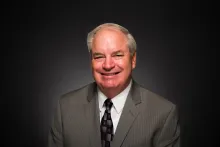
Robin Webber was born in Chicago, Illinois, in 1951, but has lived most of his life in California. He has been a part of the Church of God community since 1963. He attended Ambassador College in Pasadena from 1969-1973. He majored in theology and history.
Mr. Webber's interest remains in the study of history, socio-economics and literature. Over the years, he has offered his services to museums as a docent to share his enthusiasm and passions regarding these areas of expertise.
When time permits, he loves to go mountain biking on nearby ranch land and meet his wife as she hikes toward him.
