

Don Ward
This sermon demonstrates that physical Israel and physical Jerusalem also have spiritual dimensions that are being fulfilled by the Church of God, the Israel of God. The great theme of the Bible is for God to bring all nations into spiritual Israel, the Israel of God and spiritual Jerusalem the mother of us all. The Church of God is the Kingdom of God in embryo and it is beginning to raise up the tabernacle of David as revealed by Amos 9:11 and Acts 15:14-17. The sermon also demonstrates several spiritual truths especially the unity of the Bible and progressive revelation.
The title of today, The Two Israels and the Two Jerusalems. I've chosen this topic today because it will demonstrate to some degree the unity of the Bible, how the Bible is a beautiful tapestry woven together around a central theme. And what is that theme? That theme is that God is bringing sons and daughters to glory in His family, in His kingdom.
In this sermon today, hopefully you will see the principle of progressive revelation, some things that are mentioned in the Old Testament. Of course, we're made much clearer in the New Testament. You'll come to understand more clearly the importance of understanding prophecies that center on the Israel of God. You will see that the principle focus of prophecy is the establishment of the kingdom of God. You will see that the Church of God is the kingdom of God in embryo.
We used to hear that quite often. You will see that God is the God of all peoples, as the Apostle Paul writes in Romans 3.29, Is He the God of the Jews? Only no, He's the God of the Gentiles, as well, and both are justified through faith. Unfortunately, so many people in studying prophecy focus on the enemies of the kingdom of God instead of the kingdom of God itself. So we need to focus first and foremost on what the Bible reveals about the plan of salvation and what we are to become and what we must do to be in the kingdom of God.
The Apostle Paul writes in 1 Corinthians 13, verses 1 through 3, I believe these are some of the most important passages in the whole Bible, because it shows that what is the most important thing, though I speak with the tongues of men and of angels and have not charity, 1 Corinthians 13, verse 1, I become a sounding brass or a tinkling cymbal, and though I have the gift of prophecy, understand all mysteries and all knowledge, and though I have faith so that I could remove mountains and have not charity.
Well, one place in the Bible it says, well, in fact, in 1 John 3, verses 18 and 16, it says, God is love. So what is God and charity can be translated as love, as we know the spiritual love is agape, A-G-A-P-E-E, A-G-A-P-E, agape, spiritual love. So Paul is saying, if I am not becoming as God is, God is love, and here it says, if you don't have charity, if you're not becoming as God is, I think we can safely say, I am nothing.
And though I bestow all my goods to feed the poor, and though I give my body to be burned, and have not charity or love, it profits me nothing. So the Apostle Paul is very quick to put things in perspective of the things that are most important. He says, among those things, though, I understand all mysteries have the gift of prophecy and so on, if I'm not becoming as God is, it profits me nothing. The story of the physical Israel and the Israel of God, they all begin with the calling of Abraham in Genesis 12 and verse 1.
Though most people, just the Jews themselves and the preachers of the day, mainly the Protestant preachers and the Jews themselves, focus mainly on the physical side of things, that Israel is the chosen people or the Jews are the chosen people, and we shall see from Galatians 3 what it means to be chosen of God. In Genesis chapter 12, of course it starts somewhat in 11, but we'll pick it up in chapter 12 verse 1, Now I am the Lord, now the Lord has said unto Abraham, Get you out of my country and from your kindred and from your father's house unto a land that I will show you, and I will make you a great nation.
I will bless you and make your name great, and you shall be a blessing. I will bless them that bless you and curse them that curses you. And basically they focus on this, the Jews are the chosen people. Well, in one way, I guess you could say they are. In fact, in Romans chapter 3, I believe it is, God says what advantage does the Jew have? Well, much in every way, because unto them were committed the oracles of God. So they preserved the Old Testament through the ages, the scribes and the Pharisees.
Well, not the Pharisees at that time, but the scribes preserved the Old Testament. So let's continue. And you shall be a blessing, and in you shall all the families of the earth be blessed. Well, how will all the families of the earth be blessed through Abraham? We will see that more clearly in Genesis and Galatians chapter 3 later on. So one of the things we talked about, progressive revelation. The promises were passed on to Isaac, and we look at Genesis 26.
Genesis 26 verses 1 through 4. Genesis 26 verses 1 through 4. We will see that the promises were passed on from Abraham.
Genesis 26 and verse 1. And there was a famine in the land beside the first famine, and was in the days of Abraham. And Isaac went unto Abimelech, king of the Philistines, unto Jirar. And the Lord appeared unto him and said, Go not down into Egypt, dwell in the land, which I shall tell you. So turn in this land, and I will be with you, and will bless you. For unto you and unto your seed I will give these countries, and I will form the oath which my fathers swore unto Abraham, my father. Or to my father, Abraham. And these promises were passed on to Jacob in Genesis 28 verses 10 through 15. We won't read those, but the same promises that were given to Abraham were passed to Isaac, were passed to Jacob. In Genesis 32 verses 22 through 32, we see that Jacob wrestled with an angel. It says an angel, an angelos in Greek, and it is Malach, usually in Hebrew. That it could be a human messenger, it could be a divine messenger. In this case, of course, it seems to be the one who became Jesus Christ that Jacob wrestled with. And Jacob said, I want a blessing before I go. And he said, from now on, your name is going to be called Israel. So that was, in one sense, the beginning of physical Israel, which means, Prince of God, or ruling with God. I like ruling with God. But there are two Israels and two Jerusans. There is spiritual Israel.
There is physical earthly Jerusalem. And there is, of course, spiritual Jerusalem, the church. Now, let's go to Galatians 4 and verse 26. Galatians 4 and verse 26. And we will see what the Apostle Paul writes about the church here. Galatians 4 and verse 26. Galatians 4 and verse 26. My Jerusalem, which is above, is free, which is the mother of us all. And we've oftentimes referred to the church as the mother of us all, and we are kept in the womb of the church safe. And the church is supposed to protect us, help us to grow spiritually, come to maturity, so that we can eventually be born into the family of God, the kingdom of God.
For it is written, Rejoice, you barren, that bear not. Break forth, and cry, you that surveil not, for the desolate has many more children than that which has a husband. So, Israel, in a sense, was married to Jesus Christ, and he put them away, gave them a bill of divorcement, as we shall see later. And now we see that the church is spiritual Israel, and you are members of the body, the church of God.
Now, back to physical Israel. Jacob had 12 sons, which became the 12 tribes, which became the nation of Israel. Israel entered into a covenant with God at Sinai, and we can turn to Exodus 25, perhaps.
I say perhaps, I haven't written it down. In Exodus 25, and we see that Israel entered into a covenant at Mount Sinai.
I'll find it eventually.
In Exodus 25, verse 1, Exodus 25, 1, and the Lord spoke unto Moses, saying, speaking to the children of Israel, that they bring me an offering, and every man that gives it willingly with his heart, you shall take my offering. So they took up an offering, and really it was more than they could actually use. And he said in verse 8, build me a sanctuary that I may dwell among them according to all that I show you after the pattern of the tabernacle and the pattern of all the instruments thereof even so shall you make it. So the pattern was made from the heavenly, the tabernacle, the temple in the heavens, that God said you will pattern it after it. And they shall make an art of kenom wood, two cubics, and a half, and the length of it, and thereof a cubing, and half the breath thereof, and a cubing and a half, the height thereof. And he goes on to talk about it, you will overlay it with gold, and so on. The description of the ark is given. And then God says in verse 22, and I will meet you and commune with you from above the mercy seat from between the two carabim, which are upon the ark of the testimony of all things which I will give you in commandment unto the children of Israel. And you shall take of kenom wood, and two cubics shall be the length thereof, and a cubic, and so on. And it tells how to make the ark, and everything that is going in it. Then in verse 30, and you shall set upon the table, show bread before me always, and you shall make a candlestick pure goal of beaten work shall the candlestick be made, his shaft and his branches, his bowls, his knobs, his flowers shall be of the same.
Then it goes on describing the candlestick and the bowls.
And God entered into a covenant with Israel, and that covenant was a national covenant, and we call that covenant the Old Covenant.
It was pointing toward spiritual things, but yet they were still quite physical incense, and they offered physical sacrifices which made them ceremonially clean. So, Israel entered into this covenant at Sinai, and as I said, it was a national covenant. Now, the new covenant is an individual covenant, an individual basis.
On an individual basis, we are called out by the God the Father to Jesus Christ, and Jesus Christ reveals the Father.
And Jesus said, no man comes to the Father except through me.
One of the greatest difficulties in dividing the word of truth centers on the ability to discern between that which applies physically and that which applies spiritually.
Historically, the Church of God over the past, I would say 80 or 90 years, has had difficulty in distinguishing between that which applies physically and that which applies spiritually, and we still have that problem to some degree at some times.
In my view, we have heard at times in emphasizing the physical over the spiritual. For example, we emphasize that the promises to Abraham were that of race and grace.
But you see, God was interested all along in bringing people to the Israel of God.
That Israel of God, the spiritual Israel. So, we could say that the promises to Abraham were of race and grace. That, of course, is true to a certain degree.
But we have to be careful with our explanation of God blessing some people more than others because of race. Of all the things that God hates, He hates that of acting superior.
God hates people to be prejudiced against one race or another race. That God is the God of all peoples, as I've already quoted from Romans 3 and verse 29. He's the God of Jew and Gentile. God is not a respecter of persons, as it says in Romans 3 and verse 11. That God is not a respecter of persons.
None of us is superior to anyone else on or just by our physical descent.
Now, we may have an advantage over someone else because of our physical descent.
And there's a big uproar now with regard to even statues that depict Jesus as a white man.
Some on the left want to tear down all of the statues that picture Jesus Christ as a white man.
And probably Jesus Christ had a swarthy complexion, as most of the Jews of that day did. But, you know, there is great prejudice in the land and it has been made a political football tossed to and fro. James emphasizes the point in chapter 2 of James we're not going to turn there about partiality, though, that God absolutely hates partiality and He is not a respecter of persons.
The plan of salvation centers on how one can become a member of the spiritual family of God, no matter what the race, color, creed, so on is initially, but they must, as I have often said, the plan of salvation is exclusive, but the plan is inclusive as well. It's inclusive and exclusive, inclusive that everyone has an opportunity. It's exclusive as it says in Acts chapter 4, that only through Jesus Christ can one be saved.
So the precious promises of Abraham are eventually fulfilled through the spiritual realm, but the Jews and Protestants, as I mentioned earlier, presented as physical and to a large degree, ignore the spiritual. You want to treat God's people, they will say well. You don't want to ignore God's people. Well, God's people is the church of God.
So we are blessed, and how are we blessed through Abraham's seed? How would the promises made to Abraham, Isaac, and Jacob be fulfilled and all nations be blessed? Now we go to Galatians chapter 3, and we shall see. We talked about progressive revelation. We talked about unity of the Bible and this beautiful tapestry woven together, making one beautiful whole. In Galatians 3 and verse 14, that the blessings of Abraham might come on the nations, the Gentiles, through Jesus Christ. How did the blessings come on the Gentiles? It's through Jesus Christ.
Well, they orthodox you to this day, rejects Jesus Christ, and it will not profess him as the Savior of the world, the promised Messiah. They are still looking for a Messiah.
That the blessings might come through Jesus Christ, and we might receive the promise of the Spirit through faith. Brother, and I speak after the manner of men, though it be but a man's covenant, yet if it be confirmed, no man dissinels our heads thereto. Now, to Abraham and his seed were the promises made, he said, not unto seed as of many, but as of one, and to your seed, which is Christ. So it is through Christ that the promises made to Abraham are fulfilled. Now we continue, and it talks about that which was added. I'm not going to get off track with that. We go to verse 22 now. But the scripture hath concluded all under sin, Jew and Gentile, that the promises by faith in Jesus Christ, I believe the correct translation is in Jesus Christ. If we all had the faith of Jesus Christ, nobody would fail. If he took off his stew and gave it to us, like you could take off your faith and give it to someone else, you have your faith, the faith in Jesus Christ. We all have faith in Jesus Christ might be given to them that believe. But before faith came, we were kept under the law. Shut up. We were kept under the law. Shut up unto the faith which would afterwards be revealed.
Wherefore, the law was our schoolmaster to bring us unto Christ, that we might be justified by faith.
We're justified by faith, but even that, you remember on the day of Pentecost, after Peter gave his inspired sermon, that they said, well, men and brethren, what shall we do? And Peter's response, Acts 2.38, repent, be baptized. Of course, Peter gave the shortened version. You have to be convicted. You have to repent. You have to exercise faith in Jesus Christ.
Repent of your sins. Be baptized. Receive the laying on of hands. But Peter said on that day, repent, be baptized, and you will receive the gift of the Holy Spirit, which shows that the gift is conditional. It is conditioned upon repentance, faith, and the sacrifice of Christ and baptism and laying on of hands. At the laying on of hands, we receive the Holy Spirit.
So how are all nations blessed through Abraham's seed? How were the promises made to Abraham, Isaac, and Jacob that were read about in Genesis be fulfilled? The Apostle Paul clearly gives us the answer here. So we must remember that God wants us all to become spiritual Jews.
So we continue here in Galatians chapter 3, a schoolmaster to bring us to Christ.
But you are all the children of God by faith in Christ Jesus. Now verse 27, For as many of you as have been baptized into Christ have put on Christ. There is neither Jew nor Greek. There is neither bond nor free. Spiritually speaking, there is neither male or female, spiritually speaking, for you are all one in Christ Jesus. And if you be Christ, then then are you Abraham's seed and heirs according to the promise. According to the scripture inspired by the Holy Spirit given to us through the writings of Paul, he received inspiration from Christ initiated by God that we are Abraham's seed and heirs according to the promise through Christ. If you be in Christ, then are you Abraham's seed. And God wants us all. Let's go to Romans chapter 2. I started quoting Romans chapter 2 and left off. In Romans 2 and verse 28, we see that God wants us all to become spiritual Jews. In Romans 2 and verse 28, for he is not a Jew which is one outwardly. So the Jews boast, I'm a Jew, I'm God's chosen. Have mercy on me because if you do, God will bless everybody through the Jews. No, God, if you're Abraham's seed through Christ, then you are heirs of the promise. For he is a Jew which is one outward, neither is he that of circumcision which is outward in the flesh. But he is a Jew which is one inwardly, and circumcision is that of the heart, in the spirit, and not in the letter whose praise is not of man but of God. It's not just of keeping the commandments. If you were called when you were age 20 and perfectly kept the commandments, that would not alone save you because you have to repent of sins of the past, and only the sacrifice of Christ can do that as we read here in Romans chapter 3 verse 23, all are sin and come short of the glory of God. And it is through Christ that we can have redemption and the sins of the past can be forgiven. In verse 25, for God has set forth to us a perpetuation, that perpetuation who went in our stead as Christ through faith in his blood to declare his righteousness for the remission of sins that are passed. That's what you committed up until age 20. If you were to keep the law perfectly after you were called, what about those sins of the past? The only way they can be blotted out is through Christ, through the forbearance of God. And then we are to live a lifelong process of repentance, being in a state of repentance the rest of our lives. In my view, we cannot overemphasize the importance of how we can become spiritual Jews. If you be in Christ, then are you spiritual Jews? The true recipients of God's mercy are those who have been covered by the blood of Christ and receive God's Spirit, as we have described. This mercy can be extended to anyone who allows the word of God and the Spirit of God to circumcise his or her heart and to be recipients of God's forgiveness, have their sins blotted out, receive the Spirit of God in their minds and hearts. And God, through his Spirit, can write his laws, that which were on tables of stone, put in the Ark of the Covenant, and above which was a mercy seed and above which God appeared. But today, God has, through his giving us his Spirit, the very essence, and written his law, as it says in Hebrews on our very inward parts, on our hearts and minds. So you must judge yourself and cry out for God's mercy. We're all familiar with the story of the publican and the sinner, at least I think we are.
The story of the publican and his Pharisee that went up in the temple to pray, or to the temple, not that they necessarily entered into the temple, but went up to the temple to pray. And the publican and the Pharisees, first of all, prayed and said, I give tithe and I fast twice in the week and I do all these kind of things, and I give alms to the poor and so on. And then the publican, not so much as lifting up his eyes, said, Lord, have mercy on me, a sinner. So he judged himself. He said, I am a sinner.
In order to be justified, we have to come to judgment. We must judge ourselves.
You know, before taking the Passover in 1 Corinthians 11, it says that you are to judge yourself so you won't be judged over the world. So judge yourself and cry out for God's mercy.
God says in 1 John chapter 1 that he is faithful in just forgiveness of all unrighteousness. It will come before him, confess our sins, repent, and ask for his forgiveness. He will forgive us. But judgment must precede mercy. If you go to James 2, 13, James 1 of the general epistles, James 2 and verse 13, a very important scripture. I hope you understand it.
For he shall have judgment without mercy that hath shown no mercy, and mercy rejoices against judgment. How does mercy rejoice against judgment?
In that, you have to judge yourself first. So you judge yourself and you admit I am a sinner.
God says, and I've already quoted 1 John chapter 1, he's faithful in just to forgive us of all unrighteousness, and he will forgive us of unrighteousness if we judge ourselves.
And then we have received mercy. We have received forgiveness. And so mercy glories against judgment. The judgment is you have sinned. You repent. You come before God. You ask for forgiveness. You ask for his mercy. He extends his mercy, and mercy then glories against judgment.
God will save those who are true recipients of his mercy. The Church spiritually, for example, the Israel of God is true. Let's go to Galatians 6, 16.
This is one of the few places, maybe the only place that states it in this way. In Galatians 6, 16, this is a scripture that every person in the Church of God should have committed to memory.
In Galatians 6, 16, that as many as walk according to this rule, peace be upon them, and mercy and upon the Israel of God. The Israel of God is the Church of God.
Look at verse 15, for in Christ Jesus neither circumcision avails anything nor uncircumcision, but becoming a new creation. And as many as walk according to this rule, peace on you, peace upon them, and mercy and upon the Israel of God.
So we are all hopefully striving to become the Israel of God. The book of Hosea is an allegory showing how Israel went astray. They committed spiritual fornication, if you would turn to Hosea chapter 1. Hosea was a type of Christ. Hosea literally means salvation or deliverance.
So Hosea, the first of the minor prophets, I used to teach minor prophets, and you could spend the whole semester on the minor Pro... on Hosea in the minor prophets. But you spend about six weeks there, and then you move on. But we're going to look at Hosea today. In chapter 1, verse 1, the Word of the Lord came unto me on Hosea, the son of Beriiah, in the days of Uzziah, Jotham, he has Hezekiah, kings of Judah, and in the days of Jeroboam, the son of Joash, the king of Israel.
The beginning of the Word of the Lord by Hosea. And the Lord said to Hosea, Go take unto you a wife of Hordom's and children of Hordom's, for the land has committed great Hordom's departing from the Lord. So, Israel went and, I mean, Hosea went and married a whore, Diblium. Diblium means verse 3. So he went, took Homer, the daughter of Diblium, and conceived and bear him a son. So Gomer was the fruit of the illicit relationship here. Now, God did not marry a whore himself.
God cleansed Israel and forgave them, and He gave them His law so that they could walk in His ways.
Hold your place there. We go quickly to Ezekiel back a few pages to Ezekiel 16 and verse 8. Ezekiel 16 verse 8, before God entered into the Old Covenant with them at Sinai, as we read about ours, we mentioned we didn't actually read these scriptures where He entered in. But in Ezekiel 16, Ezekiel chapter 16 verse 8, And now when I passed by you, they were in a terrible state when the Lord passed by them.
They were, as I said, in a terrible state. Look at verse 5.
None I pitied you, or did any of these help you to have compassion upon you, but you were cast out in the open field to the loathing of your person in the day that you were born. So, Israel was the weakest, really, you might say, of the nations, least desirable.
But God came along and saw them, and their filthiness cleansed them up and entered into a covenant with them, married them. Now when I passed by you and looked upon you, behold, your time was the time of love, and I spread my skirt over you, and I covered your nakedness. Nakedness is symbolic of sin. Adam and Eve tried to hide from God and cover themselves with fig leaves. I swore unto you and entered into a covenant with you, saying, the Lord God, and you became mine. I washed you with water, yes, I thoroughly washed away your blood from you and anointed you with oil. I clothed you with bordered work and shod you with badger skin.
I girded you about with fine linen. I covered you with silk. I decked you also with ornaments. I put bracelets upon your hands and a chain on your neck, and I put a jewel on your forehead and earrings in your ears and a beautiful crown upon your head. So Israel was decked out. They were chosen of God as the nation that was to bring all people into a relationship with God. But of course, they erred in breaking the covenant, as you read about in Hebrews 8, 9, and 10.
So back to Hosea. God didn't marry a whore, a spiritual whore, but he commanded Hosea to take one of the hortoms of what Israel had become. Now in verse 4, this is Hosea 4, And the Lord said unto him, Call his name Jezreel. Jezreel is a geographical location just north of Jerusalem, sort of shaped like a funnel with a large end to the north, funneling down into Jerusalem. Many great battles have been fought on the plains of Jezreel.
The meaning of Jezreel is literally, God sows. God can sow destruction, or God can sow destruction.
I may have said that wrong. God can sow destruction, or God can sow restoration.
And the Lord said unto him, Call his name Jezreel. In this case, it was destruction.
For yet a little while I will avenge the blood of Jezreel upon the house of Jehu, and will cause to cease the kingdom of the house of Israel. Not the people, but the house of Israel.
As you know, the Assyrians came and took them into captivity. A large number of them, some of them, escaped. But for the majority of them went into captivity. And it will come to pass that day that I will break the bow. Bow is symbolic of military strength and power. I will break the bow of Israel in the valley of Jezreel. The valley where all these battles have been fought. So the military strength and might of Israel was broken. The Assyrians took them captive. She conceived again and bear a daughter. And God called unto him, or said unto him, call her name Lo Ruhamah. Now in Hebrew, L-O means not, translated into English, lot or no. Call her name Lo Ruhamah. Ruhamah means mercy. So it's not having received mercy. For I will no more have mercy upon the house of Israel, but I will utterly take them away. But I will have mercy upon the house of Judah. And I will save them by the Lord their God. And will not save them by bone, my military strength and power. Of course, you can read about how God destroys them. He speaks. And the flesh comes off their bones. And the fowls of the air and the corn and the animals of prey come upon them and devour them. You read about it in Revelation. Not save them by military power, nor by sword, nor by battle, by horses, nor by horsemen. Now when she had weaned Lo Ruhamah, she conceived and bear a son. And she said, call his name Lo Ruhamah, for you are not my people, and I will not be your God. Now we've we picked this up in the old town. We're coming back to Hosea if you would hold your place there. We'll go to Romans. We'll go to Romans chapter 9. I've heard, I think it's verse 29, verse 25. Romans chapter 9. And verse 24 will start. Even us whom he hath called, not of the Jews only, but also of the Gentiles. As he also said in Hosea, I will call them my people, that is Ami, which were not my people, Lo Ami, and her beloved, which were not beloved. And it shall come to pass that in the place where it was set unto them, you are not my people, you are Lo Ami. You shall be called the children of God. The children of the living God. Isaiah also said a cry concerning Israel, though the number of the children of Israel be as sand of the sea, yet a remnant shall be saved. For he will finish the work and cut it short in righteousness, because in short work will the Lord make upon the earth. Well, we are 2,000 years down the road, and we're still waiting for that work, that final work, to be done. Now we go to 1 Peter chapter 2, and we'll see here in 1 Peter, just after James, in 1 Peter chapter 2, and we'll start in verse 9. For you are a chosen generation, a royal priesthood, a holy nation.
That's one of the few places in the Bible where the Israel of God is referred to you as a holy nation, but you see the church is spiritual Israel, a purchased people that should show forth the praises of him who has called you out of darkness unto his marvelous light.
Oftentimes we just read that scripture and don't go on and read 10, 11, 12.
Which in time passed were not a people, lo Ami, as Hosea said, but are now the people of God. Ami, see, we are the people of God, the church of God, which had not obtained mercy.
At one time, all of us were lo Ruhama, we had not obtained mercy.
But now we are Ruhama, having obtained mercy. But are now the people of God, Ami, which had not obtained mercy, lo Ruhama, but now have obtained mercy, Ruhama.
Dearly beloved, I beseech you as strangers and pilgrims, abstain from fleshly lusts and war against the soul, having your conduct honored, honest among the nations, that whereas they speak evil of you as evildoers, they may by your good works, which they shall behold glorify God in the day of visitation.
You know, I had an opportunity to visit the projects in Sri Lanka and Jerusalem, other places, and oftentimes we question the projects. But the minister, Gemini Disanayaka, who was a friend of Mr. Armstrong's and led the way in getting Mr. Armstrong into Sri Lanka, said unto me, we don't really need your money. We need your example, how you organize, how you do this, how you live. Two or three years, well, it was a lot longer than that. Several years later, I received a letter from a person who had attended ambassador who is now affiliated with the school we established there in Sri Lanka and said, we still have this little school going.
People are even selling their birth rights to enroll here because they know how valuable it is.
You can sell your birth right in Sri Lanka, apparently. That's what he wrote in his his letter. So the example that we set among the the Gentiles, do not go unnoticed.
It is very much noticed. And we are, we say that we are the land of the free and the home of the brave. But James writes that we need to walk in the perfect law of liberty. Liberty is not achieved anyway except through the law of God. Well, there are many other aspects to it.
Now we go back to Hosea. We'll read 9 again.
Then said God, call his name Lo Ami, for you are not my people, and I will not be your God.
Yet the number of the children of Israel shall be as a sand of the sea, like we read from Romans chapter 9, which cannot be measured nor numbered, and it shall come to pass, that in the place where it was set unto them, you are not my people or Ami. There it shall be set unto them, you are the sons of the living God. You are Ami. You are my people. Then the children of Judah and the children of Israel begether together, beginning at the millennium there together, and appoint themselves one head. That one head will be Jesus Christ. Of course, David will serve under Jesus Christ. They shall come upon the land, for great shall be the day of Jezreel.
Remember, Jezreel can mean God destroys or God, it means literally, God sows. He can sow destruction and he can sow restoration. Great is the day of Jezreel. This is God sows restoration.
Say you unto your brethren, Ama. Say to your sisters, Ruhamma.
You are my people. You have obtained mercy. Plead with your mother. Plead.
She is not my wife. Neither am I her husband. Let her therefore put away her hoardings out of her sight, and her adulteries from between her breasts. Lest I strip her naked and set her as in the day that she was born. Remember we read from Ezekiel 16 how she was when she was born. And make her as a wilderness and like a dry land, and slay her with thirst. And I will not have mercy upon her children, for they be the children of Hordim's, for their mother had played the harlot. And so the Israel of today has played the harlot. They have gone astray. And it is up to the Israel of God to set the example, to preach the gospel unto them, and to bring them into the Israel of God.
So we need to be concerned about the direction that the church is going.
The prophet Amos prophesied of the restoration. Before we go there, I wanted to read, I think I have it written down here, I wanted to read a couple verses here from Hosea 2. I've already read 3 or 4 about divorcing her and her going into Hordim's once again.
In verse 19, Hosea 2, verse 19, And I will betrothed you unto me forever, I will betrothed you unto me in righteousness, see, he sows restoration, and in judgment, and in loving kindness, and in mercies, and I will even betrothed you unto me in faithfulness, and you shall know the Lord, and it shall come to pass in the day that I will hear, says the Lord, I will hear the heavens, and they shall hear the earth symbolically, and the earth shall hear the corn and the wine and the oil, and they shall hear the gensreel, God sows restoration, and I will sow her unto me in the earth, and I will have mercy, Ruhamah, upon her that had not obtained mercy, and I will say unto her who were not my people, Lo Ami, you are my people, Lo Ami, and they shall say, you are my God. We want to be a part of those who are able to say that at the coming of Jesus Christ.
In Amos chapter 9, the church of God is the kingdom of God in embryo. Once again, a minor prophet, Hosea Joel Amos. In Amos chapter 9, last chapter of Amos, the last chapter of Amos, we read about this restoration in a different way. This is the spiritual restoration, and that talks about mainly how the crops and all of that will be bountiful in that day.
In Amos chapter 9, verse 11, in that day I will raise up the tabernacle of David that has fallen. The tabernacle of David is symbolic of the church. And close up the breaches thereof, and I will raise up his ruins, and I will build it as in the days of old, that they may possess the remnant of Edom.
Now, that word, the translation of that is in a debate in Acts 15. It is translated as we shall see men. Here it is translated Edom. I believe it should be translated men, as we'll see in Acts 15, that they may possess the remnant of Edom.
And all the heathen, that once again leads me to believe that it is men, all the nations, heathen nations, which are called by my name, says the Lord, that does this. Behold, today's come that the that the plowmen shall overtake the reaper and the treader of grapes, him that sows, and the mountain shall drop sweet wine, and all the hills shall melt.
And that is the physical side of restoration. And verse 11 is the spiritual side of restoration.
The apostle James in Acts 15, the famous Acts 15 conference, in making his declaration of whether or not believers had to be circumcised, he quotes, he refers to, he doesn't call the name, but he refers to the prophecy that we just read in Amos, and raise up the tabernacle of David. Now we speak it up in Acts 15, 13. And after they had held their peace, James answered, saying, men and brethren, listen unto me. Peter had declared how God at first did visit the Gentiles.
Acts 10 showed that the Gentiles were to receive the Holy Spirit, to take out of them a people for his name, and to this agree the words of the prophets as it is written. After this, I will return and build up the tabernacle of David. We read it from Amos chapter 9, which has fallen down, and I will build again the ruins thereof, and I will set it up, that the residue of men, not just of Edom, but the residue of men, might seek after the Lord, and all the nations upon whom the name is called, upon whom my name is called, says the Lord, who does all these things. Known unto God are all his works from the beginning of the world. So you are helping to fulfill raising up the tabernacle of David, the Church of God in embryo, the Jerusalem above, the Israel of God that we read about in Galatians 4 and also in Galatians 6.
So I would conclude with this few statements here. The Church of God is the kingdom of God in embryo, and that the restoration of all things in and through the Church, the Israel of God, the picture is much clearer. Of course, we don't restore it as Christ, and the kingdom will.
We should also remember that God is not going to restore Israel in the flesh until they repent, look upon him whom they have pierced. Exercise faith in his blood, they'll have to repent and exercise faith in his blood, repent, be baptized, receive the laying on of hands, and review. God says to the northern 10 tribes, I am going to sow destruction. This is why the first child was called Jezreel.
God can sow destruction, he can sow restoration. Another child was called Lo-ru-hami, not having obtained mercy. Yet Judah is going to obtain mercy. Someone is going to be the recipient of mercy. Another child was called Lo-am-i, not my people. In spite of all of this, God is sowing restoration. And as I said, he begins with you and I. Are we going to restore that which is fallen down? Great shall be the day of Jezreel. Jezreel means God sows. At that time, God is going to sow Israel back in the land, and he is going to finish raising up the tabernacle of David so that all nations will come to it, as in the case of Zechariah 14, where all the nations come up to the feast of tabernacles. And if Egypt comes not up, they don't get any rain. Remember, they took him whom they had pierced, they licked upon him whom they had pierced, and they repented. That's in Zechariah chapter 12.
So we see here what I began with, a part of the unity of Scripture. How the Bible interprets the Bible, the great unity of Scripture. We see progressive revelation. We see a lot of other things, and we also see what we are to do. We have been called to blaze the trail of restoration and the establishment of the kingdom of God.
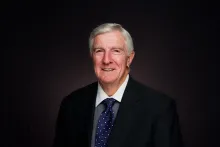
Before his retirement in 2021, Dr. Donald Ward pastored churches in Texas and Louisiana, and taught at Ambassador Bible College in Cincinnati, Ohio. He has also served as chairman of the Council of Elders of the United Church of God. He holds a BS degree; a BA in theology; a MS degree; a doctor’s degree in education from East Texas State University; and has completed 18 hours of graduate theology from SMU.
