
Frank Dunkle
This transcript was generated by AI and may contain errors. It is provided to assist those who may not be able to listen to the message.
Many of you will remember the first year we had the feast in Jekyll Island. But I see the hands. Who was in Jekyll Island in 63?
A few of us were.
Well, that was the first year Norm and I were married, and that was our assigned site from Pittsburgh.
You might remember we had a hurricane offshore, and it was threatening to come ashore.
And it backed up, which is unheard of.
It went back over Cuba, came back again, backed up again, and went over Cuba, and came back again.
Now, poor Cuba really got it.
But the feast site in Jekyll was spared, which is good because we had a tent.
And I can imagine a hurricane coming ashore in Jekyll with a tent, all of the problems that we would have had.
Obviously there, God did control the weather, and He did protect His people.
There may come a time in the future when we might not be able to gather for the feast as we do today.
We're blessed. If you look at that feast list that I gave to you, the majority of us are going to Panama City.
That's the biggest group. Next biggest is Jekyll Island.
Then there are a number going various other places.
We have the privilege, we have the opportunity today to be able, if we want to go halfway around the world, hopping a plane, and we're off.
If we want to drive Stain Bolt Springs, we can drive over there.
We might be prevented in the future because of weather, such as hurricanes, high prices, such as gasoline, and other dangers that you and I might not even be able to imagine at this point.
Many of us will shortly be leaving for the feast and traveling all over the world.
Norm and I are scheduled to go to Australia and Tasmania this year for the feast. We did this back in 1998.
We flew from Tyler to Dallas, Dallas to LA, LA to New Zealand, New Zealand to Tasmania, Tasmania to Australia, and three different sites in Australia that year.
We laughed about it. It was our feast of airplanes.
We were in so many airplanes, day down and day up.
Every other day, you were flying somewhere. We never saw a kangaroo. We were there, but you don't see them that far up in the air.
This year, we're not going to be quite as bad. We're flying from Chattanooga to Chicago, Chicago to LA, LA to Brisbane, to Tasmania, Tasmania back, and then back home, repeating the experience.
Those of you who have flown overseas, many of you have had similar experiences in the past of trying to go from point A to point B, and you just can't get there directly.
You go here, here, here, and finally, you end up where you want to be. Most of us will be driving to the feast. That's a blessing.
We'll stay in nice hotels or hotels. We get to the feast. We'll have condos or nice hotels to stay in.
We'll eat out in some great restaurants. We'll have some nice food to eat.
You will really enjoy it. These are some of the blessings that God gives us in being able to observe the feast.
But have you ever stopped to think about how long did it take the Israelites to go to the feast in Jerusalem?
How did they get there? They didn't have airplanes and they didn't have automobiles. They didn't have motorcycles.
They didn't have motorboats. Nothing of that nature.
You would either walk, ride a mule, ride a horse, ride a donkey, be pulled in a wagon.
If you were a decent farmer, you might have an oxen pull your wagon, a bushel of apples, a bushel of potatoes, some beans, some wheat, some things that you would carry along with you. You would strike out for the feast. You would walk. How many miles can you walk a day? If you had to walk from here to Jekyll Island, how far would you go?
Most of us can't walk around the block. So we wouldn't get very far, would we? A few here could go a little further.
But you stop and you think about it. If you lived 100 miles away, or 75 miles away, you're talking about 3 or 4 days of walking or riding to be able to come up to Jerusalem, keep the feast, and then go back.
And if you came up for the Feast of Trumpets, you'd probably stay over for atonement, and then Feast of Tabernacles, and the last great day.
Well, after the national captivity of the house of Judah, the diaspora traveled back to Jerusalem from all over the Roman Empire.
And it would take sometimes weeks for them to arrive. They'd come from Asia, from Asia Minor, from Rome, from Greece.
Let's notice in chapter 2 of the book of Acts, Acts 2, beginning in verse 5, one account that we have that explains this, I think, a little more clearly.
This is on the day of Pentecost. Remember, three times a year, especially the males were asked to come up to Jerusalem to keep the feast.
In verse 5, it says, there were dwelling in Jerusalem, Jews devout men from every nation under heaven.
And when this sound occurred, the multitude came together and were confused because everyone heard them speak in his own language.
In verse 8, they said, now how is it that we hear each in our own language in which we were born?
Parthians, Medes, Euleomites, Dwellers of Mesopotamia, Judea, Cappadocia, Pontus, Asia, Phrygia, Pamphylia, Egypt, the parts of Libya, adjoining Cyrene, visitors from Rome, both Jews and Proselytes.
So there were Jews and then there were Gentile Proselytes who came up. Cretans and Arabs, we hear them speak in our own language the wonderful works of God.
So they came from all over the Roman Empire.
So, here's an example of what was occurring back at that time. Josephus indicates that there were actually hundreds of thousands who came up to Jerusalem to observe the Fall Festival.
It certainly took an amount of dedication and zeal to do this on a regular basis, if you were going to come up.
Now, as we approach the Fall Festival, hopefully this hasn't become old hat with us.
You can say, well, I've kept it for 30 years, 20 years, 40 years. I think for Norma, it's 50 going on 60. I've kept it about 52 or 3.
And you can say, well, I've done it. I think I'll take off this year. You don't do that, do you?
There's a reason for that, as we will see.
As the Fall Festival approaches, we want to look at our attitude towards the Holy Day season and especially toward the Feast of Tabernacles.
It is a lot more convenient for us today to get there than it was for them back in the time of ancient Israel.
Do you, this year, plan to have the best feast ever? Is that what you're planning?
You've got your plan written out, best feast ever. You've got that written down.
Or, are you going to go and say, mediocre feast? Are you going to have a mediocre feast?
Or have you written out terrible feasts? 2008. So you've written that out. What kind of a feast are you planning on having?
What do we need to do to have a great feast?
Are we going to have or get a wonderful feast? Or are we going to give a great feast?
Which approach will we be using? Something that we can get or something that we can give?
Many times when we use the term attitude, we say, well, somebody's attitude is bad, somebody's attitude is good.
We loosely define that. Everybody has his own definition of what a good attitude is or a bad attitude.
Do we know what we're talking about when we talk about attitude?
And especially the attitude we should have toward the feast.
Attitude can be broken down into three components, three different parts.
How you think, how you feel, and how you react are your actions.
Your thinking, your feeling, and your actions.
If you have a right attitude, you and I have to view things from God's perspective, the way he would look at it.
What's God's approach? What would God do?
Not only does he feel, but how does he think about it?
There are times that we don't feel like doing something, such as, I don't feel like cutting the grass.
That was my complaint yesterday.
I looked at the grass and said, oh, I don't feel like cutting the grass today.
But guess what? If I didn't cut it, it wasn't going to get cut.
So you go out and you cut the grass.
Or you might say, I don't feel like going to work today.
So what? You still have to go to work.
So many times we might say, I don't feel like doing something.
And yet we realize that we must arise above our feelings.
And our actions have to reflect what our duties, what our responsibilities actually are.
Therefore, our approach is right. Our actions will be right and will be correct.
So today, I'd like for us to take a look at some of these principles and apply the principles surrounding what is the right attitude or right approach to keeping the feasts.
And we need to judge ourselves to see, are we truly doing it in the right way?
We don't need to be judging others. We have enough problem with ourselves when we look at what should we be doing or not doing.
And what should our attitude be toward the feasts?
So why do we go to the feasts every year? Ever ask yourself that?
Why go every year? Why not every other year? Every third year? Just do it that way.
There's a lot of work connected to the feasts, isn't there?
If you're going to travel, especially if it's some distance, you've got to make sure your car is running. You've got to make sure you have enough money.
You've got to make sure the tires are okay on your car.
If it's going to take two or three days driving, you've got to plan out where you want to stop.
You've got to make sure you have enough money. If it's two or three days travel, two or three days back, you're there for eight days or nine days.
Do you have enough money to pay for each one of those days? How much do you have?
So you begin to plan. It's a lot of work.
Not only individually or for the family, but collectively.
A lot of work behind the scenes goes into preparing a feast site.
I coordinated. I shouldn't say I. Norm and I coordinated because she did a lot of work.
For twelve years, feast sites.
We coordinated up to eight to ten thousand people.
You started thinking about eight or ten thousand people and taking care of their needs and their concerns and problems.
And everything that goes along with that, there's a lot of work connected to it.
I estimated it took about three months of my time just devoted to that one project.
Well, let's go back to Leviticus 23 and verse 33.
Leviticus chapter 23 and verse 33.
And I want you to notice the reason why we do this.
Speak to the children of Israel. Verse 34 here, saying that the fifteenth day of the seventh month shall be the Feast of Tabernacles for seven days to the Lord.
On the first day there shall be a holy convocation and you shall do no customary work on it.
For seven days you shall offer an offering made by fire to the Lord.
On the eighth day you shall have a holy convocation and you shall offer an offering made by fire to the Lord.
So here you find that you and I are told to go to the Feast and that we're to go there because God is the one who has set this time aside.
It's holy time. He has made certain days within that festival. High days are Sabbath.
So we must come with a proper reason and motives to attend the Feast.
Many reasons why people go to the Feast.
Let me just enumerate some that people have mentioned to me in the past. I think, thankfully, most people are not going for some of these reasons today, but none of them are really bad if you have the right motive and attitude.
Some go to party, or to play, or to have a good time.
Kick back. You'll take it easy. For family reunions. Get a mate.
You're on the prowl looking for a mate. To meet other singles. To eat a lot. To drink a lot. Sleep a lot. You'll fish a lot. Whatever it might be.
Is it wrong to eat, drink, have reunions, play, do certain things? Obviously not, if they're motivated in the right direction.
The problem is, if that's your only reason for going, or just your main reason for going.
There's a difference in having that as your main focus, as opposed to, okay, I can go and yes, I'll meet a lot of singles there, but there are other reasons for going.
What is our main reason for attending the Feast? Well, notice in verse 2, chapter 23 verse 2, Speak to the children of Israel and Sejalem, the Feast of the Lord, which you shall proclaim to be holy convocations. These are my Feast.
So, they are a festival devoted to God, to the Lord, as it says here. We go there to worship God. That's the main reason, the main focus.
If we're not going there to worship God, and that's our main reason for going, then why are we there?
In Zechariah chapter 14, we have a picture of the future here. Zechariah 14, beginning in verse 16.
I want you to notice here that in the millennium, that people are going to go up to keep the Feast to worship God.
And we read here in verse 16, It shall come to pass that everyone who is left of all the nations which came against Jerusalem shall go up from year to year to worship the King, the Lord of Hosts, and to keep the Feast of Tabernacles. And it shall be that whichever of the families of earth do not come up to Jerusalem to worship the King, the Lord of Hosts, on them there shall be no rain.
And if a family of Egypt will not come up and enter in, they shall have no rain. They shall receive the plague with which the Lord strikes the nations who do not come up to keep the Feast of Tabernacles.
So in the Old Testament, God commanded them to keep the Feast to worship Him.
We know that we do the same today, and you'll find in the millennium the same thing is true.
The word worship, if you look it up in Webster, means to reverence a divine being or supernatural power, to regard with great, even extravagant respect, honor, and devotion a form of religious practices.
So you and I, when we go to the Feast, we're going up to pay honor and respect to God, to reverence Him, to honor Him, to worship Him.
Now, how do we worship God? How do you go about worshiping God?
Well, John 4, 22 through 24, John chapter 4, Christ said, The day is coming in which you will neither worship God here or in Jerusalem, but that God is going to seek those who will worship Him in spirit and in truth.
So you and I are to worship God in spirit and truth. The emphasis is upon the spiritual, on the spirit.
You and I have to worship God according to the truth. What does the Bible say? How does the Bible tell us to worship God? Does it say to worship God by keeping Christmas, by keeping Easter, by any old way that our minds can devise or think of? No, it says worship God by keeping the feast, the holy days. And we find that Israel did. We find the New Testament Church did. We find they will in the millennium. So why don't we do it today? Well, we do do it today because God has commanded it. So you have to do it according to truth and you have to do it with a right attitude.
Again, remember attitude has to do with action, thinking, and feeling. When you come to the feast, or when we go to the feast, we have to do the right things.
We have to keep it in the right place and for the right reasons, so that our motives are right, our actions are right, and we've thought it out, so we're going to do what God tells us to do. Now, what are some of our actions? What kind of action should we have in the feast? If you're going to go there to worship God, guess what's going to happen every day, where God's people are going to be gathered together to worship Him?
It's called services. We're here today and we're worshipping God on the Sabbath day. We worship God by hearing His word expounded, by singing through prayer, fellowship, any number of ways. Now, what if you attend the feast? And thankfully, again, I don't find that most of God's people are this way today, but in the past, I've had people tell me, well, I'm going to miss a couple of days so I can go over to Disneyland.
This is when I was in St. Pete, just a couple hours, two or three hours drive, they go over to Disney World, and they could spend a couple of days there. Or as one man told me, I'm going to take tomorrow off and go fishing. He had an all-day cruise, so he was going to go fishing. Now, you stop and think about it.
Where were their priorities? And where should our priorities be? Is it wrong to fish? And if you're close enough, when United first started, we had a feast site in Orlando, and any number of us went over to Disney World after services or stayed afterwards or went before. But to miss the feast, to miss services, was not thinking clearly. That's not the right thinking. That's not how we should feel about it. We have to think correctly about all of these things. We have to put the spiritual first, the physical second.
So are we putting God and worshipping Him first? Now, we can feel a certain way. We can go to the feast, and we can become upset, frustrated. Sometimes I've seen people, just because they couldn't get what they want, just started to go haywire. And again, that's not the majority of God's people. When we go to the feast, we should be happy, excited, joyful, realize that we are there before God, that we're serving Him. That these are His days.
They're honoring Him. Again, back in Leviticus 23, Leviticus 23, verses 1 and 2, The Lord spoke to Moses, saying, speak to the children of Israel, and say to them, The feast of the Lord, which you shall proclaim to be holy convocations, even these are my feast. The word for festival or feast there is modal, and it has to do with an appointment, a fixed time, or season. When you and I go to the feast, we go there to meet with God. They're meetings. God meets with us. He is the host. What we're actually having is a gigantic family reunion.
You used to often think there are times when you may have a family reunion where all, you know, physically, and your family decide to go to the feast the same year, and that way you can spend some time with one another. Nothing wrong with that. But when you go to the feast, and every single person there and their family, and you know, if they have God's spirit, guess what? We're all part of God's family. And so it's a giant reunion with God and his family. So we must put God first. If we do, then there's nothing wrong with proper recreation, proper eating, proper drinking, these type of activities.
In fact, in Deuteronomy 14, verse 22, we find that one of the main reasons we go to the feast is to learn something. And I find that this is something that we're constantly growing in. It's not a matter that we've, you know, you say, okay, I've learned that. I don't need to study it anymore. Now, in Deuteronomy 14, verse 22, it says, You shall truly tithe all the increase of your grain that the field produces year by year, and you shall eat before the Lord your God, in a place that he chooses to make his name abide, the tithe of your grain, of the new wine, and of your oil, of the first point of your herd, of your flocks, that you may learn to fear the Lord your God always.
So you and I go to the feast to learn to fear God. Fear God means we stand in awe of God. We have respect of God. This is a proper attitude God's looking for. Sometimes that's not the reason we're there. What becomes, in some people's minds, the number one reason for going to the feast? What is it that dominates their thinking, planning, and everything that they do?
What's called housing? Housing becomes the most important thing for going to the feast, or aspect of the feast. Now, obviously, none of us want to stay in a dump. And thankfully, you don't have to do that. There are so many fine facilities, especially in places like Panama City, and other areas that a person can go to.
But look at our actions, and do our actions reflect the right type of attitude? Sometimes, and thankfully, again, some of these things I'm going to mention here, I don't think most of us do today. Sometimes members will make early housing, simply so that they can get what they want. Or they'll go off the list, do their own thing. Or they've got to get the same condo they had the year before, because they liked it so much, or the same house, or the same motel room. And if they don't, they're miserable. I've known of some people, or maybe there are three of them, going to share a facility, and each one of them will book a condo.
Then afterwards, they'll compare notes, see who got the best, and then a week or two later, they might cancel the other. So that they can make sure that they get the best thing possible.
We should try to have nice housing, but not to the detriment of other people. Not to hurt or to harm them. Our attitude should be one of love and selflessness. We're not thinking of the self, but we're thinking of others also. We are to be considerate of the whole body.
Now, in Leviticus 23, again, we read verses 34 through 36 about the festival. Let's take a look at verse 39 now. Also, on the fifteenth day of the seventh month, when you have gathered in the fruit of the land, you shall keep the feast of the Lord for seven days. Again, we find it's a feast of God. On the first day, there shall be a Sabbath rest. On the eighth day, a Sabbath rest. So the eighth day, the last great day, we know is a separate festival.
You shall take for yourselves, on the first day, the fruit of beautiful trees, branches of palm trees, the boughs of leafy trees, and willows of the brook. You shall rejoice before the Lord your God for seven days. You shall keep a feast to the Lord for seven days in the year.
It shall be a statue forever in your generation. You shall celebrate it in the seventh month. You shall dwell in booths for seven days. All who are native Israelites shall dwell in booths that your generation may know. Now, here's something that God wants us to know. That I made the children of Israel dwell in booths.
When I brought them out of the land of Egypt, I am the Lord your God. Okay, now for ancient Israel, one of the main lessons that they were supposed to learn was to look back to the fact that for 40 years they wandered in the wilderness. That they were strangers, they were pilgrims, they didn't have a permanent homeland at that time.
They were headed for the promised land for Palestine, but they were temporarily living in tents. Well, guess what? You and I are supposed to learn the same lesson. That we are strangers and pilgrims on this earth. And that when Israel took branches, and most of us do not go out and get branches of palm trees when you go to Panama City, if everybody did that after a while, and no palm trees left or other trees, you would cut off branches and build yourself a little shelter. Now, the principle is to dwell in a temporary booth.
A motel, a condo, a house where you don't normally live, this is temporary. And it's teaching us that our lives are temporary. Our existence is temporary. Anybody in here, 150 years old? You know anybody 150 years old? You know anybody 200 years old? No. We're temporary, aren't we? We generally somewhere between 65 and 105 die. And our lives do not go on forever. And so there's a lesson. When you and I go to the feast, we are to get a foretaste of the world tomorrow. We're living a little bit like they will in the future. So, there's nothing wrong, and we do place a lot of emphasis on the physical aspects of the feast.
There's nothing wrong with that as long as our attitude is right and our approach is right. And if we have the right attitude with the right motives, God wants us to learn that this physical life is only temporary, this world, with all that it contains, all that it successes, its glory, its money, its possessions, its honor, its prestige, you know anything you want to name, they're all temporary. We're not to set our hearts on it. We're to look to the future. Remember Alexander the Great conquered the world, but Alexander's dead.
He's in his grave. All we know about him is what we read in the book. He came, he conquered, he died. Greece passed as an empire. The Roman Empire came along. They passed, you know, so on and so on. So what we need to realize is that this world and all of its glory is, again, only temporary.
In 1 Chronicles 29, we find that David understood this. 1 Chronicles 29, beginning in verse 14. Here we find that David understood that he was just a sojourner. He was king. This chapter shows you all the offerings that were given for the building of the temple. And in verse 14, David said, but who am I and who are my people that we should be able to offer so willingly as this? For all things come from you and of you, of your own, I should say, we have given you.
So God owns everything. He gives us some of it. We return some of it. For we are aliens and pilgrims before you, as were all our fathers. And our days on earth are as a shadow without hope. Without God, our days are without hope. But with God, certainly, we do have hope. So we are sojourners. Our days are like a shadow. They just pass quickly. David lived in a palace. He was king. He was one of the most famous kings around at that time.
But yet, he still looked forward to something else. Remember last week, I talked about how Abraham looked forward to the New Jerusalem? How there was prophecy before the Bible was written, and God revealed to his servants what the future was going to be like? Well, Abraham, in Hebrews 11, verses 9 through 10, looked forward to the New Jerusalem. David looked forward to the future. You and I, brethren, look forward to the future, to the time when God will give us a permanent home, where we will have a permanent body.
We will be able to live forever. We will have eternal life. So, what is our attitude toward serving at the feast? It seems like every year, it gets harder and harder to come up with a number of people to serve. You keep hearing more announcements. Please volunteer to serve here, to serve there.
Actually, we should occasionally attend our assigned site. Our assigned site here is northern Kentucky. I think we have one or two going to northern Kentucky this year. But next year, I think that site will change, because it's not scheduled to be a feast site. They're looking at a number of things down this way in other areas for a possible feast site. We'll just have to see how that turns out.
But if there is an area that you're assigned, then possibly that would be a good thing. If you stay, you're going to actually help. You can serve. You can be involved more concretely. You can go to any feast site and volunteer and serve. Many people do once they get there. They go out and see if there's something that needs to be done. What kind of a feast are we going to give this year? You and I have the opportunity of going to the feast. What kind of a feast will we give? Will we give to our mates?
Will we give to our children? Will we give to other members in the church? To the church of God as a whole? To the community as a whole? What kind of an example will we be setting? Will they come back from the feast? Really excited because they feel that you truly did have concern for them.
We can all serve in one way or another. I know sometimes age hampers us, health hampers us. We may have infirmities that restrict our ability to serve. That is one thing. We are getting older. Those who carried the major loads in the past aren't carrying the loads today. There are others who are going to have to step in. But even if a person is not able to attend the feasts because of health or finances, there are still things that all of us can do.
We can all pray. We can all cooperate. We can all smile. We can all be good examples. We can all study during that period of time. There are just any number of things that we can do. When we go to the feasts, we want to make sure that we don't do anything that would embarrass our family, maybe first of all ourselves, our family, our church family, or God. There have been rare occasions that things have happened that had to have been dealt with.
But 99% of God's people set a very fine example. Make sure that we always do what is pleasing to God. We ask ourselves, is this what God would have me do? Because God is with us always. He is aware of us. Many of you who are teens, younger people, young adults, will have a wonderful opportunity to serve at the feasts, perhaps with assisting the elderly, those who are needy into the auditorium. If you have the ability to sing, to be able to join into the choir, that's a real service and sacrifice.
Remember, how are we great in God's eyes? How does God say that you're great? By serving, by stepping in and doing that. If we all serve, guess what? We help to lighten the load. Think of it from this point of view. If we had out here a 500-pound bag, let's say, weighs 500 pounds, and two or three people get under it.
I could pick two or three people here who I think would easily pick that up and walk with it. But what if there were 10 people under that bag? Now, you're only having to carry 50 pounds as opposed to 160 or 65 pounds. What if there were 20 people carrying it? The more you have carrying the load, the easier it gets to be, and the less only one person has to do. If we have small children, we need to make sure that they behave, keep them under control, that they're quiet, so that you're able to enjoy the feast.
How many times have I seen mothers who never go to the feast? I mean, they're there. I see them bodily, but they're never in services. They're always out. They've got a baby, and they're going... There's a difference in having a baby and having someone who's four, five, or six, and not knowing how to control that young person.
Service requires action on our part. We have to do something, so we have to make sure that our motives are correct. In Matthew 6, Christ points out that there's a right and wrong way to do everything.
Notice Matthew 6, beginning in verse 1.
Take heed that you do not your charitable deeds before men to be seen of them, otherwise you have no reward from your Father in heaven. So he says, look, don't do things to be seen, to be recognized, that type of thing. Therefore, when you do your charitable deeds, do not sound the trumpet before you as the hypocrites.
Now, can you imagine going down the street and you want to give a poor beggar a coin? You go, and you blow the horn, or have somebody else blow the horn. You've got everybody's attention. You drop it in the basket and you walk on. And everybody thinks, what a great guy this is! They don't think that. No. What a bum.
But, you know, sometimes we don't realize it, but we do do things to be recognized. And that's not the reason we should do it. To impress people, to try to get ahead. So he goes on to say in verse 3, but when you do a charitable deed, do not let your left hand know what your right hand is doing. That your charitable deed may be in secret. Your Father who sees in secret will himself reward you openly.
So make sure, again, we have the right motive, the right attitude. We're thinking properly, whatever we do.
God looks on the heart. Man looks on the outward appearance. God sees what's going on inside, the intent, the purpose, the state of mind, what's behind what is being done.
Actually, the Feast of Tabernacles should be the happiest, if not one of the happiest, if not the happiest times of the year. In Deuteronomy 16 and verse 13, notice here concerning the Feast, You shall observe the Feast of Tabernacles seven days when you have gathered from your threshing floor and from your winepress, and you shall rejoice in your feast.
You, your son, your daughter, your male servant, your female servant, the Levite, the stranger, the fatherless, the widows, who are within your gate.
So it's not just you doing things, it's the whole family in your sphere of influence.
If you know of a family, or if you know of a couple or an elderly person who doesn't have much second tithe, then you should step out and help them.
There have been times in the past when many of us have gone to the Feast with very little, and because of the generosity and the love of other people, they helped to make your Feast that much more enjoyable. So there are many ways that we might be able to help. So what you find, brethren, is it's a time to rejoice.
So family should rejoice, the widow should rejoice, the Levite.
Now how can you do that?
I'll guarantee you, if you haven't been saving your second tithe, your rejoicing is not going to be as much as it could be. If you've been faithful in saving your second tithe, or your festival tithe, turn back here to Chapter 14 again.
Chapter 14.
And we find that you shall truly tithe all the increase of your grain that the field produces year by year.
And then you shall eat before the Lord your God in the place He chooses to make His name abide, the tithe of your grain.
Now the first tithe, what we call first tithe, wasn't something that you could personally use. It was to go to the Levites. It was to be used for doing the work of God.
Here's a tithe, though, that you take with you to the feast, and you eat it. And as we find in verse 24, the journey is too long for you. Then you could turn it into money. Verse 25. And you're to spend that money for whatever your heart desires. Oxen, sheep, wine, similar drink for whatever your heart desires.
And you shall eat before the Lord your God, and you shall rejoice, you and your household.
So you find part of the rejoicing has to do with the fact that you've saved your second tithe. You've been faithful.
Now, snatching a few dollars out of the pot and running to the feast is not the same thing as saving your second tithe and being faithful.
Because you're able to go, and maybe a few times during the feast you have Chateaubriand, you have Porterhouse, you get a nice wine that you can't afford normally. Maybe you're drinking dego red, and you find a nice bottle of wine that you can buy and drink or some special drink. And so you're able to rejoice.
If you're just eating beans, and I'm not against beans, but if that's all you're able to eat because you haven't been faithful in saving your second tithe, you don't rejoice as much.
So if our attitude is right towards the festival tithe, our actions will follow, and our actions will be, I will save my second tithe as God has commanded me.
Our motives will be right. We'll be glad to save it because not only is it going to help us to enjoy, our children will rejoice, and then those around us will be able to help them also. We'll be able maybe to give extra and turn in at the feast to be able to help other people.
We'll be able to help Maniti and share with others. So it is a blessing that God gives to us.
Now in chapters 16, verses 16 and 17, you find that we're also to give a Holy Day offering.
It says, three times a year all your males shall appear before the Lord, your God, in the place which he chooses.
And it tells us what those three times are at the Feast of Unleavened Bread, at the Feast of Weeks, at the Feast of Tabernacles.
And they shall not appear before the Lord empty-handed.
Every man shall give as he is able according to the blessing of the Lord your God, which he has given you.
So you and I then give an offering. We need to plan for these offerings ahead of time.
And if it's nothing more than laying out 50 cents a week, a quarter here or there, or such as our Life-Net Jug, where you take your change and you put it in that, you begin to plan, you begin to think about the Holy Day offering.
And as they come along, then you're able to empty your jug, you turn it into money, or put it in the bank, write a check, and then you're able to give an offering.
So, brethren, everything that we do as we approach the feast, while we're at the feast and when we come back, we need to evaluate our actions according to our attitude.
We all need to judge ourselves and not judge others.
I mean, it's easy to say, well, you know, I don't know why so-and-so didn't do such-and-such, and maybe we know a little bit about their circumstances, so we begin to judge them.
God is the one who deals with each one of us individually. He deals with you, He deals with me, and He eventually will find out what our true motives truly are.
And, you know, they will be revealed to God.
What I cover today emphasizes how to observe God's festivals with proper attitude, proper action, how we feel, how we think about God's law, His way of life, and what we should be doing.
Actually, I have also shown you how to meditate on God's law.
You know, when you meditate, today there's so much misunderstanding about meditation because people think that you meditate by sitting in a room and going, um, or you let your mind go blank.
And that's not what the Bible is talking about when it's talking about meditating. You take a principle, you think about that principle, and you think about its application.
You meditate. David said, Oh, how I love thy law. It's my meditation all the day.
So we take a principle and we apply it. I've been trying to apply the principles concerning the feast to you personally, to your family, to the church as a whole, to the millennium. You apply it in that way.
So when you think about a principle, you ask yourself, okay, here's the principle in the Bible. I'm supposed to learn to fear God.
Okay, what am I going to do with this feast this year to help me to learn to fear God?
What am I going to do with the feast this year to worship God? What am I going to do with the feast this year to serve?
And then, how do I feel about that? I don't want to be bothered. I don't want to serve. I don't want to...we can do and think about this.
So you take a principle, such as learning to fear God, and you apply it to yourself, and you ask yourself, how do I learn to do this?
How can my family learn to do this? What can I do to help my family?
What if the whole world feared God? What a difference that would make in the world.
How is this principle going to be applied in the world tomorrow when everybody learns to fear God?
Can we apply this principle for eternity? Is there ever going to come a time in the future, throughout eternity, you're going to sit back and say, I don't need to fear God anymore. I'm just as good as he is, big as he is, strong as he is.
It won't work that way. You won't have eternal life, if that's our attitude.
So we find these principles applied, and you can take them, and you can begin to think about them at various stages, and how they were applied here, how they're applied now, how they'll be applied in the future.
See, the one thing, brethren, that will follow us into eternity is our attitude and character.
Character we develop, the attitude that we have.
It's not whether we got a bigger condo this year than we had last year, or we drive a bigger car than somebody else, or we make more money.
Or, you know, people think we're great, or the best thing since sliced cheese, or whatever it might be.
What we have to realize is what goes into the world tomorrow, into eternity, is the attitude and the character that we are to have.
So let's make sure, as the coming Holy Days approach, that we keep the feast with God's outlook, and make sure that our motives are proper.
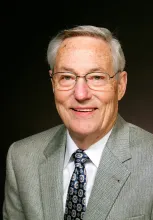
At the time of his retirement in 2016, Roy Holladay was serving the Operation Manager for Ministerial and Member Services of the United Church of God. Mr. and Mrs. Holladay have served in Pittsburgh, Akron, Toledo, Wheeling, Charleston, Uniontown, San Antonio, Austin, Corpus Christi, Uvalde, the Rio Grand Valley, Richmond, Norfolk, Arlington, Hinsdale, Chicago North, St. Petersburg, New Port Richey, Fort Myers, Miami, West Palm Beach, Big Sandy, Texarkana, Chattanooga and Rome congregations.
Roy Holladay was instrumental in the founding of the United Church of God, serving on the transitional board and later on the Council of Elders for nine years (acting as chairman for four-plus years). Mr. Holladay was the United Church of God president for three years (May 2002-July 2005). Over the years he was an instructor at Ambassador Bible College and was a festival coordinator for nine years.
