

Ben Light
This transcript was generated by AI and may contain errors. It is provided to assist those who may not be able to listen to the message.
Well, today I've used the Preachers Outline and Sermon Bible commentary, as well as the Life Application commentary, to prepare the message. I want to quote a portion of an article in Science Daily that I read this last week. The title of the article is, You've Got to Have Hope. Studies show that hope therapy fights depression. I'd like to quote here, just one paragraph. A growing body of research suggests that there is a potent way to fight symptoms of depression that don't involve getting a prescription. This potent weapon? We call it hope. We're finding that hope is constantly associated with fewer symptoms of depression. And the good news is that hope is something that can be taught and can be developed in many of the people who need it. It says, Jennifer Clevens, Assistant Professor of Psychology at The Ohio State University. When I say the word hope, that very word causes our hearts to spring to life. The word hope creates a sense of optimism, a feeling of expectancy. Hope will reassure us. Hope rescues us. Hope restores us. Yet if we don't have hope, despair can reign. If we don't have hope, we can overcome a sense of purposelessness. With God's help, it's good to know there are no hopeless situations. Only people who have grown hopeless about their situation. People can grow hopeless if they don't put God in the equation. Sometimes we've all been guilty of that, haven't we? We walk by sight and forget that there's a great God. Whenever God is in the picture, there is always hope. I'm going to do something here I don't think I've ever done in the years I've been your pastor. I'm going to quote Stephen King. Stephen King wrote a video play, or what do they call him for movies, Shawshank Redemption. Probably a number of us, I know, I've seen the movie on several occasions. It's an interesting movie. It's a story about a man who was framed for murdering his wife. He didn't do it, but he was thrown in jail anyway. This was a jail somewhere down south. I don't know if it was 1920 or what, but it was some number of years ago, according to the story. The main character's name is Andy Dafrein. He was the one who was framed. He was played by Tim Robbins. Tim Robbins became friends with a lifer there in jail. His name was Red. Red was played by Morgan Freeman. In this letter from Andy to Red, he says, Hope is a good thing. May be the best of things. And no good thing ever dies. Which I thought was interesting. Dr. Martin Luther King, Jr. said this, Only in darkness can you see the stars. Only in darkness can you see the stars. Here's a young woman who, if anyone were to have a sense of hopelessness, it would have been her. Her name was Anne Frank. And she wrote, in the diary of a young girl, she wrote, I don't think of all the misery, but of the beauty that still remains. Hope is a powerful thing. Hope is a very powerful thing. Today we want to talk about that, but we want to talk about hope in a very special way. Let's begin our journey today over here in Romans chapter 8. Romans chapter 8. Starting in verse 19. Romans 8-19.
For the earnest expectation of the creation eagerly waits for the revealing of the sons of God. And notice here where it says, the earnest expectation. That phrase means that here's people who've got their heads up, their eyes open, they are looking around, they have a real fervent expectation. They're looking forward to something. They're looking forward to the revealing of the sons of God. In other words, looking forward to the time when the family of God is fully converted in the kingdom of God. Where the God family has grown from being flesh and blood, where we've got God as a part of us, to where we are fully converted and we are totally spirit beings. Verse 19. For the creation was subjected to futility not willingly. God created a good creation, a beautiful planet, a gorgeous place for Adam and Eve to live and to raise their family. However, when Adam and Eve made a wrong choice, Adam and Eve dragged the whole of the earth with them. For the creation was subjected to futility not willingly, but because of whom we've subjected it in hope. Because the creation itself also will be delivered from the bondage of corruption into the glorious liberty of the children of God. So, brethren, what we're looking at here is even the world, the physical earth that we stand on. The physical earth is looking forward to a change. In essence, if the earth could speak, the earth would say, we're looking forward to the second coming of Jesus Christ. We're looking forward to the time when mankind no longer is a sinful group of people, but they are totally spirit. Verse 22. For we know that the whole creation groans in labors of birth pangs together until now. In essence, those verses, verses 19, 20, 21, and 22, talk about how the whole world awaits a renovation, physically but more importantly, spiritually, for the inhabitants of the world. Now, as I was thinking about just having gone through paths over the days of Unleavened Britain, and we're coming up to the Feast of Pentecost, the Day of Pentecost, I got to thinking about the power of God. I got to thinking about a lot of associated issues with the power of God. And today, my sermon, if you want to take some notes and write something across the top of your paper, here is the theme of what I would like to get across today. And that is that God addresses one of mankind's greatest needs, the hunger for hope. God addresses one of mankind's greatest needs, the hunger for hope. The whole world craves, hungers for the hope of God. And I know that you do. When I saw the offerings this last Holy Day season, I was truly amazed. You know, we don't normally talk about this. We used to talk about this a great deal. But to give you a sense of where we were with the Holy Day offerings and where your heart and mind are, on the first Holy Day, we averaged $70 per person. And I don't say this in case you gave less than that to make you feel bad. That's not the point. The point is, as a group, we were averaging $70 per person. On the last day, $77. Brethren, in our area, we pretty much averaged $55 to $60 a time. And this was so much better, because I think that you are looking at what's happening in the world. I think that you have a hunger for wanting to get a message out to the world. You see how hopeless the world is. You see how desperate people are. You see people walking around with no sense of direction. And you know that we have a sense of direction. And you want to do something about that. So together, with synergy, we get all of our assets together. We get all of our prayers and our fast things together. And we do something that is just remarkable. The very work of God. Let's turn to Titus 2. Titus 2.
Titus 2. Titus 2 and verse 13. Titus 2.13. Looking for the blessed hope and the glorious appearing of our great God and Savior, Jesus Christ. The glorious appearing of our great God and Savior, Jesus Christ. So here we see where Christ's coming is called glorious. But you know, that's not the only thing. You will be resurrected at the time and you will be glorious. The Kingdom of God will be started at that time and that will be glorious. As I was pulling into the parking lot today, I saw Bob and Mary Dunham. They were walking in with all their stuff. I rolled the window down, you know, cars everywhere because they were taking in the jewelry show here.
And I said, I look forward to the day when all churches all over the world have this many people because they want to come to church. Because you, at that point, will be a spirit being and you're running Sabbath services. And you are teaching. And you're counseling. And you're anointing. And you're doing all of them. Because you're God. You're one of the big guys. And I look forward to that day. Glorious results, glorious lives with the return of Jesus Christ.
And the whole of mankind is hungering for that. Now, as Mickey mentioned earlier today in Ann Arbor, when I was looking at this subject, I thought, well, how do I attack this subject? How do I put this down in a way that really makes sense? Well, from a logical point of view, I think the first thing we should look at is the foundation of our hope. What's the foundation of our hope? Hope is only as good as the source of it. Hope is only as good as its source. Outside of God and the Bible, hope consists of whims.
It consists of what man thinks. Or it can consist of what Satan wants you to think. As a matter of fact, Satan is the author of false hope. False hope. Where there is no anchor. Where people will trust in one ideology, you know, they'll trust in the ideology of the Jew.
What is the ideology today? Is it Marxism? Is it capitalism? Is it materialism? Is it idealism? Is it religiosity? Is it secularism? Is it legalism? Is it license? What is the thing today? Well, apart from God and Jesus Christ and the Bible, there is no foundation for hope. People can wish... people can wishfully think that that doesn't get you anywhere.
Some people hope in a career. They hope in a business opportunity. Or some people hope in a marriage. Or children. Or money. Those things get us nowhere, of and by themselves, apart from God. John 8, verse 44. Interesting statement here, John 8, verse 44. Brought myself some nice hot tea. At least that's what I'm going to tell you is in there. John 8, 44. You are of your father the devil, and the desires of your father you want to do.
That's what people hope in. Things that Satan will lead them into. He was a murderer from the beginning with Cain and Abel. Does not stand in the truth, as we realize from what happened to Adam and Eve. Because there is no truth in him. When he speaks, he speaks from his own resources. For he is a liar and the father of it. Satan is the father of lies. He's the father of deception. He's the father of misdirection. You can't have hope based on any of that. Yet the world does just that.
The world places its hope in things of this world. Where Satan has his fingerprints all over him. There's no hope in that. John 10, go over it and read yourself. John 10, verse 10. John 10, 10. Where it says, The thief does not come except to steal, and to kill, and to destroy. To steal, to kill, and to destroy. This is the very antithesis. This is the very opposite of hope. Satan doesn't want us to have hope. Satan wants us to be depressed, to be discouraged.
He wants us to feel for alone. He wants us for Lord. He wants us to feel that we've got no purpose in life. He wants us to give up. He wouldn't want us to walk out of the door in the morning. He's there to steal our happiness. He's there to steal our joy. He's there to kill us spiritually. Take our life physically, if God would allow. He's there to destroy and shipwreck our salvation. No hope in any of that.
So Satan can't be the author of hope, but he's the author of false hope. Now, the foundation of hope that really matters is where God the Father and Jesus Christ, where they are the foundation. They are the authors of true hope. God the Father and Jesus Christ. Brethren, as you and I look into the Scriptures, one thing we see so loud and so clear is that hope has to come from beyond us.
It can't be physical. It can't be of flesh and blood. It's got to be beyond us. It's got to come from someplace else. It's got to come from God. Jesus Christ is going to be the real deal. The Christian's hope is not subjective. It is objective. It clings to something that's real and powerful, and that is the living God. God is both the inspirer and the object of our hope.
He inspires it and should be the object of our hope. Let's take a look at just a few Scriptures along those lines. Psalm 39 and verse 7. Psalm 39 and verse 7.
And now, Lord, what do I wait for? My hope is in you. It's not in an ideology. It's not in another person. It's not in money. It's not in a business opportunity. It's not even in religion. It's in God. Because there can be an awful lot of false religion out there. You know, we've read on so many occasions at the very end of Hebrews chapter 10 and gone through Hebrews chapter 11, faith chapter. But in Hebrews chapter 10 and 11, we see where there's a different dimension when it comes to faith. And it's also true when it comes to hope. There is a different dimension, a spirit dimension. God the Father and Jesus Christ are the foundation of that dimension. And that's why we can have hope. Real hope. Solid hope. 1 Timothy chapter 1 and verse 1. 1 Timothy 1-1.
1 Timothy 1-1, Paul, an apostle of Jesus Christ, by the commandment of God our Savior, and the Lord Jesus Christ. Notice, God can be called Savior as well, God the Father. And the Lord Jesus Christ, notice, our hope, not only is the Father our hope, Jesus Christ is our hope. God's family is our hope. And so the foundation, as I said, the foundation is only as good as its source. Our source for hope is God and Jesus Christ. And so that foundation is good. As a matter of fact, over here in Matthew chapter 7, you don't need to turn there. I can read this for you. Matthew chapter 7, starting in verse 24. Matthew chapter 7, excuse me. Matthew chapter 7, verse 24. Therefore, whoever hears these sayings of mine, and does them, I will liken them to a wise man who built his house on the rock. Built their house on the foundation, and that rock is Jesus Christ. And now notice verse 25. The rains descended, the floods came, the winds blew and beat on the house. In other words, people who are going through the storms of life, the trials, the difficulties, all the challenges, the life will throw at us. All these things. But they don't fall. It doesn't fall because it was founded on the rock. If we are founded on God the Father and Jesus Christ, that's where our hope is founded. We won't fall either. Because we've got that solid foundation. Many years ago, when I lived in St. Clair Shores, I had this little tiny starter home. Every once in a while, I'll just drive by, just peek at it. Just the tiniest. I don't think that thing was 800 square feet. I mean, it was so tiny. Just the two little bedrooms, just the tiny little band. My garage was larger than my house. I had a garage that was larger than my house. I should have slept in the garage. Well, sometimes I did. But anyhow, across the street was this huge house. It was a really nice home, brick, fully brick. And it just looked so gorgeous sitting over there. One day, my wife went over to walk into the house, talked to the neighbor lady, and she came back and said, Randy, you should see the inside of that house. I said, what do you mean? She says, all the walls are billying. I didn't know at the time, but being there in St. Clair Shores, we were only half a mile from Lake St. Clair, that house was on top of an underground street. It was an awful foundation, and the house was just caving in on itself, bit by bit. Bad foundation. It looked like a million dollars on the outside, but the inside was awful. It was awful. Foundation means everything. Verse 26, But everyone who does these sayings of mine and does not do them will be like a foolish man who built this house on the sand. If we listen to Satan, with his deception, his misdirection, then that's what we're going to be, you know, we're basing our life on sand. Verse 27, And the rains descended, the floods came, the winds blew, and beat in the house of the words of trials of life. And it fell, and great was its fall, because it didn't have the proper foundation. It was not a foundation of sand, not a foundation of Jesus Christ. Now, with that in mind, let's go back to John 10. We read the first half of John 10. Let's take a look at the second half of John 10. John 10. 10. The thief does not come except to steal, and to kill, and to destroy, have come that they might have life, and they might have it more abundantly. The first half of this verse deals with Satan, the way Satan deals with things. But that second half, crisis I have come, Christ has come, that they might have life, real life, eternal life, a life filled with hope, and they might have it more abundantly, the abundant eternal life.
So, we've taken a look at the foundation. Your foundation, my foundation, is in God the Father and Jesus Christ. We've got a tremendous source. We've got a solid foundation. At this point, I want to turn our attention to the power of Godly hope. The power of Godly hope. The days of Unleavened Bread are giving way to Pentecost. Pentecost talks about God giving His Holy Spirit of power. Well, let's take a look at this power of Godly hope, and what that means to you and I as Christians. Let's start over here in Hebrews 6.
Hebrews 6. Verses 18 and 19.
Hebrews 6.18. And what we're going to see in these two verses, again, if you're taking notes, the power of Godly hope is shown that it's sure and steadfast. Sure and steadfast. That's the power of Godly hope, is sure and steadfast. Verse 18.
What two immutable things are we looking at? Well, verse 17 tells us. That God determined to show up more abundantly to the heirs of promise that immutability of His counsel confirmed it by an oath. So we've got, number one, God's word. Give you God's oral word, God's written word in the Bible. That's one. And secondly, God says, I will back that up by my own oath.
Those two things. We get to verse 18. Those two things says it's impossible for God to lie. In the middle of verse 18, that we might have strong consolation. Part of the power of Godly hope is God wants us to have this strong consolation. In other words, this phrase, strong consolation in the Greek means to be mightily encouraged. God wants to mightily encourage you. Not weakly encourage you. Not kind of give you dog and pony, a little bit of shadows here and there. He wants to strongly encourage you as you go through life.
We might have strong consolation who have fled for refuge as we have fled for shelter from danger or distress or some enemy. You know, on the last day of Unleavened Bread, I was trying to convey the thought. So many times we think about deliverance from something.
And the whole course of the thought I was trying to convey on the last day of Unleavened Bread is that God also delivers us to Himself. Over and over on the pages of the Old Testament we see where somebody was delivered into somebody's hand. Well, we want to be delivered into God's hand. God's caring hand. God's powerful hand. We want to be delivered there. And we have this strong encouragement that we can flee to Him to be delivered in God. Paul said, I cried three times for God to heal me. God didn't heal them. But what did God say? God told him, look, my grace is sufficient for you.
You can flee to me. You can have refuge in me. And my power will get you through the day. My power will get you through the day. God said, you know, I can very easily heal you, whatever the problem is right now. Nice miracle. The breath of your mouth will be open. Everything will be wonderful. But then it's done. God said the two. Paul says, look, I think it's better for you to have a miracle every day. But every day you've got to walk with me. Every day you've got to rely upon me. So Paul had that strong consolation that he can go to God as a refuge.
Verse 19. This hope we have as an anchor of the soul, both sure and steadfast, which enters the presence behind the veil. We have as an anchor of the soul. You know what an anchor is? You know, we live here in Michigan. We're familiar with boats. We've got plenty of water all around us. Remember as a kid growing up on Lake St. Clair, the boat that my dad wanted to buy ended by a nice 23-quarter. And I thought, well, this is wonderful. Lots of swimming in the store, fishing, all sorts of good stuff.
But my dad was an old Navy man. And during World War II, he was on a PT boat. Those were 75, 80-foot boats made out of mostly plywood. And they would be able to see those little, tiny, dinky boats. They'd be able to see four or four months at a time. They'd be resupplied out at sea and what have you. My dad, during World War II, his group was more around the Philippine Islands. When he found out that the boat he was looking at was a Higgins. And Higgins was the company that made the PT boats in World War II.
He had to have it. I thought, no, Dad, you don't gotta have it. Because I was thinking to myself, we're going to spend two months out of three in the summertime scraping paint, painting that thing up, getting it ready to be worthy. And that's exactly what we did most years. But, you know, there were times when I would say to Dad, I really have to go swimming. I was a young kid. I want to go swimming. Throw out the anchor and off we go. You better throw that anchor out because if you don't, your boat's in a drift. And just as last week, we saw the United States Navy being made a fool of.
Here we had a mine layer. It was only one that we had in our whole fleet, I think. A mine layer. A pretty good size vessel. An ocean-going vessel. And it was over in the Philippines, and this mine layer was coming close to a reef. And the Philippine government says, hey, you gotta back off. You can't be coming close to this.
This is a national treasure. And so the captain radioed back, and basically the captain said, mind your business. Well, in a very short time, our ship, this Navy ship, ran aground on the reef. And of course, in the course of time, the wave action was strong enough where the waves pushed that ship further onto the reef. So what was done just this past week? The Navy decided the best way to deal with this is not drag that thing off the reef, but they chopped that whole ship up.
They scrapped it. Bit by bit. Cut it apart, and it cost millions of dollars to do that. Ship the thing away, then they also had to pay the Philippine government for the damage done to the reef. Now had the guy listened to the Philippine government, or had the guy thrown his anchor out when he should have, that ship would not have done that. We have an anchor to our soul. An anchor that will give us stability.
We're not going to drift onto the rocks and be ruined, because we've got an anchor of our soul. And that's the analogy that Paul's wanting us to understand there. Paul on many occasions would go from point A to point B on a ship. And he knew about ships and anchors. He spent a day and night in the deep, or whatever it was. So we have here a hope. The power of godly hope is that it's sure and steadfast.
You know people at work who wish they had hope that was sure and steadfast. Their hope is fleeting, and their hope is not steadfast. Romans chapter 4 shows another kind of hope. Another power of hope. Romans chapter 4.
Romans chapter 4 verses 18 through 22. Talking about Abraham. Talking about Sarah. Talking about the fact that they had a hope that looked beyond circumstances. That's a powerful thing. To have a hope that sees beyond our circumstances. Romans chapter 4 verses 18. Who, contrary to hope, believed. It says, contrary to hope. There was no hope that Abraham, as old as he was and Sarah as old as she was, physically speaking, there was no hope they were going to have children. That was the physical set of circumstances they faced. But notice, who, contrary to human hope, in hope, believed. They believed in the hope and the power that God has. That God moves beyond our circumstances. That God deals in a whole different dimension than what we live in. So verse 18. Who, contrary to hope, in God's hope, believed. So he became the father of many nations, according to what was spoken. So here shall the descendants be. And not being weak in faith, he did not consider his own body already. Not being weak in faith, he did not consider his own body already dead. You know, his body just wasn't in the position to make children. Since he was about 100 years old. And the deadness of Sarah's home, she was in the same situation. He didn't consider that. He didn't allow that to have him waver. He had him anchored to his soul. He was firmly anchored. He knew that whatever God wanted to take place was going to take place. Verse 20, he did not waver at the promise of God through unbelief, but was strengthened in faith, giving glory to God. He didn't vacillate. And verse 21, being fully convinced that what he had promised, he was also able to perform. What God had promised, God was fully able to perform. Brethren, I can't think of a better scripture in the Bible than it defines what faith is. Verse 21 is a tremendous definition of what faith is. God has made promises. They're here in the Bible. He's able to do it. You just have to believe it. We just have to believe it. We've got to live according to God's way of life so God can answer the prayers of the faithful. So here we have a second facet of God's power of hope, and God's hope sees beyond our circumstances. Brethren, what are your circumstances right now? Are you facing something you think is insurmountable? You're standing at the foot of your Mount Everest? What is it right now in your life? Well, God, Godly hope sees beyond just the circumstances. It has faith in the power of God. 1 Peter 1 shows yet another facet of the power of Godly hope. 1 Peter 1 and verse 3. 1 Peter 1 and verse 3.
Where it says, Blessed be God, blessed be the God and Father of our Lord Jesus Christ, who according to His abundant mercy has begotten us again to a living hope through the resurrection of Jesus Christ from the dead. A living hope, a facet of God's power of Godly hope, is that it's a living hope, it's a dynamic hope, it's a vital and vibrant hope, it's a vivacious hope. Because Christ is alive, Christ is alive, Christ has risen from the dead, and because He is a living God, all things are now possible to those who believe. Again, if you live in that beautiful dimension, a spiritual dimension.
Go over a few chapters to 1 John chapter 3. Here's yet another facet of the power of hope. 1 John chapter 3, starting here in verse 1. 1 John 3, 1, Behold what manner of love the Father has bestowed on us that we should be called the children of God. Therefore the world does not know us because it didn't know Him. People want to think they have evolved from slime. You know, that we've got a Simeon background. Well, a lot of people believe that if they want to. We know better than that. We are God's kids. Verse 2, Beloved, now we are the children of God. Over the course of years there, but people say, well, we can never know about our salvation. Do we really have salvation? You know, we've got to run to the end. Well, that's true. We do have to endure to the end. But can we know for sure we've got salvation? Absolutely! It says so right here. Beloved, now we are the children of God. It doesn't say, well, brethren, hopefully you're the children of God. No, now we are the children of God. When you were baptized, your name was written in the Lamb's Book of Life. And if Christ were to come in this very instant, which He's not going to do, but if He were to do, then you would be resurrected because your name is in that Book of Life. You are the children of God. And it has not yet been revealed what we shall be. No, Christ has not come yet. It is Second Coming. But we know that when He is revealed, that His Second Coming, revealed His Second Coming, we shall be like Him, for we shall see Him as He is. We will have spirit. We'll be able to see other spirit. But verse 3 is the key here. And everyone who has this hope in Him purifies Himself just as He, just as God or Christ, is pure. So a facet of God's power of hope is that hope encourages us to overcome. Hope encourages us to overcome. We don't have to settle for a substandard level of Christianity. We don't have to just settle for our sins which so easily beset us. We have hope that will allow us to overcome. And that is connected to the last passage I want to discuss with you before we move on to something else with the sermon. And this is about over in Romans chapter 15. Romans chapter 15.
Here in Romans chapter 15 you've got a prayer of Paul's, actually a benediction to this letter. Starting from verse 14 and through the bulk of the letter he's talking about private matters, personal matters to various individuals and so forth. But notice a prayer he's offering up here of the Apostle Paul. Romans chapter 15 verse 13. Now may the God of hope fill you with all joy and peace in believing that you may abound in hope by the power of the Holy Spirit. Brother, one of the facets of this power of hope is that it is supplied by God's Holy Spirit. We don't work it up. We can't work it up. We can't do this on our own. God supplies us as a gift through grace. It's a tremendous gift that God gives us. And notice this says here that God of hope fill you with joy. We have joy despite our circumstances because we know we've got a relationship with God the Father and Jesus Christ. And notice something else, and it says, peace in believing. We're not going to have peace if we don't believe in God. Not real peace. If we don't believe in God, there's no foundation for real peace. That's why mankind doesn't have peace. Mankind doesn't have God. They don't have the right foundation. They're never going to have peace. But what Christians can have peace in believing, and we can abound in hope because of God's Holy Spirit. God is the God of hope. He's the author of our hope. He's the foundation of our hope. God is the builder of our hope. He's the finisher of our hope. He's everything. He's the Alpha and Omega of our hope. And that's why we've got such a great hope. That's why we have such great joy. Now, Brendan, lastly, the last part of the sermon I want to give to you today is this. We've looked at the foundation. Our foundation for hope is God the Father and Jesus Christ. We've looked at the power of hope. We saw several different things here. But God being who He is, Jesus Christ being who He is, and we being who we are, because we've got the heart and the mind and the spirit of God and Jesus. We want to proclaim that hope to the whole world. That's our commission. We don't want to just have salvation for our own selfish needs. We want to do a work. We want to do a work in power. We want the whole world to be filled with hope. And this world isn't filled with hope. This world is filled with despair, despondency. Where people have to see specialists to help them to get through the day. Our commission is to proclaim God's hope to the world. Remember Romans 8? I'm not going to go back there. Romans 8, where the whole world is groaning. The whole world is hoping for the return of Jesus Christ, for the family of God to be resurrected, and for there to be these other spirit beings. Let's take a look at the Apostle Paul and some of the things he said when he was before a king. This is over in Acts 26. Acts 26.
Acts 26, verse 6. And now I stand and am judged for the hope of the promise made by God to our fathers, to Abraham, to Isaac, and to Jacob. Paul says, I stand and am being judged for hope. Verse 7. To this promise our twelve tribes, e, earnestly serving God night and day, hoped to attain. For this hopes-taking, O grip, I am accursed, accused by the Jews. Why should it be thought, incredible by you, that God raises from the dead? So here we've got a discussion, a very succinct discussion, where Paul is talking about the resurrection. He says, this has been the hope of Israel from as far back as there were the fathers. The hope of the resurrection, the hope of the coming kingdom of God. He says, this is what I am being judged by, this hope. The whole world wants that kind of hope. The whole world wants a different kind of ruling party. This world is tired of what it's had to offer over the last six thousand years. Matthew chapter 1 ties into this. Let's go to Matthew chapter 1 for a moment.
Matthew chapter 1.
In verse 16, Matthew 1 verse 16. Real hope here, not false hope, real hope. Matthew 1.16. And Jacob begot Joseph, the husband of Mary, of whom was born Jesus, who was called Christ. He was called Christ. He is the Messiah. Messiah is the Hebrew word. Christ is the Greek word. Both words refer to the anointed one. The one who is coming, the one who is going to establish a new kingdom, the kingdom of God on earth. And Jesus Christ day people fervently wished for a different kingdom. They wanted to throw the yoke of Roman bondage away. Their life was harsh, it was hard, it was impoverished. Under the Roman Empire, they felt that they simply needed a new shot, a new lease on life.
And, brethren, that's true today, too. You and I don't live under the Roman Empire. You and I are fortunate to live under God's birthright blessing nation of modern Israel, the United States of America. And as great as our nation is, and as much as it's afforded us, compared to God's kingdom, this is way down the list of what we desire. We desire to be in God's kingdom.
But in Christ's day, they look forward to a Messiah. Paul said, I am being judged because I am looking forward to a Messiah. And think about the things Paul says, when he says the word Messiah, what that conjured up in people's minds then.
Because the same thing is true today. And today we need to preach that same gospel, that same message, that just back in the Paul's day, they were looking for a national leader that would come to lead Israel to greatness. Well, the Jews back in those days simply had their timing wrong. That's going to take place. They kind of skipped over the Scriptures dealing with Christ's first coming, went right to the second coming, where they saw the Millennium.
Where they saw Israel being the leader of the world tomorrow in the Millennium. We want our people to understand that there is a future. Right now there are a lot of people concerned about what's happening in Korea. They're not concerned that Korea is going to launch a nuclear warhead toward the United States. I don't think many people are that concerned about that.
But what if North Korea decides they want to invade South Korea? South Korea's got a brand new woman president. She's untested. The new ruler of North Korea is a young man who is also untested. There is some thought that, is he a puppet? Are the generals running North Korea? So you've got these two untried people running those two Koreas, North and South.
And there's some real worry that this whole thing can escalate badly out of control. There's also worry that, whereas North Korea probably won't launch a missile against the United States, they could sell dirty atomic material to various terrorists, and they can bring it over here. This world needs some real hope. And we need to let people know there is hope. And we are part of an organization who is proclaiming this hope. Back in Paul's day, the people thought, boy, we need a Messiah that will bring his armies and establish this new kingdom. Well, we want to tell people, yes, that's true.
Christ will bring his armies, but they are armies of angels. And the saints will meet him in the air and come down to rule this planet forever and forever. So again, people had the timing wrong, but they had the same longings that people do today. And you and I are a part of an organization who is doing just that.
I don't know about you, but I'm getting increasingly more and more sick when I'm watching television or listening to the news on radio. And seeing what's passing off is, well, this is the way America is today.
Here is what our country is today. You know, if you don't believe in a gay lifestyle, something is terribly wrong. You were so big at it. My dad died back in 1977. My dad would be resurrected and walk the earth today and read a newspaper today.
He'd say, what in the world? And it's not been that long ago. What is happening? My dad was not a religious person. He wasn't an atheist, but he didn't darken too many pews in too many churches too many times. He just wasn't a religious guy. But he would say, this is... He'd say a lot of choice things. I couldn't repeat here. But he would say, this is incredible.
There's something else that we want to proclaim to the world. Not only there's a coming kingdom where Israel and our peoples will shine, where God and Christ will rule, where the churches and the knowledge of God will cover the earth as the waters cover the sea. We want to get that knowledge out to people. But there's something else people need to know about and we proclaim. It's over here in Psalm 33. Psalm 33.
Psalm 33, verse 18. It says, Behold, the eye of the Lord is on those who fear Him, on those who hope in His mercy. Hope in His mercy. This is something else we want to proclaim to the world. That there is mercy and forgiveness available. People today are hurting themselves. They are taking their lives. They're doing all sorts of things because they can't cope with what they've done in life, what people have done to them in life. And they're looking for the mercy of God. Luke chapter 7 talks about mercy. Let's take a look over there. Luke chapter 7. We see this personified in this individual that comes to Jesus Christ.
Luke chapter 7, verse 37. Luke 7, 37. Which is, Behold, a woman in the city who was a sinner. When she knew that Jesus sat at the table of the Pharisees' house, brought an alabaster flask of fragrant oil. She knew who she was. She was a sinner. She knew who Jesus Christ was. She had probably either heard Him preach in person or heard an awful lot about Him. And she loved His message. She was going to seek Him out. And stood at His feet behind Him weeping. And she began to wash His feet with her tears and wipe them with the hair of her head. And she kissed His feet and anointed them with the fragrant oil. So not only is this woman a sinner, and she knows that she's a sinner. She is convicted of her sins. She doesn't want to be there anymore. She desperately wants mercy. She knows she's got a tremendous need. Her heart aches for forgiveness. Her heart aches for cleansing. She wants freedom from all that she has shackled herself to with an inappropriate lifestyle. And so she seeks out Jesus Christ. And when she finds Him, she begins to serve Jesus Christ. She begins to surrender to Him and yield to Him. She washes His feet with her very hair. Verse 39. Now, when the Pharisee who had invited Him saw this, He spoke to Himself, saying, This man, if he were a prophet, would know who and what manner of woman this is, who is touching Him for she is a sinner. Like as though she was the only one in the house.
Jesus Christ was not a sinner. It's interesting, some of these fellows in the Bible. Ah, these women. Well, who was He? You know? She's repentant. She's looking at Jesus Christ, and she's serving, and she's weeping, and she's wanting forgiveness. He's stiff-necked, and looking down His nose, and self-righteous. He's in a horrible state. But He doesn't see that. He doesn't see that. Because He doesn't have the same frame of mind She does. Verse 40. And Jesus answered and said to Him, Simon, I have something to say to you. He says, go ahead, say it. Verse 41. There was a certain creditor who had two debtors, one owed a 500 an hour and the other a 50. And when he had nothing with which to repay, he freely forgave them both. Tell me, which of them will love him more? Simon said, the one that you forgave more. He said, you've rightly judged. Then He turned to the woman and said to the Simon, do you see this woman? I entered your house, and you gave me no water for my feet. But she has washed my feet with her tears, and wiped them with the hair of her head. You gave me no kiss, but this woman has not ceased to kiss my feet since the time I came in. You did not anoint my head with oil, but this woman has anointed my feet with fragrant oil. And the idea here is this oil probably was extremely expensive. This may have cost her the better part of several months' wages to save up and buy this. But she felt nothing is too good for my Savior. Verse 47, Therefore I say to you, her sins which are many are forgiven, for she loved much, but to whom little is forgiven, the same loves little. Then He said to her, your sins are forgiven.
This is a message we want to get out to the world. People who have ruined their lives in so many different ways. They can have a fresh start. They can have forgiveness.
The last thing I want to discuss with you today, the last scripture we'll look at today, is over here in 2 Thessalonians 2. 2 Thessalonians 2.
We want to proclaim God's coming Kingdom. We want to proclaim God's mercy. We also want to proclaim something else here that we see. 2 Thessalonians 2. Verses 16 and 17. We want to proclaim eternal hope. We want to proclaim eternal encouragement. We are an upbeat work. We've got an upbeat message. It's not just pull yourself up by your own bootstraps, buy a book from us and we'll show you how to get rich in 90 days. You know, some of the things you see on TV. Oh, just go to Mark, go to our seminar. You go to our seminar. It changes lives. Oh, baloney! So you have more money. Does that really change your life? It probably changes your life for the worse in a lot of ways. 2 Thessalonians 2. Now may our Lord Jesus Christ Himself and our God and Father who has loved us and given us everlasting consolation. Everlasting. Something that's not going to go away. It can't be taken away. What you have, you have from God. You know, when I do a funeral for somebody who's died in the faith, they've made it. And I've never stood next to a casket in all the years I've been in the ministry. All the people I've buried, I've never stood next to any one casket where the person laying there was perfect. And they wouldn't say they were perfect. They knew better. But one thing that all of them who died in the faith had is that they died in the faith. And they have a relationship, they had a relationship with God and their names were written in that Lamb's book of life. And nobody takes that away. Nobody. So here we have everlasting consolation, everlasting encouragement, everlasting inspiration, and good hope by grace. Notice where this comes from. We're not doing this ourselves. This comes, good hope comes by God's grace. He says, comfort your hearts and establish you in every good word and work. So the hope that we have establishes us. And we want the people of the world to come in contact to be established. We want them to know the truth that has helped us so dearly. So we have a commission to get this word of hope out to the world. Brethren, today we've learned a lot about hope. We've learned the hope of something that can be taught. It can be developed, if you know how to do it, with God's help. We've learned that hope causes our hearts to spring to life, creates a sense of optimism, gives us a feeling of expectancy, reassures us, rescues us, restores us. We've seen today that hope can transform discouragement and defeat, knowing that there are no hopeless situations in God's sight. None. It's just that sometimes people simply grow hopeless because they don't look at God in the picture. We've taken a look at the world's great need for hope. We've taken a look at the fact that the foundation of our hope is in God. And we've seen some of the power of Godly hope. I went through five different things. The Godly hope is sure and steadfast. The Godly hope sees beyond our circumstances. The Godly hope is living and dynamic and vital. The Godly hope encourages us to overcome. And the Godly hope is supplied by God's Spirit. We don't have to work it up. And lastly, we took a look at our commission to proclaim this beautiful hope to the world. The hope of the resurrection. The hope of the coming kingdom of God. The hope of the mercy of God. The hope of eternal hope. Brethren, I'm hoping today, as we've gone through this message, as we're moving forward now to the coming of Pentecost, that we can rejoice in the hope of God.
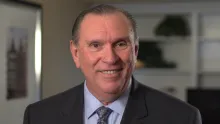
Randy D’Alessandro served as pastor for the United Church of God congregations in Chicago, Illinois, and Beloit, Wisconsin, from 2016-2021. Randy previously served in Raleigh, North Carolina (1984-1989); Cookeville, Tennessee (1989-1993); Parkersburg, West Virginia (1993-1997); Ann Arbor and Detroit, Michigan (1997-2016).
Randy first heard of the church when he was 15 years old and wanted to attend services immediately but was not allowed to by his parents. He quit the high school football and basketball teams in order to properly keep the Sabbath. From the time that Randy first learned of the Holy Days, he kept them at home until he was accepted to Ambassador College in Pasadena, California in 1970.
Randy and his wife, Mary, graduated from Ambassador College with BA degrees in Theology. Randy was ordained an elder in September 1979.
