
Greg Thomas
This transcript was generated by AI and may contain errors. It is provided to assist those who may not be able to listen to the message.
Well, thank you, Mr. Blakey. Wasn't that rousing? Kind of makes you want to get up and do jumping jacks, and... That's awesome. Thank you so much for special music today. Very powerful, and just what we needed to get us through this afternoon service together. Well, welcome again to the afternoon service of the Day of Pentecost here in 2018. We are here once again to worship our great God and to celebrate His gift to His beloved children, and that, of course, is the gift of His Holy Spirit. Have you ever considered how profound God's Spirit is in the work that God does? We're going to see today it's that same Spirit. In the very opening message of Genesis, Chapter 1, the Spirit is mentioned.
And it's a very closing message of Revelation. Once again, God's Spirit is mentioned. And a number of times in between, we're going to look at a number of those times, God's Spirit and the power, the energy of God's Spirit is mentioned. So what happened on the Day of Pentecost in 31 AD was an incredible miracle and a miraculous event, but indeed was just one of many times the power of God's Spirit has been manifested to this world. So let's begin by going to Genesis, Chapter 1 and verse 1, and begin to see the very first mention of the Spirit of God.
A very beautiful Scripture. We have to remember, of course, when the Bible was written, there were no verses or chapters. That was added later on by men. So what we read here regarding the Spirit of God are the opening thoughts, the opening instruction of the story of creation. Genesis, Chapter 1, beginning in verse 1, it says, In the beginning God created the heavens and the earth, and the earth was without form and void, and darkness was on the face of the deep. And of course, we know and understand that there was a period of time between God's original creation.
There was a gap of time that occurred in which, unfortunately, the earth came into chaos and destruction, probably through some form of warfare, heavenly warfare, that had occurred. So as we read here, beginning in verse 2, And the earth was without form and void, it had become that way. And the Hebrew word was, can be, of course, translated, became. Form and void and darkness was on the face of the deep. And the very next words. And the spirit of God was hovering over the face of the waters, and God said, let there be light, and there was light.
The spirit of God, the Hebrew word, is ruach eloim. Ruach being a Hebrew word, it means breath. It means wind. Translated, obviously, is spirit, and eloim is the name for God here given in the book of Genesis. And the ruach eloim was hovering in the face of the waters, and God said, let there be light, and there was light. I'm going to read this from the translation, the new, revised, standard version, verse 2. And the earth was formless and void, and darkness covered the face of the deep, while a wind from God swept over the face of the waters.
So here, again, we have this Hebrew word, this phrase, ruach eloim. And what it means here is that this was the breath of the Almighty. It was an agent of creation. It is the picture of God's energy breathing out creation, as it were, making it habitable for the creatures that would follow during the next days of the recreation of the earth.
This word hovering here is very interesting. It's only used, the Hebrew word that's translated in English, hovering, is only used three times in the Bible. The next time it's used is in Deuteronomy chapter 32, regarding God's care of Jacob as an eagle, caring for its young. The same word is used and translated hovering there in English in Deuteronomy 32. And again, it shows that God cares for his young.
He is stirring his nest. He is spreading his wings and allowing his young to be protected by his wings. So when we see this verse here that the Ruach Elohim was hovering over the face of the waters, this word indicates a high degree of care, of concern, a word of action. So the Spirit of God is the dynamic energy, power, and creative force that the Father and Christ both share. And here in the recreation of the earth, God the Father willed it. The Word spoke it into existence, and the Spirit that they share that creative force of God performed the act of recreation of the earth.
From once again no longer being in chaos, in void, but being fashioned so that God's creatures, including you and I, could live on it. Here the Spirit of God transformed something that had become mediocre, something from mediocrity to magnificent. And we're going to see today that this is a common quality of what God's Spirit does when it's in action.
It transforms things from mediocrity into being magnificent. Let's go to Genesis 41 and verse 34 and see an example of an individual whom even a pagan tyrant could say that this person is different. This person is unique. This person has something that no one else in my kingdom has. Genesis 41 and verse 34. We're familiar with the story of Pharaoh having a nightmare, and in the nightmare it's a dream, and no one could interpret the dream, but this young man Joseph, who had spent much of his life as a slave, some of his life in prison, was able to interpret the dream.
And so let's pick it up here in verse 34. Let Pharaoh do this and let him appoint officers over the land to collect one-fifth of the produce of the land of Egypt into the seven plentiful years, and let them gather all the food of those good years that are coming, and store up grain under the authority of Pharaoh, and let them keep food in the cities.
Verse 36. Then that food shall be as a reserve for the land for the seven years of famine, which shall be in the land of Egypt, that the land may not perish during the famine.
What a manager! He just provides an answer to a complex problem. How are we going to prepare for seven years of famine? And so Joseph demonstrates a gift. He demonstrates something that truly impresses Pharaoh and everyone in Pharaoh's court, everyone surrounding him. Verse 37. So the advice was good in the eyes of Pharaoh and in the eyes of all his servants. And Pharaoh said to his servants, can we find such a one as this, a man in whom is the Spirit of God?
I want you to notice here that this man, Joseph, by all appearances on the outside, an average individual, was made special by a supernatural gift of interpreting dreams because he had something special inside of him. That something special was the Spirit of God. Again, we could say that Joseph was transformed from the mediocre to the magnificent because he had the Spirit of God.
Exodus chapter 31. Let's go a little further here into the Old Testament. Exodus chapter 31 and beginning in verse 1. God obviously wanted a tabernacle built that reflected his majesty and his glory and he needed skilled artisans to be able to follow the detailed design that he would give to Moses so that the tabernacle would reflect the quality and reflect the attributes that God wanted it to have. So we're going to pick it up here. Exodus chapter 31 and verse 1. Then the Lord spoke to Moses saying, See, I have called by name Bezal, the son of Uri, the son of Her of the tribe of Judah, and I have filled him with the Spirit of God in wisdom, in understanding, in knowledge, and in all manner of workmanship, to design artistic works, to work in gold, silver, and bronze, in cutting jewels, for setting, in carving wood, and to work in all manner of workmanship.
Verse 6. And I, indeed, I have appointed with him a whole lab, the son of Ahishamak, the tribe of Dan, and I have put wisdom into the hearts of all who are gifted artisans, that they may make all that I have commanded you. Do you realize that there are essentially are two different types of gifts?
All gifts come from God. Every gift that any human being could possibly ever have comes from God, because he is the creator. But there are indeed two kinds of gifts. The first kind are natural gifts that come as a result of the DNA mixture that we were born with, and a predisposition to do certain things well. I happen to know, for example, Mr. Blakey, that he has a natural gift. I've seen pictures of him on album covers. He was cutting records before he was called into God's way of life. He is a product of someone who was blessed with natural gifts to be able to sing. And we have many other of us, brethren, in this congregation who have a number of natural gifts.
The second type of gift that's available are spiritual gifts, and they are not the result of natural talent. They're not the result of a predisposition to do something. They are miraculously given from God to fulfill a need in the Church of God. So those are the two types of gifts. They all come from God, and he gets all the credit for whatever types of gifts we may have or that we may possess. Now, in the case here of Exodus 31, these were individuals who obviously were artisans, and God gave them. He magnified the gifts that they had so that they could perform superior, detailed craftsmanship. So we could say that these artisans were transformed from gifted artisans to the ability to create magnificent work, to honor the glory and the majesty of God.
Let's take a look at another example. 1 Samuel chapter 19 and verse 18. 1 Samuel chapter 19 and verse 18, Saul had finally gotten to the point where he decided he wanted to kill David. And unfortunately, just before this event, Saul had expected David's wife, who happened to be Saul's daughter, Michael, to turn her husband in, David, into her father. And she refused to do that. She actually helped her husband to escape, and there was a little bit of a conflict over that. So we'll pick it up here now in verse 18. So David fled and escaped and went to Samuel to Ramah and told him that Saul had done to him. And he said, Saul is trying to kill me. Saul has turned against me.
And he explained all of that to Samuel. And he and Samuel went and stayed at Neoth. Now it was told Saul, saying, take note, David is at Neoth in Ramah. Verse 20. Then Saul sent messengers to take David. And when they saw the group of prophets prophesying and Samuel standing as leader over them, the Spirit of God came upon the messengers of Saul, and they also prophesied.
So what's happening here? Saul sends a group of messengers out, and their goal is to find and locate David, and possibly even to arrest him, to seize him, so they can turn him over to Saul.
He sends those group of messengers out. Upon them comes the Spirit of God. They begin to prophesy with the other prophets that are there, and they don't come back. Saul's a little bit concerned here. They never returned. Verse 21. And when Saul was told he sent other messengers, and they prophesied likewise. Then Saul sent messengers again the third time, and they prophesied also.
Well, he probably by after the third time he said, you know, if you want to do something right, you got to do it yourself. So it says, then he also, this is referring to Saul, went to Rama, and came to the great well that is in Sekou, and he asked and said, where are Samuel and David?
And someone said, indeed, they are at Neoth in Rama. And so he went there to Neoth at Rama, and then the Spirit of God was upon him also. Speaking of Saul. And he went on and prophesied until he came to Rama, and he also stripped off his clothes and prophesied before Samuel in like manner and lay down naked all that day and all that night. Therefore, they say, is Saul also among the prophets? Of course, we know that, anciently, the ability to prophesy was considered a special gift from God. And in these cases, we literally read how the Spirit of God came upon these mere individuals and transformed them into something different than they were.
Saul meant evil for David, but God was showing Saul here that God has the power to influence, the power to control events, the power to control individuals at his will. His message here, of course, to Saul was that anything he could ever do to David was only because God would allow it.
God was saying, I'm in control of all events. I can motivate, manipulate, change events, change people according to my will. That was the message that God was sending here to Saul. Again, we could say that because of the Spirit of God, Saul and his messengers were transformed from mediocre, from average, into having the magnificent gift of prophesying. And what we're seeing here is a common theme and a God-given purpose of his Holy Spirit to make the ordinary into the extraordinary.
Depending on God's will, this remarkable power of God magnifies, transforms, recreates something that's average, typical, mediocre, into something majestic.
The Feast of Pentecost reminds us of God's desire to do the same with us. He's taking a group of people, one at a time in our own way, according to his individual development plan for us, and he's changing us from being average, typical, mediocre, into becoming magnificent, majestic, being able to be part of his family. Matthew 12 and verse 26. Let's go there. We want to take a few minutes to see how the Spirit of God worked with Jesus Christ himself when he walked on earth, because he walked on earth as a human being. He was born of a woman named Mary. He had blood cursing through his veins. He suffered from cold and hot and abrasions, just like the rest of us do. He struggled with the same challenges of the flesh, just like each and every one of us. Matthew 12 and verse 26. Here he's in a discussion with the Jews who accused him of having a demon, and obviously that offended him quite greatly. He said, if Satan casts out Satan, he is divided against himself. How then will his kingdom stand? Any group of people that are divided among themselves eventually are going to blow apart. They're going to fall apart. So he's saying, how could this kingdom of Satan be so powerful and stand if Satan casts out Satan, if it's divided?
Verse 27, and if I cast out demons by Beelzebub, by whom do your sons cast them out? Therefore, they, your own sons, will be your judges. And then he says something interesting here in verse 28. But if I cast out demons by the Spirit of God, surely the kingdom of God has come upon you.
What Jesus reveals here in a roundabout way is his ability to cast out demons. How is he able to do it? He's able to do it by the Spirit of God. And this shouldn't surprise any of us. It was the spirit that was the miraculous agent of Jesus's conception in Matthew chapter 1. The Holy Spirit came down and Jesus said his baptism in Matthew chapter 3 in verse 16. It led him into the wilderness where he was tempted by the devil in Matthew chapter 4 in verse 1. And here we see it enabled him to heal diseases and cast out demons right here in Matthew chapter 12. Luke wrote in Luke chapter 4 in verse 1, it says that Jesus Christ was filled with the power of the Holy Spirit. The Spirit of God made the human Jesus Christ extraordinary with remarkable power. And that power came through the gift of the Holy Spirit. But that spirit didn't simply reside only in Jesus Christ. Oh, I know. The exciting news, the really good news, is the same spirit that resides in the Father and the Son resides in us. That's the promise of God. That's the promise of Jesus Christ. Let's go to John chapter 14 and verse 15 and review a few verses here that we read at Passover and that we know are very powerful and some of his final comments to his disciples before the evening that he was arrested and eventually crucified. John chapter 14 and verse 15, he said, if you love me, keep my commandments and I will pray the Father and he will give you another helper that he may abide with you forever. This helper, this paracletos, of course Jesus is referring to the Holy Spirit, isn't going to be with you for a week, for a month, or for a decade, or until the day you die. It says it will abide with you forever. The Spirit of truth, whom the world cannot receive because it neither sees it nor knows it, but you know it, for it dwells with you and will be in you. Now, at this point in the context, the disciples did not yet have God's Holy Spirit. It wasn't in them. It dwelt among them in the presence of Jesus Christ, but it wouldn't be long before the day of Pentecost would come that year and they literally would receive the gift of God's Spirit. So he says, for he dwells with you and will be in you. I will not leave you orphans. I will come to you. Dropping down to verse 23, if anyone loves me, he will keep my word and my Father will love him and we, that's the Father and the Son, will come to him and make our home with him. That's the power of the Holy Spirit, the same Spirit that the Father and Son share, the same Spirit that was Ruach Elohim that literally refashioned this world, the power of God, the dynamic strength and energy of God Almighty, his breath dwells in you.
The Lord kept his promise to the original disciples and on that day of Pentecost that we heard earlier today, it said in Acts chapter 2 verse 2, and suddenly there came a sound from heaven as a rushing mighty wind and it filled the whole house where they were sitting and there appeared to them divided tongues as of fire and one sat upon each of them and they were all filled with the Holy Spirit and began to speak with other tongues as the Spirit gave them utterance. So once again, as we saw earlier, powerful manifestations of the power of God's Holy Spirit throughout history, once again that dynamic power of God, that energy, that presence of God was used in an incredible way to perform yet another manifestation in history.
Generated by the power of the Holy Spirit. Once again, in a profound way, individuals were transformed from the mediocre, simple fishermen, no one special, not highly educated, from what the presence of the world would say were average, from the mediocre to the majestic, the magnificent.
Their ability to comprehend new languages unknown to the speaker or the hearer was an example of a spiritual gift. They didn't have any DNA that gave them a predisposition to no languages, to learn languages quickly. It was given to them. There was a need. God had a need in the church because he wanted to give the opportunity to preach the gospel throughout the Roman Empire, a booster charge, the ability to powerfully connect with the world, and they were given that as a spiritual gift. Let's see what Paul told us about God's Spirit. Second Corinthians chapter 1 and verse 19. Second Corinthians chapter 1 and verse 19. As I said earlier, we have that same Spirit that the Father and Son share. It's a promise.
And how good of a promise is it? Well, we'll allow Paul to tell us how good of a promise it is.
Second Corinthians chapter 1 and verse 19. It says, For the Son of God, Jesus Christ, who was preached among you by us, by me, Sylvanas and Timothy, was not yes or no, but in him was yes. For all the promises of God in him are yes, and in him, amen.
So is God going to give you the gift of his Holy Spirit upon repentance?
Is God promised to you sonship for all eternity? The answer isn't maybe.
The answer isn't no. There's only one answer, and that answer is yes.
And don't you ever let anyone tell you otherwise. It is so much of a yes that it's amen. You know what the word amen means? It means so be it. It's done. So it's so important for us to realize that God has not given us the spirit of fear. He has given us a boldness. He has given us some of his very energy, some of his very presence to be in our lives. Verse 20 again, for all the promises of God in him are yes. Not maybe, not perhaps. It's yes, and to him, amen, to the glory of God through us. Now he who establishes us with you in Christ and has anointed us is God, who has also sealed us and given us the spirit in our hearts as a guarantee.
What does the word guarantee mean to you? Have you ever bought something and it said if there was a guarantee? That means it's for sure. That's what a guarantee means.
Paul is saying something very powerful here. The promises of God are not no or maybe. They are absolutely yes. They are so be it, amen. And when we've been given the spirit of God and are led by it, we are established by it. We are sealed for salvation. Its presence in us is a guarantee of eternal life as a member of the family of God. As we remain faithful, no one can take that away from us. 2 Timothy chapter 1 and verse 3. Mr. Graham mentioned this, and I'm going to read the actual scripture now. 2 Timothy chapter 1 and verse 3. Paul wrote to Timothy the evangelist, I thank God, whom I serve with a pure conscience as my forefathers did, as without ceasing or remember you in my prayers night and day, greatly desiring to see you being mindful of your tears, that I may be filled with joy. Paul's writing to an individual here who is having a hard time. We don't know the exact reason Timothy was struggling, but Timothy's struggling here. His faith has been shaken. We use a phrase in the 21st century that someone is burnt out or near burnout. He's struggling with something, and Paul knows that. And Paul is writing a number of things in this letter to try to encourage Timothy to get back on track, to get back to where he needs to be. Verse 5, and when I call into remembrance the genuine faith that is in you, which dwelt first in your grandmother Lois and your mother Eunice, and I am persuaded as in you also, therefore I remind you to stir up the gift of God which is in you through the laying on of my hands, for God has not given us the spirit of fear, but of power and of love and of a sound mind. This word stir up comes from a Greek word, and that Greek word is anadzopora. Anadzopora. And it means to rekindle.
It means to resuscitate in the context of a fire. I happen to have a fireplace in my home, and we burn wood in the wintertime, and sometimes the embers get down to just a few little glowing embers, but we want the fire to continue. So we fan the flames, we take a bellows, and we blow air on it, and that oxygen stokes up that little spark that's left in there, so we can burn little pieces of wood or more paper, and once again get that fire roaring, get that fire large, and burning things up as it was designed to do. The translation, the new international version, translates to verse 6 this way, For this reason I remind you to fan into flames the gift of God which is in you through the laying on of my hands. Other translations say to kindle afresh or to rekindle the gift of God that is in you. Brethren, the same thing that happened at Timothy's conversion happened to us when we had hands laid on us after our baptism, and a prayer was made, and we received the gift of God's Holy Spirit. We received the same spirit that the Father and the Son share, the same spirit that Paul had, the same spirit that Timothy had, and so many others have had. But we're human beings, aren't we?
And there are times in our lives when we too need to stir up that precious gift of God that is in us. The Feast of Pentecost is always a good time to be reminded of how we're doing with the gift that God has given us. It's a good time to be reminded that God is transforming the mediocre, that's you and I, into the magnificent, and that's a process, and that takes time. So how can we benefit from the spirit that God has given us?
How can we allow it to grow, to develop, to be stirred up in our lives in a greater way? Well, first of all, the important thing to remember is that God's Spirit is called a gift.
We read earlier in Acts 2 and verse 38, it says, Repent and be baptized for the remission of sins, and you will receive the gift of the Holy Spirit. Like any gift we receive, it's not going to do us much good if we don't open that gift, and we don't use that gift.
Have you ever received a gift you really didn't want? I have, and I was taught from a little boy that you pretend like you're really excited about it, and you like you really appreciate it, and then when the person is out of your sight, you put it in the closet on the shelf, and you look for someone else to give that gift to. Because we're human beings, and my point is, is if we don't appreciate something we've been given, then we're not going to take advantage of it. A gift sitting on a shelf doesn't do us any good. How about if someone gives us a gift, and we say, well thank you very much, you're very kind, I appreciate that, and we don't even take the effort to open the gift. Will that gift do us any good? No, it won't do us any good at all. So for us to stir up, to fan into flame the gift of God, we have to first of all acknowledge that it is a gift, a precious gift. We have to open it, and we have to begin to use it, or it is of very little value to us. One of the things that I think is important for us to stir up the gift of God is to remember to actively live our faith. Let's take a look at dropping down now to verse 8. Actively live our faith. We'll allow Paul to tell us a little bit here, since he mentioned stirring up the gift of God, we'll allow him to give us some instruction on how we can make sure that we're applying that.
Verse 8, therefore do not be ashamed of the testimony of our Lord, nor of me as prisoner, but share with me in the sufferings for the gospel according to the power of God.
Brethren, our calling is it not a fad? This isn't just a stage we're going through.
This isn't just a phase. This is our calling. This is our way of life. We should not be ashamed of what we believe and the truth that we have received. We should not be ashamed of who and what Jesus Christ was. And we should not be ashamed of our brothers and sisters in Christ.
You know, the book of Acts in chapters 9 and 19 and 24 refers to what we call the truth. The reference to it is called the way. Because what we know isn't something that we are to practice for a few hours and Saturdays. It is a way of life. It's how we think. It's what our priorities are. It's how we live 24-7. It's a way. And again, we should not be ashamed of our beliefs or God's law, the teachings of Jesus Christ, especially at an age when those things are not popular. We should openly and proudly observe the Sabbath and the Holy Days. When we leave our homes on the Sabbath, we should be very proud as we're dressed up in a way that honors God. And we have a briefcase or a bag pack or something. We should be very proud of the fact that we are observing God's Sabbath day. And the same should be true about other truths that God gives us.
And in a similar way, we should be supportive of our brothers and sisters in Christ. We need to help to serve and to pray for one another. That's part of actively living our faith. That's part of being part of the way of life that God has called us to. We stir up the Spirit of God by sharing our lives with others. Verse 9. See what he says here. Who has saved us and called us with a holy calling, not according to our works, but according to his own purpose and grace which was given to us in Christ Jesus before time began, but has now been revealed by the appearing of our Savior, Jesus Christ, who has abolished death and has brought life and immortality to light through the gospel. So God's Spirit in us is a guarantee, and we have not only been saved and have that guarantee. All we have to do is continue our journey, continue on our mission, faithfully dedicated to God. So we've not only been given that guarantee, but we've now been given a new mission statement. Our mission statement is a holy calling. It means that we change our attitudes. We change what we think about other people. We change how we view the purpose of our lives. We realize that we now have a spiritual mission that also connects with the physical life that we have. It's a holy calling, and that becomes our new mission statement.
In spite of our flaws and weaknesses, God has called us, and He's made us holy by His grace according to His plan, which goes back a long, long time ago. We are not saved according to our works, anything that we could possibly do. Our good works are a result of having God's Spirit. It's a result of our conversion. We don't do good works to be converted. Hopefully we were obedient to God, and that led us to baptism and a number of good things. But we are saved not according to our works, but by the generosity, the love, the favor, the mercy of God Almighty, and appreciating that our life has a divine purpose, and that we were specifically chosen by God should motivate us and encourage us to realize that we have a holy calling.
Let's take a look at verse 13. Another thing that we can do, of course, is to hold on to the truth, to hold on to the truth of God. Verse 13, hold fast, he says, the pattern of sound words, which you have heard from me in faith and love, which are in Christ Jesus. That good thing which was committed to you, keep by the Holy Spirit who dwells in us. This you know. And he's going to give an example of people who didn't hold on to the truth. Verse 15, this you know that all those in Asia, now what he calls Asia isn't what we think of Asia today. He means what today we call Asia Minor, part of the modern-day Turkey, that all those in Asia have turned away from me. Among those are Phyjalis and Hermogenes. And then he's going to tell us, in contrast, someone who's holding on to the faith. He says, the Lord grant mercy to the household of Anessa Forest, for He often refreshed me and was not ashamed of my chain. But when He arrived in Rome, He sought me out very zealously and found me. What Paul is saying, here's just one thing to know the truth. It's another thing to hold on to the truth for decades and to live the truth. Are we holding fast to the sound words of Scripture? What Paul is saying here is when you love God and you say, I love God, you also love God's people. Paul was disappointed at Phyjalis and Hermogenes because of their conduct towards him. They claimed to be Christians, but when he went to jail, they were nowhere to be found.
They weren't there to encourage him. They weren't there to stand for him, to be witnesses for him, to the Romans. They were afraid of becoming suspect because of their Christian beliefs.
If you love God, you show it by loving God's people.
Jesus said in John 13 and verse 35, by this people will know that you are my disciples if you love one another. And in this case, they didn't hold on to the truth. These two individuals no longer were holding fast.
Second Timothy chapter 3 and verse 16. Let's take a look at the importance of living by the Word of God. Living by the Word of God. Second Timothy chapter 3 and verse 16. Paul again wrote to Timothy here, chapter 3 and verse 16. He says, All Scripture is given by inspiration of God and is profitable for doctrine, for reproof, for correction, for instruction in righteousness, that the man of God may be complete, thoroughly equipped for every good work. And this word inspiration here, used and translated into English as inspiration, actually masks. It hides what's going on here in this Scripture. The Greek word is theopneustos and it means divinely breathed in. So it's saying here that all Scripture is divinely breathed in by God. I'm going to read this from the New International Version. All Scripture is God breathed and is useful for teaching, for rebuking, correcting training in righteousness. Earlier we saw in Genesis chapter 1 and verse 2 how God breathed his energy, ruach, eloim, into the act of creation. Paul states here that God is doing the same thing in the act of redemption as the Scriptures themselves. Our God breathed from the Spirit of God.
Let's go to Romans chapter 8 and verse 14. I think this is really important, especially for those of us in the Western world, because for us to be able to stir up the gift of God, we have to begin to follow the leader. And here's a hint. We are not the leader. The problem we have in our Western world today that is so contrary to the Old Covenant and the New Covenant, the Old Covenant and New Covenant held up exemplified family. It was family that was important. In our Western culture today, it's the individual that's important. So much so that if some individual creates a new dysfunction or perversion, that the entire part of our society has to now accept it, establish it, and try to make it normal and acceptable. Because the individual is so important. Again, in diametric opposition with what the Bible teaches about the emphasis on the good of the family. So you have to follow the leader, Romans chapter 18 and verse 14, for as many as are led by the Spirit of God, these are the sons of God. Brother and God-sphere can only lead us if we're humble enough to follow it and listen. Are we following the leadership of the Holy Spirit? Or have we dominated it?
Are we singing refrains with Frank Sinatra? I did it my way.
In inaudible ways it communicates with us through conviction, spiritual conscience, introducing a thought or an idea in our heads. Are we listening? Or have we just become so good at pushing things out? I may have offended so. Nah, grow up. I should send so-and-so a card. I'm busy today.
I should give someone so-and-so a phone call. Oh, I don't have time to look up the phone number.
So are we allowing ourselves to be led by the Spirit? Are we following the leader?
Or have we learned to dominate, to submerge, to push to a corner the power of God's Holy Spirit in our lives? Winston Churchill once said, most people sometime in their lives stumble across truth. Most jump up, brush themselves off, and hurry on about their business as if nothing happened. Brother Nizis, what's happening when the Holy Spirit is trying to lead us?
Are we just stubborn? Are we not really listening? Have we so submerged it and dominated it and pushed it off into a corner of our life that we're no longer following the leader? We're following what we think is right, what we want to do. Luke wrote in the Gospel of Luke chapter 4 and verse 1, it said, then Jesus being filled with the Holy Spirit returned from the Jordan and was led by the Spirit into the wilderness. What did he allow himself to be doing? To be led by God's Spirit. He was following the leader, the presence, the energy, the power that came from the Father that was saying, you need to be doing this. You need to change this attitude. You need to overcome this issue or mindset in your life. You need to become more proactive and do such and such to help this individual or that individual. Again, usually it's inaudible. It's a thought, it's a feeling, it's an idea, premonition, whatever you want to call it. Are we listening? Or have we been rejecting it? 1 Peter, verse 1, chapter 1, verse 1. 1 Peter, chapter 1, verse 1. Of course, to stir up the Spirit within us, we have to desire spiritual growth. Success breeds success.
And we have to desire to become more like God, desire to develop the mind of Christ.
1 Peter, chapter 1, verse 1. Peter, an apostle of Jesus Christ, to the pilgrims of the dispersion in Pontus, Galatia, Cappatia, Asia, and Bithynia, elect according to the foreknowledge of God the Father in sanctification of the Spirit. As was mentioned this morning, it's God's Spirit that sets us apart, that makes us special, unique. Why? Again, because God is changing the mediocre into the magnificent. Continuing, in sanctification of the Spirit for obedience and sprinkling of the blood of Jesus Christ, grace to you and peace be multiplied. I'm going to read this from the new Revised Standard Version, just verse 2. Who had been chosen and destined by God the Father, and sanctified by the Spirit, to be obedient to Jesus Christ, and to be sprinkled with his blood, may grace and peace be yours in abundance. So among the attributes of our faith, mentioned by Peter, is that we're being sanctified by the Holy Spirit to grow in obedience as we are continually being forgiven. It's God's Spirit that leads us to develop the fruit of the Spirit, that of course are outlined in Galatians chapter 5 and verse 22, and we also heard about those in the fine sermonette this morning. The Holy Spirit is essential to our growth and spiritual maturity.
Are we using that gift? Are we taking advantage of that opportunity to change, to grow, to have that dynamic presence and force in us, to help us, to overcome those things that we can't do alone? Those attitudes, those mindsets, those sins that we just cannot change by ourselves. God has given us a comforter. He's given us something special that is shared by the Father and the Son, put within us, to be able to do things that are magnificent, miraculous, that we can't do of ourselves. 2 Corinthians chapter 3 and verse 12. 2 Corinthians chapter 3 and verse 12.
Paul writes here to the congregation current, therefore, since we have such hope, we use great boldness of speech. Unlike Moses, who put a veil over his face. You may recall that in Exodus chapter 34. He came down from God giving him the law, and his face was so bright and radiated to such a degree that it provided discomfort for the Israelites. So they were blinded. The light was just so bright it irritated their eyes, so he began to wear a veil. And of course, when he went back to talk to God, he would take the veil off. But when he came to talk to them, he would wear this veil. Continuing here, what Paul says, so that the children of Israel could not look steadily at the end of what was passing away, but their minds were blinded. For until this day, Paul says, that same veil remains un-lifted in the reading of the Old Testament, because the veil is taken away in Christ. Only if you understand who and what Jesus Christ was does the Old Testament and its many prophecies pointing to him make sense. If you don't accept Christ, then you don't understand that he came. He came one time to forgive sins, and he's coming the second time to establish the kingdom of God. But if you don't accept and understand that, you're still sitting around looking for the Messiah. You're still hoping for the Messiah to come someday, and you don't understand the precepts of the New Covenant. So he's saying that his own brothers and sisters were still blinded. Verse 15, But even to this day when Moses is read, a veil lies on their heart. Nevertheless, when one turns to the Lord, the veil is taken away.
Now the Lord is in the Spirit, and where the Spirit of the Lord is, there is liberty.
There is an understanding that we are forgiven of sin, that the shed blood of Jesus Christ paid the price for our sins. And we no longer have to live in fear and worry and have a guilty conscience about our past life and the mistakes that we've made, because we now live in liberty. We live in a different mindset. Verse 18, But we all with unveiled face, beholding in the mirror the glory of the Lord, are being transformed into the same image from glory to glory, just as by the Spirit of the Lord. I agree that's a little bit cryptic there in verse 18, so I'll read it again from the New Revised Standard Version. It says, In all of us with unveiled faces, seeing the glory of the Lord, as through reflected in a mirror, are being transformed into the same image from one degree of glory to another, for this comes from the Lord the Spirit. Here's what I want to focus on in this verse. The word that is translated into English is transformed. It's a Greek word, and the Greek word is metamorpho, from which we get the word metamorphosis. If you've ever studied biology, you understand the change that occurs in metamorphosis. First of all, I'd like to use the physical concept of what metamorphosis is, and then I would like to make a metaphor or an analogy about it, so we can appreciate it. Metamorphosis is the physical process by which animals undergo extreme physical changes after their birth. The result of metamorphosis can change an organism's entire body plan, such as the number of an animal's legs, its means of eating, its means of breathing. For example, in the case of a caterpillar being transformed into a butterfly, the new body has almost nothing in common with the old body. They have studied it, and they have found that inside that exoskeleton that that caterpillar created becomes a liquid soup.
Every single cell in what was that caterpillar's body is repurposed, redesigned for something totally different. It has new legs, new sensory organs, a new exoskeleton, new reproductive system, and its digestive tract does not even work the same way. It now will digest nectar instead of leaves. In addition, when it opens up and that butterfly comes out, it has beautiful wings. In other words, as the Greek word here is for metamorpho, there has been a complete transformation from one kind of existence, physically speaking, to another totally different kind of existence.
And now I'd like to bring the spiritual metaphor to us being transformed from mere carnal beings into the immortal family of God as his children.
If someone looks at the outside of us, they would say that person's quite mediocre, common, they have a physical body, but what they don't understand is inside of this physical body, in your heart, in your mind, that a transformation, a metamorphosis, is taking place throughout your life. And you literally are being transformed from one type of existence, physical, carnal, selfish, limited, mortal, into a totally different type of existence, immortal, spiritual, righteous.
And that transformation will not totally take place, of course, until Jesus Christ returns. And in the twinkling of an eye, much like that butterfly breaks through that cocoon and comes out as something totally unique and different, at that time, that metamorphosis will be complete in our lives. And at the blinking of an eye, we will be changed from mortal to immortal, from being corruptible to incorruption. And though on the outside we look like we're quite common and quite average, we're human beings, we have two arms and two legs and a head, and it doesn't seem to be anything unique about us. What's happening is that God's Spirit is transforming us from mediocre to magnificent to majestic. He's transforming us into a whole totally new type of existence.
But as we close the sermon today, I have to remind us that we have to be careful not to ignore this wonderful gift we've been given, not to attempt to dominate it and submerge it and push it over into a corner of our lives, but to allow it to open up that gift, to use it, to allow it to transform us, because it's not going to force us. It's waiting to be used. It's waiting to be tapped into.
Paul did caution the church in Ephesians chapter 4 and verse 30. He said, do not grieve the Holy Spirit of God by whom you were sealed for the day of redemption. And that Greek word, a lupedo, means to distress, to put something in heaviness or to make it sorry. So he's saying, don't put God's Spirit in a sense of heaviness because we're ignoring it, because we're dominating it, we're not listening to it, we're pushing it off to a side in our life. He wrote in 1 Thessalonians chapter 5 and verse 19, he said, do not quench the Spirit. Another way of putting it, by analogy, he's talking about quenching a fire. The New International Version says, do not put out the Spirit's fire. The New Century Version says, do not hold back the work of the Holy Spirit. This is a Greek verb that's translated in the quench, and it means to extinguish or go out. So we shouldn't allow that Spirit in us to become so dormant, so ignored, so pushed off to the side, that it literally risks becoming dormant or becoming extinguished in our life. We certainly don't want to disparage the gift of God or miss out on the opportunities provided by its influence to create within us the mind of Christ. So on this day of Pentecost, as we celebrated in 2018, this day should remind us that God has given us a powerful gift of transformation.
We are all that work in progress, and on the outside we look rather average, rather mediocre, but on the inside, in our hearts and minds, with our character, God is doing something wonderful. He's doing a metamorphosis to change us from one form of existence to an eternal form of existence.
Let's be sure we allow this creative force to change us and to help us to grow.
Today we started out this sermon by showing the creative energy of the Spirit back in Genesis, chapter 1 and verse 2, the Ruach Elohim. It should be no surprise, understanding the way that God works and the power of His Spirit, it should be no surprise that at the end of the book of Revelation, the Spirit of God is mentioned again as an agent of transformation, and it's connected with the Church, with the Bride of Jesus Christ. Revelation chapter 22 and verse 17, it's our final scripture. Let's take a look at that today. Again, it should be no surprise with what we've seen today, the power of God's Spirit throughout history, including on that day of Pentecost, 31 A.D., before then, at the recreation of the earth, and after that time with the people whom God has worked with in the New Covenant, we're going to see that once again the Spirit is mentioned as an agent of transformation, as the message of the good news of the kingdom of God of the gospel is opened up to everyone, not just those whom the Father is calling in this age, and much like the gospel, it comes in the form of an invitation, and it looks forward to a time when everyone will be offered salvation freely and abundantly. Revelation chapter 22 and verse 17, and the Spirit and the bride say, come, and let him who hears say, come, and let him who thirsts, come, whoever desires, let him take the water of life freely.
So here we are, God's firstfruits, on the outside, looking like we're average, mediocre, but on the inside a transformation is taking place. And that transformation is made possible because of the grace and the love of God and his calling, and a very special gift that he gave us, the gift of his Holy Spirit. Have a wonderful remainder of the day of Pentecost.
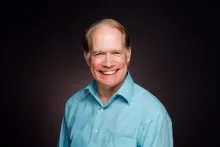
Greg Thomas is the former Pastor of the Cleveland, Ohio congregation. He retired as pastor in January 2025 and still attends there. Ordained in 1981, he has served in the ministry for 44-years. As a certified leadership consultant, Greg is the founder and president of weLEAD, Inc. Chartered in 2001, weLEAD is a 501(3)(c) non-profit organization and a major respected resource for free leadership development information reaching a worldwide audience. Greg also founded Leadership Excellence, Ltd in 2009 offering leadership training and coaching. He has an undergraduate degree from Ambassador College, and a master’s degree in leadership from Bellevue University. Greg has served on various Boards during his career. He is the author of two leadership development books, and is a certified life coach, and business coach.
Greg and his wife, B.J., live in Litchfield, Ohio. They first met in church as teenagers and were married in 1974. They enjoy spending time with family— especially their eight grandchildren.
