


Andrew C Lee
For the video presentation please see our YouTube channel under UCG Cleveland.
This transcript was generated by AI and may contain errors. It is provided to assist those who may not be able to listen to the message.
Good afternoon, everyone! Welcome to everyone visiting with us today. Special thanks for the people doing the video for matching my tie today with our video. It's the little things that make a difference, you know? Hopefully everyone's having a good Holy Days. It's hard to imagine it's almost over here. We'll be heading into our last day before the Holy Day tomorrow.
For those who like a theme or a scriptural theme, especially for a sermon, this sermon comes from Philippians 3, verse 10. We won't turn there right now, but there's a phrase in that scripture where Paul says that we may know him and the power of his resurrection. And that's the theme I'd like to dwell on today for the sermon for a little while. And to take a complete left turn, I'm going to start by telling you a story about a trip to China that I took back when I was a 19-year-old.
Some of you know my family heritage from my dad's side is Chinese, and had the opportunity together with my family in 1985 to go over to China for the feast. It was just in the very early years when China had opened up to Western tourists, and so we look forward very much to that opportunity.
Had about a week, week and a half before the feast itself to tour around. And one of the highlights that just stuck with me was this incredible experience that happened in a really unexpected kind of a way. We had—it was three or four tour buses full of people there for the feast. And we were traveling between cities—I can't even remember which cities they were anymore— but it took us out really into the hinterlands. We're going past just all kinds of agricultural land when one of the buses got a flat tire.
And since we were all a group, there wasn't a whole lot of traffic those days. In fact, as an aside, I can remember at that time they were building all these monstrous highways in China. And there were just people riding bikes down these highways because people didn't have cars. It's incredibly different now. The last time I was in Beijing was probably a handful of years ago, and just traffic completely choked up on those same highways that they'd built so many years back.
Anyway, we were out there in the hinterlands, middle of nowhere. We pull over four tour buses. And while they're working on getting the tire changed, we all got out and stretched our legs. And we look over in the field next to us, and there's a man there doing what men there do in the fields, which is plow the fields. And he was out there with a wooden plow and with his ox. Probably like his parents and grandparents and great-grandparents going back had done for centuries, just working the land, probably mostly a subsistence farmer. And he was there, and I can just imagine what was going through his mind, as he's there plowing his field with his wooden plow and his ox.
And these four tour buses full of crazy Americans stop at the side of the road and start gawking at him, taking pictures. Well, one person in our group had a Polaroid camera. And as the man was coming towards us working his field, they stopped him, and they took a picture of him with a Polaroid camera. And he'd clearly never seen anything like that before. And as Polaroid cameras do, it spit out the picture, and they held this picture in front of his face, as that picture slowly developed in front of his eyes. And I will never—it's like a cartoon, as you just see the eyes bulging out.
Perhaps the first time he'd seen a clear picture of himself—I don't know what level of mirrors they might have even had in, you know, the homes that they had in that part of the country— and just the look on his face as he saw this picture of himself developing in front of his eyes. And just blew him away. It was clear. It just completely blew him away. The person left the picture with him. We got in the bus, and we moved on. Clearly, of course, have no idea what happened to this guy since. But that few moments just really struck me, because, you know, we don't see a whole lot of that in our world today anymore.
We hear stories from going back maybe in the 20s and the 30s, when people would encounter tribes in faraway distant lands in the South Pacific that had never known Western civilization. But most of that time is gone. And that sense of wonder, of having something happen that is just completely beyond comprehension, has pretty much escaped us. When you think about it, a few weeks ago, when we had the eclipse, might be one of those rare occasions in our lifetimes when it happened. You know, I see a few smiles here as I look out on the audience.
And even talking with the most sort of crusty, jaded people that I know, and asking them if they've seen the eclipse, you kind of get this childlike look on people's faces. They just say, you know, I've seen pictures of it, but this was just completely different. So how we see things today, and that sense of wonder in many different ways, is gone. And to bring this back to where we sit today, stand in my case, near the end of the Holy Days, but specifically the Sabbath within the Spring Holy Days.
What is it that was happening on this Sabbath after the Passover when Jesus Christ died? We don't really think about it that much. We don't celebrate a Holy Day of the Resurrection because it's not something that we see written in the Bible. Notwithstanding that, though, the Resurrection was one of the most important events that ever happened. I'd like to spend some time and try to put us back in that sense of wonder, that Polaroid developing in front of the face that we've never seen before, and think about what this time must have been like back then, and as the picture develops more and more, what we should be seeing in it as we look at it today.
So let's start back in the original days of what was happening. And, you know, I've entitled this section, You Can't Unsee It. You've probably seen that written, whether it's on a Facebook post or a comedy routine or something. You know, you see something, you see an optical illusion, people put these things up, and as soon as you see finally what that optical illusion is, it looks like a person, but it's actually a dog or whatever it is. And once you see it, you can't unsee it, right? You've seen that image, and your mind puts things together, and you can't go back the other direction.
And in many ways, it's that way for us as we think about the resurrection of Jesus Christ. Even though there are plenty of people in the world today who are unbelievers, the story, at the very least, of the fact that God came to this earth, became man, and was both crucified and resurrected is embedded in Western civilization.
You can't go to a major museum, art museum, in the Western world without seeing paintings of some sort of depicting what the artist believes is Jesus Christ and Mary, perhaps the crucifixion, perhaps the resurrection. It is embedded in our culture. And so it is difficult to unsee that and to put our minds back into what it must have looked like when it first happened.
Compounding that, there's actually not a scripture that tells us what the disciples were doing in that time period between the crucifixion and the resurrection. There's extremely small scriptural evidence of that time and the 40 days that followed the resurrection of Jesus Christ. I don't know if we've ever thought about that. There are indications, though.
Indications are that the disciples scattered. A few were there, as we know, as he died, seeing to it that he was buried, but only hints after that. Turn with me, if you will, to Luke 24. We'll see one of the sets of hints. We had a couple of messages last year on this road to Emmaus incident. I'm not going to replay that, but I wanted to look at a different element that we see here. It's just the indications of what it was that the disciples were doing during that interim period of time. That time that would have been now on the Sabbath after the Passover in their days. Luke 24, we'll start in verse 13.
That's the first indicator that we see of what was happening during that time period. Now, this was actually, again, it was after Jesus Christ had been raised, as we'll see. So, it is not conclusive in terms of what they were doing before that point in time, but we can guess they were continuing to do the same thing that they'd done for the last several days, not knowing at that point in time that Jesus Christ was raised. So, that's one thing that we see that they were doing. They were talking together. They're going over and over, as one does, when tragedy hits, when something unexpected happens. Somehow, it turns even the most non-verbal of us into talkative people in certain time periods, and we just can't stop talking. It's like part of how we process shock and grief and extreme incidents that happen. And so it was in verse 15, while they conversed in reason, Jesus himself drew near and went with them. Their eyes were restrained, though, and they didn't know him. And he said to them, what kind of conversation is this that you have with one another as you walk and are sad? So there's our second indication of what was going on during that time period. Not shocking. Someone they'd known, they'd lived with, they'd walked the dusty roads with, they'd slept on floors together with him, they'd eaten together with him for three and a half long years, and learned so much from him. Of course they were sad. And that was clearly another thing that was going on at that time. And they went on in verse 21, and they told him, we were hoping it was he who was going to redeem Israel. Indeed, besides this, today is the third day since all these things happened. And so here we see another indication of what was going on. Shattered hopes. They had hoped that he was the Messiah. Now they understood the Messiah at that point in time differently than we understand him today. They were looking for that deliverer of Israel who was going to come in power, throw out the Romans, reestablish God's government right then and there on earth. Notwithstanding their understanding was different. Disappointment, though. All of these things that they thought were going to happen had not happened. In addition to the grief, they were trying to process the disappointment. Verse 33, the account goes on.
There's no reason to believe it was something unique that day. Certainly it was the Sabbath. You'd expect them to be together. Or actually, at this point, it would have been Sunday. You'd expect them to be together the last several days if they were together that day as well. So another thing that they were doing, they were gathering themselves together and they were spending that time together. Let's go on to John 20. We see pretty much the same indications. We'll read in verse 19. It adds one more detail, though. And this is where we start to take a turn. In terms of the first dim pieces of this Polaroid starting to develop itself as the image starts to become clear of what's going on. John 20, we'll read verse 19. Then that same day at evening, being the first day of the week, when the doors were shut, where the disciples were assembled, for fear of the Jews, Jesus came and stood in the midst and said to them, peace be with you. Here's the other condition that was going on as they were assembling. They shut themselves in. They closed the doors because they were afraid of what was going to happen. When you think, remember again, the crucifixion of Jesus Christ was pretty much a mob scene. When you think he was brought out there along with Barabbas and Pilate said, All right, guys, what do we do? And the mob was incited and they were all saying to put Jesus to death. And so the disciples, we remember that Peter was the only one who had the courage to even show up and see what was going on, although once he was recognized, he denied Jesus three times before he ran away. And so not only were they gathering together, not only were they sad and disillusioned, but they were also fearful, enough so that they locked themselves into the rooms where they were as they spent the time together. So it's important we look at that because, you know, again, through today's lens, having seen this whole picture develop, understanding all the things in hindsight, we would think they were there expectantly awaiting for Jesus Christ to reveal himself because they knew he was going to be resurrected. And it's clear that's not the case. They didn't grasp that yet at this point in time. They were dejected. They were discouraged. They were confused. You know, perhaps you've read stories or watched a show or listened to a podcast about people who've been scammed, whether it's a Ponzi scheme, whether it's other times of scams that go on. And what do they talk about? They talk about how they have this mixture of anger, of shame, of disillusionment, feeling dumb because they were tricked by somebody. And you can imagine as the days dragged on into this last day on the Sabbath right before Jesus Christ would be raised and revealed the next day to them, you could imagine that feeling just continuing to grow in them as they would be at this point in time, the Sabbath between the Holy Days, on the third day of nothing, trying to figure out what came next. And so it's interesting what Jesus Christ does at that point in time because he makes it very clear after this, unmistakable what's happened. That picture has to develop in front of them. John 20, we'll read now, verses 24 through 28.
Now again, it's easy from where we stand to read those words and say, this guy had absolutely no faith. What in the world was he thinking? But again, you put yourself in the shoes at that time. He's saying the same thing that the others thought. He hadn't seen Jesus Christ yet. He started hearing about it from other people.
And it's just not something that was in their experience, not something that was in their understanding of the Scriptures. And he could not come to terms with it.
He said, you know, probably struggling for a couple of days about was Jesus really the Christ because he's dead, or was he just another guy who claimed to be? And he said what probably all of us would say in a situation like that. We watched stories of being scammed and somebody comes to you with a story that's too good to be true.
I'll believe it when I see it. And that's exactly what he said. And then after eight days, in verse 26, his disciples were again inside and Thomas with them, and Jesus came, the doors being shut, and stood in the midst, and said, Peace be unto you. And then he said to Thomas, Reach your finger here and look at my hands, and reach your hand here, and put it into my side, and don't be unbelieving, but be believing. And Thomas answered and said to him, My Lord and my God. He knew. And I find the mercy and the grace of Jesus in this situation to be wonderful as well.
He knew exactly where their minds were. He didn't fault Thomas for what was happening. He made it abundantly clear who he was so that Thomas and the others would understand. The other detail in a few of these passages, a couple of these passages that we read, both verse 19 and here in verse 26, he worked another miracle, which is he came into the locked room. They locked themselves into that room because they were fearful.
They weren't going to have people barge in and drag them away like they dragged Jesus Christ away. Notwithstanding all those things, Jesus Christ just appeared there among them. So several miracles in quick succession here as Jesus Christ reveals himself to them, making sure it's no mistake at all to anyone who would see it and who would hear about it that this had actually happened. Verse 30, I find incredibly interesting, and I would love to find out the details, and someday we will. Truly, Jesus did many other signs in the presence of his disciples, which are not written in this book.
Now, that's going to be fun to figure out what he did. We can all imagine. We can all think about it. They didn't bother to tell us. I don't know why they held out on us. But he spent time to make it clear what it was that had happened, because it was so far outside of anything that they could have ever believed. Imagine that sense of wonder as the understanding of what it was that really happened came to their minds and things that were not even written in the book.
Let's turn to one more passage on this section about what Jesus Christ did immediately afterwards to make himself plain. That's in 1 Corinthians 15. Paul, in this section, goes through and starts talking about ways in which Jesus Christ revealed himself. Verse 3, he says, But some have fallen asleep. That's pretty amazing, isn't it? I don't really dwell on that very often. But you think, when Paul was writing here to the Corinthians, he was writing to them and said, Hey, some of these people, you know them. They saw Jesus Christ appear after he was raised. And it was enough people that would have been in Jerusalem at that point in time from other locations outside of Jerusalem that they carried the word back.
And they testified for the rest of their lives that Jesus Christ was actually resurrected. And they'd seen it with their own eyes and make no mistake about it. And so in these first days afterwards, and as we think about where we sit here, the Sabbath in the days of Unleavened Bread, just hours after this point in time during that original days of Unleavened Bread after Jesus Christ's crucifixion, these events would start falling into place, where eventually there would be literally hundreds of people who could testify first person that they had seen Jesus Christ resurrected from the dead.
And many of those who would be able to say that they saw some of these miracles which weren't written in the Bible. And so there was no mistaking what had happened. That picture had to become clear, and that's something that Jesus Christ had to do. But why is that so important? Why is it so important to understand the resurrected Christ?
We don't celebrate with the Holy Day. We celebrate His death and His sacrifice with the Passover. But why is it important to understand the resurrected Christ? That's why I'd like to spend the rest of the message on.
So let's think next about the picture that's drawn immediately after the resurrection. As the understanding begins to develop, as things begin to unfold, in their minds, as the Holy Spirit begins to work with them. First of all, again to reiterate, this was an unexpected event. There were a few resurrections that were recorded. We've talked about that before. I forget the exact number. There were probably five or six resurrections that had taken place before this. Not very many. Some of them were pretty interesting, like somebody getting thrown on the bones of Elisha and rising up again. That's one of my favorites. So a resurrection was not completely out of their understanding.
Lazarus would have been a hot topic. That was one of the reasons that was kind of a catalyst for why the Pharisees started going after Him and wanting to kill Jesus Christ because of His resurrection. But it was completely unexpected, as we've seen.
So Jesus performed numerous miracles to prove He was resurrected. He showed Himself to over 500 people. And on He went. So what is it that began to develop, then, as a picture for the apostles? Again, it's not only striking how little is written about those days between the crucifixion and the resurrection. But when we look at everything written in the Bible, there's also virtually nothing written about the 40 days that Jesus Christ spent on the earth after His resurrection.
I don't know if we've thought much about that either. Now, my personal conclusion is because the perspective that was gained as He talked with them about the kingdom of God—that's what we read in Acts. I don't have the scripture here, but in Acts it talks about the fact that during those 40 days Jesus Christ spoke with them about the kingdom of God. What I would venture to say is that what's written in the Gospels in terms of point of view beyond the basic facts, what we see written in the epistles, very largely encapsulates the themes that Jesus Christ would have talked with them about over those 40 days.
Because what they did is they followed His injunction in Matthew 28, 19, and 20. They took that word out into all the world as a witness to make disciples. And what they said and how they did it is, at least in part, recorded for us in the epistles. And as they went back and wrote the Gospels, you can see how they connected things that happened to the understanding that they would have gained through the Holy Spirit after Jesus Christ's death and after Pentecost.
Have you ever played Jenga? I know it's kind of a random question. Did Paul ever play Jenga? Inquiring minds want to know. Paul plays a bit of a spiritual Jenga, a theological Jenga, and it actually has to do with the resurrection. Can anyone think of where that might be? Turn with me, if you will, to 1 Corinthians 15.
Mark Graham has given me a quizzical look, so I know I've accomplished something today.
So as you know, Jenga is a game where you've got this tower and you've got all these wooden pieces. You have the big ones that they might have out that you can play if you're out at a restaurant or something. It's backyard-sized. They have a little tabletop version. The game is the same, whichever one you play. You kind of take turns pulling little pieces out, trying to keep the tower standing. And whoever pulls out that last one in the tower falls, loses.
Paul lays out a very similar theological element here in this passage related to the resurrection. It's like that last Jenga piece where the whole picture falls apart, if not for that event. 1 Corinthians 15. Let's start in verse 12.
Now, if Jesus Christ is preached that he's been raised from the dead, how is it that some of you say there's no resurrection from the dead?
So that's Paul's thesis here. He's talking to a group of people, and there are people out there who say, this resurrection thing, I don't care who it is that tells me they've seen this, they've seen that, didn't happen. So that's Paul's thesis going into this. Verse 13. If there is no resurrection from the dead, then Christ is not risen. Makes sense logically, right? Because if there's no resurrection, then Jesus Christ wasn't resurrected. It either happens or it doesn't.
And if Christ is not risen, then our preaching is empty and your faith is empty. Why bother talking about the faith of Jesus Christ? Why bother talking about the truth of God if Jesus was never raised from the dead in the first place? Because then he probably wasn't the son of God either. Yes, in verse 15, we're found false witnesses of God because we have testified of God that he raised up Christ, whom he did not raise up, and if, in fact, the dead do not rise.
For if the dead do not rise in verse 16, then Christ is not risen. If Christ is not risen, your faith is futile, and you're still in your sins. Then also those who have fallen asleep in Christ have perished. And if in this life only we have hope in Christ, we are of all men the most pitiable. I think the old King James says, most miserable. It's the word that always sticks in my mind with this verse. So what is it that Paul is saying here? He was talking to people who said there's no resurrection of the dead, speaking broadly. He says, look, if there's no resurrection, then there's no way Jesus Christ rose. If Christ didn't rise, everything falls apart. Nothing to have faith in. There's nothing going on anymore because Christ isn't risen, faith is futile, you're in your sins, and everyone who died has perished is never going to live again. Sounds pretty hopeless, doesn't it? And that's where Paul is saying, and that's the point I want to make here, is he's saying that the resurrection of Jesus Christ is in the very center of our faith. And what I find interesting is we know clearly through the keeping of the Passover, some of the things we heard in the sermon, the things that we've rehearsed over the last number of days, we know clearly that the death of Jesus Christ and His shed blood for our sins is incredibly important and it is necessary for our forgiveness. But what does Paul say? If Christ is not risen, your faith is futile and you're still in your sins. So there's an element by which the resurrection is also a necessary part of the forgiveness of our sins, a necessary part of our faith. In fact, as Paul lays out here, a very lynchpin of it. Let's go on to Romans. It talks a little bit more about the resurrection of Jesus Christ and specifically what it does for us in our spiritual lives. We'll read in Romans 4, verses 23 through 25. Romans 4, verse 23, now it was written, not for his sake alone, that it was imputed to him. We're talking here, Paul is about Abraham and his faith. But also for us in verse 24, it shall be imputed to us who believe in him who raised up Jesus our Lord from the dead. Verse 25 is the punchline. Who was delivered up because of our offenses and was raised because of our justification.
So here it very clearly ties the idea of justification being justified with the resurrection of Jesus Christ. Just like forgiveness being delivered up because of our offenses is tied to his death. Now what is justification? Let's read the New Living Translation, which gives us a little bit different look at this verse.
Here, verse 25 is phrased, We talk a lot in modern parlance about, hey, you've got to be right with God. And it's true. It's another way to say the word justification. So we understand that through Jesus Christ's sacrifice, and as we see here through his resurrection, God sees us as sinless before him. Even though we know we are sinful human beings, he imputes righteousness to us. He gives us the opportunity to come before him, and he sees us as sinless, as justified, or right with him, even though we're still imperfect human beings. And that happens, as we read here in Romans, through the resurrection of Jesus Christ.
Turn with me, if you will, to 2 Corinthians 5, talking again about the newness, the difference, the change that happens through the resurrection in our lives.
2 Corinthians 5, and we'll start in verse 15.
Again, starting with what we rehearse at Passover, that those who live should live no longer for themselves, but for him who died for them and rose again. So the resurrection inextricably bound together with the sacrifice that he gave. Therefore, because of this, we regard no one according to the flesh. Even though we have known Christ according to the flesh, we now know him thus no longer.
So if anyone is in Christ, he is a new creation. Old things have passed away, and all things have become new. Old things pass away through the sacrifice of Jesus Christ. Our lives become new as we're justified by his resurrection. And we see many places in the Bible we're not going to turn to them. A great thing to do over the course of the next couple days is to look at the places where it talks about the fact that we are raised through Christ.
That Christ is the firstborn among many brethren. And what that means in terms of our lives. We come into a new life, a new life that's justified or right with God because of the resurrection. We don't only have a dead Savior, we have a living Savior, and that's what we'll look at next, who sits at the right hand of God. So the picture that developed for the disciples, as they learned more through the Holy Spirit, as they more deeply spoke with Jesus Christ and understood over those 40 days what was going on, and then went out to preach to others, was the fact that the resurrection of Jesus is integrally tied to his death and central to our Christian belief. The ability to have a new life in and through the resurrected Jesus Christ is central, a new life that's fully justified or right with God. So, let's finish out the rest of this message, thinking about how is it that this picture is developing for us. How's that Polaroid picture as it starts coming in front of our faces? We go through these Holy Days every year, exactly like Alan was saying in the Sermonette. You know, every year, every time we look at things, we learn something new. We see a different facet of God's truth, don't we? And that's something we should look at and we should take encouragement in as we look at our lives from year to year, as we're seeing more things in God's Word. That's a measure of us growing in knowledge and understanding. It's a point of God's Holy Spirit working with us as we go through different experiences in life, as we mature, and we understand more and different things and deeper things from the Word of God.
Let's go back to John 20. I'd like to read a few other, a couple other verses in John 20 to launch into this last section. We'll start in verse 29. Again, this is Jesus Christ talking to Thomas. And He said to him in John 20, verse 29, Thomas, because you have seen Me, you have believed.
Blessed are those who have not seen and yet have believed. So He's talking to us, isn't He? Us and our many brothers and sisters over the centuries that fit this category who have not seen like Thomas did, like the 500 others did, but yet have believed. So we're blessed because of that. And truly, Jesus did many other signs as we read in verse 30 in the presence of disciples which are not written in this book. In verse 31, Just as Jesus returned to life, that belief in Him is supposed to give us life in His name.
It's not just the past of the sins being washed away, but it's a new life that's lived, just as Jesus was raised and lives as a spirit being after His ascension into heaven. So I'm going to just introduce three thoughts to you that I thought of as I'm sorting this picture out in my own head in terms of resurrection. What does it mean? What is the power of the resurrection that Paul was talking about? So let me lay out a few propositions to you and encourage you to think of some others for yourselves here as we go through the rest of this day and into the end of the Holy Days.
Again, I think it's especially profound where we sit on this Sabbath in between the Holy Days. Again, if we transport ourselves back to that Sabbath after Jesus Christ's crucifixion, we were only hours away from His resurrection and only a few more hours away from when the disciples found out about it and began into this whole set of thoughts that we just were reading through.
So let's look first at the idea of a living sacrifice and not a dead one. A living sacrifice and not a dead one. Let's read a few passages in Hebrews. This would be a great place to spend some time if you're looking for something to reflect on here in these last few days before the end of the days of Unleavened Bread.
Hebrews is very much about the New Covenant. What is it that happens through Jesus Christ that couldn't happen under the Old Covenant? We'll go to Hebrews 9 and read verse 15 as our first passage. Here the writer of Hebrews says, For this reason he, speaking of Jesus, is the mediator of the New Covenant, by means of death, for the redemption of the transgressions under the First Covenant, that those who are called may receive the promise of eternal inheritance. So he mentions his death, but he also mentions that promise of eternal inheritance. That's that thought of Jesus Christ as the firstborn among many brethren, about that everlasting life that comes as a result of the resurrection of Jesus Christ.
Hebrews 10 points this out in more depth in terms of what Jesus Christ is doing as the living Son of God, the resurrected Son of God, and how it enriches our lives and ables our lives as Christians. Hebrews 10 will start in verse 11. Here he's drawing parallels between the physical priesthood that Israel would have experienced under the Old Covenant and Jesus Christ as the priest of the New Covenant.
In verse 11 of Hebrews 10, he says, That's the resurrected Jesus Christ. It's not a dead sacrifice. It's the being that was resurrected and then sat down at the right hand of God after he ascended into heaven. From that time, verse 13, waiting till his enemies are made his footstool. For by one offering, he has perfected forever those who are being sanctified.
And so we have a single sacrifice and one that became a living sacrifice that does a couple different things for us, pointed out here. One of which is forgiveness, the ability to come to God. But secondly, and so incredibly important, sitting at the right hand of God where he makes intercession for us daily, he's able to talk to God and impart exactly what it's like to be a human being and translate the things that we're saying to God for us.
Turn with me, if you will, to Hebrews 7. This lays out the enduring nature of Jesus Christ through his resurrection as a spirit being and how he continues to help us and sustain us and take us forward through every part of our spiritual lives. Hebrews 7, starting in verse 23. Again, we're comparing priesthoods in this section. Also, there were many priests because they were prevented by death from continuing.
So he's saying in the Old Covenant, we had tons of priests, right? Priests were human, humans die, one priest dies, another one comes in. So we had a lot of priests because they were prevented by death from continuing. But Jesus, because he continues forever, again, the resurrected Christ, has an unchangeable priesthood. Therefore, because of this, because he's resurrected, because he continues forever, he's able to save to the uttermost those who come to God through him since he always lives to make intercession for them.
That is the power of the resurrected Christ. You know, we talked about justification being made possible by Jesus Christ's resurrection. This is how that's put into action.
Jesus Christ there at the right hand of God, as we pray for forgiveness, as we bring all of our thoughts to him and try to put them in subjection to God, making intercession for us to God all the time. We'll read about this one last time in Romans. As we shift to Paul's writings in Romans, and we'll read Romans 8. I tend to go back to Romans 8 a lot, as all of you know. One of my favorite parts of the Bible, not the favorite. We'll start in verse 31, tackling the very similar theme here.
Who is he who condemns? It's Christ who died, and furthermore is also risen, who's at the right hand of God and who makes intercession for us. So here it's underlining again and putting that detail to what it is that the resurrected Jesus Christ does for us, as he intercedes for us, as he enables us to be justified, and to be able to approach God, which sin and God cannot live together in the same place. But through that justification, through Jesus Christ, we can come to him because he sees us as sinless through Jesus Christ. Let's go next to the idea of victory. Two types of victory that I'd like to briefly talk about as we wrap up. One is victory over death.
Now, we usually think about this at the Feast of Trumpets as we think about the resurrection of ourselves and all those who died in Christ. But it was through the death and resurrection of Jesus Christ that happened back at this time in the original Passover that that victory over death took place. Because Jesus Christ was the firstborn, he opened the door, as we read in the Bible, that others may come through it. Let's go again to 1 Corinthians 15.
There are many places we can turn to. We're just going to look at two of them. 1 Corinthians 15, we'll read verses 51 and 52. This entire chapter would be great reading as well if you're looking for somewhere to go in the next couple of days. 1 Corinthians 15, verse 51. Now Christ is risen from the dead, and he's become the firstfruits of those who have fallen asleep. And of course, we know what first means. First means there's a second and a third, or at least a second. In this case, we know that there are many.
What's our assurance of that? It's the resurrection of Jesus Christ. The thing that he made incredibly plain to all of those people, hundreds of people, in fact, after the time that it happened. So that we can have assurance that in Christ all shall be made alive. Let's turn to one other passage. This is John 11. John 11, you might recall, includes the account of Lazarus, a good friend of Jesus Christ who died.
He was dead, and in his sepulcher long enough that it was clear from the smell coming from inside the sepulcher that he was dead. You can smell the decay. That's what we read in this account. We'll skip just to verse 25 of this section. And this is Jesus speaking to the sisters of Lazarus before he's raised.
Now, how does that sound from somebody who's martyred and put in a grave and never heard from again? Sounds kind of hollow, doesn't it? How does that promise sound from someone who was crucified, put in the grave, raised after three days and three nights, performed miracles, seen by hundreds, spent forty days talking to his disciples about what they needed to do and what the kingdom of God was all about, and then sits at the right hand of God. That's the power of the resurrection. That's the victory over death. And what happened to him assures us that it can and will happen for us. Let's look at one other element of victory before we wrap up for today. And that's victory over evil, or over Satan.
And I'll give you one more sort of out of left field analogy or example before we dive into the scriptures on this. Has anyone seen Snowboard Cross in the Olympics? No? One person, yeah, because Karen and I watched it. So, Snowboard Cross first became a sport in the Olympics in 2006.
And it's different than regular snowboarding because you actually run multiple people down a course on their snowboards, racing to the finish line. They usually run it in multiple heats and then the last heat. I don't remember. I think it's like four people at one time. And the course, sometimes it'll crisscross. It has jumps. It has slalom barriers that you have to go around. And in the 2006 Winter Olympics, the first time the Snow Cross was run, there was a U.S. snowboarder named Lindsay Jacobelis. Fantastic snowboarder had already won a gold medal. And she was just tearing it up. She went out there. She was probably 100 plus meters ahead of her nearest competitor approaching the last jump. She went off the last jump. And for some reason that even she couldn't fully explain at the end of the day, she decided to kick her board up behind her and grab her board with her hand. A trick that snowboarders often do. She fell on her rear end and she was passed by her next competitor who won the gold medal. Now, she was so far out ahead that she still won the silver medal, as it happens.
But despite the fact that the victory was won, she lost it. Through actions that she took. By not keeping her eyes on the finish line, perhaps she got distracted, perhaps she got cocky because she was so far out ahead that nothing could touch her. She couldn't even fully explain it in the press conference afterwards. Turn with me, if you will. To John 14. Make sure I'm at the right place in my notes here. John 14. We'll read verse 30. I'm reading this from the English Standard Version because the translation of this is somewhat different, depending, not as clear, depending on the version you have.
John 14, verse 30. Jesus, in his last discourse with his disciples, is telling them in verse 30 of John 14, I will no longer talk much with you, for the ruler of this world is coming. The English Standard Version translates the last part of this, He has no claim on me. The Christian Standard Bible translates it, He has no power over me.
Jesus conquered Satan, as we saw when he was tempted by Satan, and through his death and resurrection, his victory over Satan and over evil was perfected. It's a done deal. So is ours. But we're very much like that snowboarder who's out ahead with a jump ahead of us and a decision to make what we're going to do as we go over that jump.
That's the best example that I can give of the situation that we're in. Because, you know, we read in the Scriptures, and we'll go there in a moment, about Satan and his power, but we're not told that he has power over us. What we're told is we've got to submit ourselves to God. Because God, Jesus Christ, through Jesus Christ, won that victory.
And so the victory is there, but we've got to be able to claim it. We have to keep our eyes on Jesus Christ, we have to submit to him, and we have to do those things. Turn with me, if you will, to 1 Corinthians 15.
Verses 56 and 57, here Paul writing to the Corinthians, saying similar things, talking about sin and how sin and the consequences of sin are put to death, and the victory is won over them by Jesus Christ.
Verses 56 and 1 Corinthians 15, the sting of death is sin, the strength of sin is the law, but thanks be to God, who gives us the victory through our Lord Jesus Christ. That victory that's been won.
So let's turn to 1 Peter 5, and we'll read what the Scriptures tell us when we apply this more specifically to our adversary. We know he's our adversary. We know that Satan is active in this world.
We can see by things that happen in this world that there absolutely is evil. But we also have to know that evil has no power over us. We have to submit ourselves to God. We have to stay justified with Jesus Christ, and it will not have power over us. And that's something we have to understand. We can't go through every day of our life thinking that Satan has power over us. It's actually not scriptural.
1 Peter 5, Verses 6-9.
Humble yourselves therefore under the mighty hand of God, that he may exalt you in due time, casting your care upon him, for he cares for you. And verse 8. Be sober and be vigilant, because your adversary the devil walks about like a roaring lion, seeking whom he may devour. Resist him, steadfast in the faith, knowing that the same sufferings are experienced by your brotherhood in the world.
We have to 100% recognize that Satan is active in this world. Our job is to be sober and to be vigilant, to keep our eyes on Jesus Christ. Just like that snowboarder coming to the finish line. We can't afford the hot dog. We can't afford to start thinking that, hey, we got it made. Somehow God's just kind of given us the keys, and it's all good to go. We have to say sober, and we have to stay vigilant. James 4 lays this out, perhaps, with even more clarity.
In verses 7 through 8.
James 4 verses 7 through 8.
It comes through submission to God. Verse 8 goes on.
That victory that Jesus Christ won, he said that Satan had no power. Evil had no power over him.
Through him, through the justification that comes from him, we are in the same position. We have to continue to walk our Christian lives. We have to continue to come before him and ask for thanksgiving, for forgiveness. I'm sorry. We have to continue to ask for justification to be right with God. We have to be forgiven from our sins and confess them to him. That's the job that we're given to do. And that victory that Jesus Christ has won, through submission to God, we can continue to walk forward in him. So how is the picture developing for us? As we spend time thinking about the resurrection, hopefully we'll spend some additional time in the next few days, please consider how it is that this picture of what's happening in our lives, our understanding of the resurrection of Jesus Christ and the power that it has in our lives, what that does for us.
In Philippians 3.10, Paul indicates that one of the reasons that he made the sacrifices he did in his life was that he may know Jesus and the power of his resurrection. We've reflected this afternoon on what that power is in trying to put ourselves back in the position of people who are experiencing and understanding that for the first time, processing the concept of a resurrected Jesus Christ that hadn't been understood before.
It's easy to lose the magnitude of an event because it's become common understanding. When you can capture an image of anything by googling it and looking at the picture on your iPhone in three minutes, it takes some of the wonder away from it, doesn't it? But as we complete these days of Unleavened Bread, the time during which Jesus Christ was not only crucified but also resurrected, let's reflect on the power of that resurrection and what it means for us.
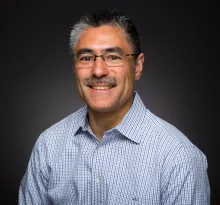
Andy serves as an elder in UCG's greater Cleveland congregation in Ohio, together with his wife Karen.
