


Richard Kennebeck
This transcript was generated by AI and may contain errors. It is provided to assist those who may not be able to listen to the message.
I'll begin by mentioning that this past month we missed the Sabbath in the Park that we were supposed to have. And I had a sermon in mind about the marvels of creation. That's a standard and tradition with all that beautiful canopy of trees around us and all the beauty at Irvine Park. Hopefully this will be the only time we miss going there. Hopefully next year it will be better. But like I said, I had a message for that time that I've been ruminating and I've been preparing over these weeks. And I would like to give it now. And it's very encouraging for all of us to learn about a very special psalm of creation. Again, the first message by Tim brought up the creation and how God is the Creator. Everything he did, he instructed the one who became Jesus Christ, the Word at that time. And everything was created through Jesus Christ, but God the Father is the one over Jesus Christ. The psalm is Psalm 145. So let's turn to Psalm 145 and see how beautiful this psalm is, how profound. I don't think you'll ever forget this psalm after this message. There are some very special characteristics of this psalm.
Psalm 145, it says here, this is a praise of David. This is the only psalm that is specifically designed and mentioned as a praise to God. It's also in a Hebrew style of poetry, which is built around the acrostic style, which means each letter of the Hebrew alphabet begins a new line of the hymn. So a lot of thought goes into it.
So it is a praise of David. And he starts out saying, I will extol you, my God, O King, and I will bless your name forever and ever. Well, how can a human being do this? It's because David had the faith that one day he was going to be resurrected and was going to have eternal life, and that he would continue to praise God's name as a spirit being forever and ever. Because we know human life is limited. We can't use the term forever being humans, but we can one day as a spirit being. And then he goes on to say, Every day I will bless you, and I will praise your name forever and ever. So this is interesting that David committed himself to praising God daily. Not on certain occasions, not every week, but that every day. And he will praise your name forever and ever because God's name contains all the attributes of God. It represents God. So David knew about eternal life, and he was looking forward to praising God forever and ever. He loves God so much that he commits himself to praise him every day. He appreciates him, and not only once in a while. Then he goes on to say in verse 3, praise...let's see...
In verse 3, it says, Great is the Lord and greatly to be praised, and his greatness is unsearchable. So David now focuses, apart from glorifying God, now he begins to focus on God's attributes and also his works. This is the way that he is focusing on God. I'd like to read it from the Message Bible because it contains a little clearer notion of the end part of this verse. It says, God is magnificent. He can never be praised enough. There are no boundaries to his greatness. As David contemplates the majesty and power of God, he says it has no boundaries, no limits.
Here we come to what is one of the classic arguments for the existence of God. I'm going to introduce you to three of the classic arguments. I'm using the term arguments as a synonym for reasons. Just like an attorney, when he has what is called the closing argument, which is basically the closing reasons that he wants people, the jury and others, to be convinced. He has the closing arguments, the closing reasons of his case. This is what David is doing. He is presenting the reasons why he praises God in such a marvelous way. One of the elements, the reasons, is that there are no boundaries to his greatness. No limits. This is the reason of God's nature. When we talk about God's nature, it is limitless. It has to do with his nature, his attributes.
That is called, formally, the ontological argument for God's existence. This is a word that comes from the Greek, onto, which means being or existence.
The term logi, or logical, has to do with the study of something. When you are studying God's being and his attributes, one of them is that he is boundless.
He can extend himself through his Spirit and reach everywhere in this universe. He can extend and project his presence, his majesty. There are no limits. They go beyond this universe. We are going to introduce these three classic arguments for the existence of God.
As I mentioned them, we can learn and remember them. I always like to relate things that we should memorize through acronyms, which means using the first letter of something to remember it. How many know what Okta is here in Orange County? Orange County Transportation Agency. These are the ones that have all the buses and transportation for people.
We can use this acronym to remember the three classic proofs or reasons for the existence of God. One category is ontology, which we just covered. It has to do with God's being, his existence, and his qualities. The second, which is the C, is the cosmology. Cosmology is the cosmological argument, which has to do with God's creation, how it came to be. This is something that David covers in this psalm. The third is the teleological argument from the term theological theology. That has to do with the proofs about design and purpose in what is created. They are designed, they just didn't come haphazardly, accidentally, but they were carefully designed and orchestrated for a purpose. Those are the three cosmological, teleological arguments for the existence of God. Let's go to verse 4 of Psalm 145. It says, It says, This is saying that those that know God's truths and teach God's word to others should teach them about God's mighty works. The greatest mighty work is the one that was brought up in the first message by Tim, which is the creation of the universe, the God who created the universe, the cosmological argument. It comes from the word cosmos, which means universe, and is the study of everything dealing with astronomy. They have a term cosmology, which is the study of the cosmos as well. I'll just bring up a very special proof of the cosmological argument. It goes like this. Number one, everything that has a beginning has a cause. In other words, something created cannot cause itself. It has to be created by something else that causes an effect. Everything that has a beginning must be created and have a cause. The second, which is a syllogism, which is this logical argument, which is kind of a mathematical formula. If this A is true and then B is based on A, then C, which is also connected, has to be true as well. If everything has a beginning and every beginning has a cause, then the universe had a beginning. All the evidence that astronomy, cosmology, and others have come up with show that if you go back in time, you can go back to the shrinking and diminishing of this universe. It ends up in what astronomers say is nothing. They can actually go back to a fraction of a second and then everything appears. It's a stately expansion up to this time. The universe is still expanding. If you rewind the clock, you can eventually come to the point where there was no universe. If the universe had a beginning, it also must have a cause that is outside of it. The universe cannot create itself because it began at this point. At this other point, it was zero. If you go to the first number, 1, the universe starts. That's the expansion. That's one of the cosmological arguments. But it has to do with a lot more than just the cause of the beginning of the universe.
There are multiple forms of evidence for this. Here we have a couple more indicators of the existence of a creator God that science cannot explain. Number one, the origin of the laws of the universe. How do you get to have laws of the universe? They're not physical entities. But they govern and regulate matter, energy, information. All of these things are regulated because there are laws. These laws have to exist prior to the creation.
Secondly, the origin of matter, energy, and information. Where do these all come from? If they had a beginning, something had to kick it off, get it started. You need an uncreated cause to start everything.
That uncreated cause we call God. Something had to kick start all of this, get it going. But it itself cannot have something that kick started it. It was the original. And are we teaching the next generations about the evidence for God's existence? His attributes? These wonderful truths? Notice what else David mentions in verses 5 and 6. As he contemplates God's greatness, his creation. In verse 5, he says, I will meditate on the glorious splendor of your majesty and on your wondrous works. So again, he's committing himself to studying, asking questions about the world that we live around. Do we have that inquisitive nature? Do we want to know how things work and function? Well, David did. He meditated on the glorious splendor of your majesty and on your wondrous works.
So let's see how well you're learning about this. So he says, I will meditate on the glorious splendor of your majesty. What argument? What are those three? I will meditate on the glorious splendor of your majesty. What would that be? It would be the ontological about God's nature and his attributes, because it's talking about the majesty of God. And on your wondrous works, your creation. What is that argument? Cosmological argument has to do with the universe. He says, man shall speak of the might of your awesome acts as we're doing today. We're talking about some of God's awesome acts. And I will declare your greatness. So here again, the importance of meditating about how God is, his nature, his attributes, and about his works. In verse 7 through 9, David goes on to say, They shall utter the memory of your great goodness, and shall sing of your righteousness. The Lord is gracious and full of compassion, slow to anger and great in mercy. The Lord is good to all, and his tender mercies are over all his works.
So again, what of the three arguments would you say that has to deal with?
Anybody want to bring it up here? I will meditate. He says, and the Lord is gracious, full of compassion. That's the ontological argument. Again, dealing with God's being, with all that has to do with his nature.
I thought it's interesting when he talks about God's mercy. In the Passion Translation, it says, You're kind and tender-hearted to those who don't deserve it, and very patient with people who fail you. Your love is like a flooding river overflowing its banks with your kindness. God, everyone sees your goodness, for your tender love is blended into everything you do. This brings to mind, by God's mercy, the parable of the unforgiving debtor. In Matthew 18, verses 23 and 24, I'll read it in the Passion Translation. It says, There once was a king who had servants who had borrowed money from the royal treasury. He decided to settle accounts with each of them. As he began the process, it came to his attention that one of his servants owed him $1 billion. So he summoned the servant before him and said to him, Pay me what you owe me. Of course, the servant didn't have anywhere. He had been taking money from the king's treasury and hadn't paid it back. This is called today, embezzlement. Ten thousand talents would be about 60 million days' wages. A sum that would be impossible to repay.
In the believers Bible commentary, it says, Like many debtors, he was incredibly optimistic about what he could do if only he had the time.
But the whole region of Galilee, the total revenue, only amounted to 300 talents. That was an annual income of a whole region of people working. What we would call the gross national product of Galilee was only about 300 talents. This man owed 10,000 talents.
That is the way we can compare what God does for us and will do for us in the future. It is so ridiculously insignificant what we do in comparison to what God has done.
Let's go to verse 10 of the song. It says, In the Passion Translation, it says, Ah, that's a key word for us. About one of the three classical arguments or reasons, this introduces the third classical argument called the teleological argument. It's spelled T-E-L-E-O-L-O-G-I-C-A-L. It comes from Telius in the Greek, which is defined as end, purpose, or goal. And everything in nature shows design and purpose. There's a goal that things are designed to fulfill. For example, even the very atoms of the table of elements, the periodic table of elements, we used to remember, had 103 of the classical elements. Now they've been increasing them, but there's still 103 that are the normal, natural elements. Of those three, I mean, of the periodic table, four of those atoms are the most important to be able to create human beings or any type of living thing from a bacteria to mankind. Michael Denton, in his latest book, he's a biochemist. He is one of the big critics of the theory of evolution. In his latest book this year, I just finished going over it, it's called The Miracle of the Cell. And he goes into these four atoms that were specifically designed to be able to bring life into existence. He says, The genetic, organic substances of the cell also provide, by simple combinations with each other, three simple molecules which are vital to life. One is water, H2O. The supreme matrix, water is the means that all living things are able to operate within a cell. Secondly, carbon dioxide, the unique carrier of the carbon atom to all parts of the biosphere. And thirdly, ammonia, nitrogen combined with hydrogen, the compound by which the nitrogen atom is introduced into the organic domain. Has any invention of man ever transcended the wondrous elegance of these four atoms?
Only someone committed to rejecting out of hand all evidence of teleology. So here he's using the term, which has to do with design and purpose. Those that don't study just a very intricate and perfectly fine-tuned atoms to be able to combine and produce eventually what we have in living things.
He says, only someone committed to rejecting out of hand all evidence of teleology and nature could fail to see these examples of fitness and this elegant evidence of design. There is, I believe, no other body of evidence anywhere in science, which provides more convincing evidence of design in nature and purpose, in other words, a theological argument, in the universe than the fine-tuning of these atoms for the carbon-based cell.
So you begin even before life. Somebody had to design, especially those four atoms, to have all of these very special characteristics. And here I brought what I could illustrate with four magnetic balls. And if they are like atoms, those four elements, they combine and all of the forces between them to be able to unite, separate, to join together at the precise combination and the precise power to be able to do this and separate. You have the covalent bonds, which are the strong bonds.
You have the ionic bonds, which also are strong. And then you have the weak bonds. But they're all calibrated, fine-tuned, to be able to create these molecules that can go up to a million atoms combined with these four little atoms. And so that's just one of those teleological arguments. And he mentioned that anybody that studies this knows that this couldn't have evolved. This had to be there at the beginning. What he calls the basic matrix for life doesn't begin with cells.
It begins with the fine-tuning of the atoms. Let's go on to verses 11 through 14. So David here is dealing with the teleological argument. Let's see what the next section deals with. Verses 11 through 14, it says, They shall speak of the glory of your kingdom, and talk of your power, to make known to the sons of men his mighty acts, and the glorious majesty of his kingdom. Your kingdom is an everlasting kingdom, and your dominion endures throughout all generations. The Lord upholds all who fail or fall, and raises up all those who are bowed down. So David focuses on the theme of, Thy kingdom come, the glorious kingdom.
He has a big picture in mind when all the major promises that God has made will be fulfilled. Not now, because as Solomon mentioned in Ecclesiastes chapter 1, one generation comes, and the other generation goes. There's nobody that can stop the generational change from one generation to the other.
So those promises are not going to be fulfilled in this life. But David is looking forward to that everlasting kingdom. That's when the majority of the promises will be fulfilled. So this is the ontological argument, talking about God's being, his qualities. He will fulfill his promises, but in his time, not ours. We are not promised eternal life now. Eventually, our body is going to wear away, and we will die. That generation of people will be buried, but there's another generation that substitutes them. That's been going on since the time of Adam and Eve. Let's see what verses 15 and 16 mention.
It says, The eyes of all look expectantly to you, and you give them their food in due season. You open your hand and satisfy the desire of every living thing. In God's word version, it says, All living things look to you for their food, and you give them their food at the right time. This is despite the seasons that change. They go into winter, but do all the animals starve to death? No. God takes care of animals, even in the harshest of winters. He has them hibernate. He has them all going into little caves and other ways of protecting themselves. In the spring, they come back. God is the one in control.
He's the one that prepares everything. He goes on to say, You open your hands and give every living thing all that it needs. Here we have the teleological argument, the one that has to do with design and purpose. God made it so that animals would know what to feed themselves, when to do it. This is based on what is called instinct. Living things know when and what to eat. They know when to quit eating.
God designed that people had to feed themselves, but then he had a way of kicking in a different mechanism that stops them. Or else they would become just full and full and they'd never stop. But God has a way to diminish that appetite. He gave instinct to everything from bacteria to men about when to reproduce, when to sleep, when to migrate. There are animals and there are birds that migrate every year. Animals know when danger is approaching.
This is all the software that God programmed into every being from a tiny little bacteria. He knows what to eat, how to defend itself, when to flee, whatever it takes to survive. So instinct is based on information, like a software program that tells living things what to do so they can survive. And then finally, we have verse 17. I'm going to finish right now. Let's go to verse 17 and finish this section all the way through to verse 21. It says, the Lord is righteous in all his ways, gracious in all his works.
Again, talking about his nature, the ontological argument. The Lord is near to all who call upon him, to all who call upon him in truth. Yes, a lot of people call on God, but they don't really do what God's will is. But he says here, those that do in truth obey God. God comes and helps them. He will fulfill the desire of those who fear him, which means deeply respect him.
He also will hear their cry and save them. The Lord preserves all who love him, but all the wicked he will destroy. This is part of the ontological, talking about God's nature. He's also a judge. He will dispense justice. Sooner or later, he will carry out, because he is also a judge to dispense. He knows who are evil, who are good. Some people, they get away with it in this life. They won't when they get resurrected. It is a righteous judge that is over us. Verse 21, he says, My mouth shall speak the praise of the Lord, and all flesh shall bless his holy name forever and ever.
So here he ends with that ontological argument about his divine nature. So David gave us a marvelous psalm about creation and his grace, and the reasons to praise him every day. We learned today that there are three basic types of evidence.
Remember that acronym, Okta. It is the Orange County Transportation Authority. That way, we remember, the O is for the ontological argument that has to deal with the nature of God, the power of God, everything about him, his righteousness, his perfection. Then we have the C for the cosmological argument that has to do with his creation and how fine-tuned the universe is, and how it had to originate with a cause that is not part of the universe.
It had to be before that, because everything that has an effect has a cause. If the effect was the universe, there had to be a cause that originated it. Finally, we had the teleological argument, which has to do with the design and the purpose for things created. Everything that we see around us, the universe, when you look at that sun that was created, this ball of light and heat. When you go outdoors, maybe in the morning, just like I did this morning, and went out there and picked up the paper.
I looked and that sun had come out. It felt warm. I felt good, because it was kind of chilly this morning. How you have this sun that is aiming that light and heat at the right amount, the right wavelength, and it warms us up. Every day, we get this free light and heat to continue living. That's part of the cosmological argument. Then we have the teleological argument, which has to do with the design and purpose of everything that God created. He not only created the sun, but there is a design and a purpose.
Imagine this great energy of diffusion that's going on and emitting all of this heat. Yet, it's not destroying the earth. It's actually beneficial to it. To me, I study these three very much, learning about God's nature. Just like David mentions here about giving Him thanks and praise, not only every day, but he says forever and ever.
He created us. He took every one of ourselves and made sure we would come out the way we have. Also, I'm praising His works and praising His design and purpose for all things. I'm reading another book now by Michael Behe. It's called A Mouse Trap for Darwin. He designed the argument against evolution about irreducible complexity and used a mouse trap to show you would never be able to evolve a mouse trap. You'd have to have all these parts with a spring and everything else, and it catches mice. He says the same way, how are you going to explain away all the design and purpose for everything that we see around us?
This is the theological argument that I'm on. I never can get enough studying these things. Just about those four little atoms. Annie Banakkad, who is a member, is a chemist. She could tell you about the marvels of how everything is just right. The right forces to bond together, to stick when they have to, and then they separate when they have to. They have to, and how the electrons are able to combine and join the atoms.
But then they're also able to separate, recombine, and all of that was not accidental. We have so much to give praise and thanks to God. This Psalm 145, to me, is like a little summary of what the Bible is all about. Praise God to look at His works, to look at His nature, and look at that future Kingdom.
When He's coming, Jesus Christ, He will wipe away every tear from the eyes. Everything that we have lived and suffered in this life, that will be put in the past because the joy will be so much greater. He has a perfect Kingdom that is coming, and He's called us to be part of it. Remember, I'm teaching you these things because we are all to be teachers. One day you're going to say, you remember this octa?
You're going to teach the world, generations in that coming Kingdom of God, in the Millennium. We're going to be teaching them and giving them hope and strengthening their faith, especially in these times that are so difficult. We don't know what to expect. The more this COVID continues to extend. You know why it's called COVID-19? It was because it was discovered in 2019. So that's why they put 19 at the end of this. I was thinking of one thing, brethren.
Let's go to Exodus. I'll just finish here. This is an ontological argument about God's nature. What He did before, in the book of Exodus, with the plagues in Egypt, and it mentions the first plague in chapter 7, verse 14. It says, So the Lord said to Moses, Pharaoh's heart is hard. He refuses to let the people go to Pharaoh in the morning when he goes out to the water, and you shall stand by the river's bank to meet him.
And the rod which was turned to a serpent you shall take in your hand, and you shall say to them, The Lord God of the Hebrews has sent me to you, saying, Let my people go, that they may serve me in the wilderness. But indeed, till now you would not hear. Thus as the Lord by this you shall know that I am the Lord.
Behold, I will strike the waters which are in the river with the rod that is in my hand, and they shall be turned to blood. And so it happened. And it mentions here in verse 24, So all the Egyptians dug all around the river for water to drink, because they could not drink the water of the river. And seven days passed after the Lord had struck the river. And this was all Egypt, because that Nile River was the main funnel, the main way and source of getting drinking water. The second one is the plague of the frogs. And this also, they covered the land.
And it says in verse 6, And so Aaron stretched out his hand over the waters of Egypt, and the frogs came up and covered the land of Egypt, all the land of Egypt. So you see, the people in Israel, they suffered thirst with that first plague. They were saying, boy, this is tough. When is God going to lift this? We're thirsty, because it wasn't just one area. And when the frogs came, they came, and they also invaded where the Israelites lived. And then the third one is the plague of Lys. And it says, verse 16, So the Lord said to Moses, Say to Aaron, Stretch out your rod, and strike the dust of the land, so that it may become Lys throughout all the land of Egypt. And they did so, for Aaron stretched out his hand with his rod, and struck the dust of the earth, and it became Lys on men and beasts. All the dust of the land became Lys throughout all the land of Egypt. But what happened with the fourth plague? The one that had to do with flies, and most commentaries believe these were mosquitoes.
It says, in verse 21, Or else if you will not let my people go, Moses speaking to Pharaoh, Behold, I will send swarms of flies on you and your servants, on your people into your houses. The houses of the Egyptians shall be full of swarms of flies, and also the ground on which they stand. And in that day I will set apart the land of Goshen, in which my people dwell, that no swarms of flies may be there, in order that you may know that I am the Lord. In the midst of the land, I will make a difference between my people and your people.
And so, eventually, God protects his people. So we'll have to see what happens in the future. Maybe this is the beginning of periods of difficulty in the earth, it's just going to be followed by something else. But eventually, God is going to intervene. He will protect his people, and we're looking forward to that day.
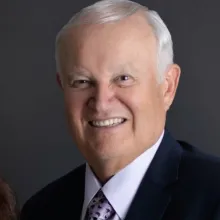
Mr. Seiglie was born in Havana, Cuba, and came to the United States when he was a child. He found out about the Church when he was 17 from a Church member in high school. He went to Ambassador College in Big Sandy, Texas, and in Pasadena, California, graduating with degrees in theology and Spanish. He serves as the pastor of the Garden Grove, CA UCG congregation and serves in the Spanish speaking areas of South America. He also writes for the Beyond Today magazine and currently serves on the UCG Council of Elders. He and his wife, Caty, have four grown daughters, and grandchildren.
