
Gary Antion
This transcript was generated by AI and may contain errors. It is provided to assist those who may not be able to listen to the message.
Good morning, everyone. I feel like I'm falling apart here. This is very heavy. Very heavy. I wondered with two men trying to lift it, and it's hard to have a grip on it. So thank you very much for doing that. We certainly appreciated the ABC Corral's first time I've heard them. I've heard them, you know, bits and pieces of them from my office down the way, but it was very beautiful.
Mr. Shoemaker, thank you, and the ABC Corral. Great job. They've spent a lot of time preparing. They spend mornings when they could be sleeping. They spend lunchtimes when they could be eating more so that they can perform for you. So I do appreciate it. We do appreciate the effort they put forth. And they're getting ready now. They're getting the rest of their program ready. They'll be starting to launch that what, in January?
February. They'll be going all to a number of the churches all in and around the area, bringing encouragement and inspiration to those areas by their performances. So we certainly appreciate them. Mr. Shoemaker works with them. I can't believe the great sounds he gets out of them. And certainly thank you for all the hard work you put into it. We appreciate that very much. We did have wonderful meetings. I'll try to share just to briefly hit some of the highlights from the letter from Mr. Rhodes to everyone. We had wonderful meetings.
They were exhausting. We spent a lot of time the first day. We basically spent all day long just sitting in there. It was closed session. There was nothing that we, you know, we just talked about anything that we felt was important regarding the church and regarding the direction of the church and where we were going. On the second day, we spent all day long trying to hammer out the strategic plan.
I'll talk more about that. This is what's presented every year to the GCE. And it's the strategic plan, the operation plan, and the budget. Without a strategic plan, you can't prepare the operation plan, and you can't know the operation plan unless you have a budget, because you have to know how much you can spend to do what's asked for in the strategic plan. So strategic plan sets forth your goals and your aims, and then you have the operation plan. How do we go about doing that? And then you have the financial side of it.
Can we afford it? What can we afford? So that was our job this time. This has to be ready for May. So we worked on it this time to try to make sure we at least get a start on it. We'll try to finish it either in a teleconference or next February. So Mr. Rhodes brings out several things in here, and I'll mention he talks about Mr. Luecker, who's talked about his trip already to Europe with his wife and how they're profitable. Those trips were to the various areas and how unifying it was to Italy and to France and to England and to Germany.
Mr. Kubik talks about the number of individuals that are now attending services. We have roughly 8,000 in the U.S., and we do not count people who are on the website. And we don't count people who sit in their homes on Sabbath and who are sick.
Literally count the people that are coming to services, which is 7,621 was the average attendance for October. We take average, not the highest. We have 12,000 across the world who attend services each week, close to 12,800. Good news from South Africa.
About 20 people have returned to United. The whole congregation basically in East London, South Africa, have come back to United. So they're now attending with United. Let's see what else I'm going to share with you. There are area conferences that we had here, one of them, for a number of the ministers that are doing it at six different regions of the United States. They have six area conferences that are to be held, and that will be in strategic areas that will cover a number of the ministers to give them a chance to come together and discuss various things and present to them.
And it's more like a discussion as opposed to just lecturing them. And so they have a chance to ask questions and make comments and kind of interactive. It was very profitable. Here from what I gather, I didn't get a chance to go to many of them. I did conduct one session on counseling and had a lot of good feedback and good comments from individuals about it and good interaction with the ministry who was here. Mr. Eddington brought out something very exciting that we should all be excited about.
One, two, three, four. Fourth paragraph, Don, if you haven't read it. And that is the addition of Word Network. Word Network. Beyond today will go on Word Network. Word Network is a religious broadcasting network. So you're going to get people who are interested in religion, not just people who are casually looking for something and fascinated by social issues or whatever else. You're going to actually get individuals who are interested in religion. And this will cover 210, reaches 85 million households in 210 U.S. media markets. It also reaches millions in almost 200 countries around the world.
So they can pick it up on their satellite TV or on their – it reaches over 200 different countries. The only one that they said that doesn't bring it in is Holland. So I don't know what's wrong with the Dutch over there. They must not like it. But anyway, the Word Network is one we're going to begin broadcasting on. I think it's on a Tuesday. It's put on here Tuesday afternoon, which then has a favorable time abroad, considering the time changes.
And then up over here, it's on Sabbath as well. It'll be on Saturday afternoons or Saturday, so people will be able to see it. So it's another opportunity for individuals to hear the truth being broadcast. Very exciting. Also, I think we're aware that Mr. Myers and Mr. McNeely and Mr. Petty do occasionally – well, not occasionally – do daily.
BT was called Beyond Today Daily. So they had like a two-minute blog on any issues that are current, which is really nice, because in addition to the Beyond Today program, they do a daily blog of what's happening in the news and to be able to keep up to date every day. They'll do that five days a week. Mr. Aaron Dean brought out about the finances. He said they're much better than expected, that we had budgeted for a certain amount that we would not be having as a result of the split.
And we now have better income than that. So it's very positive, that – very positive. The faith line he put in has almost been achieved of a million dollars that would come to us, because as you know, we had a $777,000 estate given to us, as well as another – I think it's a $90,000 estate that came to us. So we're already $800,000-plus on a faith line, how we're going to believe that God's going to bless us as we move forward with his work.
Let me share with you another couple of things, and then I want to bring it back to the strategic planning. Please continue to – well, let's see. He says the administration requested the Council consider plans to expand the home office. You'll be hearing more about that. You can read more about that in the second page on the other side, that we are – there's consideration of expanding the home office, not building another building, but actually adding on to it on the other side. If I get my – on that side, is that correct?
Over on that side? I feel like a traffic cop trying to get people to – anyway, we're going to add on to the outside of the building and expand by adding a whole lot of warehouse space and a new auditorium. It'll be a 500-seat auditorium, is what we've requested.
We can also – that'll double, not only for part of ABC. This room will remain the same, except probably divided with a temporary divider, so that part of it would be in a conference room, part of it would be ABC on a regular basis, but then the auditorium could be used for ABC as well, but would seat about 500 brethren. With the nice vestibule washrooms, we ask for a baptistery to be in there, because after all, isn't baptism one of the important things that people do in life, if not the most important?
So we probably have something there set aside, but also expanding the ABC library by doing so, by being able to move into this general area over here, which is now the mailing area. Have a larger – much larger mailing area, and then have a TV studio, which is the main reason that this was thought of in the first place, to have a much larger TV studio, because this TV studio we have now is very cramped with people inside there trying to do editing, and you don't dare sneeze because then you could ruin a whole telecast if you're observing.
So they're trying to fix that by having a new TV studio, which will be more state-of-the-art. And so we can preach the Gospel as a witness to the world in the most effective manner. So that's what – those things are under consideration. They'll try to keep the brethren in the loop, ask for your input if you have any thoughts about it. Also, about the – try to get buy-in from the ministry, the elders out there to make sure they understand what's going on.
As the administration proposed this to the Council, the Council gave them the go-ahead to get architectural drawings so we could know how much it's going to actually cost us. They're estimated to be around $2 million to advance. And that'll get – maximize the use of this building and even allowing a couple of spaces that have not yet been developed upstairs so that they could expand in that area as well, if need be.
It would be unfinished areas. But the warehouse will be substantially larger, but what is now the warehouse will become also the TV studio. So – and washrooms will be added on that side. And the hall for the brethren to come in will be a separate entrance. It'll have a roof over the area where you drive up to, so if you need to drive – drop people off, there'll be a roof there that you could drive under that you can drop people off and then go park your car so only the driver gets wet or everybody else can come in and be dry.
They have a big vestibule where they could have cookies and goodies not inside the hall but right outside in a big lobby-type area. And it looks really nice. Just the plans that we've talked about it, we talked about it with the home office staff, they seem to be all for it. And they gave their input – they had several meetings – we gave input to the architect, what we'd like to see in it, what we'd like to have arranged.
We'll have a fragrance-free room right at the back of the auditorium, which will have one-way glass that'll be entered from the vestibule. They don't even have to come into the auditorium so you won't say, oh, they have fragrance-free. Now, they'll just walk in there, close the door, and they'll have sound, and they'll be able to see. They'll be able to see one-way glass.
They'll be – you see out, we won't be able to see in. They'll have a mother's room and a father's room, or a mother's room – I'm going to ask for a father's room, too – mother's room, father's room, and a counseling room for anointing right at the back. So it looks like a really nice plan, and just wanted to emphasize that. And more information will be coming out so you can give your input. They want your input, too.
If they use this, have it 500. They probably will make Cincinnati a permanent site – a permanent feast site. So we could have people coming to visit the area, keep on a limited staff here who can rotate. At times, they stay here, and at other times that they go. But we would have a 500-person feast site here every year. So that's the thought and plans once that would be built. So it would be really nice they could use that facility, not the Holiday Inn or somewhere else.
Use that facility for it. Let's see if there's anything else I'm going to share for you. There are many needs, larger TV and so on. That's the part they brought out. Okay. What I'd like to share with you is the section he mentioned about the strategic plan. Council of elders and the administration are working together in a spirit of unity and cooperation. And by the way, unity and cooperation does not mean there's not sometimes differences of opinion on the council.
And if we have a difference in opinion, we try to come to, hey, I don't think that's a good idea. Why don't we do it this way? Oh, what do you think that's a good idea? Yeah, that's a good... Well, what about this part? And we add together and we work together and we come up with a good product. He said to take a far-reaching look at the guiding principles of the strategic plan to make sure the plan accurately reflects the spiritual mission of the church, which is to preach the gospel and make disciples. This is so important that the first two days of the week were set apart solely for this purpose. Now, Mr. Robin Weber and Mr.
Bill Eddington, who will speak to you this afternoon, were the two who actually drove this particular part, spent Monday brainstorming, and then trying to put scriptures to what we do. Because we're not just a secular organization that just puts together a strategic plan. Lots of organizations do. But we wanted to have scriptures to support what we were doing. We suggested those, many of those as well. Along the way, he said, we want to look at scripture.
We followed that on Tuesday when we started, laid down concrete plans to move forward with a revised strategic plan. And then after we do our part, that's only one part of it, then we give it to the administration to put their part in, which is the operational side of it, how they plan to get there. So it was very exciting to be able to do that. So we met for four days, and a major focus was given to develop the goals and aims of the strategic plan for the administration to carry out.
And it was focused on public proclamation of the gospel and congregational care areas. We used scriptures. We went to scripture. Well, the scripture says this. This is what we need to do. This is how we need to word it. We need to add the scripture there if we need to, but we certainly need to add the thought of the scriptures to it.
As a church, as a church, we have an awesome commission from Jesus Christ to preach the gospel – that's proclamation – publicly, and to prepare a people – that's congregational care. We have a job to do as a church. And in a critical time that we're in, in the world affairs, take a look at the meeting in Europe.
Look at the faces of the people who – of these leaders as they try to decide how they salvage the entire continent of Europe because of the weakness of the Euro, because of overspending, and they're trying to figure out how they will even succeed. And of course, our country many times is tied in to Europe, even though we're distant from them. They're our trading partner.
We send lots of goods there. They don't have money to buy it. We don't have any market to sell it. So we have a job to do. We have a big job to do. Mark 16, verses 15 and 16. If you want a title for this sermon, if you want a title for it, it's, Preach the Gospel and Prepare a People. Preach the Gospel and Prepare a People. Mark 16 and verse 15.
And we were all intensely interested in intensely commenting on how we need to get that gospel out as a witness to this world. We were all intensely interested in how we are preparing God's people, what we're teaching them in the education side of things.
How important is it for us to understand God's purpose for humanity? How important is it for us to be preparing people that God calls? You'll see that as I go through and discuss. Mark 16, verses 15. And he said to them, Jesus Christ, right after His resurrection, He appeared to them and He said to them, Go into all the world. That's an order to His disciples. And if you're a disciple of Jesus Christ today, that's an order for you today. It wasn't only for those men and women back in those days, it's for us today. Go you into all the world and preach the gospel to every creature, not dogs and animals, but every human creature, every person. Preach that gospel. Get it out to everyone.
Maximize your efforts. Let people here go to all the world. That's public proclamation.
Matthew 28, verse 18, is the real commission that Jesus Christ gave. Matthew, chapter 28, in verse 18, and Jesus Christ said to them after His resurrection, He came and He spoke to them, saying, All power is given to me. I've got all power. Now, He had power, but He also was in the flesh. But now He says, I've got all power, as Mr. McClain was mentioning. He's going to share His estate. I've got all power. I'm willing to share that with you. All power is given to me in heaven and earth. Go therefore. Teach all nations. So you've got to go and teach. It's not just a matter of preaching. It's also teaching, baptizing them or discipling them, making them disciples, help teach them in the name of the Father and the Son and the Holy Spirit, teaching them to observe all things, whatever I've commanded you. Pass on the Word, and lo, I am with you always. As long as you're doing His work, as long as you're doing His will, He said, I'll never give up on you.
I'll build my church. Nothing will ever stop it. Satan the Devil does not like God's people.
Satan the Devil does not like God's church. He'll do anything he can to disrupt it. He'll do anything he can to prevent people from hearing the truth. Isn't that what it says in 2 Corinthians 4, 4? He blinds the minds of those who might hear the gospel. We'll see that when we talk about the parable of the sower. He doesn't like people hearing hope. He doesn't like hearing people or people hearing that there's a better world coming. He doesn't want that. He wants people to feel downtrodden and feel like losers, which he is. He knows he's a loser. He knows he's not going to make it. He knows that God's going to deal with him and reckon with him. So we've got a job to do. Christ said, lo, I am with you always, even to the end of the world. Amen. That means that's for sure. Luke 1. So that's the first part of it. Public proclamation and couple with that, taking care of the people that God calls. I've known of some groups that preach the gospel, but they don't care for the people. You get people all hyped up. There's a better world coming. There's a great world coming, but I'm sorry we can't serve you. We don't have any means taking care of you. In Luke chapter 1 and verse 17, we find this. He talks about John the Baptist, or the one who comes in the spirit of John the Baptist and Elijah. He shall go before him in the spirit and power of Elijah to turn the hearts of the fathers to the children and the disobedient to the wisdom of the just. Listen to the last part of Luke 1.17. To make ready a people prepared for the Lord. That's congregational care. We have a responsibility to help God's people be ready for Jesus Christ's return. Be ready for service with Jesus Christ in his coming kingdom, which he's going to establish. So let's take a look at those two aspects of the strategic plan, the goals. One, the preaching of the Gospel. Two, the preparing of God's people. We have wonderful news for the world. Barkley, in his commentary on Peter, talks about how many slaves there were in the world. Something like, in his day, 60 million or 80 million, whatever, in the Roman Empire.
People who were taken in, who were captured, who were enslaved to the Roman government.
And when the message came, and Palestine was too where Jesus Christ was, you can be a part of a kingdom that's going to be a whole lot better than this one. It gave those slaves hope. And even in the scriptures, he says, now when you come to church, if one of your boss, your owners, happens to be converted, because remember, God calls the weak, and they're much more willing to respond than those who are high and mighty. So the weak were there a lot. So you could have a slave who was a deacon. And into the church, for the visit, for the first time comes his boss. He doesn't know that slave's a deacon. And that slave's over him when he comes to church. He says, now you be nice to your owners. Treat them with kindness.
God said, send this message out, and it would go out with power, and it would reach them.
Slaves responded because they had hope. They had a message of, brethren, we have such a wonderful message. It's a message of a kingdom that has foundations, whose builder and maker is God, a kingdom in which will dwell truth, which will dwell blessings, which will dwell peace, harmony, healing. Talk about a world, financial security, because God knows where every vein of gold is. He knows where all the motherlodes are for gold and silver and everything.
God knows where they are. God knows in the oceans where there are gems and jewels. He knows where they're all bare. He knows where all the precious stones and precious metals are. And you will too.
Say, hey, you know what? The guys are out there prospecting. Just go over here, and you'll find some. Just go over here. It's right over there. There it is. They could be digging over here all the time. I can't find anything. I can't find anything. Oh, it's over there. I know.
The world will be a whole lot better place, but we've got a message of hope for a world.
As a therapist and as a counselor, I'm always told when people leave my office, I should leave them with hope. I should never leave them down. I leave them with hope.
We've got a gospel, a message that's God's message, which is good news.
And we should want to get that out to the world.
And you have to say, why did God call us now? Why didn't He call us in a... When would be the best time to be called? Probably when there's no Satan in no world around.
Probably better in the millennium, don't you think? People in the millennium just might have a little edge without Satan in the world, in addition to the old self? In the world?
Tomorrow, they'll just have old self. Why is God calling you and me now?
To be a part of a work that preaches the gospel as a witness to the world.
To be a part of a work that helps spread that message, that message of hope to a sick and dying world. Mark 1, verse 14, Jesus Christ officially introduced the preaching of the gospel. Mark 1, verses 14 and 15, under this first area of preaching the gospel. Mark 1, verse 14. Now, after John was put in prison, Jesus came into Galilee preaching the gospel of the kingdom of God. He preached a message of hope to people who lived in a world that was dominated by the Romans, in which they were enslaved to the Romans. Verse 15, and saying that... And by the way, being a slave back then meant you were nothing. You might be able to speak, but you were just a living tool.
You had no rights. They could kill you by fiat, to just say, I'm tired of this slave, put him to death.
Nothing would happen to them. A slave was a living tool, just like a cart was an inanimate tool.
The only difference between a slave and an animal, a beast of burden, was that the slave could talk.
That was the only difference. They had no rights. And to tell people in that condition, you can be a part of the kingdom of God. God's calling you to be a king and a priest.
And in his kingdom, he's going to make you a king and a priest, or a queen in his kingdom. Talk about hope for people that had no hope, nowhere to look but down.
Now they could look up. Mark 1 verse 15, and saying, the time is fulfilled. The kingdom of God is at hand. The kingdom of God is near.
And also, you can show the kingdom of God by your actions. You can live the way people are going to live in the kingdom of God, in character, in an attitude, in an approach to others. You can do that right now.
Repent and believe the gospel. Jesus Christ officially began the preaching of the gospel.
Colossians 1.23. It is a message of hope. Colossians 1.23, as Paul spoke to the church at Colossae, 1 verse 23. He said, if you continue in the faith, breaking into a thought, grounded and settled, be not moved away from the hope of the gospel. God's message of eternal life, of the kingdom of God, brings people hope. Do not be moved away from the hope of the gospel, which you have heard, which was preached to every creature which is under heaven, where have I, Paul, made a minister? The Apostle Paul said, hey, I'm doing my best to get out there.
I'm going to take this message as far and wide as I possibly can.
Ephesians 6.15. It's a message of peace. Ephesians 6 and verse 15. He talks about the armor of God and what we have. He said, and your feet shod with the preparation of the gospel of peace.
God's gospel is about peace, a time when they will break their swords and the plowshares and their spears into pruning hooks. They'll make hoes out of their, and cultivators out of their spears, and they'll make plowshares out of their other equipment, out of their other weapons.
A time of peace. Every man will sit under his vine and under his fig tree. It's a sign of peace.
God says there's going to be a time of peace. How much peace is our world known? Only hundreds of years that in all the recorded history of man has the whole world been at peace. There's always been somebody, someone, at war with someone. Somebody hating somebody. But God says that's not going to be in his kingdom. Not going to be there. The gospel of peace. We have that message in a troubled world. Matthew 10, verses 7 and 8, he sent out his disciples. He told them to go out two by two. Take this message, Matthew 10, verses 7 and 8. He told them to go forth.
You can read all of Matthew 10 if you choose, but Matthew 10, called them and sent them out to heal in all manner of sickness and disease, calls their names and it says don't go into the way of the Gentiles. But verse 7, he says, and as you go preach, saying the kingdom of heaven is at hand. God's kingdom is coming.
God's kingdom is near. You have a chance to be a part of something bigger than life.
Heal the sick. Cleanse the lepers. Raise the dead. Cast out demons. Freely you have received, freely give. That's why we give away the literature.
How many local churches could we have if we kept all the money back for ourselves?
Lots of them. We could provide lots of money for churches if we just didn't preach the gospel.
If you wanted to be selfish, just pull into yourself instead of having a gospel to go forth to a world that's sick and dying. A message of hope. Not a told-you-so message, but a message of hope to a world that those that God chooses to call may come.
Carried on after he wanted his disciples to carry on the message after his departure. Acts 28.
How diligent was the Apostle Paul in fulfilling this? He was in prison or under house arrest.
And he still maintained preaching the gospel.
Acts 28 and verse 30.
And Paul dwelled two whole years in his own hired house and received all that came into him.
Previous verses said Jews were just there. Verse 31. What did he do?
Preaching the kingdom of God.
Preaching the kingdom of God and teaching those things which concern the Lord Jesus Christ with all confidence, no man forbidding him.
We believe that our mission is to preach the gospel, the kingdom of God, and Jesus Christ as a witness to this world. Brethren, it does you no good if I tell you there's an awesome, wonderful world coming. There's a great world coming. There's an awesome world coming. But I don't tell you how to get there. And you can't get there if you don't believe in Jesus Christ.
You can't get there without the name of Jesus Christ. You can't get there without the teachings of Jesus Christ. It's impossible. I'll share that with you in a moment.
It's a message about the kingdom and it's a message about repentance and change. In Luke 24, verse 47, we must cry out. We must tell people they need to change.
We must make that part of it. You can be a part of this if you're willing to change.
Notice he said, and that repentance and remission of sin should be preached in his name among all nations beginning at Jerusalem. This message needs to go forth, but it also needs to include, if you want to be a part of that kingdom, you've got to change. If you want to be a part of that kingdom, you must repent. It's also about the king of that kingdom and the Savior by whom we may be in that kingdom. Take a look at 1 Corinthians chapter 15. 1 Corinthians 15, what the Apostle Paul understood, and after all, he was trained by Jesus Christ directly. 1 Corinthians 15, and verse 1, Moreover, brethren, I declare to you the gospel which I preach to you, which also you have received, and wherein you stand, I'm telling you the gospel, by which you also are saved, if you keep in memory what I preach to you, unless you have believed in vain.
Part of the gospel message is not just there's a great kingdom coming, it's how you can be a part of it. It's not just a great message about what a wonderful time there will be, but it's also about how you can be there. For I delivered to you, first of all, that which I also received, how that Christ died for our sins according to the Scriptures, verse 4, and he was buried, and that he rose again the third day after three days and three nights, according to the Scriptures.
This was part of the gospel message. We'll also see what the disciples did in Acts chapter 8. Paul said people have to know about Jesus Christ. They have to know who he was. It's not a gospel. Jesus Christ didn't come and say, hey, look me over. Hey, I'm talking all about me. But he did say, I am the door. You do not enter into the sheepfold except by me. You can't. He said, my sheep hear my voice, and they know it, and they follow me. Look at Acts chapter 8 and verse 4.
Acts chapter 8 and verse 4. So part of that, that's why we say we preach, it's not two gospels. We preach the gospel of Jesus Christ and of the kingdom of God because they're integrally entailed.
They're intertwined. You preach it, and you tell people how. How do I get there through Jesus Christ? You can't make it by yourself. Christ in you, the hope of glory. Let this mind be in you, which was also in Jesus Christ. The apostle Paul said, what? I'm crucified with Christ, nevertheless I live, yet not I. But Christ lives in me. And the life I now live, I live by the faith of the Son of God, who loved me and gave himself for me. Galatians 2.20. Pretty good quote of that.
Pretty close. You check it. You have to have Jesus Christ in your life. In Acts chapter 8, Acts chapter 8, when the disciples were scattered and went out, what did they preach? Notice Acts 8 verse 4. Therefore they that were scattered abroad went everywhere preaching the word. What did they preach? Verse 5. Philip went down to the city of Samaria and preached Christ to them.
He preached Jesus Christ to them. Now what did he say? Jesus Christ is 5'10 and weighs 165 pounds and is wiry and is a man's man. What did he say? He would have told what Jesus Christ was about. He would have talked about what Jesus Christ believed in, what he stood for, what his character was, what his message was. But indeed it involved Jesus Christ. And notice verse 12. It wasn't just Jesus Christ, but verse 12. But when they believed Philip, he's the one who went down, preaching the things concerning the kingdom of God. Oh, he didn't forget the kingdom of God.
And the name of Jesus Christ, they were baptized, both men and women. When they believed about the kingdom and the name of Jesus Christ, Acts 4 verses 10 to 12. I won't read it. You can write it down. Acts 4 verses 10 to 12 says, there's no other name given under heaven, whereby we must be saved. You can't be saved without the name of Jesus Christ, without understanding about him, without understanding his way. Now, as that message goes out, that good news of a kingdom, as that message goes out and reaches people, people begin to respond if God is calling them. And we find a parable of the sower that shows the response of individuals to the seed, the word, as it goes forth. Matthew chapter 13 and verse 3.
Matthew 13 and verse 3. He spoke many things to them in parables, saying, Behold, a sower went forth to sow, and when he sowed, some seeds fell by the wayside. So he gives this parable. Seeds are sown, some of them fall by the wayside. Fowls of birds of the air came and devoured them. So you preach the word, but taken away. Throw these seeds out. Some people, they're taken away by the birds.
Some fell in stony places. They had not much earth, and forthwith they sprung up.
And because they had no deepness of earth, when the sun came, they were scorched. Because they had no root, they withered away. Their roots couldn't go down deeply, and as soon as any trial came upon it, they were gone. He said, Some fell among thorns, and the thorns came up among them. Weeds grow faster than the plant and choked it. He said, But other fell in good ground, and brought forth fruits, some a hundredfold, some sixtyfold, and some thirtyfold. Who has ears to hear? Let him hear. Now, you could make many sermons and sermonettes off of this, but let's go and see what Jesus Christ said. Verse 18. He gives the interpretation to his disciples. Here, Matthew 13, 18. Here, therefore, the parable of the sower. When anyone hears the word of the kingdom, the gospel, the gospel of the kingdom of God, that's what Jesus Christ came to preach, the kingdom of heaven, kingdom of God, or synonymous, where is the kingdom of God from heaven? Where's God's throne? Heaven. That's where the kingdom is going to emanate from. And when anyone hears the word of the kingdom and understands it not, so he's trying to figure out, what is this about? I hear this. I mean, the Beyond Today program goes out to a lot of people. The Good News magazine goes out to a lot of people. Advertising and Reader's Digest, I think, goes out to a lot of people.
Some people say, I don't know about this. It doesn't seem to make any sense. And here's what happens when they don't understand it. Then comes the wicked one and catches away that which was sown in his heart. The wicked one, Satan the Devil, takes it away from him. Oh, you don't want to dabble with that. Oh, that's a cult. You don't want to go that direction. This is he which received the seed by the wayside. It came and it was taken away. The fowls of the air came and took it away.
Verse 20, but he that received the seed in stony places, the same as he that hears the word and at once has joy and receives it. I've seen these two flash in the pans. Oh, this is a wonderful, this is the greatest, wonderful, most wonderful thing I've ever seen. The next thing you know, what happened to them? They left the church. They turned their back on what they knew. Didn't have any depth. They didn't think it through. It sounded like a good idea, but they didn't think it through. They didn't make it their own. As I've said, for talking to Dr. Ward about Ambassador College, you can externalize Christianity. You can really look like a Christian without being one.
Christianity is not a matter of how you look on the outside. Christianity is a matter of how you are on the inside. It is a matter of the heart. And if you only just superficially accept it and don't believe it down to your toes, you will leave. Something will cause you to leave. I remember a sermon at the feast many years ago when I was of sophomore college. What is your sticking point?
What will get you out of the church? What will you leave over? If you don't believe God's way down to your toes, something will take you away. And he says here, they had no root, verse 21. They didn't believe it down to their toes. It was only superficial. Yet he has no root in himself, but it doers for a while, for when tribulation or persecution arises because of the word, by and by, he's offended. I was telling the students, what will you let offend you?
Well, I helped you. Don't you ever offend me. You're getting a millstone for offending me. Good. Okay, he gets a millstone. And you're out. That make you feel good? That both of you are out? He gets a millstone, so he goes on deeper than you do. But you're both out of the church.
Does that help you? Does that make you feel good? He gets a millstone, but we're both out because he offended me. I leave. And he gets a millstone at the end. But you're out, too.
Great peace of those that love God's law. Nothing will offend them.
Do not allow people to offend you. Well, they did that to me. This can't be the church. Wait.
Does everybody do that to you? Is that a teaching?
Do some people not practice what they know? Yes, some people don't.
Do we all slip and stumble? Yes, we all do. We all offend in some way.
Is it deliberate? Most cases, no. If it is deliberate, we'll be to the person who did it. But the point is, if you let them offend you, you're out, too.
Is that consolation that he's going to get a millstone?
And you're out, as well? I don't see it that way.
These people, as soon as troubles came, they were offended and left.
Verse 22. He also that receives seed among the thorns is he that hears the word and the care of this world. He gets sidetracked. He or she forget. They're calling. As Mr. Maclean was bringing out, they forget where to seek first the kingdom of God, not seek first the cares of the world. Seek first the kingdom of God.
He says, and they take the care of the world and the deceitfulness of riches.
I'm going to spend all my time trying to figure out how I can make money.
I want to spend all my time trying to figure out how I can get the opposite of God's way. And it chokes the word, and he becomes unfruitful.
The cares of the world draw him away. So one is Satan draws him away. Another one is his own weaknesses draw him away. And in this one, the cares of the world draw him away. But verse 23 says, but he that receives the seed in good ground is he that hears the word understands it, lets it go down deep into his life, which also bear fruit and brings forth some 100, some 60, and some 30.
We all bear different amounts of fruit.
That doesn't mean one's better than the other. It just means one is one's plant. This plant is more productive. They're all going to be in God's kingdom.
So that's the response. Now take a look in the second part. This leads into the second part of the sermon, which is prepare people. Second Thessalonians 2.14.
Second Thessalonians 2.14.
We're called by the gospel.
Notice verse 14 of Second Thessalonians 2.
Whereunto he called you by our gospel. It wasn't Paul's own gospel.
It was the gospel that he had been given that Paul was bringing to the obtaining of the glory of our Lord Jesus Christ.
You are called by the gospel. The gospel message goes out. Some people hear it, don't understand it. Some people hear it, and let the world take away. Some people hear it. Satan comes and takes it away from them.
Some people hear it in trials because they have no... They start out because as a flash in the pan, and then because they have no root, it quickly dwindles in their life and they move away.
But it is you are called by the gospel.
Mark 16 verse 16.
It's essential that the gospel go out because that's how people believe, and that's so essential for baptism. Mark 16, 16.
Verse 15, he told them, we saw in the first half, go to all the world, preach the gospel to every person, every creature. Verse 16, he that believes, believes what? The gospel.
The gospel.
And is baptized, shall be saved.
Because if he believes the gospel, he believes in the King Jesus Christ, who's our Lord and Savior, and Master and High Priest, and all the other attributes.
And characteristics that are attributed to him.
He believes that he knows where the kingdom's going to be, not in heaven somewhere, but here on this earth, that God is going to set up a kingdom here on the earth. He believes who's going to be in that kingdom. Flesh and blood can't enter it, so he's got to be changed.
But he knows he'll be ruling over people who are left on the earth.
He also knows that any kingdom requires laws and rules by which people must live.
And those are God's laws and God's commandments and God's teachings.
So really, when you say, do you believe the gospel, you're saying a lot.
You're saying a lot.
That's why that gospel must go forth, needs to go forth, so that people may be called and drawn. Now, the scriptures tell us, many are called but few chosen. Matthew 22, 14.
Many are called but few are chosen. Sometimes we use the term calling. We say, I've been called. We really mean, I've been chosen.
Calling is sending out a message.
It's hearing a sound.
Otherwise, those who are called are not many, only few.
Message goes out to many.
Good News magazine goes out to many, not just the church.
How many come to church?
12,000 out of what? 300,000, they get the Good News magazine. Many are called. They're getting that message. They're called by the gospel, but they don't respond to it.
It doesn't make any sense.
I remember so diligently coming to my dad, so excitedly coming to him, Dad, look at this. The Bible says we could be a member of the family of God.
1 John 3, 1.
Now, are you the children of God? It does not yet appear what we shall be.
I'm not born into the family yet, but I'm called like a child of God.
God, look, look, Dad. God says we could be like Jesus Christ.
He tells us, call him Father. He says he's bringing many sons to salvation. He says, Jesus was the firstborn. I was so excited. Why were you born? I was so excited.
Am I dead, so?
Padded me on the head, or patted me on the back. Nice going, son. Goodbye. Let me get back to watching TV.
It didn't. He couldn't hear it.
He couldn't understand.
He couldn't understand. Many are called, a few chosen. That's why he calls the church a little flock.
He doesn't say a huge flock, but we still have an obligation to send that message out to the world.
Oh, yeah, the third angel will do it, too.
But we have a job to do. What about all the people intervening in between who didn't get it?
We have a job.
Ephesians 4, verse 11, Once God draws those people, we have a responsibility as a church to care for them.
We have a responsibility to care for them.
Part of the job of congregational care is working with the ministry so that they treat God's people in a way that develops them toward the kingdom of God.
That's our efforts and our aims.
To work with developing ministers, to work with the existing ministers, to help them have an approach that is godly toward God's people, an approach that is caring, an approach that adds to their joy. Oh, no, we're not taking away the authority they have. Every one of us as a minister has the authority.
Do this fellowship somebody? Do we like doing it? Absolutely not. Do we relish that? No. Do we walk around with our stick and our club waiting to hammer people? No.
We know we have that authority, but we also know if we misuse that, we will answer to Jesus Christ, the head of the church.
But our main job is to help people have joy.
John wrote to the church in the general epistle that he wrote and said, I want right to you that your joy may be full.
I want you to be a happy church. That's what he said.
I want you to be joyful. I want you to be happy in Christianity, not sad sacks.
Not, well, life was heavy, life was hard, life was terrible, life was... But it's Christian.
Do I want to join you in your misery? No.
Misery might love company. You might want me to join you, but frankly, if I see you as sad sacks, I don't want to be a part of you.
I want to be a part of an organization that's bright and uplifting and outgoing and happy.
That's what God has called us to. Ephesians 4, verse 11. He gave some apostles, some prophets, some evangelists, some pastors, some teachers, for the perfecting of the saints to help God's people become better, mature, for the work of the ministry helped them become better at serving, for the edifying of the body of Christ to uplift, not to criticize and put down. There is a time to criticize.
But if it's all you receive as criticism, you'll get very tired.
You'll get weary.
Oh no, here comes another chew-out.
That's not the way we should be.
There's a time to correct, absolutely.
But the majority of the time, it should be helpers of their joy, not critics of their mistakes.
Edifying the body of Christ, till we all come in the unity of the faith, to the knowledge of the Son of God, to a perfect man, a mature man.
Notice what we're trying to do to the measure of the stature of the fullness of Christ.
That's our job, to have congregational care that prepares people to become like Jesus Christ, to encourage them to develop the character of Jesus Christ, not just to be a good church member, though we hope if you're developing the character of Christ, you will be a good church member.
It's not to keep you in the church, although if you are a good Christian, you'll want to be in the church.
But it's to teach you to grow in the measure and the stature and the fullness of Christ.
That's our job, congregational care.
One thing was brought out by Dr. Ward was how important it is to teach God's people, to teach the children, to know who God is, what God is, who man is, what man is, and why you were born.
Some of the crucial questions in life.
We need to really be honing in on that, to know God is eternal life, because you know that He has it. You know that He'll give it. You know what His purpose is.
Jesus Christ told Peter three times, feed my lambs, that's one, feed my sheep, two, feed my sheep.
I take it to be the young folk, the middle-aged folk, and the older folk, because sheep can be either young or old sheep. Lambs are definitely young.
Take care of them. Feed them.
The Apostle Paul urged Timothy in a letter to him, 2 Timothy 4.
Urged Timothy, his beloved son that he called him in the faith.
2 Timothy 4, verses 1-4. He said, I charge you therefore before God and the Lord Jesus Christ, who shall judge the quick and the dead, and his appearing and his kingdom.
Verse 2, Preach the word, be instant, in season, out of season, during the holy days and outside of the holy days. Reprove, rebuke, exhort with all long-suffering and doctrine.
Teach. Teach truth. Teach people to discern the difference between right and wrong. Teach them to do right instead of wrong. Teach them. He said, For the time will come when they will not endure sound doctrine.
One of the damnable teachings of secularism is, Well, that's your perspective. Well, God says, Keep the Sabbath, they will. Well, that's your perspective. God says, Don't eat, unclean me. That's your perspective. It's not my perspective! It's the Bible!
I read words and I understand the words. You don't understand the words, get a dictionary.
But it's not my perspective. My perspective might be, Let's see. I think red is a nice color. That's my perspective. You could say, My perspective is blue. Good for you.
Those are perspectives. What do I think about that? Well, I think I shouldn't do it. That's a perspective. But don't tell me what it says if it comes out of the Scripture. You have no perspective. Your perspective is, Do I do it or don't do it?
Don't mess with it, is God's Word. He said, Preach it. They'll not endure sound doctrine, but after their own lusts shall heap to themselves. Teachers having itching ears. Tell us more. Tell us more. Tell us more. You know what he said about the Greeks? Wasn't it the Greeks always wanted to hear something new? He was, Tell us something new. Sorry! Unless we start preaching from one of the other holy books of the religions of this world, you're always going to hear from the Bible.
Always going to hear from the Bible. Sorry! It's my source. It's not going to be one of the other holy books.
It's the Bible. That's what we hear from. Verse 4. When they have itching ears, they'll turn away their ears from the truth. God's Word is truth. Shall be turned to fables. So we have a responsibility to preach the truth, to teach the truth, to impel and to inspire, to motivate God's people to do the right thing. John in Revelation urged us to hold fast. Revelation 3 verses 10 and 11.
Hold fast, he said, because you have kept the word of my patience, I will also keep you from the hour of temptation. You shall come upon the whole world to try them. Dwell upon the earth. I'm coming quickly. Remember, a day says a thousand years with God. I'm coming quickly. Hold fast that which you have that no man takes your crown. Inspire God's people. Don't give up. Have true grit.
Remember the movie True Grit? John Wayne. And that girl said, he said, why do you want to get that rooster cockburned? Why do you want him to be your guy? She said, because he has grit.
He has grit. Stick to it of this. He's not going to give up. He's going to hang in there. Do you have grit? True grit? Or do you give up easily? Stay strong. Stay faithful. We are also urged to overcome. To him that overcomes. Revelation 3 21, same chapter. Revelation 3 21. To him that overcomes will I grant to sit with me in my throne, even as I also overcame and am set down with my father in his throne. We've got to overcome. We've got to change. We've got to become more like Christ and less like ourselves. Less like the world. Less like Satan in his way. More like Christ.
So that we could be a part of that kingdom. So we have a job to do to prepare our people.
It is interesting that the joy of the ministry at the end, what do we want? We were asked a question.
If you knew this was your last day of life, what would you want to say about your life in your ministry?
We talked about that in the session. My thought? First Thessalonians 2 19.
For what is our hope or joy or crown of rejoicing? What will make us happy? Are not even you? You brethren in the presence of our Lord Jesus Christ that is coming.
For you are our glory and our joy. The greatest joy we can have as a church, as a ministry, responsible for helping you. And you help each other too. It's to see each other in the kingdom of God.
To see that the work that we did with you was not in vain.
To see that you caught fire and you grew in the stature of Christ so that you could be in God's kingdom. Now we'll die, we won't know who makes it. When we die, who've been ministers who've taught you, we won't know how you younger folk end up.
We hope we will make it and we hope we'll see you there too.
Prepare a people. In Revelation, it's put this way, the bride has made herself ready.
Prepare a people. What is on our logo?
Preach the gospel. Prepare a people.
That's our job. That's what we went through in the strategic plan.
Set the goals. How do we do this? How do we point in that direction? Let's be more specific.
See, there's a gospel for the end time. Matthew 24, 14. I cut my teeth on it. Have you heard the early broadcasts by Herbert Armstrong, by Garner Ted, whatever? They were always Matthew 24, 14. This gospel shall be preached as a witness in all the world. Then shall the income. It is a prophecy. Who's going to fulfill that prophecy except those who know what the gospel is, those who put their energies toward preaching that gospel as a witness to the world. And in fact, we must. We must preach the gospel, and we must prepare a people. The Apostle Paul said 1 Corinthians 9 and verse 16, my last few verses, so the song leader could know when he could come up. 1 Corinthians 9 and verse 16, For though I preach the gospel, I have nothing to glory of, for necessity is laid upon me. And by the way, one big topic that was brought up many times was teaching the aspect of humility.
Teaching the characteristic of humility throughout the church.
Teaching people to serve Christlike service throughout the church. Humility. Recognizing others. Seeing them. Recognizing your flaws and your shortcomings and recognizing them, them. And esteeming them. But verse 16, he says, For I have nothing to glory of, for necessity is laid upon me. Yes, woe is unto me if I preach not the gospel. Do you feel that same way?
Woe be to me if we don't do that job. God has given us a job to do. We must, like Paul, say, woe be to us if we don't do our job. And then we must prepare a people. Matthew 24, at the end of his life, at the end of his ministry, I should say, Jesus Christ warned his disciples. Matthew 24, Matthew 24 and verse 45. He said, Therefore be you also ready, for in such an hour as you think not the Son of Man comes. Verse 45, Who then is a faithful and wise servant, whom his Lord has made ruler over his own household, to give them meat in due season, to feed them. Blessed is that servant whom his Lord, when he comes, shall find so doing. We as ministers and we as brethren have a responsibility to uplift, to encourage, to feed, to nurture the people of God toward the kingdom of God. And Jesus Christ said, My meat is to do the will of God. I live to do the work of God. That's what he said. I live to do the work of God. Do you? Brethren, I really hope that we will have a renewed zeal in these troublesome times. Let's offer our prayers. Let's offer our lives to God, that he may, through his church, preach the gospel and prepare a people.
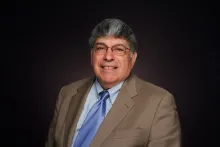
Gary Antion is a long-time minister, having served as a pastor in both the United States and Canada. He is also a certified counselor. Before his retirement in 2015, he was an instructor at Ambassador Bible College, where he had most recently also served as Coordinator.
