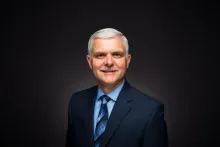


Randy Urwiller
This sermon will focus on God’s instruction regarding the observance of the Feast of Tabernacles and the 8th Day and their meaning drawn from Leviticus 23, Deuteronomy 14 and 16, and Micah 4. To illustrate the importance of preparing our hearts for worshiping God, I will use the example in 1 Samuel 7:3-12 of the Philistine’s oppression of Israel until they heeded Samuel’s instruction to prepare their hearts and serve God only.
This transcript was generated by AI and may contain errors. It is provided to assist those who may not be able to listen to the message.
Well, happy Feast of Tabernacles, everyone! Well, you want to try that again?
Happy Feast of Tabernacles, everyone!
All right, now you got me charged, too. That's great. Thank you so much for that. Greetings to you from East Texas and Ruston, Louisiana, and also Texarkana, Texas. We have a Bible study group up there, and many of those folks are here. I can't see you yet, but I know you're here.
Well, here we are another year's behind us.
It just seems... Honestly, I guess I'm getting old, because it seems like I was just here a few months ago. And we kept the Feast here last year, but I'm ready. Are you ready? Is it good to be here?
It really is. I agree.
We did a lot of work to prepare ourselves to observe and celebrate the Feast of Tabernacles. I don't know if I'm allowed to touch this, but I'm going to move it up.
Out of my way a little bit, maybe.
We registered for the Branson Feast site, perhaps. We made housing reservations. We planned our route. We arranged time off from work and school. We somehow found a place to take care of the dog, cat, birds, lizard, fish, whatever we might have. We put our mail on hold, or we forgot. And we packed our clothes, forgot to bring our envelopes, left our sermon notes on the desk, and other things like that. But here we are, and we're glad to be here, aren't we?
With all these preparations behind us now, we finally arrived, haven't we? We're finally here. And hopefully we're not too exhausted, we're not too harried and worn out, and we're getting some well-deserved rest today.
And now we're ready to keep the feast, right? Or are we ready? Are we ready? Is keeping the feast just a matter of preparing and getting ourselves to the feast site, getting the room rented, then going back and forth to services, spending a little time then out running on adventures to spend our second tithe, and as God commands us to do in Scripture, is that what the feast is really about? It's a good part of it. It's a good part of it. But there's much more to keeping the feast, and there should be. And we will be ready to keep the feast as God would prefer us to if we take time to also prepare our hearts, if we also prepare our hearts, our minds, to keep the feast.
We've heard a little bit about that already today. We need to prepare our hearts to keep God's feast in a way that pleases God, and that will bring blessings to others and also to ourselves. And that's today's subject, the subject of this message. The title of the message is, Prepare Your Hearts for the Feast. Prepare your hearts for the feast. Now, if you're like me, I've heard mention, prepare your hearts many times in my life.
But what exactly does the statement mean? Now, I'm not asking you what the world might say it means. I'm asking, what does God in His Scripture say that it means? Because we want to draw our truth from God's holy Scripture. And so let's look into that. Let's look at some examples. For example, in 2 Chronicles 19, verse 3, and if you don't have time to turn there with me, that's fine. I'm going to read it for you.
2 Chronicles 19, verse 3, the seer of God told King Jehoshaphat that he had made a bad decision in helping Ahab, the evil king, evil wicked king of Israel. And yet, the seer also told him that God was pleased with the godly things Jehoshaphat did.
Jehoshaphat did. Verse 3, the seer said, nevertheless good things are found in you, Jehoshaphat, in that you have removed the wooden images, the idols from your land, and have prepared your heart to seek God. So there's our first example of preparing our heart. What does that mean, to prepare our heart to seek God? On the other hand, conversely, in 2 Chronicles 12, verse 1, now we read about Rehoboam. Rehoboam, you probably remember, was the son of Solomon. But did you also know that Rehoboam was an evil king? 2 Chronicles 12, verse 1 says, Now it came to pass, and Rehoboam had established the kingdom, and had strengthened himself, that he forsook the law of the Lord, in all Israel, along with him.
In verse 14, it tells us, Rehoboam did evil, why? Because he did not prepare his heart to seek the Lord. He did not prepare his heart to seek the Lord. He did the opposite. So we're beginning to form an idea of what God means to seek, to prepare your hearts to seek God. And so, when we look into the word for prepare, it's the Hebrew word kun, k-u-n, and it means not just to prepare, and frankly, I like some other translations.
I think the word choice is a little better in this case. The Hebrew word kun translated prepare in the New King James Version. It actually means to direct one's step toward God. You might want to jot that down. It means to direct one's step, to make your decisions, to make your choice of direction, to direct one's step to God. Another definition is it means to set one's heart a right to be faithful to God. A right might be an older word.
You might say to set your heart in alignment to be faithful with God. Are you beginning to get a fuller picture of what it means to prepare your heart? Now, there are other scriptures that convey similar messages, different words.
I'll read some of those to you. 1 Chronicles 29, verse 18. It talks about how in this setting, in this verse, the background King David wanted his people to be faithful to obey God. In 2 Chronicles 29, verse 18, King David humbly prayed, and he said, O Lord God of Abraham, Isaac, and Jacob, our fathers keep this, Israel, keep this, obeying God's law forever in the intent. Let it be the intent of the thoughts of the heart of your people, and fix their heart towards you. To fix it. Keep it in place. In Daniel 1, verse 8, we're told how Daniel, and Daniel is just a young man, a young person like many here today, we're told how when Daniel was a young man, he chose to obey God's food laws.
Daniel 1, verse 8 says, But Daniel purposed in his heart that he would not defile himself with the portion of the king's delicacies, nor with the wine he drunk. Therefore he requested the chief of the eunuchs that he might not defile himself. And so Scripture upon Scripture begins to give us God's definition of what it means to prepare our hearts to seek God, and also, as we're going to see, to keep his feast. To prepare your hearts to seek God means to choose, to be determined, to believe, to do what God says, to choose to be faithful, to please God first, to please God first and foremost in our lives.
That's a priority. Now, what happens when people prepare their hearts to seek God? When they decide to direct and fix their hearts, their minds, will, and purpose to obey God? Well, if they hold fast to their determination, if they stick to it, and with God's help, God will always help us, we know from Scripture that God will surely bless them.
He will surely bless us. We find an example of this very thing in 1 Samuel chapter 7. Now, here I would like for you to turn with me. We're going to read a little narrative here in 1 Samuel chapter 7.
1 Samuel chapter 7, and we're going to be reading verses 2 through 13. And what we find here, the backdrop, the backstory, you might call it the Philistines. Those Philistines that had constantly plagued the children of Israel in those early centuries, or in the land of Canaan, the Philistines had terribly oppressed and troubled Israel for many years. But during those very same years, the children of Israel had worshipped other gods. In other words, they weren't really looking toward God at all. They're worshipping foreign gods. But now they wanted God's help. Nothing else seemed to work. And often, as we see in desperation, Israel would finally turn to God. And so we're going to begin reading 1 Samuel chapter 7 verse 2, the second sentence there in that verse. It says, In all the house of Israel lamented after the Lord. And then Samuel spoke to all the house of Israel. And here's what he said. He said, If you return to the Lord with all your hearts, all your hearts means with total loyalty, total faith and dedication, well then put away the foreign gods and the asterisks from among you and prepare your hearts for the Lord and serve Him only. And He will deliver you from the hand of the Philistines. So Samuel makes very clear what they need to do. Turn your attention back to God, get rid of the foreign gods, and start looking to God to serve Him only. And God will do His part to deliver you. Pretty easy equation. And what did they do? Verse 4, And so the children of Israel put away the bales and the asterisks and served the Lord only. And that's what God has always wanted from them, and it's what He wants from us. And Samuel said, Gather all Israel to Mizpah, and I will pray to the Lord for you. So they gathered together at Mizpah, they drew water, they poured it out before the Lord, and they fasted that day. Well, we did that just five days ago. They fasted that day and said there, We have sinned against the Lord. And so that was part of their turning their hearts, preparing their hearts for the Lord. They humbled themselves, they fasted. You notice they confessed their sins. They were seeking reconciliation with God.
And Samuel judged the children of Israel at Mizpah. It seemed to be the time when Samuel began to take on more of that judgeship role. Verse 7, Now when the Philistines heard the children of Israel gathered together at Mizpah, the lords of the Philistines went up against Israel. And when the children of Israel heard of it, they were afraid of the Philistines. Yeah. And so the children of Israel said to Samuel, they told Samuel, Do not cease to cry out to the Lord our God for us, that He may save us from the hand of the Philistines.
And then Samuel took a suckling lamb and offered it as a whole burnt offering to the Lord. And then Samuel cried to the Lord for Israel, and the Lord answered him. God immediately responded. And now Samuel was offering up the burnt offering. The Philistines drew near to battle against Israel, but the Lord thundered with a loud thunder upon the Philistines that day. And so confused them, put them in a panic that they were overcome before Israel. And the men of Israel went out of Mizpah and pursued the Philistines and drove them back as far below Bethkar.
That's a long way, way west of Mizpah somewhere, apparently. And then Samuel did something very interesting. And then Samuel took a stone and set it up between Mizpah and Shen, and he called its name Ebenezer. He called it Ebenezer, saying, Thus far the Lord has helped us. And so the Philistines were subdued, and they did not come any more into the territory that Israel, in the hand of the Lord, was against the Philistines all the days of Samuel.
And so this is a huge, huge turning point in the early history of Israel. God intervened and accomplished the complete rout of the Philistines, Israel's terrible adversary. And Samuel set up a stone so that Israel and their descendants would remember what God did. And when they did their part, to prepare their hearts for the Lord, and then chose to direct their steps and set their hearts aright to obey Him. And Samuel named the stone Ebenezer, which means stone of help. And he said, Thus far the Lord has helped us.
Today, Satan, the world, and our own fleshly nature are our oppressors. And God has delivered us from them all. Jesus Christ willingly paid the death penalty for the sins of all mankind, including yours and mine. Why? So that we might be forgiven. So that we might receive everlasting life in the kingdom of God. And again, not just us, but ultimately for every human being, if they would have it.
God is more than a stone for us. He is our rock. God is our rock, our rock of salvation, and He is our hope. He strengthens us with His word, and in combination with His Holy Spirit, if we would have it. In God's Holy Days, think of it this way, too. God's Holy Days act as memorials. They are our memorials, memorials, for us to remember God's plan of salvation. God commands us to observe His Holy Days every year at His appointed times. We don't set the times. God does. He commands His faith and wants to gather together in holy convocation to worship Him and to remember the significance each one of those days and times points to.
Fifteen days ago, does it seem a lot long? Fifteen days ago, we kept the Feast of Trumpets with all its symbolism of the trumpet sounds of warning for God's coming judgment upon the world, and at the same time, trumpet sounds of jubilation for Jesus Christ's return to establish God's kingdom on earth, and for the resurrection of the firstfruits, the saints, to become immortal spirit beings. The firstfruits, just the first part of the harvest of salvation. Five days ago, we kept the Feast of Atonement. Well, sort of a feast, wasn't it?
The Day of Atonement with fasting and rejoicing, and rejoicing, because we were told to remember about Christ's willing sacrifice, so all mankind might be reconciled to God. And we also remembered the coming judgment on Satan, our adversary, and the adversary of humanity ever since, well, before humanity began, I guess. And God is going to bound Satan for a thousand years, and then forever, and then forever.
And now today, we are here observing the first day of the Feast of Tabernacles, a holy day of convocation. God is not forcing us to observe this feast day, is he? No. He doesn't make us do that. We're not being forced to observe his feast, whether here or elsewhere, or even via the webcast. I don't think that's mind-bringing. So God is not forcing us to observe his feast, whether we're here or elsewhere, or even if we're having to watch via webcast this year. We have freely chosen to observe his feast because of our faith in God and our faith in Jesus Christ. We have left our daily routines behind this week. We disrupted on purpose our normal activities. We have intentionally gathered together as God commands to worship him and to learn more about him and about his plan of salvation for all humanity, and to be encouraged and strengthened and uplifted in learning about our part in it. And so it is right, and so it is right and fitting, that we also prepare our hearts to seek and worship God. Let's turn to Leviticus 23, verses 33-36, and we are going to read today God's instructions about observing this Holy Day. Some of you have read these instructions many times for 50, 60. I'm sure there's a few 70 years, and some will save in longer. But on a day of convocation, on a day where we're supposed to remember and commemorate what God has done, it is fitting that we remember these scriptures, these instructions. We have some here that are keeping the feast here, keeping the feast for their very first time. We need to know our instructions from God. So Leviticus 23, 33, God instructs us how to keep the feast in the eighth day. Then the Lord spoke to Moses, saying, speak to the children of Israel, saying, The fifteenth day of the seventh month shall be the feast of tabernacles for seven days to the Lord. On the first day, that's today, there shall be a holy convocation, and you shall do no customary work on it. For seven days you shall offer an offering made by fire to the Lord, and on the eighth day you shall have a holy convocation, and you shall offer an offering made by fire to the Lord. It is a sacred assembly, and you shall do no customary work on it. So it's important that we rehearse and remember that God established these eight days, just as He established the weekly Sabbath and the other holy days of the year, as a time for His people to assemble together and worship before Him.
And therefore in faith we have chosen to regard these days with right reverence for God who established them.
See, we're to already have a certain attitude in our heart, a certain humility and reverence for God.
We're in sacred assembly before Him right now, we're being here instructed in His word and way of life. And of course, instead of offering animal sacrifices, we give monetary offerings as God has blessed us. Now again, we could have ignored these things. We could have decided not to prepare ourselves for the feast and not to do what I'm going to be speaking about a little bit more here, choose not to prepare our hearts to seek God. But so far we've chosen to do the right thing. And it's good to see all of us here. And we're doing this because we're convicted. We're doing this because we're convicted of the truth that God is our potter. And we're just the dumb clay. And we need to do what God says. As I'm reminded from time to time, I'm and all of us, we're just dirt.
We're just dirt. There's nothing special about us at all, except what God is doing in our lives and what He will do in our lives. We're reminded also that God has power over life and death, and we have chosen life. That's what God wants His people and all people to do. Deuteronomy 30, verse 19, choose life so that we might live, really live. And God wants all people to choose life through faith in the sacrifice and resurrection of Jesus Christ, His Son. If you want to hold your place here, I'm going to quickly turn to Colossians 1, verse 13-14. Colossians 1, verse 13-14. And just a few scriptures there, again, to kind of fix our thoughts. This is not just something to do with the Old Testament. This is all intricately tied together as one beautiful plan God has created and is fulfilling even now in our lives. Colossians 1, verse 13-14 states, He the Father, He is referring to the Father, He the Father has delivered us from the power of darkness and conveyed us into the kingdom of the Son of His love, in whom we have redemption through His blood, the forgiveness of sins. And so with hearts and minds prepared to seek God, we think on these things. We think on these things today, and we should think about it every day. Now, let's go back again to Leviticus 23. Hopefully you put your bookmark. I remembered this time. Leviticus 23 42. It's during the feast that God reminds us also that we are temporary. We're physical. This existence is not meant to be forever. And we learn that through His instruction to live in booths or temporary dwellings. And so here it reads, Leviticus 23 40. And you shall take for yourselves on the first day the fruit of beautiful trees, branches of palm trees, and boughs of leafy trees, and willows of the brook. And you shall rejoice before the Lord your God for seven days. And verse 42 tells us, you shall dwell in booths for seven days.
Well, I like modern-day booths, don't you? Our modern-day hotel rooms, and I guess now I have to say rental properties, here in Branson, they've got all sorts of houses and things you can also rent. Hotel rooms, rental properties we dwell in, are a huge step up from tree branches. I like that. I'm spoiled.
But still, our brief stay in our temporary dwellings is to remind us of our temporary and mortal existence. But if God's Holy Spirit dwells in us, when Christ returns, the Father will resurrect us to eternal life. That's what we're told in Romans 8, verse 11. And it's at that time that we will put on immortality. In 1 Corinthians 15, Paul goes into great detail about that. And so the day is coming when we will cast off these fleshly bodies and be changed into glorious spirit bodies.
If we continue to prepare our hearts toward God and choose to live our lives aright with faith in Christ, we have to keep making choices. We have to keep keeping God first and foremost in our lives, not just know about Him, not just to know God in His commandments and way, but to know and to do. To simply know and feel good about knowing, it's not good enough. We have to do. Let's turn to Deuteronomy 14 now. A little more to be read here in the instructions from God about keeping the Feast of Tabernacles. Deuteronomy 14. And it's interesting to know...
I don't know if interesting is the right word, but isn't it wonderful that God is intentionally timed the Feast to coincide with Israel's third and final harvest of their season? This time of the year in Israel is primarily the time of harvest, while now in ancient times especially, is primarily harvest time for figs and pomegranates and grapes and olives. But it's this final harvest that also foreshadows God's future harvest of all humanity, pictured by the eighth day.
And here it's... let's know Deuteronomy 14, verse 22, that God wanted His people to bring their families. This is meant to be a family occasion. All the families, every member, were to be gathering together before God to rejoice before Him, to bring their second tithes with them.
Verse 22, You shall truly tithe all the increase of your grain that the field produces year by year, and you shall eat before the Lord your God, in the place where He chooses to make His name abide. The tithe of your grain, and your new wine, and your oil, so the tithe from the entire year's harvest were to bring. The tithe of the first born of your herds and your flocks, bring it so that you may learn to fear the Lord your God always.
But if the journey is too long for you, so that you are not able to carry the tithe, or if the place where the Lord your God chooses to place His name is too far from you, when the Lord your God has blessed you, then you shall exchange it for money, and take the money in your hand, and go to the place which your Lord your God chooses.
And you shall spend that money for whatever your heart desires, for oxen and sheep, for wine or similar drink, for whatever your heart desires. You shall eat there before the Lord your God, and you shall rejoice, you and your household. So God gave these instructions to help His people prepare their hearts and minds for the feast, and to help His people understand why they should praise, why they should thank the Lord their God.
When we're spending our second tithe, it's fun to spend it. But while we're spending it, God would have us remember where that abundance came from, where that increase came from. And He wants us to enjoy spending it, because God is a generous God. And He wants us to enjoy the good things. He wants us to know what it's like to be able to be generous, not just to ourselves, but to others we can share with. Let's also read Deuteronomy 16.
Deuteronomy 16, 14 through 15. And as mentioned earlier, what we've heard today, God also instructs us not to rejoice with our families only, not just alone with our families, not in our own little groups isolated from one another. That is not what God wanted. Verse 14, And you shall rejoice in your feast, you and your son and your daughter, your male servant, your female servant, and the Levite, the stranger, and the fatherless, and the widow, who are in within your gates.
Seven days you shall keep a sacred feast. It's sacred to the Lord your God in the place the Lord chooses, because the Lord your God will bless you and all your produce and all the work of your hands, and so you will surely rejoice. It's supposed to be a wonderful time. The importance here, it seems to be the principle that God wants no one to be overlooked. Some may not have had a prosperous year. Their income might not have been so good. Some are widowed. Some are poor. But God wanted everyone to receive something. God wanted everyone to receive. He encourages us to prepare our hearts, to be magnanimous, to be generous to all.
He wants every single person to have a reason for praising Him and rejoicing before the feast, at the feast, because the feast pictures the time of coming abundance, of peace and joy in the kingdom of God. The feast tabernacles should especially excite us because we recall we're to reign as kings and priests under Christ.
Revelation 1, verse 5 through 6, what do we read there? Revelation 1, verse 5 through 6. And they're breaking into the thought. It talks about Jesus Christ, Jesus Christ, the faithful witness, the firstborn from the dead, and the ruler over the kings of the earth. To Him who loved us and washed us from our sins in His own blood, and has made us kings and priests to His God and Father, to Him be glory and dominion forever and ever.
Yeah, we're going to be the Father's Spirit-born sons and daughters in the kingdom. We're going to help all people learn what we're learning right now, and we've got a lot more to learn. I don't know about you. I've got a lot more to learn. But God's helping us all the way, and we're learning now and choosing to practice what we learn so we can be very effective as those future kings and priests in God's kingdom.
Let's also go back to Micah. Micah in the Old Testament. Micah 4, verse 1-2. During the millennium, people will seek God and His instruction. And again, we're going to be part of this. We're going to be somewhat in the background, according to this Scripture, but we know what we're going to be doing. People then in the kingdom are going to be ready to cast off the oppression, their oppression, to sin, the oppression of sin, the oppression of their suffering.
They're going to be ready to learn God's law. They're going to be looking for, shall we say, stones of help. They're going to be looking for the rock, Jesus Christ. They're going to be looking for help, things to remind them of what they need to do. How do they live by faith in Jesus Christ, their Savior and King? Micah 4, verse 1. Now it shall come to pass in the latter days that the mountain of the Lord's house shall be established on the top of the mountains, symbolically over all the governments of the earth, both big and small.
And shall be exalted above the hills, and people shall flow to it. Many nations shall come and say, Come and let us go up to the mountain of the Lord, to the house of the God of Jacob. He will teach us His ways. God's very generous. And we shall walk in His paths. They're going to make right choices. For out of Zion the law shall go forth in the word of the Lord from Jerusalem, the capital of God's kingdom on earth.
And we understand, and we're going to learn a whole lot more about that with many more sermonettes and sermons and music this week. We're going to learn and be reminded that God's kingdom will bring about an unprecedented time of God's peace and justice on the earth. Justice is something the world needs very much right now, and always has. People are going to be eager to learn. They're going to want to be taught how to prepare their hearts to seek God. And our happy part is one day you and I are going to be able to be very much deeply involved in that on a very personal level.
So how to prepare our hearts for God's feast. Let's keep narrowing it down a little bit more. This topic is a little more narrowed down now, a little more specifically to us. We're here. We got here. Most of the things we got here, we're here. We're prepared and ready. But now that we're here, we must be sure to undertake that even more essential preparation, that spiritual preparation. That's what we're going to talk about now, our spiritual preparation for keeping the feast.
You see, we have to think about this because if we don't plan somehow for our spiritual preparation for keeping the feast, we might otherwise neglect to do it. You see, we are human. Pinch yourself. Yep, you're human. And in our excitement of finally being at the feast amidst new things, and some of us have been coming here for years, but if you drive up and down 76, you're going to see some new things.
Oh, look at that! Being around these new things, beautiful surroundings, enjoying the fellowship, making new friends, spending the second tie, the excitement of getting what our hearts desires, and having all the fun, it's quite possible that we can come to God's feast and actually give very little of our personal time to God. Can you imagine doing that? I can, because in my early years, I forget how many decades I've been keeping the feast, but in those first few years, I was pretty self-centered. And only later, and maybe you had the same experience.
I hope I'm not the only one. Well, I'm called out now. But, you know, we learned to be a little less self-centered year by year by year. Maybe that's been your experience. And so we actually, doing all the fun things God wants us to do in rejoicing, we have to remember to give our personal time to God.
And it's only staying close to God, if some of you know this, it's only by staying close to God at the feast that we can never hope to have that best feast ever experienced. I already heard it mentioned once. Maybe more times today that God wants us to have. So here's what we need to be doing. This may be new for some of us. Some of us have not been keeping the feast, and that's wonderful to have those younger ones among us, we might say.
What do we need to do to be spiritually prepared for the feast? Well, we need to be praying every day. You can jot that down. We need to pray every day. For prayer is absolutely vital for having a close relationship with God. Being in different housing situations can make privacy for prayers a little more challenging, but we have to figure out a workaround.
Go sit in the car and pray. Go find a quiet bench somewhere, and the property is your stain. But figure it out. Just tell them, hey, could you give me some privacy? I'm going to be in the bathroom 20 minutes praying. Okay? Don't time me. That wouldn't be very nice. But we've got to figure it out. We cannot go through the feast without praying to God multiple times during the day.
And I know, yes, you could pray to God hanging upside down over a cliff. Very effective prayer.
But we want to give it more careful thought and attention, although intensity is a very good thing in prayer. We also need to read the Bible every day. Read the Bible every day of the feast. And you jot that down, too. And not just what you read or listen to during services. Read God's inspired word and allow God to inspire you, me, us personally.
You know, this week is an ideal time to read Psalms 120 to 134. You can jot that down, too, if you want. Psalm 120 to 134, they're called the songs of ascents. It was mentioned earlier. These are 15 psalms that were traditionally sung by the pilgrims as they traveled up to Jerusalem to worship at the temple during God's feast centuries and millennia ago. There's 15 psalms to read. You can read 2 a day plus 1. Keep that for the eighth day if you want. Or just keep reading. That's what I recommend. Another thing, meditate on God and His word. Some of these points should be familiar, I think. Meditate on God and His word. It's a perfect way to direct our hearts and thoughts to God. You know, God has loved us and humanity ever since before the world began. And we're learning about that.
Think about how different people, creation, everyday life will be when Christ reigns on earth. Imagine all the nations. I just read Micah. You read with me. Wanting to know God and how to keep His law and way of life. Can you imagine that? I tell you, some days I look out and what's going on in my neck of the woods, and I have a hard time imagining, but I know that God's kingdom is coming. And what better way to direct our hearts to God than to fast?
Than to fast and abstain from the distractions of the world. Now, I don't mean to offend anybody, but so be it. I think we should ignore the social media noise this week. If you go out to dinner, make a rule among yourselves. No phone's on the table. I think you'll have a better feast and a better meal. That might be something you want to take home and do. So we should ignore the social media noise.
And for some of us that are addicted to the daily news items on the website, I recommended that we quit the daily doomscrolling. Do you know? That's what they call it now. Some of you heard that. Doomscrolling. Doomscrolling is when we just go, get on the web, and you go from one depressing news article to the next one. And it just feels so good to be depressed, I guess. We need to stop that, I recommend, for the duration of the feast. It's a good time to forego to abstain from the world's distractions and make more of that time about God and sharing your blessings with others.
Now, putting these four habits in action will help us, won't it? It'll help us have that close fellowship with their Heavenly Father and Jesus Christ. But we know there must be more to do. We have to have a right attitude with God the Father during the feast, but there's more. And Mr. Dobson, I don't think he saw him. I know you did not see my notes, but he's right there. It's what I was told to do in my heart and mind.
We have to turn our attention to the fellowship with our brethren, with one another, the rest of the body of Christ. And so we should purpose in our hearts another item to add, to attend to every service. I know you should hear it every feast, but really do it. If you haven't been too good at that, we'll make it a point this year. Attending services ought to be our priority this week because God didn't establish the feast to be our vacation.
I'm nervous for people who say, well, we didn't go to services because we wanted to go do this. I'm sorry if I'm making anybody uncomfortable. I don't think that would be a good thing to do this week. I think, make God first and foremost is the better approach. This time is command of an appointment for us to worship and learn from God. We also need to imitate Christ's example. Here at services and outside services, of patience and kindness to all.
We need to be courteous to help the elderly and families with small children have patience with each other. Make a point of singing praises to God. All these hymns are many sermonettes and sermons in some ways. They're wonderful and they're very inspirational.
We need the inspiration. The world is terribly dark. We need to be here singing, enjoying, coming to every service. We need the light of God's Word in our hearts. We should also be prepared to practice good fellowship. That good fellowship, it can be friendly and invite others to dinner and outings. Give time with those who are alone or can't get around too well. Many of my friends have gotten much, much older. They're old friends and they're older friends now. So I have to make sure I give my time to be where they can be, because they can't always get to where I'm going to be or where I am.
That's being thoughtful and having good fellowship. I encourage us to be willing to have extra love and attention for those who are having a more difficult feast this year. We may forget, but each feast there's somebody here, a number of people here, for whom this feast is difficult, because they're maybe recently widowed. Maybe they lost a close member of their family this year, and the feast just doesn't have that same light it did the year before. There are people that are battling cancer in our midst. There are some in chronic pain, terrible pain.
And there are many others of us suffering serious trials. Some are waiting us when we get back home. Now, there are some things that only God can fix and heal, and one day He will. But God can use you and me to uplift a brother or a sister with a listening ear, with a gentle smile, with choice words of understanding and prayers. You know, some of the best friendship Job's three friends had for him, and they sat with Job for a week in his morning. And what did they say for a week? Not a word. They just sat there with Him, just being present.
Just being present sometimes is very important. And also ask us, and I'm going to ask myself, you know, we don't always need to be in a hurry to go somewhere to do something. Sometimes what we really need to do is just give and have slow and meaningful fellowship. There's always going to be people zip-zapping around out there. Sometimes it is time just to have slow and meaningful friendship. And to have the best peace ever, experience we must prepare our hearts to serve and share.
Another point, to serve and share. Serve and share however you're able. I've had 96-year-olds approach me, I can't help with the meals anymore, I can't do this, I just feel awful. I said, can you still pray? Oh, yes, I pray. That's the best thing ever. That's the best way to serve. If you want to have that best feast ever, it took me a while to figure it out, but now I know, and many of our long-time feastgoers here know this truth as well. If you want to have a great feast, find a way to serve. Find a way to get out of yourself and give of yourself, however big, however small, you feel comfortable doing.
That helps us to give thanks to God. There's many ways to serve, and we need more help in the auditorium. There's people, if you want to know, I can point you to a few folks to go and talk to. There are ways we can serve outside of services as well. Perhaps we kids, yes, I said we, perhaps we kids can try harder to please our parents, our grandparents.
Perhaps we parents might try harder to do the really cool stuff our kids want to do, but we really don't want to do. Come on, parents, I dare you. Cough it up. Go squeeze yourself into the teacup at T I'll get sick as a dog if I do that, but I'll try if that's what's required of me and my sacrifice for my family.
Be ready to share and serve in other ways. Take some widows to lunch. Pay for someone else's meal. Do it secretly and watch their expression from across the room. That's fun. Babysit some harried parents' children. Send cards of cheer to shut-ins back home. Or give a ready smile. Give a good word. Give a quiet prayer. And we should always be determined, final point here, rejoice and have fun at the feast. And you know when you're sharing and giving of yourself, I promise you, you are going to have fun.
It may not be the Three Stooges slapstick type of fun, but it is going to be very fun and deeply meaningful and enjoyable for you and others. Rejoice and have fun. The word rejoice, if you look it up, it actually is tied in with the meaning of like dancing and kicking up your heels. We're going to have a dance this week. You might want to go. We should do something fun and memorable. I encourage all of us to do that so that we can make the feast unlike any other week of the year.
Do something totally different. Make this week stand out from the rest of the year. Perhaps try to do something a little more adventurous. Eat something besides steak and potatoes.
Try some new cuisine. There's a great Indian restaurant I hear in town and other neat places you can try out. Step out of your comfort zones. Whatever that might mean for you. Ask your kids. I'll tell you. Ask your family. They know what your comfort zone is. Show the kids and grandkids and great grandkids that you still got it. I don't know what you got, but show them that you can still get out there and have fun.
The Kingdom of God, the feast, looks forward to the Kingdom of God. It's going to be filled with all sorts of new adventures and new things. I know we're going to be spirit beings, but we're still going to stand there, I think, with our spiritual mouths open thinking, I cannot believe this. I've never seen it. I read about it, but I couldn't. Let's make it fun and exciting. Looking forward to that time in the Kingdom.
We should aim to build wonderful memories, having fun, strengthen our relationships, our fellowship with our family and our brethren.
So, brethren, like the children of Israel, David and Daniel, and many others, we need to prepare our hearts to seek God and be ever faithful to Him. If you want to read more this week in reading your Bibles, I can recommend a few places you might want to read more about preparing your hearts. You can go to 2 Chronicles 19. Read a little bit more about King Jehoshaphat. Go to 2 Chronicles 27. Read about King Jotham. Go to Ezra and read Ezra 7, how he prepared his heart to teach God's law and way. Brethren, we need to prepare our heart and mind to serve God and to serve His people at the feast. Yes, and don't stop then. Keep it up when we go back home. Our brethren back home need it too. And then, while you're doing it back home, just keep it up right on into the Kingdom. Let's keep preparing our hearts and minds for service to God and all humanity in the Kingdom. So let's prepare our hearts and minds. Let's forever be moving towards the Kingdom. Brethren, may you all have a blessed and happy Feast of Tabernacles.
