
Jorge de Campos
This transcript was generated by AI and may contain errors. It is provided to assist those who may not be able to listen to the message.
The story of the liberation of the Israelites nation from slavery in Egypt has caught the attention of many generations for many years. The slavery was hard, was very hard, and the people were under the strong hand of a Pharaoh, and life was very difficult for those people. Really, life was difficult.
Today, brethren, we live in a similar situation. Life is very difficult for a lot of people. We're all in different situations. We all have different instances in our lives of different things.
But we all go through difficulties in our lives, in one way or another. Life is difficult. And, particularly, maybe even so more in some countries.
I received in Portuguese, so I've got this note here in Portuguese, and I'm going to read it to you now what I'm reading, but I'm going to read it in English.
So I'm translating as I'm reading it. And it says, we Christian pastors, through the grace of God in this country, I deliberately took the name of the country out.
If you want to know later on, please ask me. And then we ask to fellow servants of God around the world that our voice may be heard before the Father in this situation.
What is happening in this nation is without historical precedent. In this modern era, only Adolf Hitler demonstrated such degree of cruelty, and that we are confronting a wave of violent acts, which have attempted to destroy the life of the citizens of this nation, leaving a trail of death, destruction, hatred and violence.
Now, then the note continues with many other facts. But I think that shows that in some countries today, things are really far worse than we are in this country.
The world is horrible, brethren. And you and I, we all, maybe in some countries even more, other countries even more, we are in a slavery situation. We are slaves to this situation that we're encountering ourselves.
Just like the Israelites, we're freed or liberated from slavery to go to the Promised Land.
And just like God acted and spoke through the angel of the Lord, through the Lord, through the Word, there was with God, there was God, and became flesh and lived amongst us.
John 1, verse 1, and verse 14. That spiritual rock which guided there was Christ. 1 Corinthians 10, verse 4.
Likewise today, brethren, that spiritual rock, Christ, is going to take us out of the slavery of this world and is taking us out of the slavery of sin that we're encountering ourselves in.
Because the slavery of this world is under the hands of an invisible Pharaoh. And this invisible Pharaoh is none other than Satan, the devil.
And the Pharaoh which controls this world is going to have to be forced to let my people go.
Satan will be forced to let my people go. Just like Pharaoh had to be forced to let my people go.
And in this case, at this time of the end, will not be only Israel, but will be the whole world.
The whole world will be liberated from the slavery that is under now, the slavery of Satan.
Brethren, as the children of Israel foreshadow the church which is called out of the world.
Likewise, the church foreshadows the world that will be liberated. In other words, the people of the world, the nations, that will be liberated from this evil world.
And they'll be liberated to the real promised land, who will be the kingdom of God reigning on earth for a thousand years initially, and then beyond that, the eternal life.
And so we will be liberated to live a different way, a different way of life.
And so it is good, brethren, to review annually these events and to bring them to the top of our mind these events that happened and look at some analogies that apply to us today.
The events of the Passover that happened on the 14th day of Nisan.
And so to do that, let's start by looking at Exodus chapter 1.
So if you turn with me to Exodus, and we'll start with Exodus chapter 1.
And we're going to start by reading in verse 6, and it says, Joseph died and all his brothers and all that generation, but the children of Israel were fruitful and increased abundantly.
They multiplied, they had a lot of children, and it says, And they grew exceedingly mighty, and the land was filled with them.
They really multiplied, they had a lot of children, and that nation became quite strong.
Verse 8, And now there arose a new king over Egypt who did not know Joseph, and he said to his people, Look, the people of the children of Israel are more and mightier than what we are.
These Israelites, these people are more and mightier than we are. So let's deal with them shrewdly and make them slaves and work hard so that we keep them in control.
We keep them in check. And that's what happens today in society.
Governments are controlling people, and the more you have these ideas of these different isms, which means government will say, we'll control you more and more and more, and that's the same sort of way you're going.
So there was an attitude, as we can see there in verse 10, let's deal shrewdly. Let's them multiply. Otherwise they will join our enemies, fight against us, and so go up out of the land. In other words, they will say, hey, we need to control them. We need to suppress them. We need to smother and strangle them so that we are in charge and control.
And Britain is the same as today. The same as today. And therefore they said taskmasters to afflict them with their burdens.
And so we chose that. They built for Pharaoh different supply cities like Pithom and Ramses. But the more they got afflicted, the more they dealt multiplied.
The bigger the trial, the bigger the affliction, the more children they had, and the bigger they became.
And we can see all the way through the end of the chapter that the midwives would ask, well, if it's a boy, kill the boy. But then they went to kill him. And they say, why come? Well, because the Israelite women are very strong. The babies come out before we get there. Come with them. And so they were blessed and had families, the children. And then we get down onto Exodus chapter 2, and we have the story of Moses' early life.
As he becomes a general in the Egyptian army, becomes very, very powerful there. So you can read that story. But then he kills an Egyptian, and then he's found out, and he has to flee. And then he flees to Midian, and he marries the Midianite woman. And look at verse 23 through 25 at the end of chapter 2. He says, now it happened in the process of time, then that the king of Egypt died. And the children of Israel groaned because of the bondage, and they cried out. And they cry came up to God because of the bondage. And so God heard the groaning, and God remembered his covenant with Abram, with Isaac, and with Jacob.
God never forgets. And God had made a promise, and he would fulfill it. And God looked upon the children of Israel, and God acknowledged them. So we have here a situation in which the children of Israel were growing, but they were under a very deep affliction. Meantime, now Moses had been in the desert area for 40 years.
Previously, maybe his first 40 years of his life, he had grown to become a very strong and powerful ruler in Egypt, and probably very arrogant. But then, God brought him from a general to a shepherd, to a simple, humble shepherd for 40 years. And throughout those 40 years, he learned humility. Because we read elsewhere, they say, there was no other man as humble as Moses. So, now that God had worked these little things out of Moses to become more malleable and teachable, then the time comes after these 40 years. And 40 is usually a number, implies tri-intested. Think about that 40, that's kind of that. So, in chapter 3, now Moses was standing the flock of Jethro, his father, in law, the priest of Midian. And he led the flock to the back of the desert, and he came to Horeb, the mountain of God. And there the angel of the Lord appeared to him. The angel of the Lord appeared to him, in a flame of fire from the midst of a bush. And as he looked, and behold the bush was burning with fire, but the bush was not consumed. I imagine it's burning with fire, but it's not getting burned. So, he was very curious, oh, let me see what this is. And so from Yah, from this moment, till the end of the book of Exodus, we're looking at about a period of about two years. This whole section of the book of Exodus from Yah, till the end. And so, he went there and looked. There's this, he says, the angel of the Lord. Now, who was this angel of the Lord? Looking in verse 6, we'll jump a little ahead and we'll go back to verse 2. Verse 6, Moravih said, I am the God of your father.
This angel of the Lord identified himself as I am the God of your father. The God of Abraham, the God of Isaac, and the God of Jacob. And Moses hid his face, for he was afraid to look upon God. So, who appeared to him? The angel of the Lord. Who did the angel of the Lord identify himself as? I am the God of your father. So, yeah, we have. That he saw the being of the God family, as we call it today, or, in other words, of the kingdom of God, that spoke for the Father.
The word, the one that spoke, the one who became flesh, whom we call Jesus Christ.
And he was God, in the form of God, as we read in Philippians 2. So, let's go back with Exodus 3. It says, the angel of the Lord appeared to him in a flame of fire.
In a flame of fire. That's interesting, because when they heard the law, look at Deuteronomy 5, verse 24. So, keep your finger down on Exodus, because we're going to come back to it. But look at Deuteronomy 5, verse 24. Deuteronomy 5, verse 24.
And it says, And you said, Surely the Lord our God has shown us his glory and his greatness, and we heard his voice from the midst of the fire.
So, yeah, we have, God speaks from the midst of the fire, just like he spoke to Moses from the midst of the fire. And it's also very interesting, because then we read in Hebrews 12, verse 29, that says, God is a consuming fire.
So, what does this fire symbolize?
Well, maybe one symbolism, I can give you two. Maybe one symbolism is that the bush was symbolic of Israel, because Israel was not a full-ground tree, it was still a bush.
It was still not powerful as a nation.
And he appeared as a flame of fire within the bush. It was within the children of Israel, but it was not consumed.
So, typically, a fire is like a fiery trial. The children of Israel were going through a fiery trial, but they were not consumed. In fact, they were multiplying, getting bigger.
So, it's an interesting possibility of symbolism. There's also another symbolism that fire is a cleansing, as a cleansing effect. It was to separate the righteous from the wicked.
And after all people have learned the truth of God, and to go God's ways, God will separate the righteous from the unrighteous through the lake of fire.
A cleansing effect. So, let's go back to Exodus chapter 3. We'll finish reading verse 2, and then we'll jump to verse 4. So, when the Lord saw that He turned aside to look, so when He saw that Moses was curious and came and said, Well, let me look at this. God called to Him from the midst of the bush and said, Moses, Moses. And He said, Here I am.
Then He said, Do not draw near this place, take your sandals off your feet, for the place where you stand is holy ground. God's presence in that ground at that moment made it holy. And therefore, God's presence is what makes one holy. And therefore, He had to show respect to that. And look at it in verse 6 through verse 11, and says, Moravian said, I am the God of your Father, the God of Abraham, Isaac and Jacob.
I read that already. And then verse 7, and the Lord said, I have surely seen the oppression of my people who are in Egypt, and I've heard their cry because of their taskmasters, for I know their sorrows. 8, so I have come down to deliver them out of the land of Egyptians. I beg your pardon, out of the hand of the Egyptians, and to bring them up from that land to a good, large land, to a land flowing with mocha nani, to the place of the Canaanites and Hittites and the Amorites and the Perizzites and the Hivites and the Jebusites. Here it was, the promised land. Now therefore, Behold, said God, the cry of the children of Israel has come to me.
And I have also seen the oppression with which the Egyptians oppressed them. So these are the lights we're going through this fiery trial. Come now, verse 10, therefore, and I will send you, you Moses, to Pharaoh, that you may bring my people, the children of Israel, out of Egypt.
Forty years ago, or previously, Moses would have said, Here I am! I'm ready! Now, forty years later, after he had been humbled, Moses said to God, Who am I that I should go to Pharaoh? There is a man that had been humbled. And it's quite something that when we get to a point when we realize we are nobody, who am I? And if I'm going to do this work, it's only about the grace of God. And I said, Who am I that I should bring the children of Israel out of Egypt? So, Yah is the circumstances in his life, coming from general to shepherd, that brought him to be one of the humblest man, if not the humblest man on earth.
Look at Numbers 12, verse 3, not going to turn it there, but maybe you want to make a note. Numbers 12, 3, that says, He was the most humble man on earth. Let's continue then reading verse 12. So Moses said, Who am I?
Now God encourages him. God gives him the greatest encouragement you and I could have, which says, God says, I will certainly be with you. I will be with you. I say, fear not. I'm with you. That is a great encouragement, brethren. And this shall be a sign that I've sent you. That when you have brought the people out of Egypt you will come to this very mountain to serve me. And they did. And that was the sign, indeed, that God said it's me speaking.
And from there that will give Moses encouragement for the other forty years ahead. So we can see what God says. He says then Moses said to God, verse 13, indeed when I came to the children of Israel and say to them, the God of your fathers has sent me to you and they say to me, what is his name?
What shall I say? What shall I say? And then God said to Moses, say, I am who I am. That's a powerful statement. I am, and I'll always be I am. At all times, I have control. I'll make things happen whichever way I say I am. I have power. I have control. I am. I cause to be whatever I say it's going to be. I am what I am. Whatever will happen it will happen what I said that it's going to happen. That's who it is. I am who I am.
In the New Testament, we read of a number of places that Christ uses these words, I am. I am the way. I am the truth. I am the life. I am the light of the world. John 14, 6 John 8, 12, John 9, 5, and many others. There's various I am's in the Gospel of John that sometimes the translators don't even highlight it but Christ said I am many times. And so, yeah, we hear in Exodus the name I am.
I am who I am. But we see that name I am magnified or amplified in New Testament by saying I am the way I am the truth. I am the life. I am the light. So it magnifies this term greatly. In fact, you know that when Christ said that, there were many times that he got so offended they want to stone him because they said you make yourself to be like God. And therefore that's blasphemy. So you can see who this was the being of the God family, the Word, the agent for the Father that was speaking to Moses, who became flesh and who spoke to the Israelites and is our deliverer.
Let's continue then in verse 15. It says, Moreover God, say to Moses, Thus you shall say to the children of Israel, The Lord God of your fathers, the God of Abraham, the God of Isaac, and the God of Jacob, has sent me to you. This is my name forever. Now this is very interesting. For one, it's not just the God of Abraham. Because when it says the God of Abraham, the God of Isaac, and the God of Jacob, narrows down to a specific genealogy.
Because Abraham had many other children that identify themselves as the children of Abraham. But they're not the children of Jacob.
And Jacob got his name changed to Israel, and therefore they were the children of Israel. And it also says, This is my name forever. That means in the world tomorrow, you'll also be called by that name. Let's look just at two scriptures which shows that. So keep your fingers there on Exodus 3, but let's look at two other scriptures' prophecies. One is in Isaiah chapter 2 verse 3. Isaiah chapter 2 verse 3. Isaiah chapter 2 verse 3.
It says, Many people shall come. It's a millennial scripture. You read about chapter 2 of Isaiah is about the name. But you are looking in verse 3. It says, Many people shall come and say, Come and let us go to the mountain. Symbolic of what? Government, nation, to the mountain of the Lord. Y-H-W-H, the Eternal. To the house of the God of Jacob.
He personally will teach us His ways. Who is going to be there? Christ at the Second Coming. It's Christ, the King of Kings and Lord of Lords. It comes down to earth and reign from Jerusalem. He, the God of Jacob, will teach us His ways. And we shall walk in His paths. For out of Zion shall go forth the Lord.
So, Yah uses the word, the God of Jacob in the world tomorrow. You see, it's the name forever. Let's look at another example. That's in Micah. Micah, so Amos of Ediah, Jonah, Micah, Micah chapter 4, verse 2. Again, this is a millennial prophecy. Micah chapter 4, verse 2. And look at that. Many nations shall come and say, come and let us go up to the mountain of the Lord. The house of the God of Jacob, He will teach us His ways.
He sees so, and He is re-emphasized. And He shall walk in His paths, and for out of Zion the Lord shall go forth, and the word of the Lord from Jerusalem. So we can see this is a name forever. So let's go back to Exodus. Exodus, we're reading about in chapter 3, and it says in verse 15, it says, Moreover God said to Moses, thus shall say to children of Israel, The Lord God, the Yahweh God, Elohim In other words, the eternal Elohim, Elohim is a uni-prural word which implies more than one.
And then it says, of your fathers, the God of Abraham, the God of Isaac, and the God of Jacob. Christ refers to this in Matthew 22, verse 32. Let's look at that in Matthew 22, verse 32. Matthew 22, verse 32. Christ said, Quoting the Christ's word says, I am the God of Abraham, the God of Isaac, and the God of Jacob.
God is not the God of the dead, but of the living. Or does it mean therefore that Abraham, Isaac, and Jacob are living now? No, but they will be resurrected and they will be living. They will be resurrected because you read in Hebrews chapter 11, it says, these promises are kept and they do not receive the promises waiting for you. So they will receive, but they will be alive. Their life potential is not extinguished. Yes, their body is dead, but the spirit of man in man, God has kept it, and will put that spirit of man in man into a new body.
I'm not talking about a soul, I'm talking about the spirit of man in man, which in a sense is the recording, is the, all the things, the characteristics of that person, that is saved and stored by God. And then it's put into a new body, it's like an mp3 file or a CD or whatever it is, it's put onto a new, brand new recorder player, and then it plays music. But that saved CD, DVD, mp3 file, whatever it is, is not alive, it's purely a recording. So the recording of that being, of those beings, is stored to be put back into a brand new body at the time of the resurrection. And so God has promises made to the children of Israel.
And there it is, the very promises, it says they will be alive. It's not the God of the dead, it's the God of the alive. And let's back to Exodus chapter 3, verse 16, go and gather the elders of Israel together and say to them, the Lord God of our fathers, the God of Abraham, Isaac, and Jacob, has appeared to me saying, I have surely visited you and seen what is done to you.
And, verse 17, I have said, God has said, I will bring them out of the affliction of Egypt to the land of Canaanites, Hittites, Amorites, Ivethites, Jibizzites, a land flowing with Mokanani. God has said, like I said, let your yes be yes and your no be no. When God says, He is faithful, and what He says will happen. There's no questions about it. God has said, when God speaks, it's a promise. God is faithful. Tell the children of Israel. That's what God is telling to Moses, to tell the people of Israel. He says, tell the children of Israel, I have not forgotten the covenant with your fathers. Help is on the way. And you know what?
What's the meaning for today? God has not forgotten that He will release the whole world from the slavery of Satan. Help is on the way. It's not any religious organization. It's not any political party. It's not any leader of any nation that is going to save the world.
Oh yes! Then you'll come out and say, vote for me. I'll save all this. Hogwash. None will do it. The only saviour of the world is Jesus Christ, the governor, the king of kings, that will bring ultimate saviour, salvation to the world. Not only to us individually, but to the world, to our country, to our nations.
So He's saying, God has said, I'm coming. And Christ has said, I will return. Come, Lord Jesus. Let it be simple, because the suffering is getting worse and worse by the day.
And then we can read from verse 17 through 27. From verse 18 onwards, we can see how this developed. And then there's various signs that are described, and then it goes into the different plagues. And then there is a series of plagues that happen. Nine plagues. In the latest Beyond Today magazine, there is this cover article, the Exodus plagues, Judgment on Egypt's Gods. Very interesting, because they had many gods. And different plagues, when you read it, they actually attacked what those gods were. One was the god of the river Nile. Bang! It became blood. Other were the gods of frogs or whatever it is. Bang! They became a curse. And they couldn't do a thing with that. So it was an attack on all those gods. So it's very, very interesting. It goes through that. So make sure you take the time to read it. But you know, what are our gods today? Oh, we're not like the people of in those days, don't we? What is our gods today? Whatever god, false god, you have or I have or we have will be destroyed. The gods could be, for instance, a political party.
People say, well, this political party is going to solve all the problems. No.
The gods could be our economic system. Oh, our economy is strong. We're going to resolve all the problems. No. The god could be a new type of ism that is going to bring and solve all the problems. No! All those are false gods and all those will be utterly destroyed.
The god could be our education system. No. The god could be our culture. I go into some countries and say, well, it's my culture. Well, that culture will be destroyed. Our culture. We've got our own culture. There are things in our culture that will be destroyed. I'm not criticizing. I'm just saying we have to change.
We have to change. Yes, we are blessed with a certain amount of security and blessings. But even that, one day will be destroyed.
So whatever it is that we are trusted on is gradually showing its weaknesses today.
And you can see. And nations and governments and organizations are being shown that inside them, amongst those leaders, there is corruption. Whatever country I'm not talking about against America. You can see it in every other country. Every country there is corruption. There is incompetence in the leadership.
And so all those gods, whatever gods it is, were destroyed in Egypt. All the gods we have in the modern age will be destroyed as well. And then, there will be the greatest plague after the nine was the tenth.
Wherein these relights were delivered from slavery.
And that was when Pharaoh was destroyed. And that's when Satan the devil will be put down.
Look at Exodus chapter 10. Exodus chapter 10. So we're jumping a little bit ahead now in the story after the plagues. So we're going to go into the tenth plague. But just before it, in Exodus chapter 10, verse 27 through 29, it says, The Lord hardened Pharaoh's heart. It was to give an analogy symbolism of Satan. And he would not let him go.
And in verse 28, Then Pharaoh said to them, Get away from me. It was said to Moses and the leaders, Take heed to yourself and see my face no more. He said, Get out. I don't want to see your face anymore.
For in the day that I see my face, you, Moses, are going to die.
And so Moses, verse 29, said, To Pharaoh, You've spoken well. I will never see your face again.
Interesting, isn't it? Moses said, You're right. I'll never see your face again. Why? Why did Moses say that? Because, look at now chapter 11, verse 1, and you could put that between brackets.
Because the Lord had said to Moses, as probably it should be. That's why Moses said that, because God had told Moses, I'll bring one more plague to Pharaoh and on Egypt. And afterwards, I'll let you go free. And then look at verse 3, And the Lord gave the people, favoring the side of the Egyptians.
And then verse 4, and said, And thus God, Moses said, Thus says the Lord about midnight, O God, in the midst of Egypt, And all the firstborn in the land of Egypt will die, From the firstborn of Pharaoh, who sits at the throne, To the firstborn of the female servant, Who is behind the handmaid, And the firstborn even of the animals. And there'll be a great cry throughout all the land of Egypt, Such as was not liked before, nor shall be regained.
But against none of the children of Israel, Shall even a dog move its tongue. It will be so quiet that a dog won't even bark, Because it will be so peaceful. But not in the areas of Egypt, Because with dying at the end, people screaming and shouting, The dogs will be going mad.
So he says, But not in the area of the Israelites, That you may know that the Lord does make a difference Between Egyptians and Israel. And all these your servants shall come to me, And bow down to me, saying, Get out, And all the people will follow you. After that I will go out. And that, in a sense, could be called Plaso Bracas. Because then says, Then he, Moses, Went out from Pharaoh in great anger. You see, so Moses said, You've spoken well. And he knew that.
He said, I'll never see you again, Because God had told him these things. And therefore then, at the end of verse 8 says, Moses went out from Pharaoh in great anger. Oh well, Moses did have an anger issue, didn't he? Well, God had risked that in due time. But he did leave Pharaoh. So we see a situation of what happened here at the beginning of the 10th plague.
And then we get to chapter 12. And we get to chapter 12. Now the Lord spoke to Moses and Aaron in the land of Egypt. In verse 2 says, This month shall be the beginning of your months. It shall be the first month of the year to you. As we do a bit of research, we find out that the Egyptians had various calendars. But one of them was a religious calendar, which was managed by the Egyptian priests. And it was a calendar that would start the religious year, and would start the religious year at the first rising of Sirius, a star that symbolized the beginning of the summer solstice.
And that meant that the river Nile was then going to flood. And the flooding of the Nile, which would happen at the beginning of summer, at the summer solstice, and it was very regular, it then became that time, the beginning of the year for the Egyptians. And God said, no, not that month, the beginning of summer, but at the beginning of spring, it will be the first month to you.
So, you can see that God gave them instructions to work out a calendar according to God's instructions, starting in spring, and just as it is today with the Hebrew calendar. So, continue now in verse 3. It says, Speak to all the children of Israel, saying, On the tenth day of this month, every man shall take for himself a lamb, according to the house of his father, a lamb for a household.
And if the household is too small for the lamb, let him and his neighbor take it according to the number of persons, according to which man's need, that you shall make your count for the lamb. And your lamb shall be without blemish, a male of the first year, so it's a little lamb, you may take it from the sheep or from the goats. So, it could be a goat as well. And you shall keep it until the fourteenth day of the same month.
So, you take it out on the tenth, and you keep it until the fourteenth day begins. In other words, after sunset, when the day begins, at the beginning. In other words, until then, the whole assembly of the congregation of Israel shall kill it at twilight. So, as soon as the fourteenth comes, at twilight, that's when sun sets, and there's still a little bit of light before it gets dark, and you'll kill it.
So, we'll continue reading then in verse 7. Then you shall take some of the blood, and put it on the two doorposts, and on the lintel of the houses where they eat. So, first they've got to kill it. Now, this is after the beginning of the day. Then they've got to take the blood, and put it on the doorposts, and on the lintel of the houses, where they are.
And then shall they eat the flesh that night, roasted in fire. Roasted. It's not boiled. It's not fried. It's barbecued. It's roasted. Right? Roasted in fire with unleavened bread.
Now, it wasn't yet the days of unleavened bread, but they had to eat the Passover with unleavened bread, because it points to the real Passover lamb, which is Christ, and unleavened represents Him without sin. So, with the herbs, they shall eat it. Do not eat it raw, nor boiled. Yeah, not boiled at all with water, but roasted in fire.
It's heads, and it's legs, and it's entrails. You shall let none of it remain till morning. And what reminds of it, until morning, you shall burn with fire.
So, and then it says, verse 11, And thus shall ye eat it with a belt on your waist, your sandals on your feet, and your stuff on your hand, and ye shall eat it in heist. It is the Lord's Passover.
They were dressed, ready to leave Egypt.
They dress, but now understand. Now understand.
Look at the YAH at verse 12. For I will pass through the land of Egypt that night, and I will strike all the firstborn in the land of Egypt, both man and beast, against all the gods of Egypt. I'll execute judgment. I am the Lord.
So, think about it.
The sun said they killed the lamb. Then they're going to put the blood on the doors. Then they're going to roast it. They're going to eat it. Then at that night, at what time at night would that be that says that I'll pass through the land?
Well, we just have to go back to the previous chapter, chapter 11, verse 4. It says, chapter 11, verse 4 says, Moses said, Thus says the Lord, about midnight I will go out in the midst of Egypt. So, what time would it be? Midnight.
So, it's the night of the 14th. So, we know how the day counts. The night of the 14th, and then the day portion of the 14th.
So, at the beginning of the night of the 14th, the sunset, the lamb is killed. They put the blood on the doorposts. Then they eat it. At midnight, the Lord passes over. The Lord passes over.
Then, the Egyptians die because they didn't put blood on their houses, the firstborn.
And then they got the rest of the day portion of the 14th, you see.
Look at verse 13 and 14. Now, the blood shall be a sign for you on the houses where you are, and when I see the blood, I will pass over.
Pass over. In other words, let you go on living.
In other words, it's our forgiveness that He passes over our sins.
And the plague shall not be on you to destroy you when I strike in the land of Egypt.
So this day shall be to you a memorial, and you shall keep it as a feast to the Lord throughout your generations.
That means the 14th this day shall be a feast, the Feast of the Passover. You shall keep it as a feast by an ever-lasting ordinance.
Look at verse 21. So we jump a little bit now. Exodus 12 verse 21.
Then Moses called for all the elders of Israel and said to them, Pick up a lamb and do according like He has told you. And He says, And you shall take a bunch of Egypt and dip it in the blood. So now is Moses telling them to do what Moses had been told them, he needed to tell them. You see, so God told Moses, and now Moses is telling them, Now this is what you're going to do. Go out and do it. He says, and look at verse 22, You shall take a bunch of Egypt, dip it in the blood that is in the basin, and strike the lentil and the to-do posts with the blood that is in the basin. And now look at what he says next.
And none of you shall go out of the door of his house until morning.
None of you will leave the house until morning.
So what do we have?
At sunset of the 14th, they kill the lamb. They put the blood on the doors. They roast it. At midnight, the angel passes over their house. But in the meantime, the Egyptians, there's this cry out.
They are not to leave their houses until morning.
And look at verse 28.
Then the children of Israel, still Exodus 12 verse 28, Then the children of Israel went away and did so, just as the Lord had commanded Moses and Aaron, so they did.
Did they disobey this? No. After they see all nine plagues, and after hearing all the children dying in the neighborhood, the Egyptian neighborhood, I will not disobey. I'll stay right here until morning.
It's actually one of the exceptions with Israel also by God.
So they did not leave.
And therefore, during the day portion that followed, that's in verse 33, starting in verse 33, And the Egyptians urged the people that they might send them out of the land in haste, for they said, we go over and be dead. So the people took their dough before it was 11. So they took the bread and the dough very quickly in a rush, having kneaded their bowls, bound up in their clothes, and kneaded their shoulders. Now the children had done, according to the word of Moses, yeah, they obeyed everything. And they had asked from the Egyptians, articles of silver, articles of gold and clothing, and the Lord had given the people favoring the sight of the Egyptians, they granted them what they requested thus, they plundered the Egyptians. And the children of Israel then left Ser John, from Ramesses to Zukov, about 600,000 men on foot besides children. Now, brethren, the probability, if there were 600,000 men, is that there would be at least 600,000 women. Now that means 1.2 million adults besides children. Now children, for instance, less than 20, probably let's say they were multiplying a lot, but let's say at least two children, that would be another 1.2 million. 1.2 million husband and wife, and another two children per family, another 1.2 million. So we're talking about 2.4 million people. Plus, it says, verse 38, a mixed multitude went out with them. That means some of the Egyptians said, hey, I repent, I'm coming with you. So I don't know how many, but it says a mixed multitude came. So at least 2.5 million, maybe 3 million people. Now, you try and go on a campout with 50 people and organize them to leave a place. And I think it takes a little bit of time to organize 50 people to leave and all to leave at the same time. Or if you go in a bus, like in a tour bus, and then it says, okay, we have a 10-minute break, you can go to the toilet, get back in 10 minutes, we're all leaving 10 minutes. Well, we'll never leave in 10 minutes, because get everybody together takes time. Now getting 3 million people together takes time. And therefore, they use that day portion of the 14th to get the people organized. And as you read, they went organized, each one by their tribes and things like that. They were well organized, they went out disciplined, everything. God does everything decently and in order, they left well organized. And so we see that they left at the end of that 14th day. So that means by the time they actually left, Egypt was in the night, but the following night, the 15th. The time they actually left was the night, but the 15th. So let's go back to Exodus 12, verse 15. Because from verse 15 now is God's explanation about what are you to do on the days after the Passover? It was from the 15th through the next 7 days. He said, 7 days you shall eat 11 bread. Why? Because they're leaving now in a rush and they don't have 11. So it's a symbolic day.
On the first day you shall remove 11 from your houses. For wherever it's 11 bread from the first day until the seventh day, that person shall be cut off from Israel. On the first day there shall be a holy convocation and on the seventh day there shall be a holy convocation. No manner of work shall be done on them, but that which everyone must eat, that only may be prepared by you.
So Yah is an interesting instruction that you're not to work, but you can cook.
So they left Egypt, they see there on verse 17. And so you shall observe the Feast of 11 Bread for on this same day, which was Diocese, the 15th. I have brought you out of armies of the land of Egypt. You see, on the 14th they couldn't get out because there was the killing of the lamb, they were not allowed to leave the houses until morning. Then they told, get out, now they've got three million people to organize and that takes some time. So by the time they left was the next night. Was the next night, the beginning of the 15th. You can read that in the Autronomy 16 verse 1. It says, they left by night. They left by night. So it was the night of the 15th and that's what we call the night to be much observed. Look at verse 17 on the same day and look at that at verse 40. Exodus 12 verse 40. Now the Sergion of the children of Israel who lived in Egypt was 430 years. This in the Septuagint, it says, And the sojourning of the children of Israel while they sojourned in the land of Egypt and in the land of Canaan was 430 years. So the children of Israel from the time of the promises, all the way, the promise to Abraham when they left was 430 years. And that ties in with Galatians 3.17. Galatians 3.17 says there was 430 years from when the promise was given to when the law was given. 430 years. So there it says, verse 41, And it will come to pass at the end of the 430 years on that very same day. Well, it means God is a calendar. 430 years later, on the same day! It wasn't just by luck. God is a calendar on the same day. It came to pass that all the armies of the Lord went out in the land of Egypt. So, brethren, God's plan of salvation is carefully timed. Think about it. God's plan of salvation is carefully timed. God does everything on time. At the exact time, you and I are spiritual pilgrims. These people were pilgrims. And at a certain time, on the right day, that God wanted it to be, they stopped their pilgrimage. You and I are spiritual pilgrims. Our spiritual pilgrims on this earth. Till the exact day that only the Father knows. No man knows the day. Christ said, no man knows the day or the hour. But my Father. But God knows that day. God knows that day. And continue then on verse 42. This is a night to be much solemnly or much observed, says in King James Version. Observance to the Lord for bringing them out of the land of Egypt. You see, so they didn't bring them out of Egypt on the 14th. Because the 14th, they had to kill the lamb. They had to put the blood on the door. They had to wait till midnight for the death angel to pass over. And they were not to leave the houses till the morning. So the night that they left, he says, yeah, the night to be much observed, for bringing them out of the land of Egypt was the following night, the 15th. This is that night of the Lord, a solemn observance for all the children of Israel, throughout their observations. And today, brethren, we still keep that night to be much observed. Now, we went through this, brethren, because then Christ, in the New Testament, changed the symbols. You know how John the Baptist said, the eye is the Lamb of God, when he saw Christ to be baptized. And look at it. Well, let's look at that. You see, John 1, verse 29.
That's very interesting. John 1, verse 29.
John 1, verse 29. That's John the Baptist there, identifying Christ. And then he says, in John 1, verse 29, says, the next day, John saw Jesus coming towards him and said, Behold, the Lamb of God. The Lamb to the Israelites was a Lamb to the Israelites. This Lamb, the Lamb of God, is to take away the sins of the whole world, not just of the Israelites. The whole world. And then look at verse 30. He says, This is whom I said, after me comes a man who is preferred before me, for he was before me. Well, of course he was born after John the Baptist, but he was before me. Why? Because he was eternal. He lived eternally. I did not know him, but that he should be revealed to Israel before I came baptizing with water. And John bore witness, saying, I saw the Spirit to send him from heaven like a dove and remained upon him. So, and he says, I baptized with water, but he, that's Christ, baptizes with the Holy Spirit. So, Christ is the one that immerses us, baptized. The word baptized means immersed, puts us into the body of Christ, through, by giving us God's Holy Spirit. And then, Christ changed the symbols. We can read in John 13, where, for instance, there's a foot washing during the Passover. There was a foot washing. A Passover. He said, well, I have long desired to keep this Passover with you. Well, in fact, let's look at that, which is in Luke chapter 22. Luke chapter 22. You see, because some people say, oh, well, I can keep the Passover every week. Or I can keep the Passover once a month. Or I can keep the Passover once every three months. Well, what does Christ do? Look at Luke 22, verse 7. When the day, you know, the season, that's probably a better translation, the season of the 11 bread, when the Passover must be killed. The Passover had to be killed when? On the 14th. The 11th bread started on the 15th. But therefore is when the Passover must be killed. And look at verse 14. And when the hour had come. So it's not just the day, but the hour. And so Christ kept the Passover at the right day, at the right hour. You and I know that Apostle Paul in Corinthians, it says, the night that the Lord was betrayed, you ought to do the same thing. So we ought to do exactly at the same time, on the same day, at the same hour that the Lord did it, which is on the 14th. And so Christ changed the symbols. We're reading John 13 about the foot washing. It says, do as I've done, which symbolizes selfless service. And then on, you can see how we then took the bread and the wine. And it says, this I've desired to do for a long time. He said in verse 15, then he said to them, with fervent desire, I have desired to eat this Passover with you before I suffer. I've desired to do this. Amazing! Knowing what he knew that he had to go through, he desired to go through that. And then in verse, continue verse 16 says, for I say to you, I'll no longer eat of it until it's fulfilled in the kingdom of God. So Christ, when he comes back in the kingdom of God to earth, you will then be taking the Passover with us, with these symbols. But not until then. Then he took the cup and gave thanks and said, Take this and divide amongst yourselves, for I say to you, I'll not drink of the fruit of the vine until the kingdom of God comes. And he says, do it! And he says, do it! And then he took the bread, so he took the bread, which is my body, do it, and remember, so me. And he says, and also he took the cup, and he says, it's the cup of the new covenant.
And so we ought to do this in remembrance of Christ.
And so it is the blood of the new covenant. It's a new covenant. And then we see that they sang a hymn. We can read that in Matthew 26 in a parallel story. And it's important to understand it's a new covenant. It's a new agreement.
It's a new contract that God is making, which has got a higher sacrifice, which is sacrifice of Christ, not a sacrifice of bulls and goats, but a sacrifice of Christ. And it brings us to a special relationship with the Father, reconciled with the Father.
We then, through this, ought to be led by God's Holy Spirit.
Obviously, this covenant is a renewal of our covenant we made at baptism. And therefore, we then, when at baptism, we received the Holy Spirit, we now are to be led by Holy Spirit, not by man. And we must reflect God's Spirit in our lives.
We must reflect that. So we need to prepare for that, brethren. We prepare for it in two ways. Number one, we prepare physically, and before the 15th, we need to take leaven out. And there are many spiritual lessons out of that. We can do that.
We have a little... let me see if I've got it here. We have... if any of you would like this, I can email it to you. But it's, look for leavening and what is leaven, and tell you what is leaven. So it's a leavening agent, things that make bread puff up. So that I do have. And I also, therefore, also have some scriptures, because it's not just a question of you preparing physically, but preparing spiritually. You all have a handout, which is called Passover Season Study Guide, with various scriptures to go through as a preparation for the Passover. Because even though we prepare physically, the important is to prepare spiritually. So the physical just reminds us, but the important is not to neglect the spiritual. We gotta give time to that. Now, when do we do that? And when is the Passover? And when are God's holidays? We have a booklet, God's Holy Day Plan, and in the centerfold of that booklet, we've got all the dates for this year and future years. And some of you probably have a little pocket calendar that the Church has distributed, and I've got a few copies here, if any of you don't have, which shows the dates so you can identify when those Holy Days are for you to be prepared. But for this year, 2019, we have the 14th starts at sunset. So the 14th is itself on Friday, April 19th. That's the Passover. But because we start at sunset the night before, the Passover will be on the 18th. We are gathering together on the 18th for Passover. Again, the bread in Passover is 11, which represents Jesus Christ without sin.
The days of 11 bread are for seven days. This year starts from April 20th, which is the Sabbath, through to the following Friday, the 26th, which is the 15th day of the first month of God's calendar. And the night, we much remember, is that evening on April of at sunset. It was before the Sabbath, at sunset, at the beginning of the Sabbath, which will be Friday night, April the 19th.
So please plan with brethren nearby to actually keep those days. We have to prepare spiritually. I've given you very scriptures there. And you have to hand out very scriptures that you can use to help you prepare. One important point that I just want to leave as a highlight is in 1 Corinthians chapter 5.
1 Corinthians chapter 5.
From verse 1 through verse 8. But he is talking about, you are puffed up. And then he says, take that person out from among you that has got that sin. And he says, verse 7, purge out all leaven that you may be a new lump. You know, purge out those old sins that you may be a new lump spiritually speaking. Since you are unleavened, physically speaking, for sins because these are during the days of unleavened bread. For indeed Christ our Passover was sacrificed for us. Verse 9, therefore, let us keep the feast, the feast of unleavened bread, not with the old leaven, for, a big part, nor with the leaven of malice and wickedness, but with the unleavened bread of sincerity and truth.
So we got to focus spiritually speaking, we got to focus in taking out that malice and wickedness that we may have and work on being absolutely sincere and truthful. So that pride must be taken out and we must be sincere and truthful. So look at the Passover as a ceremony to remind us of this. But on the other side, look at it as a victory ceremony. It's a victory. Why? Because through it we're going to be liberated from the Pharaoh of this world. We will then have a time of reconciliation of mankind. Conflicts, world conflicts will be resolved and through the sacrifice of Christ you and I are reconciled with God and can be at peace with God. We are liberated from spiritual slavery. And therefore now, as we are now being liberated from sin, we now have time to prepare ourselves to reign with Christ so that we can endure with Christ when all nations will be liberated from slavery. So please, let's enter the feast with the unleavened bread of sincerity and truth.
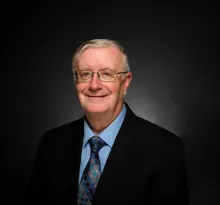
Jorge and his wife Kathy serve the Dallas (TX) and Lawton (OK) congregations. Jorge was born in Portuguese East Africa, now Mozambique, and also lived and served the Church in South Africa. He is also responsible for God’s Work in the Portuguese language, and has been visiting Portugal, Brazil and Angola at least once a year. Kathy was born in Pennsylvania and also served for a number of years in South Africa. They are the proud parents of five children, with 12 grandchildren and live in Allen, north of Dallas (TX).
