

Greg Thomas
This transcript was generated by AI and may contain errors. It is provided to assist those who may not be able to listen to the message.
Well, I hope you're enjoying this sunny Sabbath day. And believe it or not, what it means that sunshine shining out there is that spring is on its way. And the fact that spring is on its way tells us that we're getting close to God's Passover and days of unleavened bread. And I wanted to begin talking about the spring holy days today in a rather different way because I think that it's good for us as we do a self-analysis and we look at our lives that we appreciate how important God's commandments are for us, particularly the very first commandment.
I'm going to cover only the first of the Ten Commandments today in this sermon in a hope that it will help each and every one of us to begin that self-examination of our lives and help prepare us for the spring holy days. You know, in 1487 B.C., the Hebrew slaves were freed from bondage in Egypt and God, in His great love, gave a slave people a set of laws and those laws became known as the Ten Commandments.
And if they would have only kept those commandments, they could have been a great people because these commandments, these laws, reveal the value of God, His value system, and they reflect His divine personality. I'd like to talk about the first of the Ten Commandments today as we begin to prepare for the holy days, but in order to put them in context, turn with me to Deuteronomy chapter 10 beginning in verse 1, and I want to enforce how important the Ten Commandments are to God.
And we see this by where they were placed after they were given. This gives us an indication of just how important these commandments are to God by where He told Moses they should be placed. Again, that's Deuteronomy chapter 10 beginning in verse 1. Moses was inspired to write, At that time the Lord said to me, Cue for yourself two tablets of stone, like the first, and come up to me on the mountain, and make yourself an ark of wood.
And I will write on the tablets the words that were on the first tablets which you broke. So God says, Okay, hothead, you broke the first set that I wrote. Now I'm going to write a second copy for you to read to the people, and you shall put them in the ark.
So I made an ark of Acacia wood, hewed two tablets of stone like the first, and went up to the mountain, having the two tablets in my hand. And he wrote on the tablets according to the first writing, the Ten Commandments. So that's what he wrote on the tablets. Which the Lord had spoken to you in the mountain from the midst of the fire in the day of the assembly, and the Lord gave them to me. And I turned and came down from the mountain and put the tablets in the ark.
So the tablets went inside of this ark of the covenant that had been made. And there they are at the time of this writing. Again, this is Deuteronomy, this is near the end of Moses' life. And there they are, just as the Lord commanded me. I want you to notice that the tablets were placed inside of the ark of the covenant. Do you know that the book of the law wasn't even put inside of the ark of the covenant?
The book of the law, the first four books of the Bible, according to Deuteronomy 31-26, were placed beside the ark of the covenant. Why? Because they were an old covenant. They weren't meant to last forever. They were put aside the ark of the covenant. But the law, the tablets, were placed inside of the ark because they are the heart and the core of God's value system. They reflect who and what God is and what it takes to have a real intimate relationship with God.
They tell us the way He is. And if we want to have a relationship with Him, we have to change and become like He is. Any society or people who reject these laws will eventually degenerate into being a group of barbarians. And I'll give you a classic example. We won't even need to turn to a scripture. Just a few generations after these laws were given at Sinai, that is exactly what happened to Israel as is recorded in the Book of Judges. If you've ever read the Book of Judges, you'll see that it's a historical book that records great perversion. And brutality is unbelievable, how brutal and perverse people acted at that time in Israel's history.
Well, why? Because they had not honored and respected God's laws long enough. They hadn't had enough generations of valuing these commandments to literally be part of Hebrew culture. But when their leaders died, when the leadership grew old and died, then unfortunately they resorted to living similar to animals that are recorded in the Book of Judges. But we, of course, have been called to a much higher calling. Not only have we been called to the physical letter of the law of the Ten Commandments, but the spiritual application, which is much harder, is what Jesus Christ has called us to appreciate and live by.
Let's go to Exodus chapter 20 and verse 1 and read this commandment that we'll be focusing on today. Again, Exodus chapter 20 verse 1.
And it's written here in Scripture, and God spoke all these words, saying, I am the Lord, your God, who brought you out of the land of Egypt, out of the house of bondage.
You shall have no other gods before me. I'm going to read this from the New Century version. Then God spoke all these words, I am the Lord, your God, who brought you out of the land of Egypt where you were slaves. You must not have any other gods except me. Now, in our modern society today, I don't believe anyone in this room has been in physical slavery, so we haven't come out of that kind of a bondage like the Israelites did out of Egypt. But we all came out of spiritual bondage. God called us out of a darkened world in which we were just slaves to our own emotions and our own desires, in which we were blinded to the ways of God. And God brought us out of that bondage into a land of freedom. He took the scales off of our eyes. He gave us his Holy Spirit, and gave us the ability and the desire to become more like our spiritual father. So it's important for us to understand that even though they only came out of physical slavery, we have been called out of a spiritual slavery, the slavery of this world. There's a reason outlined in this short phrase in the first commandment that God makes this number one. Why have the first commandment so short? You shall have no other gods before me. It's because it's the most important commandment.
If we don't get this one right, if we don't glean from it all that God intends, the other nine commandments are window dressing. If we don't understand the importance of this commandment, all the others will be shallow, and we won't be able to keep them faithfully either. The first commandment is extremely important because it's about faith. Faith about the absolute existence of a being that you cannot see or scientifically prove. And this commandment, the reason it's number one, is intended to provoke the most meaningful questions that any human being can have in their life.
And here are some of those questions. And why this is the first commandment. Is there really a God? Is there a superior, supreme being that controls the universe, that controls the destinies of men, and everything that occurs? What is this God like if he exists? Is he one? Is he three? Is he fifty? Is he like the Greek gods who are constantly at war with one another and challenging one another?
Is this God omnipotent and omnipresent? Is he all-powerful? Is his presence everywhere? That's a good question because the actions of many people to me over the years tells me that they don't believe that God is all-powerful and ever-present. You see, many people act like God has grown old. He's tired. He's in semi-retirement and he really doesn't know what's going on. Therefore, I have to do things. I have to force change because God isn't reacting quickly enough. You see, that is a lack of faith.
It's like when Peter went and severed off the ear of the high pre-servant. You see, he took matters in his own hand. Where are you, God? God's acting too slowly, so therefore I have to take over. I have to do something. I have to intervene because God has become old and weak. He's not really all-powerful. He's not really ever-present anymore. And that's the philosophy that a lot of people outside the church and unfortunately inside the church is the perception they have about God. And that's a wrong perception.
So if there is a God, what does he have to say that has any importance or relevance to me? It's another question that this commandment should stir in our hearts and minds. Why did God create mankind? What does God require of me? Does he require anything from me? Or maybe he's kind of like the deist God.
There were a group of believers throughout history who called themselves deists, and here's what they believed. The God, like a scientist, kind of created the world, and then he stepped back and just watched, and he didn't intervene. He just let things happen. He wasn't an intervening God. He was more like an observant God who just watched these things happen and had no influence in the world.
Is that kind of God that we worship? Is that how we picture God? And another interesting question we need to ask ourselves is if God does require something from me, if I have commitments or obligations or whatever to this God, has he provided an instruction manual for me to live by so I know what pleases him, so I know how to fulfill what is required of me in this lifetime.
Until a person personally confronts these questions, they're not capable of a lasting faith or total commitment to God. If the foundation of our faith is not built on the right answers to these questions, it will eventually collapse when the stress of trials or time is heaped upon it. And I have seen it over and over again, people who were in the faith for 20, 25, 40 years, their foundation had been wrong because they limited God. They trusted in men and limited God. And because their foundation was faulty, eventually there was a crack, a stress in their foundation, and they collapsed.
I'd like to read you from the Believer's Study Bible. Although Jewish interpretation considers this verse the first commandment, it is better viewed as the primary motivation for the commandments that follow in verses 3 through 17. The Mosaic law as a whole and also these commandments dealt with Israel's responsibilities to God himself and to one another. Here's what Henry's commentary says about these commandments. The first four of the Ten Commandments, commonly called the first table, tell of our duty to God and that it was fit that these should be put first because man had a maker to love before he had a neighbor to love. If you're having trouble with relationships with people, here's a hint.
It's because you're having trouble with your relationship with God because that's where it all has to start. People problems are an indication of a relationship problem with God, and we can't overlook that. Let me continue here. Again, it says it was fit that those should be put first because man had a maker to love before he had a neighbor to love. It cannot be expected that he should be true to his brother who is false to his God. So it all first starts happiness, fulfillment, clear thinking. It starts by having the right relationship with God. And if that relationship is distorted, if that relationship is perverted, then we're going to have relationship issues with other human beings. Continuing, it says, the first commandment concerns the object of worship, Yahweh and him only. The worship of creatures is here forbidden. Whatever comes short of the perfect love, gratitude, reverence, or worship breaks this commandment. Whatever you do, do it all in the glory of God. Turn with me, if you would, to Psalm 139.
I don't know of any other scripture in the entire Bible that so powerfully displays the fact that God is all-powerful and in control of everything and that he is ever-present. He knows everything that's going on. Nothing is hidden from him.
There are no secrets. He can't be snookered. He can't have the wool pulled over his eyes. That he is totally aware of everything that is going on. And I know of no more powerful scripture that discusses those two issues than Psalm 139. And we'll read that beginning in verse 1. I'm going to read from verses 1 through 18 in the new century version. And I just ask that you follow me with whatever translation you have. This is David talking about his life.
And I want you to understand that there's nothing about David that isn't also true about you. You were created in God's image. The same characteristics that David says occurred in his creation as an infant, as a fetus, is the same thing about each and every one of us.
So I don't want you to think that David was an exception because that's not true. Psalm chapter 139 beginning in verse 1. He says, Lord, you have examined me and know all about me. You know when I sit down and when I get up. You know my thoughts before I think them. You know where I go and where I lay down. You know thoroughly everything I do. Lord, even before I say a word, you already know it. Let me just stop right there.
So what's he emphasizing? God knows the words that are going to come out of our mouths before we even utter them. He knows us better than we know ourselves because we live in a certain degree of self-delusion. But God knows our hearts. We can't hide our thoughts, our motives, our attitudes, our instincts from God.
He's the Creator. He knows us better than we're willing to admit. And He knows us better than we know ourselves. Verse 5, you are all around me in front and in back. You have put your hand on me. Your knowledge is amazing to me. It is more than I can understand. Where can I go to get away from your spirit? Where can I run from you?
Verse 8, if I go up to the heavens, you were there. If I lie down in the grave, you were there. If I rise with the sun in the east and settle in the west beyond the sea, even there you would guide me. With your right hand, you would hold me. Verse 11, I could say, the darkness will hide me.
Let the light around me turn into night. But even the darkness is not dark to you. The night is as light as the day. Darkness and light are the same to you. You made my whole being. You formed me in my mother's body. Verse 14, I praise you because you made me in an amazing and wonderful way. What you have done is wonderful. I know this very well. You saw my bones being formed as I took shape in my mother's body when I was put together there.
You saw my body as it was formed. All the days planned for me were written in your book before I was one day old. God, your thoughts are precious to me. There are so many. If I could count them, they would be more than all the grains of sand. When I wake up, I am still with you. So, brethren, as David is saying here, God knows everything that's going on. He knows when we were formed. Thousands upon thousands of years ago, he knew that we would live what our names would be.
He knew that he would call us, that he would give us an opportunity to be his first fruits. God is not asleep. God is not somehow weak, that we have to intervene and we have to do things because God doesn't react quick enough for us to be happy or satisfied. Let's now go to Isaiah 45 and verse 18. Take a look here at what the prophet said, once again emphasizing the importance of the first commandment.
We saw in Psalm 139 about God's omnipotence and his omnipresence throughout the world and in our lives. Here's what the prophet Isaiah said in chapter 145 and verse 18. For thus says the Lord who created the heavens, who is God? Who formed the earth and made it? Who has established it? Who did not create it in vain? Who formed it to be inhabited? I am the Lord and there is no other.
Verse 19. I have not spoken in secret in a dark place of the earth. I did not say the seed of Jacob, seek me in vain. I the Lord speak righteousness. I declare things that are right. So God says to the seed of Jacob, I didn't hide myself. I gave you this book. I gave you prophets.
I gave you my word. I made myself available for you to get to know. Verse 20. Assemble yourselves and come. Draw near together you who have escaped from the nations. They have no knowledge who carry the wood of their carved image and pray to a God that cannot save. Tell and bring forth your case. Yes, let them take counsel together. Who has declared this from ancient time? Who has told it from that time? Have not I the Lord? And there is no other God besides me, a just God, a Savior.
There is none besides me. So again, the prophet Isaiah emphasizes that there is one Creator, God. Brethren, there's no substitute for knowing our Father. There are no smaller gods. There's nothing else in this life that's worth the joy and the fulfillment of our calling and getting to know and having a relationship with our spiritual Father. And he's not just our Creator. He says that He is just. He is fair. He's a God of fairness. And He's also a God that provides salvation from our sins and our transgressions. Let's go to the 46th chapter of Isaiah, chapter 46, verse 8.
See another statement here that the prophet says, Isaiah chapter 46 and verse 8.
Remember this and show yourselves men. Recall to mind, O you transgressors. Remember the former things of old, for I am God and there is no other. I am God and there is none like me. Declaring the end from the beginning. Does not have a plan? You bet he does. And he knows what the end of that plan is. He knows when he started that plan and he understands everything that will occur between beginning and end. He is a complete, all-powerful, all-present, all-knowing, all-understanding God. When all is said and done, God's will will prevail and everything against His will shall fail.
Let me say that again. When all is said and done, God's will shall prevail and everything against His will shall fail.
God is that powerful, that influential. Now, we can't end the sermon here because Jesus Christ came, as we know, to magnify the law. What we've seen is this physical application of the law, as outlined here in the Old Testament. But what we haven't seen yet is how Jesus said, how Jesus Christ Himself said, we should apply the first commandment in our lives as His disciples, as New Testament Christians. Let's begin to look at that in Matthew chapter 5 and verse 17. Jesus came to restore the spiritual intent of the commandments. This commandment, just like He did all of the other commandments.
Matthew chapter 5 and verse 17. Now, in context here, of course, the Ten Commandments are within the law of God, the books of the Bible. He says, do not think that I've come to destroy the law or the prophets I did not come to destroy but to fulfill. For assuredly I say to you, till heaven and earth pass away, not one jot or one tittle will by no means pass from the law till it is fulfilled. A jot and a tittle were just small little changes to the Hebrew alphabet. Jesus enforced, he reinforced, the importance of the law and the prophets. And he said that he came to fulfill them. That is to give them greater meaning, greater application, to give us a deeper understanding of the law than had been known before. Let's continue and see what he says here. He says, whosoever breaks one of the least of these commandments and teaches men so shall be called least in the kingdom of heaven. But whoever does and teaches them shall be called great in the kingdom of heaven. For I say to you that unless your righteousness exceeds the righteousness of the scribes and Pharisees, you will by no means enter the kingdom of heaven. I'd like to read a sentence here from the Believer's Study Bible about this verse. It says this refers to the entire Old Testament revelation and the righteousness required by it. It introduces Jesus's uncompromising acceptance of the authority of the Old Testament as God's word. Verse 18 reflects the extent of the inspiration of the law. Here, a reference to the Old Testament. Continuing, it says this minuteness of detail makes clear Jesus's view of the thoroughness of inspiration. So the law was important to Christ, so important that he came not to do away with it, not to abolish it, but to make it more meaningful to each and every one of us. So I would like to take a look at that today because we live in the 21st century, not at the time of Jesus. And most of us would think today that I wouldn't even consider worshiping idols made of metal or wood or stone or paper. I wouldn't even consider making a god of something out of those particular qualities. Or would we? Maybe just in a different way. Let's take a look at the magnified intent of the first commandment. Let's go to Matthew chapter 6 and verse 19 and begin to see the spiritual application of the first commandment that Jesus wants us of all people to understand. Matthew chapter 6 and verse 19.
Jesus said, Do not lay up for yourselves treasures on earth where moth and rust destroy, and where thieves break in and steal, but lay up for yourself treasures in heaven, where neither moth nor rust destroys, and where thieves do not break in and steal, for where your treasure is there your heart will be also. The lamp of the body is the eye. If therefore your eye is good, your whole body will be full of light, but if your eye is bad, your whole body will be full of darkness. If therefore the light that is in you is darkness, how great is that darkness? No one can serve two masters, for either he will hate the one and love the other, or else he will be loyal to the one and despise the other. You cannot serve God and mammon. Let me read this to you from the New Century Version. But if your eyes are evil, your whole body will be full of darkness. And if the only light you have is really darkness, then you have the worst darkness. And, brethren, the best way to determine what is most important to us and where our treasure is, is to ask ourselves, what do I spend most of my free time doing? That's the best way to ask yourself where your treasure is. Now, we all have many commitments in obligation. That includes working a job. That's certainly a commitment and an obligation. School, child-rearing. We all have other duties, but we also have some free time. And, yes, we observe the Sabbath, and that's good. That's what God commands in the Holy Days. But what are we doing other times during our free time that shows what our priority is? Here's what the Believer's Study Bible says about mammon. It says, mammon is from an Aramaic word denoting what is stored up or our property. Hence, it came to have the meaning of riches or wealth. It may refer to anything in which one puts his trust. So, Jesus said, you cannot serve God and mammon. So, what kind of treasures have we been building in our lives?
You know, some folks wouldn't think of carving an idol out of stone, but I've personally known men who would build great buildings to make a legacy for themselves that became a god in their lives. I've known people who wouldn't think of creating an idol out of wood, but I worked with co-workers in my career who had a 2,000 square foot home and then a 4,000 and a 6,000. And then after all their children left and there were no children left in the home and it was just he and his wife, then they built a six-bedroom home. Why? What is the purpose of that? Because we live in a society of materialism where we want more and more and bigger and better. I know individuals who wouldn't dream of making a paper mache god, but they'll check every day on their 401k.
Now, I stopped doing that a couple years ago because I got sick every time I looked at my 201k. It just thoroughly, completely sickened me, so I quit doing that. There are some individuals who wouldn't think of making a god out of metal, but every year they have to have the latest brand new car model because that becomes so important to them because they live in a world where he who dies with the most toys wins. And is that really true? It's a lie! Let me assure you of something. You cannot take it with you. Someday the richest man in the world whose name is Bill Gates is going to die, and some homeless person in Cleveland will die that same day. And you know what? Death is the great equalizer. When they die, they're both equal. Bill Gates will have nothing over the homeless person who died. The only difference is he'll be in a prettier box. But you can't take it with you. It's meaningless. When you die, all of that striving we wanted for wealth and fame and glory and notoriety and all the things that are important to people mean nothing at death because God designed in his plan where once again it's almost like a jubilee death is. It's the great equalizer. Yet in our world today, many people clamor to get more and bigger because that's their status. That's how they feel important. There are other things also that can be very distracting to us. How are we spending our free time? Are we watching too much television when we could be sending a card out to someone who's sick? Are we spending far too much time on the internet when we could be doing something, I mean like productive with our lives rather than wasting time on the internet? He says you cannot serve God and mammon. So where is your treasure?
The treasure spoken of here is our investment. Is our investment in physical things? Is it in slander, gossip, innuendo, rehashing rumors? Or is our investment in the right kind of things? And that is doing God's will for us. Let's go to Matthew chapter 22 and verse 36. Matthew chapter 22 and verse 36. You see, brethren, we can't be hybrids. Jesus is saying we can't do justice to both. We either have to have our treasure in spiritual matters or we have our treasure in physical matters. But you can't have both. Only one is going to rule.
Only one is going to come out on top of our lives. We need to make God a priority in our life, and we can do that when we put His will above our own will. Matthew chapter 22 and verse 36.
Here's what Jesus says about the first commandment. Matthew chapter 22 and verse 36. Teacher, Jesus was asked, which is the great commandment in the law? And Jesus said to him, you shall love the Lord your God with all your heart, all your soul, and all your mind. This is the first and great commandment. He's quoting of course Deuteronomy chapter 6 and verse 4. Here, Jesus gives the spiritual application of the first commandment. It goes beyond just acknowledging a superior God. He says God has to be your life, the center of your life. You have to believe in the three alls, all your heart, all your soul, all your mind. This, he says, is that first and great commandment. It's the will of God to make Him first in our lives. Now, how can we make God first in our lives? How can we fulfill His will for us? What does He want us to do? Let's go to Mark chapter 3 and verse 32. Mark chapter 3 and verse 32. It says, and a multitude was sitting around Him, and they said, and Him, look, your mother and your brothers are outside seeking you. But He answered them, saying, who is my mother and my brothers? Well, of course, I think we understand that after Jesus was born, that His mother did have a normal marital relationship with His stepfather, Joseph, and they produced physical children. We could say that His brothers and His sisters here were His half-brothers and half-sisters since they shared the same mother. He said, who is my mother? My brothers. And He looked around in a circle at those who sat about Him and said, here are my mother and my brothers, for whoever does the will of God is my brother and my sister and mother. That's me, and that's you. He says whoever does the will of God, not their own will, not their own agenda, but whoever does the will of God is my brother and my sister and my mother. So are we doing God's will? Jesus came to earth to be an example for us. Every day He walked in the earth, He lived a life of positive, godly values and supported the work of preaching the gospel to those who needed its encouraging message. How are we doing with that? Is being part of preaching the gospel important to us?
Is it part of who and what we are? Or have we been distracted by other things in our lives? Matthew chapter 28 and verse 18. Matthew chapter 28 and verse 18. It says, And Jesus came and spoke to them, saying, Matthew 28, 18, all authority has been given to me in heaven and earth. Go therefore and make disciples of all nations, baptizing them in the name of the Father and of the Son and of the Holy Spirit, teaching them to observe all things I have commanded you, and lo, I am with you always, even to the end of the age. Amen. This is part of the will of God. This is God's work in the same commission that they were given. We have the privilege of being part of that same commission. Do we understand that? We have two important parts to play in preaching the gospel. The first is our prayers and our emotional support, and that includes those of us who are employed and have an increase our financial support. But the second part of preaching the gospel is our personal example.
If a visitor comes to church, what kind of example do they see when they talk with us and when they meet with us? You know, I may pray regularly. I may send in my tithes and offerings. I may do a lot of wonderful things, but if I come to services complaining and questioning everything and discouraging you, then my personal example is rejecting the will of God. God's will for me is that I build you up and that I be encouraging and strengthening to you. And that's what we should be doing with one another. That is part of preaching the gospel when we come to services, when we talk to each other on the phone during the week, when we send emails together. Are we building one another up? Are we encouraging? That's so important. It's very important to God.
Let's go to Matthew 10 and verse 32. Matthew 10 and verse 32.
Now, why do we keep the Sabbath and the Holy Days? Why are they so important to us? Of course, the Sabbath day is a weekly reminder of the kingdom of God that will be established on this earth. The Holy Days revealed to us God's entire plan of salvation. In Matthew chapter 10, verse 32, it says, Therefore, whoever confesses me before men, him, well, I also confess before my Father who is in heaven, but whoever denies me before men, him I will also deny before my Father who is in heaven.
It tells God something. When contrary to the culture and the traditions of this world, we get up on Saturday and that we leave our homes and we come here and worship together. We are confessing before men our faith and our belief. Sometimes that may not be easy. Sometimes we just may not feel good or we just may not feel like we want to go to services. But it's an important thing to do because we are confessing before men who and what we believe in the fact that we love our Father in heaven and we want to come and worship and celebrate His greatness during services.
He says, verse 34, do not think that I have come to bring peace on earth. I did not come to bring peace, but a sword. For I have come to set a man against his father, a daughter against her mother, and a daughter-in-law against her mother-in-law, and a man's enemies will be those of his own household. He who loves father or mother more than me is not worthy of me, and who who loves son or daughter more than me is not worthy of me.
Now, in all fairness and context, Jesus is not talking about people who share the common beliefs that Christ is the Savior and the Sabbath and the Holy Days. In context, he's talking about the result of him coming was being in Jewish families. Someone would say, I believe that Jesus is the Savior and the Messiah, and the other member of the family would say, I don't accept Him as the Messiah and Savior. I'm going to wait for the true Messiah. All right, so that's what Jesus was talking about. He wasn't talking about minor differences that people create among themselves who basically share the same beliefs.
And continuing, he says here in verse 38, and he who does not take his cross and follow me is not worthy of me. He who finds his life will lose it, and he who loses his life for my sake will find it.
I'm going to read verse 39 from the New Century Version. Those who try to hold onto their lives will give up true life, and those who give up their lives for me will hold on the true life. In verse 38, when Jesus said, he who does not take up his cross and follow me, everyone in that audience knew exactly what he was talking about. That phrase was a common colloquialism at that time. When you were to take up your cross, they knew that the Romans believed in punishment in a form called crucifixion.
And what they required of you when you were going to be crucified is to take that cross beam and carry it yourself to the place that you were going to be executed. And that whole length of time that you were dragging that cross beam, you knew that the end of this is not going to be pretty. That's what he was talking about. And everyone in the audience knew that he said, you're not worthy of me if you're not willing to be a living, complete sacrifice and love God with all your heart and all your soul and all your mind.
That is the kind of sacrifice that Jesus was talking about. He says, take up your cross and follow me. And if you're unwilling to do that, you are not worthy of me. In other words, the kind of person who tries to hold onto their lives, onto their physical things, onto their own habits, onto the way they are, will end up giving up true life. And those who are willing to say, Christ, I am putty in your hands. I am nothing to you, O God. Please love me and work with me and grant me your spirit.
And I give you everything. He says, that person who's willing to do that, then I will save them and I will give them life for eternity. That's our choice. It's that simple. What do we choose as the disciples of Jesus Christ?
Now, if we feel that we have neglected our relationship with God, if you're to the point where I am, I mean, I've been thinking about the first commandment this week, obviously, putting the sermon together. And I've certainly seen areas that I have fallen far short. If you're in the same boat that I am, how can we make God first in our life? That's what the Passover is all about. We worship a God of second chances. We worship a God that says to us, okay, let's wipe the slate clean. Let's renew those vows you made at baptism. And let's start over again. Get up and let's start this journey over again. What are some of the things that we can do to fulfill God's will for us? I have a number of things. Here's number one. Number one is to realize that we've broken the first commandment by not keeping God first. It is so easy with our own carnal minds and thoughts to put things before God, to put ourselves before God, to put other people before God. And that's not a good thing. We need to acknowledge our sin. We need to ask God's forgiveness. We need to determine to use God's Holy Spirit to change our priorities. Remember that Jesus said in Matthew 6 and verse 33, but seek first the kingdom of God and His righteousness, and all these things shall be added to you. So seek God's kingdom first. He says, and you'll be given some of those material things that are enjoyable in this lifetime. You will be blessed with some of those things, but keep your priority right and make sure God is first in your life.
Number two. Spend time every day to pray and to study. Study the Bible. Research on the internet is not an alternative for Bible study. Magazines are great. Listening the sermons are wonderful, helpful, but they are not a substitute for getting into the actual Word of God. Magazines and MP3 sermon files and all those things are great and wonderful, and I use them, but they are intended to enhance what is in the book, not to replace what is in the book.
And it's important for us to study and pray every day and to make that a habit in our lives. Now, I am not the kind of person who believes that one should study or pray by clocks the way I was taught when I was a teenager. 30 minutes. All right, let's set the clock. And I tried that once, a 30 minute, and I prayed and I prayed and fervently everything that came to my mind. And I thought about it and I prayed and I tried to go into fine detail like flour.
I went through it and I went on and on. I looked at the clock and I only had 29 minutes to go. God is interested in quality. He's not like a straw boss with the punch clock. Give me that card. Okay, next. That's not the kind of God that we worship. I've had to learn over the years that not only is it important for me to have a formal time of prayer every day, but I have learned that it's important during the day to shoot up a number of prayers as I'm faced with situations that challenge me to quickly, in my mind, help me to deal with this situation.
Father, please intervene and help something that looks like it's very bad to turn out to be okay. And I've learned that throughout the day, aside from a formal time that I take for prayers every day, to shoot up quick prayers to God as my temper or as in various ways I am challenged throughout the day to quickly take it to God and ask for strength and ask for help.
And that's what he wants. He doesn't want us to pray by putting a clock on there and thinking that somehow 30 minutes makes us special or 30 minutes makes us better than anyone else. No, an open and contrite heart makes us special in God's eyes. Learning and getting the message that he's trying to send us about our weaknesses and how we need to overcome them, that's what makes us precious and special in his eyes.
Brethren, if we're too busy to pray and study every day, our priorities are all messed up. That's just the way it is. And when our priorities are wrong, we suffer, our families suffer, our marriages suffer, our children suffer, our jobs lose meaning to us, and eventually the church loses meaning to us. If we're not doing the things that we need to do, I'm not asking you to invest all of your free time into God's way of life.
I'm not asking you to pray or suggesting even that you pray or study for hours every day. What I am asking you to do is to develop a habit in which you make that connection every day that you open up the Word of God. And by opening up the Word of God, you study it and you allow Him to speak to you. And then you close up the Word of God. And communications are two-way streets. Then you talk back to your Father. So you allow Him to talk to you by reading this, and you communicate back to Him through the honest and open thoughts that are in your heart.
That's what God desires from us. Not punching a clock, not some type of meaningless ritual, but something that's genuine, something that comes from us. The third thing I would like to encourage you to do if you feel that there's room for growth in understanding and appreciating the first commandment is to take time to openly worship your God and to honor His weekly feast day. Again, this is an opportunity for us to confess before men what our beliefs are each and every Sabbath day and on the holy days to proudly come and worship during God's Sabbath services.
And take the Apostle Paul's advice and come here and encourage the brethren. Don't discourage them. Don't alarm them. Don't offend them. Come here and build them up and make them know that God loves them. The fourth point I would like to bring out here is support the effort of God's church to preach the gospel. You know, the United Church of God doesn't just talk about preaching the gospel.
We put our money where our mouth is. We invest a lot of money in magazines, one in particular, that consistently has been published for 15 years. We spend a lot of money on national television to promote our broadcast. Lots of booklets, lots of information in ways to reach people in various degrees depending on their age and their cultural background. We have print media. We have the internet. We have YouTube. We have a way to reach virtually everyone who, according to their own age or culture, might have the ability to be reached by preaching the gospel.
That costs a lot of money. It costs an investment of resources of people to write those articles and do all those things. And we do those things because we really believe what Jesus said in Mark 16. He said, go into all the world and preach the gospel to every creature.
That commission that Jesus gave His disciples is the same for us today. And the Church of God needs our emotional support, needs our prayers, needs our spiritual support, and needs our financial support. Brethren, we already have 6.9 billion critics in the world who lack faith. We don't need any more.
We're trying to do something beautiful here. We have a can-do attitude about our mission. We believe in the calling that God has given us, and we're not going to let anyone or any being in the universe stand in the way of our ability to fulfill God's will for His people. And my final point is to get personally more involved in serving the Church. I commend so many of the brethren here today because most of you have taken this one to heart.
We have too few doing too much in many areas and at some points almost burning out. God gave you talents to be developed and to be used for His service, and for many of us we have talents that we've never even discovered yet that can be used for the glory of God. So if you see a need, volunteer, say, hey, I'd like to do that. That looks like something that needs to be done. I would like to do that. Can I do that? And you will see a renewed zeal and enthusiasm in your life by getting involved with God's people and by serving within the Church of God.
That is so very important. And brethren, we have a great work to perform, and as God's army, we have to be dedicated. We have to be well trained. We have to be focused on our mission. If it weren't for Jesus Christ, I can tell you that the enemy is stronger than all of us combined. The only difference is the Spirit of God that dwells within us. Satan has devoured much greater people than us.
We're just a small group of people in this planet of 6.9 billion human beings trying to fulfill an enormous task, and we can only do it through God's Holy Spirit. But I want to encourage you to realize that you are part of God's great plan. As we read in the book of Psalm earlier, God knew exactly what he was doing when he called you. He called you for a reason. He knew when you were formed in your mother's body. He knew there was something special about you to be one of his first fruits so that you could support the work of the Church of God.
You are important to God. You are precious to God. You are one of his first fruits. So I encourage you to continue to grow, continue to think about the first commandment and the things that we can do to be more spiritually inclined to fulfill what God wants in our lives, to take that commandment to heart, to love God with all of our heart and our soul and our mind with every fiber of our being.
We've been called to that kind of a calling, and through God's Spirit we can do it. We not only can do it, we will do it. So I encourage you to take the time between now and the Passover to look at your life, to look at ways in which you can become stronger, you can become of greater value to the Church of God, greater value to God, and you can do both of those things through greater service, through a deeper sense of love and commitment. And I encourage you to do that.
And I ask you to think about the things we've discussed today and to prepare for a very meaningful Passover and days of unleavened bread. Have a happy Sabbath!
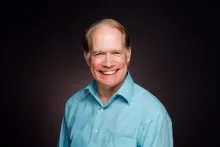
Greg Thomas is the former Pastor of the Cleveland, Ohio congregation. He retired as pastor in January 2025 and still attends there. Ordained in 1981, he has served in the ministry for 44-years. As a certified leadership consultant, Greg is the founder and president of weLEAD, Inc. Chartered in 2001, weLEAD is a 501(3)(c) non-profit organization and a major respected resource for free leadership development information reaching a worldwide audience. Greg also founded Leadership Excellence, Ltd in 2009 offering leadership training and coaching. He has an undergraduate degree from Ambassador College, and a master’s degree in leadership from Bellevue University. Greg has served on various Boards during his career. He is the author of two leadership development books, and is a certified life coach, and business coach.
Greg and his wife, B.J., live in Litchfield, Ohio. They first met in church as teenagers and were married in 1974. They enjoy spending time with family— especially their eight grandchildren.
