

Roy Holladay
This sermon was given at the Panama City Beach, Florida 2010 Feast site.
This transcript was generated by AI and may contain errors. It is provided to assist those who may not be able to listen to the message.
What a wonderful blessing it is to be able to be here today, to meet with God on His appointed feast days. My wife Norma and I would like to wish all of you a wonderful feast. I know all of you don't have the opportunity to come up here and say that, but we have that opportunity. You would have an inspiring feast. This is a feast that I know is going to be filled with a great deal of joy, happiness, inspiration. Having looked at some of the sermons that are coming, I know that there are a number of really powerful sermons describing God's kingdom, and something that all of us will certainly look forward to.
We have the opportunity, while we're here, to fellowship with God. This is God's festival. He's the host. He invited us. And we have the opportunity to worship Him, fellowship with Him, and also with His family. When I look around this room, I see many faces that over the last 51 years I've known, and I think many of you can do the same thing. There are so many of us here, and we are truly a family that God is working through.
We actually, in that sense, get a foretaste of the coming kingdom of God. I'd like to ask a question that we have asked over the years on many occasions. Why are you here? Why did you come here to keep this feast? Who is God, and why is God so interested in you and in me?
Why is God taking a personal interest in all of us? Why would God look down upon us and reveal Himself to us? Very little would be known about God, except God has revealed Himself to us. There was a time in our life when we did not understand who God was. We didn't understand Him, His nature. But God, in His mercy, opened our minds and began to reveal Himself to us. Let's go back to the book of Isaiah, chapter 40, beginning in verse 15. Isaiah, chapter 40, verse 15. You'll notice something that God mentions here about Himself.
This is in comparison to the human family. God says, Behold, nations are as a drop in a bucket, and they're counted as a small dust of the scales. In verse 17, all nations before Him are as nothing, they're counted by Him less than nothing and worthless. So what we find is that all nations, when they're compared to God, are like a drop in a bucket. Small dust on the scales.
And God says, nothing and less than nothing. Less than nothing is not very much. But that's what God compares all nations when they're compared to Him. God reveals in His Word that He created all things, that He sustains all things, and that He has done this through the power of His might. And He's done it for a purpose, for a reason. And that purpose involves every one of us here. In Hebrews 11, beginning in verse 3, notice an insight that God gives to us about the physical creation and even about ourselves.
In verse 3, this is the faith chapter, it says, The all-powerful God created the visible out of the invisible. Now you ask, how did He do that? Well, that's one of those questions that we will find the answer to at some time here in the future. Matter is made out of things invisible. And the invisible, obviously, is talking about the Spirit of God, the power of God.
It appears that God has taken energy, rearranged it, or compacted it, in a former existence that places it in a different realm than where God Himself resides. God lives in the spiritual dimension. You and I live in the physical dimension. We don't see Spirit. There could be hundreds of angels in this room. You don't see them.
And yet, they're there. Spirit can interact with the physical and reveal itself in the physical realm. But the physical dimension cannot step into the spirit world. You and I cannot walk through walls yet. We are not able to go into the spirit realm, but God is able to come into our realm. And I think that's extremely important when we begin to think about the world tomorrow, the millennium, the white throne judgment, and the fact that God has called us.
And there's going to come a time when we will be in His family, His kingdom, when we have stepped into a different dimension, and we will then be able to react and to deal with people in the human realm and be able to teach and be able to guide them. God is revealed in the Scriptures as the Almighty God. We are revealed as less than nothing compared to Him. He is eternal in His existence. We are physical, and we live for a short period of time.
God says we're like the dew in the morning that quickly disappears, like the grass that is brown, or the flowers that decay. The total sum of man's accomplishments, his genius, is described as nothing compared to our great God that you and I worship. And that great God, even though all nations compared to Him are nothing, that great God has an awesome purpose for you and for me, for every human being who has ever lived or will live. He has a plan. That plan has been kept secret from mankind down through the ages. And yet God in the end time has revealed to mankind His plan.
Back up to Colossians 1. Colossians 1, chapter, beginning in verse 26. Colossians 1, 26. We read that the mystery which has been hidden from ages, from generations, but now has been revealed to the saints. To them God willed to make known what are the riches of His glory, of this mystery among the Gentiles which is Christ in you, the hope of glory. God has revealed this mystery, His purpose, His plan to mankind. And it has to do with Jesus Christ living in us through His Spirit. God has used different methods, different ways to reveal His plan. God has revealed it through His spoken word. He has talked to His prophets, the apostles, and they have written it down.
You and I have that written word. It is called the Bible. You have it on your lap. And it reveals to us God's word, His plan. Through a lot of symbolism, God has revealed His plan. Through the two trees in the Garden of Eden, through the sacrificial system. God revealed that we need a Savior. Through the symbolism of the tabernacle and the temple, God revealed how man can approach unto Him.
And then through the Holy Days, God has revealed His plan to us. I'd like for us to very quickly focus on one of those revelations from God. And that is the plan of God revealed through the Holy Days. That's why we're here. Where it's a culmination of the Fall Festival season. There are a number of the Holy Days that are yet to be fulfilled. You know, at one point in time, all the Holy Days were futuristic. Today, a number of those Holy Days are historical. They're part of a past historical events. And some of them continue to be fulfilled today.
Let me illustrate what I'm talking about. The Passover, there are many Old Testament prophecies that predicted the first coming of the Messiah. That Jesus Christ would come, that He would die for our sins. That the Lamb that was sacrificed was a type of Jesus Christ. As Matthew states when Christ came to the earth, His name would be called Emmanuel, meaning God with us.
And so that Holy Day has been fulfilled in 31 A.D. Jesus Christ died for our sins. He shed His blood. His sacrifice has taken place. The days of Unleavened Bread are another illustration. In the Old Testament, we find that God said that He would call His Son out of Egypt.
And so God, through Moses, led Israel out of the land of Egypt. In the New Testament, this scripture is also quoted. It refers to Herod killing the children around Bethlehem. Joseph taking his family into Egypt and then calling them back out of Egypt. And God called His Son out of Egypt.
Israel came out of Egypt, a type of hour coming out of this world, out of spiritual Egypt. And so we find today that the days of Unleavened Bread have partially been fulfilled, of God calling His church, His people, out of this world. Pentecost, as we know, is a Holy Day that pictures the early harvest season. It pictures the firstfruits. It depicts the giving of the Holy Spirit, the start of the New Testament church. And here we all are sitting today as part of the firstfruits, as part of those first individuals that God has called. And God is continuing to do that work. God continues to call people into His church. And we're here today. The final four Holy Days are yet futuristic. They've not yet occurred. The Feast of Trumpets points to world events that lead up to Jesus Christ returning. And that's sooner than later. The Day of Atonement pictures Christ taking Satan the devil, locking him the demons up. The Feast of Tabernacles, as we know that we're here to celebrate, pictures the wonderful world tomorrow, the millennium, our part in the kingdom of God. And finally, the eighth day when God will extend the opportunity for salvation to all mankind. You'll find at one time all prophecy was futuristic, but eventually it becomes historical. The example, the first prophecy in the Bible, Adam and Eve were told, if you touch this tree or you eat of it, you will die. Adam and Eve were dead. They did die. In Genesis 3, the second prophecy about Jesus Christ triumphing over the serpent, and Jesus Christ did triumph over Satan the devil. Noah was warned of a flood. 120 years of flood came. Although those prophecies were futuristic when they were given, now they've been fulfilled. They're historical. We find that there are a number of prophecies that are yet futuristic. And we're going to take a look at some of those as they apply to us here tonight. You and I are on a journey toward God's kingdom. That's our goal. That's why we're here. God has called us to be a part of a movement, a part of a group that He's training, He is preparing for His kingdom. You and I are living and experiencing the Holy Days today. We've experienced Christ's sacrifice. We've experienced coming out of this world. We've experienced receiving God's Spirit being the first fruits. And we're still headed for the kingdom of God. Let's notice in Hebrews 11 and verse 13. Hebrews 11 and beginning in verse 13. God is preparing us for a tremendous job. We are called today sojourners or pilgrims. And we read here about all those in the Old Testament who went before us.
We read, these all died in faith, not having received the promises. So they had the promises made to them. They understood about the new heavens, the new earth, the new Jerusalem, the millennium, the kingdom of God, the calling that God had given them. They died not receiving the promises, but having seen them afar all, and were assured of them and embraced them and confessed that they were strangers and pilgrims on the earth.
And you find, as you go on through here, that they sought a heavenly country. They sought a city that God has prepared for them. We find that they walked by faith and not by sight. They were dominated by faith. They were not dominated by what they saw, but what God had revealed to them. Faith leads us to future seeing, to being able to see the future, being able to see what God has in store for us.
Faith is trust in God. One day, brethren, you and I are not going to look at the fall holy days as being futuristic, but as being historical, because they will have been fulfilled. One day, we will live through the events that are pictured by the Feast of Trumpets. You and I will have to live through the time leading up to the resurrection. There will come a day when we will experience the resurrection.
A change will take place. We will be in the kingdom of God. We will be able to look back, and we will say, that holy day has been fulfilled. We have been born into the very family of God. Can you think about the time in the kingdom of God and the millennium when you can appear to a human being and begin to teach them about the resurrection, what it means to be changed from human to divine? It is not a theoretical thing.
I can stand here all night and try to talk about it, try to explain it, try to describe it to you. But I don't know how it feels. I've never experienced it. But once you've gone through it, you will be able to inspire people, constantly infusing them with excitement about what it's going to be like to be in the very family of God.
Can you imagine when the day of atonement is passed that you and I will see Satan the devil locked up? We will be able to see the demons locked up. We will see the mighty power of God demonstrated and displayed by the removal of the arched enemy. And we will see that. We will experience it. And one day, we will not just look forward to the millennium. We will be a part of the millennium. We will be a part of the kingdom of God.
We will be able to help people, teach them. We will be teachers, kings, and priests. We will help to jumpstart the millennium and assist Jesus Christ in ruling. We will witness also one of the greatest events in history. We will be there when billions of people come out of the earth. We will see them come alive again. We will see God bring them to life. Bones coming together. Sinyu. Flesh. The breath of life entering. Billions, maybe 50 billion people or more standing on their feet and coming up before God.
And how God will open their minds and give them salvation. Have you ever wondered how a mind is open? What does God do to open a person's mind? Well, we will be able to see that at that time. Then after that, all of those holy days will have been fulfilled. God will have completed His plan of salvation for mankind. And there will be a period where we will live with God for eternity in the kingdom of God forever.
1 Corinthians 13, beginning in verse 9, describes some of the understanding that we will have at that time. 1 Corinthians 13 and verse 9. Talking about us today says we know and part and we prophesy and part. So you and I understand only in part, not completely. It says, but when that which is perfect or that which is complete has come, then that which is in part shall be done away. There is going to come a time when we will not just know in part. But once we have been made a spirit being, you might ask the question today, what does an angel look like? What does a carob look like? What does the spirit body look like?
Well, once you have a spirit body, once you see angels, once you see God in operation, the things that we have only known in part, we will know to a much greater degree. Paul says, when I was a child, I spoke as a child. I understood as a child. I thought as a child. But when I became a man, I put away childish things. But now we see in a mirror dim way, but then face to face, we will be able to see God in His glory.
Now I know in part, but then I shall know just as I also know. So you and I will have that opportunity. There is going to come a time when we will see things from the other side, when we will step into eternity, into the other side, the other dimension. Have you ever stopped to ask yourself, why are so many of the prophecies of the Bible revealed to us today, to this end time generation, to the people of God in this, well, the 20th now, 21st century? There have been hundreds of years down through the ages that many of the people of God did not understand prophecy anywhere to the degree that we have.
But yet we understand a great deal, but not all. Prophecy was written for several reasons. One, it was written as a warning of future events to come, so that we would be prepared. Secondarily, it's given to us to encourage us. When I read through the Bible about what's going to happen in the future and how God will ultimately extend salvation to all mankind, it's extremely encouraging. Prophecy was also written to motivate us, to turn us on, so that we would be motivated to obey God.
Today, brethren, we see prophecies occurring around us all the time. We live in an age when prophecy is beginning to be fulfilled, and I wonder if we have not grown complacent to some of these prophecies that are taking place. It's easy for us to understand historical prophecy. They've already been fulfilled. An example, the four world ruling empires.
Babylon has come. They have fallen. Rome has come. Greece has come. Persia has come. All those ancient civilizations have come and gone. Those prophecies have been fulfilled. I think it's easy to believe future prophecies, because they're about the future. We believe those, the resurrection, the millennium, the white throne judgment. But it's understanding what's happening now in the present that is much more difficult for all of us.
Because we're living in a time and an age that we used to talk about 40 years ago, 50 years ago. We talked about what was going to happen in the future. We heard sermon after sermon about prophecy, and now we're living in the time when those prophecies are taking place. But that in mind, we need to understand that we're living at the time of the end.
We're living at the time that the Bible says, prophetically, if you want to place this somewhere on the continuum of prophecy, at the timeline leading up to the Feast of Trumpets and Prophecy. World events indicate that we're living in a period shortly before the return of Jesus Christ to this earth. I think all of us can look around. We can see the moral collapse of our nation. We can see the economic downturn of our nation. We can see the debt burden. When our national debt becomes something like $1 trillion. When you look at the debt at all levels of government individually, the loss of power and influence we have as a nation, you begin to see Leviticus 26 and Deuteronomy 28 being fulfilled.
Prophecies that we've talked about for decades are happening right before our eyes. What is our response? How do we respond? Are we living today like we believe these prophecies are truly going to happen? Are you and I living in that way? That we believe that these prophecies will take place. God has put a lot of time and training in this generation. I look around me here and I see a group of people that I know many of you have been around for a long, long time.
How many here have been in the church for four decades or more? Could I see your hands? Look at all the hands. Go on. Okay, how about three decades? We can count the four in the three. I think when you look at it, the majority of us in here have been three to four decades in the church. God has done something with this generation that is unlike any other generation that God has dealt with. Think of it. In one year, you hear approximately 61 sermons.
Over one decade, that's 610 sermons. Two decades, that's 1,220.
In four decades, you will have heard over 2,400 sermons. Think about all of the sermons that you've heard. You've heard the Word of God expounded over and over again. When you come to the Feast of Tabernacles, you hear 10 sermons every year. Now, over a decade, you hear 100 sermons. That means 100 sermons about the Feast of Tabernacles, about the world tomorrow, about the calling that God has given to us. In four decades, you will have heard over 400 sermons. Think of all of the sermons that you've heard explaining the world tomorrow.
How many hours have you spent in personal Bible study in the last 40 years? How many magazines have you read? How many booklets have you read? How many broadcasts have you read or heard? I remember years ago, listening seven days a week, well, greetings, friends around the world. And many of you will remember that, too.
And you've heard hundreds of broadcasts. You hear, Beyond Today, our choir director here is one of the presenters on the Beyond Today program. But you realize, brethren, that for much of the history of the church, members do not even possess a Bible. You and I are privileged to have a Bible to read. How many of you have two Bibles? How many of you have multiple translations? I've got a Bible program that I must have 40 translations on. I've got over 3,000 books on that Bible program. What do you do with all of that? All of that information? Think back in the Dark Ages or the Middle Ages, when people had to meet in secret, in caves, in people's homes, hiding. And they had a minister come occasionally. Ministers back during that time maybe had a book of the Bible, a page of the Bible. They were truly blessed to be able if they had any part of the Bible. Many of them memorized books of the Bible, whole books of the Bible. And they would preach from memory and they would recite it. Have you heard a sermon from a minister who was reciting from the book of John?
You went home? You did not have the book of John to open up. You had to remember what he said. You would discuss it among yourselves. Truly, the Word of God would be precious. And yet, here we have this fantastic training that God has given to us. We should never take the feasts for granted, the church for granted, or the opportunities that God is giving us. It's obvious that God is preparing us for something special in the future. That God is preparing us to serve. So we need to take advantage of that. None of us know exactly what the future holds for us personally. We don't know if we'll even be here next year for the feasts. So we must take advantage of what God gives to us. While we're still blessed with health, with monies, with the freedom to keep these days, we need to take advantage. Because there may come a time here in the future, even in this country, that we may not be able to assemble like this together in such a large gathering. And there may be many different factors that might prevent that. We are preparing for the future, for our future jobs and our future responsibilities. Now is the time of training because you and I are going to help bridge the gap into the world tomorrow. We are the ones who are going to step over into the world tomorrow to help train this generation. How many people have died in the past even know what a computer is, a car is, an airplane, radio, a television? You and I have lived in this age, and so there's going to fall a great responsibility on our shoulders. You and I have the opportunity to learn now how to serve, how to give, how to submit, and how to help God's people. In what way are you and I being trained and prepared for the future? Well, let's go back to the book of Genesis, Genesis 2 and verse 20. Genesis 2, and we'll begin to read here in verse 20.
Before him, when God created Adam and before he created Eve here, God had Adam name all of the animals. And Adam gave name to all the cattle, to the birds of the air, to every beast of the field. But for Adam, there was not found a helper compatible to him.
So God put him asleep, took a rib, made a woman, and verse 23, Adam said, This is now bone of my bones, flesh of my flesh. She shall be called woman, because she was taken out a man. Okay, when Adam looked around, there was nobody else that looked like him that was compatible or comparable to him, that he could have as a mate. He saw dogs, he saw cats, he saw all kinds of animals, but he did not see another human being. And so God prepared a woman who was comparable to him, who was to be his helper, who was to help him. Now, brethren, Jesus Christ is doing the same thing today with us. He, the Father, I should say, is preparing a bride for his son, one who will be comparable to his son, one who will be on his level of existence, one who will have his same approach, his same attitude, and will be able to serve with him, one who will be capable of being a helper. Let's notice in Ephesians 5, verse 30. Ephesians 5, verse 30, where it talks about marriage. It says, we are members of his body, of his flesh, and of his bones, just like the woman was of Adam's flesh and of his bone. For this reason, a man shall leave his father and mother, be joined to his wife, and they too shall be one flesh. This is a great mystery. The word mystery in the Greek simply means a hidden truth. This is something that's been hidden but now revealed, but I speak concerning Christ and the church. We are the bride of Christ being prepared to assist him.
We are to be his helper in the world tomorrow. Just as a wife was created to be a helper, an assistant, an aide, but yet somebody who is totally comparable to her husband, so we are being prepared in the same way to assist Jesus Christ. We will assist him in ruling the nations. But Christ is not going to use a wife who is not comparable to him, who does not hold the same values, who is not on the same level, who cannot communicate with him. And once we have been born into the family of God, we will be on that same level. We will rule with him, and we will be a helper to mankind, and we will help Christ. What is the one main requirement that God is looking at in us to be able to serve in the future? Well, Matthew 20 and verse 25. There is an attitude that God is looking for in his wife, that God is looking for in the bride that is being prepared. In verse 25, Jesus called them to himself and said, You know that the rulers of the Gentiles lorded over them, and those who are great exercise authority over them. Yet it shall not be so among you, but whoever desires to become great among you, let him be your servant. And whoever desires to be first among you, let him be your slave. Just as the Son of Man did not come to serve, or to be served, but to serve and to give his life a ransom for many. You and I must have a servant's attitude. To be great, to be a part of the bride of Christ, to assist him to be able to help and serve in the proper way, we must have a servant's attitude. How do we prove to God that we are true servants? That we have this attitude that he is looking for? Well, by developing that attitude today. You cannot say, well, in the future, once I'm in the kingdom, I'll be a true servant and I'll learn how to serve them. Now, that attitude is developed now, presently, by serving. That's one of the wonderful opportunities we have coming to this great festival. As we heard, there are many opportunities for service. God is looking for those who are willing to serve, those who are willing to help, and to be able to give. What Jesus Christ was talking about here goes beyond just the occasional serving. What it means is that you and I must be a servant. Not just serve, but be a servant. A man who is a slave knows he's a slave. He has to serve, but he knows that he's a slave. You and I, one of the analogies in the Bible is that we are servants of God. We have been called to that purpose. Now, we are God's sons and daughters. We're his children. But that attitude is there also, that we are willing to serve one another. This is what our approach and our attitude must be in the kingdom of God. So, obviously, when we come to the feast, we all have opportunities to serve in one way or the other. If our health does not permit or age does not permit, we can still pray to God, ask God to bless and guide and direct. All of us can have an integral part in doing the work of God. This is the basis for leadership that God is looking for. God is looking for true servants, and he's looking for those who are willing to be a helper.
Now, there is a warning, though, at the end time. Let's turn back to the book of Revelation, to chapter 3 in the book of Revelation. Beginning in verse 14, there's a warning that God gives to those of us living at the end time. Because, you see, prophetically, we can come to a crossroad. If you ever come to a road that there's a fork in the road, and you say, well, should I take the right fork? Should I go to the left? Well, the Bible indicates in the end time that there is going to be a fork in the road. In verse 14 here, the section that we're very familiar with, but it is a warning to all of us. Because, at the end time, one of the attitudes that you find that will be prevalent in the church will be one of complacency. In verse 14, it says, to the angel, the church of the latest in, write, these things says the Amen, the faithful, the true witness, the beginning of the creation of God, I know your works, that you are neither cold nor hot. I could wish that you were cold or hot. So then, because you're lukewarm and neither cold nor hot, I will vomit or spew you out of my mouth. And then he goes on to say, because you say... Now, notice the attitude of these people. Here is their estimation, their summation of their spiritual condition. This is how they look at themselves, how they see themselves. Because you say, I'm rich and have become wealthy and have need of nothing. And do not know that you are... Now, here's what God says. This is what God thinks. You don't know that you are wretched, miserable, poor, blind, and naked.
So He says, I counsel you to buy from Me gold tried in the fire, that you may be rich, and white garments that you may be clothed, and that the shame of your nakedness may not be revealed. And so we find that their view of themselves is completely different from God's perspective. Why? Well, because they're lukewarm, they're complacent. They're obviously not diligently praying and studying, fasting and serving as they should be. They're not close enough to God and to His direction. Brethren, one of the greatest fears that I have about myself, about all of us, is just beginning to grow lackadaisical, take it easy, become complacent, and not really on fire, not fired up with zeal and drive and enthusiasm for God's kingdom, but just sort of sitting back and taking it easy. When you begin to look at what Jesus Christ says here about the end-time generation, it becomes very, very sobering. Let's notice in Luke 12 also, Luke 12 and verse 35. Christ describes His servants here when He comes back. He says, "'Let your waist be girded and your lamps burning.
You yourself be like men who wait for their master when he will return from the wedding, and when he comes and knocks that they may open to him immediately. Blessed are those servants,' He says, whom His master, when he comes, will find watching." They're watching, they're awake, they're seeing the prophecies, they see what is going on. "'Assuredly I say to you that he will gird himself and have them all sit down to eat, and will serve them.'" But you notice He says, "'If he comes in the second watch or comes in the third watch and finds them so, blessed are those servants.
But know this, that if the master of the house had known what hour the thief would come, he would have watched and not allowed his house to be broken into. Therefore you also be ready, for the Son a man is coming in an hour that you do not expect.'" Notice the true servants of God at the end time are to be ready for action, filled with the Spirit.
In other words, their light is burning. And they're ready, they're prepared, they're watching, they have not gone to sleep. Verse 45 goes on to talk about, "'If the servant says in his heart, my Lord delays his coming, and begins to beat the male and the female servants to eat and drink and be drunk, will you find that those who knew their master's will did not prepare themselves, will not make it?'" So God is expecting all of us, brethren, to be ready.
And we find at the end time, the Bible talks about that the bride has made herself ready. This is one reason why we're here at the Feast of Tabernacles. We're here again to be ready, to be prepared, to use this eight-day period as a period of inspiration, a period of motivation, a period to be stirred up, to leave here with enthusiasm, with excitement, truly turned on to the work of God and to the calling that God has given us.
What if you knew that there was a category five hurricane about to strike where you live? Would you do anything? Would you prepare for it, or would you sit there and say, I don't think it's coming? Would you be alert and watch for it? Would you have the radio on, television on? Be watching the path of that hurricane? Would you be prepared? Would you board your house up? Would you save water, food? Perhaps you would gas your car up, have extra gasoline. If you had to flee from the area, if there was a direct strike of the hurricane, or would you simply do nothing and just sit back, unaware, and get caught off guard?
Well, we all know that that's not what we would do. We would be prepared. We would be ready. Well, this is exactly what God wants all of us to do. And so God, in His mercy and His love, gives us every Sabbath to help keep us strong.
He gives us this feast, and we're going to hear throughout this feast, word pictures painted of our job, our responsibility, our calling. And we need to take those and think about them, ingrain them in our minds, never let them go so that they become a part of us.
We need to ask ourselves the question, are we living today like we know that we're living in the end time? Are we living like people who say they are living in the end time? I remember years ago discussing, well, the closer we get to the end, when these prophecies began to be fulfilled, boy, that's when we will all be filled with zeal. We'll be stirred up. We'll be excited, and yet you find the exact opposite in many cases happening.
Does my life, does your life reflect the last days? Does our life reflect the urgency of the time that we live in? Because we live in an urgent time in history. We're here at this feast to re-sharpen our focus on our calling, to enliven our minds, to draw closer to God, to draw closer to the family of God that God has chosen to be here, the family that we see about us. We're here to be reminded of the coming world tomorrow and our jobs in it.
We are the bride. We're being made comparable to our husband. We have an awesome future ahead of us. Our minds can't comprehend it, but God has given us an awesome future. It's just over the horizon. It's not far away at all. And you and I are living in that time. If we truly believe that we're living at this time, and that God has given us this opportunity, this training, our beliefs need to be reflected in how we live, what we do.
When I say how we live in our prayer and our Bible study, in our preparation, in getting ready for the return of Jesus Christ to this earth and our watching. So, brethren, we need to redouble our efforts in preparing for this end time. It's so easy to get sidetracked, and I know it's so easy for all of us.
We will leave here eight days from now. We will go home. And our job, our responsibilities, our duties, if we're not careful, will begin to come in and sidetrack us. Remember that we are here. We are the generation that's going to live into the world tomorrow and bridge the gap. We're the generation that God has put all this time, all this training into, to prepare, to help in the world tomorrow. And God has called us to a tremendous calling. Are we living today like we're living in the last days?
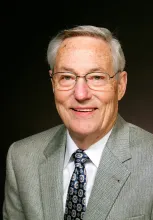
At the time of his retirement in 2016, Roy Holladay was serving the Operation Manager for Ministerial and Member Services of the United Church of God. Mr. and Mrs. Holladay have served in Pittsburgh, Akron, Toledo, Wheeling, Charleston, Uniontown, San Antonio, Austin, Corpus Christi, Uvalde, the Rio Grand Valley, Richmond, Norfolk, Arlington, Hinsdale, Chicago North, St. Petersburg, New Port Richey, Fort Myers, Miami, West Palm Beach, Big Sandy, Texarkana, Chattanooga and Rome congregations.
Roy Holladay was instrumental in the founding of the United Church of God, serving on the transitional board and later on the Council of Elders for nine years (acting as chairman for four-plus years). Mr. Holladay was the United Church of God president for three years (May 2002-July 2005). Over the years he was an instructor at Ambassador Bible College and was a festival coordinator for nine years.
