

Ben Light
This transcript was generated by AI and may contain errors. It is provided to assist those who may not be able to listen to the message.
We just got back from the Feast of Tabernacles, and we had an incredible opportunity to go through and learn more about the Kingdom of God. To learn more about the coming Kingdom, the Millennium, the Millennial reign of Jesus Christ. I trust that all of you had a wonderful Feast of Tabernacles wherever you may have kept it. As I mentioned earlier, I know locally we had folks that were gathered in Rapid City, South Dakota. We had folks in St. George. I think the readers, I'm not sure who else was in Branson, but we had folks in Glacier Country, Panama City Beach. We had folks all over the place. In addition to a number of the full sites I'm probably missing, and a number also of smaller feast sites overall, webcasting in locations such as Bend, or perhaps Steamboat Springs, or something along those lines in one of the sites that was ultimately cancelled.
While this year was different, and certainly different, I don't think any of us would argue the fact that it was a very different year this year from a standpoint of the Feast of Tabernacles, I felt that even though those, even despite those differences, I felt that the feast itself was incredibly spiritually fulfilling. You know, we had a chance where we were gathered in Bend to be able to gather with folks a few times throughout the feast, to visit with a number of brethren, and it was absolutely wonderful. The messages I felt were incredibly strong, and I felt that they were very poignant to what we've experienced and what we are experiencing here as we go through the remainder of 2020 and we go into 2021.
I hope that, again, regardless of wherever you may have attended, I hope that you are able to enjoy the time that you had with one another, the gleaned, many wonderful messages, and to be able to center on that vision of the coming Kingdom of God. The Feast of Tabernacles in the eighth day represent a highlight of our spiritual year. All of our Holy Days do.
I think all of God's Holy Days do, but I think the Feast of Tabernacles, even a little more so, mostly with regards to the manner with which it's kept. That we are instructed specifically to go and to rejoice. That we are instructed to go from our home or go from our normal location to a place where God has placed His name.
To be able to have wonderful dinners with good friends and family, to have strong drink and good conversations, and really just all of us be able to radiate abundant joy. But, you know, in addition to that, it's the couple of Holy Days in God's plan that include eight days of coming before God each day.
And learning to worship Him together. Learning more about Him. Learning to understand what His plan is and what He's working with in each and every one of us. And I think that helps us focus in even a little bit more on Him and ultimately on His plan for mankind. You know, we're at the feast, whether we're again in person like we were this year or whether we're webcasting in the services from a different location. There was a very strong vision of a coming kingdom that was described. That vision is an age of peace and prosperity. It's a time in which God's law and the knowledge of God covers the earth as the waters cover the sea.
It's a vision of Satan being bound and being put away for the duration of the millennium. It's of lions and calves and youth and cobras and children. It's a vision that's built for us and described for us of nothing that is harming anything within God's holy mountain. It's a time in which sword is beaten into plowshare. It's a time of a righteous and judge and a righteous and ruler that is full of justice, our Lord and Savior Jesus Christ.
It's a time of healing of the nations and ultimately of the world itself in a variety of ways. I don't know if you've considered it this way or not before, but the Feast of Tabernacles in many ways represents a personal prophecy to you and to all of mankind. Each and every person receiving this promise from God. And it's a personal promise from God through the mouths of his prophets as to what he will fulfill on this earth. It's the culmination of a plan that was executed more than 2,000 years ago with the death of Jesus Christ on our behalf. It was again his atoning sacrifice that reconciles us to the Father by his own blood, allowing our sins to be forgiven.
And ultimately, because of that forgiveness, because of the love that we were shown, we in turn show our love to him through the keeping of his commandments, through the putting out of sin in our lives.
By taking in more and more of him and his way of life, entering into that covenant with him, expressing that covenant through baptism, receiving his Holy Spirit, and living each and every day of our life going forward. That's the ultimate goal of becoming more like God and Christ and less and less like the man or woman that we once were. We look at God's plan for mankind. We look at what he's prophesied and what he's promised. And we've reached a point to an extent where in this plan we wait.
The events that are symbolized by the Feast of Trumpets and the Day of Atonement, the Feast of Tabernacles, and the Eighth Day, those are things that are all still yet to come. Those are all still promises that are yet to be fulfilled. They have been promised. They've been described in great detail. And each year we go through and rehearse the meaning of these days. We capture that vision of that coming kingdom and the events that are ultimately leading up to its arrival.
And it's, I don't know about you guys, but it's incredibly difficult not to become just amazingly excited about what is to come. You know, to have the opportunity to picture ourselves there at the time of Christ's return. Witnessing the first resurrection. I mean, just in your mind's eye, seeing Christ's return. Witnessing that first resurrection. That transformation into a spirit being and ultimately serving in the kingdom. It's really difficult not to try to imagine what this world will be like based on the passages that we see and read in the Book of Isaiah during the Feast of Tabernacles.
So as a result of this, and this excitement and the energy that comes from being together at the Feast, we often come off of the Feast of Tabernacles on a spiritual high, so to speak. There's excitement. There's a renewed zeal for God's plan. There's an even stronger desire to be a part of it. There might even be in your life a plan to focus more and improve on areas that need improvement. All of these things are good things. All of these things help to motivate us to improve and to grow spiritually. But sometimes, even despite our best efforts, that zeal and that excitement from the Feast wanes with time.
We're not as diligent. Maybe we're not as focused as we could be. And that vision and that excitement that's in our mind's eye as we come out of the Feast of Tabernacles can diminish little by little by little. Well, how do we prevent that? How do we prevent that? That's what I'd like to talk with you about today. How do we prevent the loss of that vision?
How do we preserve that vision in our lives? Proverbs 29 and verse 18, we won't turn there. It's been turned to before. Proverbs 29 and verse 18 records that where there is no vision, where there's no revelation, the Hebrew word is hazon, it means prophetic vision. Where there is no revelation or vision, the people cast off restraint. Now the word for restraint is a Hebrew word, yepara, which means to let it go free, to go out of control, or to run wild.
Now you might in your mind's eye be thinking of images that go along with to let something be free or to go out of control or to run wild. But without a vision, without prophetic vision, without revelation, without a view of a long term, the people cast off restraint. They go out of control, they run wild.
So in other words, where there's no recognition of or maybe a diminished recognition of prophetic promises in the hope that lies within us, which gives us that guide, so to speak, in challenging times to be able to maintain our focus and direction, without that, people will be less diligent. They won't focus as closely on the end goal, instead kind of becoming myopic, I guess, if you want to think of it in that way. That's my glasses prescription. I'm myopic. I'm nearsighted, which means that I can see things fairly well, you know, in certain capacities, but not so much in others.
What happens is you end up focusing on the things that are directly in front of you, and in the process of doing so, you miss the big picture. You know, that passage in Proverbs 29 verse 18 concludes with, you know, when the people cast off restraint, it says, Happy though is he who keeps the law. Happy or blessed, sometimes, that word can be interchanged. Happy or blessed is he who keeps the law. Instead of casting off restraint, maintaining the focus on that end goal, preserving that vision, keeping the law of God, keeping those prophetic promises in the forefront of our minds and not losing them, helps us to keep ourselves going in the right direction.
Helps us not to get distracted and stuck in the weeds. Maintaining and preserving that vision helps us to be able to keep ourselves going in the right direction toward that end goal of the kingdom of God. So, how can we do this? How can we preserve the vision?
That is the title of the sermon today, Preserving the Vision. And in the time that we have left, I'd like to take a look at three specific things that can help us as we move from the Feast of Tabernacles into the months between now and the Spring Holy Days to keep that vision of the kingdom of God foremost in our lives. Now, many of us have lived in the Pacific Northwest for a number of our lives. Or a number of our lives. We haven't had more than one life.
A number of years here in the Northwest. And as you know, the winters in the Northwest can be dark and they can be cold. You know, the rainfall, the days get shorter, the vitamin D deficiency starts to kick in. And I don't know about you guys, but come December, January, maybe early February, it can be more challenging to maintain a positive outlook. It can be easy to get bogged down in these challenges and to not maintain the vision. And so I'd like to give you again three things today that I think will help, and I hope will help, to help maintain the vision in our lives.
That vision that was described for us and provided for us this year at the Feast of Tabernacles. The first of those things is to begin by taking stock of your supplies. Taking stock of your supplies. Taking stock of what is prepared and what is there. Going back six or seven months at the beginning of this COVID crisis that we've experienced, as it all began worldwide, we saw a series of shortages develop. First, it was toilet paper. You know, everybody ran out to Costco and these other big box stores, and they bought enough toilet paper to last for 100 years.
Some of them are probably still using that toilet paper that they bought on the early end of things. But they ran out, they bought all this toilet paper, and it became incredibly difficult to find toilet paper anywhere in the United States for a little bit. I don't know if any of you got down to your last roll or not, but I can imagine that there is a degree of panic when you realize you are down to your last roll. And there's none in the stores. But there were these shortages that began to develop.
Not long after the toilet paper shortage, there was a dry yeast shortage. Some of you might still be experiencing a dry yeast shortage. It's still kind of hard to get your hands on. But I don't know if this was a similar thing to the toilet paper, which was really more panic buying than anything. Or if it was just that people realized, hey, I've got a lot more time on my hands. I'm going to take up baking, or I'm just going to bake a bunch of goods and turn around and sell them, maybe to supplement lost income or whatever.
But there was a time for a little while that it was impossible to find dry yeast on the shelves. Conveniently, as those of you that are bakers probably realized, it was right after we threw out all of ours for the days of unlimited bread. So it was the restocking of trying to get back what you had before that was no longer there.
I'm incredibly thankful for sourdough. We've been doing sourdough basically since then. That's how we've been making bread, essentially. Shannon Hezner. Sourdough's start named Martha. And Martha has been doing a wonderful job of creating some very delicious loaves of bread. But that wasn't all the shortages that we've experienced. There have been shortages in sanitizer, hand sanitizer. There's been shortages in disinfectant wipes, flour. I mean, that goes along with yeast, I suppose. Shortages in baby formula. Other items that tend to be deemed to be high need or in demand at the time.
But even that, the availability of a number of things has really fluctuated significantly in the past several months. Recently, it's been interesting. The latest shortage that we've come across as the summer has drawn to a close is the shortages on canning supplies. In fact, there was an article in the Statesman Journal today talking about the difficulty of tracking down canning supplies. Jars, lids, rings, and being able to put up a harvest. You know, the supply chain disruptions that people have experienced have folks looking back towards the wisdom of generations past to ensure that they're able to care for themselves to a greater degree, that they can be self-reliant, making sure that they're not beholden to the grocery store stocking schedule or the manufacturer's schedule of producing the various items that they might be looking for, but instead making sure that they have the needed supplies, the food, etc.
on hand in order to be self-reliant during any of these disruptions that have come about as a result of COVID restrictions and closures. We've canned for a number of years. Shannon has grown a garden for a number of years, and we've canned produce out of that garden. We store it up so that we're able to preserve it for the winter months. Many of you do the same thing. I know when we originally called out in the weeks following the initial situation with regards to COVID, as I spoke with a lot of the older members, that coming out of the depression mentality, and not all of you were cognizant necessarily in the depression, but some were, that mentality that comes out of having your parents or having yourself go through something like that is very different.
Most of the older folks I talked to said, we're good. We've got supplies on hand. We're fine. Everything's great. Whereas, maybe some of the younger folks are living more along the line of more paycheck to paycheck, and going into the grocery store and grabbing things as they can. In Proverbs 6, we see an admonition to consider the example of the ant.
You want to go ahead and turn over there. Proverbs 6. We'll see an example here that God provides us by using creation to illustrate the kind of attitude and the kind of discipline that all of us should have. Proverbs 6. We see again this admonition of the example of the ant. To consider the ways of the ant.
To consider the ways and the wisdom of this particular creature. Proverbs 6, and we'll pick it up in verse 7, says the ant, speaking of the ant here, says, Then it says, Verse 9, The implication with this is that that ant will be secure through the long, hard winter as a result of the work that was done earlier, based on the resources that were banked and put away and that were stored up. It says, Genesis 41. We'll see an example here along the lines of this, but in humans.
Genesis 41, and you can probably think about where we're turning to and imagine the example we're headed to, we're going to take a look in Genesis 41 at the example of Joseph. We see that in Genesis 41, Pharaoh has a dream. Pharaoh can find no one who can provide him with the interpretation. And Joseph, who had interpreted the dream of one of the Pharaoh's attendants who he had been jailed with earlier, a few years before, had remembered Joseph's interpretation when the Pharaoh mentioned that he'd had this dream.
And the gentleman brought up Joseph. He said that, you know, Joseph is this gentleman who interpreted a dream of mine a couple of years back. He's a man who will be able to interpret your dream Pharaoh. So they call for Joseph, they bring him before the Pharaoh, and Joseph listens to the dreams that Pharaoh had experienced. The dream of the fat cows and the skinny cows, of the fat heads of grain and the skinny heads of grain.
And as he listened, and as God gave him understanding of this particular dream, Joseph tells Pharaoh that God is telling him what will happen. That there will be seven years of plenty, seven years of plenty that the crops will produce so much, and that during that seven years of plenty, you know, there will be no want or need of anything. But then he says, after that, there will be seven years of famine, and those seven years of famine will be so great, he said, that all of that plenty, all of those good years would be forgotten.
That the famine would be so severe that all of those good years, and all those years of plenty, would be forgotten that no one would even remember those good years as a result of the severity of the famine. In verse 33, Genesis 41, we'll go ahead and pick it up there. Verse 33, this is Joseph's advice to Pharaoh.
He says, Now therefore let Pharaoh select a discerning and wise man, someone who has discernment and wisdom, he says, and set him over the land of Egypt. Let Pharaoh do this, and let him appoint officers over the land to collect one-fifth of the produce of the land of Egypt in the seven plentiful years, and let them gather all the food of those good years that are coming, and store up grain under the authority of Pharaoh, and let them keep food in the cities.
Then that food shall be as a reserve for the land when the seven years of famine, which shall be in the land of Egypt, that the land may not perish during the famine. We see Pharaoh heeded Joseph's advice. He agreed. And as often happens, somebody brings an idea, and the leader says, that sounds like a great idea.
You do it. And so he appoints Joseph to be that man. And for the next seven years, during these times of great plenty, the Egyptians set aside one-fifth of the produce of the land during those years. So they essentially stored up one full, plentiful years' harvest. In addition, above and beyond the harvest themselves, one full, plentiful years' harvest, and another almost half a year of that plentiful harvest, in order to be able to stretch things out over the next seven scarce years that were prophesied to come.
Genesis 48 and Genesis 49 records that Joseph gathered these things, records that Joseph ultimately set this up and recorded or set these things into storage cities. And it says that the amount of grain that was collected, the amount of grain that was present, was as the sand of the sea said that it is so immeasurable that they stopped even trying to count it.
God blessed them immensely in these years of plenty. God provided for them immensely in these years of plenty. Then the lean years came. The famine came. Egypt sold grain to its own people. They sold grain to the nations around them, the tribes of people who surrounded them. When the people ran out of money and the money failed, the people sold their livestock.
Eventually they sold their lands, and eventually they sold themselves in order to survive. And that was not a slave to Egypt. So during this process, Egypt centralized power significantly. Lands and money and other things became very powerful as a result of Joseph's operation here.
But because of that prophetic vision that God provided Pharaoh, because of the interpretation that he gave to Joseph, the Egyptian people were able to focus their efforts towards ensuring that they could support themselves through this prophesied scarcity. During the good times, during the good times, during the plentiful times, when it is so easy to lose focus, when it is so easy to realize that times are good, I don't need to worry.
Everything is great. Money's coming in. The food's there. I don't need to worry at all. During those times, because of that vision, because of what God had provided to Pharaoh and what Joseph interpreted, during that time when it is so easy to lose focus, the Egyptians showed a remarkable restraint. They showed incredible self-control and a focus on the goal of ensuring that they stored up enough that they would be able to make that stretch over those coming years of scarcity.
That they would not just be able to provide for themselves, but also be able to provide for their neighbors in times of scarcity. I grew up in Spokane. I've told a number of stories about growing up in that area, but one of the close friends that I went to high school with, one of my close friends in high school and his family, were Mormon. As you might be aware, the Mormon faith teaches a very strong focus on self-reliance.
Its members should be prepared for eventualities and disruptions by storing up food, storing up supplies, and, by and large, learning to be more self-reliant.
One of the things that we've seen this year with COVID and with the wildfires, I don't know about you, but you've seen how quickly shelves run out of various things. How quickly the stores are out and then you can't find it. Looking back on this year in particular, this is probably not a bad idea. Having enough food and supplies on hand for your family to be able to span several weeks of disruption, if not more.
The Mormons actually have several canneries that are in operation where people can go. It used to be before COVID, they could go in and actually can and do vacuum sealing and other things. It's not just open to their members. You can actually go in if you're not a member as well. People can go there now and they can buy items in bulk, they can seal them, they can can them for storage.
Brett's family never really did any of that. They lived on a several acre parcel. They had a huge garden. They grew potatoes, they grew beets, they grew all so many different kinds of vegetables. I don't even remember seeing as a kid, but I remember seeing their root cellar a couple of times. Some of you can maybe harken back to a time in your grandmother's home, perhaps. Maybe a time that is a little bit more distant when canning was more common. Or think back to your own pantry, currently, perhaps. I just remember seeing their root cellar a few times and that it had just rows upon rows upon rows of these just beautifully colored vegetables that the family had processed, had grown themselves, processed and preserved.
I'm thinking, as I remember seeing that in there, there had to have been at least a year or more of supplies that their family, which was a large family, could have eaten on for that amount of time. It had to have been at least a year's worth of stuff. But they had peaches and beets and green beans and peas.
It was interesting because it was jar on jar on jar of these golden or purple or emerald-looking gems just on the shelves of this root cellar. And it made an impression on me. I remember seeing that and thinking, these guys are prepared. They're ready for difficult and challenging times. They had harvested when it was in plenty and they had stored it up for those times of scarcity so they could then draw on that harvest when needed.
Another name for the Feast of Tabernacles is the Feast of In-Gathering. It's a time of taking in all the crops, of processing and of storing them. One of the reasons that Israel could go and rejoice in the way that they did was the farm work for that season had largely been completed.
They were kind of in between crops. There were a few kind of holdover crops, but they had harvested the one set and then when they got back from the feast they would begin the planting of the next. And so there wasn't a ton of extra work that needed to be done. They could actually go and rejoice before God where He placed His name.
And when they got home they would start the next set of plantings to prepare for the spring harvest. But not only that, they would be consuming the stored food and the processed food, the oil and the wine and the other foods, the dried foods and things that they had stored from their previous harvests over those months that were prior to the feast, over through the winter into spring. Brethren, we've just come out of a time of spiritual harvest. We've come out of a time of spiritual plenty. We've had eight days of the feast. And during that time we've heard eighteen different messages on the vision of what is to come.
We've had opportunities for iron to sharpen iron. We've had good conversations about God's plan, about our part in it. We've shared meals and drinks with good friends and family. And I would argue, brethren, despite the challenges, as I've talked with a number of people that have been at the feast this year and watching the feast from home, that in many ways this year was a bumper crop. That it was a good feast this year.
Many solid messages. And it was a bumper crop with regards to the harvest this year, spiritually. It makes me curious as to what the coming year will hold. You know when Israel was keeping God's land, Sabbaths, as they were instructed in Leviticus 25, they were to sow when they were to prune and they were to reap for six years. And you want to begin turning over to Leviticus 25.
Please feel free. But they were to sow, they were to prune, they were to reap ultimately for six years. They were to work the land for six years, and on the seventh year they were to let the land lay fallow. They weren't to work it, but they could eat from the produce of what grew in the vineyards and the fields. Not harvest it, but they could eat of the things that grew on there on a court.
In verse 20, though, of that, we can see kind of Leviticus 25 outlines the whole basic set up of the land Sabbaths. But in verse 20, God addresses their question of natural question, I suppose, of what will we eat in the seventh year. So if we can't process all of our food, if we can't take care of our land on that seventh year, God, what are we going to do?
What are we going to eat in those years where we're not working our land? And so God, in verse 20, answers that question. In fact, He anticipates it. He says, you may ask, verse 20, what will we eat in the seventh year if we do not plant or harvest our crops? God says in verse 21, I'll send you such a blessing in the sixth year that the land will yield enough for three years.
While you plant during the eighth year, you will eat from the old crop and will continue to eat from it until the harvest of the ninth year comes in. God tells Israel in the process of this physical harvesting that on the sixth year that He would provide a bumper crop such that they would store up that produce and that they would be able to eat from that produce clear through the ninth year.
You know, it's impossible for us to ascertain exactly what the coming year holds. But frankly, chances are good it'll be more of the same. You know, in the United States, we're in the midst of a contentious election. We're still reeling from the restrictions of the COVID-19 outbreak. Some outlets are beginning to say we're entering the third wave as cases kind of continue to rise in various places. We're still experiencing economic and civil disruption.
We're experiencing, in Portland, riots in the streets just north of us, 45 minutes. With all of these things going on, it is so easy for us to focus on these things that are right in front of us. It's so easy for us to see all of this chaos and to take our eyes off of forward and off of this vision and look at these things that are right in front of us. Brethren, that's not what God desires for us to do.
These things are fleeting. These things are passing. This, out here in front, is eternal. So with all these things going on, how do we keep that vision of the Kingdom of God alive? Well, I think it requires us to harvest the fruit from these messages. God has provided us with a bumper crop. God has provided us with a bumper crop of fruit from these messages, from our time at the feast, fruit from our conversations, from our discussions.
Brethren, I think we need to store them up. I think we need to ensure to put them up, put that harvest away for the cold and scarce months of winter. To be able to pull from them and be able to encourage and to strengthen and to edify ourselves in the times of scarcity, in the times of challenge, as that vision starts to wane. The way we can pull from these harvests and be able to strengthen that vision once again, but keeping our focus on that Kingdom, not allowing ourselves to become Yippara, so to speak, without restraint, out of control, or running wild, with no idea of where we're going.
It requires us to maintain the vision that God has provided us through this Feast of Tabernacles in the 8th day, to keep our eyes on that coming Kingdom of God and be able to look past these things that are before us. Meditating on and enjoying the fruit that you've harvested from this feast throughout the coming year and these cold winter months.
But not only that, not just what you've harvested, but being able to share your harvest with others. Having the opportunity to talk with one another, especially for those like Dr. Hanaway illustrated this morning. Sharing messages that came from other sites where you may not have been. Going on to the sermon archive and going back and listening to the sermons that are in other areas and that came from other areas. These are ways to meditate on and to enjoy the spiritual fruit that came from this Feast of Engathering. To be able to use those things to help to feed us through the winter months into the spring harvest.
So that's one way that we can preserve the vision. We can continue to keep our eyes on things going forward and making sure we take stock of our supplies. Another way that we can preserve that vision is to feed the fire. And it's kind of a mixing of metaphors, so I apologize. But as we leave the Feast of Tabernacles, we are likely at the highest level of excitement and zeal that we will experience throughout the entire year.
We are coming off of a time in which we are just absolutely on fire for God and for His way. You know, you take a look at where you're at as of like the mid to end of the Feast of Tabernacles, and we're on fire for God and for His way. We are excited. We are enthusiastic. We are enjoying our time together. We're enjoying having these opportunities. And as the months kind of post-Feast become a little bit darker, they become a little bit colder, the importance of a roaring fire is two-fold.
A fire provides warmth, but it also provides light. And that light helps to extend our vision, helps us to see the things that are off in the distance. You know, you come out of the Feast of Tabernacles, you're burning brightly. Similarly to the Millennium at first, you think about the beginning of the Feast, maybe you brought a little of the world with you. Maybe that world is clinging a little bit onto our coattails as we roll into opening night. Maybe we've been impatient because we're trying to get everybody ready and make it out the door on time and get our shopping done and get everything taken care of.
And maybe we're a little gruff with other people because there's still a degree of that world that's following us around and is kind of connected to our coattails, so to speak. And as the week goes on, as we're surrounded by God, as we're surrounded by His people and that presence of God and His people for the time of the Feast, we're able to shed much of that.
You only think about it. You don't have to rush out the door for work in the morning. We can spend those mornings with God. We can have a good cup of coffee and spend our time in Scripture in the morning and have a little bit slower, more methodical morning that's not as chaotic and not as crazy. We can have really good, edifying conversations. We can enjoy reconnecting with our friends and our spiritual family. But it enables us to focus and center on His way of life for the days that we're there.
And in some ways, if you think about it, it parallels the millennium a little bit. In that, at first, those who come out of the Tribulation are going to have some of the world still clinging to Him. It's going to be challenging as they start to shed the trappings of society and civilization and all that goes along with that underneath the rule of Christ. But as that thousand years continue, though, there will be children born with no memory whatsoever of the way things were.
There will be people born with no memory of pain and suffering. There will be people born with no understanding of the time that came before the millennium except for what they heard and what they've been taught. Peace and prosperity of God's way will be evident to all. And then we get to the end. We reach the end of that thousand years and Satan is released.
For the first time in many, many, many, many years, temptation enters the minds of the people who are alive. Suddenly they get thoughts that they've never had before. Ideas of rebellion enter their brains, and they make choices. And some of them make poor choices. You know, it's a little bit like when we come home from the feast. I don't know if you've noticed, but you come home from the feast. It's a little bit easier while you're at the feast to keep your tongue.
It might not say something that you regret to somebody or along those lines, but when you come home from the feast, you might have noticed it's a little more challenging to keep your tongue, to hold your tongue. Maybe we say something roughly to someone and not intend it, where a week earlier we would have let that frustration slide. It would have not even registered. But we are burning bright as we come out of the Feast of Tabernacles. That light is shining. That fire is burning hot and bright.
But as we leave the feast, that cold and that darkness begin to encroach. The wind picks up. The fire starts to flicker. What do we do? How do we keep it going? Well, brethren, we need to feed that fire. We need to feed it. Let's go to Leviticus 6. Take a look at Leviticus 6.
For those of you who were in St. George, Mr. Sexton gave a message that included this idea and this concept. I would say definitely take a listen. Definitely take a listen in that he goes through and describes this process quite well. We're going to go through it relatively quickly. But in Leviticus 6, God gives Israel the ordinances of the offering. He gives them the specifics of what those offerings are to look like, how they're going to be administered. It's similarly written in Leviticus 1 as well. So there's a statement and a restatement of these things.
But in Leviticus 6 and verse 8, we get the ordinance of the burnt offering. Leviticus 6 and verse 8, we'll go ahead and pick it up there. Leviticus 6 and verse 8 says, The Lord said to Moses, Give Aaron and his sons this command. These are the regulations for the burnt offering. The burnt offering is to remain on the altar hearth throughout the night until morning. The fire must be kept burning on the altar. The priest shall then put on his linen clothes with linen undergarments next to his body and shall remove the ashes of the burnt offering that the fire has consumed on the altar and place them beside the altar.
See then, he's to change his clothes. Verse 11, he's to take off these clothes and put on others and carry the ashes outside the camp to a place that is ceremonially clean. The fire on the altar must be kept burning. Verse 12, it must not go out. Every morning the priest is to add firewood and to arrange the burnt offering on the fire and burn the fat of the fellowship offerings on it. The fire must be kept burning. Verse 13, on the altar continuously, it must not go out. Three different times the instruction is given that that fire is not to go out.
He gives that same instruction numerous times. That fire of that offering, that particular altar, that fire was to be perpetual. It was to be something that never went out. It was something that was to be continuous. The priest would offer the evening sacrifice and either put enough wood on it at the beginning of the night and make sure that it burned all night long or get up in shifts and add more wood to ensure the fire never went out throughout the night until the morning when the morning started to go out.
The evening sacrifice was offered. It's important to consider why this was so important. It was because this fire was started by God. This fire was started by God. Leviticus 9 talks about this. Have you jot it in your notes? We won't turn there.
But in Leviticus 9, it helps to kind of build context here. When the priesthood began their sanctification process, when they began offering various offerings for their sins, making atonement for themselves, for the people, they prepared these offerings as God instructed. They followed all of His instructions to the letter. They did it all before the congregation. After Moses and Aaron entered the tabernacle, so they did this whole process. God instructed them what to do.
They followed it to the letter. Moses and Aaron entered the tabernacle. They come back out. They bless the people of Israel. Then this miraculous thing happens. Fire comes down from the presence of God and consumes the offering and the fat which is on it.
That fire, which was started by God, was that fire that was to be maintained perpetually by the priesthood. They were to continue to feed that fire, continuing to put wood on that fire, continuing to ensure that that fire stayed burning. And that's why, and this is what Mr. Sexton got into, that's why Nadab and Abihu's sin that's recorded in chapter 10 is so egregious.
They made an offering with impure or profane fire before God. They offered the incense with coals from their own fire, not the fire God had provided. And as a result, God, in a maybe not exactly irony, I think it was purposeful, consumed them with the fire that came from Him.
Regardless of all of that, for the fire to continue burning, think about what it takes to keep a fire going. For a fire to continue burning, the priesthood had to be shoveling fuel on the fire of that altar to maintain a state of constant burning. To enable that fire to continue to go morning and evening as the aroma from those offerings rose to the Lord as they did the morning sacrifices and evening sacrifices.
You know, when things started to cool off and the light of that fire started to wane, what did the priest do? Threw more wood on the fire. They fed the fire. Brethren, for us to preserve the vision of the kingdom of God, we have to feed that fire that we experienced at the feast. We have to keep it burning high and keep it burning bright.
And that means more wood. That means more time close to the source of that fire. That means more time in prayer. That means more time in study, ensuring that we are just tossing wood and fuel on that fire so that it goes from, you know, a small little bit of fire, so to speak, to a hungry, huge bonfire in our lives. I would say many of you, we've done all done camp outs over the years.
We have our church camp out that we've done. A number of you enjoy camping, too. And you've probably experienced colder summer nights while you've been out camping or maybe cold mornings. There's a quote from C.S. Lewis that I just love. C.S. Lewis said, you know, good things as well as bad are caught by a kind of infection. If you want to get warm, you must stand near the fire.
If you want to get wet, you must get into the water. If you want joy, power, peace, eternal life, you must get close to or even into the thing that has them. You know what? We might say in this capacity that we need to be close enough to singe our clothes from the sparks. Or maybe, as some of you do, melt your shoes in the campfire ring as you're sitting around the campfire and putting your feet up on the rocks.
You know, this past summer we had a chance to go camping with the Kester family down at Cascadia State Park outside of Sweet Home. For those that drove to Bend via Highway 20, we went right past it. The nights were cooler. I wouldn't say cold, so to speak, but they were cooler. Probably in the high 50s, low 60s. But from the daily temperatures, which were up in the high 80s, 90s, it was a stark difference. At night, you know, it started to cool off a little bit. People would start to campfire. And it's amazing. If you just sit back and look sometime when you're out camping and somebody starts a fire, what happens?
People start, whatever they're doing, they start to slowly flock to it. You know, you end up with all these people start to get...we're like moths. We just kind of end up near this particular fire. But what's funny is they all do the same thing. They come in and they stand in front of it and they rub their hands together like this. And then they hold their hands out and they warm their hands. And then maybe they turn around and they warm their backs up. And then turn back around to the front.
So you get this rotisserie action going, where it's front and then back and then hands and then front and back and hands. Well, everybody goes to bed. The fire dies down. The next morning, once that kind of goes out, the first person out of the tent gets the fire going again. And what happens then? Everybody flocks again, gravitates towards the fire, and a warm cup of coffee.
And those of you that burn with wood heat, you know, there's nothing really like it. It just goes straight through. It goes into your bones. It's comforting. It's warm. It gives us light. It allows us to maintain our vision outward to the edge of the circle of light that it creates. You want to see further out. You want to be able to see that focus and maintain and preserve that focus on what's out there.
Throw more wood on it. Make the fire higher. Extend the circle of light out further. Let's go over to 2 Timothy. 2 Timothy. We know Timothy was a young man, one who had been entrusted with the care of a congregation. We know that he was the pastor there in Ephesus, at least for a time. We also know that he was a companion of the Apostle Paul. He spent quite a bit of time with him.
The two shared a strong bond. Paul knew his family and his grandmother and his mother. He knew Timothy as well. He knew multiple generations of believers in Timothy's family. It appears, at least from the way that Paul writes, that he shared an affinity for this particular family and for Timothy as a part of it. We're going to pick it up in 2 Timothy 1 and verse 3. I want you to read and see Paul's words to Timothy here. 2 Timothy 1 and verse 3.
He goes on in verse 7, stating that the spirit of God is not a spirit of fear, but it's a spirit of power and of love and of a sound mind. The word in Greek that's used for stirrup here in verse 6 is anazopyrion.
You might recognize the word pyre in there. Anazopyrion, which means to rekindle, to stoke, to stir up the coals of a fire with a stick, so to speak, to begin to make that flame burn brighter. Paul is admonishing Timothy to kindle the fire of God's Spirit in him, to throw wood on that fire, to stir it up, to stoke the coals, and to allow that flame to burst into a raging fire. You ever wonder why we come away with such an invigoration after the feast, like fundamentally what's happening?
If you think about the Feast of Tabernacles, each of our individual embers are coming together. And as those embers come together, and as they're stoked, and as they're fed, and as they're kindled, as we go through the week, and as we learn more about God, and as we, you know, stoke one another, so to speak, with conversation and whatnot, that fire of God's Spirit in us is fanned.
It's flamed up. We literally catch fire, so to speak. We do the same thing on the weekly Sabbath. We come together, we bring our embers into the presence of God and one another, and what's the result? There's a fire. There's a fire. So how do we keep that fire from going out as we go forward from the Feast? How do we preserve that vision of what's to come?
How do we ensure that we are looking forward at the vision of what's to come? Why don't we keep putting wood on it? Continue to remain close to the source. Continue to throw wood on that fire until it's light and it's warmth. It's evident for all to see. And brethren, in a world that is getting colder, in a world that is getting darker, if that fire is going within you, it is not going to go unnoticed.
People of all stripes will see that fire. They will recognize that something is different about you. And they'll be curious. And they'll be interested. And they'll start to ask questions. They'll start to wonder what it is about you that enables you to be able to be the way that you are in these circumstances. We need to make sure we're putting wood on that fire, strengthening that fire so that the warmth and the light of it are evident for all to see. So we need to make sure that we're feeding it.
The last thing we need to be considering and the last thing that we need to recognize is that vision itself, and the vision of the kingdom of God in this case, the vision requires action. Nelson Mandela once said, vision without action is just a dream. Action without vision just passes the time, but vision and action will change the world. Vision requires action without vision, without something that's directing our path, just acting for the sake of acting. It's no more than spinning our wheels. We're not propelling ourselves forward to the ultimate goal of that vision if the actions that we're taking don't align with our vision.
If that's the case, we're just acting for action's sake and we're wasting time and energy. Likewise, if we have the vision, but there's no follow-up or action based on the end result of that vision, so if we see the kingdom of God off in the distance and then we go, eh, whatever, I mean it is what it is, then that vision's nothing more than a dream. Now, a vision requires action. When the actions that are taken in life line up with the vision that a person is focused on, momentum is a result.
Momentum resists resistance. It just charges forward. And provided that momentum can be maintained, there's an incredible amount of energy that can come as a result of momentum when your actions line up and align with your vision. When you have a goal in mind and you are focused on making that goal happen and your actions follow, there's incredible momentum that can be created as a result of that. You know, we just finished keeping the feast of the Lord. We just rehearsed and learned symbolically and even experientially as we interacted with one another something that the world has no real idea that it even needs.
Brother, we literally just rehearsed the solution to the endless stories on the nightly news. We rehearsed the end to the rioting and civil unrest, the solutions to the issue of race, the solutions to politics, to government overreach and corruption. We just finished rehearsing the solutions to war and genocide, to poverty, disease, and frankly, all of man's ills.
They are all wrapped up in the events that are symbolized by the Feast of Tabernacles and the Eighth Day and the vision of this coming Kingdom of God. Brethren, you have that vision. They need it. They just don't know they need it yet. The world around us is reaching and they're groping and they're grasping at straws for some way to make their life work so that they can achieve happiness and fulfillment.
I don't know how many times you've talked with individuals, people that are successful, people that don't have to worry about money, people that don't have to necessarily worry about jobs or anything else, but when you talk to them and you discuss, I mean, you get past the superficial stuff, they're not satisfied. Many of them are not fulfilled.
They're depressed. They're struggling and they think that if I can just do this or I can just do that, I can finally be happy. But the fact is there's an emptiness and a hole that can only be filled by Almighty God. He is that solution. He is ultimately what fills that hole. And the vision, brethren, that you possess, the knowledge that has been revealed to you regarding this coming Kingdom of God, it's the answer.
Folks around us as we look at the world and we look at the conditions of the world, they need some good news. They need the gospel. They need the hope of a better future. You have it and they need it. God is still drawing people to Him through Jesus Christ. He is still calling people. Christ stated in John 4, verse 35, it was true then and it's true today. The fields are white for the harvest. Trick is we don't know who God's working with or not working with.
We don't know who He's calling or might not be calling. We don't know where they are in their life when they're called. Sometimes people are called out of incredibly challenging circumstances and our first interaction with them may be a very challenging interaction. But God works with people and God develops. God builds. But we don't know who He's calling. Maybe it's that person next to you in traffic that you just cut off. Or they're in the checkout line.
Maybe it's the waiter or waitress at a restaurant that you've interacted with. Or someone that you may or may not interact with online or in person. Thank you for the question we have to always have in the back of our head. Will I be the Scripture that that person reads today? Will it be me? Will it be the only Scripture that they read today as my personal actions?
Let's go over to 2 Peter 2 for our final passage today here. As we kind of consider this idea of the information and the opportunity that you have. 2 Peter 1 It's tucked away in hiding in my Bible. 2 Peter 1 2 Peter 1, verse 1, says Simon Peter, a bond servant and an apostle of Jesus Christ, to those who have obtained like precious faith with us by the righteousness of our God and Savior Jesus Christ.
3 It says, This is addressed to those who have the vision, to those who have obtained a similar precious faith in God and Christ. Talks about how that divine power has been given to us all.
Talks about those that have this vision that they might be partakers of that divine nature, having escaped the decay that is in the world through lust. Verse 5, But verse 9, Might say myopic. Talks about how if these things are evident in our lives, if we have this eagerness, this diligence, if we have this virtue, this excellence of character, if we have understanding and a ruling of ourselves, if we have patience and piety, if we have a love for our brothers and enduring love for others in God, it says we won't be barren, we won't be idle, lazy or useless.
We won't be unfruitful or unproductive in our understanding of Jesus Christ. But it does say that if we lack these things that Peter talks about, if they're not present in our lives in both word and deed, then we are ultimately short-sighted.
That we're myopic and we're missing that long-term vision. We're not seeing it. We can't see the end result because we're so focused on what is right in front of us. He goes as far as saying that in those circumstances we can even become blinded and forget that we were cleansed from our sins by the sacrifice of Christ. He goes on in verse 10, says, Therefore, brethren, be even more diligent to make your call and election sure. For if you do these things, you will never stumble.
For so an entrance will be supplied to you abundantly into the everlasting kingdom of our Lord and Savior, Jesus Christ. We just spent the better part of a week learning about this kingdom of God. Learning about our part in it, learning about God's plan for mankind, learning about this vision.
That vision was described in incredible detail for us, and it was palpable. We've come out of this feast of tabernacles energized. We've come out of it excited. You know, we're on a spiritual high, so to speak. The next several months are going to be cold, and they're going to be dark. How do we preserve that vision? How do we ensure that the actions that we take, the things that we do, align with that vision?
Verse 8 again of 2 Peter 1, For if these things are yours and abound, you will be neither barren nor unfruitful in the knowledge of our Lord Jesus Christ.
We'll be productive. We'll have opportunity to share that vision. How do we preserve it? How do we keep that vision in the forefront of our mind? Brethren, we can draw on the things that we've stored up, look back over the messages. Look back over our notes, meditate on them, chew on it, so to speak. Chew on the things that we've heard and what we've learned in the conversations that we had. You know, we came away again from the feast on fire for God and for His way of life. How do we preserve that vision? Keep throwing wood on that fire. Don't let it go out. Don't let it die down. Keep chucking wood on that fire. Keep it burning. Maintain that fire. Stay close to God. Stay close to that perpetual fire that He started in our lives so that we can keep those embers burning. You know, through that process of keeping our own embers burning, we ignite the embers of others as well. We encourage and we edify them so that they, in turn, can also keep their fire going. And in doing that, we work together to ensure that that vision is a shared collective vision in all of our minds.
Lastly, and not that any of these are more important than the others, but we have to put into practice the vision of that kingdom in our lives today. We have to be living it now to the best of our ability. We have to be setting an example of the attitudes and the actions of the coming kingdom of God in this world, showing that warmth, showing that light of God and ultimately of His love for mankind. We do all these things in conjunction. We do all these things together in conjunction with one another. If we go back and look at those stored things and we back and we review and we keep that in the forefront of our mind through the reviewing and the meditation on those messages. And we keep throwing wood on that fire and we keep living this way of life. Brethren, we'll be successful in preserving that vision. We'll be successful in keeping that excitement and that energy of that coming kingdom of God in the forefront of our mind. And we'll be able to ensure that the path that we take and the path that we walk is together in the direction of the kingdom of God.
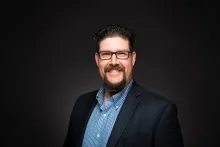
Ben is an elder serving as Pastor for the Salem, Eugene, Roseburg, Oregon congregations of the United Church of God. He is an avid outdoorsman, and loves hunting, fishing and being in God's creation.
