

David Mills
This sermon was given at the Jekyll Island, Georgia 2018 Feast site.
This transcript was generated by AI and may contain errors. It is provided to assist those who may not be able to listen to the message.
Good morning, everyone. That's a hard act to follow. On behalf of all of us, I'd like to thank those children for that wonderful special music.
Parents, you have some very cute little ones. Very cute. And I was thinking, we all were cute like that at one time. What happened to us? I guess we outgrew it. Welcome to the third day, the Feast of Tabernacles. So good to see you all here on beautiful Jekyll Island, Georgia. My wife and I love Jekyll Island. We have kept more festivals here than anywhere else. I'm sure at least 25 in the 25 to 30 range. But beginning in 1999, we began to travel to some of the international festival sites. We went to New Zealand. They needed speakers in some of these areas, and we were very happy to travel and very happy to do that.
We went over and enjoyed the feast in New Zealand in 1999. After that, we were able to go to some of the other international sites in England, Italy, India, Zambia, Malawi, Zimbabwe, and a couple of sites in the Caribbean.
Before we would go on these festival trips, we always did quite a bit of homework. We would get brochures and videos even from the library and visit travel agencies and try to find out some information about the sites or the areas we were going to. And, of course, we'd always tried to schedule a few extra attractions, a few extra days just to tour around in those countries. We saw pictures and videos and places and attractions and natural wonders and palaces and ruins that we would want to see, snapshots of what we would soon see in reality. In New Zealand, we wanted to see Rotorua. We wanted to tour Auckland, tour the South Island.
And when you're that far away, why not go ahead over to Australia and spend a few days there? So we did that. We saw the rainforest in Australia and the Great Barrier Reef. In England, of course, we'd want to tour London, see Buckingham Palace, Westminster Abbey, Windsor Castle. In Italy, you'd have to see the volcanic ruins of Pompeii and the Colosseum and the ruins of Imperial Rome, the canals of Venice. So we read and we studied travel books and videos. We saw pictures and snapshots of places we would be seeing in reality shortly. We actually had a pretty good idea of what the countries were like and some of the things we'd like to see before leaving home. You can say that we had a foretaste of where we were going. But, by the way, we're here to have a foretaste of something wonderful that is just ahead, not all that far ahead. My goal today is to give us a foretaste of the millennium, the wonderful world tomorrow, when Jesus Christ will reign over all the earth. We're here to get a foretaste of it. And the Bible gives us a lot of scriptures, just literally hundreds of scriptures, and they are actually word pictures, as we will see. They are not in black and white. They are in color, and they are 3D even. Holy men of God were inspired by God to write down prophetic snapshots of the world tomorrow. And we can study them, just like we studied these brochures and travel books. We can study these scriptures and begin to get a foretaste of what it's going to be like in the millennium. We want today to read some of those inspiring prophecies of peace and prosperity and abundance, and get a foretaste of this golden age. We need it more than ever, because this world is literally falling apart rapidly. Now, most of us have heard many sermons about the wonderful millennium just ahead. And what I'd like for us to do is kind of test ourselves in a little fun quiz as we go along. That will be kind of the format of the sermon. And we'll need your participation in this. We're going to take 10 or 15 snapshots of the wonderful world tomorrow. By the way, as far as a title, for those who like a title, I thought about this one, a foretaste of the wonderful world tomorrow, and then changed it to prophetic snapshots of the wonderful world tomorrow. We're going to read these prophetic snapshots today, at least 10 to 15 of them, and look at them how wonderful they are. We can't read the 100 or 200 or 500 that are in the Bible. But what I'd like for you to do as we read each of these Scriptures is whether you can remember who God inspired to write down this prophecy. Let's kind of have a fun quiz then. Just write it down on a piece of paper. We're not going to—you won't need to hand it in. Only you will know how well you did or otherwise. So let's do it. Everybody participating, and let's enjoy it. Young and old, teenagers, children, why don't you see how you do on this little fun quiz as well? Let's get started.
Number one, prophetic snapshot number one. I'm going to ask a question. This is going to be easy for you. It's going to be multiple choice. You will have three choices, and then you can choose which is the right answer and write it down.
Number one, which holy servant of God preached that after Jesus Christ returns, there will be times of refreshing and times of restoration of all things? Was it Peter? Was it John? Or was it Paul? Again, I'll repeat the question. Who wrote down that after Jesus Christ returns, there will be times of refreshing and times of restoration? Not who wrote down, but who spoke that prophecy? Was it Peter? Was it John? Or was it Paul? You have to real quickly put down your answer so I can't give you too much time quickly to put down which one you think it would be. Peter, John, or Paul. And for the correct answer, let's go to Acts chapter 3. I don't think these verses have been read yet.
We certainly want to be sure to read them, every Feast of Tabernacles, because it describes this time that we are now observing the Feast of Tabernacles, picturing a wonderful age just ahead. Let's read these verses in Acts chapter 3 and verse 19.
So the question was, which holy servant preached this message? And for that person, we have to go back to verse 11. This is about the healing of the lame man in the temple area in Jerusalem. And in verse 12, it was Peter who stood up. And he said, men of Israel. And he gave this sermon, this message here. And coming on down to verse 19, that is a part of the message that Peter preached on that day. So, which holy servant preached about times of restoration and times of refreshing? That would be Peter. All right. Everybody get it right? Okay. How many hands do we have that got it right? Okay. I'm not seeing everybody, I don't think. Well, we want you to get this second one then that is coming up. But before we get to that one, I want you to notice in verse 21, the last part of verse 21, that these times of restoration, that God has spoken by the mouth of all His holy prophets since the world began. We're going to be reading those from what those prophets wrote down. God inspired them. God did the speaking. He inspired the words they wrote down. We're going to read those words. And they are so encouraging. And we're going to be uplifted a lot by them. So we're going to read them as we go through the sermon here this morning. Number two, let's see how we do on this one. This is Prophetic Snapshot number two. What man of God prophesied that Jesus Christ would come with ten thousands of His saints to reign and execute judgment on the ungodly of this evil world?
Was it Enoch, or was it Jude, or was it Isaiah? Alright. Again, the question, which or what man of God prophesied that Jesus Christ would come with ten thousands of His saints to reign and execute judgment on the ungodly?
Was it Enoch, was it Jude, or was it Isaiah? Write down what the answer you think is correct.
And for the answer, let's go to the book of Jude. The book of Jude and verses 14 and 15. And the answer is not Jude, but the answer is revealed in the book of Jude. So we'll read verses 14 and 15.
Enoch. Oh, it's Enoch. Enoch, the seventh from Adam, the seventh generation, prophesied about these men, saying, Behold, the Lord comes with ten thousands of His saints to execute judgment on all, to convict all who are ungodly among them of all their ungodly deeds, which they have ungodly or committed in an ungodly way, and of all the harsh things which ungodly sinners have spoken against Him. So way back before the time of the Flood, Enoch lived about halfway between creation of Adam and Eve and the Flood over 5,000 years ago. Enoch then prophesied, and how Jude came across this, well, God inspired him to come across it or to have it, and wanted this to be in the Bible. But Enoch was foretelling the second coming of Jesus Christ with the saints to reign on the earth and to bring judgment upon the earth. Enoch was the great-grandfather of Noah, and he prophesied of the evil and ungodly in all ages, no doubt, but also undone especially to our time today. And this prophecy is about Jesus Christ and the saints coming to execute judgment, coming to convict the world, to get the world to change, not to destroy mankind, but to get mankind to repent and start doing it right. Enoch's prophecy then is actually very positive. It's about times of refreshing when the world begins to be convicted, and the change there will begin to be those times of refreshing and times of restoration. So Enoch was that one who prophesied about the ten thousands of saints. The correct answer for number two would be Enoch. Let's go to Prophetic Snapshot number three. How many still have a hundred percent? I'm disappointed. I believe everybody is going to get this one, number three. Name a prophet who wrote about worldwide peace and that nations will beat their swords and the plowshares and their spears into punning hooks and learn war no more. Was it Isaiah? Was it Jeremiah? Or was it Micah? Again, the question, name a prophet who wrote about worldwide peace and that nations will beat their swords and the plowshares and their spears into punning hooks. Learn war no more. Was it Isaiah, Jeremiah, or Micah? Got your answer down. We can't give you too long. We need to move on through the sermon. Okay, for the answer, let's go to Isaiah chapter 2 and verse 1. Isaiah chapter 2 and verse 1. And read the first four verses. Well, beginning in verse 2. Isaiah 2 and verse 2.
And the word of the Lord from Jerusalem. He shall judge between the nations and shall rebuke many people. They shall beat their swords and the plowshares. Here it is, like in graphic language. Notice that it doesn't say in verse 4 that the nations, just maybe putting it in black and white, you will say the nations are going to disarm. But putting it in living color, three-dimensional, it says here that the nations will beat their swords into plowshares and their spears into pruning hooks. And there's a statue in front of the United Nations building in New York City that has a big, strong, muscular man beating a sword into a plowshare. Many of us have seen that statue. That statue, oddly enough, was made by a citizen of the former Soviet Union shortly after World War II. Here it is. The correct answer, then, for number three is Isaiah. But there's more. On the opening night service, Mr. McCoy turned and read from Micah, Chapter 4, verses 1 to 3. And for the sake of time, we won't turn to Micah, Chapter 4, verses 1 to 3, because what you will find is word for word exactly what we just have read here in Isaiah. So was it Isaiah? Yes. Was it Jeremiah? No. That one would be wrong if you put that one down. Was it Micah? Yes. And if you put down both of them, we're going to give you some extra credit.
But how graphic, brethren. You see, these truly are prophetic snapshots in living color. Can we imagine all nations denuclearizing, not just Mr. Kim and the North Koreans, but all nations? Nuclear weapons don't make any sense. Rockets and tanks and missiles killing human beings, it doesn't make any sense.
I remember as a 10 or 12 year old, maybe an 8 or 10 year old, chopping on the farm with my parents who were in North Carolina where I grew up. And they were talking about people killing each other in a war. It may have been the Korean War, I can't remember. The First World War had not ended all that long, or the Second World War.
And I said, what? They killed each other? It didn't make any sense to my mind at that age at all. Still doesn't make any sense. But the time is coming, there won't be any more killing in war or in just murder. No bloodshed at all. For a thousand years, there won't be even one murder. This Feast of Tabernacles pictures this wonderful time of peace.
Okay, correct answer number 3 then would be Isaiah and Micah. Extra credit if you get both. Let's go to number 4, Prophetic Snapshot number 4. Which prophet wrote about a time of plenty of food? He graphically described it as a time of abundance when the plowman will overtake the reaper. Was it Zechariah? Was it Amos? Or was it Jeremiah?
So again, which prophet wrote about this time when the plowman will overtake the reaper? Zechariah, Amos, or Jeremiah? Well, the answer is to turn it over to Amos. Amos chapter 9. So, here we read beginning in verse 13. Let's begin in verse 11. Amos chapter 9 and verse 11. On that day I will raise up the tabernacle of David which has fallen down and repair his damages. They shall possess the remnant of Edom and all the Gentiles. In verse 13, behold, the days are coming, says the Lord, when the plowman shall overtake the reaper and the traitor of grapes, him who sows seed.
The mountains shall drip with sweet wine, and all the hills shall flow with it. I will turn back or bring back the captives of my people Israel. They shall build the waste cities. They shall plant vineyards and drink wine. They shall plant gardens and eat fruit. So, it's going to be a very productive time in the millennium. God could have inspired this to read, there will be an abundance of food.
But no, He put it very graphically. These are word pictures, the way that God inspired these prophecies to be written. They paint us a picture, a word picture, of a plowman. You picture a plowman who is ready to plow the field for planting a new crop of grain or food, a crop for food in the future. And He is leaning on His plow, waiting for the old crop to be harvested.
There's such an abundance. In the Kingdom of God, there will be no hunger. There will be no malnutrition. We'll search on world hunger now, however, and you'll find that roughly 10 or 11 percent of the world is malnourished. 10 or 11 percent, that's around 800 million people are malnourished on the earth right now. And 9,000 children, those were beautiful children that got up on the stage, but 9,000 children die from hunger-related diseases every day. Every day, 9,000 children. This, these pictures, the time there will be no more hunger, no more malnutrition, a time of abundance.
And furthermore, it will be good food. It will not be GMO or other watered-down type seeds. It will be wholesome foods that help to prevent sickness and disease. So it's going to be a wonderful time indeed. Okay, let's keep moving along. We have a lot of other prophetic snapshots to consider. Number five, which prophet? Saimas was the correct answer for the previous one, number four. Number five, which prophet wrote prophecies about no more deserts, that deserts will blossom as the rose.
He's the only one to put it quite that way. Deserts shall blossom as the rose. Was it Ezekiel? Was it Isaiah? Or was it Hosea? The prophet that said, wrote that there will be no more deserts. The deserts shall blossom as the rose. Was it Ezekiel? Was it Isaiah? Or was it Hosea? Okay, you've got your answer down, and let's turn then to Isaiah 35, a beautiful, beautiful chapter, the whole chapter.
We'll just read a few verses from it. Isaiah 35 and verse 1, Here it is. Again, it's presented in a very descriptive manner, graphic. It is in color, beautiful color, three-dimensional. It's not two-dimensional, black and white. The desert shall rejoice and blossom as the rose. It shall blossom abundantly and rejoice, even with joy in singing. The glory of Lebanon, a beautiful area in ancient Israel, shall be given to it. The excellence of Carmel and Sharon, they shall see the glory of the Lord, the excellence of our God.
And so the deserts are going to become farmland, productive farmland. They're going to blossom. People will live there. No more Mongolian in western Chinese desert area. No more western USA in Mexico. I grew up in North Carolina. I'd never seen the desert until I went to Ambassador College at the age of 18. And the further I got west of Dallas, Texas, the drier it got until getting into New Mexico and Arizona.
And even southern California, there's desert. Just a lot of sand, a lot of cacti, a lot of big desert in the western U.S. and Mexico, the Sahara Desert and Saudi Arabia. Just imagine one of those deserts, what a change that's going to make the Sahara Desert, which I believe is the biggest desert of them all. Imagine plenty of rain, new lakes and beautiful streams, which we go on down to actually read about here in verses 6 and 7. The lame shall leap like a deer in the tongue of the dumb, saying, For waters shall burst forth in the wilderness, and streams in the desert, rivers are going to develop in the Sahara Desert that do not now exist.
The parched ground shall become a pool, lakes and ponds are going to form, and the thirsty land springs of water. So imagine in the Sahara Desert, now just a lot of sand and dunes. Imagine lakes and streams of water, streams that flow north up into the Mediterranean, west out into the Atlantic.
It's going to be quite a different situation than what we have right now. Imagine rich farmland. You know, geography books are going to have to be rewritten. Rich farmland producing bumper crops, parks and recreational sites, beautiful family vacation areas. And think of this. The horrible hurricane that recently hit North and South Carolina and caused such damage, it was born in the Sahara Desert. The winds began to blow the hot air over into the Atlantic waters that were moist and warm. It began to form a depression and then a tropical storm that then went on into a full hurricane and blew all the way across and did tremendous damage that people right now are still flooded up in that area.
And it's so very, very sad. So the weather patterns are going to be changed by a desert's blossom like the rose. And it's going to be a happy time when things like this begin to develop. What we're speaking about today is actually one of the topics I enjoy speaking about the most. It's the Wonderful World Tomorrow. We had a book that came out around the 1960s, I believe it was, The Wonderful World Tomorrow, What It Will Be Like by Herbert W. Armstrong. And about a hundred pages long, it describes this wonderful time that is pictured by the Feast of Tabernacles.
In verse 10 of Isaiah 35, we'll close out this question by reading verse 10. The ransom of the Lord shall return and come to Zion with singing, with everlasting joy on their heads. They shall obtain joy and gladness, and sorrow and sighing shall flee away. There's not going to be any more bad news, and so much of our news today is bad. Okay, the correct answer, as far as deserts blossoming as the rose, number five would be Isaiah. Number six, prophetic snapshot number six, which prophet wrote about beautification projects for today's ugly cities and places? He wrote that the desolate land will become like the Garden of Eden. Was it Ezekiel? Was it Isaiah? Or was it Micah? Beautification projects, the ugly places, are going to become like the Garden of Eden. That sounds very beautiful, doesn't it? Was it Ezekiel, Isaiah, or Micah? Well, let's turn to Isaiah 51. We're already here in Isaiah. Isaiah 51 and verse 3. Isaiah 51 and verse 3. So, you know already that if you put down Isaiah, you got this one correct. In verse 3, the Lord will comfort Zion. He will comfort all the waste places. He will make her wilderness like Eden and her desert like the Garden of the Lord. Joy and gladness shall be found in it, thanksgiving and the voice of melody. So God is going to make the wilderness and the desolate places like the Garden of Eden. However, Isaiah is not all the answer. Let's go to Ezekiel 36. I like Ezekiel even better. So if you put down Ezekiel, you got this one correct also. You only have one-third of a chance of missing this one. Okay, in Ezekiel 36, and let's read verses 33 to 35. Ezekiel 36 beginning in verse 33.
So they will say, So desolate places, so much of the earth is desolate, a lot of it. All those areas are going to become like the Garden of Eden. Can we picture Ambassador College? When Mr. Armstrong bought the grounds, the buildings, and the grounds, they were just run down. They needed a lot of paint, a lot of beautification on the buildings. The grounds needed to be landscaped and with grass and beautiful flowers and shrubbery.
You know, underneath every beautiful park and area and every ugly, desolate-looking area, underneath each one is the same thing, dirt. It's a matter of how you arrange it and what you do with it. Mr. Armstrong took the grounds, he took the buildings, and beautified them, and it was, I believe, like the Garden of Eden.
It was beautiful. And so that's going to happen all over the earth. So the correct answer for number six would be Ezekiel or Isaiah. And if you got both of them, you get extra credit. Okay, let's go to number seven. Number seven, which prophet wrote that wild animals become tame? The wolf shall dwell with the lamb, and the lion shall eat straw like the ox. And deadly snakes no longer deadly. Was it Jeremiah, Hosea, or Isaiah? Write down the one you think wrote, The wolf shall dwell with the lamb, the lion shall eat straw like the ox.
Again, Jeremiah, Hosea, or Isaiah? Okay, well, we'll give away the answer right away. Isaiah chapter 11, go back to Isaiah. Isaiah, by the way, wrote so many of these word pictures about the wonderful millennium and the wonderful world tomorrow. He actually wrote more than anyone else. If you want to do some homework during the feast, read from Isaiah. Isaiah chapters 40 through 66 are especially good, but even in the first chapter, the first 39 chapters, there's quite a bit as well.
Okay, let's see. Isaiah chapter 11 and verse 6, The wolf also shall dwell with the lamb. Some have observed that we have a lion and a lamb over here, but the Scriptures allow for that when you allow a bit of poetic license because both are mentioned here in this passage, but technically it does say in verse 6, The wolf also shall dwell with the lamb.
I actually like the looks of the lion a lot better than the wolf anyway, but it does say the wolf shall dwell with the lamb, the leper shall lie down with the young goat, the calf and the young lion, and the fatling together. A little child shall lead them. The cow and the bear shall graze, their young ones lie down together.
And the lion shall eat straw like the ox. Imagine that. The nursing child shall play by the cobra's hole, and the weaned child shall put his hand in the viper's den. How picturesque? God didn't just say the wild animals are going to be tame. He painted a picture here, a beautiful picture. A beautiful picture of the animals, even the animals, being at peace in the wonderful world tomorrow. Oh my, what we are observing here.
I'm just hoping that this will help us to all the more thank God, all the more pray for God's kingdom. This is what we need, is what the world needs. It's a wonderful time. It gives us hope in a time where hope is diminishing all the time. So what a beautiful, beautiful picture here is presented by Isaiah. And Isaiah is the only one, the God inspired, to write down about the animals being tamed in this way.
You know, parents, you can take those children who sang so beautifully this morning, you can use these graphic word pictures in the Bible and bring it out to them and describe how wonderful the world tomorrow is going to be. You can say, you know, you may be grown by that time. We don't know just how soon this will come, but your children, if you're grown, your children might be able to have a pet lion or a pet cheetah. Jump on the cheetah and what did they go, about 50 or 60 miles an hour? Something like that. And you can describe it to your children. You can have a pet rattlesnake even if you want to.
That's something I've never craved, but even when this tame is able to be in the millennium. But you can make this come alive for your children and should. These are word pictures here, prophetic snapshots of the millennium. I picture myself, animals mean so much to human life. I picture a lot of animals in the millennium, and many of them like zebras and giraffes and elephants just roaming around.
And being tame, you can go right up to them. My wife and I were able, on one of our trips to Africa, to go to Kruger Park, one of the largest animal parks in South Africa. And we were there two or three days just looking at the animals, with all kinds of giraffes and rhinos and elephants and zebra. But none of them were tame. And I thought, well, you know, in the millennium, they will be tame, and people will be able to go right up to them and stroke them and lions.
We saw some lions. They were eating carcasses of animals they had killed and unfortunate gazelles or others. But I thought, you know, I pictured them, they will be eating straw. They will be munching straw like an ox. So we can make these things really come alive for our children, and should certainly do so. All right, so number seven, as far as the animals being tamed, that is Isaiah.
Let's go to number eight. Which prophet wrote that God will enter a new covenant with Israel and Judah and write His laws into their hearts and minds? Was it Daniel? Was it Jeremiah? Or was it Zechariah? Which prophet wrote that God will enter a new covenant with Israel and Judah and write His laws into their hearts and minds?
Was it Daniel, Jeremiah, or Zechariah? Okay, well, for the answer, let's go over to Jeremiah. So it was Jeremiah, and in chapter 31, he was the one that wrote about this new covenant. The earlier part of this chapter shows the restoration of Israel, bringing Israel out of the North Country. Look at verse eight. I will bring them from the North Country and gather them from the ends of the earth where they have been taken into captivity. So we read on down, though, to verse 31 about the new covenant.
Behold, the days are coming, says the Lord, when I will make a new covenant with the house of Israel and with the house of Judah. Not like the covenant that He made when He brought them out of Egypt in verse 32, but verse 33, this is the covenant that I will make with the house of Israel after those days, says the Lord.
I will put My law in their minds and write it in their hearts, and I will be their God, and they shall be My people. So yes, God is going to make a new covenant with the house of Israel and Judah, and He's actually going to invite the Gentiles into that same new covenant. The new covenant involves a repentant heart. God will take away the stony heart and give them a heart of flesh that is able to change and to repent. He will grant them repentance, and then they may be baptized and receive the Holy Spirit, and God's Spirit will be poured out upon all flesh. So that's wonderful to think about. Baptisms are going to be in the thousands and thousands and hundreds of thousands early in the millennium.
Okay, so number eight, as far as the new covenant, it is found here in the book of Jeremiah. Number nine, which prophet wrote that everyone will be keeping the Sabbath? He wrote that from one Sabbath to another, all flesh will come to worship God. Was it Jeremiah? Was it Isaiah? Or was it Hosea? So which prophet wrote that everyone will be keeping the Sabbath? All flesh will come to worship from one Sabbath to another. Okay, for the answer, again, was it Jeremiah? Was it Isaiah? Was it Hosea?
Okay, got your answer down. Let's go to Isaiah. It is found in the book of Isaiah, chapter 66. Can we imagine this? We heard about the Feast of Tabernacles in the Sermonet, but what about the Sabbath services? Every week there will need to be just hundreds of thousands of Sabbath services all around the world in every city. Now, some cities may have two or three areas where they hold Sabbath services and communities. People many times will be able to walk to services, not drive the long distances that many of us today drive.
Well, Isaiah, chapter 66, verse 23, It shall come to pass that from one new moon to another, and from one Sabbath to another. You know, I like the way, too, that this is stated, don't you? It shall come to pass. God will see to it. He will bring this to pass, because all people will be required to keep the Sabbath, just like they are required to keep the Feast of Tabernacles.
They are required to or else. And I don't know about you, but when my father and mother told me to do something when I was a child or else, I understood what that meant. So God's going to certainly instruct, but He's going to expect that they also obey the instruction, pertaining to the Feast of Tabernacles and also the Sabbath. So from one Sabbath to another, all flesh shall come to worship before Me, says the Lord.
All flesh. And even this is stated very graphically. God didn't say everybody is going to rest and keep the Sabbath. We have action here. Everybody is going to get up, and they're going to travel, and they're going to come to worship at a holy convocation every Sabbath day. So the correct answer for this one is Isaiah. All right, we're going to very quickly move through these. I don't even know if we'll turn to all of them, but number 10, which prophet wrote about a safe, secure time when everyone will sit under His vine and fig tree, and no one will make them afraid.
We may not even turn and read these because my time is running down, but I do want to have a few additional ones that we consider these prophetic snapshots. So much prophet wrote about people sitting under their vine and fig tree. He's the only one to capture that, nowhere else in the Scriptures, but every man will sit under His vine and fig tree. Was it Ezekiel? Was it Micah? Was it Hosea? We're kind of taxing our minds, and I meant to mention early on that I hope you brought your thinking cap with you today.
So it's kind of good to be reminded just where these prophecies are found, and they're prophecies we all know very well. Well, the answer is found in Micah. I'm just going to give you the Scripture that you can look up. Micah chapter 4 and verse 4. And right after the swords being beat and the plowshares and the spears and the punning hooks, it goes on in verse 4 to say that every man will sit under his vine and fig tree, and no one will make them afraid.
At that time, there will be no crime. It's going to be wonderful. Okay, let's go to Prophetic Snapshot number 11. Okay. The one before was number 10. This is number 11 now. Which prophet wrote that streets of Jerusalem will be full of men and women and boys and girls playing in the street?
Was it Hosea? Was it Zechariah? Or was it Amos? And I'll give you the answer right away. It was Zechariah. Zechariah chapter 8 verses 3 to 6. And here it gives a picture of the serenity in Jerusalem. Old men and women for very age sitting in the street, and boys and girls playing in the street. And here it is. And here it is.
And here it is. And here it is. Old men and women for very age sitting in the street, and boys and girls playing in the street. And I don't picture them playing their video games in the street, but playing maybe cake ball or other games. That's what I picture. Let's go to the next one, number 12. Which prophet wrote about joyous social occasions, then shall the virgin rejoice in the dance? Was it Isaiah? Was it Jeremiah? Was it Ezekiel?
Well, the answer is found in Jeremiah. Jeremiah 31 verses 12 to 14. The virgin shall rejoice in the dance. And old men and young together. Okay, number 13. Which prophet wrote that healing waters will flow from the temple in Jerusalem, which heals the waters of the sea? Was it Ezekiel? Was it Isaiah? Or was it Hosea? Well, the answer is found in Ezekiel 47. Healing waters will proceed out from the thorn of Christ in Jerusalem, healing the waters of the sea.
And the waters are going to need a lot of healing after all that happens at the end of this age. And number 14. Which New Testament writer wrote that all of Israel will be saved, that Christ will turn away ungodliness from Jacob? Was it James? Was it Peter? Or was it Paul? Well, Romans chapter 11 and verses 25 to 27, it was Paul who wrote, All Israel shall be saved, that Christ will turn away ungodliness from Jacob.
The final one I want you to write, and we are going to turn to this Scripture. Which man of God, number 15, which man of God is the only one to write down a prophecy on the length of the wonderful world tomorrow?
He wrote that the resurrected saints will reign with Jesus Christ for a thousand years. He's the only one to describe exactly how long the world tomorrow will be. Write down your answer on this one. Was it Peter? Or was it John? Or was it Isaiah who wrote down the prophecy? That the wonderful world tomorrow will be one thousand years long.
Let's go to Revelation chapter 20, Revelation chapter 20, and read verse 4. It is John who wrote this down. It was Jesus Christ who gave it to John. But John is the one that wrote the prophecy down, as he was instructed to do. Revelation 20, verse 4, I saw thrones, and they sat on them, and judgment was committed to them. I saw the souls of those who had been beheaded for the witness of Jesus and the Word of God. So who's going to be sitting on these thrones and judgment committed to them? Well, those who had been murdered, who had not worshipped the beast or his image or received his mark on their foreheads or hands, they lived and reigned with Christ for a thousand years.
And we often call this the Millennium. The word Millennium just means one thousand years. And I looked up the word Millennium in my dictionary, and it's interesting. The second definition is the period of a thousand years when Christ will reign on earth. And it gave Revelation 20, verses 1 to 5 right here in the dictionary. I said, well, they got it right. Definition number 3 for Millennium in my dictionary was, any period of great happiness, peace, prosperity imagined golden age. And I thought, well, they got that one right, too. Two of their definitions were absolutely right on.
And they were, well, indeed a golden age. Well, that brings us to the end of our prophetic snapshots. Anyone make a hundred percent? We were tested then. I had a professor at Ambassador College who believed that if anyone made a hundred, they had not been really tested. And the way he presented his tests did test me, and I think others, too.
I think about the highest I ever made was about 67 or something, 63 maybe. So we were tested, but I hope we have learned from this little exercise. And what I wanted us to do is to just look at some of the prophetic snapshots. Word pictures from millennium is presented in word pictures by the holy prophets. That's the way God inspired them to write it down in colorful, three-dimensional language. That is beautiful and wonderful. And I encourage us to go back even during this feast and read those prophecies in the Old Testament, more of those prophecies. I'm going to end this sermon the next few minutes before I conclude and come to the end of the sermon.
I would like to ask us, how would you like to help make it happen, to help make this happen? We know we can't cause the rain to come down on deserts. We can't change mountain ranges, which may very well be changed by Almighty God. We can't tame animals. God has to change the nature of the animals.
But as far as working with human beings and training them and teaching them, we would be able to do that. And to make the world a better place, we do have that opportunity to make this world a better place. Our calling is a humanitarian calling. Do you love mankind?
Do you love those people that are malnourished every day? Those 9,000 children that die every day from malnutrition? Do we love them? I think we do. Would we like to turn that around? Would we like to get food to them, more than food, understanding of the purpose of life? It is our calling to serve with Jesus Christ for 1,000 years. And that's what we read right here in Revelation 20 and verse 4, that those who then are faithful are going to be put upon a throne, and they're going to live and reign with Christ 1,000 years.
And verse 6 goes on to say, Our job description then breaks down into three major areas. It will be as a priest, as it says here, to serve as a priest of God and of Christ. Put as a priest, a priest is a minister, a minister who teaches spiritual knowledge that will be our job, to be a priest, to be a minister, to be a servant to people. The second major area of our responsibility, our job description, is that we will be a king.
We are being trained to be a king. Those who overcome are going to reign as kings on the earth, Revelation 5 and verse 10. We will reign with Jesus Christ over the nations, Revelation 2 brings out, over the nations right here on the earth. And the third major aspect of our job description is that we will serve also as a judge.
There's a lot in the news right now about a judge, but the saints are to judge the world. 1 Corinthians 6 and verse 1. And also Jesus told his 12 disciples they would be judging the 12 tribes of Israel. And even here in Revelation 20 and verse 4, if you're still there, I saw thrones and they sat on them and judgment was committed to them. We're going to be judging. There will be matters of controversy in that area, in a city that God might give to us.
And we have to be a righteous judge. The saints are going to be judging as well. So what a responsibility! Could we be a king, a priest, a judge? We don't look at ourselves and maybe think we could ever do that. I know I look at myself and I don't think I'm myself being a king one day or being a minister, yes. But a judge? No. But that is our calling.
Could you do it? The answer is God is preparing us for it this very moment. If you were given a city, if God gave you a city with 100 people or 500 people, and he said go and teach them and work with them and take care of them, could you be their king?
Could you be their priest, their minister? Could you be their judge? Could you teach them the Ten Commandments? I believe you could. Could you teach them the Sabbath and how to keep it? And if anyone wanted to keep Sunday, why he shouldn't keep Sunday? Could you teach your city to keep the Holy Days instead of the holidays of the world? Could you teach about clean and unclaimed meats? You know, I think that you could.
I think right here we do have kings and priests and judges in the making. God is preparing us to be a king and priest and judge. And just think, we will no longer be human. Right now we're human. And we'll have the human limitations. We'll have all the wisdom, all the knowledge. Furthermore, we'll have Jesus Christ and under him others that we might be able to go to when there might be any question.
So without realizing it, we are being prepared to be a king and priest and judge and help to make the wonderful world tomorrow happen. God has been preparing us. And yes, we will help Jesus Christ make to happen this wonderful time we have been reading about this morning. The prophetic snapshots we have read, though, how wonderful they are. They picture a wonderful golden age just ahead of us. But they can't compare to the reality. What about when Jesus Christ returns and begins to reveal and to unfold all of these prophecies that we have read this morning?
When animals will be tamed, when deserts will blossom, when people will have smiles upon their faces. There's just no comparison to the reality that is going to happen. On our travels to keep the feast in other countries, we, for example, went to India and looked at pictures and brochures about the Taj Mahal. Look how beautiful that is. You've seen pictures of it, the Taj Mahal. Well, we finally arrived in India. We kept the feast. And after the feast, we traveled on up to Agra. And we parked our vehicle. Our guide did. Our driver.
And we walked inside. And as we walked, we rounded a corner and looked up ahead. And there it was. There it was, sitting about two football fields away. There was the Taj Mahal.
And we were able to walk on up to it, able to walk inside it, around it.
There was the reality. And what we had seen in photos and pictures and read about, suddenly became a reality.
And all of these prophetic pictures that we have seen today, one day, what we have now, we can't begin to comprehend as far as what the reality is going to be. But we are being prepared for the reality of God's kingdom. These prophetic snapshots, one day, will suddenly jump into reality after the Second Coming of Jesus Christ.
And right now, reading these snapshots, I hope it helps us to prepare for the future reality when God's kingdom is on the earth, and we do have, at last, the wonderful world tomorrow. Be sure to get a good foretaste of this time while you're here. And have a wonderful feast of tabernacles.
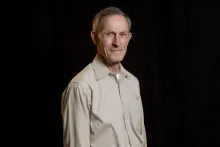
David Mills was born near Wallace, North Carolina, in 1939, where he grew up on a family farm. After high school he attended Ambassador College in Pasadena, California, and he graduated in 1962.
Since that time he has served as a minister of the Church in Washington, Florida, North Carolina, South Carolina, Oregon, West Virginia, and Virginia. He and his wife, Sandy, have been married since 1965 and they now live in Georgia.
David retired from the full-time ministry in 2015.
