
Paul Moody
In an ever-changing, increasingly unstable and uncertain world, we can look to the promises of God with trust and assurance that everything will work out in the end. The many prophecies in scripture that have already been fulfilled can give us confidence that God's promises are sure, and His purpose will stand.
This transcript was generated by AI and may contain errors. It is provided to assist those who may not be able to listen to the message.
A few weeks ago, I gave a sermon, basically an overview of the Holy Days. I said, now that we've come through them, let's not just set them on the shelf until next year. Let's remember just the incredible value they are to our lives. And I would have to say, I think for me, this year, in this previous year of the Holy Days that we've walked through, it's probably been the most impactful for me that I can remember. And I would say, it is more than we're walking through the process and learning the lessons. As I conveyed in that message, what really impacted me was, this is everything to us. What these days represent our hope in literally every aspect of our lives are tied up in the symbolism and the meaning of we walk through in those Holy Days. And so I've continued to process that in my mind, the fact that our hope, it's everything. Today, I want to take that thought one step further and discuss not only the hope that we have in the promises of God, but the confidence that we can have in the promises that we see made. I mean, the Holy Days start in one perspective, looking back. You know, the sacrifice of Jesus Christ, which has occurred, and various things which have occurred, but literally, we're living in the Pentecost season, I would say, of the Holy Days. And as you walk through the remaining portions, they're very much forward-looking into the future, prophetic things that God indeed will do to bring about the return of Jesus Christ, the establishment of the kingdom of God, and the eternal purpose that He has planned. So here is the future, and again, that is our hope. But what gives us our confidence in that hope? You know, we can have hope. I have hope in a lot of things. You know, I hope that one day I'll be able to retire healthy and financially secure. You know, sometimes people have one but not the other. And, you know, that's a hope. And I'm trying to make steps towards that, right? You have to plan along the way in various ways, but that's a hope. Do I have confidence in that? No, I do not. Okay, so there's things we hope for, but again, confidence. That's even another level. God's Holy Days gives us hope. His plan gives us hope. But how do we have confidence indeed in what He is doing? That's what I'd like to discuss in the sermon today. Because, brethren, we live in a world of uncertainty, a world of challenges, you know, a world of so much change. Just turn on the television on any given day, and you'll see that it is so. Challenges are difficult in some ways to live through.
We live in a world where people make promises all the time, but often they're not fulfilled.
We live in a world where people make predictions. You know, they can look at trends, they can look at flow charts, they could look at history, and they can make projections towards the future. You know, here's what we project will happen in the stock market, or in the housing market, or in whatever it might be. You make predictions, oftentimes predictions that fail to come to pass, right, as people would make them. And as such a future can seem quite uncertain.
You know, we've just come through a political cycle, right? Mid-term elections have taken place, and we've kind of seen this political mood swing that takes place in our country. Every two years, going back probably about 25 years now, where you have a party elected into office, you have a president and a supporting party, and maybe you have two years where the president can accomplish his agenda, because there's not really enough of an opposition to stand in the way of that agenda. You get down the road two years, you have midterms, and you have people say, well, whoa, whoa, you know, we voted for change, but not for that, maybe. And then they vote and kind of handcuff or shackle the president and with the opposing party, and now they have that term they call lame duck, right? It's like the two years where now you're going to have kind of this maybe gridlock party to party. It hasn't always been so dramatic, but literally since about 2000 or so, it has really been such a huge back and forth every two years. And I just, in my mind, it's a political mood swing in many ways. To me, it reflects a society that knows they need to change. Something has to change. We're desperate for change, but exactly how and exactly what shape that change takes, you know, many don't agree with one another. So we have this back and forth, and again, it creates uncertainty, right? Uncertainty. So we have the promises of God. We have what he has prophesied will come. We have these things that we walk through the holy days and we rehearse every year, and we put our hope in, and they encourage us because in an uncertain world, that's our anchor.
That's our anchor of security and hope. Indeed, the Bible shows that God has made great and precious promises throughout the ages. He's revealed events long before they ever happened, and history itself has demonstrated the fulfillment of many of the things that God has prophesied. Now I say many now I say many and not all because yet there are things to be fulfilled in the future. But things that have been prophesied for the past, indeed history shows the fulfillment of those things, and that is what gives us tremendous confidence in the promises God has yet to fulfill.
So the title of the message is today the prophetic word confirmed. The prophetic word confirmed. That might sound familiar to you. It comes from a verse in 2 Peter chapter 1. It's something that Peter gave, and it's something that was intended to convey confidence. More than just hope, but absolute tremendous confidence, even in the face of the world's uncertainty. Peter wrote this verse to the New Testament church near the end of his life as a point of encouragement to them, and it's one that needs to be a point of encouragement for us today as well.
So let's begin there today. 2 Peter chapter 1. Again, the prophetic word confirmed. 2 Peter chapter 1, and I want to pick it up here in verse 16. Here Peter says, For we did not follow cunningly devised fables, when we made known to you the power and the coming of our Lord Jesus Christ, but were eyewitnesses of his majesty. He's saying, you know what? What I've taught you, and what John has taught you, what James has taught you, what Paul eventually came to teach you, he says, these weren't just fables of men.
These weren't made-up stories. We were eyewitnesses. You know, Peter among one of the original 12, who for three and a half years walked and talked and interacted with Jesus, and eyewitnessed to these things that we are now conveying to you. And wrapped into that then would be prophecy, looking forward, that Jesus had shared with them. Okay, they're not stories, he says. Verse 17, he says, For he received from God, Christ received from God the Father, honor and glory.
He says, When such a voice came to him from the excellent glory, saying, This is my beloved son, in whom I am well pleased. And Peter says, We heard this voice which came from heaven, when we were with him on the holy mountain. And so Peter's describing this experience he had when Jesus was in the flesh, and you recall he was transfigured before them, on the mount of transfiguration, as it's often called. And he's using it to assure the church of his day that the teachings concerning Christ's second coming and power and glory, they're not based on story.
They're not based on some made-up fable. In fact, Peter had seen something that was a confirmation of that prophecy. He saw it himself. In fact, he'd personally seen the majesty of Christ through that event. He had personally heard the voice confirming Jesus as God's beloved son. And so, in verse 19, then, Peter makes this statement that's the anchor of the message today. He says, And so we have the prophetic word confirmed. It made me happy that someone else says, And so all the time. And so, you know, in light of this, we have the prophetic word confirmed.
He says, Which ye do well to heed is a light that shines in a dark place, until the day dawns and the morning star rises in your heart. So this is our assurance, Peter is saying, to the church. This is our assurance. This is our confidence that these prophecies are true. Recall that six days before the experience that he's describing, back in the Gospels, six days prior, Jesus said, You know what?
There are some of you here who won't see death before they see the kingdom of God. And it was looking not to the actual establishment of the kingdom, but what took place through this vision, through the transformation. In Matthew 16, verse 28, you just write it in your notes, we won't go there, but that's where he says, you know, some of you will actually see the Son of Man coming in his kingdom.
And so that transfiguration was a glimpse, right? It was a foretaste, not the actual establishment itself, but it was revealed to them through this vision. They saw Christ in majesty. They saw Moses and Elijah with him in the kingdom of God, a vision but a confirmation still. And so we have Peter here saying we have a reliable foundation. We have a reason for believing that our hope is secure. We have every confidence that what God has promised concerning the future, the coming of Jesus Christ, the establishment of the kingdom will happen as he is declared that it will happen.
Verse 20 then says, knowing this first that no prophecy of scriptures of any private interpretation or if you have a marginal reference in your Bible, it might say origin. You know, no prophecy of scripture, no prophetic utterance written in this Bible is of a personal origin. It didn't come from a man. Verse 21, for prophecy never came by the will of man, but holy men of God spoke as they were moved by the Holy Spirit. And so again, Peter saying these things that we've shared aren't man made stories or fables. They are truths revealed about God himself by God himself, and they confirm what he has promised that indeed will happen. And that's so encouraging, brethren. Again, we have the promise made, and we have the hope, but what gives us the confidence? What's the confirmation indeed that God has offered, continues to offer, and will offer yet in the future?
Isaiah chapter 46, I do want to go there, Isaiah 46, it confirms where the foundation of our confidence really comes from, because as Peter said, it doesn't originate with man. Isaiah chapter 46 and verse 9.
This is, I read it as God speaking, you know, God's words through Isaiah the prophet. Isaiah chapter 46 and verse 9 says, Remember the former things of old, for I am God and there is no other. I am God and there is none like me, declaring the end from the beginning. And from ancient times things that are not yet done, saying, My counsel shall stand and I will do all my pleasure. Verse 11, Counting a bird of prey, excuse me, calling a bird of prey from the east, says the man who executes my counsel from afar country. Indeed, I have spoken it, God says. I will also bring it to pass. I have purposed it. I will also do it. And so here God is identifying something about himself that distinguishes him from every other, every human being and indeed every other being, okay, which is God knows the future. God knows the future. And how can we say that? Well, because God has said, I declare the end from the beginning. Okay, you know, God, that doesn't take away our choice to make decisions. It doesn't take away mankind's decisions and the course that they will direct their life on. Okay, but God can see the heart of man and he can understand where trends are going to take them. And he knew there would need to be a Messiah. And he knew that, you know what? There comes a day when my kingdom must be established. My son must return. And these things are certain because he has declared them before the time ever began. Remember Jesus Christ slain from the foundation of the world, as we're told. And so God knows the future because he has declared it in advance. And so God doesn't look at flow charts or, you know, kind of timelines from the past and make predictions on what will happen. He declares what will happen. And then he has the power and the ability to bring his purpose to completion. And brethren, that is our confidence.
That is our confidence. That the God who declared the end from the beginning has both the will and power to bring to pass that which he has declared. And he will bring it to pass. And so it becomes more than just our hope. It becomes our rock-solid confidence. Again, human beings can study trends and make predictions and anticipate future possibilities. But they're often wrong.
God has demonstrated his ability to announce events long before they take place. And you know what? We have multiple examples of that in Scripture. The point of the message isn't to just go through example after an example, but I do want to look at a few. Let's just lay a foundation of God's ability to do this, to foretell and fulfill. Let's go to Isaiah chapter 44, since we're in the neighborhood. Isaiah chapter 44 and verse 28. Let's consider King Cyrus. Isaiah 44 and verse 28 says, Who says of Cyrus, he is my shepherd, and he shall perform all my pleasure, saying to Jerusalem, you shall be built, and to the temple your foundation shall be laid. Let's just understand the time stamp for a moment on this. Isaiah wrote this well before the captivity of Judah, long before the destruction of Jerusalem or the destruction of the temple. This is not, you know, in real time. This is a prophecy. This is a prophecy about this man whom God would raise up to perform a specific duty in his service. And again, it says, his man will be named Cyrus. Now, the kings listed during the life of Isaiah in chapter one are well established to have reigned from 767 BC. I'll give you a few dates. 767 BC through 686 BC. Okay, these kings of Judah. We'll get to them in our kings series eventually. But this is the time stamp of Isaiah's life and his writings. So the lighter part of that would be 686 BC. But Jerusalem, as we know, wasn't destroyed until 587 BC, some 100 years after Isaiah even wrote this. And this isn't the prophecy of the destruction of Jerusalem. This is a prophecy of then Cyrus that would permit the rebuilding following the captivity. So there's this prophecy regarding this specific future conqueror. He will let the remnant return. He will let the temple foundation be laid. He will let the city of Jerusalem be built, prophesied before the destruction, prophesied even well before this man's birth. Isaiah 45 verse 1, Thus says the Lord to his anointed, to Cyrus, whose right hand I have held, to subdue nations before him, and to loose the armor of kings. Understand many of God's prophecies are written as if they've taken place, because from his perspective he spoke in it. It is as good as done.
It says to open before him the double doors, so that the gates will not be shut. To go before you to make the crooked places straight. He says I will break in pieces the gates of bronze and cut the bars of iron. He says these solid kingdoms are going to fall before you, Cyrus. I will give you the treasures of darkness, the hidden riches of the secret places, that you may know that I am the Lord, who call you by your name, and the God of Israel. Understand, Cyrus was the king of Persia.
He wasn't king of Israel. He wasn't a king of Judah. This is a foreign king God is predicting, then, or prophesying well before his time. And he says you're going to know, Cyrus, when I accomplish these things through you, just who exactly I am. Verse 4, for Jacob is my Jacob, my servant's sake, and Israel my elect. I have called you by your name. I have named you, though you have not known me. I am the Lord, and there is no other. There is no God besides me. He says I will gird you, though you have not known me, that they may know from the rising of the sun to the setting, that there is none besides me. I am the Lord, and there is no other. I form the darkness, or the light, and I create darkness. I make peace and create calamity.
He says I the Lord do all these things. And so we have this incredible prophecy. Again, remember when it's been given, and when you understand that perspective, it reads so different, because it declares a God who calls the end from the beginning, and then brings to pass that which he has declared.
Here we have Cyrus declared by name, 150 years before he will fulfill then what God is prophesying for him to do. What you're going to find if you go to verse 13, let's just go there first, Isaiah 45 verse 13.
God says, I have raised him up in righteousness, and I will direct all his ways. He shall build my city and let my exiles go free, not for price or reward, says the Lord of hosts. So God says, I'm going to raise him up for this purpose. And even though he's a foreign king, he's going to do this not because he's being benefited in some financial way, but because I have inspired him to fulfill what I've declared in advance. And so many years later then, we have Ezra the scribe who comes along. Ezra lived in the day of King Cyrus, and Ezra then recorded the decree that Cyrus issued, allowing the Jewish captives, at least a remnant, to return to Jerusalem to begin the reconstruction. I'll leave that to you to study out. Go to Ezra 1 verse 1 through 4. That'll be the beginning of the decree, and you can study out the history from there. But again, the prophetic word confirmed.
Something God prophesied and then brought to fulfillment. And indeed, it's a matter and a record of history, what it is that God has done. Another example is found in the succession of world-ruling empires. You know, the prophecy of Daniel is pretty incredible. The things that God allowed him to interpret for King Nebuchadnezzar in his day, things that reached all the way down to the end time. And something that was dramatic, as we from our perspective look backwards, is the succession of world-ruling empires that Nebuchadnezzar dreamed about.
And Daniel then gave the interpretation. I'll just give you the notation. You can go read it in your own time. Daniel chapter 2, verse 31 through 45. Daniel identified specific kingdoms, not by the names we know them, but by identification of how they acted, what they came and did, and the succession by which they did it. But Daniel literally identified Babylon, followed by Medo-Persia, followed by Greece, followed by Rome. And again, history back up, backs up as we look from our perspective today backwards. What was declared well in advance was fulfilled in this sequence. Again, foretold and fulfilled. Alexander the Great would be another. Again, you could go back to the book of Daniel, Daniel 8, verse 3 through 8.
Daniel 8, verse 20 through 22. It talks about the rise of Greek power, and it talks about the prominent first leader who would rule. That was who would become known as Alexander the Great, and it described as well then the division of his kingdom following his death. Again, we have the prophetic word confirmed. And not just as a small matter of history, well-known history, yet declared by God in advance. Again, brethren, these aren't isolated incidents. Indeed, the Bible records numerous prophecies in their fulfillment, and they were declared hundreds, and in some cases, thousands of years before they came to pass. Prophecies concerning Abraham and Isaac and Jacob and their descendants. Prophecies concerning the nation of Israel and the land God would settle them in and who they would be and what would happen to them indeed well before it happened. It's an incredible study. If you want a long-reaching homework assignment—I know Dale loves homework—go through the Bible, make your own list of prophecies foretold and fulfilled. Things that have come to pass already that God declared before they came to pass.
Make your list. Build that foundation of confidence. We have the prophetic word confirmed. And indeed, that supplies more than just our hope that comes through the promises.
It supplies our confidence that indeed what God said yet lays ahead will indeed come to pass, as he has declared. Again, so many prophecies. Eric and I, on the way down today, we're talking about King David, right? The line of David. And we've discussed some of that in my study of the kings, that God promised the David that there would not fail to be a man to sit on the throne from the line of David all the way to the return of Jesus Christ. The fact that actually, if it, if he was removed, a generation would not pass before he was either restored or Jesus' return came. The one who would then be established on the throne of David forever. So through our studies of the kings, we see that prophecy, right? We've seen it. And we see it step by step, continuing to be fulfilled through the line of David. But not only that, we see it being fulfilled in our day today. As you can look over and you see the British monarchy on the throne who can trace their lineage back to David through Solomon. Prophesied, fulfilled, continuing to be fulfilled, yet to be fulfilled in its ultimate fullness at the return of Jesus Christ. But these aren't just interesting stories. These are things that give us our confidence, indeed what God is doing. Messianic prophecies. The Old Testament is replete with messianic prophecies of the one who would come and what he would do both in his first coming and his second coming. You can go back in the archives about a year and a half ago, I gave a two-part sermon on the foretold and fulfilled prophecies of Jesus Christ in his first coming. And they're very specific. And there's prophecies concerning, you know, things he would say and do. And people kind of just, you know, brush over that. It's like, well yeah, he said that because the prophecy said he would say that and he could just say that. Fine. There's prophecies saying where he would be born, how he would be born, you know, a little out of his control. Prophecies declaring his ministry. Things he would do, not just by the works of man's hands, but miraculously. Prophecies surrounding his crucifixion, his death, his resurrection. Again, those are things that have been fulfilled. And we can look back and see them in the Old Testament hundreds of years, thousands of years in advance, and fulfilled through the record of Scripture that we have as it moves forward from there. Some estimates say the Old Testament contained three to four hundred prophetic passages describing who the Messiah would be and what he would accomplish. And sixty of those are major prophecies, many of which have already been fulfilled with eyewitness testimony to follow. That's what Peter said. That's what Peter did. He says, me, the other apostles, those who were with him, who touched him, who heard him. John starts out his writing, I believe it's first John, talking about, you know, that which we have seen, we've heard, we've touched concerning the Word of life. He was true when we were with him, we declare to you. So that's the confidence Peter himself then was seeking to pass on to the church at the end of his life. And so confidence that we can receive and carry forward with yet today as well. Again, that brings us back to the important principle of today's message, which is, if God has faithfully fulfilled what he declared for the past, we have every reason to trust what he has promised for the future. If he has faithfully fulfilled what he declared for the past, brethren, we have every reason to trust what he has promised for the future.
Hope is important, and God gives us this holy day, the prophecies, all these things that we have recorded in the Word of God for our inspiration, for our hope, but also for our confidence.
Right? You can structure your life based upon this, and you will never be disappointed.
That's why we heard the scriptures that we heard in the first message. Right? Seek first the kingdom of God and his righteousness, and all these things will be added to you. You know, don't worry about this. Don't be troubled by that. We still have to make a living. We still provide for our families. Okay? But God says, I'm first. My kingdom, my righteousness. If you bank on that, you'll never, ever be disappointed.
When we look around the world in which we live today, we see wars. We see rumors of wars. We see economic challenges. We see political instability. We see confusion. Confusion simply over what is good and what is evil. What is right and what is wrong. And apart from the calling of God, brethren, I would say we would be right in that same mix as well. No doubt many wonder just how much worse all these things will get, including us. Right? We look around and we say, okay, you know, these are good times still, I would say. By and large in this country, we're living in an age of place of blessing. Look at the scope of human history, the long horizon. We're in a blessed place still. But the writing's on the wall and the challenges, indeed, are ahead and that, too, is prophesied, is it not? And so we know for certain and confidence that those things will take place as well. And we might wonder, though, how much worse can worse be? Well, we went through a number of prophecies on the Feast of Trumpets that said the worst it's ever been. Right? As in those days, such has never been before. So we talk about Jacob's trouble, the Great Tribulation, the time of the end. So we know they're going to get much worse before they get better. What would it be like to not know what you know and walk through everything this world's going to walk through? Again, the Holy Days, we grab hold of those because that is our hope in everything. Everything from our marriages, our families, our purpose in life, our children, our future that we're storing up for. That is our hope. What would it be like to live apart from that knowledge? That's much of the world around us. To live in a world of uncertainty without the certainty of the outcome, that's a desperate place to be. That's a dire place to be. And so I hope we don't ever take for granted the treasure that we have and knowing how things will turn out and knowing the God who will bring them to pass. It gives us an incredible peace even in the midst of the storm. Because, brethren, desperation in the unknown is a difficult place to be.
My trip I took to West Africa for the Feast of Tabernacles. As I've conveyed to you, we took the week after the feast, which I believe would have been the Sabbath would have been one month ago from today. Steve Cusi and I flew from Ghana to Liberia to visit with the folks there and to gain a deeper relationship. We took a flight from Accra to Monrovia and on that flight there was a malfunction that was, at least for a moment, concerning. You know, we're up at altitude, I don't know, 30,000 feet or so, about 45 minutes into the flight, and I noticed it's getting kind of warm in here, you know, and planes, you know, the temperatures regulate, they come and go, but like it's kind of warm, I'm in a t-shirt, but you know, this is West Africa, but at 30,000 feet, even there, it's cold, right, at that altitude. It's getting warm in the plane, and then suddenly it's getting hot, and I thought, well, this is odd, and I reach up to turn on the overhead air, and it's blowing, it's blowing hot air, and I guess I'm not the only one to notice because I see people starting to look around, you know, heads are starting to move and turn, and people are reaching up and adjusting the air over their head as well. It started to get warm, and I didn't think a whole lot about it at first, but then, I mean, this is rapidly increasing in temperature, suddenly starting to get very hot. Have you ever turned your furnace on for the season yet? Smelled that first smell the first time the furnace comes on, it's like burning off the dust, or I haven't been this hot in a long time, and you get that burnt smell, or you overfire the wood stove, and you get this, you know, burnt smell because the metal and everything's curing. That smell started coming out of the vents, and it started to get hot, and the sweat now is starting to pour off, and the way airplane climate control works is they don't just have like this electric heater that heats the cabin. It pulls the heat from the jet exhaust kind of through these radiators, and then they can temperature control it in, but if the temperature control mount functions, it can dump in and bring a cabin up to 150, 160 degrees in a matter of minutes. So this thing is heating up, people are getting worried, and I suddenly started to get like this desperation, I'll call it.
Panic is really what it was. Not that I panicked, but it was like, you know, if you felt that well up all of a sudden, like, uh-oh, and we're crammed 150 of us in this airliner that, let's just say, take the cheapest seat in the U.S. and reduce it by four inches, and that's kind of how you are, like three across, and I'll take 150 of us, and I'm between two people kind of sitting like this, and it is heating up, and it's starting to feel like a sauna, and I'm getting, I suddenly well up this, I had to close my eyes and kind of take this breath, and I thought, you know what, we might be in trouble here, something's going on, and the flight attendants kind of rush up to the front of the plane, and it's getting hotter and hotter, and I didn't have a thermometer, but it probably got somewhere in the neighborhood of about 120 degrees, and I remember thinking, you know what, if they don't get this under control in two minutes, we are in trouble, because when people start to panic, it's fight or flight, and you're going to start busting out windows, or somebody's going to try to open the door for fresh air at altitude, and you know, that's a dramatic part of the story, because they eventually fixed it, and it started cooling down, but I'm sitting there just drenched with sweat, but you had a moment where like 60 seconds where probably 50% of that plane was pushing the flight attendant call button, and people were getting antsy, and my concern wasn't as much about the heat as it was. What happens if everybody panics? You know, this could get bad in a hurry.
Desperation, when you don't know the outcome, can hit anybody in a hurry, and this is the world we live in. We know an outcome, and it is a positive outcome. It is a hopeful outcome that God has given to us. What an incredible blessing that is. I have to say, this was probably the first time I'd ever been in a place where I kind of had to fight my own, I don't know if it was claustrophobia, or panic, or something, right? But a point where you said this could get desperate in a hurry.
When you don't know where things are headed, and you don't know how much worse they can get, you might find yourself in a place of desperation quickly, but you know what? We're blessed, because although we live in this ocean that we call the world, God has thrown us a prophetic timeline. It's a life preserver to hold on to, to know, okay, we're not going to sink. There is a future, there is a hope, there is a rescue, and it will come through the return of His Son, Jesus Christ. But there will be challenges before the result comes. And again, brethren, that is prophesied as well. Notice Matthew chapter 24.
Matthew 24. Hear the words of Jesus Christ. We focus, and we should put our heavy emphasis on the encouragement to come, but we understand that these prophecies are just as legitimate as well. God has declared them. Matthew chapter 24 and verse 6, Jesus speaking to the disciples, He says, and you will hear of wars and rumors of wars. See that you are not troubled. It's like, well, it's easy for Him to say, right? See that you are not troubled. He says, for all these things must come to pass, but the end is not yet. He says, this is just the beginning, okay? This is just the warm-up. Verse 7, for nation will rise against nation, kingdom against kingdom. There will be famines, pestilence, earthquakes in various places. All these are the beginning of sorrows, Jesus said. It's just the beginning, but even in the midst of troubling events, He tells His disciples, don't be troubled. It's like we heard already today where He's like, don't worry about those things. Well, why could He say that? Well, because He knows the outcome. He knows the outcome.
Verse 9, He says it's going to get worse. Then they shall deliver you up to tribulation and kill you. You will be hated by all nations for my name's sake. Then many will be offended, will betray one another, will hate one another. Many false prophets will rise up and deceive many, and because lawlessness will abound, the love of many will grow cold. He says, but he who endures to the end shall be saved. There's always the light. There's always the hope. There's always the eventual outcome unto righteousness that God has intended. Verse 15, therefore, and then it goes on from there, but 14 actually is another prophecy, right? And it comes down even to our age today. This gospel of the kingdom will be preached, and all the world is a witness to all nations, and then the end will come. And so the events of this world are going to get very hard, but brethren are never going to move to the point where they prevent God from doing what God has declared he will do. The God who declares the end from the beginning has the will and power to bring to pass that which he has declared.
Yes, we should pay attention to what's happening in the world, but also remember the prophecies God has revealed which will yet take place. And don't let the events around you rob your peace. We have a peace that surpasses all understanding. It's like that peace doesn't even make sense. Don't you see what's going on, right? When did Christ say, I give you this peace? Right on the verge of being delivered up to be crucified, he said to the disciples, I'm at peace. I give you this peace. It's not dependent upon the conditions on the ground around you. It's dependent on your relationship with God and your confidence that he will fulfill that which he has promised. And so, brethren, we have the prophetic word confirmed, and our confidence is there not in the economies or the governments or the promises of man. It is in God. It's in the Word of God. This is what he has given us to be preserved to our day, yet even today. No prophecy of Scripture, Peter said, is of any private interpretation. God is the source. If he said it, he will do it. And again, that brings us back to the Holy Days. Because keeping God's Holy Days each year continually reminds us of what God has promised. And they point us year after year after year to keep our focus on the prophetic events, wonderful events, indeed, that will be fulfilled. I'll just remind you of a few prophetic highlights. Again, these are things we walked through recently through the Holy Days. You'll either have to write quick or I would recommend just jot down the Scripture and you can go look at it later. But just some prophetic events to keep in mind. These are yet to come. Jesus Christ will return to this earth with power and might. Matthew 24, verse 30. The kingdoms of this world will become the kingdoms of our Lord and of his Christ, and he shall reign forever and ever. Revelation 11, verse 15.
The dead in Christ will be resurrected to glory and be with him always.
First Thessalonians 4, verse 16 and 17. Satan will be restrained. The influence of evil will be restrained. Revelation 20, verse 1 through 3. The saints will reign with Christ. Revelation 20, verse 4 through 6. The earth will experience peace under the reign of the kingdom of God. Now as the knowledge of the Lord covers the earth, as the waters cover the sea, there will be peace and blessing. Isaiah 2, verse 2 through 4. Ultimately death will be swallowed up in victory and suffering will be no more. Revelation 21, verse 4. And when all of these things have come to pass, as we're told, then Jesus Christ will hand the kingdom to his father. So that God will be all in all. 1 Corinthians 15, verse 28. Those are incredible promises, brethren. Those are incredible promises. Promises we cling to, not only for our hope, but promises we can have confidence in because God has declared them. The good news is that they're not the wishful thinking of men. They're not cunningly devised fables. Indeed, they will come to pass from the same God who has declared the end from the beginning. And so I want to wrap up today back where we started, back in 2 Peter chapter 1, verse 19, because there's a couple other small principles.
Let me call them brief principles. They're not small by any scope, but we want to make sure we include this with the package. 2 Peter chapter 1, again in verse 19.
Peter says, And so we have the prophetic word confirmed, which you do well to heed as a light that shines in a dark place, until the day dawns and the morning star rises in your hearts. Okay, so Peter is telling us that this prophetic word needs to impact our life.
Right? We need to allow it to guide and direct our life as a light that shines out in the darkness.
Have you ever gone camping and just, you know, you're away from the city and there's no light, except for maybe what's coming from the sky? Remember one time being in the Wind River's wilderness and the moon had set and I was up in the middle of the night and it was just black. Like black, like you couldn't even see your hand in front of your face. So are you going to run confidently in the darkness? Not if you're wise, but if you have a light, does not that give you confidence? The light shining through the darkness, showing you where to place your steps, where it is safe to go, how to order your life. That's the prophetic word confirmed.
Peter says, allow that to shine forth in your life as a light shining through the darkness. It shows us where things are heading and it shows us how we must live our lives in the meantime. King David wrote about this, right? Psalm 119 verse 105, what did he say? Your word, God, is a lamp to my feet and a light to my path. He said, it illuminates the way before me. It helps to guide and direct my steps. Show me the paths of righteousness. Remember, the apostle Peter had personally witnessed the majesty of Jesus Christ. He had heard the voice confirming God's Son and he wanted the church to understand that the promises of God are sure. And brethren, we have that same prophetic word confirmed today. We have the record of what God has declared from old, as well as the evidence of what he has already fulfilled, right? History, as well as what he continues to fulfill yet even today. That's the beacon of light that shines forth in our lives today. That's the confidence we can cling to until the day dawns, right? The day of Christ's return and the morning star shines and rises in our hearts. Revelation 22 verse 16 identifies Jesus Christ as the bright and morning star. Brethren, we may not know exactly what tomorrow holds.
We may look around at a confused world and kind of wonder about certain things ourselves. We don't know all the details of what will happen along the way, but we can have absolute confidence in the God who holds our future in his hands. He's given us his word. He's given us his son.
He's given us his spirit. Indeed, he's given us everything we need to succeed in this calling. Regardless of what happens in the world around us or what challenges we may face personally, let's always remember that the God who declares the end from the beginning has both the will and power to bring to pass that which he has declared, and he will bring it to pass. Take confidence in that. Trust in that. Live in that. Build your life around that confidence. Indeed, we have the prophetic word confirmed. And, brethren, there is no greater guarantee that anyone can give us than that.
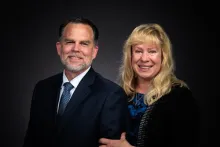
Paul serves as Pastor for the United Church of God congregations in Spokane, Kennewick and Kettle Falls, Washington, and Lewiston, Idaho.
Paul grew up in the Church of God from a young age. He attended Ambassador College in Big Sandy, Texas from 1991-93. He and his wife, Darla, were married in 1994 and have two children, all residing in Spokane.
After college, Paul started a landscape maintenance business, which he and Darla ran for 22 years. He served as the Assistant Pastor of his current congregations for six years before becoming the Pastor in January of 2018.
Paul’s hobbies include backpacking, camping and social events with his family and friends. He assists Darla in her business of raising and training Icelandic horses at their ranch. Mowing the field on his tractor is a favorite pastime.
Paul also serves as Senior Pastor for the English-speaking congregations in West Africa, making 3-4 trips a year to visit brethren in Nigeria and Ghana.
