

John Elliott
This transcript was generated by AI and may contain errors. It is provided to assist those who may not be able to listen to the message.
One of the greatest discoveries as a very teenager and young boy that I was at the time when I came to the church is that I discovered the value of the Bible in my life. That was not one of my priorities before, but I found this wonderful truth that the Bible answers. Whatever circumstances and situation we are in, there is an answer that you can find. If you meditate, if you examine, you search the Scriptures, you can find what God wants you to do in that circumstance and situation. And I thought, boy, this is one of the greatest discoveries in my life. I don't have to be, depending upon my own reasonings and my own rationalities and thinking about how to figure things out. I have the God of the universe that's on my side if I just search the Scriptures and find out what He wants.
It's wonderful when you're a young person. Before mistakes accumulate, if you can have the guidance at the very early stages of life and you take God seriously, you will find the answers to how to conduct yourself as a young person, how to prepare for marriage, and after marriage, how to prepare for the future.
You have a family. All of these things God has written in His Word and also about aging and becoming a senior. There's information which we'll go into here in a moment about. And so, to me, the Bible was this great encyclopedia. It had answers from A to Z. It was just a matter of studying and, of course, yielding to Him. It's not human knowledge or wisdom. It's talking about God's wisdom. He will open the Scriptures up, as He did to His disciples.
So let's go to 2nd Timothy, chapter 3, where we get this principle about how the Bible is useful in all situations. 2nd Timothy, chapter 3, in verse 16. The Apostle Paul declares, All Scripture is given by inspiration of God. The word here means it's God-breathed.
It's something that God is the one that was doing the inspiring and is profitable for doctrine, which means teachings, for reproof, which means to refute, for correction of a person's life, because it is a spiritual mirror that we can see ourselves as God sees us, for instruction in righteousness, living the right way of life before God. That the man of God, and that certainly applies to women as well, may be complete.
In other words, fully equipped, thoroughly equipped for every good work. So you have your toolbox, and you have to be adding to those tools. A good carpenter doesn't have just a hammer and a saw. He has all kinds of instruments. I know there are people, I've seen some of the workshops they have. They can build just about anything with that, because they have all these tools, and they've learned and mastered how to use them. Same way with the Bible itself. We're all disciples.
We're all students of the Bible. That's why you're here. And so, for instance, for the youth that are here, I remember when I started learning about what are the principles of Godly living at the age of 17 years old. And I found two scriptures to guide me through that period of life. One was in Psalm 27, and again, everybody has their own story about this. This is any better or worse than anybody else.
I'm just sharing what happened in my life. Psalm 27 in verse 10. David is speaking here, and he said in verse 10, when my father and my mother forsake me. Have you ever had that experience where your parents are not gonna back you up? Maybe you've decided to follow God a different religion than your parents. A different lifestyle. That has happened to some here.
When my father and my mother forsake me, then the Lord will take care of me. I truly believed it. I had to leave my father and mother's way of life. I had to leave my previous religion behind. Nobody was happy about that. I had to leave a lot of my friends in school because they didn't think it made any sense what I was doing. Keeping the Sabbath, eating food laws, where I would not eat certain foods. Because that's what the Bible, the instruction book, it's a health book.
It's a nutritional book. It tells us about what foods to eat and what not to eat. That's part of having faith, trusting in God. You can't just go out there and say, well, oh, I have faith in God and I'll follow him, but I want to eat poor cottogs. Well, okay, show your faith by your actions. You're not going to displease God. If he has an instruction not to eat that, we shouldn't eat it. And so that happened and I saw that he's not going to forsake me. And that has been the case. And then the second scripture is in Philippians chapter 2. Philippians chapter 2 verse 14 through 16. It says, do all things without complaining and disputing that you may become blameless and harmless, children of God without fault in the midst of a crooked and perverse generation among whom you shine as lights in the world, holding fast the word of life, talking about God's Word, so that I may rejoice in the day of Christ when he returns, that I have not run in vain or labored in vain.
So it's the type of a race and this is not a playground. This is a battleground for our minds, our hearts. Who is going to win? God or the devil? The devil is winning right now in the world, but God knows that. He's allowed it. But it's also to try his people, the saints.
So I was thinking, if God considers all the different situations of life, don't you think that he would also have a psalm about the Sabbath day, about how to keep it? He does. I mentioned that the other week. Psalm 92 is a psalm that God dedicated to the Sabbath day. So you see, he did not abolish the Sabbath day. He had a whole psalm instructing us about how to keep the Sabbath day. And that's what we're going to see.
Five principles that he has in this psalm to help us understand how he wants us to keep the Sabbath day. Psalm 92. Let's go there in the scripture. And I want you to read this in your Bible.
It's not something that you should take for granted. You should read it there, because you will see here that in the title is the term about the Sabbath day. Psalm 92, verse right here, the title, it says, praise to the Lord for his love and faithfulness. A psalm, a song for the Sabbath day. So if God created the Bible as his instruction manual, wasn't he going to use at least one of these psalms to guide us? Absolutely! And so it's important to see these five Sabbath principles which are given to God's people.
This is not given to the world. This isn't something that a Sunday keeper would do, because he's got another day that isn't holy. Now these are that for God's people who consider the Sabbath a holy day. This psalm is dedicated to them.
Notice in verse 1, he says, it is good to give thanks to the Lord and to sing praises to your name, O Most High. So he starts out, the Sabbath day is a day to thank God for the week that has passed and for the Sabbath day itself. Wonderful day of rest and to sing praises to your name, O Most High. So the Sabbath is a special day to praise God. Why? Because he has a holy convocation. It's not only giving thanks to him in the morning and prayers and in the evening as well.
We have a holy convocation that is a special time of assembling ourselves. Notice in Leviticus chapter 23. So here we concentrate our thanks on the Sabbath day to God. Psalm 23 verse 1 through 3. It says, and the Lord spoke to Moses. Notice it's God giving the instructions. It's not Moses inventing something. Moses is the secretary. He's the scribe. He writes down what God has told them.
These are God's instructions. Speak to the children of Israel and say to them, the feasts of the Lord which you shall proclaim to be holy convocations. These are my feasts that will never change through history. Christmas will never be one of God's feasts. He will never declare Christmas or Easter my feasts because he's already given the instructions on it. So everything that is taught about these other feasts that the world keeps are lies.
There are not truths. And then he goes on to say verse three. Here is the weekly feast day. Six days shall work be done, but the seventh day is a Sabbath of solemn rest, a holy convocation.
You shall do no work on it. It is the Sabbath of the Lord in all your dwellings. So God has set it apart, made it holy, holy time, and it is a feast of rejoicing because that's what he says about the feast. When we come here, we should be rejoicing and realizing what a privilege it is to come, to withdraw from the world for this day, and to be able to assemble with God's people, to do things God's way and not man's way, of assembling before him.
And it talks about it being holy. So it's not some type of entertainment time. Yes, there are hymns, there are songs, there is rejoicing, but it's primarily a solemn occasion. It's a time of leaving behind the frivolity of the world, because God is teaching us. And we should concentrate, we should take it seriously. It's not a time to be out there just letting all your passions get out of control and things like that. No, it's a time of solemn meditation on what you're hearing. A time when your heart and mind should be quiet, to receive it, not full of other types of things. It is a special time.
It's sacred time. That doesn't mean that it is austere, like the Puritans, they look like they never smiled. One of the things we saw when we visited an old congregation back in area of Maine, or these were the holy dancers. They had a special group, and everything was kind of sacred. And you looked at all the pictures back in the 1800s, early 19th. There wasn't a smile on them. That's not what God's Holy Spirit is. It's a spirit of joy. But at the same time, yes, it's a time of quiet meditation, analyzing what we are hearing. Shouldn't just go in one ear and out the other.
Let's continue in Psalm 92.
So the first thing we learn about is that it is given to God's people who are keeping it. It's not given to the world. They're not going to pay attention to it. Very few people keep the Sabbath nowadays, even in this country with religious freedom. People ought to know better. They should check things out with their Bibles. Is there any psalm dedicated to Sunday? No, there isn't. And it goes on to say in verse 2, to declare your loving kindness in the morning and your faithfulness every night. So it's something that we do in the morning, at night, praising Him.
It talks about the different instruments on an instrument of 10 strings on the lute and on the harp with harmonious sound. That's why we have music with the hymns that we sing.
For you, O Lord, have made me glad through your work. Talk about your work in me. That's what makes me happy and glad. God is working in us. I will triumph in the works of your hands. Yes, I will yield to it, and there will be good fruit from it. Then he goes to the second theme.
O Lord, how great are your works! Your thoughts are very deep. So now he focuses on creation.
What does the Sabbath have to do with creation? Why? It's the basis for the Sabbath day. Keep a finger here in Psalm 92, and let's go to Exodus chapter 20.
We're going to read the fourth commandment.
It says in Exodus 20 verse 8, this is God who put this down. Remember the Sabbath day to keep it holy.
Six days you shall labor and do all your work, but the seventh day is the Sabbath of the Lord, your God. In it you shall do no work. And then he goes on talking about your household.
And then he says, verse 11, for in six days the Lord made the heavens. See, it says, the reason is to honor him for being the creator God. For in six days the Lord made the heavens and the earth, the sea, and all that is in them, and rested the seventh day. Therefore the Lord blessed the Sabbath day and hallowed it. That's repeated even in Genesis chapter 2.
Hey, God set it aside, and he called it a sign between me and my people.
Notice in Exodus just a little bit farther, 31.
Oh, let's see. I hope it's, see, I always get these a little mixed up.
It's the one that talks about the sign. I thought it was here. Yeah, Exodus 31.
It says in verse 16, therefore the children of Israel shall keep the Sabbath to observe the Sabbath throughout their generations as a perpetual covenant. It is a covenant. It is a commitment to do so, not just for one family, but then the following family and the generations.
It is a sign between me and the children of Israel forever, those that obey God. These are the children of Israel, and we're part of the children of Israel, spiritual Israel now, as it was mentioned in the first message, that now we are all part of Abraham's seed. For in six days the Lord made the heavens and the earth and the Sabbath day He rested and was refreshed. So it is a sign between God and us. There's something special about a person that keeps the Sabbath day and the Holy days. They have God's plan of salvation always in their thoughts, and they have it as their focus in their lives. You quit those things, you're out drifting in this unsettling seas of the world. You're going to become like one of these logs, drifting back and forth. There's no anchor. We're anchored by the Sabbaths, the Holy days. It's a sign that God is there with us. So we should not focus on our jobs, on our concerns or problems on the Sabbath day, but on the gift of creation. Give things to God for the life that He gave us, the opportunity to serve Him and His people, the opportunity of learning how to serve now for the future Kingdom that is coming, and also for all the beautiful things around us. Anybody go and look at their garden today, see your flowers, see the birds chirping. God didn't have to make birds, but they're so nice to have them occupy the skies.
Also, the vegetables that are all growing now, which we enjoy so much.
All these things that we should give thanks and not take them for granted.
That's one of the worst curses. People that take things for granted. They think they deserve it. They don't. It's all given by God. He says every gift, everything good comes down from the Father of lights. Then the third part of this psalm, David focuses.
He says, a senseless man does not know. This is still the second theme, so let's stay with it. Because he says a senseless man does not know nor does a fool understand this.
See, a person that's worldly or stubborn in his ways, they're not going to think about the Sabbath day as something special, as something sacred. And so they're not going to understand what God is doing at this time. He goes on to say, when the wicked spring up like grass, and when all the workers of iniquity flourish, and they do for a time, it is that they may be destroyed forever. They don't repent. They don't change their lives and change. That's what's going to happen to them. They're going to get their just desserts and their future judgment. You won't see them boasting and thinking they're so full of themselves and so great. And then we go to the third theme.
Focus back on the mighty God. That's what we do on the Sabbath. But you, Lord, are on high forever more. In other words, you're on top of everybody. And you allow the wicked to prosper, but it's up to you how long they will do so. For behold your enemies, O Lord, for behold your enemies shall perish. All the workers of iniquity shall be scattered. So again, it says God will avenge.
He will take care of things. Don't get desperate. Don't think that the wicked are always going to get away with things. They're not. And then we go to the fourth theme. The results of keeping the results of keeping the Sabbath all your life.
Starts out here in verse 10, rather. It says, But my horn, David says, you have exalted like a wild ox. I have been anointed with fresh oil.
Talking about, again, symbolically the oil of God's spirit. My eye also has seen my desire on my enemies. My ears hear my desire on the wicked who rise up against me. God is going to avenge. He's going to take care of all of these things. In verse 12, this is the results of keeping the Sabbath all your life. The righteous shall flourish like a palm tree. And by the way, it's not these tropical palm trees. That's not what they're talking about. It's talking about the date palm tree, the palm tree that produces dates, which was one of the delicacies and one of the key foods there in the Middle East. It says, well, you shall grow and flourish like a palm tree. He shall grow like a cedar in Lebanon, one of the tallest trees. Those who are planted in the house of the Lord shall flourish in the courts of our God. Talking about who's planted today. Who are planted in the house of the Lord. Talking about the convocation we are in. You've been planted here, brethren. You've been called to be part of this congregation and sort of the fruits of God's people.
They shall flourish in the courts of our God. They shall still bear fruit in old age. So it doesn't matter whether you're young or old. Even if you're old, you're still bearing fruit. You're still producing good things before God. They shall be fresh and flourishing. And even if the outside part is deteriorating, that spiritual part is still flourishing. So that's the theme.
The fifth theme, flourishing spiritually before God on the Sabbath day.
Notice what it says in verse 15. To declare that the Lord is upright.
He is my rock and there is no unrighteousness in him. Very good summary. We stand by God. We trust in him. There is no unrighteousness. There's no evil, no bad things.
Although here on the earth things can happen, God is holy. He is good. And so this Psalm 92, the Sabbath Psalm, remember, has these five themes. First of all, it's given to God's people who are keeping the Sabbath. Those who aren't, it has nothing to do with them. Number two, will you focus on creation and giving thanks? Number three, the worldly person or the fool.
Their fate, if they don't repent or change, they will be punished.
We focus back on the mighty God. In verse the fourth theme, the results of keeping the Sabbath all your life. And number five, flourishing spiritually beforehand.
Yes, it's a wonderful Sabbath Psalm. I hope we keep it in our minds forever.
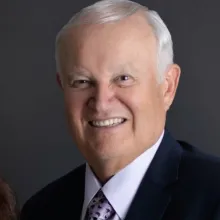
Mr. Seiglie was born in Havana, Cuba, and came to the United States when he was a child. He found out about the Church when he was 17 from a Church member in high school. He went to Ambassador College in Big Sandy, Texas, and in Pasadena, California, graduating with degrees in theology and Spanish. He serves as the pastor of the Garden Grove, CA UCG congregation and serves in the Spanish speaking areas of South America. He also writes for the Beyond Today magazine and currently serves on the UCG Council of Elders. He and his wife, Caty, have four grown daughters, and grandchildren.
