
Greg Thomas
This transcript was generated by AI and may contain errors. It is provided to assist those who may not be able to listen to the message.
Well, for the second time in a month, our Cleveland Church family has lost a loved one.
Linda died a little over a month ago, and this week our beloved brother Tim, who was a friend to so many of us, a deacon, a very loving servant of this congregation, has served in so many ways.
Vijay and I are remarking in a way how difficult it is to find a lot of pictures of Tim over the years. And the reason is he was usually the one behind the camera. He was usually the one doing the sound system while the rest of us were out there mugging it up and eating food and taking pictures of ourselves. He was always the faithful servant who was out there doing so many things for so many people. And I'll be my honest with you that for a couple of days my heart has been very heavy and discouraged. Not that I don't have hope, but I'm going to miss his presence, I'm going to miss his personality, I'm going to miss who and what Tim was in my life and his presence.
Of all people, we have a hope for the future, and we have a hope for Tim's resurrection and Linda's resurrection because it's embedded in the faith and in the scriptures that we believe in, that we cling to. And we all look forward to a time when we will see Linda and Tim again in the first resurrection. What's known also in the scriptures is the better resurrection, the one that occurs when Jesus Christ literally comes down and returns to this earth. When Tim and Linda are resurrected, what kind of a body will they have? What spiritual abilities will Tim have? What spiritual qualities will Linda possess being part of that resurrection? And obviously, by extension, what kind of abilities, spiritual abilities and qualities will we possess? And what kind of a body will we have?
Well, we're very thankful that the Apostle Paul actually talked about this very subject, and he worked very hard so that people could understand in context those who were in that first resurrection, the kind of body that they would have. And thankfully, we had the literal example of Jesus Christ after he was resurrected. As he walked on earth, we can see the spiritual qualities and abilities that one has when they are resurrected spirit and walk out of the grave.
Let's go to 1 Corinthians chapter 15 and verse 35. We will begin there today. 1 Corinthians chapter 15 and verse 35, if you will turn there with me.
Paul had the kinds of questions that we just asked related to him. He said, but someone will say, how are the dead raised up? Just how in the world does that happen?
And with what body do they come? There are some religions on earth that believe in the resurrection, that everyone is just resurrected physical again. And there is a resurrection in which that occurs after the millennium, when God decides to bring to life again those who never had an opportunity for salvation. But in context, Paul's talking about the very first resurrection, that better resurrection that will occur when Jesus Christ comes. And we see him literally mention that when we get down to verse 15. So again, but someone will say, how are the dead raised up? And with what body do they come? This is a great question. And to answer it, Paul uses the analogy of planting a seed, something that any farmer or any home gardener could understand and appreciate and relate to.
When you plant something, when you plant a seed and you grow a crop, you plant a shriveled up dry seed into the ground. And it looks dead, doesn't it? You know, you take something similar to a white bean seed. It doesn't appear to have any life at all.
Hard as a rock, shriveled up, no sign of life. How could anything living possibly come out of a dried up shriveled feed? Think if you plant corn, how the cornseeds look when you pull them out of a little packet and you put them into the ground. They're emaciated, they're desiccated. How in the world could life spring from something that appears to be so dead? And that's the analogy that Paul uses here. Let's pick it up in verse 36. Foolish one.
What you sow is not made alive until it dies. In other words, that's the process. Of course it's dead. Of course it's shriveled up. Of course it's emaciated and desiccated. That's part of the plan.
That is part of the process, Paul says. Verse 37. And what you sow, you do not sow that body that shall be but mere grain or perhaps wheat or some other grain. He says you don't take a wheat stalk and put it into the ground. No, you put this dried up shriveled little grain kernel of grain of wheat and you plant it into the ground. And it certainly looks dead. It certainly looks like it has no hope.
It certainly looks like life couldn't possibly come out of that little piece of grain seed.
But you know what you get? You get a green plant that breaks through the earth. And you get something that doesn't resemble that dead, emaciated, shriveled up seed at all. Verse 38. Paul says, but God gives it a body as He pleases. And to each seed its own body. All flesh is not the same flesh, but there is one kind of flesh of men, another kind of flesh of animals, another of fish, and another of birds. There are also celestial bodies. There are terrestrial bodies. There are bodies in the sky. There are bodies in this world, in the sea, on the earth. But the glory of the celestial is one, and the glory of the terrestrial is another. There is one glory of the sun, another glory of the moon, and another glory of the stars. These are three different bodies. And one, we call the sun, is magnificently intense. So much so that the UV rays over a period of time can darken our skin, can literally change our DNA. Then there's a body called the moon. And it's much less intense.
And actually, the light that we see of it doesn't radiate from the moon itself. It's actually a reflection of the light from the sun. But it's a different body. He says, and then there are stars.
You look up in the sky at night, and you see these little things. Does that twink something, twinkling in the sky? You blink a few times. Yes! There are heavenly bodies up there, and their light is even dimmer than that of the moon. Paul says, this is all according to God's will. God is trying to teach us something through these bodies that He made. They are all part of His will and part of His plan. God created different types of bodies, and every one of them are by His will. They're not all the same. They don't all serve the same purpose. Some have a greater intensity or brightness than others. Physical bodies serve one purpose for God, but then they wear out and they die.
Spiritual bodies serve another purpose for God, because they provide immortality, and they are incorruptible. So let's read more about it here, going into verse 42. He says, So also is the resurrection of the dead. For the body is sown, that means planted. Again, He's continuing to use this analogy of this seed, this hard, shriveled-up, emaciated seed. The body is sown, planted in corruption, and it is raised in incorruption. It is sown in dishonor. In a human body, when it dies, it begins to take on qualities through decay that are not very pleasant. It's not a very honorable thing to see or smell. It's sown in dishonor, He says, but it is raised in glory. It is sown in weakness. When you're dead, you're pretty weak, aren't you? You're pretty feeble. You're not animated very much when you're dead. It's sown in weakness, and it's raised in power.
It is sown a natural body that is fleshly, physical, carnal. It is raised a spiritual body, something that is not subject to matter, something that in itself you cannot touch, you cannot feel. It's in a whole different realm. It is in a whole different world. It's in a whole different level of understanding. It is spirit, not material, not of matter. There is a natural body, He says, fleshly, carnal, and there is a spiritual body. And so it is written, the first man Adam became a living being. The last Adam, He's referring to Christ, became a life-giving spirit. However, the spiritual is not first, but the natural and afterward, the spiritual. So part of God's plan, part of God's will, is we live first, physical, we live first, carnal, fleshly, corruptible, subject to death, He said, and afterward, the spiritual. Let me read this again in verse 47. The first man Adam was of the earth, made of dust, but the second man, capital M, Christ, is the Lord from heaven. As was the man of dust, so also are those who are made of dust. And as is the heavenly man, speaking of Christ, so also are those who are heavenly. Meaning, they're waiting for a resurrection. They're waiting to receive their reward from heaven. They're heavenly. Verse 49, and as we have borne the image of the man of dust, we shall also bear the image of the heavenly man. We will see Christ and we will be like Him and see Him as He is. So Paul does a masterful job of contrasting the physical with the spiritual and using the analogy that the human seed planted, that is a body that is buried in the earth at death, is physical, earthly, dishonored, begins to decay. But when it's resurrected, it is spiritual, like Christ. It belongs to the kingdom of God. It is glorified in honor. And Paul draws this analogy so that we can all grasp the difference between the two.
Verse 50, scriptures that we're perhaps more familiar with. Now this I say, brethren, that flesh and blood cannot inherit the kingdom of God, nor does corruption inherit in corruption.
Behold, I tell you a mystery. We shall not all sleep, but we shall all be changed. Paul is revealing the fact that he thought in his lifetime that Jesus Christ would return to earth in his generation. That's why he says, we shall not all sleep. We're not all going to die. He knew there would be a generation that would be alive when Jesus Christ returns. He was hoping he would be part of that generation. And ever since, Christians who have lived and died throughout two millennia have always hoped that they were that one generation that wouldn't have to die, who would still be alive at the return of Jesus Christ. Here's what he tells us. We shall not all sleep, but we shall all be changed in a moment in the twinkling of an eye, as quick as you can blink your eye.
At the sound, at the last trumpet, of course we know what the Feast of Trumpets represents, because we observe the Feast of Trumpets. This isn't anything new to us, because we honor God's festivals and we realize they reveal His plan of salvation. And the Feast of Trumpets looks forward to that last trumpet when Jesus Christ returns to this earth, and His saints rise from the earth and meet Him in the air and return to Him to Jerusalem, and His feet touch Mount Olives.
Right? We look forward to that time. That all occurs during what's known as the Feast of Trumpets, symbolically portrayed by that festival. For the trumpet will sound, and the dead will be raised incorruptible, and we shall be changed. For this corruptible must put on incorruption.
He's saying this physical must become spiritual, and this mortal must put on immortality. It's another way. He's saying this physical tent that we dwell in, this physical tabernacle, has to become a spiritual dwelling, spiritual tabernacle. Verse 54, so when this corruptible has put on incorruption, and this mortal has put on immortality, then shall be brought to pass the saying that is written, death is swallowed up in victory. In other words, the power of the resurrection swallows up death in its painful sting, because death can't hold claim to you anymore if you're resurrected. When you become a spirit being, death holds no claim over you. You have no fear of death. It loses its power. It loses its grip. Verse 55, oh death, where is your sting?
Oh Hades, oh grave, where is your victory? The sting of death is sin, and the strength of sin is the law, and the law reminds us that we're sinners, and it points us to our need for a savior.
You need Jesus Christ. You violate these holy values system of God. You need a savior, and there's only one name under heaven by which you can be saved, and that is Jesus Christ.
That's what the law does for us. Verse 57, but thanks be to God, who gives us the victory through our Lord Jesus Christ. Therefore, my beloved brethren, be steadfast, immovable, always abounding in the work of the Lord, knowing that your labor is not in vain in the Lord.
Because of the resurrection, we ultimately will have victory over death, victory over the sting, the pain of death, and it will no longer have any power over Tim or Linda or any one of us when we experience the resurrection of God. Let's go to Philippians, the book of Philippians, chapter 3 and verse 20, if you'll turn there with me. Paul says this in a little different way, what we just read in Corinthians to the church at Philippi. Philippians chapter 3 and verse 20.
Philippians chapter 20, Paul writes, here, for our citizenship is in heaven from which we eagerly wait for the Savior, the Lord Jesus Christ. Now, unfortunately, a lot of people distort this verse to say, see, this says we're going in heaven. It doesn't say we're going to heaven. You can be a citizen and you can reside in another nation. I don't know for a fact, but I'm going to guess here, since Teogram, for example, became an American citizen a few years ago, I'm going to guess that for decades she lived in the United States and resided here while she was a citizen of the Netherlands. She's nodding her head yes.
So the very fact that Paul says here, our citizenship is in heaven, doesn't mean we're going to go to heaven, because Jesus Christ is bringing that citizenship back with Him. We are going to be where He is, and where will He be? He will reign on the earth, for our citizenship is in heaven from which we also eagerly wait for the Savior, the Lord Jesus Christ, who will transform our lowly body that it be conformed to His glorious body according to the working by which He is able even to subdue all things to Himself. I'm going to read this from the translation God's word.
It says, through His power to bring everything under His authority, He will change our humble bodies and make them like His glorified body. Again, that was the translation God's word for today.
Propresently, brethren, we are ambassadors for Christ, and as was said in the opening prayer, we live in a corrupt world that is controlled by the rebellious prince of the power of the year.
But our citizenship is in heaven, and it will be bestowed upon us when Jesus Christ returns to earth to establish the kingdom of God on earth. And here, once again, we see Paul say that we are, in the resurrection, going to have a different body, not just a physical body, part two, not just a physical body that doesn't grow old or is kind of perpetually renewed and just feels good all the time and never ages, but is yet physical. No, this is a different type of body.
It is a glorious body. Presently, we understand what Paul said, I believe, in 1 Corinthians 15, and verse 58, when he asked, or someone asked Paul the question, what is a spiritual body, and what will it be like? I think Paul has given us a great start to understand the difference between the kind of body we have now and what a spiritual body is. Well, today, what I would like to do during the rest of this sermon is I would like to look at the example of Jesus Christ after he was resurrected into a spiritual body. And if we do that, we will see that there are nine characteristics of a resurrected spiritual body. These are characteristics that Jesus Christ had, that he modeled. These are characteristics that we can look forward to Linda having.
These are characteristics that Tim will possess. These are characteristics by extension that you and I will possess when that glorious and wonderful time comes. Let's go to John, chapter 20. If you'll begin in chapter 20, verse 1, if you'll go there with me, again, that is the book of John.
As Paul said, a spiritual body is not physical. It is incorruptible and immortal, but as we're going to see, to communicate and bond with humanity in an intimate way, the resurrected spirit has the ability to exhibit itself, to manifest itself, to transform itself into a glorified body that has physical characteristics. And we'll see why that's important in a few minutes. In order for us to bond with fearful human beings, it doesn't benefit us to reflect our natural glorified presence at that time. Thunder and lightning. What happened to the people? When on the mount who received the law, they saw shaking and thunder and lightning. You know what? They were terrified. They said, we don't want this. God knows that. God understands that. That's why, originally in the garden, one on one, in the form of a physical presence, not physical, but in the form of a physical presence that Adam and Eve could relate to, he walked through the garden to bond with them, to communicate with them, so they wouldn't be fearful of them. They have a relationship with them in which they could learn. And we're going to see that's exactly what Jesus Christ does here, so that he can relate and bond with his disciples. John, chapter 20, beginning in verse 1, Now on the first day of the week, Mary Magdalene went to the tomb early, while it was still dark, but saw that the stone had been taken away from the tomb. Then she ran and came to Simon Peter, and to the other disciple whom Jesus loved, and said to them, They have taken away the Lord out of the tomb, and we do not know where they have laid him.
Peter therefore went out, and the other disciple, and were going to the tomb. So they both ran together, and the other disciple outran Peter and came to the tomb first. And he, stooping down and looking in, saw the linen clothes lying there, and did not go in. Then Simon Peter came, following him. He couldn't run as fast as John. And he went into the tomb, and he saw the linen clothes lying there. And the handkerchief that had been around his head, not lying with the linen clothes, but folded together in a place by itself. And then the other disciple who came to the tomb first, went in also, and saw and believed, for as yet, that they did not know the Scripture that he must rise again from the dead.
One of the difficulties they had, and they struggled with, is they were looking for a Messiah, not necessarily a Savior. They were all looking for a king who would arrive, who would throw off the shackles of the Roman Empire and bring about the glory of Israel once again. And their minds were limited to looking at Israel once again being a great nation.
They didn't quite grasp the concept that he was a Savior, and that he had to die and shed his blood. For the remission of the sins of all mankind, he had to be resurrected out of that grave.
He must die and rise again to be a Savior. Verse 10, then the disciples went away to their own homes, but Mary stood outside the tomb weeping, and as she wept, she stooped down and looked into the tomb, and she saw two angels in white sitting, one at the head and the other at the feet, where the body of Jesus had lain. Then they said to her, Woman, why are you weeping? And she said to them, Because they have taken away my Lord, and I do not know where they have laid him.
Now, when they had said this, she turned around and saw Jesus standing there and did not know it was Jesus. She doesn't yet recognize him. And Jesus said, And her Woman, why are you weeping? Whom are you seeking? And she supposed him to be the gardener, said to him, Sir, if you have carried him away, tell me where you have laid him, and I will take him away. And Jesus said to her, Mary. Now, there's something in the inflection of his voice that she finally recognized him. There was some nuance in the way that he said, Mary, or the timbre of his baritone or tenor voice, whatever kind of voice he had.
There was something that was distinguished and recognizable about the way he said, Mary. And she got it. And she realized that it was Jesus Christ. And she turned and said to him, Rebboni, which is to say, Jesus Christ, the Holy Teacher. And Jesus said, Do not cling to me, for I have not yet ascended to my Father, but go to my brethren and say to them, I am ascending to my Father and your Father, and to my God and your God.
He said, There's something that I have to do. It just happened to be at this time that this was the time as prescribed in the Old Covenant that there would be a wave sheep offering on this day. And we'll see later that he also returned to earth on this very same day. So he said to Mary, You've got a job to do. You go tell the disciples I've got something to do. There's some place that I have to go because it's time to go.
And I'm going to tell you what I'm going to do. I'm going to tell you what I'm going to do. I'm going to tell you what I'm going to do. I'm going to tell you what I'm going to do. I'm going to tell you what I'm going to do. So the first characteristic when you are resurrected from the dead is the ability to manifest yourself from spirit into a physical form, a physical likeness, so humans can relate with you so they can have a relationship with you.
Jesus Christ did not want them to be terrified of you. He said, Jesus Christ did not want them to be terrified. He did not want to come across as Casper, the unfriendly ghost. He didn't want to come across as a phantom, the phantom of the opera.
He wanted to come across to them as someone who could relate to them, someone who could be touched and hugged and carried on a conversation with. That's exactly what he wanted to do to bond with his disciples to have an intimate, personal communication with them. In this case, Christ did not leave his physical body in the tomb and take on an additional body. You'll notice that he is, in what essence, a glorified version of his previous physical body. His physical body was resurrected into a glorified spiritual body. And for those who would talk to him and later meet with him, it had physical human characteristics. It had matter. You could touch it and feel it.
You could sense it. You could sense its presence as if it were matter. This is what Jesus Christ wanted to do. So again, he could relate in a close and intimate way with his followers, and so they wouldn't be terrified of him or fearful of him. The second characteristic, obviously, is the ability to speak and communicate with human beings.
So when looking at the situation of Tim and Linda, they will have, just like Jesus Christ's unique personalities, the unique character that they had that made them recognizable when they speak. The little idiosyncrasies that we have, it'll be the old Tim that we always knew. He was an individual. It will be the Linda that we always knew. They will be recognizable just like Jesus Christ was recognizable. And when they again manifest to themselves to communicate with humans into a form that appears to be physical, they will have recognizable traits that their family members and people who knew them will be able to pick up on and will recognize and understand. And of course, the ability to communicate and carry on a conversation with people who are not spirit like you are. The third ability is to be recognized by the sound of your voice or your features if you so desire. Again, at first Mary didn't recognize Jesus, and this may have been because he was disfigured by the scourging that he experienced. But it didn't take long until he said the word Mary, that there was something about the way he said it or his inflection, that she did recognize him. And she did one-on-one, communicate with him, and immediately connect with him. Again, why is this so important? Let's go to Genesis 3, verse 6. You may want to keep your place in John.
You have one of those little ribbons in your Bible or a piece of paper. But let's go to Genesis 3, verse 6.
It says, So when the woman saw that the tree was good for food, that it was pleasant to the eyes that it was a tree desirable to make one wise, she took her the fruit and she ate, and she gave it to her husband with her, and he ate, and the eyes of both of them were opened, and they knew that they were naked, they felt shame for the first time in their lives, an emotion that they had never felt before.
And they sewed fig leaves together and made themselves coverings, and they heard the sound of the Lord God walking in the garden in the cool of the day, and Adam and his wife hid themselves from the presence of the Lord God among the trees of the garden. So here in the Garden of Eden, we see that God, in order to have a close relationship with Adam and Eve, so they wouldn't be terrified of him, so they wouldn't be fearful of him, transformed himself into a perceived physical form, and he talked, and he walked, and they recognized him as God. There was something they could raise. That's God walking through the garden in the cool of the evening. It's like they were used to it. This wasn't a one-time event. It's like this was something that they were used to, that they were accustomed to. So why would God do this? Because he wanted to bond individually, one-on-one with the first man and the first woman. God knows that the raw presence of his majesty overwhelms fearful human minds, the human psyche. Again, I referred earlier to Exodus chapter 20, verse 18. I won't turn there for the sake of time, but I will read it when they were on the verge of receiving God's law. It says, now all the people witnessed the thunderings, the lightning flashes, and the sound of the trumpet, and the mountains smoking, and when the people saw it, they trembled and stood afar off. And then they said to Moses, you speak with us, and we will hear, but do not let God speak to us lest we die. He said, well, why would God do that? Since he did it differently in the Garden of Eden, it's because God did not have an intimate relationship with the people in the Old Covenant. He gave his Holy Spirit the very few people. It was the old relationship.
God was working through a nation. He was working through a few prophets and a few people that he gave his Holy Spirit to. The overwhelming majority of people he was not working with, he was not calling, he never gave his Holy Spirit to. However, when you get to the New Covenant, which should more appropriately be called the New Relationship, God is calling individuals one by one, new disciples, new believers, individually giving each one at a time the gift of his Holy Spirit, bringing them through repentance, calling them to God's way of life. Let's now go back to John 20, verse 18.
And let's see some more characteristics.
Again, the first characteristic is the ability to manifest yourselves from spirit into a physical form so humans can relate to you. The second was the ability to speak and communicate with human beings. And the third is the ability to be recognized by the sound of your voice or your features if you so desire. Now let's go to John chapter 18. I'm sorry, chapter 20, verse 18. Mary Magdalene came and told the disciples that she had seen the Lord and that he had spoken these things to her. Then the same day and evening, being the first day of the week, when the doors were shut, where the disciples were assembled for fear of the Jews, then Jesus came and stood in the midst of them and said to them, peace be to you. Well, the fourth characteristic of a resurrected spirit is the ability to travel at the speed of thought. You may recall that earlier in the day, Christ told Mary that he was going to the Father. He was going to be there to be accepted as the ultimate fulfillment of the wave sheaf offering, and that occurred this year specifically during the days of Unleavened Bread.
So he could fulfill that role once and for all. In approximately 12 hours, Jesus had traveled to the Father's throne in the third heaven, and I have no idea in human miles how far that is.
And he was accepted by the Father as an ultimate wave sheaf offering, because that's what he told Mary that he was going to do. He said he was going to ascend to his Father, and he returned all the way back to miraculously suddenly appear in a room with a locked door to startle his disciples, and say to them, I guess that might be kind of an understatement, basically say, here I am, it's good to be home, it's good to be back. So he said, peace be with you.
So again, the fourth characteristic of a resurrected spirit is the ability to travel at the speed of thought. Jesus had traveled to the Father's throne, he had been received, he returned to earth to appear to his disciples. And this shouldn't shock us, because later on in his last appearance on earth in Acts chapter 1 and verse 9, he instantaneously ascends all the way to heaven, talking to his disciples, there he leaves the earth, and they see this, what appears to be physical bodily presence, leave the earth, and hold higher and higher until it's a pin drop, and it's gone. And the angel said, this is God's will, why are you standing here looking up into the sky?
So we can see that that's an ability that one has given to them as a gift by the will of God when they are resurrected in the Spirit. It is a quality. The fifth characteristic is the ability to pass through solid objects. Even though the doors were shut, Christ suddenly appeared to the disciples in the room without walking through a door. When you are a glorified spirit body, things like matter don't hold you back. I guess we could say matter doesn't matter, because you have the ability to transcend the scientific laws of this world. They don't have any value to you. The physical laws of this world don't limit you. They don't hold you back.
Verse 20, when he had said this, he showed them his hands and his side, then the disciples were glad when they saw the Lord. So Jesus said to them again, peace to you as the Father has sent me. I also sent you. I also send you. Get ready to work hard, he's telling them. When he had said this, he breathed on them and said to them, receive the Holy Spirit, which was a forerunner of what they would receive on the day of Pentecost.
If you forgive the sins of any, they will be forgiven them. And if you retain the sins of any, they are retained. Jesus said, you are my chosen, authorized disciples. You will receive my Spirit.
You will travel the edge of this world to preach the news of my kingdom, and you will recognize sin, and you will condemn sin, and upon repentance you will tell people your sins have been forgiven.
Jesus Christ shed his blood for the remission of your sins. Verse 24, it says, Now Thomas, called the twin, one of the twelve, was not with them when Jesus came. The other disciples therefore said to him, We have seen the Lord. So he said to them, that's why he's called doubting Thomas, unless I see his hands, the print of the nails, and put my finger into the print of the nails, and put my hand into his side, I will not believe. And after eight days, his disciples were again inside. Now, one reason I want to point out that eight days is earlier when you go into John, there are some who say, look, they're meeting on the first day of the week. Aha! They've changed the Sabbath to Sunday. Right? Well, if you want to follow that line of reasoning, it says, eight days later, they met together. So that means that they changed it again to Monday, as the holy day, using that line of reason. Of course, Jesus Christ had not changed the Sabbath.
Those are people who are looking for loopholes that justify what they want to do. And after eight days, his disciples were again inside, and Thomas with them, Jesus came, the doors being shut, there he does it again, and stood in their midst, just literally walked through walls, walked through a locked door and the piers, and says once again, peace to you. Then he said to Thomas, reach your finger here and look at my hands, and reach your hand here and put into my side. Do not be unbelieving, but believing. And Thomas answered and said to him, my Lord and my God.
Jesus said to him, Thomas, because you have seen me, you have believed.
Blessed are those who have not seen and yet have believed. That's you. That's me. We've never literally seen the physical Jesus Christ. I haven't put my hand into his side and felt the hole, that gaping hole. I haven't touched the scars in his hands where a spike was driven in the middle of his hand. I haven't felt that scar or felt that impression in his hand. We believe because of his word. Not because of the kind of belief that Thomas required. That was literally seeing it and touching it. So let's continue here. Blessed are those who have not seen and yet have believed.
And truly Jesus did many other signs in the presence of the disciples, which are not written in his book. But these are written that you may believe that Jesus is the Christ, the Son of God, and that believing you may have life in his name. So the sixth characteristic is that a resurrected spirit can transform itself to be touched. Though spirit itself is not composed of matter, it has the ability again to relate to human beings, to transform itself into something that a human being can touch. And it says, hey, I feel it. It's there. There's substance there.
That's an incredible gift that a resurrected spirit has. It's not a ghost. It's not a phantom.
It's not a hologram. It can choose to be solid. It can choose to be material. It can choose to be touched, all in an effort to relate in an intimate way to the people that they are talking to, the environment that they are in. The way that Jesus Christ appeared to his disciples is represented by his description of the book of Revelation. Let's turn there quickly to Revelation chapter 5, beginning in verse 1. Revelation chapter 5 and verse 1. He'll turn there.
Thank you. Revelation chapter 5 and verse 1.
And I saw in the right hand of him who sat in the throne a scroll written inside. This is a scroll with seven seals. And on the back, sealed with seven seals. And I saw a strong angel proclaiming with a loud voice, who is worthy to open the scroll and loose its seals. And no one in heaven or on earth or under the earth was able to open the scroll or to look at it. So I wept much, John says, because no one was found worthy to open and read the scroll or to look at it.
For one of the elders said to me, Do not weep, behold, the lion of the tribe of Judah, the root of David, these are these are terms, titles that Jesus Christ had, has prevailed.
You see, he died, he was crucified, but he was resurrected again. He has prevailed over death, over the ultimate enemy of humankind. He has prevailed to open the scroll and loose its seven seals. And I looked and behold in the midst of the throne and of the four living creatures, and in the midst of the elders stood a lamb as though it had been slain.
You see, brethren, we live in a corrupt world that worships youth and physical beauty and unblemished skin. Jesus Christ is not ashamed of the distinguishing scars of being crucified as a Savior and as our Passover lamb. He was not ashamed to show the disciples the scars in his hands and in his side. He was not ashamed here, as outlined in the book of Revelation, to be recognized as it looks like a lamb that had been mutilated, that had been sacrificed, that had been slain. That is the kind of God that we worship. God is interested in beauty and perfection on the inside. Not like this world is, beauty and perfection on the outside. And he takes pride in the scars that he has because of what he has been able to do to save mankind from its sins.
Let's now go to Luke chapter 24. To turn with me there, we'll go to Luke's account. Luke chapter 24.
The story of the two disciples traveling to the village of Emmaus.
Luke chapter 24 verse 13. Now behold, two of them were traveling that same day to a village called Emmaus, which was seven miles from Jerusalem. And they talked together of all these things of which had happened. So it was, while they conversed in reason, that Jesus himself drew near and went to them, but their eyes were restrained so that they did not know him. He had not yet chosen to allow himself to be recognized to them. And he said to them, what kind of conversation is this that you have with one another as you walk and are sad? And they were sad because they were confused. On one hand, they know Jesus Christ was crucified and they're hearing rumors that his body was stolen. They're hearing rumors that, no, he's been resurrected from the dead and their hearts are heavy. And so what does he do? He manifests himself into a form that appears physical, something they can relate to, and he walks along with them. And he begins to engage in a conversation with them. Verse 18. Then the one whose name was Cleophis answered and said to him, are the only stranger in Jerusalem? And have you not known the things which happened there in these days? And he said, and what things? Rather innocently. Of course, he knows the answer. So they said to him, the things concerning Jesus of Nazareth, who was a prophet mighty indeed and worked before God and all the people, and how the chief priest and our rulers delivered him to be condemned to death and crucified him. Verse 21. But we were hoping that it was he who was going to redeem Israel.
See, just like his other disciples, they don't get the full picture that Jesus Christ came as Savior. They are looking, hoping, they were hoping that he was the Messiah who was going to rise up, beat up the Romans, give them a few left hooks, chase the Romans out of Israel, and restore the greatness of the nation of Israel. That's the kind of Messiah they were looking for. They didn't quite get the fact that he came to be a Savior, and that to be a Savior, he had to allow himself to die, he had to shed his blood, and he had to be resurrected from the dead to be the firstborn of many brethren. Continuing in verse 21, though, we were hoping that it was he who was going to redeem Israel. Indeed, besides all this, today is the third day since these things happened. Yes, in certain women of our company who arrived at the tomb early astonished us. When they did not find his body, they came saying that they had also seen a vision of the angels who said, he was alive. And certain of those who were with us went to the tomb and found it just as the women had said. But him they did not see. Then he said to them, O foolish ones, and slow of heart to believe in all that the prophets have spoken, ought not the Christ who suffered these things and to enter into his glory. In other words, you don't get it, but don't you realize that the prophets said that he had to be a savior? And verse 27, and beginning at Moses and all the prophets, he expounded to them in all the scriptures the things concerning himself.
You see, brethren, the seventh characteristic of a resurrected spirit is the ability to teach and inspire the human mind. And that's one reason why the spirit manifests itself into a form and a presence in which human beings are comfortable with, can bond with, can relate with. It says, he expounded to them all the scriptures of the things concerning himself. I think of the scripture in Isaiah chapter 30. You'll need to turn there. I'll read it. It says, and though the Lord give you the bread of adversity in the water of affliction, yet your teachers will not be moved into a corner anymore, but your eyes will see your teachers in your ears shall hear a word behind you saying, this is the way. Walk in it whenever you turn to the right or whenever you turn to the left.
You see, Linda and Tim will be teachers. That is their calling. That is why so many years they sat every Sabbath and they heard the word of God expounded in sermons and sermonettes. That's why they studied their Bibles every day. That's why they got the prayer in that they needed. That's why they remained faithful to the end because they too will expound scriptures to the billions and billions of people who will be resurrected after the millennium who don't know God, who never heard of God's law or God's way of life. And part of their calling, part of their commission, will be as kings and priests and saints of Jesus Christ to teach people of God's way by taking on a form that people are comfortable with, that they can relate with, that they can bond with.
So the seventh characteristic, again, of a resurrected spirit is the ability to teach and inspire the human mind. Luke 24, verse 28. Then they drew near the village where they were going, and he indicated that he would have gone further. He wanted to walk further, keep traveling. I'm sure Jesus had other disciples he wanted to visit. But they constrained him, saying, Abide with us, for it is toward evening, and the day is far spent. And he went to stay, in to stay with them. Now it came to pass, as he sat at the table with them, that he took bread, blessed and broke it. It was Jesus' example before he ate to say a prayer, and he gave it to them.
It says, Then their eyes were opened, and they knew him. Have you ever heard someone give a prayer?
Most people who give prayers, it's pretty memorable. Meaning, if you've heard them give a prayer, they kind of use the standard routine. Most people address God by the same title. And the one that I use is our gracious Father. Almost all my prayers begin with our gracious Father. That's every people who give prayers, much like the way you look, much like an inflection in your voice after a while, there are recognizing principles, cadences, whatever, that you are going to pick up from people who give prayers publicly. And it's interesting that at this time, when he took that bread, and he blessed it, meaning he set a prayer over it, and maybe it was the way that he broke the bread, maybe it was the way that he handed it to them, I'm not sure. But it's interesting that immediately after this occurs, it says that their eyes were opened and they recognized that it was Jesus Christ. And just to reward them for that, it says, and he vanished from their sight. So again, another instantaneous miracle in which he vanishes immediately from their presence. Verse 32, And they said to one another, Did not our heart burn within us, when he talked with us on the road, and while he opened the Scriptures to us, so they rose up that very hour, remember they were intending to stay the night, but now they're excited, the adrenaline has kicked in. And they rose up that very hour, and they returned to Jerusalem, and found the eleven, and those who were with them together, saying, The Lord has risen indeed, and has appeared to Simon. And they told about the things that had happened on the road, and how he was known to them in the breaking of bread. That that was the time, whatever it was, about the breaking of the bread, that they recognized that it was Jesus. Verse 36, Now as they said these things, Jesus himself stood in the midst of them. Once again, suddenly miraculously appearing, there he is.
Jesus stood in the midst of them, and guess what he says? He said, Peace to you. We should figure this out by now. This is like the third or fourth time he said that, after he shows up miraculously. He said, Peace to you. It says, But they were terrified and frightened, and supposed that they had seen a spirit. This is the Greek word, pneuma, like a blast of air. This is horrifying.
This is like a phantom. This is like a ghost. Jesus wants to calm them down because he wants to teach them. He wants to love them. He wants to bond with them. He doesn't want them to be terrified. And he said to them, Why are you troubled? And why do doubts arise in your hearts?
Behold my hands and my feet, that it is I, myself, handle me. Go ahead, touch me.
For a spirit, a ghost, a pneuma, something that just is a phantom, does not have flesh and bones, as you see that I have. Now again, he manifested himself to be present to them in this way.
And when he had said this, he showed them his hands and his feet. For while they still did not believe for joy, meaning that it still seemed too good to be true. They were excited, but they were just still struggling with this. And marveled that he said to them, Have you any food here? He said to himself, I'll prove it to him. Do you have any food here?
And they gave him a piece of boiled fish and some honeycomb, and he took it and ate it in their presence. So the eighth characteristic of the nine that we will mention today is that a resurrected spirit can enjoy a meal. The same pleasure spelled in his physical life of enjoying a meal can be enjoyed in the spirit. And there will come a time when Linda and Tim will enjoy, will manifest themselves to relate to the people in this world that the Father wants them to teach, wants them to lead in their cities, and in the calling that God has specifically for them, that they too will manifest themselves in a way that the people, the human kind, who are alive at that time can relate to them, and they too will eat with them. There's nothing that bonds human beings more closely than sharing a meal. We call it fellowship. In the business world, we call it a business lunch. You'd be amazed how many deals are made over a group of people sitting around in a table, eating bread, slurping soup, eating a salad. There's just something about human bonding that occurs when you share a meal together as friends.
And God understands that and recognizes that. John 21, verse 1. John 21, verse 1.
After these things, Jesus showed himself again to the disciples at the Sea of Tiberius.
And in the way he showed himself, and in this way he showed himself, Simon Peter, Thomas called the twin, the fangal of Cana and Galilee, the sons of Zebedee, and two other disciples were together. Simon Peter said to them, I'm going fishing. You know, they say when the tuff gets going, the tuff goes shopping. In Peter's case, he did something that came natural to him.
When he needed to sort things out and he was struggling, he went fishing. He decided to do that. And they said to him, we're going with you also. When they went out and immediately got into a boat, and that night they called nothing. But when the morning had come, Jesus stood on the shore, yet the disciples did not know it was Jesus. And Jesus said to them, children, have you any food?
And they answered him, no! And he said to them, cast the net on the right side of the boat, and you will find some. So they cast, and now they were not able to draw it in because of the multitude of fish. Therefore, that disciple whom Jesus loved, that is, in his john, said to Peter, it is the Lord. When Simon Peter heard that it was the Lord, he put on his outer garment, for he had removed it. He was in his underwear, his givis, and he plunged into the sea. But the other disciples came in a little boat, for they were not far from the land, but about 200 cubits, dragging the net with fish. So the ninth characteristic is the ability to perform miracles and transcend the physical laws of nature. They no longer do apply to someone who is spirit.
The fish were all supernaturally gathered on the left side of the boat. The weight of the fish, scientifically, were so heavy it should have broken the net. But they didn't break the net, because this was a miracle, and it reminds us of the kind of gift that we will have when we are resurrected spirit beings, that we too will be able to transcend scientific laws, physical laws, that they will not apply to us. Verse 9, then as soon as they come to land, they saw a fire of coals there, and fish laid on it, and bread. And Jesus said to them, Bring some fish which you have just caught. Psalm 8 Peter went up and dragged the net to the land full of fish, 153. And although there were so many, the net was not broken. Jesus said to them, Come and eat breakfast, and none of the disciples dared ask him, Who are you, knowing that it was the Lord? And Jesus then came and took the bread and gave it to them, and likewise the fish. This is now the third time that Jesus showed himself to his disciples after he was raised from the dead. So again, the distinct impression is that Jesus shared this breakfast meal with his disciples. That he just didn't watch them eat, but that he cooked the fish, he prepared breakfast, something servants do. People look at themselves as servants, and then he shared breakfast with his disciples. So, brethren, in conclusion, as we pull all of these scriptures that we've looked at today together, the teachings of the Apostle Paul, and the example that resurrected Jesus Christ, what kind of a body will Tim and Linda have?
How will they appear in the resurrection? How will you and I appear in the resurrection? First of all, we need first and foremost to understand that it is a spiritual body, and that spiritual body can do miraculous things, including transform itself into an appearance and into a way in which humanity can bond and relate and cling to and learn from. It's a spiritual body. It's immortal. It is incorruptible. It doesn't decay. It never dies. It's not material or made of matter. It can transform itself into something like matter, but its up spirit of itself is not material. It's not filled or formed with matter. It's not subject to scientific law. It can perform miracles. It transcends the physical law. It has supreme health. There's no disease. There's no need for sleep. There's perpetual raw energy generated without a need to sleep like we human beings need to, one-third of our lives. There is no longer pain. There's no chronic illness or disease. There's no need for food. Food, indeed, can be enjoyed with people if one chooses after they manifest themselves to relate to people. But there's no need for food in order to survive and live. For the Word of God and the presence of God is all the nourishment that a spiritual body needs. It's a body that has purpose. We saw some of that purpose and the fulfillment of it today in the example of Jesus Christ teaching the two travelers who were traveling to Emmaus and how He expounded in the Scriptures from Moses all the way through the prophets showing what Jesus Christ had to do and that Jesus Christ was Lord and Savior. He was much more than a king and a Messiah of Israel.
And Tim and Linda too will do that. It's having expanded abilities that go so far beyond the limitations that we all have of this physical world that we can't even totally grasp it and understand it. And when one chooses to transform themselves into servants into a way so that people, humanity, mankind can relate to us, it gives a spirit of physical likeness, the ability to converse with people in a relaxed way. It allows our personality to be revealed to others who knew us, the distinctive characteristics we may have of our cadence or our gestures or the way that we look.
Whatever it may be, that personality is still unique to God and it is still carried over so that people can relate to it. As we're transformed into the ability to communicate with people who have a relationship with them, you're able to enjoy food. You're able to pass through solid objects.
People can't lock you out. You have the ability to walk right into a room. There is no place for them to hide if you so choose. It gives one the ability to be a supreme teacher because you have all the knowledge you acquired in this lifetime magnified through the spirit, magnified, and you're able to relate and teach others of God's way of life. It gives you the ability to be touched and to touch others, to feel and to be felt and enjoy fellowship with people, with family members who may be physical, with other beloved people whom you have known so you still have your unique individual personality. Well, hopefully that day is coming soon when Jesus Christ returns to earth and we see Linda and we see Tim and we see so many loved ones before them literally in that resurrection as they come out of their graves and as we all together meet Jesus Christ in the air and start a whole new era for mankind, a whole new era, a whole new millennium for humanity.
May God hasten that day. Let us have hope and let us realize that God has a great plan for all of us, each and every one of us in this room, and let us pray more fervently than ever, thy kingdom come.
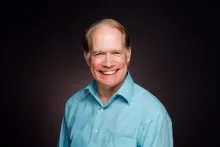
Greg Thomas is the former Pastor of the Cleveland, Ohio congregation. He retired as pastor in January 2025 and still attends there. Ordained in 1981, he has served in the ministry for 44-years. As a certified leadership consultant, Greg is the founder and president of weLEAD, Inc. Chartered in 2001, weLEAD is a 501(3)(c) non-profit organization and a major respected resource for free leadership development information reaching a worldwide audience. Greg also founded Leadership Excellence, Ltd in 2009 offering leadership training and coaching. He has an undergraduate degree from Ambassador College, and a master’s degree in leadership from Bellevue University. Greg has served on various Boards during his career. He is the author of two leadership development books, and is a certified life coach, and business coach.
Greg and his wife, B.J., live in Litchfield, Ohio. They first met in church as teenagers and were married in 1974. They enjoy spending time with family— especially their eight grandchildren.
