

Steve Myers
This transcript was generated by AI and may contain errors. It is provided to assist those who may not be able to listen to the message.
Happy Sabbath to all of you. Today I'd like to talk about opioid abuse. If you've been listening to the news or reading the headlines, you're aware of the fact that there's an opioid crisis or epidemic here in the United States, a real bad one in the state of Ohio. As a matter of fact, the state that's next to us, West Virginia, has the worst problem of any state in the country.
This class of drug is broken down into two types. First, there's opiates. They're a class of strong painkillers and analgesic drugs, including those naturally derived from the opium plant, the opium poppy. And that includes derivatives such as morphine and heroin. And then there's opioids, which have become a real problem. They're synthetic and semi-synthetic drugs that are similar to opiates and include drug names that you may have heard of Percocet, Vicodin, Oxycontin, and one that's really become a problem, fentanyl.
According to the DEA, quote, overdose deaths, particularly from prescription drugs and heroin, have reached epidemic levels. Now, how do they work? Well, opioids attach to receptors in the brain.
God created our human body to have receptors in the brain that are meant to be connected with naturally produced opioids.
Normally, we were created by God to experience very small amounts of these opioids naturally occurring in our body.
And once they attach to that receptor, they send signals to our brain, and those signals can block pain. They can slow our breathing if we're anxious. They have a general calming and anti-depressing effect, and they can also give us some mild pleasure.
Again, this is one way that God designed the human body, and natural opioids provide this mild pleasure.
Now, the body itself can't produce enough of these natural opioids to stop severe or chronic pain, and it also can't produce enough for us to overdose.
But human beings, humankind, being the way that we are, discovered a way to overload, to overwhelm the body's natural system.
So something that God created to be good and natural, humankind has found a way to get around that and to overload something that was designed to be good and natural. So we take substances from plants like opium, we can create heroin out of it, and we can take synthetic chemicals to exaggerate these effects beyond what God naturally intended.
And these powerful opioids target the brain's reward system and flood our brains with something called dopamine.
Dopamine is a neurotransmitter present in the regions of our brain that control things like our emotions, our cognition, our level of motivation, our feelings of pleasure.
And the overstimulation of this system, which was designed to reward our natural behaviors originally, it produces a feeling of euphoria.
And so much so that people misuse these drugs, and they are motivated and eventually become addicted to these kinds of very powerful drugs.
When the drugs are used repeatedly, the body can simultaneously build up a tolerance to these opioids, and they become dependent, addicted to them.
It started out innocently enough in the past by doctors beginning to prescribe opioids to help us with pain.
You had severe back pain, you had severe neck pain. Innocently, a doctor would say, well, we have these new powerful drugs that help to eliminate this kind of pain.
But unfortunately, too many prescriptions have been written, and this has totally gotten out of control in our country. I'm just going to read you a few statistics. These are all recently from headlines and newspaper articles that I read.
Of all opioid prescriptions in the United States each year, 51% go to adults with mood disorders such as depression and anxiety. 51%.
It says, overall, of the 115 million prescriptions written for opioids each year, 60 million are written for adults with mental illness.
And doctors do that innocently enough. They want to help people. But unfortunately, this can easily become an addiction.
And because you develop an immunity to it, you have to take more and more of it to create that feeling of euphoria again.
Since 1999, the rate of overdose deaths involving opioids, including prescription opioid pain relievers and heroin, nearly quadrupled.
And over 165,000 people have died from prescription opioid overdoses.
So in 17 years, it's caused the death of 165,000 people.
We lost 60,000 of our soldiers in Vietnam, and that was considered a national tragedy.
Here, 165,000 people have died in 17 years.
Another statistic. More people died from drug overdoses in 2014, the last time they have a complete record, than any year on record.
And the majority of drug overdose deaths, more than 6 out of 10, involved an opioid.
This one surprised me. Drug overdoses are the leading cause of death among Americans under 50.
You would think it's heart disease, right? Or automobile accident or something like that? No.
Drug overdoses are the leading cause of death among Americans under 50. Two-thirds of the deaths are from opioids.
In 2015, 52,000 Americans died from drug overdoses, and in 2016, the numbers increased another 19 percent to 62,000 in one year.
And obviously, the results aren't in for 2017, but it appears that it's going to overwhelm the statistics for 2016.
Then there's a particular type of opioid that's in a class of itself. Fentanyl, it's a newer synthetic opioid painkiller.
It's 50 to 100 times more potent than morphine. It's 30 to 50 times more potent than heroin.
Only 2 milligrams can be a lethal dose. Go home and look at your vitamin tablets, or look in your medicine cabinet and see how little 2 milligrams is.
And that is a lethal dose of this particular type of opioid.
Because it's pure white, it's odorless and flavorless, with a potency strong enough that police and first responders helping overdose victims have themselves been overdosed simply by touching or inhaling a small amount of fentanyl.
According to the Centers for Disease Control and Prevention, death rates from synthetic opioids, including fentanyl, increased over 72% from 2014 to 2015.
In addition, it reports that total deaths from opioid overdoses may be undercounted since they do not include deaths that are associated with synthetic opioids, which are used as pain relievers.
And treatment? Here's the final statistic I'll give you. 4 out of 5 Americans with an opioid addiction do not receive treatment, which means that there are nearly 2 million Americans who are addicted and do not receive any treatment.
Ticking time bombs. Future death cases.
This is indeed a modern tragedy. People ingest an opioid substance into their bodies, causing an addiction and sadly, oftentimes, premature death.
Something that God originally designed to be natural, to be good and in a right balance to be wholesome, because it is overdosed, because it has taken too much, because you're overwhelmed, it becomes destructive instead of beneficial. This is indeed a terrible crisis affecting our state and our nation, and we need to pray for God's protection, especially among our young, that they don't get attracted to this very terrible plague on our culture.
We need to pray that we will not become trapped in this cycle of self-destruction, as some in the church in the past have become opioid addicts, even in the church of God.
So we need to pray for our society, pray for our church family, pray for our own families that we are protected from this terrible scourge. However, this isn't my sermon today. It was only meant to be a lead-in into a more serious crisis that's been going on for thousands of years.
What I'd like to talk about today isn't a physical opiate crisis. It's a spiritual opiate crisis.
The problem isn't new. It's been going on for thousands and thousands of years. It isn't new because Paul, the Apostle Paul himself, faced it and talked about it 2,000 years ago.
So together as God's people today, let's turn to 1 Corinthians 12 and beginning in verse 27 where Paul discusses the problem with a spiritual opioid crisis that was occurring in Corinth at that time.
1 Corinthians 12 and verse 27.
He says, now, you are the body of Christ. This is important. This isn't just to any audience.
What I'm about to say is really important because of who you are. You are the body of Christ and members individually.
God has appointed these in the church. He begins the list, not hierarchical offices of command and control, but responsibilities and accountabilities among those who have been appointed by God to serve in these offices.
First apostles, second prophets, third teachers, after that miracles, then gifts of healings, helps, administrations, varieties of tongues.
And he goes on to say beginning in verse 29, are all apostles, does everyone have the gift or the talent to be an apostle? Well, of course not.
Are all prophets? Well, of course not. Are all teachers? Are all workers of miracles? Do all have the same gift or do all have gifts of healing?
Do all speak with tongues? Do all interpret? Well, no, we're all different. And God has blessed all of us with different spiritual gifts.
And different talents and abilities so that together we can fill just about every need there is in God's church because we're so diverse, because we've been given different gifts and abilities.
Verse 31, he says, but earnestly desire the best gifts. You see, some things are more important than others. Some things are better than others.
And he says here, in the latter half of verse 31, he says, but earnestly desire the best gifts, and yet I show you a more excellent way.
He says, I'm going to talk to you about something that's more important than speaking in tongues and knowledge and being able to pray for people that they're healed and interpreting. And all of these gifts and talents that you have in Corinth, and Corinth was a very gifted and talented congregation, he said, aside from all of these things, I'm going to talk about something that is more excellent.
So in context, the Corinthian church was very talented. They had many spiritual gifts demonstrated among the members.
But Paul, because of that, because they were so gifted and talented, he had to offer a cautionary warning to the brethren, because some of them were out of balance and were over-emphasizing the wrong things.
You see, there's the essential essence of what Christianity is all about, and then there's tangents. There are wrong things in right measure. They might be good.
They might be balanced. They might be good for us and something that's positive.
But if they're emphasized too much, if they draw our attention away from what is really important, then we set ourselves up for failure. For failure of God's people.
So again, Paul had a cautionary warning to the brethren, because some were out of balance and emphasizing the wrong things. It's human nature to major in the minors.
And since this is our little congregation here, and we're talking one-on-one, I have to tell you, in my 45 years of being in a church, religious people particularly tend to major on the minors. So Paul wants to discuss something that's really important here. He wants to emphasize the right spiritual attributes that give us balance that are good and beneficial.
And he wants to caution them against becoming obsessive, focusing too much on things that really, in the long run, have no value or meaning.
Let's take a look now at chapter 13. He says, Though I speak with the tongues of men and of angels, but have not love, I become a sounding brass and a clanging cymbal. He said, if I had the ability to speak all the languages of humankind, we're impressed when someone can say, Yes, I speak 25 languages. I had a gentleman tell me, Yes, I speak 25 languages. Well, imagine having the ability to speak all 7,000 existing human languages. Would you be impressed? I would be. Paul said, if I could do that but didn't have love, all I am is an irritating noise. Clang!
I want you to notice what he says here. He says, but if I have not love. This comes, of course, from the Greek word agape, that it means affection or benevolence. As the Apostle John stated in 1 John 3, verse 11, He said, Whoever does not practice righteousness is not of God, nor is he who does not love his brother. This is the message that you heard from the beginning, that we should love one another. That's what the Apostle John said. Love is a relationship.
It's a bond of respect and affection between individuals. Again, I'm going to read that. It is a bond of respect and affection between individuals. Let's continue and see what Paul says here as he's getting into this topic.
He says, And though I have the gift of prophecy and understand all mysteries, can you imagine being able to understand every mystery ever written in the Bible? Every prophecy in the Bible from Genesis to Revelation. And all knowledge, imagine being able to secure the understanding of all knowledge in every page of this book. And though I have all faith so that I could remove mountains, but have not love, I am nothing.
He says I'd be a nothing. Now, let's give this man some credibility. First of all, he's an apostle. He wrote more books in the New Testament than any other man ever did, didn't he? He had a lifestyle that you and I would be afraid to emulate. He got up every day and he marched into cities of people who didn't know him, and he preached the gospel, not knowing if he'd be welcomed or sent out of town on a rail, stoned, spit at, screamed at, and he did it day after day.
So he knows what he's talking about, and when a man of that credibility says, if I had all of this and had not love, you know what that would make me the apostle Paul? A nothing. That's what he says. And though I bestow all my goods to feed the poor, and though I give my body to be burned, but have not love, it profits me nothing. Pretty strong statement by him, isn't it? I want you to notice again what the apostle Paul said.
If I had all of these things, not just some of it, if I had 100% knowledge, 100% prophetic inspiration, 100% faith, if I had all of it but lacked one thing, love, I would be a nothing. So again, what Paul is saying here is that understanding prophecy, investigating mysteries, growing in biblical knowledge and faith are wonderful qualities, and indeed they are. But they're not as essential as having godly relationships. That's what love is. Love is a relationship. It's not some sterile term. It is having a relationship. First of all, a relationship with our creator and a relationship with our loved ones and a relationship with our neighbors. You know, we are a prophetic church, and God's church has a strong doctrinal emphasis based on faith and biblical knowledge.
And that's good. And that's intended to be right and healthy. We have a literature rack in the back of the hall that is loaded with fine written material regarding biblical knowledge. And regarding prophecy, we are a prophetic church. We have a statement beliefs. We know what we believe and why we believe those things.
We spend enormous resources in literature and teaching materials on these important topics. They are important. Let's talk about it for a few minutes why they're important. First of all, we emphasize prophecy. Understanding prophecy helps us to appreciate that God is in charge of the universe. He has a plan for humanity, and that plan is in progress, as the prophet Amos wrote in chapter 3 and verse 7, Surely the Lord God does nothing unless He reveals His secret to His servants the prophets.
Prophecy gives us confidence and hope about a troubled future. When we see terrible things in the future happening, we don't have to panic. We say, terrible as that is. And the destruction is painful and the loss of human lives and all of those things that are happening in the world. You know what? God said it would happen. He's in charge. I can be confident. I can have faith. Brethren, that's the true purpose of prophecy. It gives us faith and assurance in God's will so that when world events unravel, we won't live in fear.
We won't lose our faith. Paul mentioned here all mysteries. It's from the Greek word, actually very close to the English, musterion. Musterion is the Greek word translated into mysteries and it literally means something you know and you keep your mouth shut, which would be hard for some of us. But that's what Paul says. It's knowing something and keeping your mouth shut. Everyone loves a good mystery, don't they? There is an attraction and a satisfaction that comes from experiencing the meaning of a secret.
We don't know something and we do know it. We feel good. It's fulfilling. And in the way that God intended it, that's wonderful. As Paul states in 1 Corinthians 15 verse 51, he said, Behold, I'm going to tell you a mystery. Same Greek word. We shall not all sleep, but we shall all be changed. In the moment in the twinkling of an eye, he said, For the trumpet will sound and the dead will be raised incorruptible, and we shall be changed. So he revealed a mystery. You're not going to be dead forever. The firstfruits are only sleeping in their graves. And when that trumpet sounds, pictured by the day of trumpets itself, that God's people throughout history will be resurrected from those graves and will meet Jesus Christ in the air. So mysteries are wonderful. Understanding the meaning of mysteries is very fulfilling. It's great.
Another thing that he mentioned was all knowledge. It comes through the Greek word, nosis. It means the act of knowing. And the purpose of knowledge is to enlighten our thinking, to understand God. It leads us to have a relationship with God. Until we make sure that our values are connected with God's values, it's hard to have a relationship with God. Until we know what we need to do, what we need to obey, and how we need to change our lives to conform to what God says we need to do, you can't have a personal, intimate relationship with God. So knowledge is very important. And we spend, again, a lot of resources teaching doctrine and providing people with the materials so they can increase their knowledge.
As John the Baptist's father Zacharias said in Luke chapter 1 and verse 76, he said, Same Greek word, nosis. Knowledge of salvation to his people by the remission of their sins.
So indeed, knowledge is very important. And we, as a church, emphasize biblical knowledge.
Another phrase that Paul used, all faith, that comes from the Greek word pistis, it means persuasion and conviction of a religious truth. It means being consistent in a system of your beliefs and values, not changing it every other day, but being consistent in what you know is right and what you believe.
It means an assurance and a fidelity of faithfulness to what you believe in clinging to it. As Jesus stated in Matthew chapter 21 and verse 21, Assuredly, I say unto you, if you have faith and do not doubt, you will not only do what was done to this fig tree, you may recall the fig tree withered, if I recall the story correctly, but also if you say to this mountain, Be removed and be cast into the sea, it will be done. Jesus said.
The mountain was a metaphor for a problem. He says, if you have enough faith, no matter how big of a problem or an obstacle you face in life, if you have enough faith, it will go. It will be moved out of your way. That obstacle will be taken care of by God.
That's what Jesus is saying here. Again, all of these are wonderful and there are needed Biblical qualities, but they were intended to lead us to a requirement that is far greater and far more important than any of those things.
That requirement is having a healthy, loving relationship with God and with other people.
We'll let Jesus Christ say that. If you'll turn with me, hold your place in 1 Corinthians 13. We're going to come back there. Turn with me, if you would, to Mark 12 and verse 28.
Mark 12 and verse 28.
This is the first commandment.
And the second, like it, is this. You shall love your neighbor as yourself. There is no other commandment greater than these. You see, brethren, all knowledge, all understanding of prophecy, all mysteries, all faith, all of those talents and gifts are meant to lead us to what is most important.
And if we use any of them to avoid doing what is most important, we fall prey to a spiritual opiate. Something that distracts us, something that takes us away from what our calling is, what our mission is.
What Jesus Christ is confirming here is that, again, understanding prophecies, mysteries, knowledge and faith are wonderful attributes. But having a cherished, personal relationship with God and others is what is most essential and most important. And when I say a relationship, I mean the kind of relationship in which you know you and God are connected.
And as you walk through the day, you have a confidence in the things that you do because you know God is there with you. You have a conversation with Him during the day. He brings thoughts into your head through the gift of His Holy Spirit. You know Him. It's far beyond some intellectual knowledge of God. It is a true, emotionally connected relationship that gives you faith and security in who you are and what you do.
This is what Jesus Christ is talking about. Let's go back to 1 Corinthians, if you'll turn there with me. 1 Corinthians 13, and we'll pick it up in verse 4.
And I'm going to tell you right now the hardest thing you'll ever do. You want knowledge? That's easy. Pick up a book and read it. You want to understand mysteries? Read enough religious material and you'll get mysteries. You'll understand mysteries.
But I'm going to tell you the hardest thing that you'll ever do in your physical lifetime.
Chapter 13 and verse 4. Love suffers long and is kind. Love is kind even when you're treated rudely. Even when you're ignored, love is kindness back to that other person.
Love does not envy.
Love means when someone else is promoted, when someone else makes more money than I do, when someone else may be ordained to an office. I don't get jealous. I don't envy them. I don't have a scarcity mentality where someone else is blessed. That means I must have been denied.
No, I don't look at life that way. That's what it means. Love does not envy. Love does not parade itself. It's not all about me. Love isn't about someone showing off, talking too much to draw attention to themselves, putting a spotlight on their achievements and everything that they've done. That's not what love is. Love is not puffed up. It's not arrogant. It's not, I'm a know-it-all.
I'm smarter than everyone else. I'm the smartest person in the room. Love does not behave rudely. When it's treated rudely, it always responds in gentleness, patience, and kindness.
Love does not seek its own. Love says, how may I help you today?
Love is not provoked. When Jesus was slapped in the head, it says he didn't say a word.
When he was crucified, he didn't condemn the people putting nails in his hands, ramming the crown of thorns onto his head, drawing blood, stabbing him in the side, all the things that they did, he wasn't provoked.
It thinks no evil. Love always tries to find the best in people.
Love gives people the benefit of the doubt. It doesn't prejudge them. Love understands that someone is known by their fruits. They're not known by their bark. That's too early.
They're not known by their flowers. That's too early in the growth process. They're not known by their leaves. That's early in their growth process. They are known after a full season. They are known by their fruits. And it gives people the benefit of the doubt.
It doesn't quickly, immediately believe the worst in people. Look for evil.
It does not rejoice in iniquity.
You know, I've known people, oh, I just can't wait until the end of time. Oh, it's going to be so exciting. The Scriptures say that their eyes will liquefy and their sockets and their tongues will rot in their mouths. Goody, goody!
That's not what love is. Love isn't vengeance. Love isn't, well, you're finally going to get what you deserve.
We miss the point if we think that's what love is. But it rejoices in the truth. It bears all things. It is incredibly patient. It accepts abuse, and it doesn't lash out. It bears all things. It believes all things. When God makes a promise, he believes in God's promises. Even though it looks like there's no way that'll happen, he believes all things, hopes all things. He's positive, has a can-do mindset, endures all things, humiliation, demotion, whatever life throws at that person. This is what love is. I'm telling you, this is the hardest thing you'll ever do in your life.
This is what Jesus was talking about in Mark 12. It's clear why Jesus stated that love God and others is the first and greatest commandment. There is no feel-good, quick fix to develop the traits that I've just talked about. You can't pick up a book and develop these traits. You can't think happy, faithful thoughts and develop these traits.
You can't understand a new mystery and develop these traits.
These traits are only acquired by a lifetime of humility, repentance, personal sacrifice and discipleship, accompanied by the gift of God's Holy Spirit, changing who and what you are.
Let's take a look here at verse 8. Love never fails, but whether there be prophecies, they will fail. If you don't believe Paul, just read the book of Jonah. You'll see how the prophecy God gave Jonah that Jonah preached his heart out to and said, This is going to happen. Here's the warning. God said, I think I've changed my mind. Hold off on that.
God always has the right to change his mind. History is littered with religious believers and others who misinterpreted prophecy to their own shame. Prophecies they were just so sure of were going to happen, including setting dates, things they didn't happen. So Paul's absolutely right here. He says, whether there are tongues, they will cease. According to the New York Times, an article, world languages are dying off rapidly. There are 7,000 languages spoken in the world today. Every two weeks, a human language dies and goes extinct. It's been that way for a long time. So does Paul know what he's talking about? He says, whether there are tongues, languages, they'll cease. We know that in the world tomorrow, it says that God will give a new language for people to speak. It won't be the guttural, Mongol tongue that we all speak today. As a result of the evolution of human languages, it will be a new language and probably will not even include some words that are rather common among most human languages. So did Paul know what he's talking about? Whether there are tongues, they will cease. You bet he knew what he was talking about. Whether there is knowledge, it will vanish away.
In my lifetime, I've known organizations that thought Christ would return in 1975. They thought Pentecost was on a Monday. This was all knowledge, all written, dogmatic about it. Boy, we know this. Here's the Scriptures to back these things up. These things are going to happen. Cosmetics and medical care is a sin. And all of this knowledge vanished away because it was wrong.
Time sometimes shows knowledge to be not really true knowledge.
We can, of course, all look forward to a time when we all have a complete knowledge. Isaiah 11, verse 9, said, They shall not hurt nor destroy in my holy mountain, for the earth will be full of the knowledge of the Lord as the waters cover the sea. We can all look forward to that time.
Verse 9, he says, For we know, that means talking about knowledge, the topic of having all knowledge, we know in part, and we prophesy in part. He says, But when that which is perfect has come, that's future tense, the return of Jesus Christ, that which is in part will be done away. When I was a child, I spoke as a child, I understood as a child, and I thought as a child, but when I became a man, I put away childish things. This is his metaphor, saying that when I was a child, I played with toys, and eventually I grew up to be a man.
He's saying, I look at the world in part, I don't have all knowledge. What is the man saying who wrote 14 books in the New Testament, who was Christ Apostle? He says, I only know things in part. That's what he says. And when you grow up, someday you will understand the full knowledge of God. Verse 12, for now we see in a mirror dimly, but then face to face, Now I know in part, but then I shall know, just as I am also known.
Someday I will know God and know all knowledge to the degree that he looks in my heart and can see me right now. Verse 13, and now abide faith, hope, love, these three, but the greatest of these is love.
So here again, the Apostle Paul discusses the valuable attributes of prophecy and linguistics and knowledge, and even he admits he knows things in part, meaning in completely, was his understanding of things. All of them do not equal the importance of having a positive and a fulfilling relationship with God and others, which is the first commandment. This is why we've been given the ministry of reconciliation discussed in 2 Corinthians chapter 5. The idea of reconciliation is so that it can heal broken relationships. First, a broken relationship we have with God, then perhaps a broken relationship we have with our spouse, our children, our parents, our siblings, other loved ones, the person who lives across the street, the person in the pew in the back of the hall.
That's what reconciliation is all about, to lead to healing those relationships. First and foremost is our relationship with God. A spiritual opiate is anything that draws you away from your greatest priority and your real calling, which is the first commandment, a personal, one-on-one, ongoing relationship beginning with God, and then leading on to your relationship with others. Unfortunately, distorting the importance and priority of other things, focusing on other things rather than that, has caused a lot of people to have stunted spiritual growth, and many to even leave the faith.
I'm here to reinforce again that developing genuine love is hard. It's the most opposite quality there is against self-centered human nature. Self-centered human nature is all about me, my pleasure, what I want, what makes me happy, and love is all about something else, serving it, caring for it, giving sacrificial love to it rather than me.
There's a reason it's the first listed fruit of the Spirit in Galatians 5, verse 22. That is love. Building a relationship with God and others requires great effort and work. And once you even achieve it, I can assure you that maintaining a relationship with anyone, God or another human being, requires an investment of your emotions. It requires labor. It's a lot of work. It's not easy. Again, it's the hardest thing that you'll ever do. But here's the problem. Because it's so hard, far too many believers avoid the first commandment by focusing on feel-good spiritual opiates.
Studying prophecy is exciting. And again, in balance, the way God intended it, knowing that it's to lead you to a relationship, it's good. It's exciting. Learning new things about the Bible is satisfying, but these things are not the number one priority or the greatest commandment. They are to lead us to make it possible to fulfill the greatest commandment. Having a loving relationship with God and others is the commandment. Substituting this essential need to develop godly love, putting a substitute in front of it, or avoiding it, playing dodgeball with God.
Yes, my wife and I, we have this ongoing marital problem and we don't like each other. But look over here, here's a red heifer. I'm going to study about red heifers. A temple in Jerusalem. Oh, if I could just say God in this special Hebrew name, then that'll fill the hole in my heart. No, it won't. If I just get off in one of these little tangents and study this or do this or shake it to the left or shake it to the right or say it in a certain way, then that big hole in my heart will be filled.
No, it won't. Because you're playing dodgeball with God. In my 46 years in the Church of God, I have observed hundreds, perhaps thousands, of sincere individuals derailed by focusing on a spiritual opiate rather than what Jesus Christ said was the greatest commandment in Mark 12 and verse 29 that we read. Some of the things that I've heard over the years, jotted down a few of them, have included here some dodgeball techniques. Learning Hebrew, name pronunciations, the meaning of symbols, fixations on prophecies, obsessions with the meaning of a word, red heifers, building, rebuilding temples, calendars, new moons, distorted human history rewriting the truth, Hebrew clothing, living in the old covenant, a physical place of protection.
Sadly, and I'm really ashamed to say this, that this list could go on and on far too long. And you know what all of those items are? They're interesting, but they have nothing to do with your relationship with Jesus Christ, your relationship with God the Father.
There are too many spiritual dope peddlers that want you to fall for those who want to get your eye off the ball to become entranced and all excited about some tangent issue that has nothing to do with what Christianity is all about. Brethren, please don't become addicted. Don't listen to clanging symbols, trying to grab your attention away on a mindless tangent. Don't ever confuse what is interesting to what is essential to your relationship with God and your calling. Having a loving relationship with your heavenly Father and His Son is essential. Most other stuff, usually proclaimed by men who only have understanding in part, for all of you, are they smarter than the apostle Paul? Who only have understanding in part would like you to believe that you have to do all of these things to know God. That you have to pick up these and speak a certain way and look up and count a certain way and dress a certain way and understand distorted history in a certain way to somehow know God. That's rubbish. That's a spiritual opiate. It's playing dodgeball with God because it gives us an out to avoid dealing with the real issues going on in our lives. Brethren, don't become addicted to mental brain candy. Your relationship with God is far too important to be avoided or derailed by a spiritual opiate. The cheap, temporary thrill of learning some new truths will be long gone when your neglect of your relationships leaves an empty void and a big hole in your heart. When those you once loved no longer want to have a relationship with you, it'll seem like a pretty cheap thrill to have wasted all of those time and mental resources and energy on some trinket when you could have been healing relationships.
Sometimes people send me dogmatic comments written by some very opinionated bloggers on the Internet. And these bloggers basically say, I'm smarter than the Apostle Paul because I know it all. I'm dogmatic. I have an opinion on everything. Everyone else is bad and evil, and this group is bad, and that group is bad. Everybody's bad but me. And here's what I'm going to talk about today. And I'm judging you because you don't shake it to the left or shake it to the right like I do. Here's what Jesus stated in John 5, verse 21, Our judge is Jesus Christ, the Lamb of God, the one who died willingly and voluntarily for the forgiveness of your sins. Brethren, don't allow these self-righteous bloggers, these spiritual dope peddlers, to hook you away from the first and the greatest commandment simply to focus on nonsense.
Christ is your judge, not buffoons who have a website.
Some even teach what I'm talking about today is evangelical. They mock the concept of love. They're being evangelical. Again, they're talking about love. Well, I'm sorry. I don't know what you want to call it. But if I have a choice in following what Jesus said in Mark 12 and what Paul says in here in Corinthians, in contrast to a buffoon on the Internet, that's not going to be a very hard choice for me. How about you?
Christ is your judge. Simply choose to follow what he says, follow his example over the spiritual dope peddlers.
For many years, I've seen individuals con themselves, self-deception, into avoiding serious problems that were obvious to everybody in the Church, their family, everyone who ever met them and had more than a thirty-second discussion with them knew they had serious problems. But they conned themselves in the believing through a spiritual opiate that they were okay.
I'd like to tell you a personal reflection. I could write many of these. I'm just going to write one here.
When I became pastor a number of years ago, I inherited a gentleman in his congregation who originally started out in the 1960s. He was part of the Radio Church of God in the 1960s. He disappeared around a split in 1995 and he was gone for many, many years. Suddenly, he showed up again, but he returned with an agenda.
He had acquired an opiate of knowledge. He told me once that I study the Bible six hours a day. Why would you even tell someone that?
I have to tell you, the first thing that entered my head, this is the truth. The first thought I had was that you should close the book after an hour and then go out and live it for the following five hours.
If you were to visit his home, look at my library! Look at all of these books I have!
What was his problem? He was on a spiritual opiate.
He decided it was time to leave when he saw in the corner of his eye that his wife was beginning to talk to me in the corner of the hall.
And there I learned that he was treating her like a garbage can, which I suspected all along. He told her once that you come from a poor and ignorant culture. You don't need to study the Bible like I do.
His children all thought he was a fool. But he'd been playing dodgeball with God for decades. And what was his spiritual opiate? Oh, I'm going to know this better than anyone else. I'm going to study this six hours a day. I'm going to read every book in this phenomenal library that I have.
I could give you a lot of other examples, but that's just one that I wanted to mention.
A brother and a poor relationship with God, spouses, children, parents, siblings, brother and her neighbors can't be repaired by obsessing over Biblical stuff. It can only be repaired with prayer, lots of love, reconciliation on our part, and a tremendous amount of emotional investment in work.
That's the way those things are healed. But again, because it's so hard, people do everything they can but address the real problems going on in their lives.
Let's go to 1 Corinthians back a few chapters, chapter 2 and verse 2. 1 Corinthians 2 and verse 2, and see what message Paul said he was bringing to this congregation.
Back to chapter 2, verse 2. Paul said, For I determined not to know anything among you except Jesus Christ and him crucified. So what did Paul mean by this?
Well, first of all, this word no isn't gnosis. It isn't the word that Paul uses later on in the book.
This is the Greek word idou, which is a verb, and it means to be aware, to behold, to perceive, to be sure of.
Paul wanted to know Christ. He didn't simply want to know about him.
Paul said, I want to have a relationship with God, and that's the message that I'm bringing to you. It's not all of this other stuff, though it's helpful. And doing the right things in balance, just like the right chemical balance in our bodies, is a good thing, is healthy.
If we get out of control and we focus on the wrong things, then we're putting ourselves in serious spiritual jeopardy.
He wanted to know Christ, not know about him. To know is a relationship.
You know, when it says in Genesis 4 and verse 1, it says, Adam knew his wife Eve.
So what do you think that means? Did Adam read a biography about Eve?
Did he take the time to learn all that he could through books about Eve? No, it means he had an intimate, physical relationship with her. That is how he knew Eve. He knew Eve from every angle, from every way that she looked. He knew her intimately.
And when Paul said he wanted to know Christ, he wanted to have a deep, intimate, spiritual relationship in knowing who and what Jesus Christ was.
Chapter 2, verse 2, from the translation God's Word for today.
So again, what did Paul mean by this? The Son of God, knowing Christ, opens the door of our relationship with the Father.
Jesus reveals to us who the Father is.
His example, everything he does teaches us who and what the Father is. His entire life is the foundation of knowing God. When Philip said, show us the Father, Jesus said in John 14, verse 9, he said, Have I been with you so long, and yet you have not known me, Philip?
He who has seen me has seen the Father. So when Paul wanted to know Christ, it was his way to know the Father.
It was his way, by example, to know who and what the Father was like, what his values were.
Paul is saying that he came among them with a single, powerful message, building a direct, personal relationship with God. To Paul, everything else was secondary. Now let's go back from about 56 AD, all the way back to about 4000 BC, 6,000 years, and read the most tragic event in humanity's history.
It's the first example of a feel-good spiritual opiate being used to destroy a relationship with God. What I've been talking about today is the oldest scam going on in human history. It's the oldest con game there is.
You know what you're supposed to do. You know what the greatest and first commandment is.
But you allow others to hook you and pull you away from what you're supposed to be doing. And instead, you feel good by playing dodgeball with God.
Genesis chapter 3 and verse 1, if you'll turn there with me.
Genesis chapter 3 and verse 1. It is now the serpent. We'll find out he's just a spiritual dope peddler.
The serpent was more cunning than any beast of the field which the Lord God had made. And he said to the woman, Has God indeed said, You shall not eat of the tree of the garden? And the woman said to the serpent, We may eat of the fruit of the trees of the garden, But the fruit of the tree that is not in the midst of the garden, God has said, You shall not eat it, nor shall you touch it, lest you die. So far, so good. She actually has a good approach.
The serpent says, Look at what you're missing. She says, Oh, no. We're allowed to have all of this, except for that one. She starts out, Good!
Then the serpent said to the woman, You shall not surely die. Oh, that's interesting. I'm physical. I'm mortal. I thought I would die if I did that. This is new, additional knowledge.
I didn't know that before. Oh, no. He says, Pintillating her. You see, You shall not surely die. For God knows that in the day that you eat of it, your eyes will be opened. Oh, here's additional new knowledge, new truth. This is exciting.
And then he gets into a little bit of prophecy. And you will be like God. Picture this. If you eat of that fruit, you will be in the future just like God. You'll know good and evil. You'll get it. Life will be richer. This is going to fill any hole, any void in your life. This is going to do it.
So when the woman saw that the tree was good for food, it was pleasant to the eyes, and a tree desirable to make one wise. She took of its fruit and ate. She also gave to her husband with her, and he ate. Then the eyes of both of them were opened, and they knew that they were naked. They sewed fig leaves together and made coverings.
What did they sacrifice? What did they give up?
By taking this spiritual opiate, this promise of new knowledge, special knowledge. It will enlighten your life. It will make you better than you've ever been before. All this prophecy of the future, just knowing this will change your life. What did they give up? Verse 8, And they heard the sound of the Lord God walking in the garden in the cool of the day. Adam and his wife hid themselves from the presence of the Lord among the trees of the garden. And the Lord God called to Adam and said to him, Where are you? You never did this before. We were building something beautiful and wonderful here. This is why you were created. This is what your existence was all about. Where'd you go? Where are you?
Sadly, the first man and woman traded a potential relationship with God for brain candy. God's only response was, Where did you go? I'm here. I always wanted to have a relationship with you. Here I am, walking in the garden. What happened to you? Where did you go?
Our final scripture today in Titus chapter 3 and verse 8. Last scripture, Titus chapter 3 and verse 8.
Paul wrote, This is a faithful saying, And these things I want to affirm constantly, That those who have believed in God should be careful to maintain good works. All of these things that we do should be a light that everybody in our world, our family members, our co-workers, the person who waits on us in the restaurant, wherever we go, that people can see that light shining in our lives.
These things are good and profitable to men, verse 9, but avoid foolish disputes. Oh, does the new moon start when the crescent is a certain way? Who cares, is what Paul would say. Avoid foolish disputes, genealogies, contentions, strivings about the law. Well, we should be pronouncing God's name in a certain way. Nonsense. It's a spiritual opiate. Don't fall prey to that. For they are unprofitable and useless. May be interesting, but has nothing to do with your salvation. Zero, nada, to your salvation and your relationship with God. Verse 10, reject the divisive man after the first and second admonition, knowing that such a person is warped and sinning, being self-condemned.
So Paul is saying here that we should avoid spiritual opiates. Ignore and reject the spiritual dope peddlers. And they are many. One of the interesting rules I have as a minister is I have an uncanny knack of visiting people a few days before they die, either to anoint them or I get word that they're going to die soon, so I go and visit them. I've seen a lot of people anywhere from a few hours to a few days before they die. I remember one woman, I was called into anoint her and I got to the hospital.
She had died like 30 seconds before I got there. I was there comforting her grieving family as her body got cold and her skin color changed to whiteness through death. I visited many people during the final days of their physical life. And you know what some of the things are that they reminisce on during those final days or final hours?
I wrote some of them down because I've heard these. I wish I'd spent more time overcoming the problems I have. I wish I'd spent more time with my son. I wish I had told my wife I was sorry before she died. I wish I had gone to the feast that year. I wish I had not been so selfish. That was told to me by a member who had a physical opiate addiction.
I wish that I had not been so selfish. You know what I have never heard anyone say as they looked over their lives? And they realized that they would fall asleep. And someday they would be resurrected and their next conscious moment would be facing Jesus Christ one way or another. You know what I've never heard any of them say? I never heard anyone say, I wish I had observed the new moons. I wish I had lived to see red heifers and a new temple built in Jerusalem. I wish I had studied more to know who the descendants of Gad are.
Never heard anyone ask me that or say that. I wish I had worn tassels. Never heard anyone say that to me. I wish I had learned to pronounce God's name in Hebrew. Never heard anyone say that to me. Why is that? What's the difference between what people do regret about their lives and what they don't?
Well, what they do regret are the missed personal relationship opportunities. Either the missed opportunity they had to know God better, or they heal some wounds in their family, sometimes their own spouses, their own children, sometimes with church members, sometimes not coming to church. So what they do regret is missed personal relationship opportunities. What they don't regret is focusing on, to use Paul's phrase in 1 Corinthians 13, nothing.
Because when you get down to the end of your days, you know what was really important in your life and what wasn't. Paul said in 1 Corinthians 13, without love, I am nothing. So, brethren, I encourage you this day and each day that follows this one to stay grounded and to be like Paul and want to know Christ, not just know about him, but know Christ and him crucified.
Because if you know Christ and you study him, you learn his values, you look and observe his example, you will know about the Father, because he came to reveal the Father to us and give us access so that we can begin our prayers by saying, our Father in heaven. Have a wonderful Sabbath day.
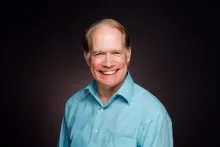
Greg Thomas is the former Pastor of the Cleveland, Ohio congregation. He retired as pastor in January 2025 and still attends there. Ordained in 1981, he has served in the ministry for 44-years. As a certified leadership consultant, Greg is the founder and president of weLEAD, Inc. Chartered in 2001, weLEAD is a 501(3)(c) non-profit organization and a major respected resource for free leadership development information reaching a worldwide audience. Greg also founded Leadership Excellence, Ltd in 2009 offering leadership training and coaching. He has an undergraduate degree from Ambassador College, and a master’s degree in leadership from Bellevue University. Greg has served on various Boards during his career. He is the author of two leadership development books, and is a certified life coach, and business coach.
Greg and his wife, B.J., live in Litchfield, Ohio. They first met in church as teenagers and were married in 1974. They enjoy spending time with family— especially their eight grandchildren.
