
Greg Thomas
This sermon was given at the Oceanside, California 2016 Feast site.
This transcript was generated by AI and may contain errors. It is provided to assist those who may not be able to listen to the message.
I would like to now introduce Mr. Jim Tuck.
I think probably most of us here have seen the musical play My Fair Lady. How many of you have seen that? Quite a few of you. Of course, very memorable music in My Fair Lady. I think Julie Andrews was one who started a movie on that particular topic.
But it's the story of Eliza Doolittle, who had a cockney accent, a very strong cockney accent. She was a flower girl, and she had no manners whatsoever. Her language was just awful. Of course, that is a setting of the play.
She takes speech lessons in the play from Professor Henry Higgins, who is an expert, a fanaticist, who declared that he could make her pass for a lady in six months. Eliza, the final test that is required for him is that she has to pass for a lady at the Embassy Ball, if you remember the story again, of My Fair Lady. After weeks of preparation, she is ready. When she gets to the ball, all the ladies and the gentlemen that are there just admire her greatly. The Queen, the Queen of Transylvania, invited her to dance with her son, who is the Prince. At the ball, there is a rival to Henry Higgins, and also a former student of Higgins.
He is a Hungarian speech expert. His name is Carpathy. He is asked by the hostess to discover where Eliza is from, her origins, and so forth. Higgins allows Carpathy to dance with Eliza.
That particular event proves to be quite successful, because Carpathy concludes that Eliza is not only Hungarian, but she is of royal blood. Again, a very interesting story. Through Higgins, and the work that he put into Eliza Doolittle, she was redeemed, as it were.
She had a new lease on life, and in fact, the two fall in love in the play. Think about this, brother. I thought about this particular story of how God has called us, the weak of the world, the base things of the world, as it does talk about in the book of Corinthians. It tells us that God has called us to confound the mighty. God is going to take people like you and me, I was just minding my own business in Oklahoma, the culture capital of the world. I grew up in a little town that I know all of you have heard of, Roland, Oklahoma. It was one of those plumb and poke towns. You poke your head out the window and you plumb out of town. It was really one of those kinds of towns. But God has called the weak of the world to confound the mighty. And you know what? God has redeemed you and me. And He's transforming us. He's changing us. You're not the person you were when you first came to the church of God. There's an old saying that God can make a self-purse out of a sows' ear. And that's what He's doing, believe it or not, with you and me. He's making more than a self-purse. He's making something that is much, much greater.
You know, the example of My Fair Lady is not a perfect analogy. I realize that. There are no perfect analogies. But the Bible describes poetically the redemption and transformation of His special people, Israel. I'd like you to go with me to Ezekiel 16. Ezekiel 16 over here. And begin in verse 2.
It says, We know that Jerusalem was a type of Israel. You know, and here God is really describing the beginning of Israel. And going on it says, You know, this is where, of course, Abraham went. This is where they were engendered. And your father was an Amorite, and your mother was a Hittite. You know, they were in a type of an area, a land that was full of scoundrels. It was a place of cutthroats, and basically anything would go there. And it says, In other words, you know, Israel was nothing. She was thrown out to die, basically, is what God is saying here. That basically God took nothing people to make them into something. But going on it says, So God took again Israel, and He made them something very special. I made you thrive like a plant in the field, and you grew, matured, and became very beautiful. And so God began to work with Israel. And she became very, very beautiful, as it says here. Let's go down to verse 13.
In other words, God says, And Israel became very famous throughout the entire world, especially during the time of David and the time of Solomon. And if we understand again about Israel and who Israel is, we know even today. Our peoples have become quite known in the entire world, around the world. But again, Jerusalem was a symbol of Israel whose birth was in Canaan, a place of idolatry, a place that was, you might say, was irredeemable. But God took Israel and redeemed Israel from this kind of a deplorable condition. Sort of like My Fair Lady. Now, God took, again, someone and made them into something. Let's go to Deuteronomy 7. Deuteronomy 7 over here. Deuteronomy 7. And notice, just a couple of verses here. The Lord said, when He's saying here to Israel, The Lord did not set His love on you, nor choose you because you were more in number than any other people, for you were the least of all people. But because the Lord loves you. It's like Mr. Weber is talking about, you know, that God does certainly care for us. He cares for us so much. He loves to hear His people fellowship with each other, as we do here at this feast. But going on, it says, Because He would keep the oath which He swore to your fathers, of course Abraham, Isaac, and Jacob, the eternal is brought you out with a mighty hand, and redeemed you from the house of bondage, from the hand of Pharaoh, king of Egypt. I want you to think about the fact, brethren, that God loved Israel so much that He allowed the destruction of the great...one of the greatest nations on the face of the earth. God allowed the sacrifice, as it were, of all of the firstborn of Egypt. He traded all of those souls, as it were, for Israel, because He loved them so much. We know Egypt is going to have a chance in the future, according to God's plan. But God's love is so deep, brethren, for Israel, that He was willing to do that. And God rescued, He rescued Israel, and He redeemed them. He bought them, as it were. And He, again, paid for it dearly, for them, with the lives of other people. And, you know, Israel needed a Redeemer. It needed somebody to come along and rescue them. And, brethren, so do we. Each of us here. We need a Redeemer. We need somebody to rescue us. I thought about this feast quite a lot in light of this, brethren, thinking about the teeming millions, the billions of people in this world that don't have the blessings that you and I have, and they never will have. You know, I've made a few trips over to Africa and seen some of the deplorable situations that people live in. In those parts of the world, and, of course, they have, sometimes, many of them, a whole lot more in terms of their happiness, sometimes, than we do. But their conditions, again, are just awful. They live in abject poverty, misery, disease. They've got no hope. Whether they're talking about the children of Africa, Bangladesh or India, or China, or someone in the United States, in the Appalachians or other parts of this country, where people just don't have anything. And, brethren, they don't have any hope. These people have no hope. And, you know, they will never come to know God the first time. They will never come to know God in this first 6,000 years of man the first time, because they're all held captive in this world that is Satan's world, as 2 Corinthians 4, 4 tells us. And all of them, brethren, all of them, and maybe some of our own family members, my mom, my dad, my brothers, my sisters, who never came to know the truth. I don't mean they're not decent people. They're decent people.
But they've never come to know the truth. They need a Redeemer. This world needs a Redeemer. It needs a rescuer. A strong hand from someplace to come and rescue them, to redeem them. That's what our work is about, to tell people about that in preaching the gospel to the world. And this Feast of Tabernacles, brethren, pictures the world of our own. It reminds us, brethren, that God is going to redeem, and He's going to transform most all people in the entire world. And everybody's going to have a fresh start, just the way you and I had that fresh chart when God called us and He forgave us. And this Feast pictures the first, the redemption, though, of Israel. God's going to begin there, and next it's going to go to the whole world. Everybody's going to have that chance. Your relatives, my relatives. Everybody's going to have the chance, brethren. And of course, that's capped off at this Feast of the Last Great Day. The Church is the first to be saved. Then, of course, Israel as a whole, and then the world. But God is going to get everybody, brethren, a fresh start in the future. God ransomed Israel from Egypt when He chose them. But, you know, they rejected God, as we certainly understand. And the United States and Britain are descendants of Israel. And the United States and Britain are so far away from God. I mean, look at this election. Look at what is happening, brethren, with the election that is going on. I think all of us are seeing the rough side of the world, aren't we, in a lot of ways, just by this election. I've always told people, you know, that the word politics comes from two root words. First, poly, meaning many, and ticks, which means blood-sucking insect. That is what politics is all about. We have our societal problems. We have the immoral lifestyles. They get worse and worse. There's no end to it. Pretty soon you're going to hear about people getting married to animals. You know, or somebody marrying a taco or something like that. But anything is possible. But, you know, think about the fact, brethren, that when you and I were born, we're very dependent. We've got little George Riker, our youngest grandson with us here at this feast. He's a bundle of appetites. But, you know, when we're born, we're like little George Riker Tuck. We are totally dependent upon other people to dress us, to take care of us, to clean us up, to feed us, to transport us. You know, like little kids like to use, you know, human cargo vans. You know, if some of our grandsons like to, they'll sort of hop one van, you know, to go and visit other people. If you sometimes, you know, they'll be at church and you'll be holding them and they want to go to somebody else because they want to go in a different direction. You know, sometimes they're very smart that way. But, you know, our children, though, are totally dependent upon us. As we mature, as we get older, brethren, we realize more and more how much we truly are dependent, not only on others, but how we're dependent upon God.
You know, some of you who are teenagers here, you know, sometimes, you know, we look for the time when we want to be independent. I mean, I went through the same thing. You know, I wanted to be independent, make my own decisions. I think about 10 years after I had made all my decisions, I wanted to go back home, you know. Let Mom and Dad make those decisions.
But the older you get, the more you realize you're dependent upon other people. And I think the older you get, too, you learn how much you're dependent upon God, how much you need God. Of course, we wouldn't have life, would we, at all, without God.
You know, King David realized that you cannot go anywhere where God is not.
God is always there.
You know, David, of course, speaks of it very poetically. Let's go over to Psalm 139 over here, Psalm 139.
In Psalm 139, David says over here, and down in verse 13, He said, For you formed my inward parts. You covered me in my mother's womb. Interesting way to talk about a person's birth.
He said, I will praise you, for I am fearfully and wonderfully made. Marvelous are your works, and that my soul knows very well. My frame was not hidden from you.
When I was made in secret and skillfully wrought in the lower parts of the earth, your eyes saw my substance being yet unformed.
And in your book they are all written, the day's fashion for me, David said.
When as yet there was none of them.
So David knew that God knew him like the back of his hand.
No, it says over in Psalm 100 and verse 3, you don't need to turn there, but it says, Know the Lord, he is God, he who has made us, and not we ourselves. We are his people and the sheep of his pasture.
Some people act like they made themselves.
Some claim to be self-made men, and others say they worship their image, which is themselves. They worship themselves.
And unfortunately there's a lot of vanity that is being thrown around in this particular election as well.
If you want to understand a product, whatever it is that you buy, you go and talk to the person who invented it, that created it, that made it.
You know, God made us. And brethren, he knows how we tick.
He knows our weaknesses, and he knows our strengths, and he knows what he intended for us.
And when God calls someone, you know what, brethren, and I found this out so much and so vividly in my own personal life, is you know what? He never gives up on you.
He never gives up on you. Now sometimes we can give up on God, but God never gives up on you.
He's there. He's watching you. He's wanting and desiring you to make the right decisions in your life, but he never gives up on you. Ancient Israel, by the way, turned, frankly, completely away from God, and God, in fact, divorced them, but he never gave up on them.
And the Bible shows what God is going to do with His fair lady at the end of it all.
And God is going to make the marriage work. God created Israel for a purpose.
He's going to marry Israel, and that marriage is going to work.
Let's go to Isaiah 43. Go with me to Isaiah 43 over here.
Now this, of course, book of Isaiah is a millennial book that points us to the world tomorrow.
Isaiah 35, of course, stands out in our minds, but because of the desert's blossoming like a rose and things changing, animals becoming tame in the world tomorrow. But in Isaiah 43, over here, down in, we'll begin in verse 1, it says, Now, but now, thus says the Lord, who created you, O Jacob, He who has formed you, O Israel, fear not, for I have redeemed you.
I bought you, and I've called you by your name. You are mine, and when you pass through the waters, I will be with you.
God is with us, brethren. He's watching after Israel.
And though the rivers, and through the rivers, they shall not overflow you, and when you walk through the fire, you shall not be burned, nor will the flames scorch you. For I am the eternal your God, the Holy One of Israel, your Savior, I gave Egypt for your ransom.
And Ethiopian Sheba, or Siba, is your place. Since you were precious in my sight, you have been honored, and I have loved you, and therefore I will give men for you, a people for your life. Fear not, for I am with you. I will bring your descendants from the east, and gather them from the west. This is, of course, in the end time he's talking about here, the time that is ahead for the modern peoples of Israel.
And it says, Do not keep them back. Bring my sons from afar, my daughters from the ends of the earth, every one who is called by my name, whom I have created for my glory, I have formed. Yes, I have made him. God made Israel, and brethren, God has made and called us, all of us. Let's go down to verse 14 here. Thus says the Lord, the eternal, your Redeemer, the Holy One of Israel.
For your sake I will send to Babylon, and bring them all down as fugitives, the Chaldeans who rejoice in their ships. And God goes on to show how that, in fact, he would make a way for Israel.
Some of these things, of course, are dual for Israel, but we know they apply to the end times as well.
But God is Israel's Redeemer, and modern Israel, the peoples of the United States and Britain, are going to have to go through some deplorable situations in the future when they go through the Day of the Lord and the Tribulation time. But, you know, they're going to repent. They're going to repent, and they're going to, you know, when they come to that lowlien of themselves, and they will, the Bible says, they're going to turn to God. You know, Jesus Christ came as the Messiah, the promised Messiah. That was, of course, one like unto Moses that was going to emerge in the end of the age. It would be that Messiah, that Redeemer for Israel. And by His shed blood, the shed blood of the Lamb slain from the foundation of the world, you know, Israel would be redeemed. And then, turn to Romans 11. That's, of course, all through the Bible, brethren. In Romans 11, over here, Romans 11, in verse 1, Romans 11, verse 1, I say then, has God cast away His people? And Paul says, certainly not. That for I also am an Israelite of the seed of Abraham of the tribe of Benjamin. God's all fit to call him, call Paul, who was an enemy of the church. Shows what God can do, isn't it? How fantastic God is. But he goes on to say, God has not cast away His people whom He foreknew. And he goes on to show about Elijah's time, where there were 7,000 that had not bowed their knee before Baal.
And, you know, God has not cast away Israel because we're here. We are here right now. And we know God has much plans for others in the future. Let's go over to Isaiah 11. We know that the fact that Israel rejected God and the fact that the Jews rejected God fell out to the benefit of the Gentiles.
So there was a positive side of it where God opened up, you know, the gospel, the calling to the entire world. But let's notice on down through here in verse 25, he says, He says, And so Israel will be saved as it is written. The deliverer will come out of Zion, he will turn away ungodliness from Jacob.
For this is the covenant with them when I take away their sins. So God in the future is going to take away all of Israel's sins. And the road work has already been done by Jesus Christ. The groundwork has been done by Christ, by His sacrifice that He gave, in His crucifixion where He shed blood.
And he goes on again to explain some of these things that through basically the unbelief, you know, of the Jews and the unbelief of Israel, that God could have mercy on everybody in the entire world and they would have an opportunity to be called. You know, verse 32 and verse 31 talk about that. You want to read it later, that shows again how God opened up, you know, the redemption process, not only to the church in Israel, but to the whole Gentile world. And that is all the nations of the whole earth. Now, the next time Jesus Christ comes back, though, He's not coming back as a lowly lamb.
Who was led to the slaughter, who did not speak a word, and died, of course, on the stake and looked down at people that were crucified and said, Father, forgive them, they don't know what they're doing. But God is going to send His Son, Jesus Christ, and that's why we pray, brethren, Thy kingdom come, to send Jesus Christ to come, not this time as a lowly lamb, but as a powerful King of kings and Lord of lords. And during this feast, we celebrate that. We celebrate that coming time when Jesus Christ is coming as that powerful King. And God wants us to appreciate the fact, again, that He loves us. He wants us to appreciate the fact that God has pulled us out of the fire many, many times.
You know, like the Bible says, that God's mercy never fails.
Jesus Christ, brethren, paid the price for you, each of you sitting in this room, and me and all of us, brethren, He paid a heavy price, a very heavy price, for us. And not only, brethren, did Jesus Christ pay a heavy price for you, but He paid a heavy price for you, for us, for us, for us, for us, for us, for us, for us. You know what?
There's a lot of other people that paid a lot of a heavy price for all of us sitting here or in this hall. Maybe your faithful parents, people that you knew, people maybe you didn't even know, that sacrificed for you, that gave of their life for you. And if some of you have ever seen that movie, my wife and I went to the theater to see this a number of years ago when it was out. Of course, it was a Spielberg film. And when we saw the movie, it was about, of course, World War II, landing at Omaha Beach, was an initial part of it, and a very poignant story, though.
But I'll tell you what, after that movie was over, the theater was, unlike other movies that we've seen, was quiet, very calm. The story of it is about, you know, a Captain John Miller who survives the Omaha Beach invasion, and he's commissioned by superiors to go and find James Francis Ryan, who is the last surviving son of a family of four men who were killed, three of which were killed, you know, in the war.
And so the policy of the Army was to search out and find Private Ryan so he could be returned home. Again, it's a very poignant story of all of the things that Captain Miller and his company face, where many of them were killed, and in the end, there was a horrible firefight, you know, that took place where Captain Miller and his company were trying to, again, get to Private Ryan.
And anyway, in the exchange of gunfire, Captain Miller is killed. But before he died, James Francis Ryan is there, and Captain Miller grabs him by the collar, and he says to him, he says, James, you earned it. You earned this. And that stuck with James his whole life. The last part of the movie is a scene where now the aged Private Ryan is looking for the grave site, the grave marker of Captain Miller. He wondered if he had lived that worthwhile life, all those years after someone sacrificed their life for him.
And he asked his wife, had he been a good man? His wife said, you have. Well, how about us, brethren, of what God has given for us and done for us? Have we tried, strived, brethren, to live worthwhile lives, because God has ransomed a lot for us, given a lot for us? Jesus Christ, our Redeemer, has done that for us. He's rescued us. He's paid a heavy price. Gave us a fresh start, brethren. Gave us a clean slate, plus the knowledge of the truth, and He gave us a new start.
You know what? Every human being on the face of the earth deserves what we had, what we've been given, each of us. All of Israel deserves it. The whole world deserves it. Let's go to Isaiah 52. Isaiah 52 begins talking about, again, the redemption of Israel here. Isaiah 52. In verse 1, we'll begin here, it says, Awake, awake!
Put on your strength, O Zion. Zion, of course, is a symbol of the church, certainly a symbol as well of Israel. Put on your beautiful garments, O Jerusalem, the holy city, for the uncircumcised and the unclean shall no longer come to you. Shake yourself from the dust, arise, sit up, O Jerusalem. Loose yourself with the bonds of your neck, O captive daughter of Zion. So the prophecy of the end time, brethren, reveals the redemption of Israel. Isaiah, again, laid the groundwork through the sacrifice of Jesus Christ, who is the Redeemer. And usually when you buy somebody, you do it with money, but not this time.
In verse 3, it says, Thus says the Eternal, You have sold yourselves for nothing, and you shall be redeemed without money. You were redeemed, of course, by the very blood of Jesus Christ, and what Christ did, and what others have done as a result, again, of their calling, of walking in the way of God.
And the Bible tells us that we are bought with a price, by the precious blood of the Lamb. We're not bought with, you know, gold or silver, but by the precious blood of the Lamb. Verse 4, For thus says the Lord God, My people went down at first into Egypt, to dwell there. Then the Assyrians oppressed them without cause. Now therefore, what have I here, says the Eternal, that My people are taken away for nothing. Those who rule over them, make them wail, says the Lord, and My name is blasphemed continually every day. Therefore My people shall know My name.
Therefore they shall know in that day, it talks about in that day, it's talking about the end of the age, brethren, that I am He who speaks, behold it is I. And it says, How beautiful upon the mountains are the feet of Him who brings good news, who proclaims peace, who brings glad tidings of good things, who proclaims salvation, who says to Zion, Your God reigns. Your watchmen shall lift up their voices, with their voices they shall sing together, for they shall see eye to eye when the Lord brings back Zion.
And so God is going to do that. That's what He's going to do in the future for Israel, brethren. He says, Break forth with joy, sing together. And, oh, looking at that time, we can, of course, rejoice here. But there will come a time when physical Israel is going to do that. Your waste places of Jerusalem for the eternal will comfort His people. He has redeemed Jerusalem. The eternal has made bare His holy arm in the eyes of all nations. Again, He came the first time as a lowly lamb.
This time, though, He's going to make bare His arm to the world. He's going to show people the power that He has. He's coming back as a, not only a prince of peace, but as a warrior.
And it says, The salvation of our God. Going on, verse 11, Depart, depart. Go out from there. Touch no unclean thing. He's telling Israel, Look, prepare yourself. Get ready. It says, Go out from the midst of her. Be clean. It's like in the end of the age. God tells us to come out and be separate from the world, the beast power, in the future. You who bear the vessels of the eternal, for you shall not go out with haste, nor go by flight for the eternal will go before you. And the God of Israel will be your rear guard.
So God's saying, I'm going to be your protector. But notice in verse 13, Behold, my servant shall deal prudently. This is talking about Jesus Christ. He shall be exalted and extolled and be very high. So God is going to send His Son, Jesus Christ, back, and He's going to be very high, the Bible says here. Not the lowly lamb that He was before. No, it's not going to be that at all.
This world is going to be, again, shocked by the power of God when these things begin to happen. Because God is going to do astounding things. He's going to do astounding things, brethren, that are going to be amazing to think about.
The leaders of the world are going to be astounded by what Jesus Christ is going to be able to do. And no one is going to be able to stand against Him. But He's going to come not to destroy the world.
As they would do, He's coming to save the world. He's going to do something completely different than they expect. He's coming to save this world, and from itself, as a matter of fact, we know the world will come to the very brink of human annihilation. And Jesus Christ will intervene in the nick of time to stop man from his race to oblivion. But again, the first time He came back as a lowly lamb, this time, though, as a prince of peace and a warrior, He's going to have the power.
And, you know, we're going to be able to take it easy as it were at that particular time because we're going to be with Christ, who's our protector. We don't have to worry at that time at all. Of course, we don't need to worry anyway because God is watching after us.
Let's go over to now, I mean, Isaiah 54. I've got to hurry here so that the platform beneath me does not collapse. They've got this shaft down here if you go too far. Chapter 54 here, in verse 4, Well, think about that again. Let that sink in a little bit, brethren. Your maker is your husband. There's no reason to fear. And it says, The eternal host is his name, and your redeemer is the holy one of Israel.
Your redeemer is the holy one of Israel. He's called the God of the whole earth. For the eternal has called you like a woman forsaken and grieved in spirit, like a youthful wife when she were refused, says your God. For a mere moment I forsaken you. God says just for a little while I forsake you. Here. But God was always there.
It's like the song, You Were Always On My Mind. You were always on my mind. God was thinking about Israel. And God has watched after them, and God is going to keep them safe. And they'll certainly keep us safe in the future. Let's go down to verse 11. O, you afflicted one, tossed with tempest and not comforted. Behold, I will lay your stones with colorful gems.
And lay your foundations with sapphires. I will make your pinnacle of rubles, your gates of crystal, and all your walls of precious stones. All your children shall be taught by the Lord, and great shall be the peace of your children. That sound like the world of moral to you? When Israel will not be Eliza Doolittle, you know, the flower girl that had the awful kopniaksa, but she will be a princess.
A place where rubies are, and crystals, and all of the finer things of life. But going on, verse 13, all your children shall be taught by the Eternal, and great shall be the peace of your children. In righteousness you shall be established, you shall be far from oppression, and you shall not fear. And from terror, for it shall not come near you. Indeed, they shall surely assemble, but not because of me.
Whoever assembles against you shall fall for your sake. You see, when God comes back, when Jesus Christ comes back, and He has incredible power, and God gives Israel the premier position that they're going to have in the world in the future, no one will stand against them. And we know ultimately that the bride of Christ is the church, will be the pinnacle of Israel, because we are the Israel of God. We're the first to be called, and then, of course, the nation of Israel, and then other nations will be called in the future.
But notice verse 17 here, brother, very inspiring to me when I read it. No weapon formed against you shall prosper. In every tongue which rises against you in judgment, you shall condemn. And notice it says, this is the heritage of the servants of the eternal, and their righteousness is from me, says the eternal. What a wonderful time, brethren, that's going to be. God says, look, I'm going to be with you. I'm going to be your deliverer. Jesus Christ, of course, is that deliverer that's going to come.
I'm going to be your protector, and you will always be safe. The Bible says also that the Redeemer will come to Zion, and God's laws will be written on their hearts. And God says, I'm going to write my laws on the hearts of the people of Israel forever and ever, for your children and their children, and their children after them. And not only for just Israel, but for the whole world. The whole world's, brothers, are going to have a tremendous chance. We have a part, brethren, in that redemption of Israel now. We have a part in what's going to happen eventually for the world.
The law's going to go out of Zion, it's going to go out by our feet, we'll be the ones that will be used of Jesus Christ to take the law, the truth of God, the gospel of Jesus Christ to the entire world.
The church, of course, as it's already been mentioned, you know, in this festival, we're going to be a kingdom of priests, a kingdom of kings as well, because we're going to be working with the King of Kings and the Lord of Lords. We'll be assisting Jesus Christ to transform the world. We're going to begin to restore Israel as one nation, putting Judah and Israel to one, making them one stick as the book of Ezekiel talks about. And then all nations are going to be brought in.
First, Egypt probably will be converted, then other nations are going to be converted and going to be brought in to the kingdom of God. You know, the Bible says in Timothy, God would have all men to be saved. And, brethren, this feast is not, you know, as Mr. Weber was talking about, an education for us. We enjoy, of course, this time as a very pleasant time to enjoy the finer treatments of life as God wants us to, but it's a learning session to prepare for the future, the future of what God has in store for us.
The future, brethren, when we will be assisting Christ to help rebuild the waste places that are going to result from the tribulation time and the day of the Lord as well. We're going to help build that back up, brethren. This feast, brethren, is about the redemption of Israel, the redemption of the whole world. Every message really will tie into that in some way.
So, brethren, let's celebrate this Feast of Tabraticals, what God is already doing in us and redeeming us, and what He will eventually do for everybody, the teaming millions in the world, the billions in the world during the time of the world tomorrow when He brings them on in to the Kingdom of God. He has called, brethren, and redeemed us, that we should not remain the weak of the world, but that we should be transformed as God's people. We should be changed.
We should be overcoming. Because someday we're going to rule with our husband, Jesus Christ, as a king and a priest of the future. We are being transformed. God is transforming us into the bride of Christ and the princess of His Son, His fair lady.
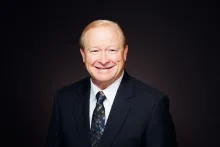
Jim has been in the ministry over 40 years serving fifteen congregations. He and his wife, Joan, started their service to God's church in Pennsylvania in 1974. Both are graduates of Ambassador University. Over the years they served other churches in Alabama, Idaho, Oregon, Arizona, California, and currently serve the Phoenix congregations in Arizona, as well as the Hawaii Islands. He has had the opportunity to speak in a number of congregations in international areas of the world. They have traveled to Zambia and Malawi to conduct leadership seminars In addition, they enjoy working with the youth of the church and have served in youth camps for many years.
