

Steve Myers
This transcript was generated by AI and may contain errors. It is provided to assist those who may not be able to listen to the message.
There's been a great debate going on in this country, especially concerning the founding of the nation. That debate revolves around where our early founders, what we would call the founding fathers of the United States, were they morally religious or were they just deist? Now, someone who is a deist believes in God, but he's not a personal God. So, therefore, those who are critics, who want to believe in secularism, humanism, believe that our early founders were secular or that they were deist and that they did not believe in God as a personal God. Now, I could stand up here for an hour and quote to you from a number of writings of what our early fathers said, but let me just enumerate a few. George Washington, who was the first president, said, human happiness and moral duty are inseparably connected. In 1778, George Washington wrote a letter to Thomas Nelson Jr. citing divine, God's divine intervention in the founding of our nation. The hand of providence has been so conspicuous at all this that he must be worse than an infidel that lacks faith and more than wicked that is not gratitude enough to acknowledge his obligation. It was mentioned about George Washington that in the fighting, there were many times when he was shot at and there was no reason why he shouldn't have been killed. I mean, in one battle, you know, seven or eight times, and he wasn't killed. They just shook their heads, and after a while, some began to wonder if he had protection, and I think probably he did.
Going on, it is impossible to govern the world without God and the Bible.
Of all the dispositions and habits which lead to political prosperity, think about economic crisis today, political prosperity. Religion and morality are indispensable supports. So if you're going to have political prosperity, there are undergirdings, and it's the Bible morality, or religion morality. Then in his farewell address, he said this, and let us with caution indulge the supposition that morality can be maintained without religion. Whatever may be conceded to the influence of refined education on minds that are particular structure, reason, and experience, both forbid us to expect that national morality can prevail in exclusion of religious principles.
Today, we hear a lot of politicians talk about morality, talking about, well, I have values. I believe in family values or whatever values, but those values are not based upon the Bible in many cases. It's just the fact that they have a set of values that they adhere to. John Adams, the American Bible Society, was started by an act of Congress, and John Adams, our second president, served as its first leader.
We have no government armed with power capable of contending with human passion unbridled by morality and religion. Avarice, ambition, revenge, gallantry, would break the strongest cords of our Constitution as a well goes to a net. Then he goes on to say, our Constitution was made only for a moral and religious people. It is wholly inadequate to govern in any form. So what do we find today? When you throw religion out, God's name is not even mentioned in schools. You can't study the Bible. You can study Islam. You can study Buddhism. You can study almost any religion. You just can't study Christianity. That the government, our founding fathers, said would not exist or continue to exist. Noel Webster, author of the first American speller in the first dictionary, said, The Christian religion in its purity is the basis, or rather the source, of all genuine freedom in government. And I am persuaded that no civil government of a republic formed can exist and be durable in which the principle of that religion have not a controlling influence. Does religion have a controlling influence today in Hollywood, in Washington, D.C., any number of places that you could mention? Is it the controlling influence? Now, you and I happen to live in a part of country where religion tends to be a pretty big subject, but that's not true of the vast majority you have to realize of this country, and especially of the educational system, what young people are being exposed to.
This nation was formed upon Christian principles and values, and most of the early leaders of the United States and many of our presidents have quoted the Bible and mentioned that it is the basis of our morality and the existence of our nation. Today, many deny these fundamental founding principles, belief in God and morality based upon religion, that our existence of the nation is based upon maintaining the Bible as the basis of our moral standard and our guide. What says Leviticus 26 and Deuteronomy 28? You know, I covered those and referred to them in a sermon I gave here recently, but they clearly demonstrate that if a nation will accept the law of God as its basis, that God will bless that nation. And when a nation turns its back on God and on His principles, that that nation is doomed to destruction. Very clear. It doesn't matter what nation it is, but especially the nations of Israel that God is personally dealing with. And we are the nations of Israel today. What is the religious state of our country today? You know, every once in a while we need to stop and look at what's going on in the country, and we need to ask ourselves, how much is it impacting me? Possibly my family. Could it be impacting the church? In Proverbs 29 verse 2, to start with, we read this clear statement, Proverbs 29 and verse 2, When the righteous are in authority, the people rejoice. But when a wicked man rules, the people groan. Well, people are groaning today. People are not very happy today. And of course, we want to blame it on one political party or another political party. Most people don't stop to ask themselves the question, could I be contributing to this morass or these problems, these difficulties out here? Is there anything that I'm doing, how I'm practicing, what I live by? In a recent study, this is from the Barna study, January 12, some very interesting facts about what's happening in this country.
The title of this study or the article is, Christianity is no longer America's default religion. See, that's what you default to. I've got a computer on my computer as a printer. Well, I've got probably 10 different computers downloaded as far as the drives on my computer. But one is said as default. And that means when I print, it automatically goes to that one unless I tell it to go to another one. That's the default. Christianity has been the default faith. Today, that's not true because there are so many other options. Let me just quote some from this write-up and this survey that was taken. For much of America's history, the assumption was that if you were born in America, you would affiliate with a Christian religion. A new nationwide survey by the Barna group, however, indicates that people's views have changed. The study discovered that half of all adults now contend that Christianity is just one of many options that Americans can choose from. So religion today is like walking into a cafeteria or a buffet line. And you walk down and you can have 20 different types of meat, 15 different salads, 500 desserts, whatever you want to choose. You just go after it. And that's the way our society has become. Now we become that way, but you go over to Muslim nations. What is the default religion there?
Are they as tolerant in those nations as we tend to be in this nation? No, they're not. And you will find that we in the West have lost our moorings. Going on, it says that huge majority of adults pick and choose what they believe rather than to adopt a church or denomination slate of beliefs. So people now are picking and choosing. Still, most people say their faith is becoming increasingly important as a source of personal moral guidance. Now what does that mean? Their faith, quote-unquote, is what is going to guide them morally.
Well, what you find is the United States has well over 200 different Christian denominations. That's major denominations. Now there are thousands of splits, as we know. It's been estimated that there have been over 300 different little groups start out of the split up of the worldwide Church of God. That just gives you one idea. If there are 300 out there—no, I've never tried to sit down and count them. I've just heard that thrown out. How many are there of all of these other major denominations where people get disgruntled and go off and they start their own group?
Says the Barna survey underscores the fact that people no longer are looking to denominations or churches to offer a slate of theological views and that the individual that it adopts in its entirety. Now in 2 Timothy, I want you to notice the reason why I think this is so important.
2 Timothy chapter 4. Here is a prophecy.
Verse 3 here that Paul gave 2 Timothy 4 verse 3 about what's going to happen. And this isn't just talking about the world, brethren. You've got to realize he's concerned about the church. The time will come when they will not endure sound doctrine. Remember, we found the word sound means healthy life-giving. So the time will come when they won't endure doctrine, teachings that are life-giving, that are healthy. But according to their own desires, because they have itching ears, they will heap up for themselves teachers. And they will turn their ears away from the truth and be turned aside to fables.
Now this has happened in the church of God. It's been a repeated verse, so to speak, over and over again, occurring throughout the history of the church, that the church would revive, have a little strength, and then you find that there would be, after a while, people going off. And we have found that this has certainly happened in the last 20 years within the church of God community. And it has happened likewise in society. Now going on with Barna, it says, by a three to one margin, 71% to 26%, adults noted that they are personally more likely to develop their own set of religious beliefs. So where are people getting their religious beliefs?
Their own, their own set. They decide then to accept the comprehensive set of beliefs taught by a particular church. Leading the charge in the move to customize one's package of beliefs are people under the age of 25.
Young adults, among whom more than four out of five, that's 82%, say they develop their own combination of beliefs rather than to adopt a set proposed by a church.
So here you have the younger generation, 80%, saying we are establishing our own set of beliefs. What we believe is right, is wrong, is good, is bad. And we're not going to accept what a church teaches. Now do you think that could have an impact on the church of God? I say it's already had an impact on the church of God. So many are sitting at home today and they are not, they've sort of made the statement, nobody is ever going to teach me again or tell me what to believe. Nobody asks anyone to believe anything without proving it. But they're just going to be out there on their own doing their own thing. Among the individuals who describe themselves as Christians, for instance, close to half believe that Satan does not exist. So these are people professing to be Christians. Half don't believe Satan exists. One-third contend that Jesus sinned when he was here on the earth. Two-fifths say they do not have a responsibility to share the Christian faith with anyone else. And one-quarter dismiss the idea that the Bible is accurate and all of its principles are its teachings. Now I ask you, how can you be a Christian, so-called, and believe these things? What is the standard that you and I are supposed to go by? Do we know? Our own ideas influenced by society, our own ideas influenced by media, our own ideas influenced by politics, or a mixture of religious ideas. Could be Eastern religion, could be any type of religion. Let's notice in Isaiah chapter 8 and verse 20. Isaiah 8 and verse 20.
Something that Isaiah wrote and recorded. We read here, and we'll come back to this section later on, to the law and to the testimony. So to the law and the testimony, if they do not speak according to this word, it is because there is no light in them. Light symbolizes truth and understanding. So there's no truth, no light, no understanding if someone gives up God's law and the testimony, the Bible, the Scriptures. In 2 Timothy chapter 3, let's go back to 2 Timothy again, in chapter 3 we find the standard that the Bible very clearly tells us that we're to go by. Chapter 3 verse 16 and 17.
All Scripture is given by inspiration of God. So that's all from Genesis to Revelation.
And it is profitable, what, for doctrine. So where are we going to get our doctrine? Our own ideas, our own beliefs? No. The Bible is where we get doctrine. It's also profitable for reproof. It corrects us. It shows us where we're wrong. For correction, for instructions, and righteousness. How to be right. That the man of God may be complete thoroughly equipped for every good word. So if we want to be complete, then you and I must use the Bible as the standard that we're going to go by. We're all familiar with Judges 21 and 25. I'll just refer to that. In those days, there was no king in Israel, and everyone did what was right in his own eyes. Now, when it said there was no king in Israel, it's talking about there was no really ultimate authority. So everybody did what he wanted to do. Everybody did what was right in his own eyes. Now, that expression is actually used several times in the Bible. Let's go back to the book of Deuteronomy 12. And I want you to notice God's instructions concerning worship. How Israel was to worship him the true God.
Chapter 12, verse 1 of the book of Deuteronomy.
Verse 1, These are the statutes and judgments which you shall be careful to observe in the land, which the Lord, God of your fathers, is giving you to possess, all the days that you live on the earth. And you shall utterly destroy all the places where the nations you shall dispossess, serve their gods and on the high hills and under every green tree. So, apparently, they set up these altars on the top of hills, under trees, went out and worshipped God. They had all of these pagan idols and symbols. You shall destroy all their altars, break down their sacred pillars, burn their wooden images with fire. You should cut down the carved images of their God and destroy the names from that place. You shall not worship the Lord your God with such things. So, here we find that God says he doesn't want to be worshiped in the way the Gentiles worship their gods and using the accoutrements that the Gentiles did.
In fact, in verse 5, he says, but you shall seek the place where the Lord your God chooses out of your tribes to put his name for his dwelling place, and there you shall go. Now, remember, Israel had not yet entered into the Promised Land. This is a reiteration of what all had gone on before. He's reiterating the law to the younger generation and growing up. They were about to enter into the Promised Land. And he says, you're not to just go worship God anywhere you want to or in any way you want to, but at the place that God shall choose. Now, that was in Jerusalem. There was a temple built in Jerusalem, Tabernacle I. And this is where God placed his name. At that time, it was in Jerusalem. Now, remember how you and I are supposed to worship God today. In John 4, 21, John 4, 21, when Jesus came to the woman, the Samaritan, at the well, Jesus said to her, woman, believe me, the hour is coming when you will neither on this mountain nor in Jerusalem worship the Father. So the time is coming where it doesn't matter where you are, you'd worship the Father. He says, you worship what you do not know. We know what we worship for salvation is of the Jews. But the hour is coming, and now is when the true worshipers will worship the Father in spirit and in truth. So you have to be led and guided and directed by God's Spirit, and it's got to be according to the truth. What is truth? John 17, 17, thy word is truth. So if we say we're going to be worshiping God, and we're not worshiping according to the Bible, according to the truth of the Scriptures, then we have a false worship. So we've got to worship God in spirit, so God's Spirit has to be there directing us. For the Father is seeking such to worship Him. God is spirit, and those who worship Him must worship Him in spirit and truth. So brethren, what we find is simply this. Today, the church is the temple. We all form the church. We're part of what forms the temple. And we come together to worship God. We don't have to go to Jerusalem. We don't have to go to a physical temple. We are the temple. We come together as the living temple of God to worship God and to fellowship together. And we, as a group, are able to do a work of God. Notice in verses 6 and 7 God's instructions to them. This is again Deuteronomy 12 verse 6.
There you shall take your burnt offerings, your sacrifices, your tithes, the heeb offerings of your hands, and your vowed offerings, your free will offerings, and the firstborn of your herds and of your flocks. And there you shall eat before the Lord your God, you and your you shall rejoice in all that you have put in your hand, you and your households, in which the Lord your God has blessed you. So, brethren, here we find that just as Israel brought up their tithes and offerings to the temple, to the priesthood, to worship God, so we today tithe and give our offerings to be able to do a work to preach the gospel to the world. And verse 8, key verse, you shall not do it all, or you shall not at all do, as we're doing here today, every man doing whatever is right in his own eyes. Now, I want you to notice this is in connection with how we worship God. It was in connection with the instructions that God gave them in the Old Testament how to worship him. And the same principle applies to us today, that if we're going to worship God, we must worship Him as He tells us, not as to what is right in our own eyes. And yet, the Barna survey clearly shows that most people today are setting up their own belief system. They're coming up with their own faith, their own beliefs and ideas.
And verses 9 and 10, As yet you have not come to rest, and the inheritance, or to the rest, and the inheritance which the Lord your God has given you. But when you cross over the Jordan and dwell in the land, which the Lord your God is giving you to inherit, He gives you rest from all your enemies round about, so that you dwell in safety. Neither have we entered into that final rest, the kingdom of God, which God is going to give us. If we hope to get there to the promised land, so to speak, the kingdom of God, the resurrection, we must worship God as He says. Now notice, also over here in the book of Judges, chapter 17, beginning in verse 1, Judges 17 verse 1, we have a perfect example of what it means to worship God in any old way you want to, and think that you are serving God. Heading to this chapter, Judges 17 verse 1, is Micah's idolatry.
Now there was a man from the mountain of Ephraim, verse 1, whose name was Micah. And he said to his mother, the 1100 shekels of silver that were taken from you, on which you put a curse, even saying, it is in my ear, here's the silver with me, I took it.
So apparently he's stolen this from his mother, now he's giving it back. And his mother said, may you be blessed by the Lord my son.
So when he had returned the 1100 shekels of silver to his mother, his mother said, I've wholly dedicated the silver from my hand to the Lord for my son, to make a carved image and a molted image. Now therefore, I will return it to you. Thus he returned the silver to his mother, then the mother took the 200 shekels of silver, gave them to the silversmith, and he made it into a carved image and a molded image, and they were in the house of Micah. Now are we supposed to make images to worship God? No. But notice, verse 5, a man Micah had a shrine and made an ephod and household idols and consecrated one of his sons who became his priest.
So here you find he and the people were choosing who was going to be their priest or their minister.
In those days, there was no king in Israel, and everyone did what was right in his own eyes. So we have this repeated again. He established his own method of worshiping God. Then later on in verse 12, we read this. So Micah, Levite, came along and lived with him. So Micah consecrated the Levite, and the young man became his priest. Notice his priest.
He lived in the house of Micah, and Micah said, Now I know the Lord will be good to me, since I have a Levite as priest.
Well, do you agree with that reasoning? I don't think so, because what you find heading to the next chapter says the Danites adopt Micah's idolatry. Then they get in trouble. Well, what you find is many times that people pick and choose what they want to believe, and then they pick and choose somebody who will teach them what they want to believe or what they want to hear, instead of listening to those who maybe occasionally might correct them. People do pick and choose their ministers today, and they go by various standards. I like prophecy, so I'm going to tune in to anybody who talks about prophecy. Or I like somebody who speaks smoothly and who has a good voice, and so they choose that individual. And they don't look at the person, they don't look at the character, they don't look at what's being taught, but just they go by other things. Now, Barna goes ahead and gives some of the implications from this study that was done, and I find many of these very revealing. Let's notice the Christian faith today, he says, is less of a life perspective, meaning it influences your life and where you're going, your future, that challenges the supremacy of the individual, as it is a faith being defined through individualism.
So people's faith today is not a collective faith in the sense we all come together. Why are we here? Well, because we all generally believe the same thing, the fundamental doctrines and teachings of the church, and so therefore we collect together. But today, faith is defined through the individual individualism. Americans are increasingly comfortable with picking and choosing what they need to be helpful and accurate, theological views that have become comfortable, discarding the rest of the teachings of the Bible. So pick and choose what you're comfortable with. I'll give you an example as we go along in the sermon, what we're talking about.
Can you pick and choose what you want to believe and obey?
Well, there is a scripture in Revelation chapter 22, just to refresh our memories, in verse 18. Revelation chapter 22 and verse 18.
For I testify to everyone who hears the word of the prophecy of this book.
If anyone adds to these things, God will add to him the plagues that are written in this book. And if anyone takes away from the words of the book of this prophecy, God shall take away his part from the book of life, from the holy city, and from the things that are written in this book.
So you don't want to add and subtract from the Bible, because if you do, you won't be in God's kingdom. Well, you can say, well, that only applies to the book of Revelation. Let's go back to the book of Deuteronomy chapter 4.
Deuteronomy the fourth chapter, beginning in verse 1.
Now, O Israel, listen to the statutes and the judgments which I teach you to observe, that you may live and go in and possess the land which the Lord, God of your fathers, is giving you. Now verse 2, Deuteronomy 4. You shall not add to the word which I command you, nor take away from it that you may keep the commandment of the Lord your God which I command you. So here you find that God said that they are not to add or to take away.
Then in Deuteronomy chapter 12, in verse 29, this is a scripture that many of us are familiar with, Deuteronomy 12 verse 29.
When the Lord your God cuts off from before you the nations which you go to dispossess and you displace them and dwell in their lands, take heed to yourself that you are not ensnared to follow them after they are destroyed from before you, that you do not inquire after their gods, saying, Well, how did these nations serve their gods? I also will do likewise. You shall not worship the Lord your God in the way or that way, for every abomination to the Lord which He hates they have done to their gods.
For they burn even their sons and daughters in the fire to their gods. Whatever I command you, be careful to observe it. You shall not add to it nor take away from it.
So God says, You worship me as I tell you.
Now, in chapter 7 in the book of Matthew, in verse 21, we find clearly the same thing mentioned in the New Testament. Matthew 7 in verse 21, Not everyone who says to me, Lord, Lord, will enter into the kingdom of heaven, but he who does the will of my Father inhabit. So many today are professing to have a faith and belief in God, but it's their own belief, their own concoction of doctrines and teachings. Many will say to me in that day, Lord, Lord, have we not prophesied in your name, cast out demons in your name, done many wonders in your name? Then I will declare unto them, I never knew you, depart from me, you who practice lawlessness.
What is sin? 1 John 3, sin is the transgression of the law. So those who practice lawlessness are practicing sin.
Well, going on with what Barna had to say, growing numbers of people now serve as their own theologian and residents. They are the final authority. One consequence is that Americans are embracing an unpredictable and contradictory body of beliefs. We have had this happen in the Church of God. There are many smaller groups, as I mentioned before, doctrinal differences.
And what you find is that people set themselves up as the final authority on doctrine. I mentioned to you before about a small group that I knew that left the Church. It was about a week before the Passover.
And I found out later on, they observed the Passover at three o'clock on the day of the Passover. So they decided it should be held at the very time that Christ was killed. Where did they come up with this? You know, what scripture could they turn to? Well, they became the authority. And so a small group decided that they would do it that way.
Barna pointed out, as an example, that millions of people who consider themselves Christians now believe the Bible is totally accurate in all of its lessons, and yet they teach that Jesus Christ sinned. Now that's contradictory. You say, I believe the Bible, the whole Bible, nothing but the Bible. And yet you believe that Christ sinned when the Bible says He's sinless.
Millions also contend that they will experience eternal salvation because they have confessed their sins, accepted Christ as their Savior, but also believe that a person can do enough good works to earn eternal life. So on one side, they believe God's going to give us salvation, but you've got to do good works. You'd be surprised how many people think that you've got to do good works to earn salvation.
Now, I don't have to go through a whole sermon on grace, but do our works save us? How about Ephesians 2, 8-10? I won't read that. By grace through faith, are we saved? God saves us by His grace. Salvation is a free gift. There's nothing you can do to earn it. Where do our works come in? We are rewarded according to our works. Salvation is a free gift. Now, in the past, when people, Barnas says, determine their theological moral points of view, the alternative which they chose were exclusively of Christian options. The Methodist point of view, the Baptist perspective, the Christian teaching, so on. Today, Americans are more likely to pick a variety of non-Christian options against various Christian-based Christian options. This is resulted in an abundance of unique worldviews based on personal combinations of theology drawn from a smattering of world's religions, such as Christianity, Buddhism, Hinduism, Islam, secularism. Now, you can go on and on with all of the isms that they draw from.
Is this not the approach that Adam and Eve had in the garden?
Did they not make a choice? And what did they choose? They ate of the fruit of the knowledge of good and evil. For as they chose to go away and they have set the direction that mankind has gone ever since, it's a mixture of good and evil. Some good in there, but a lot of evil in there. And so mankind has gone that way. The Bible indicates there is only one way to salvation. Not dozens, not hundreds of different approaches, different doctrines and teachings. Jesus Christ in John 14 verse 6 said, I am the way, the truth, and the life.
There is only one way, and Christ is that way. You have to go through Christ. Acts 4 clearly tells us that. Acts chapter 4 verse 10.
We'll turn to that and read it. Acts chapter 4 verse 10.
Let it be known to you all and to all the people of Israel, that by the name of Jesus Christ of Nazareth, whom you crucified, whom God raised from the dead, by him this man stands here before you whole. This is a stone which was rejected by you builders, which became the chief cornerstone. Nor is there salvation in any other. Verse 12. For there is no other name under heaven given among men by which we must be saved. So, brethren, there's only one name. That's through Christ. You have to accept Jesus Christ.
So, what we find is the idea that you can just sort of make a hodgepodge of religion, choosing all of these different religions, is not correct according to the Scriptures.
Barna said, faith of whatever variety is increasingly viral. You know what a virus on a computer is? You know what a viral message is?
They're a little different. A virus can spread through your computer and destroy it, just like a virus can make you sick. A viral message is one that you send out, and a lot of times you'll see these on YouTube. They become so powerful, or they're so interesting, that everybody who sees it passes it on to their group of friends, who pass it on to their group of friends, who pass it on first thing. You know, millions of people have seen that particular video. Well, what you find here is faith of whatever variety is increasingly viral. People are catching it from others. They're not from the Bible, but they're getting their ideas from others. Rather than pedagorical, that means by academic teaching, such as me standing here teaching you, with people spending less time reading the Bible. Now, notice this.
Survey shows people spend less time reading the Bible and becoming less engaged in activities that deepen their biblical literacy. Faith views are more often adopted on the basis of dialogue. I talk to you, and what you say sounds great, so okay, I'll accept that. Selfish reflection and observation rather than teaching. And this is the sad state of affairs that we find in our country today.
If I could draw an analogy, it's like the stimulus bill that was passed just yesterday, and there is not one representative in Congress or one senator who read it. They don't know what's in it, but they passed it. Now, there could be anything in there, and we'll find out over a period of time what's in there, but this is the way people are forming their views on religion. You know, don't try to tell me the facts. You know, don't preach the Bible to me. Let me decide, and I'll make up my mind based upon what goes on. How can you establish morality and religion and belief and call it Christian without believing in the Christian book and the Christian values, Christian teachings?
Christ said in Matthew 15 verse 9, In vain do they worship me, teaching for doctrines the commandments of men.
Then one final thing in this particular write-up by Marna. Feeling and emotions now play a significant role in the development of people's faith views. You know, this just feels right, so people adopt it. In many cases, much more significant than information-based exercises, such as listening to preaching, are participating in Bible studies.
Now, can you see why it's important for you and for me to study the Bible daily? To know what's in the Bible, know what the doctrines are, what the teachings are. Why do you think we're going through the fundamental teachings of the Bible? Because we all need to know what the Bible teaches, and need to know and know that we know the right way. Did not David say that the Scriptures were a lamp to my feet and a light to my path?
See, the Bible is like a big beacon light. You're out here in that thick dark or in the middle of a dark cave, and all at once this huge powerful search light comes on and shows you the way out.
People live in darkness, and the only way to know how to go is if the light is shining. And without it, you're in darkness.
Now, that was January this year. Back in October, last year, Barna did another survey, and it was entitled, 2008 Beyond Spirituality. It says the nation's population has always possessed an appetite for active spirituality. The street continues to shape the thinking of millions of Americans who describe their religious faith as personally very important. So 71 percent of people say their faith is extremely important to them. So when you talk to people and you ask, would you have a belief in God? Yes. You have faith? Yes. But when you start questioning people about what their faith is and what their God is like or what he will do, then you begin to find people are all over the map, and you don't know what they truly believe.
So you'll find all of this focus on spiritual matter seems to provide people with a self-confidence, self-assessment, because 82 percent of adults in this country describe themselves as being spiritually mature. Now that's hard to believe, but they believe they're spiritually mature. Now as we saw earlier, faith is based upon what people think is spirituality. Let me give you some of the things that people are basing their spirituality upon. The green environmental movement, environmentalism, that's part of it. Religion, you know, this has become a religion with some people. Paganism, Wicca, open spirit worship, you name it, people gravitate to it. People today go to tarot cards. Siances, they believe that they can talk with the dead. They read their horoscope faithfully, believe in signs of the zodiac, and you go on and on and on. We've even had presidents and their wives who have consulted with, you know, the horoscope and signs of the zodiac and all of this. And so you'll find today that people go to eastern religions. They go and they want to look at what did the American Indians do in their worship of nature, you know, pantheism, and all of these different type of ideas. And what does the Bible say? Don't, when you're, when God drives the nations out from before you, don't go and ask, how did these people worship their God? We're to worship God, and here is what God has given us. This is His teaching to show us how to go. Deuteronomy 18, part of that teaching, verse 9. Deuteronomy chapter 18 and verse 9.
When you come into the land which the Lord your God has given you, you shall not learn to follow the abomination of those nations. There shall not be found among you anyone who makes his son or his daughter pass through the fire. They'd be sacrificing their little children to a pagan god. Or one who practices witchcraft. Or a soothsayer. Or one who interprets omens. Or a sorcerer. Or one who conjures spells. Or a medium. Or a spiritus. Or one who calls up the dead. For all who do these things are an abomination to the Lord, and because of these abominations, the Lord your God drives them out from before you. And verse 14.
For these nations which you will dispossess, listen to soothsayers and diviners, but as for you, the Lord your God has not appointed such for you. But what do we find today in this country?
We find TV programs where they're always talking about the paranormal or the spiritism or ghosts. They're trying to find out all of these kinds of things. And they just draw attention to it. In Isaiah chapter 8, Isaiah writes about some of the sins of our nation today. This certainly is applicable to what happened with ancient Israel, but it applies to us today. Chapter 8 discusses the ultimate fall of the house of Israel because of their sins. Let's notice in verse 11. For the Lord spoke thus to me with a strong hand and instructed me that I should not walk in the way of the people, saying, Do not say a conspiracy concerning all that this people call a conspiracy, nor be afraid of their threats, nor be troubled. The Lord of hosts, him you shall hallow. Let him be your fear. Let him be your dread. He will be as a sanctuary in a stone of stumbling, a rock of offense new to others, to both the house of Israel and to Jerusalem. Now in verse 16, it says, Bind up the testimony, seal the law among my disciples, and I will wait on the Lord and hide who hides his face from the house of Jacob. As we found out back in the book of Hosea, there's going to come a time when God will turn his back on our people, when our sins have multiplied so much. And he will hide his face. He will go to his place and national captivity. He will remove his protection. But Isaiah says, I will hope in him. Now notice verse 19, And when they say to you, Seek those who are mediums, and wizards, and whispers, and mutter, should not a people seek their God, should they seek the dead on behalf of the living? To the law and to the testimony. Notice this in context. If they do not speak according to this word, it is because there's no light in them. So if you go to somebody who mutters in peace, has seances, which the Bible condemns, then you're not going to the testimony, to the law, and the testimony, to what God says. He's talking here about the religious practices that go on in this world. If we don't speak according to the scripture, it's because there's no light in us.
Now, Barna, in August of 2008, had this to say, American society has become more intrigued by moral issues in recent years, as evidenced by the fact that 55% of the adults discussed moral issues with others during a typical week. So they're talking about some type of moral issue. But a nationwide survey by the Barna group indicates that Americans have also redefined what it means to do the right thing in their own lives. So if you redefine what is right and what is wrong, see, if you say, well, stealing may not be wrong under these circumstances. That's called situation ethics. Or it might not be wrong to murder somebody given these circumstances. And so you come up with your own ideas. And he goes on to talk about how young adults ignore traditional values. One of the most stunning outcomes from the Barna survey was the moral pattern among young adults under 25. The younger generation is more than twice as likely as adults to engage in behaviors considered morally inappropriate. According to George Barna, who directed the survey, the results reflect a significant shift in American life. We are witnessing the development and acceptance of a new moral code in America. This is a summation. A new moral code in America. Mosaics, that's the younger generation here, have little exposure to traditional moral teaching and limited accountability for their behavior. So little exposure, little accountability. The U.S. has created a moral system based on convenience, feelings, and selfishness. True Christianity is based upon what? Is it always easy to serve God? Is it always easy to keep the Sabbath or the Holy Days or to tithe or to do what is right? Is it based upon feelings? If I feel Friday is a day to worship on, does that count? No. What does God say? Well, His Word says, the Sabbath. And so you find that this is the direction that people are going in. The consistent deterioration of the Bible as the source of moral truth has led to a nation where people have become independent judges of right and wrong, basing their choice on feelings and circumstances.
So sometimes if you tell somebody or try to help somebody to say something is wrong or maybe they need to reconsider it, they get offended. They get upset. You know, who are you to tell me? You know what is right and wrong? It is not likely, He goes on to say, and this to me is a profound statement. Listen, it is not likely that America will return to a more traditional moral code until the nation experiences significant pain from its moral choices. Now, what does the Bible say? Well, the Bible shows that God will send at the end time, and He has to His people, prophets, His servants, who will stand up and cry aloud, show my people their sins. We are to be a watchman. We are to proclaim the gospel to the world. And if people don't heed, then God says there will be national captivity and the time of the tribulation. Jeremiah 30. Jeremiah 30, beginning in verse 6.
Jeremiah 30 verse 6, and now, ask now and see whether a man is ever in labor with child. So why do I see every man with his hands on his loins? Like a woman in labor and all faces turn pale. Alas, for that day is great so that none is like it. It is a time of Jacob's trouble. And we've been talking about the time in the future of Jacob's trouble. What is going to happen at that time? Verse 12. For thus says the Lord. Jeremiah 30 verse 12. Your affliction is incurable. Your wound is severe. I say, tie in Hosea chapter 5 with that. There is no one to plead your cause. You may be bound up. You have no healing medicines. All your lovers have forgotten you. Nations turn their backs on us. They do not seek you, for I have wounded you with the wound of an enemy, with the chastisement of a cruel one for the multitude of your iniquities, because your sins have increased. God says. And why do you cry about your affliction? Your sorrow is incurable because of the multitude of your iniquities, because your sins have increased. I have done these things to you, God says. Not because we are righteous people, as God is going to do this, but because our sins have increased. But then God goes on to show that I will restore health to you and heal you of your wounds. And verse 18, Behold, I will bring back the captivity of Jacob's tents and have mercy on his dwelling places. The city shall be built up, and God then is going to plant them again. You can read from there down to verse 22. Let's just read verse 22, which summarizes it. God says, after the time that people are going to have to experience the pain of our moral choices with captivity, God says, You shall be my people, and I will be your God. And again, that ties in directly with the book of Hosea.
Show you how bad things have gotten in this nation. A few years ago, there was a conference held at Lipscomb University.
A Larry Bridgsmith was talking. This was an interfaith meeting on resolving conflict. And it illustrates the problem why our nation is under a curse. Because under the guise of tolerance, of understanding, we see ministers who are teaching things that are totally contrary to the Scriptures. He goes on to say this. This is Larry Bridgsmith. To live peacefully with Muslims and Jews, Christians must put aside the notion that their faith requires the creation of a Christian kingdom on earth, as Lipscomb University theologian told, interfaith gathering at the university. He's thinking from the point of view that the Christian Church today is trying to go out and convert the whole world, their body, to their brand of Christianity. But yet, we know that the Bible very clearly teaches that Christ is going to come back and set up His kingdom on the earth. He says we need to forsake the Christian model, Camp said. The most basic Christian commitment is that we say we believe in the lordship of Jesus. But if we claim that, how can a Muslim or a Jew trust us if we say Jesus is Lord of lords? So how are they going to relate to us? So you can't say that Christ is Lord of lords because they have their own lords, their own gods, their own beliefs. So therefore, he's saying that we should not do this. I want you to notice a very interesting scripture here in Ezekiel 13 where God talks about a little bit of what's going on today in our nation. Chapter 13, verse 1. The word of the Lord came to me, saying, Son of man, prophesy against the prophets of Israel. So here are the religious teachers who prophesy and say to those who prophesy out of their own heart, hear the word of the Lord. Thus says the Lord God, woe to the foolish prophets who have followed their own spirit and have seen nothing. O Israel, your prophets are like foxes in the desert. You have not gone up into the gaps to build a wall for all the house of Israel to stand in battle on the day of the Lord. Now, notice the imagery. Many of the major cities, anciently, used to have a big wall around them. They could defend themselves, just like anciently. A few hundred years ago, out west in this country, or actually in this area in the early days, they used to build forts. And what happens if part of the wall crumbles? That's exactly where they're going to come through because that's the weak area. So somebody should be shearing up that weakness. Somebody should, first of all, expose it and say, hey, that part of the wall is weak. Have you noticed over here there's a gap? Somebody needs to stand in that gap. And so he is illustrating here, the ministry today is not standing in the gap. It's not standing up and saying, this is wrong, this is evil. You need to repent. You need to change. We need to get our moral wall up high and strong so that we can have a good defense. No, it goes on to say, they have envisioned futility and false divination, saying, thus says the Lord, but the Lord has not sent them, yet they hope that the word may be confirmed. So they make predictions, say things, and they hope, well, I hope God's going to back it. Have you not seen a futile vision and have you not spoken false divination? You say, the Lord says, but I've not spoken. Therefore, thus says the Lord God, because you have spoken nonsense and envisioned lies. Therefore, I am indeed against you, says the Lord. And my hand will be against the prophets who envision futility. Notice in verse 10, because indeed, because they have seduced my people, saying, peace, when there is no peace. And one builds a wall. So, okay, they build a wall and they plaster it with untempered mortar.
So, okay, you build this wall. Imagine building a brick wall, stone wall, whatever. You don't actually put mortar between the bricks. It's sort of whitewashing. Hey, it looks good. Untempered mortar. First person comes up, pushes against it, or hits it. It's going to fall. It's not going to stand. So, so it is what they're teaching. Say to those who plaster with untempered mortar that it will fall. There will be flooding rains and on and you, O great hailstone, shall fall and a stormy wind shall tear it down. And so, God goes on to indict them. In chapter 22, the same thing is mentioned about the prophets of Israel. Actually, you could read this whole section beginning in verse 23, but I want you to notice God's indictment. These are not my words. These are God's. Her priests have violated my law, profaned my holy things. They have not distinguished between the holy and the unholy. So, you find in the world people are not being told what is holy, what is right, what is sacred, what has been set apart by God, consecrated. Between the holy and the unholy, they've not made known the difference between the clean and the unclean. They have hidden their eyes from my Sabbath so that I am profaned among them. Then God goes on to say in verse 28, her prophets plaster them with untempered mortar, seeing false visions and dividing lies. So, they give all this puffy sermons and knowledge and information, but it's not doing any good. It's not strengthening the fiber, the character of our people and of our nation. So, verse 30, he says, So I sought for a man among them who would make a wall, stand in the gap before me, on behalf of the land, that I should not destroy it, but I found no one.
Well, brethren, I certainly hope that this is not an indictment against all of us, because you find the prophets don't teach the right standards. But God expects his true servants, his true church, to stand up and stand in the gaps and to be able to teach and prepare a people, for one thing, but then to proclaim the gospel to the world. I want you to notice, and I'll be finishing basically with this article here. This is from WorldNetDaily. The article was titled, Why Are Christians Losing America?
Why are Christians losing out? Why a nation this started with such a preponderance of ideas about Christianity now becoming a humanistic, secular, atheistic, deist type of a nation?
The article, quoting from it, says, Many years a solid decoration of truth has been commonly understood in both the church and the unchurched population in America. That God is real, evil exists, absolutes are not only knowable but expected to be followed. That was Lenore. Moral clarity was a basic understanding of our rule of law, and our rule of law was even built on some of these principles. For all these years, the church stood as the voice of the Declaration of Truth and in the process played an important part in helping keep America on track. The very need for the existence of a religious community is based upon the premise that there must be some entity within a society that helps to direct moral issues in the public debate. Morally, what should we do?
In the West, the understanding of basic moral absolutes has determined our system of law and government, but moral absolutes are now a thing of the past. No more absolutes.
And it is the church, not the government, that is chief in leading society over the cliff.
Is the assessment of this article. Yes, society is going to pot, but the church is not doing its job. And then they give an example on a recent edition of the O'Reilly Factor. We're probably all familiar with the O'Reilly Factor, 8 o'clock, Fox News, every night. The debate centered around the Episcopal Church's decision to submit the name of a 56-year-old Jean Robinson for nomination for bishop for New Hampshire. Robinson's advocate of the program was a REV Mary June Nestor. She's the dean of the Claremont School of Theology. So she is arguing the case that this woman should be a bishop who also happens to be a homosexual.
I'm not going to get into biblical arguments, she said. So why would a Christian leader choose not to get into biblical arguments? Fill the Bible out and you have nothing to discuss. Christians are an extraordinary, diverse body of diverse human beings, and we read the Scriptures differently. We interpret them differently. This is a fundamental difference, I think, in the churches of God. It might be true on minor points. I know that not everybody sitting here believes the exact same thing on everything, but on our major fundamental principles, the Ten Commandments, the Sabbath, the Holy Days, clean unclean meats, tithing, you can go on and on.
You know the major fundamental things that we believe in. The fundamental doctrines, as we are covering. We believe. In the Episcopal Church, she goes on to say, our interpretation of the Scripture is, notice, first of all, culturally informed. So we look around and see what's going on in the culture. It is historically informed, and our tradition helps a great deal. So notice, culture, tradition, historical. We're looking now at a very different understanding of what it means to be a human person embodied with sexual orientation.
A very different understanding than anything Saint Paul could have imagined. Certainly anything different. Anything unlike what Saint Paul knew. Now, was Paul ignorant of sexual orientation in the first century? Well, Romans chapter 1, Romans 1, and I'm not just going to read this from the perspective of sexual orientation. I want you to notice what has happened to our society.
By their fruits, you shall know them. What you sow, you reap. And so all we have to do is look at society, and we can tell what people are reaping and what they are sowing. I mean, it's a living principle. So notice, verse 18, for the wrath of God is revealed from heaven against all ungodliness and unrighteousness of men who suppress the truth. So when they have the truth, they suppress it in unrighteousness because what may be known of God is manifest in them, for God has shown it to them.
For since the creation of the world, his invisible attributes are clearly seen being understood by the things that are made, even his eternal power and Godhead, so that they are without excuse. So what we find, Romans chapter 1 explains why mankind rejects God's law and his way of life. Man rejects it because he doesn't want a creator telling him what to do in any area of his life.
He wants to decide for himself what he would like to do. And so what this does, it leads to a secular society where human reasoning is the highest standard. That's what you go by, the intellect. Now, let's notice in verse 28.
Well, verse 24 says, first of all, it says, Therefore God also gave them up to uncleanness in the lusts of their hearts to dishonor their bodies among themselves, because they reject him. In verse 28, and even as they did not like to retain God and their knowledge. So what happens to a world, a society that doesn't retain God in its knowledge? God gave them over to a debased mind, a twisted perverted mind, to do those things that are not fitting, being filled with all unrighteousness, sexual immorality, wickedness, covetousness, maliciousness, full of envy, murder, strife, deceit.
And it goes on and on and on, talking about the fruits that you would see. So when you look at our nation and you begin to see some of these type of actions unfolding before you, you know exactly what is happening.
Well, what you find, brethren, is that this type of an approach is the approach that is being used today. So are there lessons that we should be learning from this? Is there anything that you and I should take away from this sermon today? One thing we in the ministry and you as members are all there to help stand in the gap. When the spiritual gaps appear, we should not be afraid to stand in the gaps, to preach the truth, and to support that truth being preached. Today it's called hate language to express disapproval of different sexual orientations or to express dissatisfaction with other religions because today it's tolerance and everybody is equal. God is looking for a people who will stand for his way, be not afraid to pass it on to their children and to the world around them. You and I need to learn that we should not make the same mistakes that many are making in society today, that we do not allow the world's standard and cultural approach to encroach upon our beliefs and our practices. It's very easy to compromise for any people. So what is God looking for when he looks down and he looks at us? Who is it that God is going to protect in the future and look after? Ezekiel 9.4 has this to say, The Lord said to him, Go through the midst of the city, through the midst of Jerusalem, and put a mark on the forehead of the men who sigh and who cry over all of the abominations that are done in it.
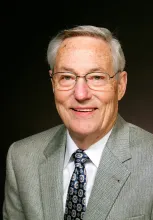
At the time of his retirement in 2016, Roy Holladay was serving the Operation Manager for Ministerial and Member Services of the United Church of God. Mr. and Mrs. Holladay have served in Pittsburgh, Akron, Toledo, Wheeling, Charleston, Uniontown, San Antonio, Austin, Corpus Christi, Uvalde, the Rio Grand Valley, Richmond, Norfolk, Arlington, Hinsdale, Chicago North, St. Petersburg, New Port Richey, Fort Myers, Miami, West Palm Beach, Big Sandy, Texarkana, Chattanooga and Rome congregations.
Roy Holladay was instrumental in the founding of the United Church of God, serving on the transitional board and later on the Council of Elders for nine years (acting as chairman for four-plus years). Mr. Holladay was the United Church of God president for three years (May 2002-July 2005). Over the years he was an instructor at Ambassador Bible College and was a festival coordinator for nine years.
