
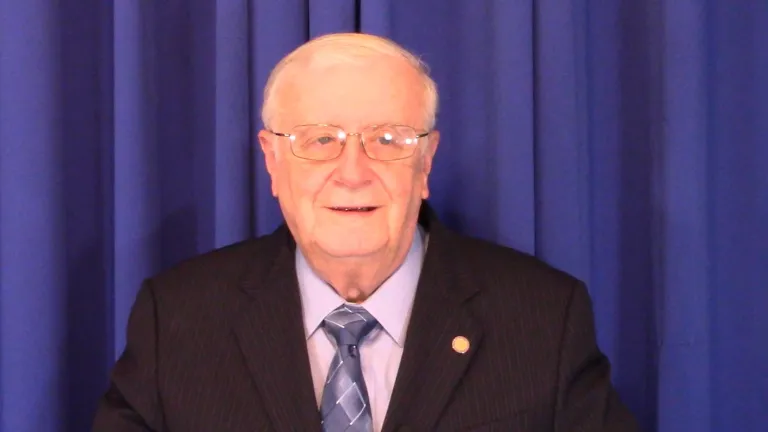

Roy Holladay
Find out how our thoughts and attitudes develop in our brains. Ill thoughts and bad attitudes can be changed to good ones through a renewing of our minds. We can take three action steps to do this as we prepare for the coming Passover.
This transcript was generated by AI and may contain errors. It is provided to assist those who may not be able to listen to the message.
As I mentioned before, it's incredible, but Passover is just a bit over a month away on March 31st. Remember, February only has 28 days. So basically, we're talking about four weeks plus this coming week, and we need to be preparing for it. The Bible is so deep that we can always find a fresh new angle to prepare for it. And so, I've been preparing this message for quite some time. Done a lot of reading to be able to share with you more discoveries and wonderful evidence of what God is carrying out. You tell me later on, if you're not impressed with some of these discoveries, that science backs what the Bible says. Never ceases to amaze me how it works out that way. For instance, a famous American psychologist of the past century, William James, once said, the greatest discovery of my generation is that human beings can alter their lives by altering their attitudes. What is an attitude? It's just a thought pattern that is dominant in a person. You can have a happy attitude, you can have a sad attitude, and that's the way the thought pattern revolves around those ideas. Now, when I read this as a young man, it was a big moment in my life. When I read that quote by that psychologist that said that human beings can alter their lives by altering their attitudes. And when I finally understood it, it made a big difference. I realized that my thoughts and attitudes were not iron-bound by circumstances, but that I could consciously change it by thinking spiritually through prayer and in a positive way to develop a godly and a can-do attitude. It's so important for young people to learn that. You're not a slave to your parents' heredity or the circumstances in which your life is controlled. No, you can alter it. If you alter up here in your mind, what kind of attitude you're going to have.
New discoveries. Oh, here I wanted to say what's so important for youths to learn is what the Apostle Paul said in Philippians 4.13. I can do all things through Christ who strengthens me. So it's not through us, but if Christ strengthens us, he will give us the power to change, to improve our lives, if we have that faith in him. Now, new discoveries about neuroscience, which is the science about the brain, back the Bible. Unfortunately, in the 19th century, under the influence of Karl Marx, Charles Darwin, and Sigmund Freud, and then in the 20th century, with systems such as communism and socialism, and some of its chief proponents, for instance, a psychologist, B.F. Skinner. If you study psychology, you're going to study about B.F. Skinner. And if you study biology, you're going to learn about Richard Dawkins. These two are atheists and anti-biblical professors, and all of this system has duped mankind into thinking that free will and consciousness were just an illusion, because everything was already determined by atoms and matter. It's a theory called materialism, where you think that this whole universe, everything that we do, is matter. It's physical things. There's no such thing as spiritual things that affect us. And people got duped by that.
But there are neuroscientists, such as Mario Buregard, who himself calls himself a non-materialist neuroscientist. He doesn't believe that everything in a human being is just atoms and matter. He believes there's a spiritual dimension through all of his studies.
He says, for many years, neuroscientists believed that the adult human brain was essentially finished or fixed, that everything that happened to us was just programmed. And it's just repeating this program. It's called determinism. Things are determined through heredity, through environment, but you're just a pawn that can't help what you become. And they found out that is false. Oh, I forgot two props that I have here. Let me get them.
This neuroscientist said that the mind and the brain did not and could not change any more than a billiard ball. You see here it's solid, but you can't make this into some type of another thing. It's a billiard ball. This is the way it's manufactured. It's solid. And so scientists back in the 19th and 20th century, under this idea from Charles Darwin and others, they said, no, we're just animals. We just evolve from lizards and from turtles and all these different creatures. People believe them. And so they said, well, you don't really have any spiritual part in your system.
It's all atoms. Your brain is the only thing that counts. And he said, and that individual neurons, which are the nerve cells, did not regenerate. They found out they can regenerate. According to the classical view of neuroscience, in such a fixed system, mental programs were simply run over and over again. Individual decisions did not affect the functioning of the system, but were rather a delusion created by the functioning of the system. Sort of like a computer. Everything's programmed and determined. It's just a matter of how, uh, your circumstances, you just become destined to be a certain way.
And that was taught in the criminal justice system and others that, well, criminals, they can't help themselves. I mean, that's something determined. And they were taught, blame the system, blame society. Don't ever blame yourself for the decisions you made. There's a, since Ron told the joke, I'll tell one too, about this Sigmund Freud, you know, the one who influenced in the 20th century about that our brain and our mind, there's nothing spiritual there. And so this person was, had a neighbor, and all of a sudden the neighbor started kicking over his trash can every week before the trash pickup would come.
And being a nice guy, he went over and he says, why are you doing this? The guy says, well, I like to do it. And so I said, look, I've got a friend that's a psychologist, and guess what? I'm going to give you a free clinical visit to them. And he said, oh, great, I'll go. So he went for two weeks to this psychologist.
And what happened afterwards, there he found already the trash can had been kicked over again. So he went, he said, I paid for these classes, all this money that I paid for them to change you. And he said, well, they did change me. I used to feel guilty about this. Now I don't feel bad at all. See, blame society, blame everybody else. Because Freud said that guilt was something that you shouldn't have. So anyways, going back to this, this Mario Beauregard, he wrote the book, The Spiritual Brain. And he said, in recent years, however, neuroscientists have discovered that the adult brain is actually very malleable, like putty.
If a neural system receives a great deal of traffic, in other words, where are you concentrating your mind? What happens is that in your brain, you start building these furrows, just like when you do farming, where you have rows, where you sow the seed, where it's the same way in the brain that it starts channeling all of this.
And it forms sort of this trowel or this rut. And so your thoughts and feelings and everything, they go down these furrows. Because you see, that's where you've dedicated. And so in a sense, it gets deeper and deeper. This is what neuroscience, he says, if neural systems receive a great deal of traffic, they will grow. That's where you channel things, because of your habits, because of where you focus on.
So it becomes stronger and stronger. These furrows get deeper and deeper. He says, if they receive little traffic, if that's not where your thoughts are, they will remain the same or shrink. So those areas, maybe you want to be a nice person, but you don't act that way. Your thoughts and feelings don't go there. So you see, you don't have that furrow. You don't have that row that has been excavated. That's why I brought my little gardening tool.
See, just like we have here, Bob Diches, our expert. And so you start doing this. As you funnel your actions, you're building these ruts and or furrows. That's where your thoughts and actions go. It says, we can change the patterns of neurons in our brains by doing so consistently. So the more you focus on that, it'll just get to be a habit that's very hard to break.
It says, again, that has been demonstrated by experiments and is even used in psychiatric treatments for obsessive compulsive disorder. People that have these obsessions, they have to wash everything. They just have these kind of paranoia. They can't control.
Howard Hughes got a paranoia about germs, right? And he had to live in this enclosed area, and oxygen, and all of this, because he feared germs. So again, that's kind of an obsessive compulsive disorder. And they can treat it by getting the mind to not focus on that, and to change it. So you eventually fill in that row. And again, that's not where your thoughts go. And now you're filling it on this other side.
The Bible defines this concept in Proverbs 23 verse 7. It says, For as a man thinks in his heart, so is he. So the way you use your thoughts, that's the type of person you will become.
And through our mind, which in the Bible is described as the spirit in man, Job 32.8 says that the spirit in man imparts understanding.
So we carve our neural channels in our brains, where our thoughts, feelings, and desires are dug, like rows or furrows in a field. They can be dug up or covered over, according to the use. For instance, I was mentioning to Cottie when we started our ministry over in San Diego, that a gentleman, very elegant. I remember he looked like one of these golfers that just very dressy and athletic looking. And we always looked up to him. And he invited us to his house. They were in a beautiful place in San Diego. And then we came in the house and he had a couple of, well, snacks and things. And he said, I wanted you to be here because this is my 16th, 16th, 16th anniversary of not taking an alcoholic drink. So for 16 years he was able to overcome the problem of alcoholism. Why? Because he covered over. He covered over where the brain was always focusing. Its attention. And he focused it on other places. And then that's where the ruts were for. No longer are you now controlled by this urge that is such a deep rut and crevice in your mind. But the important thing is, you see, it can't be changed. As Bugard, the neuroscientist, adds, materialism, that theory that only atoms exist, is apparently unable to answer key questions about the nature of being human and has little prospect of ever answering them intelligibly. In other words, that science with materialism, they have hit a wall.
I just read an article and prepared an article. It's called, Why There Are 29 Different Theories About Consciousness. That was written by a Scientific American magazine. 29 differing theories about what is consciousness. What does that tell you? They have no idea. It's utter confusion because they think they can examine this brain that weighs about three pounds and it looks like tofu. And that from there, you develop all of these works of art and the consciousness, self-awareness.
So he goes on to say, it has also convinced millions of people that they should not seek to develop their spiritual nature because they say they have none. And so be careful when you go to these universities because they, most of the teachers, don't believe that we also have a spiritual nature.
So the main point today, a central point, is that we need to be aware our thoughts and attitudes can be changed and renewed according to the Bible. And now it's backed by the prevailing theory of neuroscience. That thoughts and habits are not fixed but can be changed. Isn't that encouraging?
Let's go to Duraami chapter 30. Duraami chapter 30 verse 19.
God is there at Mount Sinai and he says in Duraami 30 verse 19, I call heaven and earth as witnesses today against you that I have set before you life and death, blessing and cursing. Therefore, choose life. Make the rows of your brain go the way of God and life as he wants you to have it and not the curses.
And that you may dwell. He says, therefore, choose life that both you and your descendants may live, have a long, profitable life. That you may love me, the Lord your God, that you may obey his voice and that you may cling to him.
For he is your life and the length of your days and that you may dwell in the land which the Lord swore to your fathers, to Abraham, Isaac, and Jacob to give them. So, see, we learn in the Bible that your brain and your mind, they're not fixed that you somehow, oh, I got this terrible problem. Oh, well, that's the way I am. No, it's because that row has been worked on where your thoughts and behaviors, they all go down this rut. But that rut can be covered over if you don't allow your thoughts and behaviors to dwell on that. Just remove. And so then you can start building the good ruts in your brain, not the bad ones. Notice in Romans chapter 12 verses 1 and 2, Romans chapter 12 verses 1 and 2.
And by the way, neuroscience mentions about cognitive behavior therapy, which is changing your brain to be able to focus on other things to change your behavior. So Romans 12 verses 1 and 2, it says, I beseech you therefore, brethren, by the mercies of God that you present your bodies a living sacrifice, wholly acceptable to God, which is your reasonable service. It's what God created you for, in other words. And do not be conformed to this world, to the false values of the world, but be transformed by the renewing of your mind. That's the title of the sermon. That you may prove what is that good and acceptable and perfect will of God. The term transformed here is where we get our word metamorphosis, which means the conversion of a worm into a butterfly.
In another Scientific American article, November 2025, it said, brain and psychology researchers are delving into how slides down the moral slope begin and what keeps them going, you know, those furrows that are dug.
Initially, we may be horrified at the thought of lying, cheating, or hurting someone. But as we engage in wrongdoing over and over, our brains tend to grow numb to it.
That's where you just digging a trench in your brain, where, of course, it's occupying all your thoughts and attitudes and actions, because that's what you have built. You've done it. You've dug the thing. It's not because you were born that way. It's where you channeled your thoughts and actions. It goes on to say, yet moral, they call it snowballing, which means the tendencies, can also happen in the opposite direction. Surprisingly, just as a neural habituation, which means the creation of a habit, can drive the ethical collapse of a person, you know, going and doing wrong things, it can also drive the escalating spirals of virtue. And because our brains adapt to repeated behaviors, movement in a given moral direction can persist. So, again, where we are focusing our attention is that what we eventually become.
Now, the Bible tells us constantly of this struggle for which habits will be dug deeper into our brains, for good or for bad. Notice Paul described the struggle for the mastery of the mind in Galatians 5, 16 through 26. Galatians 5, 16 through 26.
He says, and I say then, walk in the Spirit, which is talking about the things that God's Spirit guides you, and you shall not fulfill the lust of the flesh. So, you are going to dig those immoral ruts in your brain. It says, for the flesh lusts against the Spirit, and the Spirit against the flesh. So, these are contrary to one another, so that you do not do the things that you wish. So, you might desire something, but if you've built those ruts and they're deep, they're gonna go. Just like water travels downhill, the least resistance, that's what happens to us. That's why we cannot afford to relax and just let our thoughts and desires just go the wrong way, because it'll build this rut in your brain. It'll be harder and harder to break the habit later. It says, but if you are led by the Spirit, talking about God's Spirit, you are not under the law, talking about the penalty of the law. If you're following God, God's grace is there to protect you. You can raise yourself and you can receive forgiveness from God. So, as long as we're doing our part, God will forgive. It says, now the works of the flesh, so let's look at the ruts of evil here. The works of the flesh are evident, which are adultery, that's breaking the seventh commandment, fornication, which is sex between single people, uncleanness, which is again unclean mind, lewdness, lusting, sexually, idolatry, having something more important than God, sorcery, that's all this demonic type of influence, hatred, where you hate other people, contentions, where you cause all kinds of fights and difficulties, jealousies. Jealousies and envy go together. So, a person is jealous of another person. Maybe they want to be like the other person, but with an envy, they begin to hate that other person because it shows them what they should do. Outbursts of wrath, uncontrolled ire, selfish ambitions, the me-centeredness, what I call, instead of selfishness, we should be selflessness.
Selflessness. Desentions, heresies, envy, murders, drunkenness, reveries, and the like, of which I tell you beforehand, just as I told you in the time past, that those who practice such things, they're still in that rut. They don't change. Will not inherit the kingdom of God. Those are the wrong ruts and furrows in the field of our brain. But, here are the good furrows. It says, but the fruit of the spirit is love, joy, peace, long suffering, kindness, goodness, faithfulness, gentleness, self-control. Against such, there is no law. You're talking, God's not going to censure you. There's no law that hinders that, because that is the purpose of God's law. And those who are Christ's have crucified the flesh with its passions and desires. In other words, they've come to the place where they are. They've come to the place where they are. In other words, they've covered up those furrows. If we live in the spirit, let us also walk in the spirit. Every day is a daily walk. Let us not become conceited, provoking one another, envying one another. And so we see here the different ways of life that God has for us. It reminds me of an old Indian story. A boy asks his grandfather, Grandfather, I feel I have a struggle within me as if I had two wolves inside of me, one good and the other bad. Grandfather, which of the wolves will win out? The grandfather answered, it will be the one that you feed.
Again, it's the same system, you know, either neuroscience or Indian wisdom. It's just talking about where you focus, where you build your channels. That's where your brain is going to go. But we control that. We can change it. In 2 Corinthians 10, verse 3 through 6, this tells us very clearly again about the channeling taking place in our brain. Everybody's doing it, whether they know it or not. 2 Corinthians 10, verses 3 through 6, it says, for though we walk in the flesh, in other words, we're human beings, we do not war according to the flesh. We're not into getting involved in the military. He says, for the weapons of our warfare are not carnal. They're not physical. They're not talking about arms and guns and things like that, but mighty in God for putting down strongholds. So it's here, here's the ruts in our brain that have to be put down. Casting down arguments and every high thing that exalts itself against the knowledge of God. Those are all the worldly values, bringing every thought into captivity to the obedience of Christ, and being ready to punish all disobedience when your obedience is fulfilled. So you're watchful. You're careful where your thoughts are going to go. In Romans 13-14 it tells us another additional point about this.
Romans 13 verse 14, it says, but put on the Lord Jesus Christ and make no provision for the flesh to fulfill its lusts, because that's where these rows of channels are going to be dug up.
In the easy version of this verse it says, instead you must live with the Lord Jesus Christ as your guide. Do not even think about the bad things that you may want to do to make yourself happy. In other words, don't satisfy those evil desires.
So there are five spiritual tools God has given us to establish the right channels and to cover up the wrong ones. Number one, prayer. Ready to channel your thoughts throughout the day. Prayer drives us closer to God, and God is like that dynamo. It's that charger.
Everybody has a cell phone they have to charge usually every day. Now you wouldn't walk around with a charger-less cell phone, right? It doesn't have a battery. What good is it? But we can walk all day without prayer. How are we going to charge ourselves spiritually? So that's the first thing. That's how we connect to the dynamo that is God and charge ourselves. Secondly, Bible study. That's the instruction manual. The more we study the Bible, the more we understand what God wants of us. When we pray, we are talking to God. When we study the Bible, God is talking to us. He put it down because He didn't want to have one individual angel per human being that would say, okay, let me explain what the will of God is. And He has to explain the whole Bible to you with the principles so you would know. So God put it in a book.
And it's up to us to read it, to familiarize, because that is the mind of God, which has been put in writing. Thirdly, meditation, which means thinking through the strategy to apply God's principles. You have to meditate on it. That's why, well, in my situation, how would I have solved this? And so you meditate. You rehash it in your mind. What kind of strategy am I going to do? Meditation is the way you talk to yourself about what to do about God's ways. And then the fourth is fasting. Occasional fasting. That's when you've got a problem that's so big that prayer, Bible study, and meditation does not solve it. And so, or do not solve it.
That's bring out the heavy artillery. We're fasting 24 hours without any food or water, and blasting the wrong thoughts and habits. And then the fifth one, and this I heard from Robin Weber about 35 years ago in a sermon he gave over there in Pasadena. Just happened to be visiting minister at the time. And the fifth tool is seek ministerial advice, because that's a tool also. You don't have to know it all. God put a minister there to help out, help you out.
And so this renewing of our mind will take a lifetime effort, and we can never give up or give in. As Christ said in Revelation 2 verse 26, I'm going to read it from the amplified version, Revelation 2, 26, it says, and he who overcomes or is victorious, and who obeys my commands to the very end, doing the works that please me, I will give him authority and power over the nations. So we have to overcome.
In Revelation 21 verse 7 through 8, this is what people have become.
As they are judged by God, Revelation 21 verse 7 and 8, God the Father has come back in the New Jerusalem, and God the Father says, he who overcomes shall inherit all things, and I will be his God, and he shall be my son. Now, what happens to the people who never overcome anything? And even in the future, resurrection, the second resurrection, when they come up in physical life, a lot of people died as drug addicts, or all kinds of terrible things, but okay, they get a chance to learn God's truths, to change the ruts of their minds, and guess what? They say, no, we like the way we are. And so here they come, and they are judged. And it says, those that have established this type of attitude and mindset, but they're cowardly. And the person who never takes a chance with God, they don't have the guts, they don't have the faith, they're always going to run away from the problems. But they're cowardly, that's what they set up in their lives. And they like it. The unbelieving, the abominable, murderers, people who enjoy killing people. And that's the way they don't want it differently. The ruts have gotten so deep.
That's the only thing they think about. Sexually immoral, saucers, idolaters, and all liars, those who just can't tell the truth, shall have their part in the lake which burns with fire and brimstone, which is the second death. They'll be thrown there, and they will die forever. So here are the action steps to take as we near the Passover.
Number one, remember, nothing is written in stone. We are not condemned to be helpless before trials.
Our minds and brains can be renewed, forming new patterns and habits, no matter what they were before. There's no such thing as a sin that's so terrible that God cannot forgive, as long as the person wants to be forgiven. The only thing in the Bible that tells us is the unforgettable sin, it's called the unpardonable sin, is the one that person doesn't want to be pardoned from. The person says, no, I don't want God's forgiveness. I like, they've gotten so perverted that nothing can change their attitude or mind.
So our minds and brains can be renewed, forming new patterns and habits, no matter what they were before, according to what we consistently do. We just have to say, no, I'm not going to continue thinking about that, focusing on that. I'm going to focus on this other thing. I'm going to substitute it for this other way that is good and clean and wholesome. And maybe at first it might, you know, you might have withdrawal pains, just like a drug addict, but eventually you'll break that. And eventually you won't even like or be attracted to that. It can change because, again, those ruts get covered over and no longer do the thoughts fall into these ditches, but they fall into God's way of life. As in Galatians chapter 6 verses 7 and 8 say, and again, these are scriptures to meditate on because they're so truthful. They're so helpful in Galatians chapter 6 verse 7. It says, do not be deceived. God is not mocked for whatever a man sows, that he will also reap. Okay, so you've got that furrow. That's where you're going to sew your thoughts, like seeds. Of course it'll grow and they'll get worse. He says, whatever a man sows, that he will also reap. You will eventually have to eat that harvest of bad fruit. He says, for he who sows to his flesh will of the flesh reap corruption, but he who sows to the spirit will of the spirit reap everlasting life. What a reward! And so, remember that our thoughts and attitudes is what we consistently do for good or bad. That's a wait-line. So the more we sew spiritually, the deeper those ruts are formed in our brain with the fruits of God's Spirit. It is up to us with God's help, and we will have no one else to blame when we go before the judgment seat of Christ.
Number two, also remember what Paul said. I can do all things through Christ that strengthens me. So we know we're powerless without God's help, but with God's help it says we can overcome whatever it takes. God is stronger than any habit, anybody else.
Number three, we need a lot of patience and perseverance, as James 5 verses 7 through 8 says, James 5 verses 7 through 8. I'm going to read it from the Good News Bible. It says, Be patient then, my friends, until the Lord comes. See how patient farmers are as they wait for their land to produce precious crops. They wait patiently for the autumn and spring rains. You also must be patient. Keep your hopes high for the day of the Lord's coming is near.
So we have a job to do, and the renewing of our mind is part of what we need to prepare as a Passover comes closer. So let's begin putting these action steps into practice as we prepare for this coming Passover.
Mr. Seiglie was born in Havana, Cuba, and came to the United States when he was a child. He found out about the Church when he was 17 from a Church member in high school. He went to Ambassador College in Big Sandy, Texas, and in Pasadena, California, graduating with degrees in theology and Spanish. He serves as the pastor of the Garden Grove, CA UCG congregation and serves in the Spanish speaking areas of South America. He also writes for the Beyond Today magazine and currently serves on the UCG Council of Elders. He and his wife, Caty, have four grown daughters, and grandchildren.
