

Frank Dunkle
This transcript was generated by AI and may contain errors. It is provided to assist those who may not be able to listen to the message.
Thank you so much, Robert Bates, for that very rousing presentation. Very beautifully done. With an orchestra behind him, the marvels of what we can do today in a computer with PowerPoint, and it's all dedicated to praising God. So now we're ready for the main message for today. During this past youth camp at High Sierra, one of the themes for the youths there was responding to God. Were they going to respond to God? So that was a question.
And as we discuss this subject among a couple of the ministry there, we focused on the description of how a person is called, and each one separated his section to give in the Bible study on Friday night on responding to God.
The first memory scripture given during the day on Monday as camp started was one that as we got gathered around the flagpole at 7.45 in the morning, and they gave me the position to get everything going. I'd never done that before, so here I was trying to get everything ready for the flagpole raising, the American flag, and the UCG camp flag afterwards. And then we would ask one of the dorms to come forward and to recite by memory the scripture for that day.
And the first one was Acts 2, verses 38 and 39.
Then Peter said to them, Repent, and let every one of you be baptized in the name of Jesus Christ for the remission of sins, and you shall receive the gift of the Holy Spirit.
For the promise is to you and to your children and to all who are afar off, as many as the Lord our God will call. So God is calling people. And especially if you're involved in a family, as the young people come along, they have a special calling. God opens the door for them to be called in a special way. That is not as difficult as going out in the world and calling somebody directly. It's a lot easier when you have a child in the family. God has that door open. That's why it says there in 1 Corinthians 7 that the child is considered as sanctified, which means that they're in a special category before God. That doesn't mean they're automatically called, but the door is open to them for that calling. And so it says here that the promise is to you and to your children and to all who are far off, as many as the Lord our God will call.
Now Christ mentioned in the scriptures the two ways a person can be called to the truth and to God's way of life and the way of faith. There are two ways, and they're both mentioned in Matthew 13 starting in verse 44. We see here Christ is explaining how a person can be called.
Let's go to Matthew 13, 44. And it says, again, the kingdom of heaven, talking about the kingdom of God, it is presently in heaven, but it's coming down to the earth one day when Christ brings and establishes it. He says it's like a treasure hidden in a field which a man found and hid, and for joy over it he goes and sells all that he has and buys that field. So this person is the one who wasn't looking for the truth but stumbles across it. Maybe he has a friend that knows the truth, or maybe he just comes across the church different ways. He wasn't really searching, but he stumbles across it.
This is an interesting description because in Jesus' day they really didn't have banks that you could just go and get a checking account. People basically had their own land, and they had their own house. That was a family house passed on from generation to generation, and sometimes you would hide your money and precious goods inside the house.
Christ said about the thief that he can go in and dig in and get into the house, but sometimes a person would bury it out in the field, and he would just cover it up, and nobody knew what was there. Maybe the person took a couple of paces and he knew exactly what happened. Well, sometimes, though, that person died, maybe an unfortunate accident, and he hadn't told his family where it was at. And so it passed on, and all of a sudden, maybe with rains, there's a little bit of erosion, and somebody walking by that field all of a sudden sees something is sticking out, and he goes and he sees that it is a hidden treasure. And so he finds out that field has not been used for many years, and he goes in, he gathers everything he has and buys that field, and he's able to keep that treasure.
So this is the first way you stumble across God's truth. And the second way is the following verse describes it. Verse 47. Again, the kingdom of heaven is like a... let's see here.
Verse 45. Again, the kingdom of heaven is like a merchant seeking beautiful pearls, who, when he had found one pearl of great price, went and sold all that he had and bought it.
Well, this person is the seeker. He's the one that is searching for the truth.
Just like this person, he knew all different types of pearls, but he really realized this was a special pearl. And so he gathered all, sold all that he had and bought it. Pearls were one of the most precious types of jewels in the ancient world. Of course, diamonds were still under the earth. Basically, people didn't have access to that. And emeralds and rubies, they were popular. But pearls had to be basically brought from the Persian ocean there, and the oysters produced them. And of course, you had to go in deep to get those pearls. And some people actually bought everything or sold everything they had to buy just a pearl. Cleopatra was reputed one time to take one of those great pearls and dissolved it in wine just to show how rich she was. People gasped that she was destroying a beautiful pearl like that. Well, she says, I'm so rich, I don't even miss it. So this is the seeker that is seeking God's truth, and God eventually calls him. Now, if I was to ask everyone, you either have to come across the truth without any notion of looking for it, or you were looking for it, and you came across it in another way. Sometimes a person from their own family, well, they found the pearl, but kids don't necessarily value that pearl of great price. They have to come across and want to make it their own.
So one evening, Jim Tuck, Randy Scriber, and I got together after all the kids had been tucked away and we had a little time, we discussed a little about how our calling happened. And then we thought, as one of the themes is responding to God, why don't we tell the kids our particular story of how we were called into the truth? That might be encouraging to them, because everybody here has been called and has a very interesting story. That's one of the questions I basically pose. When we invite people over to the house or we go someplace, we ask them, how did God call you? And it's always a very interesting story. And so I'd like to relate those three accounts, the one given by Randy Scriber, a longtime pastor in the Phoenix Arizona Church, Jim Tuck, who is the pastor in the Arizona Phoenix Church, and also he is the regional pastor of the Southwest region, and also the camp director now at Camp High Sierra. And finally, my story. Now, I can't relate just every detail they gave, because I was right there at that study, but I'll just briefly go over both of their stories, because they were very interesting, and then relate to you my story, something that I have never fully developed here in church, give you a little more of a personal look about how I was called, and hopefully that will encourage others. We all have a story to tell. Now, Randy Scriber came into church through his family. His father, many of you probably know, Leonard Scriber, worked at Ambassador College. He was a longtime minister and pastor, and so he grew up kind of in the church family. His sister was very interested in the church. She was his older sister, but he said that it wasn't until he was 11 years old that he became interested in the church. What was it that got his attention? He said it was reading that booklet, 1975, in prophecy. He read that, and it was like a light went on in his mind, and he started thinking, boy, God has a lot of things in the future prepared.
And he started believing what he was reading, and he said that at 11 years old, he knew that he was in God's true church, and that from that day on he never doubted that he was in the church. And so at the age of 18, he was baptized. And now about almost 50 years later, he retired. He's over in the Phoenix area. He helped us at Camp High Sierra as a veteran, minister, and pastor. So here's a man. He didn't stumble across the truth, but he came through it because he treasured that pearl of great price. It came to him. He said from that moment on, he never questioned. He never doubted. He just followed the truth the rest of his life. Now, Jim Tuck had a different story. He was not the number two seeker of pearls. He was the one who stumbled across the truth. He lived over in Oklahoma in a farm, and he said he never prayed in his life. They were part of a marginal church at that time. They would go on occasion, but it didn't really mean that much to him. But at the age of 12 years old, his younger brother, who was six, was diagnosed with a brain tumor, and his younger brother was becoming blind.
He was losing his sight. And when they told Jim that his brother had a brain tumor and that the doctors thought that in a couple of months he would be dead and that he was going to lose his sight, he said that shook him up so much because he loved his little brother. And he said from that day on, he started praying to God for his brother to be healed, for his younger brother not to die. And so he prayed for his brother every day, and his brother improved.
And although he eventually did lose his sight, his brother was able to be married, have a job, have children, and he's still alive today. And so it got his attention that God listened and that he drew closer to God. And so around the age of 16 or 17, because he was praying every day, that he was reading more of his Bible, and he came across the Sabbath day.
And so he has his friend who was also studying with him, said, why don't people keep the Sabbath day? Why do they keep Sunday? And his friend said, well, it's just been changed now. And Jim says, yeah, but I don't see that in the Bible. I see that Jesus Christ kept it, and it's a fourth commandment. And so he wasn't convinced. And so the church that he was in, he quit attending, and he started looking for a Sabbath-keeping church. He and his friend, because his friend also thought that wasn't a good explanation, that God just sort of changed one day that's holy to another day. And so they started attending a Seventh-day Adventist church. But pretty soon, studying more, he said, well, there are these annual Sabbath days. There are these holy days that God also has as commandments in his Bible. And so he and his friend also started looking for a church that kept the feast days. And so they came across, there in Oklahoma, the Church of God's Seventh-day, which is kind of an ancestor to our church. That's the same church Mr. Armstrong came across back in the 1920s. And so they started attending, but they noticed that the Church of God's Seventh-day didn't keep all the feast days. They didn't keep tabernacles. They didn't keep the unleavened bread. They just kept the Passover, Pentecost, and such. But they didn't keep the rest. So they said, well, it's not good enough. We know that God made those days holy, and so we need to find a church that keeps all the feast days. And so they came across what is the continuation of this church.
In those days, it was called the Worldwide Church of God. And so he started attending. And then, around the age of 20, he went to college one or two years. He went to Ambassador College in Pasadena. And sure enough, I came along about a year later, and we became friends there at college. I was a classmate of Joan Tuck, his wife. I knew them there in the early 1970s.
And so he said that as he was growing in understanding, he said he got to a point around 17 or 18 years old where he knew about the Sabbath day, he knew about the feast days, but he still wasn't totally convinced. The world was still drawing him in these false values. He, of course, was a young boy in high school, and he saw the world out there. And here he was, keeping the Sabbath. At first, they started keeping it on their own before they found a church.
And he said he wasn't fully convinced. He was sort of wanting to drift back and just be normal, and regular, and go back to his old ways. And so he wondered why God wasn't fully helping him. He didn't feel that strength, that guidance, what in the first message, those fruits of God's Spirit, he just didn't feel it. And what happened, he had a dream one night in which he found himself on this island where there was a bridge, and he could see that bridge led to the kingdom of God. He could see that other great continent where this island, the bridge, was going to. But he noticed there was also another bridge, and it went back to the world and its false values. And so he realized what God wanted him to do was to burn down that bridge to the world.
And so he thought about it, and in his dream he said he burnt down that bridge. He wasn't going back to his old ways, to his old beliefs, to his old values. And once that happened, he said the next day he felt very different. God was with him. God guided him, because you see he had shut out that old way, which was still tempting him. It was like he didn't know which way to go, forward or back. But burning that bridge meant that he wasn't going back. And so that was a very interesting dream. And in Job, let's go to Job 33 in verse 15.
There are times that God can send a dream to a person to encourage them, to give them guidance. Notice what it says in Job 33 verse 15.
He says, starting in verse 14, it says, for God may speak in one way or in another, yet man does not perceive it. Sometimes God is calling the person, and a person is not aware, doesn't see all the signs and signals that God is trying to get their attention, trying to encourage and guide them. He says, in a dream, in a vision of the night, when deep sleep falls upon men, while slumbering on their beds. Then he opens the ears of men, and seals their instruction in order to turn man from his deed, and conceal pride from man.
He keeps back his soul from the pit, and his life from perishing by the sword. And so this is a way that God gets our attention. And so Jim Tuck mentioned that that was the deciding moment in his life, when he burned his bridges back. And from then on, it was clear he had to go forward. He had to pursue that path into the kingdom of God. Then, in this Bible study, came my turn. Now, I was called in the first way. I wasn't searching for the truth. I stumbled across it. At the tender age of 17, I thought all my life was planned ahead of me. It looked pretty clear to me. I was going to follow my dad's footsteps. He was a medical doctor in Murphy, North Carolina. And I actually worked at the hospital as an orderly helping nurses from basically getting out of school and working for eight hours until 11 o'clock at night as an orderly, just to be able to make a little more money. That was during the week.
And I liked the profession. I liked to help people that are sick. And of course, we had people in our houses that would come at night. At that time, we didn't even have any locks that we locked the door. Sometimes we'd be there around 9 o'clock watching TV, and some farmer or someone from that Appalachian area would come into the house. Hey, Doc, I've got this problem. We just welcome him like nothing special. So we grew up around that type of atmosphere.
And I was going I was getting close to finishing high school, so I applied for the University of North Carolina at Chapel Hill to study medicine. And they accepted me, so I thought, okay, looks like my path is pretty clear. I'm going to just get a career, study medicine, follow my dad's footsteps. But then I stumbled across the truth, the inconvenient truth in that sense, because it was a friend in school whom I liked to play chess with. We'd go over to his house, and he had been recently baptized in the church at 17. And so he gave me some literature to read, and it really got my attention.
The part that got most my attention was prophecy. I saw the Bible as a type of a time machine, that you can go back and it'll describe the past. You can go forward, describes the present, and also go ahead into the future, where it tells you what's going to happen. And I proved that that was not something any man could have written. I proved that the Bible was true, and that I should keep God's commandments. And so here I was, now with a different view of life. What was I going to do with that truth?
That was a moment of decision. Was I going to forget it and just go forward like I'd never seen it? I remember a gentleman, when Cottie and I got married and we were assigned to the church in San Diego, that we got a call about a gentleman that wanted us to visit him at the hospital. And when we went there, it was this doctor who was in his probably late 50s, and he came to the pastor and myself and he said, I knew the truth 30 years ago, but I decided not to follow it.
I followed my own interests. Now I have kidney cancer, and it's spread from one kidney to the other, so I know I don't have much life to live. But I still want to go back. I want to be baptized before I die, because I know that I should have followed that other way, but I didn't have the courage to do so. And that got my attention. I thought, man, I could have been there, too.
And so at 17, one of the influential parts of this was my father. He had been a freedom fighter in Cuba. He had been part of the Bay of Pigs invasion. He didn't invade at that time. He was one of the coordinators in Havana, coordinating the Bay of Pigs invasion, and he fought Fidel Castro through all that time, risked his life for the freedom of that country, and finally he was arrested, ordered to be shot. But he was able to talk his way out of getting shot, and they put him in a makeshift prison in Havana, where my grandmother, through her political influence, got him to the Venezuelan embassy, and from there they took him out hidden to Venezuela, and he made it back to the States.
But my dad was a very courageous man. He risked his life. He risked everything to try to gain the freedom in Cuba, and he was also a very honest man. He was one of the most intelligent doctors that I ever knew in my life. He was a college professor back when he graduated from school. They offered him a professorship at the university, they're at the medical school, and yet he died a poor man.
The only thing we had left was a house that we bought when we moved to Murphy. There wasn't practically, I don't know, maybe there was a couple of thousand dollars in the bank account, maybe that much. We never received anything because my mother had the house. That's all that was left. My father could have made a fortune, but he never was concerned. He was a very honest man, discharged a minimum amount, so that got my attention. So here I am, now I'm facing the truth. What am I going to do?
Am I going to show my father's courage and honesty, or am I going to show cowardice and fear?
And so at that time, I decided I'm going to follow this truth, no matter what it costs. I know I'm going to lose my family support, support for my friends. I'm going to go through a lot, but I have found that that's the truth, and I don't want to turn my back on it. And so I went ahead and applied for Ambassador College. I got there in 1971, tender age of 18 years old. Basically, just a year before, I was planning all of this life out, and now I was completely in a different world. Again, I attribute it to God's calling. He's the one that does the work. I must say, at seven, I lost everything. Country, everything that you cherished. We made it to the states with our shirts on our back and start anew. And so the the tensile around this world and society was burned through. I knew that you can lose everything you have from one day to the next. And so I didn't have that love for society quite as much as a person that's never lost it all and realize how quickly that can happen. So I put my career on hold and decided to go to Ambassador College. Now, it's interesting. I didn't tell this to Jim Tuck because, of course, he was very busy at camp. But I also had a dream when I came across God's truth that was very encouraging. I feel this came from God. Now, a lot of people have weird dreams or all kinds of things that you shouldn't accept. God says in 1 John, verse 1, try the spirits to see if they're from God. Not all the dreams are from God as well. But I had a dream when I came across God's truth that was very encouraging.
And it was one of those dreams that was kind of like in a deep sleep. And while I was in Havana, Cuba, as a young boy, probably six years old, my parents took me to an amusement park.
And in one of those places, they had what they called the House of Mirrors, where you had all kinds of mirrors and it was very interesting. But what happened? My mother went someplace while we were there, and I just went inside. There wasn't anybody manning the place. And so I found myself in this huge house of mirrors, and I didn't know how to get out. I started panicking because every time I'd go to a mirror, I thought that was the door. Well, it wasn't the door. It was a reflection of the door. So I was bumping my head here and there. Of course, I started crying. My mother knew where I was pretty soon. She came and she rescued me from that. Now, of course, many years later, I hadn't thought about that. But after I came across God's truth, I had a dream where I was in that amusement park again, and I was inside that house of mirrors, but it was at night. No one else was around. I was inside with all of these mirrors, and there was just one candle that lit. And of course, it reflected in all the mirrors. So here I was. I tried to grab that candle, and it was just a reflection in a mirror. So again, I felt that desperation until I turned one pathway. And what did I find? On a table was this lit candle, kind of like on a candlestick, and I was able to grab it. And it was the right candle, and I was able to make my way out of that place. And to me, it was God telling me, this is the genuine item. These are not all the distortions of truth. You have found a genuine item, and with this it'll lead the way. And after I woke up that next day, I also just felt, well, this is the truth. And I don't have to go looking for it anywhere else.
Now I just have to follow its lead. It says there in Psalms, one of the Psalms, that his word is like a lamp onto my feet. It leads the way. And so sometimes God encourages us. I don't know how many, if I asked here, how many have had a dream that God has encouraged you somehow. Yes, let's see, raise your hands. Quite a number of people. That's interesting. One day, we'll have to get together and share that. But it says in the Bible that that's one of the ways God communicates with a person, to encourage them. Now, that wasn't the only powerful experience. I had one more that was even more powerful than that. Again, at 17 years old, before being baptized, I had that dream and I had this other impression, this other experience. This is the strongest.
And it happened while I read the booklet, The Ten Commandments.
And I found there that the Ten Commandments are to be kept not only in the letter, but in the Spirit. See, it's not just a matter of doing the physical thing that gets you into trouble. It's also the mental part. So you might hate somebody. You might not kill them.
You might never do that action. But in your heart, you can assassinate that person.
You can lust after something. You might not steal it physically, but you're lusting after it. Or you might have envy or pride or vanity. So many things that, although you don't break anything physically in your mind, you are breaking that commandment. And so as I went through those Ten Commandments, I realized I had broken every one of them, if not in the letter, at least in the Spirit.
I knew what hate was. I'd gotten into fights with my sister. I'd gotten into fights with some of the kids. I had to face a bully and attack me. And boy, if I could have beaten him up good. Unfortunately, he beat me up good. He came home with a big black eye. So you experience these physical and carnal emotions. I had idols as a Catholic. I had a big silver crucifix hanging on the wall that my mother had brought from Cuba.
After I learned I shouldn't have any idol of God, I took it, opened the window, and threw it out as far as I could in the deep woods behind my house. I knew about envy. I knew about lies.
So I examined myself, not how I saw myself. Person feels, well, I'm a pretty decent person.
I don't do any of those other bad things people do, like criminals. But you see, God gave me the gift of seeing myself as He sees me. And I realized I was a carnal, selfish person up to that point.
And then I was completely deflated, breaking all the commandments. I felt pretty worthless, and I asked God for forgiveness. I had touched rock bottom. I knew I deserved death.
Not so much for what I did, but for what I was. Romans chapter 3 verse 23. I read this. It says, for all have sinned and fall short of the glory of God.
So we are all guilty to one degree or another, but there is what it tells us in Romans 6.23, for the wages of sin is death, but the gift of God is eternal life in Christ Jesus our Lord. So the penalty of sin is death. And so I felt worthless. I knew I deserved death.
And I never doubted that I was guilty. I accepted the verdict, guilty as charged.
So I sought forgiveness. From that spiritual and emotional bottom, I surrendered to God.
I would no longer fight Him. I would no longer struggle against Him.
It was His way, not my way.
I gave up fighting Him. I surrendered to Him.
And I knew I needed to get baptized, to bury all of those sins and be free and clean.
I was baptized at 18, forgiven of my sins, and I had inner peace. I felt now I didn't have all of those sins on my shoulders. Notice in Romans chapter 5 verse 1, it says, So I was forgiven. Christ paid with His death for my sins.
And I was declared not guilty.
So now I would let God lead the way, wherever He wanted, whatever He wanted for me.
I didn't think about becoming a minister. That's up to God. I just wanted to be a good member in the church, a good servant, do my part to participate. That was my ultimate purpose, to be a good member in the church, wherever I would go.
And so He led me to Ambassador College.
I was there four years, graduated with a degree in theology and Spanish.
And thanks to God, I found the right wife. I found the right way of life, the best way of thinking and living, and the best of all possible lives on earth. I'm still imperfect. The work is not finished. There's plenty to improve upon.
But that is my story of responding to God and how He called me 47 years ago. I'm still in the Christian battle. I'm still looking forward to that kingdom of God.
I hope this will also encourage you well.
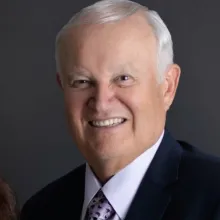
Mr. Seiglie was born in Havana, Cuba, and came to the United States when he was a child. He found out about the Church when he was 17 from a Church member in high school. He went to Ambassador College in Big Sandy, Texas, and in Pasadena, California, graduating with degrees in theology and Spanish. He serves as the pastor of the Garden Grove, CA UCG congregation and serves in the Spanish speaking areas of South America. He also writes for the Beyond Today magazine and currently serves on the UCG Council of Elders. He and his wife, Caty, have four grown daughters, and grandchildren.
