

Don Ward
This transcript was generated by AI and may contain errors. It is provided to assist those who may not be able to listen to the message.
The sun is set in Jerusalem, the future capital of the world. There are some seven or eight hours ahead of us. At sunset, and as I said, the sun has set there, observant Jews began the observance of the ninth day of Av. Av is spelled A-V. Av is one of the first words in the Hebrew dictionary. It is the fifth month of the sacred calendar. The Jews consider the ninth of Av to be the most important day of the year, second only to the day of atonement. The reason for that is because of so many sad events have happened, have occurred on the ninth of Av. Will the next 24 hours bring tragic events to the tiny nation of Israel? Probably not, hope not. But some have speculated that some kind of major event will happen during the Olympics this year that will bring the world closer to a major war. The name Av, A-V, literally means father. It derives, the root does, from the will to desire. The ninth of Av is called the saddest day on the Jewish calendar. Even sadder, as far as sadness, is the day of atonement. Because the day of atonement is really quite a celebration in the sense of having sin expiated and Satan put away. The 12 months in the Hebrew calendar, if you would turn to 2 Kings, for the most part in the Hebrew calendar, the months are just called first month, second month, and so on. In 2 Kings 6, we hear quite often because of sermons around unleavened bread and Passover of the first month of the sacred calendar, in which in English we call it nisan. The Hebrew name is Avib, A-V-I-V, sometimes spelled A-B, as in boy, A-B-I-B, and it has to do with first fruits and the spring. But in 2 Kings 6, you'll see some months named here. In 2 Kings 6, verse 37, since 2 Kings 6 doesn't have a verse 37, I would assume that this is not right. Anyhow, wherever I was looking for in King names a couple months, by the way, a different name. For example, it talks about the eighth month named B-U-L, bull. But most of the months now are named in English.
Nisan. What verse is it? What? 1 Kings 6. 1 Kings 6, verse 37. 1 Kings in the fourth year was the foundation of the house of the Lord laid in the month Ziph, and Ziph is the second month. And in the eleventh year, in the month bull, B-U-L, which is the eighth month, was the house finished throughout all the parts thereof. And according to all the fashion of it, so was he seven years and building it. So to name those twelve months, and of course because the Hebrew calendar is on a nineteen year time cycle, there are at times an extra month inserted, and that would be sometimes they call it 8R1 or 8R2. So you have the Nisan as the first month. I always say Nisan, the brand of the car, which is wrong. It's Nisan, or a bib, and then you have I-e-r or Ziph, Z-i-f, the second month, then Sivan, and Tammuz, the fourth month, and then Av, the fifth month, then Elul, the sixth month, Tishri, the seventh month, also called Ethonym, Chasban, the eighth month, or Bul, B-U-L that we read, and Kezalu, the ninth month, Tevet, the tenth month, Shavat, the eleventh month, Adar, the twelfth month, and sometimes you have Adar 1 and Adar 2, depending on whether or not an extra month is inserted to catch up the calendar. The night of Av is a fast day to remember several tragedies that befell the Jews during the 21-day period between the seventh of Tammuz and the night of Av. Remember, Tammuz is the fourth month and Av the fifth month. The three weeks begin with the fast of Tammuz on the seventeenth. Here are some of the major tragedies that have occurred during this period. One, the sin of the spies caused God to decree that the children of Israel who left Egypt and wanted to return would not be permitted to enter the land of Israel. Supposedly, that was pronounced on them on the ninth of Av. The first temple was destroyed on the ninth of Av. The fire was set. The second temple was destroyed on the ninth of Av. Betar, the fortress to hold out against the Romans during the Bar-Kobo Revolt in the year 135, fell, sealing the fate of the Jewish people on the ninth of Av. One year after the fall of Betar, the temple area was plowed on the ninth of Av. In 1492, King Ferdinand of Spain issued the expulsion decree on the ninth of Av. That is, he said that there was not a Jew to be found on the land in Spain. Not a single Jew would be able to walk on Spanish soil. And then World War I, which began the downward slide to the Holocaust, began on the ninth of Av. It is also said that Moses broke the first set of the tablets of the law on the ninth of Av. So a lot of very sad events occurred on the ninth of Av. In addition to the Day of Atonement and the ninth of Av, there are four vasts mentioned in the Bible. In addition to Atonement and the ninth of Av, so let's go to Zechariah chapter 8. Zechariah chapter 8.
I hope that our younger people will also be able to follow much of this, because a lot of what we used to know about pagan origins of various things seemed to be very rarely discussed and talked about in the Church anymore. And very seldom do we even write about it. But many of the practices and many of the things that you see in today's world trace their origins all the way back to the book of Genesis, and especially to the time immediately after the Flood and the days of Nimrod and the building of the Tower of Babel. In Zechariah chapter 8, and we're going to read into those four vasts and pick up the context.
A little bit once again about the background of Zechariah, the Jews had gone into captivity under the hands of Nebuchadnezzar from 604 to 586 B.C. The Temple was destroyed and burned in 586 B.C.
In 539 B.C., the Persian emperor Cyrus issued a decree to return and build a temple. And so a contingent led by Zerubbabel and Joshua, Zerubbabel the governor and Joshua the high priest, and a number of Jews took leave from Babylon, where they had been in captivity, and returned to the land of Palestine or Israel. They started work on the temple, and they got the foundation laid fairly quickly. But 20 years passed almost, and nothing much had been done. So in 520 B.C., God raised up two prophets, 520 B.C., two prophets to stir them up and to help them build the Restoration Temple. Those two prophets were Haggai and Zechariah.
In Zechariah chapter 8, and beginning in verse 13, we'll pick up here with the way it's going to be in the future. In other words, these are millennial words.
So many of the nations in the Middle East, and of course Israel is surrounded by hostile neighbors on every side. And increasingly, the nations throughout the world are viewing Israel and the Jews in a very negative light.
And the Bible says, And it shall come to pass that as you were a curse among the nations, O house of Judah and house of Israel, so will I save you, and you shall be a blessing. Fear not, let your hands be strong. For thus says the Lord of Hosts, As I thought to punish you when your fathers provoked me to wrath, says the Eternal Hosts, And I did not change my mind, and says, And I repenteth not, that Hebrew word for repenteth here does not have anything to do with sin. We recently had someone write into the home office and say, What does it mean when it says in the Old Testament about God repenting? Well, you have to look at the Hebrew word, and the Hebrew word means to be sorrowful, to be grieved, to change one's mind. It has nothing to do with repenting of evil. So again, have I thought in these days to do well unto Jerusalem and to the house of Judah, fear you not. These are the things that you shall do. Speak to every man the truth to his neighbor. Execute the judgment of truth and peace in your gates.
The principal reason why Israel went into captivity along with the worship of idols was that they refused to exercise judgment, mercy, and faith with their neighbors and with themselves, among themselves, and with God. See, judgment, mercy, and faith, that is the first work that you are to do. Just look back there at page 7. Chapter 7, verse 8, See, the first work in Revelation, verse 9, Revelation 2, and the message to the church at Ephesus, it says, this is, I'm sure, Revelation 2.5, I'll just quote, says, Repent and do the first works. Of course, some might say, well, what are the first works? The first works, you cannot get anywhere with God unless you exercise judgment, mercy, and faith and be reconciled to God. It's sort of like the two great commandments, to love God with all your heart, mind, and soul. The second is like unto it, you should love your neighbor as yourself. So to exercise judgment, mercy, and faith before God and your neighbor is to walk in a reconciled position with God and your neighbor all the time.
That's what God is expecting. In Micah, we're coming back here to Zechariah in just a minute. You look at Micah 6 and verse 8. Micah 6 and verse 8, He has showed you, O man, what is good and what does the eternal require of you, but to do justly, to love mercy, and to walk humbly with your God. In essence, the same as saying, exercise judgment, mercy, and faith.
Then in Matthew 23, 23, Matthew 23, 23, You pay tithe of the men of Annasim coming, but you have neglected the weightier matters of the law, judgment, mercy, and faith. These ought you to have done, and not leave the other undone. But they were more interested in doing the physical.
And to this day, the Jews are still more interested in doing the physical, and they're looking for a physical leader and a physical Messiah to come and deliver them. And they have rejected Jesus Christ. Continuing in Zechariah, Zechariah 8, verse 17, And let none of you imagine evil in your hearts against his neighbor, repeating what you've read in chapter 7, And love no false oath, for all these things are things that I hate, says the Eternal.
And the word of the Eternal Host came unto me, saying, Thus says the LORD of Hosts, the fast of the fourth month, the fast of the fifth, the fast of the seventh, and the fast of the tenth, shall be to the house of Judah, joy, and gladness, and cheerful feasts. Therefore love the truth and peace. Thus says the Eternal Hosts, that shall yet come to pass, that there shall come people, and the inhabitants of many cities, and the inhabitants of one city shall go to another, saying, Let us go speedily to pray before the Eternal, and seek the Eternal of Hosts.
I will go also. Yes, many people and strong nations shall come to seek the Eternal of Hosts in Jerusalem, and pray before the Eternal. There's going to be a Spiritual Olympics. The Spiritual Olympics will require all nations, like 210 or 12 or whatever nations represented at the physical Olympics in London this week and next week. There's coming a Spiritual Olympics, as it were, when all nations will be required to go up to Jerusalem and keep the Feast of Tabernacles, and if they don't, they will get no rain.
So those... let's look at these feasts. The fourth month, the fast of the fourth month. We'll go now to Jeremiah 52 and verse 6. Jeremiah 52 and verse 6. Jeremiah 52 and verse 6. And the fourth month, and the ninth day of the month, the famine was sore in the city so that there was no bread for the people of the land. Then the city was broken up, and all the men of war fled and went forth out of the city by night by the way of the gate between the two walls, which was by the king's garden.
Now the Chaldeans were by the city round about, and they went by the way of the plain. Now originally, the fast was observed on the ninth of Tammuz, the fourth month, as it says here. Since that was the day Jerusalem fell prior to the destruction of the first temple in 586 B.C., however, since Jerusalem fell on the seventeenth of Tammuz prior to the destruction of the second temple, the sages decided upon a combined observance for both tragedies. So the sages moved it to the seventeenth. You read here where in the Bible it says on the ninth. The fifth month, the ninth of Av, when the temple was burnt, you look down in verse 12, now in the fifth month, in the tenth day of the month, and once again here you have the Bible saying, the tenth day of the month, and the Jews actually observing it on the ninth.
And we'll explain why they did that in just a second. Now in the fifth month, in the tenth day of the month, which was the nineteenth year of Nebuchadnezzar, king of Babylon, came Nebuchadnezzar, captain of the guard, which served the king of Babylon into Jerusalem, and burned the house of the eternal. They burned the temple, and the king's house, and all the houses of Jerusalem, and all the houses of the great men burned he with fire.
How then are the dates to be reconciled? The Jews observe it today on the ninth of Av. The Bible here says on the tenth. And here's what the sages say about that. On the seventh, the heathen entered the temple, eight therein, desecrated it. Throughout the seventh, eighth, and towards dusk, on the ninth day, they set fire to it, and continued to burn the whole of the day. So the rabbis then explain the choice of the night as the date.
The beginning of any misfortune when the fire was set is of great moment. So they say, well, the fire was set on the ninth, and it continued to burn into the tenth, and it burned down on the tenth, and they observe it on the ninth. Then in Zechariah we read that there was a fast of the seventh month.
This is the fast of Gedaliah, held on Tishri the third. It commemorates the killing of the Jewish governor of Israel, a critical event in the downfall of the first commonwealth. We go now to Jeremiah 40 and verse 8. Jeremiah 40 and verse 8.
Read these verses a few times.
See, that was a message that Jeremiah had brought to Judah. He said, don't resist this invasion because this invasion is from God. This is God's wrath upon you. Don't resist it. You know, for that, Jeremiah was accused of being a traitor. He was thrown into the pit only to be rescued, barely escaped with his life, as they say. And then after the temple was burned, there was a small remnant left. And this Gedaliah was appointed the governor of that remnant, and he was telling them to do as God has said, and things will go well with you. Now we go to chapter 41 and verse 1.
Then a rose ishmael, the son of the son of Vellashima, of the royal seed, and the princes of the king, even ten men with him, came unto Gedaliah, the son of Ahachim, to Mesopah. And there they did eat bread together in Mesopah. Then a rose ishmael, the son of... I'm not going to read this son's stuff every time, and the ten men that were with him, and smote Gedaliah, the son of Shaphan, who was the son of the sword, and slew him, whom the king of Babylon had made governor over the land. Ishmael also slew all the Jews that were with him, even with Gedaliah and Mesopah, and the Chaldeans that were found there, and the men of war. So they observe a fast for the slaying of Gedaliah in this case, in the seventh month on the third day, a month of Tishri. Then the next one, the tenth month that... fasted the tenth month that is mentioned by Zachariah, the fast of Tevet, is beginning of the siege of Jerusalem. It was also proclaimed a memorial day for the six million Jews who died in the Holocaust. So we go back to Jeremiah 52, and this is when Nebuchadnezzar set his face against Jerusalem in Jeremiah 52 and verse 4. And it came to pass in the ninth year of the reign in the tenth month of Tevet, in the tenth day of the month, that Nebuchadnezzar, king of Babylon, came to and all his army against Jerusalem and pitched against it and built forts against it round about. So the Bible talks of those four fast, in addition to atonement, and there is another one as well. So if you were to fast all the days that are contained, talked about in the Old Testament, you would be fasting at least probably every other month. Not exactly in that order, but equal to that five or six times a year. There's also the fast of Esther on Adar, or Adar 13. Turn to Esther 4. Esther 4. Probably haven't turned there today. Neither have I. Yeah, I did. I did online. In Esther 4 and verse 12. You know the story of Esther, that Esther had been made queen of the Persian Empire. She was probably 19 or 20 years old, and she had not been called before the king for several days. Her uncle Mordecai had heard of a plot that the evil Haman had against the Jews, that he was plotting to kill every Jew in the land and purge them from Persia. So Mordecai comes to Esther, the queen. Esther, of course, his niece, Mordecai, her uncle. And he says this is the plot. This is what they're planning to do. The only hope we have is for you to go before the king and to plead our case.
And according to Persian law, if you came before the face of the king and he did not bid you to come, you'd be put to death. That is, if you appeared without invitation. And so Esther, at first, repeated those words, basically.
And Mordecai's response. And Esther 4, 12, and they told to Mordecai Esther's words, then Mordecai commanded to answer Esther, Think not with yourself that you shall escape in the king's house more than all the Jews. You're a Jew, too. Are you going to be spared? For if you altogether hold your peace at this time, then shall their enlargement and deliverance arise to the Jews from another place. But you and your father's house shall be destroyed. And who knows whether you'll come to the kingdom for such a time as this. I don't know how we can get it through our cross to the people who call themselves members of the body of Christ, the Church of God, the true Church of God, at this critical, crucial juncture in human history. The seriousness of the times in which we live. Because in one sense, it does seem like a verse we will read later of all things continuous from the beginning, and there is this pseudo sense of everything's all right out there. And we're blessed to be able to still meet, as we do in this building, in relative peace.
Dr. Baker sent me an article this week about a situation in Miami where, because the pastor there is preaching against homosexuality, they're going to drive him out of the building. Of course, they're trying to resist. But all of the forces are going to be unleashed against the people who really know the truth and practice the truth.
And if our lamps are not filled with oil, and the Word of God is not hidden in our hearts, we won't be able to stand during this time. Then Esther bade them return Mordecai this answer, verse 16. Go, gather together all the Jews that are President Shoshan, and fast you for me, and neither eat nor drink three days and nights. I also and my maidens will fast likewise, and so will I go in unto the king, which is not according to the law, and if I perish, I perish.
Well, the long and short of the story is that the king, Bader, come in. She told of Haman's evil plot, and the table was turned, and the cards were turned against Haman. And the result of that is what is called the Feast of Purim, in which the Jews were spared from the evil plot of Haman. So we go to Esther chapter 9, and verse 24. Because Haman, the son of Hamadatha, the Agai, the enemy of all the Jews, had devised against the Jews to destroy them and had cast poor, that is, the lot to consume them and to destroy them.
As Purim is like casting a decree or a lot to destroy them, but the tables were turned on him. But when Esther came before the king, he commanded by letters that his wicked device, which he devised against the Jews, should return upon his own head, and that he and his son should be hanged on the gallows. Wherefore they called these days Purim after the name of Pur. Therefore, for all the words of this letter, and of that which they had seen concerning this matter, which came in unto them, the Jews ordained and took upon them, and upon their seat, upon all such as join themselves unto them.
So as it should not fall, that they should keep these two days according to their writing and according to their appointed time every year, and that these days should be remembered and kept throughout every generation, every family, every province, every city, and that these days of Purim should not fail from among the Jews nor the memorial of them that perish from their seed. Then Esther, the queen, the daughter of Abbahel, and Mordecai the Jew wrote with all authority to confirm the second letter of Purim.
And he sent the letters unto all the Jews to the hundred and twenty and seven provinces of the kingdom of Asheris, with words of peace and truth, to confirm the days of Purim and the times appointed. According as Mordecai the Jew and Esther the queen had enjoined them, and as they had decreed for themselves and for their seed in the matters of the fastings and their cry.
And the decrees of Esther confirmed these matters of Purim as it was written in the book. So in so many cases when the times were critical and the backs were against the wall, they turned to prayer and fasting, and God did respond and heard their prayers. Now let's go back to the month of Tammuz, the fourth month, and the ninth of Av. From the seventeenth of Tammuz, which is the fourth month, to the ninth of Av, it's twenty-one days. This twenty-one days is called the time of straits.
It's a time of preparation. It's a time of great concentration and meditation. We want to go now to Ezekiel and look at this word Tammuz, and who is Tammuz and what is this about? The first reason we talked about that the Jews went into captivity centered on not willing to exercise judgment, mercy, and faith. Now look at this. The other great reason had to do was they turned from idols, they turned from the true God and worshipped and served idols.
Ezekiel 8 and verse 14. Remember briefly the background of Ezekiel. Ezekiel was a young man. What the ancients did, these empires and dictators that arose in the ancient world, when they went in to conquer a land, they would try to take away the leaders and the intelligentsia, the brightest and best of the population, and bring them to their land, and hopefully indoctrinate them into their way of thinking and thought so that they would have the benefit of their minds and whatever they could contribute.
You remember Daniel and his three friends went to what I call graduate school in Babylon, and they exceeded the learning of all the Chaldeans, and yet they remained faithful to God. In Ezekiel 8 and verse 14, Ezekiel was one of those young men that had been transported, taken into captivity from Judah into Babylon, and he writes concerning visions and things that God gives him concerning what was going on back in Jerusalem.
And also, there is within this the implication of, you need to repent more than implication, the appeal. Ezekiel 8 and verse 14 brought me to the door of the gates of the Lord's house, the temple, which was toward the north, and behold there set women weeping for Tammuz. Then said he unto me, Have you seen this, O Son of Man? Turn you yet again, and you shall see greater abominations than these.
And he brought me into the inner court of the Lord's house, and behold at the door of the temple of the Eternal, between the porch and the altar, were about twenty-five men, with their backs toward the temple of the Eternal and their faces toward the east, and they worshiped the sun toward the east.
Of course, this is the origin, to a large degree, of Easter sunrise services. Then he said unto me, Have you seen this, O Son of Man? Is this a light thing to the house of Judah, that they commit the abominations which they commit here? For they have filled the land with violence, have returned to provoke me to anger, and lo, they put the branch to their nose.
Therefore will I also deal in fury, mine eyes shall not spare, neither will I have pity. And though they cry in mine ears with a loud voice, will I not hear them. Who is Tammuz? Tammuz was also called the Queen of Heaven. There are various names for Tammuz throughout the nations of the ancient world and in the Bible. Look at Jeremiah 7, 18. Jeremiah, of course, the prophet on the scene, as Judah was going into captivity under the hands of the Babylonians, he talks about the Queen of Heaven, which is the counterpart of Tammuz, in Jeremiah 7, verse 18. Jeremiah 7, verse 18.
The children gather wood and the fathers kindle the fire, and the women knead their dough to make cakes to the Queen of Heaven, and to pour out drink offerings unto other gods, that they may provoke me to anger. Do they provoke me to anger, says the Eternal? Do they not provoke themselves to confusion of their own faces? Therefore, thus says the Lord God, Behold mine anger and my fury shall be poured out upon this place, upon man and upon beast, and upon the trees of the field, upon the fruit of the ground, and it shall burn and shall not be quenched. Thus says the Eternal Host, the God of Israel, Put your burnt offerings unto your sacrifices and eat flesh. For I spoke not unto your fathers, nor commanded them in the day that I brought them out of the land of Egypt, concerning burnt offerings or sacrifices. That was, and I've written an article, and we've had some discussion going back and too on it, Galatians Revisited, where it talks about the law added. The law added. Why was the law added? Because of their transgressions. And it was to bring them to Christ. And so when they left out of Egypt, what God wanted them to do was look to Him as their God, their Creator, their Deliverer, and their King, to be true to Him, to worship Him, to obey Him. But because of their so many transgressions, God instituted the sacrificial system that brought them. It was a shadow of that which was to come, the greater reality in Jesus Christ.
Let's read a little bit here about the Tammuz.
What is the origin of this? Let's go back to Genesis chapter 10. In Genesis chapter 10, where did all this Babylonian stuff come from? Well, mankind was already on the wrong track before the Flood, and God brought the Flood upon the earth because of the activity of the devil and sinful men, and it would seem that they would have learned something. And the family that was spared was Noah, his wife, his three sons, and their wives, that is eight people. Then God gave a command to the peoples of the earth to be fruitful, multiply, and replenish the earth, sort of like He did in Genesis 1 after recreation. So after the Flood, we have these eight people. They're to be fruitful, multiply, replenish the earth, and God gave them an inheritance. In Genesis chapter 10, verse 1, now these are the generations of the sons of Noah. Shem, Ham, and Japheth, unto them were born sons after the Flood. The sons of Japheth, list those sons. And then we come down to Ham, verse 6, and the sons of Ham, Cush, Misorim, Foot and Canaan, and the sons of Cush, Siba, Havala, Savata, Rama, Savitech-tah, and the sons of Rama, Sheba and Dedan. And Cush begat Nimrod. So here we have the grandson of Noah, Cush begat Nimrod.
He began to be a mighty one in the earth. He was a mighty hunter before the term, wherefore it is said, even as Nimrod the mighty hunter before the term. Now when it says this mighty hunter before the eternal, it means that he set himself up in the place of God as some great one and deliverer. And the story about this is along these lines, and there are various versions of this, that a woman named Cimaramis, gave birth to Nimrod. This is mythology. We're going to read more in just a moment. And then she winds up marrying Nimrod, and so you have that incestuous relationship. Then Nimrod is killed.
Now according to mythology, Nimrod was killed by Cupid's arrow that shot him in the heart, and you get Valentine's Day and all of that from there, which maybe we can get to in a moment.
Then after Nimrod, now according to Jewish legend, Nimrod was killed by Shem.
Shem, of course, was in the genealogy of Abraham, and from Abraham came the twelve tribes of Israel. Eventually, Abraham, Isaac, Jacob, twelve tribes.
After Nimrod was killed, mythology says by Cupid, shot his arrow into the heart of Nimrod, and so somehow this becomes heart-centered, and on Valentine's Day you send a heart.
But according to the mythology, and it seems to be some of it true, that after Nimrod was killed, however he was killed, I believe it was probably by Shem, according to legend, Shem chopped up Nimrod's body into little pieces and sent it to the various parts of the earth and said, look, if you don't turn to the true God, this is what's going to happen to you.
And so there was such a fear that came over the peoples of the world during that time that these esoteric kind of mystical religious groups began to go underground. According to the legend, Semiramis then cooked up this story that she was afraid she was going to lose her position because Nimrod, the mighty hunter, had been killed. So how was she going to survive? She said that she had been impregnated supernaturally, and she gave birth to a child named Tamuz. And so you have the origin of the Madonna, the, quote, the Mother of God, and that since Tamuz had been given to her supernaturally, then he was the Son of God, and she was the Mother of God. And so eventually the father figure faded into the background and was more just the mother and the baby, the Madonna. And virtually every civilization on the face of the earth had a version of the Madonna.
Here's Encyclopedia Britannica, probably one of the best sources, these older Encyclopedic Britannicas. Christmas was not among the original festivals of the Church, was not instituted by Christ or the Apostles, nor by Scriptural authority.
It began long after, nor the Scriptural authority was collected long after, between paganism, as we see the religious holiday originated in Babylon. Not only invaded pagan peoples, but also the apostate Church. The Encyclopedia Americana informs us that in the fifth century the Western Church ordered that the feast would be held forever on the very day that they celebrated the ancient Roman festival in honor of the birth of the Son, and not new with certainty of the day of the birth of Christ. Shaft-Harsog Encyclopedia explains, The tea of Tammuz is the origin of the cross of the Roman Church, what is known about the cross and what is its significance. Perhaps there is no symbol that represents more Christianity than the cross, but is it really Christian? The cross, with several minor modifications, was a common symbol in pagan antiquity. The original form of the letter Ta, Chaldean, or Ti in English, was like the current cross, was just the initial of Tammuz. The Sun God, and we just read that they were worshiping the Sun in Ezekiel 8, the Sun God will be marked on the foreheads of those initiated into the ancient mystery religion. The Vestal Virgins of Ancient Rome wore the letter Ta suspended from a chain around their necks, as so many do today.
So this myth of Semiramis and Tammuz spread throughout the whole world, and this Madonna figure of a mother holding a child. And you go into most any Catholic Church today, and one of the dominant icons on the wall will be the Madonna. And more and more, the worship is directed toward Mary in that religion than it is toward God the Father and Jesus Christ. And they pray to Mary.
The Jewish website offers the following. Tammuz is the Babylonian name of the fourth month. Beginning with the summer sultas came a time of mourning in the ancient Near East, as in the Aegean. The Babylonians marked both the increase of daylight hours and the onset of killing summer heat and drought with a six-day funeral for the God, which was observed even at the very door of the temple in Jerusalem to the horror of the prophet Ezekiel. So that was this period of time in which the suns had diminished to its lowest point in the sky. And it was like a funeral, so you're weeping for Tammuz, the sun god, as it is dying in the southern sky in the northern hemisphere. And then in spring, the various fertility rites are embraced.
So the verses we just read in Ezekiel speak to the worship of a Babylonian idol known as Tammuz.
The context of the month, that is, the month of Tammuz, saw many tragedies which would lead to still greater tragedies. According to the teaching of Jewish sages, the Messiah, meaning the anointed one, will be born on the ninth of A.
It seems a bit incongruous with what has happened on the ninth of A. Relative to all other souls of Israel, the soul of Messiah, who comes to redeem Israel from her state of spiritual as well as physical exile, is like a groom to his bride. After his birth on the ninth of A, he reveals himself to his bride, betrothes her on the fifteenth of A. He then will hold the office of king, rebuild the third temple on the location of the present-day Temple Mount. He will be born of the tribe of Judah, whose symbol is the lion, representing the month of A. Genesis 49, verse 9. Of course, we know that...let's go to Genesis 49. We're there now. At least that's where I left off. Genesis 49, verse 9.
Genesis 49, you have a bit of a summary of prophecies concerning the twelve tribes and what they will do. I should read verse 8. Genesis 49, 8.
Judah is like a lion's web from the prey. My son, you are gone up. He stooped down. He couched as a lion, and as an old lion, who shall rouse him up. The scepter, in other words, the Messiah, the kingship, the rulership, shall not depart from Judah, nor a lawgiver from between his feet until Shiloh come, and unto him shall the gathering of his people be. Now, of course, that was fulfilled by Jesus Christ. You look at Revelation chapter 5, verse 5. We see that the identity of this lion of the tribe of Judah, and that lion of the tribe of Judah is none other than Jesus Christ, the one who is worthy to open the seven seals. Revelation chapter 5, verse 5. And one of the elders said unto me, Weep not, behold, the lion of the tribe of Judah, the root of David, hath prevailed to open the book, and to loose the seven seals. And I beheld, and lo, in the midst of the throne, and of the four beasts, and in the midst of the elders stood a lamb, as it had been slain, having seven horns and seven eyes, which are the seven spirits of God, sent forth into all the earth. And he came and took the book out of the right hand of him that sat upon the throne. And when he had taken the book, the four and twenty-four elders fell down before the lamb, and several times Jesus Christ is identified as the Lamb of God, having every one of them harps and golden vials full of odors, which are the prayers of the saints. And they sung a new song, saying, You are worthy to take the book to open the seals thereof, for you were slain and have redeemed us to God by your blood out of every kindred, and tongue, and people, and nation, and have made unto us our God kings and priests, and we shall reign on the earth. Verse 12, saying with a loud voice, Worthy is the Lamb that was slain to receive power and riches, wisdom and strength, and honor and glory and blessings. So the Messiah has come, the Messiah is Jesus Christ, but the Jews are looking for a Messiah to come, ironically, on the night of awe. And see, this expectation and this whipping this up among the peoples of the world could be one of the deceptions that leads to people accepting the false Messiah. Notice John 5. In John 5, Jesus Christ is having discourse with the detractors of the day, scribes, and Pharisees. John 5, verse 39, John 5. Search the Scriptures, for them you think you have eternal life. The Scriptures in and of themselves cannot give life. Life comes from the Father. There's physical life, there's spiritual life. We now have physical life. If we want to have eternal life, it must come from the Father. He says, I receive not honor from men, but I know you, that you have not the love of God in you. I am come in my Father's name, you receive me not. If another come in his own name, him you will receive.
Him you will receive.
How can we believe which receive honor one of another and seek not the honor which comes from God only? Do not think that I will accuse you to the Father. There is one that accuses you, even Moses, in whom you trust. Or had you believed Moses, you would have believed me, for he wrote of me. So this expectation of a Messiah to come on the 9th of Av, or Messiah to come at any time, which they are expecting a Messiah to come, can pave the way for a false Messiah. And you notice in 2 Thessalonians, and we read from this that one of the things that this Messiah will do will build the Third Temple. Now, the Scriptures speak nothing about the Messiah getting married. They say he'll get married, and he will build the Third Temple and restore Jews to their great expectations. In 2 Thessalonians, in chapter 2, verse 3, The Greek word for falling away, apostasia. And that that man of sin be revealed, the son of perdition, who opposes and exalts himself above all that is called God, or that is worshipped, so that he as God sits in the temple of God, showing himself that he is God. And Paul says, Remember you not, when I was yet with you, that I told you these things?
And with great signs and wonders, as in verse 9, The people who do not know their God will be deceived. Everyone whose names are not written in the Lamb's Book of Life will be deceived. Verse 10, And with all deceivableness of unrighteousness, and them that perish, because they receive not the love of the truth, that they might be saved. And for this cause God shall send them strong delusion that they should believe a lie. What is the lie?
To believe, to accept, this one who sits in the temple of God, claiming that he is God, to be deceived by that one through lying signs and wonders, that he is God. Look at Revelation 13, verse 7.
Revelation 13, verse 7. So this expectation of a Messiah being born on the 9th of Av, instead of accepting Jesus Christ the righteous, in which there are so many, so many prophecies and so many records even of men, with regard to the existence of Jesus Christ.
Revelation 13, 7, There is given unto him to make war with the saints, to overcome them, and power was given him over all cancers and tongues and nations, and all that dwell upon the earth shall worship him, whose names are not written in the book of life of the Lamb, slain from the foundation of the world, this one who sits in the temple of God, claiming that he is God.
There is great unrest in Israel at the present time, as the Middle East is a virtual powder keg that is ready to explode. One of today's news items that we mentioned in the announcements is that Israel is ready to go it alone against Iran. However, in one sense, Iran is a secondary issue compared to the terrorist organizations that surround Israel. They have Hezbollah in Syria and Lebanon. They have Hamas in Gaza, living side by side as the next-door neighbors.
They have the Palestinians who are in East Jerusalem and in parts of the West Bank. We go now to Zechariah 12.
In 1948, I meant to wear the ring that I bought in Amman, Jordan, because I talked to a Palestinian there back in 1988 or 1989.
We're going now to Zechariah 12.
Zechariah 12, verse 1.
A brief history of how modern Israel came to be. After the Temple was destroyed in 70 AD, there were various uprisings. One we mentioned that happened on the 9th of Ab, the revolt of Bar-Kopa, and that was put down. There were other uprisings through the centuries.
By the time of the Crusades, the Islamic world had taken over the Middle East, and the Crusades were set up to, quote, liberate Jerusalem.
And through the centuries, there was this continual yearning of a homeland, once again, for the Jews. In the late 1800s, a man named Theodore Herzl began a movement called Zionism, of return of the Jews to Israel, to their homeland.
You see, the Ottoman Turks, who were also Islamic, controlled the Middle East basically from the 1500s until World War I.
With the Axis powers being defeated in World War I, there was a declaration that was made, a Balfour Declaration, which gave the right of return to the Jews to Palestine, and Palestine was made a British protectorate.
In about 15 or 20 years, the British began to withdraw, and after World War II, in the implementation of the United Nations, a resolution was passed in November of 1947, on November the 27th, that the Jews could return to Israel. That resolution, Resolution 181, called for two states living side by side, one for the Arabs and one for the Jews. The Arabs rejected that resolution, and in May of 1948, they declared war against the Jews. Well, the Jews had the aid of the US and the British, and they defeated the Arabs. And shortly after that, Israel was recognized, somewhere around June or July of 1948, as a nation and was accepted into the UN.
During that 48 war, thousands of Palestinians were displaced. They fled over into Jordan, to a large part. Thousands fled into Jordan. We have now thousands of Syrians fleeing into Jordan, to the point that King Abdullah of Jordan is asking for help to stem the tide.
When I went in downtown, Wanda and I went downtown, Ammon, pretty scary. We went down there by ourselves, and they had this minaret area where, only a few years before then, they were still cutting off people's arms and hanging them down at that place. Anyhow, I talked to a Palestinian there, and he told me about what had happened to his family, and their fleeing and so on, in the 48 war. So, we have this going on again, where people's fleeing for their lives are getting out of Syria. Of course, there are some who would like to get out of Gaza as well.
And Jordan is being overrun. In Zechariah chapter 12, the burden of the word of the Eternal for Israel says the Eternal, which stretches forth the heavens and lays the foundation of the earth and forms the spirit of man within him. Behold, I will make Jerusalem a cup of trembling unto all the peoples round about, when they shall be in the siege, both against Judah and against Jerusalem. And in that day will I make Jerusalem a burdensome stone for all people, all that burden themselves with it shall be cut in pieces, though all the people of the earth be gathered together against it. And he begins to talk about what God is going to do during that time. In Revelation chapter 11, you might want to hold your place there. I don't know. We'll be coming back eventually. In Revelation chapter 11, the two-state solution that you hear about in the news today was a part of the 1948 UN resolution. The two-state solution that you hear about in the news today was a part of the 1948 UN resolution.
The two-state solution, Palestinian nation, a nation for the Israelis, the Jews, living side by side, and at that time, in resolution 181, Jerusalem was to be internationalized under international control, not under the control of the Jews or the Arabs. Now, ironically, and why they did this, I do not know. In the 1967 war, the Jews drove the Palestinians, the Arabs out of, and there's controversy whether the Palestinians are Arabs or not, but any of them is a different subject, but the Jews took control of East Jerusalem, where the Temple Mount is.
And for some reason, they turned around and gave the Arabs control of the Temple Mount, supposedly to try to curry favor with the nations. So the Temple Mount today is under the control of an Arab waaf, they call it, a group of men. Now, specifically, the two mosques there are under the protectorate and also the upkeep and maintenance of the Jordanians, the kings of Jordan. First of all, who's saying now it's Abdullah, his son.
Why they did that, I don't know. See, the very solution that was in Resolution 181 is what is proffered today, a two-state solution backed by the, quote, quartet. You'll hear about the quartet. The quartet consists of the United Nations, the United States, the European Union, and Russia.
In Revelation 11-1, And there was given me a reed like a darod, And the angels stood, saying, Rise and measure the temple of God, And the altar therein, and them that worship therein. And this has spiritual connotations, but it also has physical connotations as well. But the court which is without the temple leave out and measure it not, For it is given unto the nations. The great word that is translated Gentiles is ethnos, and in most cases is a better translation is nations, And the holy city shall they tread under foot forty-two months. And then during that time, two witnesses are going to prophesy for 1260 days. Now the two witnesses will be killed, verse 7, And when they shall have finished their testimony, The beast that ascends out of the bottomless pit Shall make war against them, and shall overcome them, and kill them. Now, there are dead bodies lying in the streets for three and a half days. The peoples of the world send gifts, because these two that tormented us are now dead, And we're going to have great peace and prosperity throughout the world, Because the world is going to be deceived into believing that those two are the beast and the false prophet.
So there is great unrest in the world today. And God is allowing these things to happen as the day of God's vengeance draws nigh. Do you think that God is aware of what's going on in the Middle East and all over the world on this historic date? As the world focuses on the Olympics and the other means of escapism, Satan continues to draw the news tighter and tighter around the necks of the peoples of the world. Could things go on for another 20 years? 10 years? 20 years? Of course, if it's God's will. But apart from repentance and God's intervention, this world is on a collision course. And it says in Matthew 24, Unless those days should be shortened, there should no flesh be saved alive. It was on Tammuz the 17th when the Jews attacked the Iraqi nuclear reactor. This was in 1981. You remember that story? That Hussein claimed that he was like the new Nebuchadnezzar of the world. And the Iraqis had built a nuclear reactor in 1981. Actually, the French built it. And the Iraqis paid for it. It was named Tammuz 17 because that was the day that Jerusalem was sieged by Nebuchadnezzar and Saddam Hussein is known to fancy himself as the heir to Nebuchadnezzar's fallen dynasty. Here's a newspaper account of that bombing on June 7, 1981. Headline, Israel bombs Baghdad nuclear reactor. The Israelis have bombed a French-built nuclear plant near Iraq's capital, Baghdad, saying they believed it was designed to make nuclear weapons to destroy Israel. It is the world's first air strike against a nuclear plant. With remarkable precision and undisclosed number of F-15 bombers, F-16 fighters destroyed the OSARC reactor 18 miles south of Baghdad. On the orders of Prime Minister Menachem Begin, the Army Command said all the Israeli planes returned safely. The 70-megawatt uranium-powered reactor was near completion, but had not been stocked with nuclear fuel, so there was no danger of a leak, according to sources in the French atomic industry.
The Russian nuclear reactor was no longer a No. 2. 3. 4. 5. 6. 7. 8. 9. 9. 10. 10. 20. 11. 12. 13. 14. 14. 15. 15. 16. 16. 17. 19. 19. 20. This sermon means consolation or comfort. For the next seven weeks, leading to Rosh Hashanah, which is Feast of Trumpets, and Yom Kippur, which is Atonement, points toward consolation and redemption. Aav is historically represented as a people who mourn, but as the third day nears, it will be a time period represented in the hearts of people who will rise up against their oppressors. Now, that third day nears, that goes back to... I'm not going to get into that right now... It goes back to Hosea chapters 5 and 6, which talks about, in the third day, God will begin to raise them up. Maybe I should read that, because you'd be left. Go to Hosea chapter 5. The Jews say that they apply this Hosea to the time of consolation and comfort in which God will begin to deliver them. But actually, this is the time, probably, at the beginning of the tribulation and deliverance. In Hosea 5, verse 15, the Jews interpret that today. Will he revive us in the third day or the third millennia? He will raise us up and we shall live in his sight. And some think that Zionism and the rise of Israel is fulfilling that. Then shall we know if we follow on to know the Lord, his going forth is prepared as the morning, and he shall come unto us as the rain in the latter and form a rain unto the earth. Now, what will it take for Israel to be truly restored? We'll close with these few verses in Zechariah and Revelation. In Zechariah chapter 12, once again, Zechariah chapter 12. Remember in Zechariah 12, we read the first three verses, that God says that he's going to cut into pieces all the nations that come against Jerusalem, no matter how many there are. Verse 9, it shall come to pass in that day, in that day is a prophetic utterance that has to do with merging into the millennium. In that day, I will seek to destroy all the nations that come against Jerusalem, and I will pour upon the house of David, upon the inhabitants of Jerusalem, the spirit of grace and supplications. They shall look upon me, whom they have pierced, and they shall mourn for him, as one mourns for his only son, and shall be in bitterness for him, as one that is in bitterness for his firstborn. In that day shall there be a great mourning in Jerusalem, as the mourning of Hadarimun in the valley of Magiddin. And the land shall mourn every family apart, the family of the house of David apart, their wives of the family of the house of Nathan, and their wives apart. Verse 14, and all the families that remain every family apart, and their wives apart. See, when the nation of Israel looks upon the one whom they pierced, Paul writes in 2 Corinthians chapter 3 that to this day there is a veil upon their face when the Old Testament is read. They do not understand it. They have been blinded. In Romans 11 it talks about them being grafted back in. They will only be grafted back in when they look on him whom they pierced. Now in Revelation chapter 1, this is a time we look forward to. Verse 4, John to the seven churches which are in Asia, grace be unto you, and peace. From him which is, which was, and which is to come. Now some think when reading that that that's speaking of Jesus Christ. Verse 4 is speaking of God the Father. Mark it well.
And from the seven spirits which are before his throne, and from, and from Jesus Christ, who is the faithful witness, the firstborn of the dead, and the prince of the kings of the earth, and him that loved us, washed us from our sins in his own blood, and have made us kings and priests unto God, and his father to him be glory and dominion. For ever and ever, Amen! Behold, he comes with the clouds. Every eye shall see him. And they also which pierced him, as we read in Zechariah 1210, and all the kindreds of the earth shall wail because of him, even so, Amen! In other words, even so, Lord Jesus, come quickly.
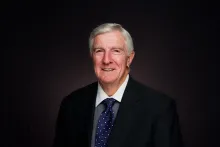
Before his retirement in 2021, Dr. Donald Ward pastored churches in Texas and Louisiana, and taught at Ambassador Bible College in Cincinnati, Ohio. He has also served as chairman of the Council of Elders of the United Church of God. He holds a BS degree; a BA in theology; a MS degree; a doctor’s degree in education from East Texas State University; and has completed 18 hours of graduate theology from SMU.
