

Gary Petty
This transcript was generated by AI and may contain errors. It is provided to assist those who may not be able to listen to the message.
Back in May, I gave a presentation to the General Conference of Elders in Cincinnati. It's always a challenge when you're asked to speak to all the ministers. But I had some things I wanted to talk about, things I'd been thinking about. The material came from things I'd been covering here for about a year, especially the series of Bible studies I did on Wednesday night on the Book of Ephesians.
I went through Ephesians in great detail. And of course, last spring, I spent a lot of time in the ancient city of Ephesus, so it was on my mind. And it was something that Bible study, I think was very important in understanding, a very important message to the church today. Also, I looked at some of the sermons I'd given over the last year, and I started looking at some themes that were in that material. And I took parts of that and gave that to the ministry as something I thought was very important for them to take home from the general conference of elders.
What I want to do today is I actually want to go through that material. What I covered there, of course, it was worded a little different. It was geared towards the ministry. But I think the message is important for the church at large in the time that we live in.
You know, we always talk about the speed of change, how change happens so quickly. And I remember a book that was written in the 1970s called Future Shock, in which the author described what was going to happen over the next 50 years in the United States. And it said he predicted that by now, by 2020, that the average person would feel a vague sense of insecurity and anxiety all the time, and not even know why. He ended up writing three best-selling books as a psychologist on what was happening in society and what it was going to produce in the average person. And this sense of anxiety was going to become the prominent sort of emotion in society.
When you look at the world we live in, already there are sociologists calling this the age of anxiety. It's just the most predominant thing people talk about. And especially the younger you are, the more they talk about constant anxiety and ability to function as an adult because of this constant anxiety. Because of what's happening in our society, we're watching society unravel. Now, we talk about that.
It's actually, there's a term for it, societal psychosis. Or it's also called sometimes the epidemic of madness. And what it is, it's a society that begins to collapse inwardly. And as it does, all norms change. And anxiety, anger, confusion, bitterness, become the driving motivations of people. And it creates constant confusion and constant conflict.
That describes the world we live in, the society we live in. But it's not just this society. That's happening on a global scale. All around the world, all societies are beginning to to fray and come apart. There are other times in history, and I've talked about that, that this has happened. But this is on a global scale, on a scale that's never quite happened before.
And as this epidemic of madness gets worse and worse and worse, the things that were normal 10 years ago are not normal. When the United Methodist Church literally kicks out the entire African Methodist, the entire group in the Methodist Church is in the millions in Africa. They kick them out because they won't accept LGBTQ.
You're no longer a Methodist. You're no longer considered a Christian in our minds, because in the minds of the Methodist here, because of their position, that that's not biblical. If you go back 25 years, that would have been considered inconceivable. My parents were Methodists. Very conservative Methodists. That would have been considered inconceivable.
And yet that's happened. And we're watching everything that used to be the foundation of our society, of Europe, of India. India is beginning to have internal problems. China is having internal problems. We're watching this madness, and it's beginning to affect the Church. It's affecting us. And how do we deal with this madness? Now, some of the ways you see it in the Church is exemplified in different ways, depending on personality of the person involved.
For many people, they're becoming spiritually numb. Spiritually numb to the anxiety around us. So what we're trying to do is pretend it doesn't exist. We're trying to just say, my career's okay, my family's okay, the people I know are okay. It's really not that bad. And if we're not careful, what we begin to do is compromise with the society itself, so that the values of this society become accepted more and more as our values. And so we begin to compromise and compromise where we're basically half like society around us and half like Christians.
We're living in a never-never land of being both at the same time, which we can't be. Another thing that happens in the Church is we become so focused on the evil that we can't let go of it. You know, and I can, I've met many people, and it's what led me to talk about this to the ministry, is because I see this all the time.
And of course, afterwards, scores of pastors came up and said, I see this all the time. Either I have a group of people that are just, you know, they're caught up entirely in entertainment or their careers or these other things, and they're not just other things, and they're just sort of pretending that the madness isn't happening. It's really not that bad. You have the others who are so obsessed with the madness that they experience none of the Christian peace, joy.
All they experience is anger, anxiety, because all they see is the madness. In fact, they get to the place they don't even see God. They just see the madness. That's spiritually unhealthy, too, because that's not what we're supposed to be. It's so obsessed with the madness that it's affecting us. A third thing people do, and this is interesting, we begin to search for sort of a secret knowledge, because if I have some secret knowledge, that means I'm special, and God's going to protect me, but He's not going to protect you.
So we become more and more and more sort of caught up in tiny details in the Bible, not for the right reason, but so that I can have the secret knowledge that saves me. These first two, just sort of compromising with the world, or secondly, being just obsessed with its evil so that we're in anxiety all the time, that's what's happening the most in the church.
That isn't what God wants us to be.
You and I are not only expected to survive as we watch Satan's world spiral out of control, we are to thrive in this. We are to spiritually thrive in it, which you can't do if you're compromising with it, and you can't do if you're obsessed with the evil all the time. Our focus has to be different, and what the church needs right now is a reawakening to what we're supposed to be. An old-fashioned word, revival. Revival is an interesting word. I mean, when you think of revival, you usually think of the old tent meetings back in the 60s and 70s, where, you know, it's Pentecostal type thing, and that's not... the word literally means to be reawakened. It means to be asleep and to wake up. You're revived. You're revived.
And the church needs to reawaken. We need to be spiritually revived to face what was going to happen, and to face this in the way that God wants us to face it, and with God's help. So how do we do this? How do we have a revival? What does that even mean? Okay, we're revived. Well, I'm not asleep. You know, I see what's going on in the world. I'm trying to obey God, but we need more than that. We need a spiritual enthusiasm. Interesting word. It literally comes from Greek, which means God in you. Theos in you, enthusiasm. We need God in us, and the energy that comes from that, and the enthusiasm that comes from that. Ephesus was a city of revival. Let's go to Ephesians, or Acts 19. Acts 19.
Of course, when I did the series of Bible studies, we covered all this in great detail.
But Acts 19 was a church that had been come frozen in time.
Verse 1, And it happened while Apollos was at Corinth, the Paul, having passed through the upper regions, came to Ephesus, and finding some disciples. So there's disciples here. People who are following God, some of them would have been Jewish, will notice that when you go through the book of Ephes- or the letter to the Ephesians, you realize the majority of the people there were not Jewish. They were Gentile. Just like the majority of the people in the Church of Rome. There were more Jews in Rome than Ephesus, but Colossae, the majority of the people in the New Testament that we have these letters written to, were not Jews. They were people who had come out of paganism. Here we have a church of people who are probably partly Jewish. We know that because of the influence. But they had no real impact on the pagan world around them. And he said to them, did you receive the Holy Spirit when you believed? So they said to Paul, we have not so much as heard where there is a Holy Spirit. We don't know what that means. And he said to them, and to what then would you baptize? They said into John's baptism. And this is why this original group is usually thought of being as Jewish, even though it would expand and explode into the Gentile world. Because John the Baptist, a disciple of John the Baptist, come along and baptize them. They were anticipating the Messiah, which was the message of John the Baptist. But the Holy Spirit hadn't been given yet. So they'd been baptized, but they had not received God's Spirit. Paul said, John indeed baptized with a baptism repentance, saying to the people that they should believe on him who would come after him. That is Christ Jesus. And they heard this, and they were baptized in the name of the Lord Jesus. And so they immediately go into the synagogue. Because remember, these original ones are Jewish. They go into the synagogue, they preach, and a lot of Jews start to respond, and then the people in the synagogue get mad at them and kick them out. This revival doesn't create, by the way. What you think it would create immediately is, oh, just lots of people coming to the church and lots of happiness and excitement. Well, yeah, there was. There was also getting kicked out of the synagogue because of their belief that Jesus was the Christ.
Paul knew that there was something wrong. This church had not awakened. This church had started. They were faithful in what they knew, but they were sort of frozen in time. They couldn't get out of where they were in time. They continued to go to the synagogue, and they continued to keep the Sabbath and the Holy Days and those things. But they were frozen in time, and they needed to awaken. They needed revival. When you read what happened, one of the things that happened was they began to spread this into the pagan world, and so many pagans began to respond to the message that it caused a riot in the city. Now, I don't know about you. I have never been part of a church that had such an impact on its society that there was a giant riot because of the message.
There was a riot in that city because they did not hold back in sharing this with others. Now, they didn't go out and try to force anybody.
It's interesting when you see all they did was live this way, and was such an example of this way. Whenever anybody asked them a question, they gave an answer, and they didn't hide who they were. This church goes through an enormous revival where it becomes possibly the largest church in the New Testament except for the Church of Jerusalem.
Most of the churches in the New Testament met in people's houses. They actually had to rent a school to get everybody in to have services. And Ephesus wasn't a little town of 10,000 people. It had half a million people. And the impact is so great just because of the way these people are living. Revivals have unintended consequences from the people who are involved in it because God does things. Now, sometimes they're great things, sometimes they're small things, but He does things. But it takes a reawakening.
What happened to these people? First of all, these Jewish people, but specifically the pagans, when they then came into the church, is they had a profound change of identity. A profound change of understanding who I am. Look at Ephesians chapter 2. If you believe that Mr. Biden or Mr. Trump are going to lead this country into following God, you are profoundly, profoundly ignorant.
So what is your identity?
What is your identity?
These people, identity changed in ways that we're almost under, we don't even understand, part of the reason why we've been at this a long time. Some of you here are third generation, right? You've heard this truth, you know this, your identity was given to you.
But do you really understand who you are in relationship to Almighty God? And what that means and how you live your life? A revival starts with rediscovering who your identity is, who you are. Not who I define who I am, not you who you define who you are, but who God defines who you are. And these people, it was major. I mean, one of the first things they did was they got together and had a giant book burning. Now, what do you think would happen in Murfreesboro if we all got together and had a big book burning? I think we'd be on the news.
That's what they did. They got together and burned all their pagan religious books, the spells, all the practices they were supposed to do. They burned them. All of the city knew they burned them. Now, they didn't go to the library or burn anybody else's books. That's what's important here. They burned their books. This wasn't like some riot. They simply burned their books publicly and said, we sever ourselves from this. We are no longer identified as this. We are someone else's. This is who we are. You have to... it's hard for us to really grasp what that meant. Some of you came out of very strong religious backgrounds. Maybe you were Catholic, or you were a very strong Protestant background, and you can share stories about how your family disowned you. None of us went through what these people went through. It would have been hard to do business in the pagan world. The Jews did business among themselves, and the pagans did business among themselves. There was no other religion, by the way. There were only two religions. Paganism, which encompassed hundreds of religions, and Judaism. Christianity at this point was considered a sect of Judaism. As far as the pagans were concerned, as far as the Jews were concerned, they were heretics. So these people had a hard time doing business. They had a hard time... they would have lost their friends. They gave up what you and I have never had to give up and said, no, I am somebody new. That's a revival.
It is saying, I understand, I don't belong anymore. And I think too much in the church, we're trying to belong to political issues in this country. You and I don't belong here. We don't fit here, and you will never fit here, as long as you have this identity. Ephesians 2, 19. Now therefore... remember, he's talking here predominant to these people who gave up everything. The Jews gave up everything too, because they got kicked out of the synagogue, and their friends and their families disowned them, and then the pagans come in, and they're disowned by everybody. Now therefore you're no longer strangers and foreigners, but fellow citizens with the saints and members of the household of God. He tells them there are two things. Your citizenship is in the kingdom of God. That's your citizenship.
And two, your children of God. You're part of the household of God. That's your identity. That's who you are. That gives you your purpose, and it gives you how you act, and how you think every day of your life. You are a citizen of the kingdom of God, and you're a child of God. And that's what caused this revival in these people, to have an impact on their society that was so great that the complaint was people weren't becoming Christians, but they were giving up paganism. A large number of people just got... ah, paganism doesn't work, simply because the Christian message helped them see that.
Having been built on the foundation of the apostles and prophets, Jesus Christ himself being the chief cornerstone, and whom the whole building being fitted together grows into a holy temple, and whom you also are being built together for a dwelling place of God in the Spirit. So he says the church are people being brought together to be the temple of God so that is the place where God dwells on earth. We are supposed to be the place where God dwells on earth. The ancient temple in Jerusalem was seen as the dwelling place of God. His Spirit came into that temple numerous times, you see it in the scripture. His Spirit now dwells in a temple, and we are citizens of that kingdom, and members of the household of God.
Our behaviors, our actions, everything we do is a direct result of who we think we are.
Whatever sentence you use to define who you are, this is who I am, that's going to define who you are.
And our definition of who we are has to be children of God and citizens of the kingdom of God. That has to be the image of who we are. I won't say self-image, because the image of a citizen of the kingdom of God and an image being the image of a child of God is not, we don't self-create that. God creates that. We don't create that image. God creates us in His image, and that becomes who we are. If we're going to thrive in the epidemic of madness that will continue, it's not going to get any better. We do that because we know who we are. Not because we're trying to pretend to be both at the same time, or not because we're just angry all the time, because look how bad the world is. The world was always going to end up this way. When Adam and Eve got kicked out of the Garden of Eden, we were headed towards this point. It never was going to change.
Only God can save this. And when we hold on to that, we are reawakened, we are revived, and we're not living in the age of anxiety. We're living in the age of God in us. There's no exact biblical instruction on how to organize a revival.
All revivals start on a very simple basis. Who is God? What's He doing? Who is man? What's God's purpose for man? Who is Satan? Where does evil come from? It starts with that. That defines everything. We know where all evil comes from, and we know why that evil will not stop until Christ stops it. It tells us that. I don't want to live in the epidemic of madness, but every time I turn on the news, that's all I'm watching, is madness. That's madness. Insanity.
And that's the world we live in. But you know, that's sort of the world everybody's lived in since Adam and Eve. It's always been an epidemic of madness. It's just this one's on a huge scale, that's all. A huge scale.
So this really breaks down to, who is God? Who am I? Why does God care? And what does God want to do with me? It just breaks down to that simplicity. And everything else becomes secondary. Now, we talk about the Kingdom of God being citizens of the Kingdom of God. We sometimes confuse the word millennium and kingdom. Those are two different things. Millennium is just a period of time when Christ comes and reigns on earth. God's kingdom is God's kingdom. It's always existed. It's never gone away. God's never left His throne. And you and I are citizens of that kingdom now. When we read in Ephesians, we could, Paul writes that in two or three different places. We are now citizens of that kingdom. Our citizenship is in heaven.
And that really makes all other citizenship very much secondary in our lives. And we have to revive that or ask God to revive it because we live by the principles and the laws of that kingdom, not by the principles and laws of the United States of America.
We live by the principles. Now, we're supposed to be law-abiding. I don't mean we don't, we shouldn't break the laws of the land. But what I'm saying is our dedication, our hearts, our minds, our enthusiasm is the principles and the laws of the kingdom of God.
That is our purpose.
As a citizen, we actually become ambassadors for that kingdom. That's a whole other subject. We are actually commanded to be ambassadors. You represent every day of your life the kingdom of God. You are a personal representative of the king of that kingdom, Jesus Christ, who God the Father has anointed king. You're his personal representative. That's what an ambassador is. Personal representative. Your purpose in life is to be a personal representative of Jesus Christ. See, we've lost that identity. We've lost it in the confusion of a world that's confusing. And we have to leave that confusion behind. That's who you are. That's who you've been chosen by God to be.
It's remarkable when you think through that. So what do we do? How do we do that? What's the first step then? Okay, what is it I do in my life that says, okay, I wish to be revived? Psalm 27. I read this in a sermon about eight months ago. Read it again, and then I'm going to read another psalm that I didn't read then, which breaks this down even more into the practicality of being revived. Psalm 27, verse 7.
David's crying out to God. He says, Hear, O Lord, when I cry with my voice, Have mercy also upon me. He's crying out to God. I need mercy. I need help, as was brought out in the sermonette. Without God's mercy, we're all doomed anyways.
But with His mercy, He gives us the calling and the power to do what He wants us to do. He just doesn't make us do it. We have responsibility, and that responsibility is very important because there is no cheap grace. There is none.
And God will not allow His grace to be cheapened, which is a very serious consequence for that.
Hear, O Lord, when I cry with my voice, Have mercy also upon me and answer me. And you said, God's answer to Him crying out is, Seek my face. That's one of the most personal statements made in the whole Bible. He didn't just say, Seek my law. No, we're supposed to seek His law. David says that over and over again. He didn't just say, Seek my judgment. It says that over and over again. David, in this crying out, what am I supposed to do? All revival starts on your knees. The starting place else.
And God's answer is, Look at me.
Do you understand that? God says to you, Put everything else aside and look at me. Who I am. How I think. How I act. Of course, when you actually look into the face of God, it's frightening. All power. All goodness. All justice.
All love. Everything that is worth of anything in this universe is in the face of God. And He says, Just look at me.
Come face to face with me. That's what God said to David.
David says, My heart said to you, Your face, Lord, I will seek. In Hebrew, this is very... it literally means to seek the presence of God. You're not just looking for knowledge. There's another phrase that means that. We'll look at that in a minute. It means to literally seek the presence of God. I wish to be in the presence of God. Which is frightening when you realize what that is, but you're to seek that. You and I... the whole thing about revival is, it's not just passive. You and I are involved in it. We seek. We struggle. We look. We spend time. There is no way to be revived except through on your knees and in the Bible and through fasting. It's on your knees, in the Bible, and fasting. You seek the presence of God.
It's the only way to get through all the madness in the world around us. There's no other way to get through it.
But with this, you can not only get through it, but God will help you thrive because you will be in the presence of God and He will be in your life. Verse 9 says, do not hide your face from me. Do not turn your servant away in anger. You have been my help. Do not leave me now nor forsake me, O God of my salvation. He says, I seek you. Don't ever turn away from me. Don't ever turn away from me. That humility before God is the beginning of all revival, that you seek the presence of God. Look at Psalm 109. This is another place where David talks about this, but he breaks it down a very interesting way because it becomes very practical. You seek the face of God. What happens in that?
Verse 1.
He says, O give thanks to the Lord. Call upon His name. Make known His deeds among the people. So he says, okay, go call on God and thank Him. One of the first steps in revival is simply thanking God. It's looking around every day and saying, thank you for this and thank you for this and thank you for this. I see what you're doing.
That you are involved, that your plan is carried out, that I have been called by you, and that you have shown me mercy. You thank God. That's the first step. You're seeking His presence and you're thanking Him. Make known His deeds among the people. You're not afraid to talk about God. I don't mean you go around and preach to everybody. Whenever the opportunity comes up, you talk about God in a proper way. You give Him thanks and you can't help but talk about Him. Sing to Him. Sing songs to Him.
David, being a musician, was when I'm drawing close to God, I can't help but sing. There is a place and time for music and our praising of God. Worship of God is a little different than praise. He says, sing to Him, sing songs to Him, talk of all His wondrous works. In other words, you can't help but talk about God. When you're being revived, you want to talk about God. Glory in His Holy Name, let the hearts of those rejoiced who seek the Lord. So the more you seek God, by the way, which is a difficult process, and it can be very uncomfortable to seek God. But as you do, you begin to experience joy. In other words, less anxiety, less worry. Less anger. Because God is giving you something that you need. It's because you're seeking His presence, who seek the Lord. Now that phrase there is similar to what we already looked at in the other psalm about seeking the face of God. You're seeking His presence. But it's a little different Hebrew in seek the Lord and His strength. Seek His face evermore. Seek His face is once again seek His presence. Seek His strength has to do with seeking knowledge from God, understanding from God, and help from God. So they actually have two different meanings. One is seek His presence. Seek to know Him. To know, in our case too, also Jesus Christ. You have to ask God for that. God says He will reveal Jesus Christ, and Jesus Christ says, I will reveal to you the Father. So you need to go ask God to reveal to you Jesus Christ, and go ask Jesus Christ to reveal to you the Father.
Show us who you are.
So this is more than just knowledge.
Verse 5 says, Remember His marvelous works which He has done, His wonders and the judgments of His mouth. Remember who God is. You seek Him and remember. You seek Him and remember what He's done.
This is not easy, but if we are going to seek God, we start with seeking His presence and seeking His knowledge. And then a second thing we do is that we have to have a renewed dedication to core biblical doctrine. Which, once again, is so easy for us to take for granted.
It's so easy, you know, to think about, I don't know about you, but I'm already thinking about the Feast of Tabernacles.
But I've been wondering, have I been thinking about the sermons I have to give? Have I been thinking about what the people will need? What God wants me to do? Am I seeking God's presence in that? Or am I thinking of Smokey Mountains National Park?
And sometimes I realize, no, I'm thinking too much about Smokey Mountain National Park. It's not wrong to think about that.
But that's not the reason we're there. That just happens to be one of the benefits of being there.
The reason we are there is because God calls us there to seek Him and to seek His strength. And to be renewed in the knowledge of this incredible truth that He has given to us. Ezra led one of the greatest revivals in the Old Testament. And there's an interesting statement made about Ezra in Ezra, chapter 7. Ezra, chapter 7, verse 10. For Ezra had prepared his heart to seek the law of the Lord, and to do it, and to teach statutes and ordinances in Israel.
He had prepared his heart, his inner being, to seek the teachings of God.
We need to renew our love of the truth. I mean, we come every Sabbath, we hear the truth preached. But have we become hardened to it? We know it, but do we find excitement in it anymore? Do we love the truth? He prepared his heart to seek the teachings of God.
And that's not just something you do once in life. It has to be a lifestyle. A lifestyle of loving the truth. Now, we don't know all the truth. I don't want to shock anybody, but we don't know all of it.
But unless we're some kind of a joke of a church, we have been given by God an enormous amount of truth. And we dare take that lightly. Because you and I didn't discover this because we were smarter than anybody else. It's because God led us to it.
And for that, we have to thank him for it. Because we didn't do it, because we were just, oh man, I just knew the Bible better than anybody else. And that's not why. It's because God led us to it.
We don't know all of it. We don't know all of it right, but we have an enormous amount of truth from God, and you and I have to love that truth. But just know it. Our hearts have to be prepared for the truth. You know, it's interesting when we went through the book of Ephesians, Paul talks about the mysteries, the things that were absolutely new to those people, things that they had never heard of before. And these people were on fire because of it. He called the mystery of their calling. Because they said, oh God called the Israelites. And he said, no, he's calling you now.
He's calling you.
That's a mystery. He tells the same thing in the book of Romans, the book of Colossians. The calling of God is open to all people now, whoever he chooses to call.
Core teaching in the New Testament. And he says, that's a mystery to you people. But let me tell you, he goes as far as he, let me tell you how this, Paul tells him, was God's plan from the very beginning, when Christ would come the first time, and how the doors would be open to all people. He tells them how this is the beginning. You're part of the plan. You just don't even know it.
The mystery of their calling. You and I have a mystery of our calling. We were called by God. Some of you were born into this, and you can say, well, my calling's not the same. It sure is. There is no difference. There's just a difference in experience. There's no difference in calling, because God wasn't under any obligation to call you because you were born in it. God called you because he called you.
He talked to them about the mystery of Christ. He talked to them about the mystery of the church. He said, you want to know a mystery? The church is a brand new concept in the next step of God. There was the church in the wilderness, or the church of Israel, but there's the church now in which God's Spirit has been given to. We just read where he says, you're now part of a building. You've all been built together to be part of this building where the Spirit of God dwells. Ancient Israel didn't have the privilege of God's Spirit dwelling in all of them. Only a few of them. He said, this is a mystery, and he talks to them about the mystery of the gospel and how the sacrifice of Jesus Christ makes possible for us to enter into a relationship with a righteous God. That's something we'll be talking about here in the next couple weeks, too, because the idea of God's righteousness, we have to break that down some. And so we'll be talking about that in the next couple weeks. We have to ask God to help us. We must seek to love the truth, and we must ask for that.
Understand, everything that happens here is because God generates something we respond to. We aren't doing something God responds to. God, I've decided to be revived, so I've come to talk to you about it. Now, we go to God and we seek it. We wrestle with it. We cry out for it. We ask God to do in us what we cannot do, and then we respond. If you don't respond, then God's not going to possess you and make you do it, but we have to seek it. We have to cry out for it. Otherwise, we face the danger of intellectually knowing the truth, but not really loving it.
And at that point, we become susceptible to deception.
Subtle deception. What this produces, interesting enough, and I won't go through this, but just to mention, what this produces when you go through Paul's writing to the Ephesians, it produces a closeness among the brethren. It produced when these people realized what they had given up and what they had become of the household of God. In Colossians, he said, yes, you people were strangers to the household of God. Now, you're part of the household of God. And that they were citizens of the kingdom of God, and they loved the truth. These mysteries were mind-blowing to them. Then he said, you have to learn now to live like fellow citizens and to live like the children of God. It's the great challenge it always faces, every congregation faces. The Ephesians did it, the Colossians faced it, the Romans faced it, the Corinthians never solved it. They never had a workable congregation. It was a mess all the time.
But we are then to come together as those people, and literally that's who we are. We have the same identity. We have the same identity of who we are. That's why we come every week. You know, one of the things that was brought up at the conference was the minister said, you know, ever since COVID, there's always a certain percentage of people just don't come to church regularly. They just watch online. And so what do we do with that? You know, we can preach all we want about the Holy Convocation and coming together and that the children of God will be known because they speak to each other often. They don't resist the assembling them together. And of course, you can always come up with a reason. And there's a good reason sometimes to be at home watching, but not as a lifestyle. But I can get a preach that all I want, but it won't change until you love the truth. It won't change until you're seeking God, and it won't change until in your heart you want to be part of the people of God. That's when it changes. So, you know, I'm not going to get up here and thump my Bible. We come because of who we are. And if you don't see that in yourself, you need to go ask for it. Yeah, but I don't like those people. Then why do you have a problem? You were called to be, but the reason you don't like it is because they're too much like you. We're all just a bunch of flawed people, right? Everybody there's too much like me. Welcome to Christianity.
So, it comes down to, we can pound the truth, or we can say, seek the face of God. Seek it. Seek a love of the truth. And seek becoming part of that collective household. The collective body, the collective building. I mean, think of all the analogies that you are called to be part of that, and part of each other. Seek those things, and God will revive us, and we will be more prepared for the epidemic of madness as we watch it deteriorate. We will be prepared not only to survive it, but we will be prepared to thrive in it through the power of God.
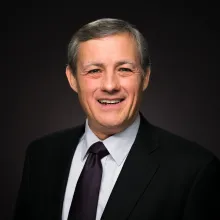
Gary Petty is a 1978 graduate of Ambassador College with a BS in mass communications. He worked for six years in radio in Pennsylvania and Texas. He was ordained a minister in 1984 and has served congregations in Longview and Houston Texas; Rockford, Illinois; Janesville and Beloit, Wisconsin; and San Antonio, Austin and Waco, Texas. He presently pastors United Church of God congregations in Nashville, Murfreesboro and Jackson, Tennessee.
Gary says he's "excited to be a part of preaching the good news of God's Kingdom over the airwaves," and "trusts the material presented will make a helpful difference in people's lives, bringing them closer to a relationship with their heavenly Father."
