

Paul Moody
This transcript was generated by AI and may contain errors. It is provided to assist those who may not be able to listen to the message.
It's often been said that the road to hell is paved with good intentions. And we're going to talk about that today, not only in our own lives, but we're going to look at a specific story, an example in the Scripture. I've appreciated that Mr. Garnett of recent date has been taking stories out of the book of Daniel. I want to continue with that, because that's why they are in there. They had their time.
We have our time. We can learn from their time, bring them into our time, and then hopefully glorify God and be a blessing to other people. But let's go back to that phraseology again, that the road to hell is paved with good intentions. The very essence of that statement suggests that tremendous effort was given towards a destination, because roads take us to a destination and to an end result, and that the concept of being paved, any time you pave something, there's a lot of time, there's a lot of energy, there's a lot of expense, there's a lot of asphalt going down.
There's a lot of expectation that you're going to get from point A to point B. But when we use that phraseology that the road to hell is paved with good intentions, we come to recognize that all of that energy, just like Hammeh the hamster, which I often bring out, Hammeh the hamster and the hamster wheel, you can be spinning that wheel, you can think you're going places, but at the end of the day, you have gone nowhere.
So oftentimes what happens when we have gone down a road, when we have done something, and then we find that the results are not there, we often come back with what? Could have, should have, and would have. And or if I had it all over to do again, sometimes we might say, well, it was a nice idea, but all of the dots were not connected.
And that's what I hope to do by the end of this message, is we're going to connect some dots for you and for me as we go out and face our Mondays and Wednesdays and Fridays as to when things come our way. Life, and yes, God, do allow us to do what I call do-overs. There are do-overs, and thank God and thank for His grace and His patience that you and I are allowed to do do-overs. But here's the comment, at what cost? At what cost before we do it correctly the first time and connect the dots?
So today, let's explore a story that's in the Bible that powerfully illustrates this point of that the road to hell is paved with good intentions. And then come to a conclusion about connecting the dots the way that God would want us to, the way that the Bible itself designs for us, if only we will read it and adhere to it, that we can glorify God and be a blessing to other people.
Turn with me, if you would, to 1 Corinthians 13. In 1 Chronicles 13, we're going to stay with one story and two individuals whose lives come together. In 1 Chronicles 13 and verse 1. And this is the story about two individuals.
We've always heard of a tale of two cities, Paris and London. This is a tale of two people, and I'll just give you their names right out there. David and Uzzah. David and Uzzah. I looked up my notes. I gave this message eight or nine years ago. But I've done, unfortunately, if I can make a comment because personal confession is good for the soul, I've done a few Uzzahs over the last eight or nine years. And so I wanted to anchor again into this message because you Uzzah and I Uzzah, and we need to learn the lesson of Uzzah so that again we can glorify God and so that we can be a blessing to people because when we do it the correct way, the way God wants us to, as Mr.
Joseph, they brought out, you know what? We're going to serve not only God, but we're going to also serve other people. Let's understand what's going on in 1 Chronicles 13. I'm just going to give you a historical biblical background for a moment so that we can all move forward on the same page, give you some meaningful context. Number one, the tribes of Israel are now united under one king.
It's no longer separate kingdoms. It's no longer separate kingdoms. They're now under one king, David. That's important to understand. Number two, Jerusalem is already, because of this union, Jerusalem is already the political capital of the nation or the kingdom of Israel. Point number three, David now desired to make Jerusalem, and it's a good desire. It was a great desire. He wanted to make Jerusalem the spiritual center of all of Israel, because God was their God, and he wanted to have that union.
Let me ask you a question. So far, so good? Are these not good intentions? Are these not good desires? Number four, then, which is important, and do we dare say germane to the story. He wanted to bring the Ark of the Covenant to Jerusalem. He wanted to bring the Ark of the Covenant to Jerusalem. That was going to be the deal sealer. That was going to be like the cherry on top of the ice cream sundae. This was going to make everything beautiful and wonderful. Now, before we go any further, what is the significance of the Ark of the Covenant? We remember that the Ark of the Covenant was designed literally by God, and that Israel, in that sense, would carry it before them.
That wherever God was, as the one that was the word, that was in the cloud, that was in the pillar, that would later become Jesus the Christ incarnate, that led Israel. Then what happened was in the Ark of the Covenant were three specific items you might want to jot this down if you've never heard this before. There were three items. Number one, there was the Ten Commandments, the original Ten Commandments, or the second edition at least.
Number two was the blooming rod of Aaron. The blooming rod of Aaron where God said, I will specifically choose out my spiritual leadership. And number three then were pieces of manna that God would be a provider. So let's understand this. Here's the PowerPoint. Frank does PowerPoint. I don't. I just do it with my hands. Let's think of Israel going through the wilderness. So number one, the pillar is out in front of them. The pillar is in front of them. God is leading them. They followed that rock, and that rock would be Jesus Christ, 1 Corinthians 10, 1 through 4. So there's God. Wherever God is, His laws, His ways follow. So God is in front. Then you had the Ark of the Covenant. Wherever God is, His ways follow. And then His people, His chosen people, His holy people, following God, following His ways, they would then be guided through this world and this wilderness. So this was what the Ark of the Covenant was all about. And historically it had been kept in a tabernacle setting, whether in Shiloh and or in the wilderness. A recent date now, to bring you up to date, a recent date, it had been stolen by Israel's archenemy, the Philistines. And for now nearly 20 years, it had now rested in the home of this Abinadab, which we're going to come to in a few minutes. Abinadab had been blessed.
Then why was not Israel being blessed as David began to want to move the Ark of the Covenant into Jerusalem? And as Paul Harvey used to say, well, that, are you with me? You can probably say it, is the rest of the story. Good idea to bring in the Ark of the Covenant? Absolutely. Good intentions. Absolutely. Now let's follow that story. Let's connect some dots here. Let's see what happened. Let's see what happened. In 1 Chronicles 13.1, we're going to kind of move quite quickly here. Then we'll come back. Then verse 1, David consulted with the captain of the thousands and the hundreds and with every leader. So he dealt with all of his advisors. Notice, and David said to all the assembly of Israel, big word now, big word, if it seems good to you and if, I had a little emphasis. I'm making if three syllables just to give you the point. And if it is of the Lord our God, let us send out to our brethren everywhere who are left in all the land of Israel and with them to the priests and the Levites, who are in their cities and their common lands, that they may gather together to us and let us bring the ark of our God back to us, for we have not inquired at all since the days of Psalm. Now there's something very specific here. And if you're daring enough with that pen or a little yellow marker, whatever you have, you might look again at verse 2, because this is very important. The two most important words here is not even David's desire, which is a good intention. We all agreed? Am I talking to the right crowd? You don't think it was a good intention? Going this way or this way? This is called the interactive portion of services. How many thought it was a good intention? Let's come on, get up there. The rest of you, you are dismissed, okay? No, just joking. It was a good intention. But the key words here are if, and if that we're going to draw upon later, then all the assembly said they would do so, for the thing was right in the eyes of all the people. So David gathered all Israel together from Sa'ar and Egypt to, as far as the entrance of Yama'ath, to bring the ark of God from Ker-Hath-Jarem. Now, verse 6, let's focus. And David and all of Israel went up to Bela, to Ker-Hath-Jarem, which belonged to Judah, to bring up from there the ark of God the Lord. Whoa! Wow! Fantastic! Who dwells between the carobim, because the carobim were actually carved in there. The carobim were the guards of that sense of this holy vessel, where his name is proclaimed. Verse 7, so they carried the ark of God, notice, very important now, if you've never focused on the story, they carried the ark of God on a new cart, very important, from the house of Abinadab, and Uzzah, and I always want to say Ohio, Ohio, notice, drove the cart.
Then David and all of Israel played musically for God with all their might, with singing on harps, on stringing instruments, on tambourines, on cymbals, and with trumpets. They were so excited.
And when they came to Chidon's threshing floor, Uzzah put out his hand to hold the ark for the oxen stumbled. And then the anger of the Lord was aroused against Uzzah, and he struck him because he put his hand to the ark, and he died there before God.
And David became angry because of the Lord's outbreak against Uzzah, and therefore that place is called Per'az Uzzah to this day. Now, we're going to deal with more of the story later on.
This kind of reminds me of the story I think it was out of Butch Cassidy years ago with Paul Newman and Robert Refford, but it was Paul Newman talking about one time about a man. They were doing an experiment, and the man said, okay, I'm going to do an experiment, and I'm going to be at the top of a building, and I'm going to jump off that building, but I'm going to have people down the way, you know, just to kind of see how things are going once I jump. And so he kind of planted men down the way, and you know, he jumped, then he's going down, and you know, the person's there, the monitors it was, the scientific experiment to see how things are going, and he's going down like that, and they said, well, how's it going? So far, so good. Keeps on going down. Well, how's it going? So far, so good. Good intentions, perhaps. A little crazy, but good intentions. He was doing an experiment, but he was on his own. He was bucking the law of gravity, and you know, and I know, what happened at ground zero. And this is a little bit what's happening here. Dave had a good intention. He wanted to bring the Ark to Jerusalem. Everybody's happy. They're dancing. The instruments are going. The women are probably singing a song of joy and happiness, and the men are doing whatever they do there in the Middle East. You know, it's a kumbaya moment. And then what happened is, and I know this. Maybe you've done this before. I'm the one that is normally driving when we drive. It's not that I'm the best driver. Susan is actually the best driver. You ladies already know that, right? But that, you know, sometimes all of a sudden, you know, you'll go like this. Something comes up. Even sometimes when you all eyes are open, something, and you know, you'll just, it's so quick that, you know, I'll go this just by the way, so you know about your pastor. This is not happening every day when I drive, just in case. I want you on the same freeway with me, okay? Happens every other day. No, just joking. So anyway, that, you know, I'll just instinctively go like this to hold Susan back. Andrew, maybe you do that with a child on occasion. Maybe you're all looking at me like I'm the only one that's ever done this. Thank you very much. And that's what I've done. This came all of a sudden out of nowhere.
So let's ask ourselves a question. Because, man, this is brutal. This is tough stuff. And is this the God that I want to worship? But let's understand some of the things, some of the background things that were happening here. Because what seems good and what is good, even with God's name attached, and it's going to be very important for us to understand, even with God's name attached or thrown in, can be totally different roads of traveling. Very important. Now, the first thing that we want to center on that we discussed was that it was carried, the ark was carried on a card. Let's understand something that God had given very specific instructions on how to handle the responsibility of carrying the ark. Join me, if you would, in Numbers 4, just for a second. Numbers 4.
And Numbers 4.
And if we'll pick up the thought, if we could, in verse 1. Numbers 4, verse 1.
The Lord said to Moses and Aaron, saying, Take a census of the sons of Kohath from among the children of Levi by their families by their father's name. Let's see if this is what I want here.
Yeah. Take a census. Thirty years older, verse 3. Notice verse 4. This is the service of the sons of Kohath in the tabernacle of meeting relating to the most holy things of which the ark of the covenant was. When the camp prepares your journey, Aaron and his son shall come, and they shall take the covering veil and cover the ark of the testimony with it. Then they shall put on it a covering of badger skin and spread over that a cloth and tired of blue. And notice, And they shall insert its poles. They shall insert its poles. So the first thing that we see here is that the ark of the covenant was to be carried by men, and they were to insert poles. Very important! In Numbers 4, verse 14, then they shall put all of its implements with which they ministered there, the firepans, the forks, the shovels, the basins, and all the utensils of the other. And they shall spread it as a covering of badger skins. And notice again, insert its poles. Now notice verse 15, And when Aaron and his sons have finished covering the sanctuary, and all the furnishings of the sanctuary, when the camp is set to go, then the sons of Kohath shall come to carry them with poles. Remember? But they shall not touch any holy thing lest they die. These are the things in the tabernacle of meeting with the sons of Kohath to carry. So we notice this. Now let's go over to number 7 and verse 9. Just to give you the backstory of what's happening here. Number 7 and verse 9. That's why it's important to read the entire Bible. But to the sons of Kohath he gave none, because theirs with the service of the holy things which they carry on their shoulders.
God is holy. He's called a holy people. He gives us holy things also to take care of.
And God's ways work, and they work best. It's like when you drive a car, you go to your compartment, and you know when in doubt, read the instructions. The Ark of the Covenant is a The Ark of the Covenant was to be carried on poles, poles on shoulders. Why? To avoid stumbling. Unlike if you have oxen and there's a cart, and it's just on the back of the cart. Now this is going to be very important as the story goes along. So let's understand something. There were specific people of the House of Air that were designated, and they were to carry the Ark of the Covenant with poles. Number two, special people use the poles. They were to put them on their shoulders to secure and to take care of the holy things of God. In their haste and enthusiasm, though, they followed the example of the Philistines. You can jot this down in 1 Samuel 6, 1-12, which is the other side of the story. The Philistines had had it. The Philistines even themselves put it on a cart. They put it on a cart. But here's one thing that you want to recognize. God does have laws, and in a sense they are equal, but God is focused on his people.
And perhaps the Israelites, either out of lack of practice, not looking at the Word of God, you know, talking about God, but not looking at... You ever run into anybody like that? They talk about God, but they don't look at the Word of God.
They think God is just law. That's about 15 syllables of love. But God's victory also is in the details. God is detailed. God's ways work, and they work best. Whether it be all the instructions that God gave to Noah, how to build the ark, to survive that storm that they lose, and or how God asked Israel to construct the tabernacle, and or how God asked his holy items to be carried by his holy people. Because it wasn't just about them. It was about God, hear and obey. But let's understand God wasn't working with the Philistines, but he was working with Israel. Now, another point you might want to try down. There is no mention in scripture of Uzzah being being a Levite, which is significant when connected with the instruction, instruction of law in Numbers and David's later statements. Now, again, let's understand a very specific point. Uzzah was struck, and he died there. Now, if I can make a comment, I'm not just reading this and saying, yeah, yeah, yeah. To me, humanly, it seems, wow, what's going on here? And we're going to discuss that in a point I'm going to give you at the end as far as the takeaway. But if you look at 2 Samuel, join me just in 2 Samuel for a second. I want to just go there. 2 Samuel. Hmm.
In 2 Samuel 6, there's a fascinating thought here, kind of like being a detective using the Bible. 2 Samuel 6. And notice verse 3.
So they set the ark of God on a new cart. A new cart!
We could use some informed imagination that the cart was even crafted to do this. Are you with me? A new cart. And brought it out of the house of Abinadab, which was on the hill in Ozzin, Ohio. The sons of Abinadab drove again, emphasis, the new cart. What did God say?
You shall put poles through it, and it shall be put on the shoulders of designated individuals. Oh, that's so Old Testament! That's so old-fashioned! That's such—are you with me here? So, micromanagement by God! I'm going to go look for another God, or I'll make God into my image.
And they brought it out of the house of Abinadab. Now, get this. Have you never seen this story before?
Or being spiritual detectives? And they brought it out of the house of Abinadab, which was on—are you with me? The hill! How do you get off the hill? You've got to go, what? Down the hill.
With the oxen, pulling the cart, with the Ark of the Covenant. Have you ever done a U-Haul or Rider move? You know, and things are moving back and forth, right? A little U-Haul. A little U-Haul vibration. Things are moving back and forth. Accomodating the Ark of God and Ohio before the Ark.
So, we look at what's—they were coming down the hill. God did not—here's something I want to share with you. God was not setting up Azza and Ohio and Abinadab and David and Israel for failure. If only they had followed his instructions. Now, we do realize that it did rain on David's parade. Absolutely. Let's now go back to 1 Corinthians—1 Chronicles. Let's go back to 1 Chronicles 13 and finish the story. Azza dies.
He's zaught. He's dead.
And David became angry because of the Lord's outbreak against Azza, and therefore that place is called Para'a'zza to this day. And David was afraid of God that day, saying, how can I bring the Ark of God? These are my intentions. This is my desire. This is the people's desire. Why are you being so mean? Don't you know? And he went into what is called in Hebrew a hissefit. So David would not move the Ark with him into the city of David, but took it aside to the house of Obed-edim the Giddai. And the Ark of God remained with the family of Obed-edim in his house three months, and the Lord blessed the house of Obed-edim in all that he had. You know, when I look at David's reaction in 1 Chronicles 13, verse 12, it speaks of him being afraid. It speaks of him being angry. Those are two very important words, afraid and angry. Who does that remind you of in the book of Genesis? It comes out of Genesis 4, verse 13. It's called the way of Cain.
God, my punishment is greater than I can bear. The same Cain that had been offered opportunity to sacrifice and to worship God. But obviously his offering was displeasing. For one way or another, I wasn't there. You're not the fly in the wall. But we realized that there was something not worshipful, not meaningful in that offering, and God was not pleased. So again, David got angry.
David got fearful. Cain was angry, fearful, etc. The way of Cain.
But time goes long, chapter 15, verse 1. David built the houses later on, and time can be a healer if we allow it to, and begin to hear God and begin to read the Word. David built the houses for himself in the city of David, and he prepared a place for the ark of God, and he pitched to 10 in it. Verse 2. Then David said, No one may carry the ark of God, but the Levites, for the Lord had chosen them to carry the ark of God and to minister to him forever. And David gathered all of Israel together at Jerusalem to bring up the ark of the Lord to its place, which he had prepared for it.
Now, the big question then remains, what can you and I on August 17th, this Sabbath day, gain from the death of Uzzah? What can we gain from the mistake of David? What can we gain? What are we going to take away and use this coming week? What can we gain from Uzzah's death that you and I might live more abundantly before our Father above, glorifying Him, and also being a blessing to people rather than stepping out or stamping out their life? Perhaps like David, you and I have been striving to please God, but it's like sometimes trying to jam square pegs into round holes.
Perhaps you came to services today angry for one reason or another because you don't think you and God are seeing things the same way. Perhaps you're upset. Perhaps you're frustrated. Perhaps it's time to spiritually reboot. I want to give you some points to that end. The remainder of this message very simply, quickly, and shortly, and a lot of takeaways. So get ready for you that want to take notes. How do we connect the dots so that we don't have to have our own 1 Chronicles 13? Doesn't that sound good? How do we connect the dots? Let's consider two basic principles, and then we're going to focus on five important short questions to take hope with us. Consider, actualize as it comes to us, internalize, and put them into practice. First principle, this story should not be lost on New Covenant Christians. This happened to the people of yore, of old, under the Old Covenant. But the lessons are just as powerful in our daily walk through life. A walk as real as us's and a responsibility as real as David's. Let me repeat that again. A walk as real as us's and a responsibility as true as David's. You see, we too carry God's sacred law. We too carry God's sacred law. It is precious. It is everything. Oh no, we do not carry it with poles. We do not carry it in our shoulders, but we do carry it in our hearts, as that is what the New Covenant is about. But we do carry it. We do carry that because God said the law will be written in your heart and in your mind. So we're special. We're special people, but without the poles. But as Christians, let's understand something that we are the walking and the talking, breathing, flesh and blood temple of God. The walking and talking, living flesh and blood temple of God. How we carry ourselves is of utmost importance. You know, Mr. Budge is fine presentation this afternoon. I hope next time you'll be here to Mr. Garnett.
That what people notice more than anything is not what we say and it's not what we know, but who we are. What's coming across? What's our conversation? What's our communication? What's our conduct? How do we carry, as was in Philippians, the gospel, the good news of the gospel in our lives and share it with others? We will always win over more people by our good example rather than our good arguments. And we really won a lot of people over by arguments the last 30 years.
As they say today, I don't think so. But people can be won over by our good example.
Second principle. Then we'll get to the questions. God not only desires worship, but He gives us the details how to worship Him. Oh, how micromanaging! That's not the kind of God I want. Don't you realize it's 2019? I mean, God, you know, I'm giving God worship. Isn't that enough? No, God is very specific in how He wants to be worshipped. And the way that we understand that is by reading the Scriptures. He does this outwardly, and He does it inwardly so that you and I, unlike Azzah, will not stumble. And of course, we will stumble as people. But just like Jesus, when Peter stumbled, but it wasn't over a rock, it was in the water. He went down into the drink. No, no, no. God the Father sent Christ so that Christ is right there, and He can look down, and He can. And I always think of this picture of, you know, Peter was in the water. So Jesus is the ultimate lifeguard, isn't He? He goes over, and just imagine.
Brung out His cloak a little bit so He didn't go back down.
You follow Me. See, Christ will always come back and invite us to follow Him. But it's got to be the way of the Father and the way of Christ that does that.
Here's what I want to share with all of you today. Never mistake the mention of God, what we might call God talk, for godliness. Just because somebody inserts God into the conversation, what I call God talk, don't mistake that for godliness. Boy, there's a really good one right at the beginning of what? Genesis 2, Genesis 3, the serpent. Who was He talking about? Who did He happen to mention in His introduction to Eve? He mentioned God. But He left out the details.
We also think again of later on Jesus and the temptations in the wilderness. There are a lot of God talk in there. But God talk and the mentioning of God, just as David also said, well, let's do this for God, is not enough. It's not enough.
God does not simply want our attention. He wants our, yes, I will use the O word, obedience.
You show me your faith, I'll show you my work. You show me your faith, I'll show you my obedience. The whole echo that comes down from the Old Testament is, hear, O Israel, hear. And that word of Shema is synonymous when an Israelite and later a Jew would hear the word hear. It was synonymous with, it was the echo of obey. Obey. That's why James later on, which is in a sense a very Jewish epistle within the New Testament. God not only loves a hearer, hearer of the word, but a doer.
Let me ask you a question. Is there a reason why our best intentions, and I know all of us as people, I know all of you, but why sometimes over days or months or even years or even decades, why do our best intentions simply have us traveling with the people of Israel in circles rather than moving forward? That's why I want to give you some very specific questions that only you can answer now in the coming week. I'm going to give you five quick questions. Here we go. Number one, I can only ask you, have I talked to everyone else but God about my plans and about my purposes?
We can even talk to people about, quote unquote, the word God, but what's the rest of the story? Have I talked to everyone else but God so that I can begin to, are you with me, eliminate the ifs? I don't want to move into lives with ifs.
I want to move into life with cans.
Why is that so important? The echo of the Old Testament out of Isaiah 55, 7-8 says that God's ways are not our ways. His thoughts are not our thoughts. Isaiah 55, 7-8. So just knowing that, even as a converted individual called of God through Christ and with the Holy Spirit, I'm still bucking human nature sometimes and taking those old steps and I've got to recognize my ways are not God's ways. So what do I do about that? What do we do when it says in Proverbs 14, 12, there is a way which seems right to a man, but the end thereof is the way of death. Well, what do you mean by that? Oh, just ask us. Oh, no, I can't ask us. He's dead. Ask us.
Ask us. Number two, have I studied the scriptures myself for myself to honor God?
God talk. All human beings are pretty good. Even Christians are pretty good at God talk. But God talk must... David did very well. Let's bring up the ark. What do you guys think? Yeah, let's go.
But nobody looked up the regulations of how to do it. They wanted to drive the car without reaching for the glove compartment and getting out the manual.
God talk must always be coupled by studying what His word says about any given situation. Our Bible that we open up. And the most important thing that we do in our church service is that we open up our Bibles. Because when we open up our Bibles, we open up... the Bible is the can opener to the heart. The Bible will, if we allow it, it will open up our hearts. And what does it say in Romans 4 and verse 3? What saith the Scriptures? You know, if David and the boys had done that...
well, Uzzah wouldn't still be alive, it was 3,000 years ago, but he would have lived a lot longer than he did, right? What says the Scriptures very important?
That's why when Satan came along with those temptations in the wilderness, and he kept on saying, if and if... and it... you know, Satan was iffy too. If, if you, if you, if you, if you're this, if you're that, Jesus always came back, anchored in Scripture. It is written.
I remember many years ago, I had the blessing of growing up in Pasadena. I had more than one mentor. I had many fine men that I was able to serve either under and or with.
But I remember at times that I had one mentor, and we'd be sitting down, and he'd be talking to Susan Osa's story, and he'd say, no, before you make any decision, you need to go to the Bible, you need to go to Scripture, and you need to write every Scripture down that applies to that case. Oftentimes, these were situations dealing with marriage. Two people striving to be in harmony and living together, and I remember sometimes some of them with me. Some of the faces were like, really, really? Normally, the people that said, really, not just really, but really, they either said it or their body language was saying it, their face was saying it, they wound up in divorce.
One or two over the years that I remember actually applied what that gentleman said. Isn't that kind of what we ought to be doing, to open up that manual, to go to the glove compartment that Father does for you baby boomers? Father does know best, and to write it down just like the kings of Israel, that they might put it into their hearts and they might put it into their minds? Number three, have you considered your actions whether right or wrong will affect another person? It's a living law. You know, over the last 30 years, you know, some of these lines that modern society brings up are a croc. That's Hebrew. That's Greek for croc. It's a croc. They talk about a victimless crime. Are you kidding me? Are you kidding? This is my imitation of Mr. John Garnett. Are you kidding me? He's not echoing back right now. Thank you, John. Is that, are you kidding me? There's a cause and effect.
For every action caused by a word, caused by a thought, there's an underlying motive. You go and you throw a rock into a still pond, and those ripples will go out and they will basically affect somebody. Let's understand something. Life is serious. How we impact people, how we approach people, our sensitivity towards people.
And to recognize that whatever you do, whether we're a parent, we heard about parenting, we had our lovely children up here today, whether we're a parent, I'm a pastor, what I do and what I don't do over these many decades. It's going to impact people. It doesn't stay in one spot. David's decision as a leader of Israel impacted and cost a man a life.
Have you considered your actions, whether right or wrong, will affect another person? What you do, right or wrong, how you handle that teeter-totter of if will impact somebody. Point number four, we're almost done. Have you considered the consequences, have you and me, I'm giving this message to me, dear friends, have you considered the consequences of fire-ready aim?
You say what? When fire-ready aim? That's at times what we do in life. It's not aim-ready fire. When we step into it, that's an old dairy term. I've described that before. When you step into it, not looking and or in our sense not looking at what God tells us in His Holy Word, just because we think God talk is rattling back and forth between our ears and our mind, we can step into it. Have you considered the consequences of fire-ready aim? Do you think before you plan and think before you reach? Do you think before you plan and do I think before I reach? Just think and try to think like God. Uzzah, unfortunately, and it was a culture and he was a king, but he chose to follow the man. He got up on the cart. He was, do I dare say, he was set up for failure from the beginning because of a man's actions who talked about God but did not follow his instructions.
Put one of his subjects, good intentions, well, absolutely, but put his subject up on a cart where he did not belong and went down a hill. Suicide mission. Uzzah chose to follow that man rather than God, and he had to live with consequences, so do we, sometimes for life. That is, unlike Uzzah, if we live. Point number five, we conclude. Have we considered the fallacy?
Have you and I considered the fallacy that experience is the best teacher? That's a fallacy.
I remember hearing that about 35, 40 years ago, and it always resonated. I said, no, no, no, you've got it wrong. That's not how it goes. Yes, that's how the Bible goes. Remember what it says in Acts 5 and verse 32, that God gives his Spirit to those who obey. No, experience is not the best teacher. It is the most memorable. It is the most memorable, but it's not the best. Obedience is the best teacher. Let me conclude. I've given you two principles to consider taking home. I've given you five questions that only you can answer, and I went too quickly. I'm sorry, but this will be on video somewhere, and if you want to hear it again and have your little pencil and paper, this is life. This is life. Oh, how love I thy law. I remember Susan saying, you know, as we were going through situations back in 1995, the people that were telling us their thoughts about the law, and Susie would say, what part of God's law don't you like? What part of God's law don't you like? It's been given that you and I might live, that you and I might love, that you and I might glorify God, that you and I might be a blessing to other people. Let's remember that the road to hell is paved with good intentions. The road to the kingdom of God is paved with something else, and that's the rest of the story next week. As somebody will bring to you, the rest of the story had more about the word of God.
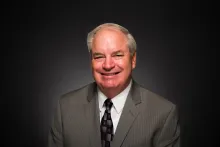
Robin Webber was born in Chicago, Illinois, in 1951, but has lived most of his life in California. He has been a part of the Church of God community since 1963. He attended Ambassador College in Pasadena from 1969-1973. He majored in theology and history.
Mr. Webber's interest remains in the study of history, socio-economics and literature. Over the years, he has offered his services to museums as a docent to share his enthusiasm and passions regarding these areas of expertise.
When time permits, he loves to go mountain biking on nearby ranch land and meet his wife as she hikes toward him.
