
Philip Aust
This transcript was generated by AI and may contain errors. It is provided to assist those who may not be able to listen to the message.
Okay, let's get right into it. And by the way, I do want to mention that Mr. Smith shared with me the good news of your generosity and charity. And it's alright. Charity is a good word towards our friends in Haiti, and he's writing a check. And each and every one of you that were able to contribute above and beyond, whether it was a cent or a dollar or more, what you were able to do, just thank you very, very much. Like I wrote in that note, yes, last night, it is so neat being able to pastor all of you because of your vision and where you are at.
And let's move right into Romans 4, because I do want to kind of keep this short and succinct, but there are some things that we want to talk about. We last time covered Romans 3, which is basically a back and forth between two major items. Number one is God's fidelity, God's faithfulness, fidelity coming from the word of Fidelius, God's faithfulness. But we also came into contact with man's infidelity.
What is interesting is, until last time, as Paul lays out where humanity had gone, either as a covenant people and or with the Gentile world, that we basically came to a stark realization until the very end of chapter 3. And I just want you to think about it for a moment. It kind of struck me. I'm going to borrow a term from William Barclay, but it struck me.
Barclay is really good. Scottish preachers are always very good with the terms. He talked about a Christless world, a Christless world. I found that to be fascinating. All of us, whether we are people of faith, Christians, or even atheists, have all been exposed to the name of Jesus Christ. Whether we have surrendered to it or not, that's another thing. You know, even in our day and age, we still use BCAD, and other modern translations use common era, etc.
But still, imagine a world without Jesus Christ. And that's the picture that Paul paints in Romans 3. It's very, very dim that the Hellenistic world had truth, but truth not towards transformation. The world of the Jew had the truth of God, but not towards true, internal transformation. It's a very, very dark picture until it comes to where he reveals what the righteousness of God is. That's where we're now picking up as we move off of chapter 3 and 4, as to the only way to be right with God.
There is a righteousness that comes from God that, as Paul himself says so, is apart from the law. Not dismissing the law, but is apart from the law. And when we understand the righteousness of God, that takes away any boasting of human achievement, which Paul dealt with as we went through those big questions at the end of chapter 3. What then can we do? What then can we do?
What then shall we say? Can we do it? It all falls flat with the righteousness of God. But now we move into a situation which is really neat. And that is, and I know sometimes I fall flat on this, I think all preachers, teachers do, that we've got to make it clear and real and tangible. Because when you deal with subjects like righteousness, kind of a theory of righteousness, and or you deal with faith, we understand faith through stories.
We understand faith through individuals that have been touched by faith and or have exhibited faith. Now what we do, you might want to jot this down in your notes to the students, is simply this. Righteousness and faith are given faces. Because now it's going to become personalized in chapter 4. Let's pick up the thought in verse 1. What then shall we say that Abraham, our father, has found according to the flesh?
Again, remember, a lot of the book of Romans, especially in chapter 3 and chapter 4, is kind of in a sense given the tone of a conversation going back and forth. You might even say the conversation of Paul the Jew and or Paul the former religious Jew, with Paul now the Christian. So it's in the sense of an interrogation or questions that demand answers. And again, remembering that with good Jewish teaching, good rabbinical teaching, oftentimes the answer is in the question. Remember that? Jesus often used that as a rabbi. He'd say, who then is neighbor?
And the answer would be in the question. Now he says, what then shall we say that Abraham, our father, has found faith according to the flesh? Now we draw upon one of the great individuals in human existence, and especially to people here. Up to this point, what Paul is striving to do is showing that performance works, performance of what the doll demands, falls short of God's righteousness, just falls short.
And we're going to discuss that more in length as we go down a little bit deeper. But that God rather desires simple trust. He desires complete yieldedness to his word. And that God loves us even when we don't deserve that love.
Even when we don't deserve it, God loves us. This is so contrary to the human natural mind, especially the religion of the Jews up to that point, that viewed that when their ways were pleasing to God, then God would bless them. Now there's a truth to that. You can go back to Deuteronomy 29. I'm not straying away from that completely. But that they boxed God in, and by doing that, by how they performed, by what they did, if they did it, then that married it God's love. And Paul is trying to show them that there's a completely different venue that they need to do. What Paul was saying, maybe even to the Jews that were in Rome, seemed a complete contradiction to everything that they and their ancestors had learned for 1,500 years. It seemed just too incredible to be credible. And so what Paul does now, beginning in chapter 4, is he takes their champion. He takes the George Washington of their country, as it were, none other than the man that they all esteemed. And he takes faith, which can be abstract, and he ties it to a person. He ties it to Abraham to show them that what he is really teaching is not something new, but is as old as the Bible. Old as the Bible, as relevant as Abraham's life. And so that's what we're going to be looking at. There's two important questions we're going to cover in chapter 4, then we're going to move. Number one, when was Abraham made righteous? When was Abraham and or Abram made righteous? Point number two, we need to ask, why was Abraham made righteous? When was he made righteous? And why was he made righteous? We're going to kind of tackle it like a good cub reporter doing a newspaper. Let's look at it. Let's deal with the first question. We center on Abraham. What then shall we say that Abraham our father has found according to the flesh? What did he profit, in other words, from the flesh? If Abraham was justified by works and or simply by what he performed, he has something to boast about.
Just like the notches on a gun of an old gunslinger in the West. Notching up, look, I've done this, I've done this, and I've done this, and I've done this, and by the way, I've done this, nobody ever says so far. Kind of like a salesman. Have you ever run into a salesman? And a salesman will always tell you how much he sold and what a good month he had, but he doesn't tell you what month it was and what he's selling right now. Because striving to gain righteousness by our own works or our own performance is, frankly, only goes so long, and we are going to, after all, dry up. So if he did this, yeah, he has something to boast about, just like the salesman.
But not before God.
Paul begins to take the conversation to a completely different place. Because so often we do things, unfortunately or humanly, so that people will notice and so that we think that we merit, or therefore we somehow have gained God's love for the first time, or have maintained that love. For what does the Scripture say? Powerful now. Let's get ready to lock in here. For what does the Scripture say? Abraham believed God, and it was accounted to him for righteousness. You know, when you think about the Bible, there's two main things. You might want to jot this down to kind of stay focused. There's two great themes of the Bible. One is salvation. Luke 19.10 says that Jesus self-proclaimed, I have come that I might save the lost.
Salvation. Great theme. But salvation is only made possible by understanding the secondary theme. You might want to write this down. Something that we don't always talk about, probably enough in our own church community. The righteousness. It's about righteousness. Because we can only in that sense be offered that salvation as we understand and receive and exist within the righteousness of God.
It says, Abraham believed God, and it was accounted to him for righteousness. Very interesting. So it takes it. Paul says, okay, I'm going to stick it to you. I'm going to go right back to the guy that you admire and that you proclaim that your father. And the Scripture itself, out of Genesis 15.6, says that it is righteousness. Not by what he performed, not by what he did, but how he believed. Now, Paul here says Abraham could have chosen two paths, just like the Jew back in first century AD and or you and me today. It could be, first of all, by our own works and or by our own performance, by our own notching up what we have done right so far so good and or from an eternal secure source. One that does not depend upon us and what we're doing, but what has been done and what is being, I like to use the term, performed for us and in us. He says here, verse 3, that Abraham has chosen to seek the eternal secure source and that's very important. When we notice this, this is an anthem, there is a great cleavature. That means a separation now. Let's understand it between what we might call in that sense Jewish legalism and Christian faith. Let's shut that down if you want to so we can kind of stay in this. I think sometimes when we write a note or two you'll be able to stay in it a little bit better. There's a cleavage. There is a gap. There is a goal. Simply this, rather than earning God's favor by what we do, a man stakes everything on faith that God's promises are true. Rather than what we hold in our hand and by what we perform, we stake our future on God's promises and believe what he says will come to pass. Very important. Now to him who works, the wages are not counted as grace but as debt.
But I've never met a legalist who doesn't think he's working the right way. Most of us, to one degree or another, would never think I've never met an individual. I've never met a self-righteous individual that first understands that he's a self-righteous individual. I've never met a legalist that says, you know, by the way, I've got this name tag on me.
It's an all caps legalist. Most people would not understand that about themselves. Let's understand. Let's go a little bit deeper. Now to him who works, the wages are not counted as grace but as debt. We're now going to be moving into the background of circumcision. That's really powerful because that's been an incredible external force that these people had done for 1700 years following the instruction of God to Abraham, down through Moses, down through the time of the kings, down through the 400 years between Malachi and now.
And God is bringing us to the point that it's no longer simply going to be about externals but internals. And if you're going to go that way, if you're going to rely on what you're performing, the wages are not counted as grace but as debt. I got to think about this, that people sometimes, because out of how they're programmed, again they think if I do this and if I do this and if I do this and if I keep, you know, we can bring it into our own genre today, if I keep the Sabbath perfectly, if I attend every feast day, if I tithe on every penny, if I do this and if I do, now should we do all of that? I think all of our hands would go up and we would hope so. But if we rely on that, to create the righteousness of God, we become debtors. Because none of us, often by ourselves, Paul says, none of us, often by ourselves, can keep that law perfectly. It is a folly to think that both in the letter and in the Spirit, that in this human tent that we're going to do it, therefore he who works, the wages are not counted as grace but as debt. I couldn't help but think, I've seen this at least three times in my life. Let me know if any of you have ever seen this. Have you ever seen it at a tip-off in a high school or a college game, where the young guard gets the ball and he is so excited that the ball has been tipped to him, that he runs down the court and scores the basket? But he put it in the other team's basket. He lost a sense of direction. I mean, and this guy all of a sudden thinks he's fleet of foot, you know, like there's nobody on him. Oh, I am so fast! Look, I'm ahead of everybody! And of course, everybody in the stand is doing what? They are just, oh, you know, it's like they're seeing the spider eat the fly in a KCET moment. You know, oh, I can't believe it's happening! Only to find at the end, the kid goes, and of course you look, you look at the scoreboard, the red scoreboard with the black two points, other side. Another story. It's like the guy that, you know, puts his ladder up, and he thinks he's a success, and he gets to the top, and at the end he looks down, he looks around, and he recognizes that his ladder's been leaning on the wrong building all along.
Paul is basically telling us, don't be like that young player. Understand where to put your energy, not in our own works, not in our own performance.
The law is beautiful. At the end of chapter 3, Paul says, do I make void the law? Absolutely not! The law is not dismissed in the New Covenant, but it must be put in relationship to what God's righteousness is and what he's done. That is brought out here. Let's understand something.
Let's make this very clear. Let's go to Genesis 12 and verse 1.
Then we'll speed it up here. Genesis 12.
Now the Lord had said to Abram, Get out of your country from your family and from your father's house to a land that I will show you, and I will make you a great nation, and I will bless you, and make your name great, and you shall be a blessing, and I will bless those who bless you, and I will curse him who curses you, and in you all the families of the earth shall be blessed. So Abraham departed as the Lord had spoken to him, and lot went with him. One of the great, great verses of the Bible. Simply this, he went. He went. He believed in God. He yielded to God. He believed that God was able to perform that which he had promised, and we notice something here. There is a blessing. Join me if you would in Genesis 15 and verse 6. This is the story of Abraham now going out and being shown the night sky. Let's go to Genesis 15. The Lord came to Abraham in a vision, Do not be afraid, I am your shield, your exceeding great reward. But Abraham said, Lord God, what will you give me seeing I go childless, and the heir of my house is Eleazar of Damascus. Then Abraham said, Look, you indeed have given me no offspring. Indeed, one born in my house is my heir. And behold, the word of the Lord came to him, saying, This one shall not be your heir, but one who will come from your own body shall be your heir. He brought him outside and said, Look now toward heaven and count the star if you are able to number them. And he said, And so shall your descendants be. And he believed in the Lord. And notice verse 6, And he accounted it to him for righteousness.
Now let's understand what's happening. You might want to jot this down. This becomes real simple. In Genesis 12, we find the first act of Abram believing God, turning his life around, leaving the land of his origin, and following God with no compass but faith.
He leaves Ur, the Chaldees. He leaves the theology of moon worship. And he follows this God, who says, You don't need a compass. I will be your compass, and I will make of you a great people. He is blessed.
It is his faith. It is not his litmus test of works or acts or performance or any externals that he's done. It has been the faith that has merited that blessing. We come to Genesis 15.6. We have the famous story of the stars in the sky. And we notice this form of blessing again that occurs. I am your God, you are my man, and I will bless you. We are in relationship, a relationship that is based on faith and belief. Simple yieldedness. I want to share a thought with you, Genesis 1710, because this is what Paul is leading to. We have the blessing of Genesis 12. We have the blessing of Genesis 15.
Cardinal verse, Genesis 15, and he believed in the Lord, and he accounted it to him for righteousness.
It wasn't, Look what I have done, Lord, all these things that I've done over here.
He took God at his word. And when God sensed that he took him at his word, he knew that all the rest would follow. Now, every good Jew that had grown up for 1500 years back to Judah, and plus at the time of Christ, could all go to Genesis 26 and verse 5 and say, Because Abraham obeyed my laws and my judgments and my statutes. We've all heard that verse? I was raised with it, and he did. Abram and Abraham did obey the laws and the judgments and the statutes, but that is not why righteousness was attributed to him by God.
That is the flow that comes from that righteousness. That is the flow that comes from that faith. The Jews would look at Genesis 26.5. Paul was directing them to Genesis 15.6 so that they could in that sense understand. Genesis 17.10. I'm sorry, you're there. I'm not. Notice.
This is my covenant, which ye shall keep between me and you and your descendants after you. Every male child among you shall be circumcised, and ye shall be circumcised in the flesh of your foreskin and on and on and on. Let's understand something. Genesis 12. Blessing, relationship. Abraham believed God. Genesis 15 verse 6. Abraham believed God, and that is what was accounted as to righteousness for him, was his belief. It is very interesting that it's only in Genesis 17 that we have the external, as it were, of circumcision.
Verse 5. But to him who does not work, but believes on him who justifies the ungodly, his faith is accounted for righteousness. We notice the example that, if you want to look at verse 3 and verse 5, this is not only speaking to the audience of that time, but is now speaking to us today, that we come into spiritual kinship with Abram, with Abraham, with the righteousness that is there. Now, what is interesting, now we have another face crop up, another face. You know, personalities are needed to make this clear about faith and righteousness and salvation. Now, can you imagine our coins or our dollar bills without faces?
You have to have a face to make something alive and real, and God knew that. He's the master instructor. That is what it says. Another personality crops up. Just as David also describes the blessedness of the man to whom God imputes righteousness apart from works.
Now, very important, if I can make a comment.
Are we in any way diminishing works? No. Works are important. It even says in the book of Revelation that Christ remembers our works. Part of our judgment.
The commandments. God, Paul said in Romans 3.31, do I avoid the law? Absolutely not. This is not the argument. Let's always remember one thing. The law is spiritual. Romans 7.14. You might want to jot that down and look at it later. Romans 7.14. The law is spiritual. This was, by the way, back in 1994-1995 when we were going through what we can call the theological wars when people were trying to relegate the Ten Commandments to basically being fossils and Sinai. Romans 7.14 was very, very important because how can something that is spiritual pass away? The law is spiritual. The law is a beautiful thing. So I don't want any of you to dismiss or think that I'm speaking ill of the law and or of our responsibility to have works. But if we think that the law is going to save us of and by itself by how you and I, Al, or you and iPad, or Susie and I, or Chris and Courtney, how we keep the law, if we think that's the ladder to the kingdom of heaven that's going to bring us back down here to earth, we're mistaken. That's all Paul is saying because we can't possibly in this human tent keep the law perfectly by letter or by spirit. And if the letter don't get you, if you use bad English, the spirit will.
Let me ask you a question. May I? We may be able, you think about this in your own life, well, I've got the Sabbath since I was age 12.
Back to Romans 3, I might have something to boast.
Have I always kept it perfectly in the letter? No.
But even if I did, do I dare say that I've kept it perfectly in the spirit?
Do you want to merit your entrance into the family of God based upon how you've done anything both in the letter and the spirit? Just asking.
Just asking. That's why David says here, just as David also describes the blessedness of the man to whom God imputes righteousness. Righteousness is not something that we can create or invent in the basement of our houses or in the basement of our hearts and say, I've got righteousness. God imputes that righteousness. Apart from works, apart from what we have done, David understood this. David was a man that said, oh, how love I thy law, and yet was a murderer, was an adulterer, had family problems up to many of which he caused and many of which he manipulated and many of which he kept it going.
That's why God could say, blessed are those whose lawless deeds are forgiven and whose sins are covered. Blessed is the man to whom the Lord shall not impute sin. And he quotes this right out of Psalm 32. And that's why David could say, join me for a moment in Psalm 51, okay? Psalm 51 verse 12.
Restore to me the joy of your salvation and uphold me by your generous spirit.
Uphold by your generous spirit that God wants to grant us salvation. He put into that sense, remember how we went through Romans 3 last time? That the righteousness of God, stay with me a second. The righteousness of God is God. He is righteous. His law must be. It is intact.
That righteousness never changes. Therefore, if we do something unrighteous, we are apart from him other than if there is that redemptive act which he put into place through Jesus Christ that becomes then the redemptor. He becomes that redemptive individual that takes us back in the way that we ourselves as slaves of unrighteousness could not pay our way out of and by ourselves. That must have come from another line. And then as the redemption takes place, then the propitiation comes forth in which the mercy and the judgment cross over at one place at the foot of the cross. That God thus is satisfied. The righteousness stays intact. The righteousness is there. Our sin does not do away with God's righteousness. The righteousness is always intact. There must be something that brings us back up to where that righteousness is imputed to us. And God says at the cross that sin was satisfied. The price was paid. Now mercy is granted. We come into relationship with God, not by what we have done, not by the number of this that we've done or the number of that that we have done, but because of the work of Jesus Christ on Golgotha.
Thus, David could say, restore to me the joy of your salvation. Now the question comes up, the Jewish way of teaching. Does this blessedness... Oh, let me go back to verse 8. Blessed is the man to whom the Lord shall not pute sin. What Paul is trying to help us determine, I want us to think about this for a moment, God doesn't wait for our change to love us. God doesn't wait for our change to love us, but loves us that he might mold us. God doesn't change in order to love us, but loves us in order to change us. That is so hard. That was so hard for the Jewish mindset that Paul was trying to buckle there, and a human mindset, that how come somebody can love us if we are in this state? This is something that's affected some of us with our relationship with God the Father, because of our own relationships that we've come out of. Maybe we've come from a situation where we just had a parent out of control, that we never felt their love. And when you don't feel somebody's love, you try to start measuring up, and please, and please, and please, and accommodate people. Sometimes they come out of a chemical dependency background, an alcoholic background, have an alcoholic husband, have an alcoholic parent. You have that syndrome there, and you're always trying to fill the vacuum by what you can do. Maybe everything will be all right tonight. Maybe everything will be right tomorrow morning. If I just do this, if I just do that, maybe my parent will love me.
Maybe if I do this one more time, God will love me.
Salvation is about God loves us from start to finish. He loved us before we were born. He loved us while we were yet in sin. We'll cover that in Romans 5, and David understood it. I'm going to take a break for a moment. Any thoughts? Have you ever seen the sequence between Genesis 12, Genesis 15, and Genesis 17? The power of all of that is what Paul is bringing out, is that Abraham was in relationship with God and was imputed righteous with and by God before what he did at circumcision. It wasn't what he cut away from his human flesh, but what God molded in the relationship and the bridge that was built on one thing, faith. Any thoughts to the right, middle, or left? Otherwise, we're going to speed up here. So I want to finish this. How then was it accounted? Verse 10, are you with me? How then was it accounted? Now here comes the how. We talked about the when.
The when was at the beginning of the relationship that Abram was blessed.
And then in Genesis 15, it says it was accounted, righteousness, not by what he did, but what he believed. How then was it accounted? While he was circumcised or uncircumcised? Not while circumcised. Paul's talking to his fellow kin, the Jews. He says no, while uncircumcised. Now you've got to understand, we've all got to go back, and it's hard two thousand years ago, because that world was so divided. The Greeks speaking the Hellenistic tongue. If you didn't speak the Hellenistic tongue, you were a barbarian. That's where the word comes from, bar-bar. You're a barbarian. You were out of it. Bar-bar means out of it. You were not Greek. To the Jew, you were either circumcised or uncircumcised. If you were uncircumcised, you were a dog. Period. You didn't go into somebody's house. You had no relationships with them.
And what Paul is doing, are you with me all? Paul is saying, let's go back to the God that you worship and understand how he started with the George Washington of our faith.
He wasn't circumcised, but he believed God. And his belief in the sovereignty of God then allowed him to exercise everything else down the line, so that when God did ask him to be circumcised, he did it. He did it. But it was his belief and his faith and the promises of God that God would perform that which he said that was the engine of his life. And put him into relationship with God. And if he received the sign of circumcision, a seal of the righteousness of the faith which he had while still uncircumcised, that he might be the father of all those who believe, though they are uncircumcised, that righteousness might be imputed to them also. Now, here's the beauty of what's happening. Paul says there's a reason for all of this. God doesn't have accidents.
I hope you worship the same God I do. If I worship the God that had accidents, I don't know if I could worship that kind of God. Could you? And we don't have an accidental Savior. God knew exactly what he was doing by first blessing a brahm, bringing him into a relationship which he imputes righteousness so that two thousand years down the line he could say, he now becomes the father of all. He is the father of the circumcised. He's also the father of the uncircumcised because of his own situation, and it's because we come to God in faith.
You might want to jot this down. What Paul is now revealing, this may sound funny, especially if you're of an ethnic Jewish background or a spiritual Jew at that time, Paul's basically saying, here's the real Jew. This is the real Jew. This is the real Jew.
And to the father of circumcision to those who not only are of the circumcision, but who also walk in the steps of the faith which our father Abraham had while still uncircumcised. For the promise that he would be the heir of the world was not to Abraham or to his seed through the law.
He's using circumcision as an overall scenario there, through the law, but through the righteousness of faith. Going back again to Genesis 15, 1 through 6. Now, it's very interesting. I want to share a thought with you. This is important. I need to spell this out for you. Here you go. Here we go. This is fascinating. The word there is hubo. Hubo. Jesus.
There's another word if you want to write it down. This is really fascinating. I hope you'll write it down. I was reading through this this morning. It got me excited.
Apagalia. Sounds almost like a noodle dish that you'd order up in a Greek restaurant, right? Apagalia. But here's the power of this. For the promise that he would be the heir of the world was not to Abraham or to his seed through the law, but through the righteousness of faith. This word here, hypo-jesus, when used in the Greek and used in the Bible, is a promise that is based upon conditions. That's what you want to put down here. When this word is used, it is a promise that is based upon conditions. You might think of Deuteronomy 28, 29, the blessings and the cursings. If you do this, I'll do that kind of back and forth cause and effect. Here is the really profound part here that's really exciting. This word is completely different, epigealia.
This is a promise made out of the goodness of one's heart.
The word that is used here, the promise that was given here, he did not waver, but out of the trust, out of the goodness of his own heart, is how God promised. Not based upon a condition at this point, but based upon what he desired to perform. Completely different. In other words, I can go over here to Bob.
Bob will wake here by coming over to him, not that he's asleep. But, you know, we all have this scenario where if I go like this to Bob, how does that feel, Bob? All right. Should I keep it up? Now what do I expect? You're going to scratch my back? Okay. I scratch your back, you scratch my back.
That's basically how the Jewish community had been for all those years. You scratch my back, I scratch you back. I do this for God. God does this for me. Boom and boom. Back and forth. A legalistic yo-yo trying to measure up. If I do this, then God will bless me. If I do this, if I do this, if I do this, if I do this, if I do this, if I do this, if I do this, if I do this, God will finally love me and not let me go. And of course, you know, we're going to be going through this in Romans 5, that God loved us and gave us his son while we were yet in sin. And therefore, it was accounted to and being fully convinced that what he had promised he was also able to perform, and therefore it was accounted to him for righteousness. Now it was not written for his sake alone in that it was imputed to him, but also for us. It shall be imputed to us who believe in him who raised up Jesus our Lord from the dead. Salvation, righteousness, and belief are directly attributed to our faith and the promise of God that he would not allow his son to suffer corruption, but was resurrected from the dead, who was delivered up because of our offenses and was raised because of our justification. I've got one more page here. One, two. Because of our justification. Well, maybe I finished that.
Okay. Maybe I did finish that. Did I skip some verses? Maybe I did, but that's enough. Here's the point I want to share with you tonight. How does this relate to you and me today? Here we are in what? The Body of Christ? We're Church of God? Christians? To use some colloquials.
People will often regard us as Christian Sabbatarians? Is that fair enough? Is that pretty classic saying, let's get right down to it? Okay. Let's talk about this. Why do I keep the Sabbath then? And I have to ask you a question. Why do you keep the Sabbath? Do you Sabbath to be saved? Or because you are in the process and the state of salvation, you keep the Sabbath?
If you keep the Sabbath and you in a sense keep the Sabbath faithfully for the rest of your life, does that merit you entrance into the kingdom of God? No. But because we are saved by the blood of Christ, we have belief in that blood. We believe in that resurrection. We therefore come into that state of righteousness that is imputed to us. And because God is working with our mind and we have faith that this is the sure will of God that is written for us to yield ourselves to.
Therefore, we obey it. We yield ourselves to it. We observe the seventh day Sabbath. Are we blessed for keeping the seventh day Sabbath? Yes, I think we're blessed for keeping the seventh day Sabbath. But righteousness is imputed to us not by what we do, but by what we believe. But what we believe in is translated then by what we do. Did I miss you, Chris? Did I ooze on that? Can you explain it back to me? Seriously. And I'm not meaning to put you on the spot. Just, I'll tell you what, I'll tell you what I'm, I'll tell you what I'm, I'll tell you what I'm at.
But same question, that is pretty neat.
That's right. Because you can go right to Romans 3.31. And Paul and the Apostle, not our Mr. Paul, but the Apostle Paul. We have the Mr. Paul here. But in Romans 3.31, Paul says, I don't make void the law. I don't make void the law. The law is beautiful. You know, David said, and this is something that we understand in the Church of God culture, where David and we sing in our hymns, oh how love I, thy law. It's a beautiful thing. And it's at its highest form, it's spiritual. Romans what? Seven. What was it? 14. You sure? You may need it one day. I'll tell you why. You want to know why? About every, I'll go on my law side. About every 25 or 30 years, somebody gets up. Somebody that hasn't been around. Somebody that all of a sudden thinks that they have a new thought. They say, you know what? We don't need to keep the Sabbath anymore. I'll tell you what, you just wait. Some of you that are younger. If we're all still here, and who knows? But I'm just saying, I was going to say, leave it to Beaver. No. I was just going to say, you just wait. Somebody 25 or 30 years that does not remember Joseph, you know, as it said, and they'll just, they'll come up and say, you know, I just read this most interesting article. And you know what? We don't need to keep the Sabbath anymore. It's all been done away with. And they'll take you to Galatians. And they'll maybe even take you to Romans. That's why we're going through all of this, friends. Right now, I, along with your elders and others, are girding you for the next, you know what. But the way that we'll be girded is when we understand the relationship of the Sabbath. The Sabbath does not save us. Because we are saved, we keep the Sabbath. But when you flip that, I don't keep the Sabbath to be saved.
But because we are saved and or in that process and or state of salvation, we keep the Sabbath, that begins to change your whole thinking around. And you know what? We're still talking about salvation. We're talking about grace. We're talking about justification. We're talking about redemption. We're talking about propitiation. You need to know those terms just as much as anybody else. They're all biblical. And you know what? That does not do away with the law. Frankly, it makes it even more exciting. But it's in the right place. And that's what Paul was trying to tell us.
One or two thoughts before we close. I said we'd go about 15 minutes and we need to go. Some thoughts here on the left. Yeah, Al? I don't really understand this.
Your translation. What translation are you using? The New King James. Oh, King James? Okay, yeah. Let me try some trans... Mine was actually, I think, more clear out of the New King James. I'm in three in seconds. I'm sorry.
Okay, I've got the New King James. I've got it here, too. Now, to him who works. The wages are not... it's a little bit more blunt, Al. Are not counted as grace, but as debt.
In other words, if you're working for the law, you're going to be indebted... You have a thought, Jim? Or you're going to be... If you're working for the law, you're going to be indebted to the law. This is kind of Paul's whole theme, is simply this. The law is wonderful, and it's fantastic, but if you're going to put your confidence and your salvation in the hands of the law... What he's basically saying, bottom line, it's a folly, because none of us, of and by ourselves, can keep the law perfectly. He's basically saying you're going down a one-way alley with a bad end. I got it now. Got it? We all got it on the left? Got it on the left? Got it on the right? Can we go? Susan and I are going to go home and see our third daughter and the son-in-law.
Thank you for coming today, everybody, and God's blessings on you. Susan, I'll see you in two weeks, okay?
God desires simple trust; complete yieldness to His Word and He loves us, even when we don't deserve it.
When was Abram made righteous? Why?
Two great themes of the Bible -- salvation made possible through righteousness.
The self-righteous don't know they are.
The legalists don't know they are.
If we rely on our right actions, we will fail.
Gen 12:1-4, 15:1-6 Abram was righteous because of faith/belief.
Gen 26:5 was a result of the faith that led to righteousness, not the cause.
Gen 17:9-11 external sign of the covenant.
God doesn't wait for us to change so He can love us, but wants to love us so He can change us.
When you don't feel someone's love, you try to please and accommodate, "if I just do this or that..." -- not so with God. He loves us while we were stil sinners.
Rom 4:13 hupochesis - a promise based on conditions (like Deut 28)
Rom 4:13 epagellia - a promise made out of the goodness of one's heart - a diametric opposite to legalism. ("If I do this, God will love me.")
Because we believe in the sacrificial blood of Jesus, we yield to the will of God. Our right actions are not a cause of being saved, but a result of being in the process of salvation.
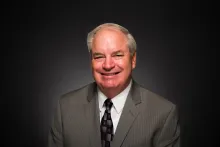
Robin Webber was born in Chicago, Illinois, in 1951, but has lived most of his life in California. He has been a part of the Church of God community since 1963. He attended Ambassador College in Pasadena from 1969-1973. He majored in theology and history.
Mr. Webber's interest remains in the study of history, socio-economics and literature. Over the years, he has offered his services to museums as a docent to share his enthusiasm and passions regarding these areas of expertise.
When time permits, he loves to go mountain biking on nearby ranch land and meet his wife as she hikes toward him.

