

Darris McNeely
This transcript was generated by AI and may contain errors. It is provided to assist those who may not be able to listen to the message.
Attached by that special music. Thank you very much to those who prepared that, especially our own Courtney Kavanagh is here to participate. So thank you. Thank you very much. I'm going to share my screen here, and we'll see if we can get this to work. We'll see if that is functioning. There we go. I really appreciate Dave Murigan's message, because it ties in very well to what I'm going to share. I don't think you're going to have to wait too long for that message he made reference to. I wanted to share something that I prepared for the Feast of Terbinacles, presented in French, I think is very relevant here, especially as we come back from the feast and think about this period between now and the Passover, and kind of how we should be conducting ourselves and how we should be using the time. I want to start out by taking us back in time. Let's see if I can control this here. Maybe I need to control over here.
Interesting. Here we go.
So on September 11, 2001, at 846 a.m., American Airlines Flight 11 struck the North Tower of the World Trade Center in New York City. At that point, Morgan Stanley, Financial Services Company Chief Security Officer Cyril Richard Rescola went into action. This was the moment that Mr.
Rescola had been preparing for his entire life. I want to share his story from an excerpt taken from an article in the Canadian Free Press on September 10, 2001, by Beth Underwood. Mr. Rescola was born in England, and he served in the British Army, and then later in the U.S. Army, interestingly enough, which is an entire story in and of itself.
He was raised to the rank of Colonel and received numerous decorations for his leadership during the Vietnam War. In fact, Mel Gibson based one of his movies, We Are Soldiers, on his memoirs. After retiring from the military, he went to university where he earned a master's degree and then a law degree and began teaching criminal justice at university level.
But in 1985, he became head of security for the prestigious financial company, Dean Witter, which was headquartered in the World Trade Center. And since then, he began working on protecting the company's employees from the risk of a terrorist attack. In 1990, with a colleague, he wrote a comprehensive risk assessment of a terrorist attack that could take place on the World Trade Center. In his report, he indicated that the buildings were most vulnerable if a truck bomb exploded in the parking lot, a report which he submitted but which New York City authorities ignored. Unfortunately, and in 1993, the World Trade Center was attacked by a truck bomb in the basement, as he predicted.
After the attack, his reputation grew substantially and his credibility as well. And Mr. Rescola repeatedly requested that his employer move from the World Trade Center to avoid the risk of another attack. And he continued to write possible risk assessments, and one of the possible attacks which he predicted in his risk assessment would come from a plane crashing itself into the buildings. And yet his warnings went ignored. Because of his writings and his and these writings being ignored, he became unsure whether local authorities could protect the building's employees. And so Mr. Rescola put in place a comprehensive evacuation plan for all the employees in the South Tower and in World Trade Center Building Number 5.
Morgan Stanley was the largest employer in the World Trade Center. It had 22 floors dedicated to its employees in the South Tower and many more floors in World Trade Center 5. Its evacuation plan required regular drills for all employees evacuation plan that Mr. Rescola put in place. And during each drill, he timed the evacuation with a stopwatch, pushing each evacuation to be faster and faster and more efficient. And over the years, he had refined his procedures and improved training for evacuation officials on each of the floors. But these regular training exercises caused a great deal of frustration among senior managers at Morgan Stanley because of their impact on employee productivity.
And most of the exercises were actually surprise drills without warning. And yet on that morning of September 11, 2001, when the first plane hit the North Tower, the authorities told all the occupants of the South Tower to stay at their desks and wait for further information. But Mr. Rescola disagreed, and he told Morgan Stanley executives they had no time to waste and that they should evacuate immediately. His reputation and credibility could not be ignored, and so Morgan Stanley went against the direction of the Port Authority and ordered an immediate evacuation of their employees.
As thousands and thousands of Morgan Stanley employees descended those stairs, some of whom had reached, some of whom were at the 77th floor, Mr. Rescola directed all the events from his office on the 44th floor, going up and down stairs and different floors around that time. Although only 17 minutes elapsed between the time of the first plane hitting the North Tower and the second plane hitting the South Tower, most employees had already descended below the plane's point of impact thanks to his evacuation plans. Through more than 15 years of planning, 15 years of planning and concentration, nearly 2,700 employees were evacuated from the South Tower and another thousand from the Tower from from World Trade Center 5, plus another 250 people who were present for a training course that day with Morgan Stanley.
Unfortunately, six Morgan Stanley employees were killed that day in those attacks, but thanks to his preparations, nearly 4,000 people were saved. And after evacuating most of the employees and after calling his wife Susan one final time, Mr. Rescola returned to the South Tower. Even though he had been undergoing treatment for prostate cancer, he decided to go back into the tower despite his exhaustion to ensure that everyone had been evacuated. He was last seen in the stairwell near the 10th floor shortly before the South Tower collapsed at 9.59 a.m.
His body was never found. He was 61 years old. He gave the ultimate sacrifice of his life to save the lives of others, and yet that day was just the culmination of 15 years of sacrifice to ensure the safety of those employees. I would like to connect the story of Colonel Rescola with our story by asking you to turn to the scripture that you turn to in the sermonette, Revelation 5 and verse 10.
And we'll fill in the other part of the message that Mr. Morigian talked about in the sermonette. Revelation 5 and verse 10. It says here, as we read, and have made us kings and priests to our God, and we shall reign on the earth. Knowing God's Church, we often hear our talk of kings, or as I think was very well enumerated, this kingdom that was described, and I really appreciate some of the background scriptures that Mr. Morigian went to. Today I want to talk about our future role as priests.
As the scripture says, we will also be priests. What do you think of when you think of a priest? Do you think of a Catholic priest or an Orthodox, a Russian, a universal church priest? Do you think of perhaps a Buddhist monk or some sort of an Asiatic priesthood? What do you think of when you think of a priest? Do you think of the Old Testament, perhaps, the priesthood of Aaron?
God tells us that we, too, are going to be priests. But as we see, we're going to be a different type of priest from those of the Old Testament, and from those that we see around us today. If you think about what a priest in the Old Testament did, his job was to make sacrifices before God on behalf of the people. You can read those passages in Leviticus in the first five books of Moses that describe the duties of a priest.
Interestingly, the Bible version that God's church uses in the French language, the Louis-Ségond translation of the Bible from Hebrew and Greek into the French language, does not use the word priest in this passage in Revelation 5 and verse 10. You see, Louis-Ségond was a Swiss Bible scholar, a theologian of renown. He lived in the 19th century, and he looked at the Greek in this passage, which is the word perios. I've got it on the screen here, H-I-E-R-E-U-S, perios. And he saw that there were two usages in Greek. For example, Homer, the author of the Iliad and the Odyssey, which is the second most widely published book in Greek after the New Testament, used the word to describe a priest but also someone who performed sacrifices. Strong's Concordance indicates this as well under Strong's word 2409. It says, a priest, comma, one who offers sacrifice to a god in Jewish and pagan religions, of Christians only metaphorically.
And so, as to clearly avoid reference to a Catholic priest, he chose to translate this word in French as sacrificaté, or in English, sacrificer. Sacrificer. The word sacrificer is an English word that you can find in the Oxford English Dictionary. Interestingly, I could not find it in the Merriam Webster's dictionary, and I think that's because the Oxford English Dictionary classifies this word in what's called band four, which is a classification of rarity. It is a rarely used English word. Specifically, Oxford says that it's used 0.1 to one time per million words. So it's not a word that we use very often in English, but it's recognizable. It simply means one who sacrifices. It just means one who sacrifices, and it came into the English language in the 1500s, and was used fairly extensively, but is not very much used today. Sacrificer. One who sacrifices. So we can say that he would, if we go back to our scripture, and have made us kings and sacrifices to our God. We are sacrifices to our God. And so in this sermon, we will see that as Christians, we are sacrifices today, and we will be sacrifices in the future, in the sense that we will make sacrifices, and we make sacrifices. We're going to examine these sacrifices in this sermon, and through this examination, I think we're going to see that our work today will continue into the world tomorrow. All of this activity is for the purpose to lead others to understand how to offer spiritual sacrifices to God. Just like Colonel Rescorla, our preparation today will support and protect those in the millennium who will come after us. Our preparation today will serve and keep from harm those who will follow us. Now before we go into detail on this, I'd like to ask you to turn to 1 Timothy 2 verse 5. 1 Timothy 2 verse 5.
I'd like you to read an important passage here, because one of the roles that was played by the Old Testament sacrifices was that of a mediator. 1 Timothy 2 verse 5 says here, For there is one God and one mediator between God and men, the man Christ Jesus. In the Old Testament, the priest acted as a mediator between God and human beings. But now we know from this verse that the ultimate sacrifice of Jesus Christ caused there to be only one mediator between God and mankind, and that is Jesus Christ. And so the role of a sacrifice for us will be different because it will not necessarily include that. So what does it mean to be sacrifices? Are we going to sacrifice animals like the priests of the Old Testament? Will we wear special clothes? Will we lead church assemblies around the earth? The answers to these questions are not completely given in the Bible, but it is useful to reflect on what it means to be a sacrificer or priest in order to understand our future role and to prepare for today. So in today's message, we're going to look at what is a sacrifice, what kind of sacrifice we're going to make, and we're going to look at five specific spiritual sacrifices that we are called to make right now. You're looking for a title for the message today. The title of the message is sacrifices for our God. Sacrificers for our God. So what is a sacrifice? What is a sacrifice? Well, again, I'm going to go to the Oxford English Dictionary. It's really the definitive dictionary. I think there's 600,000 entries for the English language. It actually has many different things to say about a sacrifice. I've chosen the first one. This is the very first definition from Oxford's English Dictionary. It says, primarily, the slaughter of an animal, often including the subsequent consummation of it by fire, as an offering to God or a deity, hints in wider sense the surrender to God or deity for the purpose of propitiation or homage or some object of passion. Now that's a possession. That's a bit complicated, actually. I mean, I think we get the idea. People would bring something to the priest, to the sacrificer, and that sacrificer would sacrifice that thing, that animal, or that offering in some way to God. Another definition from Oxford's dictionary, this is the fourth definition, is the destruction or surrender of something valued or desired for the sake of something having or regarded as having a higher or more pressing claim. The loss entailed by devotion to some other interest, also the thing so devoted or surrendered. Basically, what it's saying is that you recognize that you have something of value to you. It might be an animal. It could even be quite a prized animal. It could be a piece of land. It could be money. You have something of value, and you give up that thing of value because you know that there's something that is more valuable even still than that. So one of the attributes of a sacrifice is that it must have value to the one who gives it as a sacrifice. And we see this expressed in 2 Samuel 24 verse 24. It's fairly easy to remember. I ask you to turn over to 2 Samuel 24 verse 24 because this showed that David understood this concept that you don't sacrifice something that has no value to you because then by definition it isn't a sacrifice. 2 Samuel 24 verse 24 is the story of David going to buy this specific location where he would build this altar to God, this very special place to God. And it says in verse 24, Then the king said to Arana, that's David speaking, No, but I will surely buy it from you. Because you see the people wanted to give him this place. He was the king. He was special. They wanted to give it to him that he could then use it. But he said, No, I'm not going to take it as a gift.
Because if I took it as a gift, then it really wouldn't be important to me in the same way. So he says, No, I will surely buy it from you for a price. Nor will I offer burnt offerings to the Lord, my God, with that which costs me nothing. So David bought the threshing floor and the oxen for 50 shekels of stuff. He was going to buy it and then he was going to offer it to God. He was going to use it in that way. And in the Old Testament, people would bring a cow, a sheep, a lamb, a pigeon, all different values based upon their level in society and based upon what they desired to offer. And all of these different objects that they brought forward had different levels of value. If you look over at John 15 verse 13, you turn with me there, we'll see that Jesus picks up on the same concept because he recognizes that the things that were offered as sacrifice had different levels of value. At the highest level of value, he defines here in John 15 verse 13, he says, greater love has no one than this, than to lay down one's life for his friends. So in John 15 verse 13, Jesus said that there is this no greater sacrifice. And we understand, and I think we can connect to the sacrifice that Mr. Rescola made in leaving his wife and family behind to save the lives of others. He made the ultimate sacrifice. As I mentioned, he was being treated at that time for prostate cancer. And he was 61, and he thought of all of the people in the tower who maybe had more life to live than he did. And so he gave his life that they might live. The gift of a human life is the greatest sacrifice. And even more so, when Jesus gave his life, it had an even greater value more than any other because he was the Son of God.
So what kind of sacrifice are we going to be making in the future?
What kind of sacrifice are we going to make? Mr. Morigian may reference this, but let's turn over to 1 Peter 2 and verse 4 and 5. And let's read those passages that he made reference to together. 1 Peter 2 verses 4 and 5. It says here, 2 Coming to him as to a living stone, rejected indeed by men, but chosen by God and precious, you also as living stones are being built into a spiritual house, a holy priesthood, to offer up spiritual sacrifices. Spiritual sacrifices. 2 The sacrifices that we offer today, and I think also we will offer in the future, they will not be animal sacrifices, but spiritual sacrifices, as it says here. Spiritual sacrifices acceptable to God through Jesus Christ. Now, we do have indications in the Bible that there will still be some kind of animal sacrifice during the millennium. We find this in Ezekiel 43 to 46. And speculations differ as to why there would still be animal sacrifices in the millennium, since Christ was sacrificed once and for all human beings. Perhaps they would be done to remind people of what things were like before Christ's death. We don't really know. What we do know, however, is that Peter's language here echoes the language that we read earlier in Revelation. And again, that's why I think Mr. Morigian made reference to it. And it also echoes what we see in verse 9. And verse 9 says, You are a chosen generation, a royal priesthood, a holy nation, his own special people, that you may proclaim the praises of him who called you out of darkness into his marvelous light.
The sacrifices we make do not involve animal sacrifices, but a renunciation of certain things of value to us. And this will involve, frankly, a change of priorities, because what was once perhaps valuable is not as valuable, and therefore we let that go for something that is more valuable as that Oxford definition entailed. And it involves a change in attitude. Let's see how King David understood this idea some 3,000 years ago. If you turn over to Psalm 51, verse 16 and 17. Psalm 51, verses 16 and 17. It says here, For you do not desire sacrifice, for else I would give it. You do not delight in burnt offering. The sacrifices of God are a broken spirit, a broken and a contrite heart. These, O God, you will not despise. See, the sacrifices that God wanted from the beginning were not animal sacrifices. He wanted a humble human heart, a heart that wanted to be with him and listen to his instruction. This is an attitude that we've got to begin to understand now that as we become sacrifices. And with this in mind, let's now look at five specific spiritual sacrifices. As we know as sacrifices, we are called to sacrifice. The Bible tells us about five spiritual sacrifices that will guide others to make during the millennium and that we are called to make today. Let's start with Hebrews 13, verse 10. And let's read a couple of that are listed here in Hebrews 13 and in verse 10. On my way over there, here we go. Hebrews 13, last chapter in the book of Hebrews.
And in verse 10, it says, we have an altar from which those who serve the tabernacle have no right to eat. And so he's setting the scene here of a physical analogy of an altar and yet a spiritual, using that to launch into a spiritual discussion. For the bodies of those beasts whose blood is brought into the sanctuary by the high priest for sin are burned outside the camp. Therefore, Jesus also, that he might sanctify the people with his own blood, suffered outside the gate. Jesus was offered as a sacrifice and he suffered outside the gates of Jerusalem, as we understand. Therefore, because of that, let us go forth to him outside the camp, bearing his reproach. Let's follow in his footsteps. Let's do what he wants us to do and be imitators of him. Verse 14, for here we have no continuing city, but we seek the one to come. That is, our lives here have really very little meaning compared to that kingdom and that city that is ahead. And with that background, with that that understanding and that context, he builds on it. Therefore, verse 15, he says, by him let us continually offer the sacrifice of praise to God. That is the fruit of our lips, giving thanks to his name.
So the first sacrifice that I want to share is praise to God. Now, praise to God can be in many forms. It can be what we're doing right now. It can be in song. It can be in many, many different ways. And we do this on the Sabbath and we do this on Holy Days, and we should do this during the week as well. We should be taking the time to sing or speak the praises of God in our prayers. We begin, how would be thy name?
We come to church or this virtual assembly and we praise God in song. We listen to powerful pieces of special music, as we heard today, which is so meaningful and touching. And we listen to this, and we feel this expression then to God. Some people think they can't sing. I struggle. But God says that we should all sing praises. A person's taste for music is a very personal thing, of course, so we have a variety of different types of special music. And I think at this level we can look for more variety, and God will provide what we need, I think, as time goes by. When we sing to God, we might also be doing something else. We may postpone whatever we were doing before, and instead we choose to sing.
And we're blessed here locally with very talented musicians, and I would embarrass them if I mention their name, but I think we benefited from seeing them in the Feast Welcome video. We're thankful for them. We're thankful for the group that did the special music today. It's a sacrifice of their time. It's a sacrifice of their energy. They could be doing something else. It's a gift to God, and we benefit from that gift. We don't say people perform special music. It's not terrible to say that, but we don't typically say that. What we say is they give a piece of special music. They offer up special music to God because it's a sacrifice. It's a gift, as it says. It's an offering, and it's a way that they can offer sacrifices. And we can offer sacrifices when we sing and when we speak these things. Now look in verse 16. Verse 16, it says here, but do not forget to do good and to share with such sacrifices and for which such sacrifices God is well pleased.
So the second way that we can sacrifice to God as sacrifices is that we take our time and we share it with others, and we share our material resources with others to support the needs of our brothers and sisters in the church, in our communities, which is beyond the United Church of God, beyond the Church of God, and with our families. You know, in the kingdom of God, we will serve as sacrifices, and we have to set an example of that today. What are your goals this year to serve God's church? What are your goals to serve your family? What are your goals to serve your community?
You know, I have to complete a pastoral assessment, a self-assessment, each year, and one of those questions was, how did you lead in serving in your community? And, you know, I think with everything that happened this last year was obviously very difficult, but I think there were things that we could have done. I think we can do a better job that way.
What are your goals? I'm thinking about mine. I hope you're thinking about yours. Probably more than anything else right now, the Church of God needs the support of volunteers to do the work. If you'd like to help, please let us know. There are many things that we need help with, whether here locally or in other areas. Certainly, I mentioned this to our French brethren as well. It's a sacrifice of time, but it's also to some degree a sacrifice of anonymity. It's very easy to perhaps be in the background. There's less risk. There's less chance of hurt. There's less chance of conflict or drama or whatever, but God has not called us to be anonymous. You don't have to turn there, but I think Matthew 10 verse 33 is a very powerful verse. It says, whoever shall deny me before man him, I will also deny before my Father is in heaven. You know, we are to profess who we are, our faith, and we are to have that integrated sense of being. We're not one person in church or one person at work, another person when we go for a walk. We're one person, and we profess who we are as light, as salt, and to speak out, because it says to profess. I think I'm just going to go back to Matthew 10 verse 33 for a second if you want to turn with me there, because there's something right before it that I don't think I put this up on the screen, but there's a lead-up to this that I think is helpful.
It says, therefore whoever confesses me before men him, I will also confess before my Father who is in heaven. And confess, that's speaking. That's actually speaking aloud. It's about not being afraid of what people might think about us, or the fact that we are in church, or whatever it might be. And it is a sacrifice of time, but it's also a sacrifice, as I said, of our material goods. Are we generous people?
Often people think that you have to be rich to give, but we have the example of the of the widow, and the widow's might. And she only put in two cents, probably even less in terms of actual value. She gave what she had, and that's the example that we are to follow. You know, when I was 11 years old, my mother was going through a difficult time in her life, and she stopped tithing for a while. And she started tithing again later, and she didn't have enough money to go to the feast that year. She had just a little bit, but she was going to go anyway, because she knew it was the right thing. And we were living in West Texas at the time, and I think I've told the story, and we drove to Tucson, and we arrived in Tucson with a certain amount of money. It was, I think, just maybe barely enough to cover the hotel. And people there who were familiar with my mom and what was happening, they began to help. And we celebrated a wonderful eight days that year, a wonderful feast, and when we left eight days later, we had more money when we left than when we left for the feast. That was the generosity that people had that allowed us to keep the feast, because I knew my mom wanted to do the right thing, to go to the feast. And she did, and we were blessed. And that had a big impression on me as an 11-year-old, and I share that example with you now, nearly 40 years later.
Building on this same reflection on the gift of our resources, let's look over in Philippians 4, verse 18.
Philippians 4, verse 18, it says here, Indeed, I have all and abound, I am full, having received from Epherditus the things which were sent from you, a sweet-smelling aroma, an acceptable sacrifice, well-pleasing to God. And so we see that another way that we can sacrifice is our financial support of God's work. And there's kind of a reference to that in Hebrews 13, but it's a very explicit discussion here in Philippians 4, verse 18. We see that our financial support of God's work is a spiritual sacrifice that God accepts if it is offered in the right attitude.
Between his tithes, offerings, and work as a tentmaker, Paul was able to travel the ancient world to spread the gospel message. And the same is true today, and sacrifices are no less necessary today. There is a work being done, and many people talk about, many people in God's church talk about being fed. People say, I want to be fed. And of course, we go to church, and we are looking to be supported that way with a meaningful message and with meaningful fellowship. There's nothing wrong with that. But if all we think about is how we want to be fed spiritually and be nourished by the church, I think we're missing something. Because the body of Christ is here to also preach the gospel to the world and to make disciples, as God calls those disciples. And the United Church of God is doing a work. When I'm in France, I receive phone calls and emails from people who see us on the website. This year at the feast, I was counseling four different people for baptism, two of which I baptized. And I get calls, and people want to know about the truth. As I said, we had new people at the feast this year, with three people keeping the feast in France for the first time this year, fourth one for the second time. And you can see the changes that God is working in people's lives. And God has a plan for his first fruits and who he's going to call. And it says that the harvest is white. And we have to be prepared to be part of that work. And that's part of our role. You know, the mission of the church is to preach the gospel and prepare people. And so we should be part of that. Tides are something that belong to God. So they're not a sacrifice. Because that money doesn't belong to us at all. It just belongs to God. However, in many cases, tithes are not enough to do what is necessary for the work. Offerings, on the other hand, are sacrifices, as described here, because they're voluntary. And Paul explained in this passage here from Philippians that he had a work to do, and he put his own hands to provide for it. And he received those, you know, he worked to support himself, and he received the tithes. But he also received these voluntary offerings.
Today, many ministers and members volunteer their time. They serve as unpaid employees, or they give above and beyond even just the offerings that we take up at the feast. Because their heart is wanting to make that sacrifice. It's a way of sacrificing themselves. It's a way of being a sacrificer. The fourth way here that we offer sacrifice or our sacrifices is through our prayers. And I'd like you to turn to Revelation 8, and we'll read verse 2 to 4. Revelation 8, verse 2 to 4, it says here, And I saw the seven angels who stand before God, and to them were given seven trumpets. Then another angel, having a golden censer, came and stood at the altar.
And he was given much incense, that he should offer it with the prayers of all the saints upon the golden altar which was before the throne. And in verse 4 it says, And the smoke of the incense with the prayers of the saints ascended before God from the angel's hand. This reference alludes to what the high priest did on the day of atonement, when he offered incense before the mercy seat. Can you imagine our prayers are like that? Prayer is a sacrifice in the sense that it requires us to spend time and to do something that, to forego doing something that we would otherwise do. Instead, we go and we pray. And we think about these things. We think about the announcements we heard today about the fastidios and about the mikilings and about many other prayer requests that we received on email that we didn't have time to share. When we pray, we are also praying for others, of course, and so that we do not have our minds on ourselves. We should be people of prayer, sacrifices of prayer. And we offer this, and we will offer that sacrifice in the millennium. You don't have to turn there, but Psalm 141 in verse 2 says, let my prayer be set before you as incense, but lifting up of my hands as the evening sacrifice. The next time we close our bedroom door and kneel down and pray, we should think about those prayers that are gathered together and then they're offered before the throne of God. Imagine your prayers are offered before the throne of God as incense pleasing to God. Whether it's prayer, praise, good works, generosity, they all have one thing in common, though. They've gone through four. Whatever it is, they all have one thing in common, and that is that it is a sacrifice for this way of life. Let's go to Romans 12 verse 1. Many of you probably figured we'd end up here in Romans 12 verse 1 at one point. Romans 12 verse 1. A scripture we read so often as we should, really, because it defines really who we are as people. I beseech you therefore, brethren, by the mercies of God that you present your bodies a living sacrifice, holy, acceptable to God, which is your reasonable service. And in this way, we imitate our older brother, who gave his life as a sacrifice for us. And as Paul writes in Ephesians 5 verses 1 to 2, you can just note that down, Ephesians 5 verse 1 to 2, we must give of ourselves every day. Being a living sacrifice means that we renounce our pride. We renounce turning evil back on others for how they've hurt us. It means leaving these things to God for him to deal with in his time and in his place and in his infinite judgment. We easily recognize when we are wrong, and that is hard. That is very hard to do. But being a living sacrifice means that we are beginning to see when we're wrong, and we choose forgiveness, even if something seems unforgivable. That's what being a living sacrifice means. Being a living sacrifice means that we choose reactions of love rather than reactions of anger. Being a living sacrifice means that we make decisions every day that are contrary to our natural instincts. You know, we have a lot of instincts about things, right? But when we follow those instincts, sometimes we're going to be doing things that are just contrary to God's law. It means changing those instincts and being able to recognize the difference.
What are your life sacrifice goals for the coming year? What are the things that you're going to be doing this year that you weren't doing last year?
How do you think about this? You know, Mr. Rescola lived every day thinking about how to protect Morgan Stanley employees. It's a picture of him taken from the Guardian, bullhorn in hand as he would often direct these drills in the World Trade Center. You know, he could have stopped those fire drills when pressure from his superiors made him realize that his ideas were upsetting. He could have stopped improving processes, but he knew that when the time came, every minute would count. He only lived one hour and 13 minutes after the first plane hit the North Tower, but during that time his work saved nearly 4,000 people. For us, it's striving for perfection. Improving and never giving up what we believe. It's about relying on God's laws and not on our own way of thinking, the way of give and not the way of get. Are we ready to sacrifice everything for God? Are we ready to be sacrifices for God? Do we love him that much? You know, fortunately, God is so good that he knows where we're at in that process, and he loves us no matter where we're at in that process.
We've been called to a royal priesthood so that we can be prepared to support God and Jesus Christ in saving billions of lives. We will do this through offering spiritual sacrifices of praise to God, our time, our financial resources, our prayers, and ultimately, our entire life.
Are we going to allow God's Spirit to work in us to be an instrument in God's hand to be a That's a question, really, that I think each of us have to ask and answer for ourselves. Let's put these things into practice.
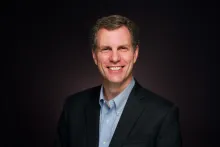
Tim Pebworth is the pastor of the Bordeaux and Narbonne France congregations, as well as Senior Pastor for congregations in Côte d'Ivoire, Togo and Benin. He is responsible for the media effort of the French-speaking work of the United Church of God around the world.
In addition, Tim serves as chairman of the Council of Elders.
