
Roy Holladay
This transcript was generated by AI and may contain errors. It is provided to assist those who may not be able to listen to the message.
The story is told about a man who got stalled in heavy traffic, and this, I think, happened to probably every one of us. Just as the light was turning green, he couldn't go. All of his efforts to start the engine failed, and as usual, there was a chorus of honking behind him that only made the matters worse. Everybody was honking a horn. You go ahead, take off. Well, he finally got out of his car and walked back to the first driver and said, I'm sorry, I can't seem to get my car started. If you go out there and give it a try, I'll stay here and honk the horn for you. Now, I don't know why I haven't thought of that before, but rather than we have the opportunity in life to help make peace and to edify our brothers, we can simply sit back and honk the horn at all of his problems, all of his mistakes, everything that he does wrong.
And guess what? There's not one of us here who doesn't do things wrong, and we make mistakes, and there are a lot of people honking their horns at us. I think now, more than any time, probably in our lifetime, we need to have a Christian approach where there is peace, where we're striving to make peace, and that we're demonstrating an attitude of love.
Perhaps this is something that we haven't really thought that much about. You might remember when Jesus Christ at the last Passover he kept with his disciples. He mentioned something. We read it every year at the Passover service. He said, By this one thing, people will know that you are my disciples. And what was that one thing he mentioned? That you love one another. That people would look and see a church, a people, a group that certainly had love for each other. This is something that all of us should be pursuing.
Underneath the goal of seeking love, have you ever stopped to think about, if you want to achieve something, how many times have maybe you wakened up in the morning and thought, Today, I'm going to show more love. And so you go to God and you pray, God, give me more love. And you go throughout the day and you don't seem to have more love.
Is there anything that you and I should be doing that would help us to grow in love?
I think underneath any goal, and what greater goal could we have than to grow in the love of God? There has to be certain objectives that you strive for, to be able to build toward that goal.
Years ago, I learned a lesson, and I think maybe many of us have, and we just don't stop to put it in that language, that if you want to achieve a goal, a primary goal or purpose, that there are things that lead you to that goal. It doesn't just happen, but you have to do something. There are objectives that you have to meet.
As an example, what if one of our young adults here decided that he or she wanted to become a doctor? So, you pray to God, I want to become a doctor, and the next morning you wake up and you look around, and you ask yourself, am I a doctor yet? Of course you're not a doctor. What would you have to do? If you wanted to achieve becoming a doctor, you'd have to do something. Probably one of the first things is getting an education. You'd have to go to school, get a degree. You'd have to make certain financial preparation because it costs a lot of money to be able to do this. You have to have a sincere desire to want to practice medicine. After you attain a college degree, you'd have to be accepted to medical school somewhere. You'd have to specialize in a particular practice of medicine. You'd have to serve several years as an intern. Then, once you did that, you'd have to graduate and then go out and find a practice. Go out and find some firm that you could join, or some hospital, or some doctor's office that would accept you as a practitioner.
If you want to become a doctor, there are a lot of objectives that you have to fulfill. By achieving those objectives, one after another, guess what? After a period of time, you're a doctor. Same thing could be said of a lawyer or an engineer or any other objective. When it comes to the spiritual realm, too often we just pray about something. We don't do anything to achieve those objectives. If I were to ask you to list primary goals that God has set for us that we need to achieve, what would be on the top of your list? Where would you start? God says, okay, I want you to measure up to a certain standard. I think probably most of us would think of Matthew 6.33. Matthew 6.33 says, Seek you first the kingdom of God and His righteousness, and then all these things will be added to you. God tells us to seek His kingdom first. Now, is there anything that you have to do to seek the kingdom first? Don't you have to perhaps repent, be baptized, receive God's Holy Spirit, obey God, keep His commandments, strive to live a righteous life? Is God going to give you membership into His family, into His kingdom? Will you be one who stands before God in the resurrection unless you do something to achieve, to move in that direction? We know it's through the power of God, which Pentecost coming up shows us. But there are goals, sub-goals, objectives that you and I would need to achieve to be seeking God's kingdom. Let's go over to Matthew 22, verse 35. You'll find that there are some primary sub-goals that you and I would have to achieve if we're going to be in God's kingdom. Verse 35, they came to Christ and said, Teacher, which is the great commandment in the law? And Jesus said to him, You shall love the Lord your God with all your heart, all your soul, all your mind. This is the first and great commandment. The second is like it, you shall love your neighbors yourself. On these two commandments hang all the law and the prophets. So it's a given, hopefully, that you and I are to love God with all of our beings. If we're a Christian, that God comes first. When you were baptized, that was a commitment you made. You said you would put God first above all. But a second great goal is loving your neighbor as yourself. Now, how do you do that? How do you come about to love your neighbor as yourself? You see, this commandment is restated and re-emphasized again back in John 13, verses 34 and 35. I referred to this earlier, where it's translated as a sign that all men will know that you're my disciples if you have loved one for another. So that's talking about having love for each other. Love your neighbor as yourself. So the great goal of loving one another has a number of objectives that lie underneath it. If we're going to come to the point to where we truly love one another, and you develop a love for humanity, for each other, equivalent to the love you have for yourself, you've got to do something. You've got to achieve certain goals, certain objectives that would lead you, as they're in result, to having that type of love. Now, there are all kinds of objectives when it comes to having love, or the proper love, that one could focus on.
We don't have time today. I only have an hour and a half to speak. No, I'm just trying to see if you're awake or not. We don't have that much time. There are so many objectives. But I would like to focus on two today, two objectives that are the underlying goals of loving one another. These two objectives are mentioned by the Apostle Paul back in Romans chapter 14 and verse 19. Romans 14 and verse 19. So, let's take a look at these objectives.
Because if we can do what Romans 14 and 19 says, then we will certainly learn to love one another much more deeply. Verse 19, number one, it says, therefore, let us pursue the things which make for peace. So, number one, we should be striving to be a peacemaker. The things that make for peace. And then, number two, the things by which one may edify another. So, secondarily, we should seek to edify each other. So, if we can work on developing peace and edifying one another, then these are part of the foundation, the undergirding, that holds up the love that we should have for one another. We will be able to make huge inroads into loving one another more effectively. So, let's take a look at both of these. First of all, let's take a look at making peace. The Bible has loaded with a lot of general principles about making peace and how to make peace and seeking peace. The Apostle Peter, back in the book of 1 Peter chapter 3, gives a number of instructions on how to go about doing this.
In 1 Peter chapter 3, we find how to pursue peace in our lives. Because Peter talks here about peace in our marriage, peace with your neighbor, how to have peace of mind, a number of ways that we have peace. Although this is covered in the first 14 verses of this chapter. So, let's go over to verse 1. 1 Peter chapter 3 and verse 1. You'll notice as we go through this section that there are a lot of imperatives in this section. When I say imperatives, an imperative is something that is charged or commanded. As we read through this, you'll notice that a lot of times it starts with the word let.
Let's begin in verse 1. That's an imperative. Wise, verse 1, likewise, be submissive to your own husbands. That even if some do not obey the word, they without a word may be won by the conduct of their wives. So here we find that it is possible for a woman to set a right example before her husband, who's not converted, and by that example that they could be called. Now, it doesn't give you an ironclad guarantee of that, but it does show that if you want them to be called, that this is one of the ways to go about it.
It says, when they observe your chaste conduct accompanied by fear. So they see your conduct. Wives hold a very powerful influence over their husbands. Their behavior is seen by their husbands. At least any guy with half a brain sees the example of his wife and what she does. Even a very carnal man in society in this world sees the righteous behavior of his Christian wife and his influence by him. I don't know how many times I've talked to men, split marriages in the past, and have found men who have said, even though they begrudgingly didn't like the religion, who would comment, you know, ever since my wife became a member of your church, boy, is she a different person.
And he's not saying that in a bad way, but in a very positive way. Because she strives to be the right type of a wife. Now, let's notice in verse 3, the first let mentioned here, says, Do not let your adornment be merely outward. Now, this is not saying that you are forbidden to adorn the outward. But it says, don't let it just be merely that. This isn't the only thing you concentrate on. You find too often in society if people want to attract others, it is strictly the outward appearance.
You know, the hair, the clothes, you know, how they appear, what they have on their fingers, whatever it might be. It says, don't let your adornment be merely outward, arranging the hair, wearing a gold, putting on a fine apparel. So, we're told not to get carried away with just the outward adornment or the outward appearance. This is not where, as a Christian, our focus should be, especially a Christian woman. Now, where should her focus be? Well, verse 4. The second, let, is mentioned here. Rather, let it be the hidden person of the heart. So, it's the heart, the attitude, the approach that is mentioned. With the incorruptible beauty, notice, a beauty that cannot be corrupted.
The outward beauty can be corrupted, can it not? You can lose your hair. You can, you know, get wrinkles, age spots. You know, you can bend over, lose your vitality, energy. And we all experience that as we get a little older. But there is a beauty that comes from within that never gets old. It says, let it be the hidden person of the heart with the incorruptible beauty of a gentle and a quiet spirit, which is very precious in the sight of God. So, here we find that there is a beauty that comes from within.
So, the emphasis, God says, is what's on the inside, the character that an individual has. That comes through in our relationship with other people. In fact, sometimes the outward appearance can turn other people off to us. You know, there are people who go around strutting like peacock, and, you know, they don't realize how much they turn people off by their example, by what they do.
And, you know, that's something we want to avoid. Having a quiet spirit that's inside of us is a powerful key to having peace with someone. It's a powerful key for a woman in a marriage, if this is her approach to having peace within that marriage, within that family. Sometimes the outward adornment can give us an appearance to others that we're better than they are, and it doesn't lead to peace and the right relationship.
But a quiet spirit is not only attractive to other human beings, but also to God, as we read here, that it is very precious. Now, the Bible doesn't talk about things being precious to God that often, but this is one thing that the Bible clearly articulates, is very precious to God. Now, let's skip down to verse 8. In verse 8, Peter gives a series of steps or characteristics to develop in relationship with others. Obviously, he's talking about developing the right character, but they also lead to loving one another and having peace. When you look at the Greek text, you find that there are five things listed here.
Let's notice what they are. In verse 8, finally, all of you be of one mind. One mind means to be like-minded. So we are to have one mind, one approach, and having compassion for one another.
Compassion is referring to being sympathetic for others. We all know individuals who have empathy, and they seem to be very sympathetic. They're good listeners, and they have that empathy that they relate to other individuals. Then it goes on to say, love as brothers.
We're talking here about brotherly love, that we love one another as brothers and sisters. Then be tender-hearted. I happen to like the word tender-hearted. I think it expresses the meaning, but the word implies being compassionate or tender-hearted toward other individuals.
Then finally, be courteous or be friendly. So we need to be like-minded, sympathetic, loving the brothers, or brethren, compassionate, friendly. These five steps really lead towards love and peace between each other.
If we can incorporate these into our thinking, into what we do, how we live, they will go a long way in developing the love that we need to have. The list continues in verse 9. You'll notice here that we're not to return evil for evil or reviling for reviling.
That's the way human nature is. Somebody kicks you, you kick them back, they punch you, you punch them. You can't do that to me. I'll show you who I am, this type of approach. But it says, on the contrary, blessing, knowing that you were called to this, that you may inherit a blessing. If we follow the objectives as they're outlined in verse 8, it brings peace, and it brings us a blessing that comes from God. After all, that's what we're looking for. Now in verse 10 through 12, Peter quotes from Psalm 34 verses 12 through 16.
And you'll notice here concerning peace, that it's something that has to be pursued. Let's read it here in verse 10. For he who would love life and seek good days, doesn't that describe what all of us would like? To love life, you know, a long life. Let him refrain his tongue from evil and his lips from speaking to seek. Let him turn away from evil and do good. Let him seek peace and pursue it. So peace is something that you have to pursue. It doesn't just automatically happen. You've got to go after it. Seek it. That's what the word pursue means. So you seek after it. It's an active process, not a passive process. Too often we tend to be passive. God, help me to have peace. Help me to have love. Help me to whatever it might be. And we don't actively do something. So we have to be active, not just passive in our approach. So you seek peace. Pursue it. For the eyes of the Lord are on the righteous, and his ears are open to their prayers. But the face of the Lord is against those who do evil.
So this is a step. And if we want to have peace, we just need to remember 1 Peter chapter 3 and read over this occasionally. Some of you may be familiar with the American landscape photographer Ansel Adams. Ansel Adams studied piano when he was a young man, and he showed some talent for playing the piano.
At one party, Adams played Chopin's F major, Nocturne. And in remembering that occasion, he said, something strange happened.
His right hand started off in F-sharp major, while his left hand played well in F major.
One's playing sharp, and the other's just playing the regular note. He said, somehow I just could not bring the two together. Could not get away from the sharps and bring the two together. He went through the entire piece, with the hand separated by half a step.
The next day, one of the fellow guests who was there gave him a no-nonsense review. He said, look, you never missed a wrong note.
He hit every wrong note. He never missed one.
Now, it's easy to be missing all the right notes in our relationship with others. So that's something that's easy for us to do. Just as it's easy to be off-key in harmony and music.
If our ears, spiritually, are not attuned, we can get used to being off-key, not even realizing. We can get off-key in our relationship with one another. And if we do, we can drive all the people around us sort of batting. Because they can hear something wrong here, but they may not know exactly what it is. It doesn't make for peace.
But we're told here in 1 Peter 3 that we need to be peacemakers. And really, the world solely needs, right now, people who can make peace, who can bring harmony together. Especially all of us need to be working on this so that in the future, in the near future, when Christ returns. You see, when you're given your five cities, ten cities, one city, half a city, whatever it might be, and Christ says, okay, I want you to bring peace to this group of people. You have the Hatfields and the McCoys living in your city. You've got the Arabs and the Jews over here. How are you going to bring peace? What are you going to tell them? You're going to tell them, look, I've got a rod. If you're not at peace, I'm going to bat your head. Now, you need to be able to explain to them the process, what they need to do in order to have peace. That's something that we need to learn now. So, are we ready to make peace and be peacemakers? Are we ready to be an example to everybody else around us? Well, there are four steps to seeking peace. And we need to apply these four steps until they become a habit.
And if they become a habit, then we can learn to be peacemakers. Let's look at step number one, 1 Corinthians 10 and verse 31. 1 Corinthians chapter 10. And verse 31, there's a principle given here. It says, therefore, and you might notice, I don't know how your Bible is.
I got the New King James Version I'm reading out of. The title above verse 23 says, All to the glory of God. That everything we do should be to God's glory. And verse 31 sort of summarizes that. If you remember here, he's talking about whatever we do should lead to peace. If somebody doesn't believe in drinking, doesn't believe in eating meat, this type of thing. We need to go out of our way to bring peace. Verse 31, therefore, whether you eat or drink, whatever you do, do all to the glory of God.
So the first step is, you and I should always seek to glorify God by our actions, to honor Him, and to show an approach of love or concern for other people. True peacemaking is motivated by a deep desire to bring honor to our God. We don't want to dishonor God's name. If people know that you are a Christian, that maybe they think you're a little different because you keep the Sabbath and the Holy Days, that type of thing. But you and I are God's emissaries on the earth.
We're God's representatives. People should see God in you and in me. If our focus is on glorifying Him, doing what is His will, it won't be on our selfish motivations, self-centered decisions. You see, most of us go through life and we're not careful. What is our mind constantly on? Or maybe I should say, who is our mind constantly on?
Well, it tends to be focused on ourselves. We're thinking about ourselves. We're thinking about what other people think about us. There are all kinds of things that go on in a normal mind, but we need to be focused on God. We come into contact with people. We need to be thinking about, how can I represent God here?
When we meet one another, Sabbath services or wherever, what can I do when you walk away from that individual to help them to feel good? They know that you appreciate them. So, the first step is to make sure that we are focusing on glorifying God in our actions. Step number two is back here in Matthew 7, verse 5. Matthew 7, verse 5, where it says, Hypocrite first removes the plank from your own eye. So, get the beam, the log, out of your own eye, and then you will see clearly to remove the speck from your brother's eye. So, the second principle to making peace is go to God if you and somebody else are having a problem or there's a difficulty.
The first thing to do is go and ask God and pray to God and ask God to reveal to you what the log is in your eye. What am I doing wrong? How have I contributed to this problem? Ask God to show you. You study the Scriptures. You pray. You look at yourself and you try to straighten that out. Then, you might be in a position to see the little splinter in your brother's eye and be able to perhaps help him.
It doesn't do any good to attack another person. You ever notice what happens when you attack somebody? Don't they attack right back? Isn't there a natural reaction to come right back at a person? You're inviting a counter-attack when that happens. Actually, if we see where we've been wrong and we're willing to admit our fault, guess what?
It defuses a lot of situations. The tension disappears, and especially when we acknowledge that we've done something wrong. That's not always easy to do. Step number two, we need to concentrate on getting the beam out of our own eyes. That's the first step. That brings us to the hard part. Step number three, Galatians 6.1. Galatians 6.1. We read, brethren, if a man is overtaken in any trespass, so somebody is sinned, he's trespass, he's broken God's law, you who are spiritual restore such a one in a spirit of gentleness.
Notice, not harsh, not mean, not jumping on them with all four feet. Considering yourself, lest you also be tempted, bear one another's burdens. Point number three is to gently restore that individual. Not hammer them, but to restore, help others to see their involvement, our fault in a loving and a gentle manner. You'd be surprised how much that can resolve problems. If you and somebody else is having a problem, and you can admit, well, you know, I realized that I shouldn't have said such and such, I'm sorry, and you know, you're gentle and you're kind, considerate, and you're dealing with them, then perhaps you can help them.
Now, when others fail to see their contribution, let's say they fail to see what they've done wrong, and it truly is a problem or a conflict, you know, if it isn't, it doesn't mount to the hill of beans, don't worry about it. But if it is, then you try to point it out to them. But if they don't respond, then perhaps you need to apply Matthew 18, where you go to your brother, and then if he doesn't hear, then you take somebody else with you. And then if he doesn't hear at that point, then you bring it to the church or to the ministry.
Now, you've got to be very careful because let's realize you can't just go to anyone. There are a lot of people in the congregation that you may be very close to, good friends, that you could tell almost anything to, and they would accept it. Others, you're not the one, maybe, to approach them because there is not that affinity, there's not that friendship that's there. So it requires a certain amount of wisdom, a certain amount of tact, a certain amount of understanding before you try to tackle some of these things.
And then step number four, in other words, you gently try to restore. And step four is Matthew 5.24, Matthew 5.24. It talks about going before the altar of God, bringing your gift to God. Verse 24 says, leave your gift there before the altar, go your way, first be reconciled to your brother, and then come and offer your gift. So step number four is strive to be reconciled, if at all possible, to your brother. Reconciliation takes two people working together. You can strive, the other person doesn't, there is no reconciliation.
It is a commitment to restoring a damaged relationship. Your relationship's been damaged, it'll take time, it takes commitment, it takes effort. We should always remember what Jesus Christ did for us, how He was willing to forgive us, and we need to be willing to forgive others. So these four steps can help and can be applied in really all types of conflict, and they can help you to become a peacemaker.
And if you work on these until they become a habit, guess what? You will be much further down the road in becoming a peacemaker. And when you pray to God and ask God to help you to be a peacemaker, well, you can see that you're making progress. You know, these are the underlying objectives. Now, in Romans 14, 19, again, I won't turn there, but you remember the second objective that Paul listed in Romans 14, 19. It was to edify others. To edify others. Now, I want you to understand that by becoming a peacemaker and by edifying others, and if you do these, you will grow in the ability to show love. And these are the objectives or principles that underlying love. Underneath each one of these, there are objectives that you have to fulfill in order to be able to do so. There's another story about a man who went to a banquet to hear a famous, well-known, much admired politician speak. He was sitting next to the speaker's wife. He noticed the speaker was immaculately dressed. He even had fancy monograms on his socks. Occasionally, he had a shirt or something that had a monogram, your initials on it, but nothing on socks. When he looked a little closer, he saw the monogram was not just the usual two or three letters, had four letters. They didn't seem to have any relationship to his initials.
Closer inspection, he saw that the monogram was TGIF. Any of you know what TGIF is? TGIF, thank goodness it's Friday. And he happened to mention that to the speaker's wife. She nodded her head negatively. No, that's not what that means. The monograms are there to help him get dressed. They mean toes go in first. Now, perhaps his wife had never heard of TGIF, and maybe she had, and was just pulling this man's leg, probably. The point is, most of us don't have to be instructed on how to put our socks on.
The toes do go in first, and then you pull them up over the feet. You don't put your socks over your head, or your elbow, or on your hand. They go over the toes first. Well, the same thing is true about edification. There are a lot of things that maybe you can learn about edification, but basically, a lot of things we know already, and we do.
We should realize it doesn't take rocket science for us to edify one another. But we don't focus on it, and so therefore it's something that we know maybe we should edify others. One of the biggest ways the ministry has to edify people is to visit with them and to speak.
Back here in Ephesians 4, verses 11 and 12, you find that verse 11, God has set the ministry in the church, says some apostles, prophets, evangelists, pastors and teachers. Why? Well, verse 12, for the equipping of the saints, for the work of the ministry, for the edifying of the body of Christ. So the ministry should edify the body. The word edify means to build up, to strengthen. And so through speaking, Bible studies, visiting, we do try to edify. But each one of us has an opportunity to edify one another. So how can we go about edifying each other?
What can you do to edify your brother, your sister here, your neighbor, anyone that you come in contact with? Well, there's several things you can do. Let me go over these with you very quickly. The first way we edify, I've already mentioned, is in our conversation. Our conversation, we can either tear people down or we can build them up.
So which do we do? Do we tear down or do we build up? In order to be a good conversationalist, one of the things that we need to do, that we all fail to do, is to be a good listener, to listen. Even our silence, at times, can be an effective communication. It's been proven that most people who are involved in a conversation are not really listening to the person they're talking to, but they are thinking in their mind what they're going to say in replying.
So they're coming up with some quip or something that they can say and come back, and so therefore they miss a lot. One of the best ways to be a good conversationalist is simply to look somebody in the eye, pay attention to them. Pay attention to what they're saying. If you ever talk to somebody while you're talking, he's looking over here, or he's looking up there, or looking past you, or he seems absolutely bored out of his gourd.
You begin to think, well, this person isn't interested in me, and so you drop off. But if somebody pays attention to you, is replying, is responding, saying, yes, I didn't realize that, I understand, and they're with you in their conversation, then you respond to that. So we can edify people through our conversations.
The main point in doing this is think before you speak. How many times do we, instead of aim, what is the principle? Aim, and then what is the three-step aim, shoot, fire. You are supposed to do things in the proper sequence, and most of the time our mouths run off without us thinking about what we are supposed to be doing.
So we need to think before something just sort of spills out of our mouths, and we regret what we just said and have to bring it back. In Matthew 12 and verse 34, Christ gave a principle. He said, blood of vipers, how can you, being evil, speak good things?
For out of the abundance of the heart, the mouth speaks. So out of the heart comes what you are going to speak. What we are thinking cannot be hidden forever. Sooner or later, for harboring antagonisms, evil thoughts about someone, they are going to come out. They are going to be expressed, because out of the abundance of the heart, the mouth speaks. We all need to realize that humanly we make mistakes, and we do things that are wrong. That doesn't mean, because somebody makes a mistake or does something wrong, that we should be perpetually angry with that person.
Our human nature gets exposed, and we sometimes can begin to hold grudges against people. But what we need to do is not to allow our human nature to rule our hearts and our minds. As James 3, verse 2, tells us, James, I think, zeroed in here on a problem we all have. It says, For we all stumble in many things, and if anyone does not stumble in word, he is a perfect man, able also to bridle the whole body. So we all stumble in what we say. If we can learn to control our minds and our thoughts and what the heart holds, then we don't have to worry about what we say, because the right things will come out of the heart. So we can edify, we can build people up by what we say, by being encouraging to them, by strengthening them. A second way we edify people is by our example.
We, when we had children, or if you still have children, know what a powerful example your example is to your children, whether it's good or bad. They will pick up on your example. It doesn't matter what you tell them, it's what you do that they will imitate. And if you're always running down authority, making fun of, say, the church, you're always talking against other people, guess what? They will pick those habits right up, and they will be the same way. So we all realize that our example can have a profound effect upon our children. Likewise, our example can have a profound effect on those around us, and they speak powerfully to edifying others. In Matthew 5.14, Christ said that you and I are to be alight set on a hill, and alight is something that can be hidden. And so if you and I are good examples, you see, this is what people should see when they come in contact with us. Do they see that you are a hospitable person, that you are a servant, that you're always thinking positive, that you try to jump in and help wherever you possibly can? You see, we are to be alight, and that encourages people. What if you were going to move, and you needed help, and nobody showed up, and no one is there to help you? But if you were wanting to move, and a dozen people showed up, and they're there, they're helping, they move, they stay late, they bring food, well, when they go away, you're going to have some warm, fuzzy feelings about those individuals, because they stepped into the gap, and they helped you. So, nothing speaks louder than our example, our light to the world. What we do, what we are, speaks loudly. So, we edify, we build people up by our example. Thirdly, we can simply edify people by our fellowship, by fellowshipping with one another, spending time with each other. When a new person walks into our congregation, are they flooded? Are they overwhelmed by the congregation, people coming up, finding out who they are, where they're from, conversing with them? Or do they come in and sort of stand on the side, and nobody comes up to say hello? That's happened. That's happened so many times.
We can also be a stranger in a crowd. We can attend church here, Sabbath after Sabbath, and know very few people. Now, we realize that it's incumbent on everybody. If you want to have friends, you show yourself friendly, as the book of Proverbs says. But we need to go out of our way. We see somebody who doesn't seem to talk to others.
Go sit down, talk to them, get acquainted with them, find out about them, and fellowship with them. So we need to circulate. And quite frankly, it would be good for those who sit on this side to sit over here. Now, if everybody's sitting over here, moves over there, everybody over there moves over here. We've got the same crowd over here, same crowd over there. But you know, half of us move one Sabbath, the other half.
The other Sabbath changes sides. We begin to find out, Hey! Guess who's here? I didn't know you were attending. You begin to see people maybe you haven't seen before. Simply fellowshiping with people. Because we come to church, we're out here all week, we're working, we're laboring, we're among the carnal world and society.
All the people we come in contact with. This may be the only contact we have with true Christians. It's on the Sabbath day. If we come and we're not able to fellowship or we don't fellowship, then we can go away. But if we do, and we feel other people have talked and we've had a chance to relate to them, it is very encouraging.
Another point about edification. We can edify people simply by encouraging them.
There's not a week goes by that somebody doesn't tell us their tale of woe.
Woe is me.
And there are a lot of woes in the congregation. And I'm not saying that's bad. You may have lost your job this week. You may be sick. You may have some problem that you're talking to others about.
Most often we don't know what it's like because we haven't walked in somebody's moccasins and what they're going through.
There are many forms of encouragement you can give.
There have been many times somebody has talked to me and they've explained some of the problems they're going through.
And I'm sitting there thinking, I don't have the slightest idea of what to say to this person.
They're sort of like a job situation. What do you say to this person to encourage them?
And sometimes just holding a person's hand or just being willing to listen, let them express their feeling, or just saying, I'll be praying for you.
Thank you for sharing your concerns. We'll certainly pray about this.
There are many forms of encouragement. I think one of the greatest, if somebody's going through a problem and you've gone through something similar, for you to say, well, I lost my job a while back and I had the similar thing and God intervened on my behalf and this is what happened.
We worship the same God. He'll do the same for you. And so you encourage one another. You build each other's faith up. And so encouragement can edify others.
We can also edify, I've already mentioned this, but by serving each other, by serving.
The old saying, a man cannot help another man uphill without getting closer to the top himself.
You and I, if we're going to help one another uphill, are going to go uphill with that individual.
So serving is a great key to edify. Look at the Passover, the last Passover the Christ kept, conducted with his disciples.
What did he do? He got down. He washed their feet. They didn't understand what he was doing.
And yet he explained to them that they should have a servant's attitude. Remember back here in Matthew chapter 20 and verse 27.
Matthew chapter 20 verse 27.
Christ mentioned that whoever desires to be first among you, let him be your slave.
Just as the Son of Man did not come to be served, but to serve and to give his life a ransom for many.
So Christ came to serve. He said us the example.
Now I realize as we age, he gets harder and harder to serve.
It gets harder to bend over. The back gives out. The mind begins to weaken. The eyes begin to cloud over.
All you have to do is read the last chapter of Ecclesiastes and it describes what happens when an individual begins to get a little older.
So there are things that are harder for us to do. So we might change our focus.
Whereas when we were younger, we would do more physical things in serving. Now we might do other things that befit our age or befit our health.
I've had people tell me, I'm old, I can't do anything.
I asked them, do you still have your mind? They said, yes. Well, pray. That's something we can all do.
I've known people who every week took a day, set aside, made a list every day and they prayed for a whole host of things on a daily basis.
They did it on a weekly basis or a monthly basis.
And you'll cover just about everything you can think of to pray for.
Well, we can all be involved one way or the other and it may come down to simply what our health might allow us to do.
Another way of edifying is to pray for people.
In 1 Thessalonians 5.25, you might remember the Apostle Paul made this statement.
In 1 Thessalonians 5.25, he said, brethren, pray for us.
So you and I, three times in the New Testament this expression is used.
Pray for us.
So we pray for one another.
Paul isn't the only one who needed prayer. We pray for those who are sick.
This is why we put the announcements for those who are sick in the announcement bulletin.
But what about when people are doing well or when somebody is going through a trial or difficulty in life?
These are the times that people need our prayers also.
This is why it's important to spend time with one another, to fellowship with each other, to talk to one another.
You get to know someone.
Naturally, in discussing things with each other, you begin to share what you're going through.
You pick up on what this person is going through, so you can pray for them and you can help them.
One of the things that we want to avoid is being overly critical, coming across in a negative point of view when it comes to edifying.
So, brethren, here we have two prongs, two pillars, if you would have it.
One is peace. The other is edification.
These two big objectives are what underline or undergird having love, one for another.
And if we learn to become peacemakers, if we learn to edify one another, and they become a part of us, they become habits that we develop, guess what?
Over a period of time, our love for each other grows and develops. It has to, because these are the underpinnings behind both of these.
So we need to actively practice and put into action steps to become peacemakers.
There's so much more that you could be doing. Steps to edify one another.
And as we learn to do so, we learn to love.
In this way, as Jesus Christ said, everyone will know that we are His disciples because we have love one for another.
Thank you.
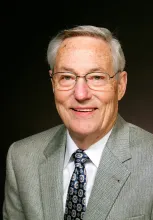
At the time of his retirement in 2016, Roy Holladay was serving the Operation Manager for Ministerial and Member Services of the United Church of God. Mr. and Mrs. Holladay have served in Pittsburgh, Akron, Toledo, Wheeling, Charleston, Uniontown, San Antonio, Austin, Corpus Christi, Uvalde, the Rio Grand Valley, Richmond, Norfolk, Arlington, Hinsdale, Chicago North, St. Petersburg, New Port Richey, Fort Myers, Miami, West Palm Beach, Big Sandy, Texarkana, Chattanooga and Rome congregations.
Roy Holladay was instrumental in the founding of the United Church of God, serving on the transitional board and later on the Council of Elders for nine years (acting as chairman for four-plus years). Mr. Holladay was the United Church of God president for three years (May 2002-July 2005). Over the years he was an instructor at Ambassador Bible College and was a festival coordinator for nine years.
